




Abstract
Gunshot detection technology (“GDT”) is proliferating across law enforcement agencies, yet little is known about public support of GDT and whether various messages about GDT can sway public support. The present study reports findings from a pre-registered survey experiment (N = 2,412) randomly assigning respondents to one of the three following conditions: (1) GDT effectiveness, (2) GDT stigma, or (3) the control condition. Those assigned the GDT effectiveness treatment were significantly more likely to support GDT, whereas the GDT stigma treatment did not sway public approval of GDT. There were non-significant heterogeneity tests across non-White and recent crime victims. Police agencies adopting GDT should transparently disseminate successes of GDT effectiveness within their jurisdiction, while addressing potential community concerns of the technology.
Introduction
The role of police, including responding to calls for service, traffic enforcement, patrol, and addressing community concerns, is to reduce crime and improve community safety (Goldstein, 1977). Police functions are constantly evolving, and agencies must adapt to a wide range of problems (Bittner, 1970). Consequently, as modern-day crime problems evolve, policing strategies must adapt to effectively address jurisdictional crime challenges. As agencies adjust to evolving jurisdictional problems, they may adopt various technologies like artificial intelligence, crime mapping technologies, and detection systems like CCTV, among others, to aid in responding to community crime challenges (Adams et al., 2024; Skogan, 2019). These tools may enhance police efficiency and effectiveness to respond to crime problems, reduce the number of crime victims, and provide better services to the public.
Some agencies have adopted gunshot detection technology (hereafter “GDT”) in an attempt to reduce gun violence, increase gun seizures, and improve response time to gun incidents (Gee, 2021b; SoundThinking, 2024). Agencies continue to adopt GDT technology in hopes of improving public safety despite mixed evidence surrounding its effectiveness (Lawrence & Novak, 2024; Piza, Arietti, et al., 2023; Piza, Hatten, et al., 2023; Piza et al., 2024). Despite limited research on public perceptions of GDT (see Henning et al., 2024 for exception), it remains unclear how messaging about the consequences of GDT adoption impacts public support. As new technology in policing emerges, such as artificial intelligence and specifically, gunshot detection technology, assessing public support (or lack of) is important, as the public is the core recipient of such technology. Further, as new technology emerges, various messaging about technologies may frame public opinion in favor or against these technologies. Messages from community members and advocates, as well as data provisions, may alter public (dis)approval of GDT which may ultimately affect overall sentiment toward the police. When the public perceives new police policies/strategies as unfair or not legitimate, their perceptions may affect opinions of the police as an institution (Tyler et al., 2015). Therefore, understanding public approval and which messages are most salient on public opinion as police technology evolves.
Understanding the public’s support of police use of technologies like GDT is important for police agencies in gaining the public’s trust and confidence as well as improving community-police relations, by transparently disseminating information about GDT implementation and evaluations of the technology with public (Tyler, 2004). Furthermore, if basic information (e.g., messages) about GDT can sway public (dis)approval of this technology, agencies can consider various information provision campaigns to encourage public support of their crime reduction efforts. Simultaneously, if negative messaging about the tool impacts public support, agencies can identify public concerns and adequately address those concerns via public messaging or community meetings. Therefore, the present study investigates public perceptions of GDT using a pre-registered framing experimental survey to assess public support of GDT. 1 These findings inform research and policy by highlighting which messaging shapes public perceptions of this technology. Finally, this study offers the first known experimental evidence on framing effects related to GDT.
Literature Review
Effectiveness of GDT
GDT, which uses acoustic sensors to identify precise and timely gunshot locations, has seen a rise in popularity, such that it is reported that over 200 public safety agencies globally have implemented the technology (Piza, Hatten, et al., 2023; SoundThinking, 2024). This tool may provide police agencies with a valuable tool to enhance their response to shootings, potentially saving lives and improving public safety. However, there is mixed empirical evidence on its effectiveness.
The body of empirical studies examining the impact of GDT on various outcomes is largely mixed. For example, Piza et al. (2024) found higher levels of gun recoveries in the adjacent catchment areas of the GDT installation in Kansas City, Missouri (see also Connealy et al., 2025). However, in another study, the authors did not find a significant increase in gun recoveries in GDT areas (Piza et al., 2023; Piza, Arietti et al., 2025). Due to the promised precise spatial and temporal identification of gunfire, there is potential that response times to gunshots are positively enhanced. Lawrence and Novak (2024) examined three cities’ GDT implementation and found that GDT reduced response times to gunshots. However, GDT was also associated with increased the workloads for responding officers (Choi et al., 2014; Mares & Blackburn, 2012; L. G. Mazerolle et al., 1998).
Regarding the impact of GDT on gun violence, empirical studies provide limited support that it reduces fatal and non-fatal and other violent firearm violence. For example, Mares and Blackburn (2021) executed a difference-in-difference analysis of GDT in St. Louis, MO, and found that it did not affect firearm violence (see also Connealy et al., 2025; Mares & Blackburn, 2012). With the high costs of GDT (Piza et al., 2025), scholars have weighed whether there is a net benefit of the technology given the mixed evidence. For example, as highlighted above, studies have found faster response times to gunshots which certainly provides a potential benefit, but that comes with the potential cost of excessive workload on officers (Lawrence & Novak, 2024; L. G. Mazerolle et al., 1998). Further, concern remains that GDT may produce both false negative and/or false positive alerts (Lawrence et al., 2018), which may result in unnecessary police response.
Notwithstanding the above findings, continued rigorous evaluations are needed to better highlight what elements of GDT positively impact community safety. While this technology has shown some positive effects, agencies need to weigh the costs and benefits of adopting the technology. That is, while GDT is expensive to adopt and implement, it may also create concern across affected communities, such as community members potentially feeling stigmatized through constant perceived surveillance, perceived targeting, and increased arrests (Gee, 2021b)
Community Perceptions of GDT
Research shows that gunshots are underreported to the police by community residents (Carr & Doleac, 2016; Henning et al., 2025; Mares & Blackburn, 2012, 2021); therefore, GDT may help close the gap of underreporting by detecting and responding to more gunshots (Choi et al., 2014; Huebner et al., 2022). This could contribute to potentially positive outcomes for community members, such as more unlawful firearms seized (Piza et al., 2024), faster responses to gunshots (Lawrence & Novak, 2024), and faster transport of gunshot victims to hospitals (Goldenberg et al., 2019; Sandau et al., 2024). While these outcomes may positively impact the public, little is known about whether the public is more or less likely to support the technology’s use.
Henning et al. (2024) surveyed residents in Portland (OR) and found that respondents expressing privacy concerns were less likely to support GDT; however, those exposed to firearm violence were more likely to support GDT. As Henning et al. (2024) highlight, the research on public assessments of GDT is incredibly limited. However, research on public attitudes towards various police use of technology is shaped by technological use in enhancing public safety, or concerns over privacy and excessive surveillance. That is, on one hand, the public may feel more secure knowing that GDT (or other policing technologies) are being implemented in their jurisdiction or neighborhood, due to the potential that officers may respond quicker to gunshots and firearm recoveries (Lawrence & Novak, 2024; Piza et al., 2024). In high-crime communities, GDT may offer a platform to increase civilian satisfaction when implemented transparently, offering the community increased perceptions of safety (Pastor et al., 2024). As technology in policing emerges, studies show that perceived police transparency is more likely to predict public approval of various implemented technologies (Przeszlowski & Guerette, 2025). Therefore, to gain public trust in technology such as GDT, agencies should be transparent with the public about its implementation, successes, and drawbacks of its use to gain public support.
On the other hand, community members may feel that the technology diminishes privacy and leads to perceptions of feeling targeted by police (Gee, 2021b; Preeya, 2022; Sinha, 2023). For example, Sinha (2023) highlights that community advocates argue that GDT implementation may lack transparency, violate resident privacy, and contribute to oversurveillance, all of which may disproportionately impact communities of color (see also public concerns of facial recognition technology and aerial surveillance in Bradford et al., 2020; Nader et al., 2025). Other scholars argue that GDT may violate community members’ Fourth Amendment rights (Stucky, 2024), contribute to the militarization of police (Goodwin, 2023), and perceptions of oversurveillance from community members (Gee, 2021a).
Framing Effects on Criminal Justice Topics
There is a robust body of literature that experimentally assesses the various impact of message framing on public opinion on a multitude of criminal justice topics. Scholars have examined whether various information provisions and vignettes sway public support of police and their strategies (Metcalfe & Pickett, 2022), courts and punishment (Norris & Mullinix, 2020; Suiter & Metcalfe, 2024), and the death penalty (Wu, 2022). For example, Boehme, Jung et al. (2024) randomly assigned the public to various police traffic stop outcome data and found that respondents given information about contraband (e.g., firearms, narcotics) seizure hit rates were more likely to support the use of discretionary traffic stops as a crime control tool. Regarding criminal justice reform, Gottlieb (2017) demonstrated that randomly assigned messages emphasizing self-interest or unfair punishment are more effective at increasing support for criminal justice reform.
This body of literature emphasizes that various messaging can sway public opinion in support (or lack of) for various criminal justice policies. However, some studies do not find that information messages sway public approval. After respondents provided their estimated number of police shootings in their city in 2020, Schiff et al. (2024) randomly assigned factual information about police shootings and found it did not sway support for various reforms (see also null effects in Boehme et al., 2023). Therefore, as new technology emerges across policing, understanding which messages impact public support for these strategies merit further investigation. These messages can then be used by local governments and police leaders to encourage public support.
The Present Study
When the community believes in the utility of police efforts and strategies, the public may be more likely to share information, report crimes, support law enforcement initiatives, and cooperate in crime-reducing efforts (Boehme et al., 2023; L. Mazerolle & Ransley, 2006; Sunshine & Tyler, 2003). Alternatively, if the public feels that such efforts (e.g., GDT) contribute to unwanted surveillance, privacy violations, and over-policing (Boehme et al., 2022), there is risk of damaged community-police relations and effectiveness of police strategies. Therefore, to examine which messages sway public (dis)approval of GDT, we use a pre-registered framing survey experiment to uncover whether various information provisions impact public support of GDT. Although GDT holds the potential to positively impact communities and support public safety, some community advocates and residents have expressed concern that they could stigmatize affected communities and deteriorate police legitimacy (Chavis, 2021; Gee, 2021a). As the core recipients of these strategies, police agencies must consider public perceptions of their strategies before (or when) certain strategies are adopted and implemented (Doucette et al., 2021). Further, understanding whether basic information provided to the public about GDT effectiveness or community concerns can sway public opinion toward these strategies is important for agencies to enhance perceptions of police efforts. This study seeks to address four pre-registered hypotheses below:
Data and Sample
We obtained a list of 903,570 emails of heads of households across the state of South Carolina from Mailers Haven, a third-party listserv which has been used in other published studies (Boehme, Jung et al., 2024; Jung et al., 2024; Mailers Haven, 2023). Mailer’s Haven obtains their distribution list by compiling data from the United States Postal Service, National Change of Address database, Delivery Sequence Files, and other consumer data to create a comprehensive list of addresses within targeted areas requested by users. 2 This distribution list was comprised of all head of household addresses across the state of South Carolina, providing a comprehensive list of state households. Based on this list of household addresses, our distribution sample was the heads of households with an associated email address. 3 Surveys were distributed via Qualtrics beginning on August 6, 2024, with five periodic email reminders throughout, with data collection concluding on October 17, 2024. We obtained a final working sample of 2,412 respondents, indicating a response rate of <1% based on AAOPOR RR2 calculator (AAPOR, 2023). However, we believe this response rate to be extremely conservative, as pilot testing indicated that about 20% of email invitations truly “landed” in the test subject’s direct inbox. Thus, we believe the response rate to be better than indicated for those that the emails landed in their inbox and were not filtered to junk/spam and other inbox subcategories within their email accounts. Although this is a low response rate compared to other criminological studies (see extensive review in Pickett et al., 2018), this response rate aligns with relevant criminological research that has used this distribution list (see Boehme, Adams, Metcalfe, et al., 2024; Boehme, Jung, et al., 2024; Kidd et al., 2024). While this is a low response rate, research indicates that low response rate may not correspond to nonresponse bias (Pickett, 2017; Pickett et al., 2018). Of those that opened the survey, 87% completed the survey. 4
The sample consists of 55% females, 80% White, 12% Black, and most of the sample identifying as politically conservative (~47%) or moderate (~38%). Further, most of the respondents were 55 years old or older, held at least a four-year college degree (~58%), were married (~66%), and are employed (~52%). Just under 10% reported being a crime victim and about 32% reported having contact with police in the past 12 months. A balance table of covariates by experimental treatment can be found in Table A1 of the Appendix with corresponding p-values from chi-square tests without the use of weighting or matching. Balance tables are robustness checks that examine whether randomization was successful by comparing covariates across experimental conditions. There were no significant differences between all experimental treatments, indicating that randomization via Qualtrics was successful. 5
Comparisons between our sample and socio-demographics across the state of South Carolina showed differences in terms of race/ethnicity (e.g., over-representation of White respondents, under-represented of Black respondents, compared to the rest of the state) (United States Census Bureau, 2022). Relating to sex assigned at birth and political affiliation, our sample is close to that of the state. Relating to national averages, our sample is close in terms of the percentage of Black respondents and sex. Notwithstanding these differences, there is evidence that our online survey technique may still produce externally valid results (Patten & Perrin, 2015). However, we remain cautious in making claims of external validity (see later discussion). Nonetheless, the core goal of our data collection process was to obtain a large sample to enhance internal validity based on the distribution list obtained.
Research Design
We implemented a pre-registered embedded framing survey experiment. Information provision and framing experiments are commonly used in the research literature, assessing whether respondents update priors after provided various criminal justice information (Boehme et al., 2023; Mullinix et al., 2021; Norris & Mullinix, 2020). After answering the consent question, respondents were asked pre-experimental questions about their trust and confidence in police, perceptions of police legitimacy, and willingness to obey the law. After these questions were answered, respondents entered the experimental portion of the survey. The experiment presented here was part of a larger survey in which there were three other embedded experiments. These other experiments asked respondents about super-cocooning police strategies, hot spots policing, and profanity use in policing. 6 The order of the four total embedded survey experiments were presented in random order to reduce potential issues of carry-over, learning, or fatigue effects (Bell, 2013; Brooks, 2012; Lavrakas et al., 2019; Sauer et al., 2020; Wickens & Keppel, 2004). That is, respondents would be randomly assigned the four experiments in random order in which they would complete one experiment then be re-randomized into the next experiment. Within the GDT experiment, respondents only received one of the three treatments (GDT effectiveness, GDT stigma, or control). If assigned a treatment, they were presented the treatment information on a single page by itself then the respondent would have to click the “next” button to move to the next page. The next page had the same treatment at the top of the page with multiple choice questions that consist of our dependent variables below.
Within the experiment, all respondents were assigned the same baseline statement about the strategy to provide context for the multiple-choice questions. The baseline statement read as follows: Gun shot detection technology (aka “ShotSpotter”) is an acoustic gunshot detection system that can provide police the precise time and location of a gunshot incident. If a respondent was assigned the GDT effectiveness treatment, they received the following statement followed by seven multiple choice questions
7
: Gun shot detection technology (aka “ShotSpotter”) is an acoustic gunshot detection system that can provide police with the precise time and location of a gunshot incident. Several research studies have found that in ShotSpotter areas,
If assigned the GDT stigma treatment, respondents were assigned the following statement followed by the stem and matrix questions: Gun shot detection technology (aka “ShotSpotter”) is an acoustic gunshot detection system that can provide police with the precise time and location of a gunshot incident. However, some community advocates and researchers have
The GDT effectiveness treatment was derived from findings from an evaluation conducted by research team members evaluating a police agency’s GDT program. 8 The GDT stigma treatment was derived from a synthesis of research that has examined community concerns about GDT. Therefore, assessing whether data message framing or community sentiment framing impacts on our outcomes is worth scholarly attention.
Variables
The dependent variables for the main analyses consisted of a combined mean scale combining seven multiple choice questions that asked respondents how much they agreed or disagreed with the seven statements (alpha = 0.853). Responses were on a 5-point Likert-scale (1 = strongly disagree, 2 = disagree, 3 = neither agree nor disagree, 4 = agree, 5 = strongly agree). Some items were reversed coded such that higher values of the combined mean scale resulted in greater support of GDT. Below are the statements all respondents were asked to rate their level of agreement/disagreement:
ShotSpotter will lead to police stigmatizing community members (reverse coded).
ShotSpotter will lead to unnecessary arrests (reverse coded).
I support the use of ShotSpotter.
ShotSpotter will help the police recover more firearms.
ShotSpotter will create safer communities.
ShotSpotter in my neighborhood would make me feel safer.
ShotSpotter will target impoverished communities (reverse coded).
Robustness checks examined these variables separately using OLS regressions as well as collapsing the five-point scale into a binary variable (1 = strongly agree and agree, 0 = neither agree nor disagree, disagree, and strongly disagree) to assess respondent agreement with the various statements (Dolnicar & Grün, 2007; Jeong & Lee, 2016). 9
Independent Variables
The key predictors were the treatment variables that were coded 1 if the respondent was assigned one of the treatments and 0 if not. The control condition served as the reference category. We also included three combined mean scales of pre-experimental perceptions of police. Police trust/confidence is a combination of four survey items; (1) the police protect people’s basic rights, (2) the police are generally honest, (3) most police officers do their jobs well, and (4) the police can be trusted to do what’s right for my neighborhood (alpha = 0.94) (Bolaji & Metcalfe, 2024). Legitimacy was measured based on how much respondents agreed/disagreed with the following six items about the police: (1) treat everyone equally, (2) clearly explain the reasons for their actions, (3) treat people with dignity and respect, (4) treat people fairly, (5) respect people’s rights, and (6) listen to suspects before making any decisions about how to handle a case (alpha = 0.96) (Tankebe, 2013). Willingness to obey is a combination of four measures of (1) I always try to follow the law even when I think it is wrong, (2) You should do what the police tell you even if you disagree, (3) you should accept police decisions even if you think they are wrong, and (4) people should obey the law even if it goes against what they think is right (alpha = 0.78) (Boehme, Adams, Metcalfe, et al., 2024).
We also included several socio-demographic variables that were asked after the experimental portion of the survey. Sex assigned at birth is a dummy variable in which male (1 = yes, 0 otherwise) (female = 1, 0 otherwise, reference category). Race/ethnicity are dummy variables, in which Black (1 = yes, 0 otherwise), Other Race (1 = yes, 0 otherwise), and White (1 = yes, 0 = otherwise, reference category) were included in the models. Age is a categorical variable in which respondents had to select which age range they fell in (1 = 18–24 years of age, 2 = 25–34, 3 = 35–44, 4 = 45–54, 5 = 55–64, and 6 = 65+). Political ideology are dummy variables of Liberal (1 = yes, 0 otherwise), Moderate (1 = yes, 0 otherwise), and Conservative (1 = yes, 0 = otherwise, reference category). Education is a categorical variable where 1 = no high school degree, 2 = high school degree, 3 = some college but no degree (yet), 4 = 2-year college degree, 5 = 4-year college degree, and 6 = postgraduate degree. Married (1 = yes, 0 = otherwise), employed (1 = working full time or part time, 0 otherwise), crime victim in past year (1 = yes, 0 otherwise), and police contact in past year (1 = yes, 0 otherwise) are dummy variables that were included in the controlled models.
Analytic Strategy
We used a multi-phased analytic approach, beginning with summary statistics describing the outcome across the full sample and by experimental condition. Next, we calculated t-tests comparing the means of the dependent variable across experimental conditions. Lastly, we estimated a series of regression models, including interactions between treatments and certain sub-groups. Per our pre-registration and as highlighted briefly in the literature review, we proposed estimating heterogeneity tests of our treatments across non-White respondents (in comparison to White respondents) as well as crime victims (compared to non-crime victims). Non-White Americans are disproportionally impacted by crime (Berg, 2014) and may receive differential treatment from the police (Peck, 2015). Further, recent crime victims may be differentially impacted by our treatments due to fear of repeat victimization from crime (Noble & Jardin, 2020; Ruddell & Trott, 2023) and may be more (or less) impacted by police efforts to prevent crime. For these reasons, we examined whether treatment effects varied across these groups.
Because the dependent variable is on a continuous mean scale, we estimated our models using OLS regression. We conducted the analysis in two steps: (1) an uncontrolled OLS model with only treatment variables including and (2) a controlled model that incorporated the above-mentioned covariates. We estimated both models with interactions between treatment and subgroup variables. These interactions serve as heterogeneity tests. In other words, they assess whether treatment effects varied across subgroups. Unlike causal moderation, which tests for causal pathways under certain assumptions (Bansak, 2021), our analysis only examines differences in treatment effects by subgroup. The results from interaction tests are included in the Appendix for brevity.
Descriptive Results
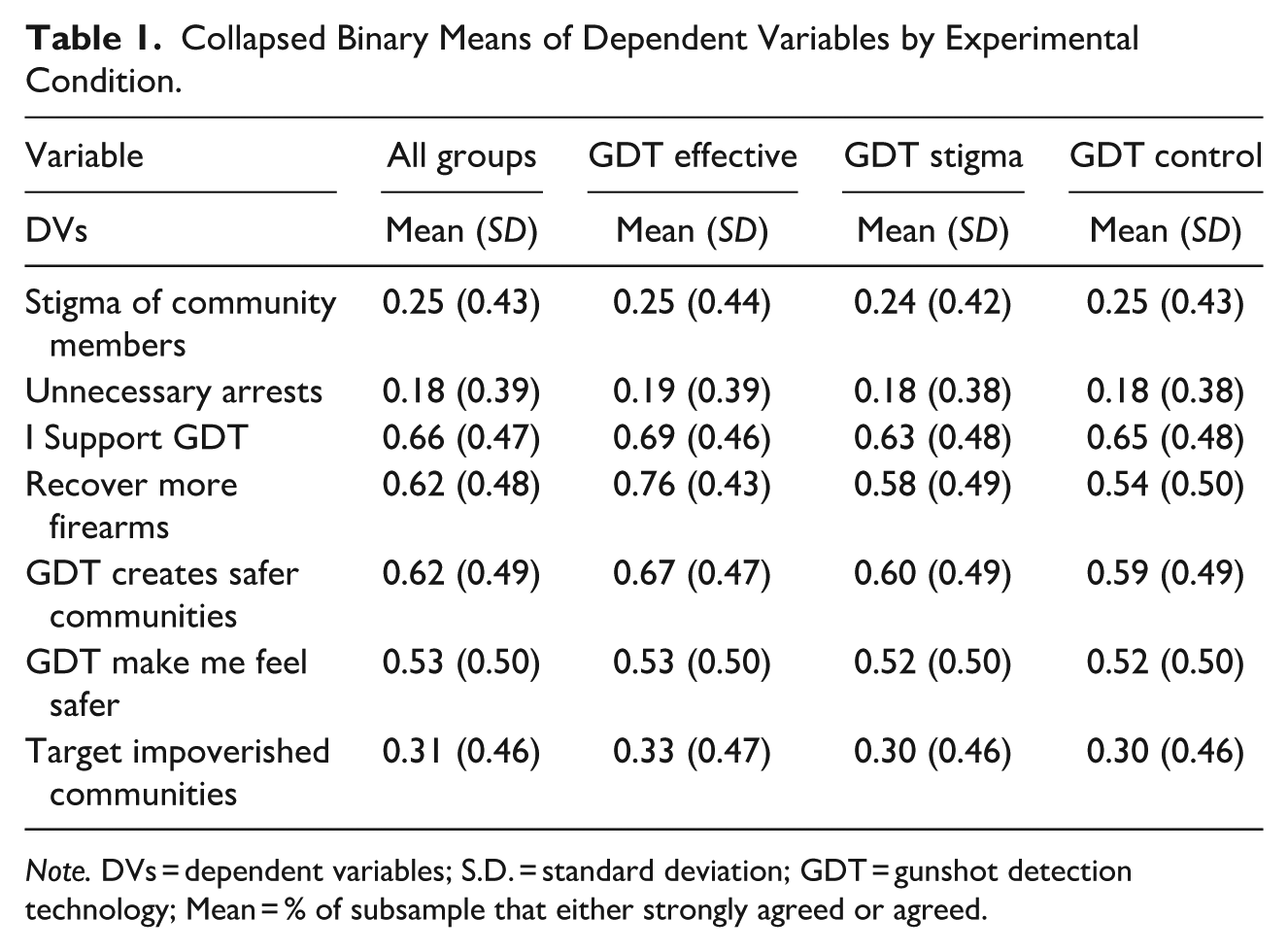
Table 1 shows the binary means to assess what percentage of the sample either strongly agreed or agreed with the seven items. Over 50% of the entire sample (regardless of treatment assigned) agreed that they support GDT, that the technology will result in more firearm recoveries, that the technology will create safer communities, and that GDT will “make me feel safer.” There was lower agreement on items that asked about potential issues stemming from GDT (stigma = 25% agreed, unnecessary arrests = 18% agreed, and targeting communities = 31%).
Collapsed Binary Means of Dependent Variables by Experimental Condition.
Note. DVs = dependent variables; S.D. = standard deviation; GDT = gunshot detection technology; Mean = % of subsample that either strongly agreed or agreed.
T-tests assessing mean differences of treatments (compared to the control) on the five-point Likert scale can be found in Appendix Table A2. Those randomly assigned the GDT effectiveness treatment held significantly higher support of the combined mean scale, that GDT will result in greater firearm recoveries, and that GDT creates safer communities. There were no significant mean differences between the stigma treatment and the control.
Experimental Results
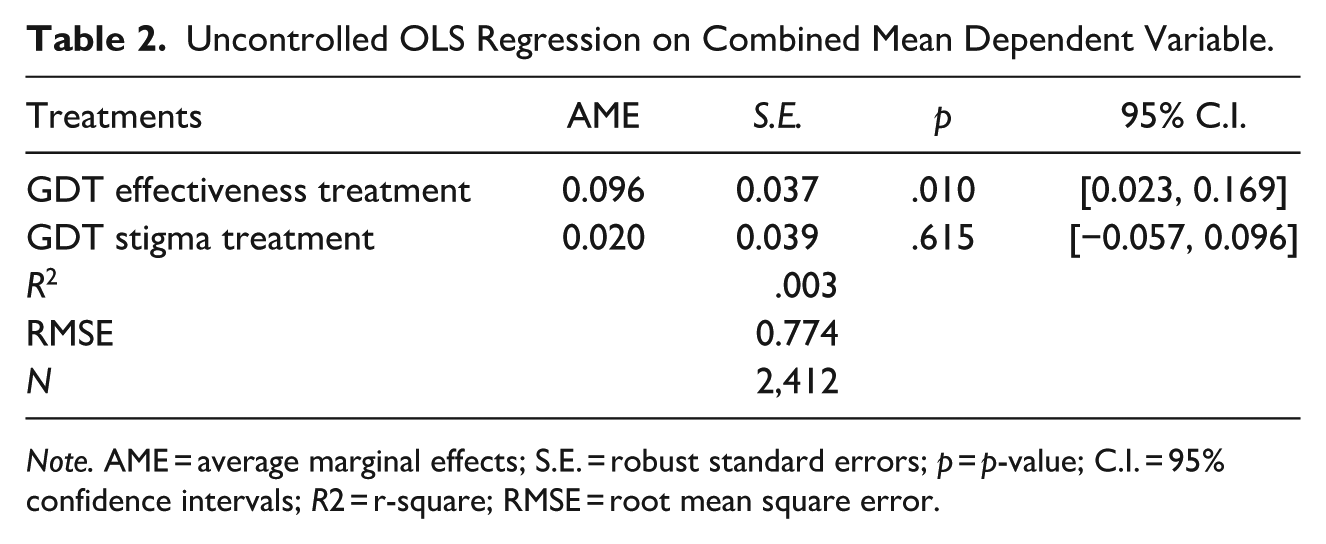
The uncontrolled OLS regression results models can be found in Table 2. Results suggest that those randomly assigned the GDT effectiveness treatment, in comparison to the control, were significantly (p = .010) more likely to support GDT (AME = 0.096). However, those assigned the GDT stigma held higher support of GDT, but the effect of non-significant (p = 0.615).
Uncontrolled OLS Regression on Combined Mean Dependent Variable.
Note. AME = average marginal effects; S.E. = robust standard errors; p = p-value; C.I. = 95% confidence intervals; R2 = r-square; RMSE = root mean square error.
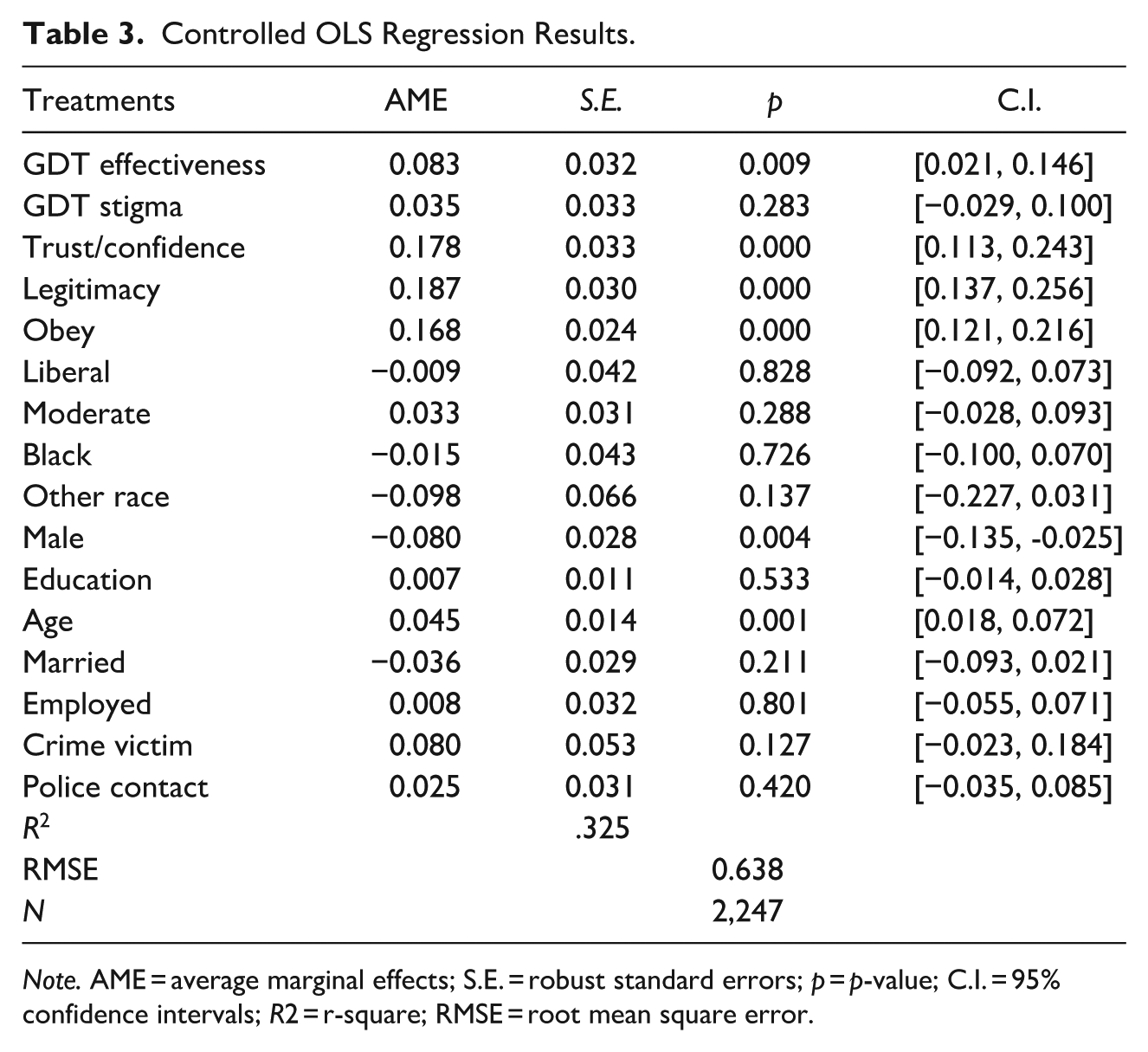
Table 3 presents findings from the controlled regression models incorporating various covariates. As expected, including these covariates did not impact the significance or direction of the treatments. That is, those assigned the GDT effectiveness treatment increased their support of GDT by 8.3% (p = .009), in comparison to the control condition. Those assigned the GDT stigma treatment did not significantly differ from the control condition in their perceptions of GDT (p = 0.283). At baseline, there were some covariates that were significantly associated with support of GDT. Respondents who held higher trust and confidence in police, higher perceptions of police procedural justice, higher perceptions of willingness to obey, and older respondents reported significantly higher perceptions of GDT. However, male respondents (compared to female respondents) were significantly less likely to support GDT.
Controlled OLS Regression Results.
Note. AME = average marginal effects; S.E. = robust standard errors; p = p-value; C.I. = 95% confidence intervals; R2 = r-square; RMSE = root mean square error.
Supplementary Analyses and Robustness Checks
We estimated several supplementary analyses and robustness checks to confirm our main analyses and examine individual survey items that consist of our combined mean scale-dependent variable (see Appendix). Table A3 of the Appendix presents OLS regression models on the single items. Results indicate that those assigned the GDT effectiveness condition were significantly more likely to support the statements that GDT will result in increased firearm recoveries and that GDT will lead to safer communities (in comparison to the control condition). Those assigned the GDT stigma treatment believed that GDT would result in increased firearm recoveries relative to the control. These results remained when estimating logistic regression models (Table A4 in the Appendix) on single items after collapsing the Likert-scale items into a binary outcome (1 = strongly agree/agree, 0 = neither agree nor disagree, disagree, strongly disagree). However, those assigned the GDT stigma treatment did not significantly agree or agreed that GDT will result in increased firearm recoveries relative to the control. An attention check was randomized throughout the experimental component of the survey. 10 We removed respondents who failed the attention check in which findings did not change from the main findings in terms of significance or direction.
Heterogeneity Tests and Sensitivity Analyses
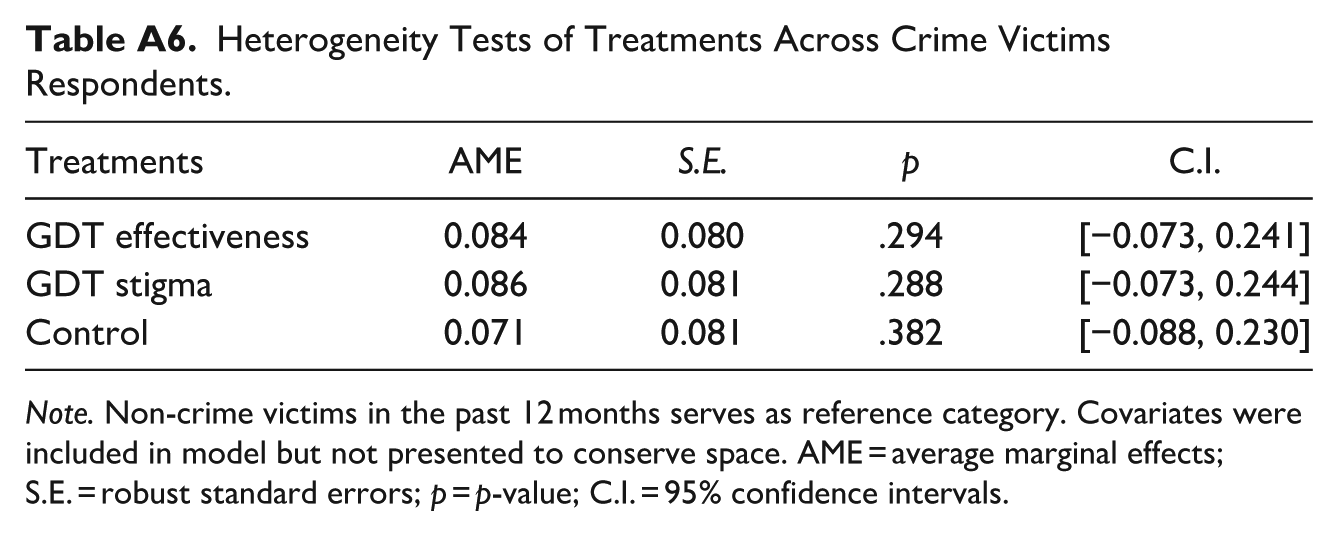
Following the pre-registration and to test hypotheses three and four, we executed several heterogeneity tests to examine if our treatments differentially impacted theoretically relevant sub-groups; non-White respondents and recent crime victims. Since point estimates and p-values may be misleading when executing interaction effects (Bartus, 2005; Williams, 2012), we relied on the margins command in Stata and visual inspection to assess the impact of the interactions. For these interactions, we compared non-White respondents receiving various treatments relative to White respondents, and crime victims who received the various treatments relative to non-crime victims. Additionally, to conserve space within the manuscript, we report these graphs and output from the significant interactions in the Appendix. Across both non-White respondents (in comparison to White respondents) and crime victims (in comparison to non-crime victims), there were non-significant heterogeneity of our treatments across these groups (see Tables A5 and A6 in the Appendix). This indicates that these treatments did not differentially sway these sub-groups.
Discussion
This is the first known study to experimentally evaluate how various message framing related to gunshot detection technology impacts support for its use from the public. These findings demonstrate that factual information derived from evaluative data on GDT positively impacted public support for its usage, while messaging about community concerns over GDT stigmatizing certain communities did not significantly impact public support of disapproval of the technology. Below we discuss these findings in greater detail.
First, descriptive findings show that the majority of our sample supported the potential crime prevention and public safety benefits that GDT may bring. That is, over 50% of the sample regardless of experimental treatment either strongly agreed or agreed that GDT will result in more firearm recoveries, will make communities safer, will make the respondent themselves feel safer. Additionally, in all three experimental conditions, respondents were provided baseline information explaining that GDT provides accurate location information to police. This basic information may inform the public of the potential positive impact that GDT may have on public safety to encourage support. Further, this baseline information did not contribute to respondents supporting the survey items asking about the potential for GDT to stigmatize (e.g., unnecessary arrests, targeting) communities. It could be that the public is more likely to consider the public safety implications more so than any potential stigma that may arise from this tool.
Second, the GDT effectiveness treatment was robust in improving the support of the technology’s usage. Beyond the baseline information, respondents in this treatment were assigned additional information about firearm recoveries doubling after GDT implementation. Although all firearms seized by police are not associated with shootings/violent incidents, the public may infer that firearms seized due to GDT implementation has crime and public safety benefits. That is, the public perceives that more firearms removed from the street is a clear indicator of safer communities, and will make the public themselves feel safer. These findings suggest that the public may be receptive to GDT when its immediate benefits are clearly communicated. Data on successes of policing strategies (e.g., seizures) appears to shape the publics’ prior beliefs. Further, these findings are in-line with other framing survey experiments that found the data sways (dis)approval of various criminal justice topics (Boehme, Jung et al., 2024; Shi, 2022).
Interestingly, the stigma treatment, which communicated concerns about over-surveillance, privacy violations, and potential for excessive police presence, did not significantly alter public perceptions. These results suggest that concerns about privacy and surveillance may be less influential in shaping public opinion than the impact GDT may have on public safety. It is possible that respondents prioritize perceived safety benefits over potential drawbacks, particularly when they are told that GDT is a tool for rapid response and enhanced crime prevention. The lack of impact of the stigma condition on public perceptions may indicate that GDT’s perceived benefits outweigh any potential drawbacks for many respondents. As it relates to the severity of the crime type that GDT is supposed to impact (shootings), it may be in agreement by the public that the benefit of better response to shootings and later seizures outweighs the potential cost of targeting communities. Finally, qualitative community concerns may not be as impactful toward the public as quantitative data about GDT.
Black and non-White Americans are disproportionately impacted by firearm violence in the US (Boeck et al., 2020; Piquero, 2024). Additionally, these groups often demonstrate more negative perceptions of police and strategies that they use (Boehme et al., 2022). For these reasons, researchers might expect GDT effectiveness to vary across this sample. Similarly, one could theoretically expect the GDT effectiveness treatment to differentially impact crime victims as GDT is proposed as a proactive strategy to prevent future harm. However, our heterogeneity tests across non-White respondents and crime victims did not significantly differ, regardless of treatment assigned. The lack of treatment heterogeneity aligns with our main effects findings.
Policy Implications
From a policy perspective, these results are significant and point to the importance of communicating policing strategies to the public. When the public understands that GDT may offer public safety benefits, they may be more likely to support its implementation. We propose several implications for police agencies that may enhance community-police relationships. First, we suggest that agencies should conduct rigorous, third-party evaluations of GDT to form a strong evidence base for this technology. This should involve assessing field outcomes (e.g., seizures, response to shootings) as well as ascertaining public sentiment toward the implementation and use of emerging technologies such as GDT. Second, agencies should be transparent with the public about the findings from the evaluations, highlighting both the positives and drawbacks of the evaluation. Third, agencies should transparently communicate how they plan to address any drawbacks derived from the evaluation. While previous studies do not often find crime control benefits derived from GDT, there may be other benefits, such as faster response times and faster transport of gunshot victims to trauma hospitals (Lawrence & Novak, 2024; Sandau et al., 2024). These relevant outcomes beyond crime control should be evaluated and shared with the public. Finally, as new technology emerges in policing such as GDT and AI (Adams et al., 2024; Boehme et al., 2025), agencies should ascertain public concern over privacy, stigma, and transparency, and work with the public to address these concerns and adopt policies as these concerns develop.
Again, we appreciate this concern and believe that these comments from the Reviewer greatly improved the implications of this manuscript.
Indeed, it is increasingly important for law enforcement strategies to achieve public safety goals while being mindful of broader community impacts (Sherman, 2022). In doing so, it is important that agencies adopt transparent communication strategies that clearly convey the intended goals of GDT while emphasizing the need to avoid heavy-handed enforcement. Agencies’ use of social media, informational campaigns, and community response teams can be leveraged to communicate effectiveness of strategies implemented by the agency. If crime prevention strategies are perceived as targeting specific neighborhoods disproportionately—particularly communities of color—trust could be eroded, and perceptions of surveillance could intensify (Metcalfe & Pickett, 2018; Tyler et al., 2015). Therefore, the implementation of GDT requires transparent messaging, community engagement, and ongoing evaluation to sustain public support.
These findings have important policy implications, particularly as they relate to the context of building and maintaining public trust. While GDT offers a promising tool for quick response and enhanced firearm recoveries, its implementation must be coupled with a strong commitment to clear communication strategies. This means that agencies must not only emphasize the positive outcomes but also actively address and combat any potential perceived harms. The implementation of new policing technologies must strike a careful balance between achieving crime-reduction objectives and fostering public support (L. Mazerolle & Ransley, 2006). Engaging communities in discussions about GDT’s use and offering transparency about its impact could mitigate perceptions of unfair targeting and support broader efforts to enhance police legitimacy.
An essential component of implementing GDT is the commitment to ongoing evaluations that extend beyond solely measuring crime reduction. Evaluation efforts should analyze how GDT strategies impact community perceptions, trust, and the potential for over-policing, especially in marginalized neighborhoods. Routine assessments can reveal unintended effects, such as heightened community concerns about surveillance or erosion of trust due to increased police presence. By prioritizing these evaluations, police agencies can make informed adjustments to the implementation of these strategies. Consistent evaluations on both field outcomes and public support of emerging police strategies highlights the importance of balancing public safety with a goal in maintaining positive relationships with the communities served.
Limitations and Conclusions
While we executed a survey experiment with a large sample size, offering a high degree of interval validity, this study also has some limitations. Although we were seeking high interval validity as the key methodological goal, the study lacks external validity for the rest of the United States. First, while our distribution list was a comprehensive list of heads of household across the state of South Carolina, if an address or email address could not be verified, they were excluded from the sampling frame. Due to this and the low response rate, we are therefore cautious in making representative claims. Second, there were three other experiments embedded within the survey that respondents answered, which may potentially influence respondents’ answers in the GDT experiment. However, these topics were not related to police technology, and we randomized the order of experiments that respondents received, which aids in addressing carryover effects. Third, while message framing about strategy effectiveness improved support of these strategies, not all community members engage with police messaging (e.g., social media) and may form opinions through other mechanisms. Fourth, while these messages update respondents’ priors, assessing the long-term impact is worth further exploration. The heterogeneity tests, particularly among crime victims, had a small sample size, being that only 219 of our respondents were crime victims in the past 12 months. Therefore, future research should seek to understand how various policing strategies are received by recent crime victims to better assess the response by police. While we could not experiment on each intricate factor affecting public approval of these strategies, researchers should consider other variations of our treatments that may affect public (dis)approval of these strategies. As an emerging tool adopted by law enforcement agencies, GDT is becoming a prominent policing strategy across American policing. As the core recipients of this tool, researchers should continue to unravel the intricacies that impact public approval of this technology, which is vital to its effectiveness. As the first known experimental study to assess public support for GDT and as the public becomes increasingly aware of its use, agencies should be transparent and communicative with the benefits and potential drawbacks of its use.
Footnotes
Appendix
Heterogeneity Tests of Treatments Across Crime Victims Respondents.
| Treatments | AME | S.E. | p | C.I. |
|---|---|---|---|---|
| GDT effectiveness | 0.084 | 0.080 | .294 | [−0.073, 0.241] |
| GDT stigma | 0.086 | 0.081 | .288 | [−0.073, 0.244] |
| Control | 0.071 | 0.081 | .382 | [−0.088, 0.230] |
Note. Non-crime victims in the past 12 months serves as reference category. Covariates were included in model but not presented to conserve space. AME = average marginal effects; S.E. = robust standard errors; p = p-value; C.I. = 95% confidence intervals.
Declaration of Conflicting Interests
The authors declared no potential conflicts of interest with respect to the research, authorship, and/or publication of this article.
Funding
The authors received no financial support for the research, authorship, and/or publication of this article.
