



Abstract
Police vehicle pursuits emphasize a central tension between law enforcement imperatives and public safety. While modern policies emphasize balancing apprehension needs against risks of continuation, little is known about whether public intuitions mirror this framework. We address this gap using a nationally representative conjoint experiment (N = 3,334) that varied eleven contextual factors across randomized pursuit scenarios. Respondents rated perceived risk, indicated whether pursuits should be terminated, and made forced-choice tradeoffs. Across all outcomes, high-risk situational factors (e.g., high speeds, adverse weather, heavy traffic, urban settings, etc.) increased perceived danger and termination support, while more serious underlying offenses, particularly violent felonies, reduced it. These patterns align with the proportional balancing logic embedded in contemporary policy and training. Findings suggest restrictive, risk-sensitive pursuit policies are broadly consistent with public expectations, though tolerance for risk in violent felony cases may limit support for outright prohibitions.
Introduction
Policing in a democracy is not defined solely by law enforcement capacity. It is bound to the constraint that authority be exercised in ways the public views as legitimate and consistent with community values. Democratic control depends on maintaining alignment between the discretionary judgments of officers and the standards held by citizens. When these diverge, trust declines and the perceived legitimacy of the institution erodes. This is particularly acute for high-risk activities where the tradeoff between immediate enforcement and public safety is visible and consequential, and where the public often serves as the ultimate fact-finder in civil or criminal proceedings.
Vehicle pursuits represent a concentrated example of this tension. They combine urgency, uncertainty, and danger in ways that require rapid judgment under imperfect information. Between 2017 and 2022, at least 3,336 people were killed as a result of police pursuits in the United States, and more than 52,600 were injured between 2017 and 2021 (Gollan & Neilson, 2025). 1 Vehicular pursuits are among the riskiest tactics police use and engaging in them opens police departments up to serious criticism regarding the dangers posed to officers, suspects, and uninvolved third parties (Neilson et al., 2024). Yet not engaging in vehicular pursuits can also spark outrage among the public as a perceived failure to enforce the law (Lindsay, 2024).
The basic dilemma has been recognized for nearly a century. In the United Kingdom, Nottingham Chief Constable Athelstan Popkess (1933) observed that attempts to intercept stolen vehicles often ended in violent crashes, illustrating that the competing imperatives of pursuit and safety were present even in the early motorized era. Over time, U.S. policy shifted from a “chase until the wheels fall off” ethos toward a structured balancing framework that requires officers to weigh the need for immediate apprehension against the danger posed by continuing the pursuit (Police Executive Research Forum, 2023). This framework, embedded in modern policy and training, reflects constitutional proportionality tests and harm-reduction principles.
Incorporating public opinion when striking a balance between competing goals can be challenging. Research on police use of force shows that public judgments of reasonableness often diverge from the legal and professional standards that guide officers in the field, what some scholars have dubbed a “legally unreasonable public” (Mourtgos & Adams, 2020). The same misalignment could exist for pursuits, as the most systematic evidence is nearly three decades old, even as the policy landscape has evolved. MacDonald and Alpert (1998) found that public support for pursuits varied with offense seriousness and situational danger, but their bundled vignette design could not isolate the independent effect of each factor. In the years since, pursuit policies have grown more restrictive, technology has expanded alternatives to high-speed chases, and political debate has intensified as jurisdictions have alternatively moved to both tighten (Akinnibi, 2025) and loosen (Luna, 2024) pursuit restrictions in response to public demand. Notably, these policy moves have occurred even as those public attitudes remain largely unknown. No nationally representative study has re-examined public attitudes in this changed environment.
This study extends prior work by applying a nationally representative conjoint experiment, the first of its kind to our knowledge in pursuit research, to independently estimate how the public weighs risk, offense seriousness, and situational context in pursuit termination judgments. In doing so, it moves beyond earlier vignette studies by identifying the causal influence of each factor and situating those judgments within the contemporary policy and reform environment.
In brief, our results show that the public’s pursuit preferences largely align with the proportional risk–benefit reasoning embedded in contemporary professional policy. Using a nationally representative conjoint experiment, we independently varied offense seriousness, pursuit speed, traffic conditions, and other risk factors. Respondents were less willing to continue pursuits as situational dangers increased—higher speeds, heavier traffic, and greater pedestrian presence reduced support for continuation—and more willing when the underlying offense was more serious. This pattern mirrors the structured balancing logic officers are trained to apply, which weighs risk factors against enforcement benefits in real time.
Literature Review
Vehicle pursuits in the United States, like other police activities, has been the subject of evolving standards through professionalization and reform. Actions that were once considered necessary for the enforcement of the law and the assurance of public safety become scrutinized by the public and the courts to constrain the exercise of police discretion (Walker, 1993). An early example of scrutiny directed at police pursuits can be seen in the case of Chambers v. Ideal Pure Milk Co. (1952). 2 At approximately 3 a.m. on February 10, 1941, Milton Elmore was driving a horse-drawn, lighted milk wagon along Center Street in Owensboro, Kentucky, and began to turn left onto Fourth Street. Moments earlier, Officers Robert Chambers and Jack Long had observed a parked car occupied by Wren Shearer, a man whose “bad reputation had become known to them.” Shearer sped off to avoid investigation, and before Elmore could complete his turn, Shearer, fleeing at roughly 75 mph, collided with the milk wagon, seriously injuring Elmore. Both Elmore and the Ideal Pure Milk Company sued the officers for damages.
Following contradictory decisions by the trial court and an appeals court, the Kentucky Supreme Court ultimately held that a fleeing suspect is responsible for their own actions. The court concluded, “To argue that the officers’ pursuit caused Shearer to speed may be factually true but it does not follow that the officers are liable at law for the results of Shearer’s negligent speed.” As a result, the exercise of discretion was embraced, and the decision effectively sanctioned a “chase until the wheels fall off” approach moving forward. 3
As the decision to pursue was left within officer discretion, little attention was paid to police pursuits beyond basic driver training during the 1960s and 1970s. There was no broad pushback against the injuries and fatalities that resulted. Some commentary appeared, most notably Gott’s (1961) observation that seasoned dispatchers and supervisors saw high-speed chases not as thrilling spectacles, but as anxiety-laden, dangerous events. By the mid-to-late 20th century, research was documenting the toll of pursuits with increasing clarity. The first widely publicized report came from the Physicians for Automotive Safety, a watchdog group that claimed 70% of pursuits ended in a crash, 50% in serious injury, and 20% in death (Fennessy et al., 1970). Although criticized for methodological flaws and lack of scientific rigor, it brought national attention to the dangers of pursuits.
A subsequent California Highway Patrol (1983) study in the early 1980s analyzed multi-agency data and concluded that 29% of pursuits ended in a crash, 11% in injury, and 1% in death. While also methodologically limited, it marked the beginning of a more systematic research tradition. Notably, the CHP concluded that “[a] very effective technique in apprehending pursued violators may be simply to follow the violator until he voluntarily stops or crashes” (p. 17). In 1986, Alpert and Anderson (1986) labeled pursuits “the most deadly force” due to their high probability of injury or death, while Barker (1984) argued they may cause more fatalities than officer-involved shootings.
The debate was sharply polarized. Police warned that failing to pursue fleeing suspects would allow offenders to escape justice, while safety advocates emphasized the dangers to the public. This standoff was fueled by attitudes and beliefs rather than by accurate, comprehensive data collected through verifiable methods. High-profile incidents intensified polarization, spurred policy changes, and left officers uncertain in the field. In 1988, Alpert published Police Pursuit: Linking Data to Decisions (1988), calling for better data and recognizable as an early call for what is now known as evidence-based policing.
By the 1980s, the rise in attention directed at the dangers of pursuits began to drive significant policy evolution. The mantra of “chase until the wheels fall off” began to give way to more measured approaches that constrained discretion and aimed to reduce harm. Central to this shift was the “balancing test,” a legal framework in U.S. law that weighs competing interests. Rooted in Schenck v. United States (1919) and later developed in Terry v. Ohio (1968) and Mathews v. Eldridge (1976), the balancing test evaluates the government’s interest in taking action against the risks such action may pose. In Tennessee v. Garner (1985), the Court applied this reasoning to deadly force against fleeing suspects, and in County of Sacramento v. Lewis (1998) it addressed high-speed pursuits directly. Over time, this reasoning became embedded in police pursuit policies, emphasizing that the need to apprehend must be weighed against the threat to public safety.
While these approaches limited discretion by directing officers to weigh the risks of non-apprehension against the dangers to the public, they often did not eliminate the possibility of pursuits in specific situations. In the 2020s, sparked by the Black Lives Matter movement and the death of George Floyd, renewed interest in police reform again turned its attention to vehicular pursuit policies. In Washington, for example, legislators initially responded to calls for police reforms by passing a law that severely restricted when officers were allowed to engage in vehicular pursuits, though this law was later repealed (Lindsay, 2024). Similarly, the NYPD made significant policy changes to prohibit vehicular pursuits in many situations (Cramer & Meko, 2025). However, while these laws and policies are passed in response to pushes from reform-oriented groups, they typically do not consider broader public opinion towards the constraints.
Modern Pursuit Policies
At the organizational level, pursuit policy reform has become a central mechanism for harm reduction. The Bureau of Justice Statistics reports that as of 2013, nearly all state and local police agencies had some form of pursuit policy in place (Reaves, 2017). These policies generally fall into three categories: discretionary, restricted, and prohibitive. Discretionary policies require the officer to decide whether to initiate or continue a pursuit. Some of these discretionary policies include supervisory review which requires supervisors to communicate and provide real-time authorization and oversight. Restricted policies limit pursuit to a narrow set of circumstances, often violent felonies. Prohibitive policies forbid pursuit altogether. Increasingly, research supports the effectiveness of restrictive policies in reducing both the frequency and severity of pursuit-related harms. Alpert (1997) documented up to a 90% reduction in pursuits in agencies that adopted stricter guidelines. Importantly, these reductions did not correspond with increases in crime or declines in public safety, questioning the presumption that aggressive pursuit policies are necessary to deter lawlessness (Alpert, 1988; Gillooly et al., 2021).
The foundation of police vehicular pursuit policies lies in the balancing framework outlined by the courts. In brief, the decision to pursue should consider various factors—the nature of the underlying offense, traffic conditions, pedestrian presence, weather and lighting, road configuration, the ability to identify and locate the suspect later, the presence of minors or passengers in either vehicle, and more—to consider whether the risk to the public of engaging in the pursuit is greater than the risk to the public by the failure to apprehend the individual (International Association of Chiefs of Police, 2025). Discretionary policies typically require officers or supervisors to consider these factors for each individual incident to determine whether a pursuit is justified. Restrictive policies remove the authority to assess justification in some situations from officers and supervisors but does so in a manner that considers this balance. For example, the policy may prohibit officers from engaging in vehicular pursuits for specific underlying offenses because policymakers do not believe those offenses justify the risk to the public of engaging in a pursuit (e.g., traffic violations). Finally, prohibitive policies consider the balance test but find that the dangers of a police pursuit are never justified in their jurisdiction.
While the core logic of pursuit policies is rooted in balancing risk against enforcement necessity, agencies differ markedly in how much discretion they afford officers. For example, the Georgia Department of Public Safety adopts a relatively permissive framework, emphasizing officer judgment and discretion. Sworn members “are expected to make reasonable efforts to apprehend” fleeing violators but are reminded that “every violator will not be apprehended” and that in some situations “the most professional and reasonable decision would be to terminate a pursuit in the interest of their own and the public’s safety.” By contrast, the Atlanta Police Department employs a more restrictive, risk-balancing policy. Pursuits may be initiated only when statutory conditions are met, such as probable cause that a suspect poses an immediate threat of physical violence or has committed a crime involving the infliction of serious physical harm. These two examples, both operating in the same state, illustrate the spectrum of pursuit policy approaches across U.S. jurisdictions, ranging from broad officer discretion to narrowly defined, risk-based authorization.
Modern pursuit policies also emphasize the critical role of supervisory oversight of vehicular pursuits. Vehicle pursuits naturally require the coordination of resources often deployed across multiple units and even, at times, multiple jurisdictions. Supervisors are expected to assess whether the pursuit remains justified and whether the initiating officer is physically and emotionally equipped to continue the pursuit safely. They must also evaluate whether supporting resources are available and whether technological alternatives, such as GPS tracking or air support, can reduce the need for a high-speed chase. Training programs emphasize that pursuit is a perishable skill that must be revisited frequently to ensure officers remain capable of navigating these high-risk situations within policy and constitutional limits (Alpert, 1997; International Association of Chiefs of Police, 2025; Police Executive Research Forum, 2023).
Technological developments have also expanded the pursuit toolbox. GPS tagging systems, drones, along with Automatic License Plate Readers and improved dispatch capabilities, can enable officers to track suspects without requiring constant visual contact or sustained high-speed chases. In jurisdictions that implement these tools effectively, pursuits may be resolved with significantly less risk to human life. However, these tools are not yet universally adopted, and their implementation remains uneven across departments.
Public Support
Despite this substantial policy evolution, relatively little is known about whether the public understands or supports this shift in practice. While media coverage of high-profile crashes and fatalities may shape some public attitudes (Pusatory, 2025), systematic investigation into whether the public intuitively recognizes the balancing logic embedded in modern pursuit policy is rare. MacDonald and Alpert (1998) examined public opinion surrounding police pursuits, using a multi-site survey across Aiken County, South Carolina; Omaha, Nebraska; and Baltimore, Maryland. Their findings showed a clear pattern: public support for police pursuits was high when the underlying offense was serious, particularly in cases involving violent felonies or the shooting of an officer. Support declined significantly as the perceived seriousness of the offense diminished. For example, under high-risk pursuit conditions, approval rates for chasing a traffic violator ranged from only 13% in Omaha to 30% in Aiken County, whereas approval for pursuing a suspect who had shot a police officer exceeded 90% in all sites. These findings suggest that while the public may broadly endorse the idea of police action in response to crime, they also possess an intuitive sense of proportionality; one that reflects a latent appreciation for the kinds of cost–benefit tradeoffs that have come to define pursuit policy reform.
This research underscores that members of the public are an important group to be questioned about pursuits as they are often the ones most at risk, including as bystanders (Gollan & Neilson, 2025; Reaves, 2017). Additionally, the public operates as the fact-finder as jurors in a civil or criminal trial. Yet their perspectives on when a pursuit should be initiated or terminated due to safety concerns, particularly across varying contexts, are largely absent from the empirical literature, and that which does exist is now 30 years stale (Alpert & Madden, 1994; Homant & Kennedy, 1994; MacDonald & Alpert, 1998). Indeed, this gap is particularly consequential given the increasing emphasis on police legitimacy and public accountability in recent years. If officers are expected to make discretionary decisions about whether to pursue based on harm-reduction principles, and if agency policies are increasingly restrictive in recognition of those risks, then understanding whether the public aligns with those principles is important (Mourtgos et al., 2020). Police agencies, policymakers, and training institutions must grapple with not only what works in terms of reducing harm, but also what the public believes should guide these high-stakes decisions (Stoughton et al., 2021). When the public’s expectations diverge significantly from professional standards, tension may arise, potentially eroding trust and legitimacy (Mourtgos & Adams, 2020).
Although this study focuses on public opinion in the United States, similar concerns about pursuit safety and proportionality have been documented internationally. Research in Australia (Lyneham & Hewitt-Rau, 2013; Novak et al., 2005), the United Kingdom (Best & Eves, 2005; Christie, 2020), and Sweden (Lundalv et al., 2010) likewise emphasizes the risks, accountability challenges, and policy reforms associated with police vehicle pursuits. Recognizing these parallels helps situate U.S. public attitudes within a broader global discourse on pursuit management and public safety.
Study Overview and Hypotheses
Our primary goal is to test whether members of the public respond to pursuit information in ways that are consistent with modern law enforcement risk-balancing frameworks. We designed and implemented a nationally representative conjoint experiment aimed at evaluating public intuitions about when police vehicle pursuits should be terminated. We do this by presenting respondents with pairs of randomly generated pursuit scenarios, each consisting of multiple contextual attributes. Respondents are asked to evaluate each scenario individually on two dimensions: (1) how risky they perceive the pursuit to be on a seven-point scale, and (2) whether they would terminate the pursuit. After making these individual judgments, respondents are then asked to imagine they must order officers to terminate only one of the two pursuits and are prompted to indicate which pursuit should be called off.
Conjoint experiments are especially well-suited to disentangling complex decision frameworks. They allow for the systematic manipulation of multiple factors within randomized profiles and can estimate the causal influence of each attribute on decision outcomes (Hainmueller et al., 2014). In doing so, they force respondents to make judgments in a context where attributes are varied independently, ensuring that the influence of each factor can be isolated while holding all others constant. This design feature is rarely employed in criminology or criminal justice research, where studies often rely on single-factor manipulations or vignette designs that bundle attributes together, making it difficult to disentangle their independent effects. By contrast, conjoint experiments have become a methodological mainstay in political science and public opinion research, where they are valued for their ability to reveal how individuals prioritize competing considerations. Applying this approach to policing and public safety contexts is novel, enabling a direct comparison between the public’s implicit weighting of pursuit-related factors and the explicit weighting embedded in policy and training. In doing so, the method not only mirrors the multifactorial structure of actual pursuit decision-making, but also produces precise estimates of how much each factor shifts judgments—information critical to assessing alignment between community expectations and professional standards.
Using the conjoint experimental method, we specifically focus on how the public weighs offense severity, road and weather conditions, population density, vehicle speed, and other contextual factors when assessing whether a pursuit should be terminated due to concerns about risk. In doing so, we provide empirical insight into whether laypeople’s evaluations mirror the multi-factor balancing tests now common in pursuit policy and training. The results contribute to a growing literature on public attitudes toward high-discretion police practices (Adams, 2024; Adams et al., 2025), while also offering practical guidance for aligning policy, training, and community expectations.
Termination Decisions and Perceived Risk
Hypothesis 1a (Perceived Risk)
Respondents will rate pursuits as increasingly risky as contextual danger increases. Specifically, we expect higher perceived risk ratings on the 1–7 scale for scenarios involving elevated speeds, poor weather or visibility, heavy traffic, urban or residential areas, and multiple passengers in the pursued vehicle.
Hypothesis 1b (Termination Likelihood)
Respondents will be more likely to select “yes” to the termination question when a scenario includes these same high-risk factors. Conversely, we expect that scenarios involving serious underlying offenses (e.g., violent felonies) will reduce the likelihood of pursuit termination, reflecting a higher perceived need for apprehension.
These expectations reflect the logic of modern pursuit policy, which asks officers to weigh the danger of continuing a pursuit against the danger of allowing a suspect to escape. If the public shares this logic, systematic variation in both risk perceptions and termination decisions should emerge as contextual features change.
Forced-Choice Tradeoffs
Hypothesis 2 (Comparative Risk Prioritization)
When presented with two pursuit events side by side, respondents will be more likely to terminate the pursuit that features a greater number of high-risk characteristics.
This hypothesis extends the same logic as above to the forced-choice task. After evaluating each pursuit individually, respondents were asked to assume they could terminate only one of the two. If public judgment aligns with pursuit policy logic, they should consistently prioritize terminating the riskier pursuit. However, we expect offense seriousness to moderate this effect: when one pursuit involves a violent felony, respondents may be more willing to tolerate situational risk than when the offense involves a minor traffic violation.
Experimental Design
Sample characteristics of survey respondents (N = 3,334)
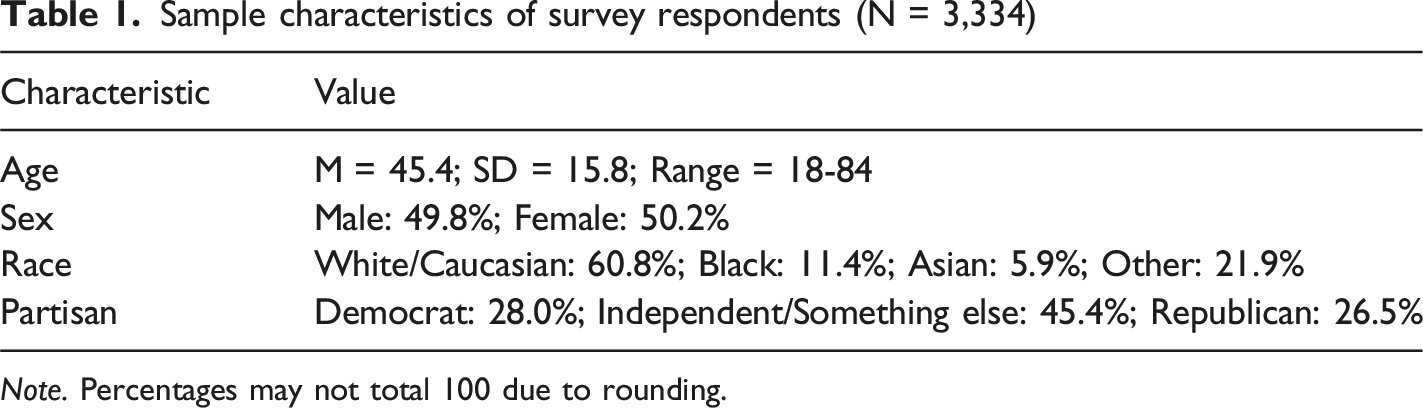
Note. Percentages may not total 100 due to rounding.
A total of 3,334 adult respondents completed the survey. This sample size was derived from a simulation-based power analysis, which appropriately treated respondents, not individual responses, as the unit of power. Because each respondent completed multiple tasks, we accounted for the nested data structure by modeling repeated responses within individuals.
We conducted Monte Carlo simulations to determine the minimum number of respondents required to detect a small effect size (log-odds = 0.20) in a mixed-effects logistic regression framework, with random intercepts for respondents. The simulations assumed three paired tasks per person, each involving two randomly generated pursuit profiles. The binary termination outcome simulations indicated that a minimum of 3,000 respondents was required to achieve 90% power at a 0.05 alpha level. A second power analysis for the Likert-scale risk ratings, modeled using linear mixed-effects regression, suggested that approximately 1,000 respondents were sufficient for 90% power. Given this, our final sample of 3,334 respondents provides ample power to detect small effects across both outcomes.
Attribute values for each pursuit scenario were drawn at random, ensuring full factorial independence across profiles (see the appendix for an example of how scenarios were presented to respondents). Each pursuit scenario represented a unique combination of eleven attributes, with attribute levels randomly varied across respondents and tasks. This design produced multiple experimental conditions that differed systematically along the same dimensions. For example, some vignettes depicted pursuits in higher-risk contexts (e.g., urban areas, heavy traffic, high speed), while others reflected lower-risk conditions or mixed combinations of the two. This randomized design allows for causal identification of the independent effect of each pursuit characteristic on both perceived risk and termination decisions. The conjoint framework thus mirrors the multifactorial reasoning embedded in modern pursuit policy and provides a robust test of whether public intuitions follow similar evaluative logics.
Attribute Design and Variable Description
The conjoint experiment was designed to reflect the multifactorial nature of modern police pursuit decision-making. Each pursuit scenario was composed by randomly assigning values to eleven contextual attributes, selected based on a review of existing pursuit policies, law enforcement training materials, and scholarly recommendations regarding risk assessment during vehicular chases (Alpert & Madden, 1994; International Association of Chiefs of Police, 2025; MacDonald & Alpert, 1998; Madden & Alpert, 1999; Police Executive Research Forum, 2023). The goal was to capture the key factors that influence both officer decisions in the field and public perceptions of pursuit legitimacy and danger.
Conjoint experiment design: pursuit scenario attributes and randomized levels
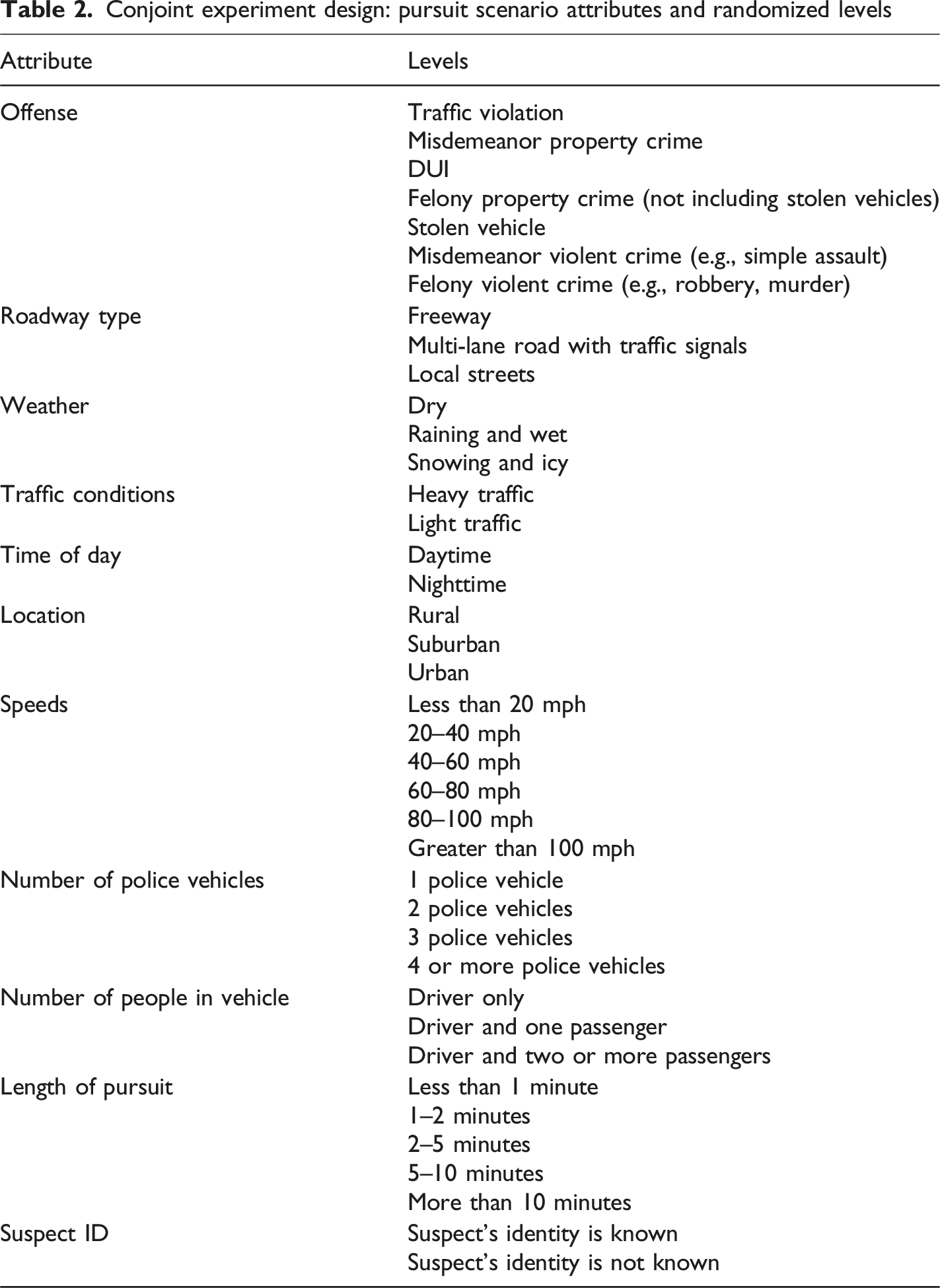
Attribute levels were fully randomized and independently assigned within each pursuit scenario, ensuring no forced combinations or profile constraints. This design allows for estimation of the Average Marginal Component Effects (AMCEs) for each attribute level across both outcome types (perceived risk and termination decision), as well as within the paired forced-choice format, providing a methodologically rigorous platform for assessing how the public weighs competing considerations of risk and apprehension.
Analysis and Estimation
Analyses were conducted at the vignette level, with responses clustered by respondent. Each respondent evaluated two side-by-side pursuit scenarios in three separate tasks. For each scenario, respondents provided a 1–7 perceived risk rating and a binary termination judgment. After rating each scenario individually, respondents completed the forced-choice task, indicating which of the two pursuits should be terminated if only one could be.
Three multilevel Bayesian models were estimated:
Perceived Risk Model
Modeled using a cumulative logit specification with fixed effects for all eleven pursuit attributes and a random intercept for each respondent:
Termination Decision Model
Modeled as a Bernoulli logit with the same fixed-effect structure and respondent-level intercept:
Forced-Choice Selection Model
Modeled as a conditional logit with fixed effects for all pursuit attributes, random intercepts for respondents, and random intercepts for respondent-by-task to account for the pairing structure:
Prior Specification and Computation
Weakly informative priors were used to regularize estimation without overwhelming the data:
Prior predictive checks confirmed that the priors generated plausible outcome distributions before fitting the models to the data. All models were estimated using Hamiltonian Monte Carlo via the
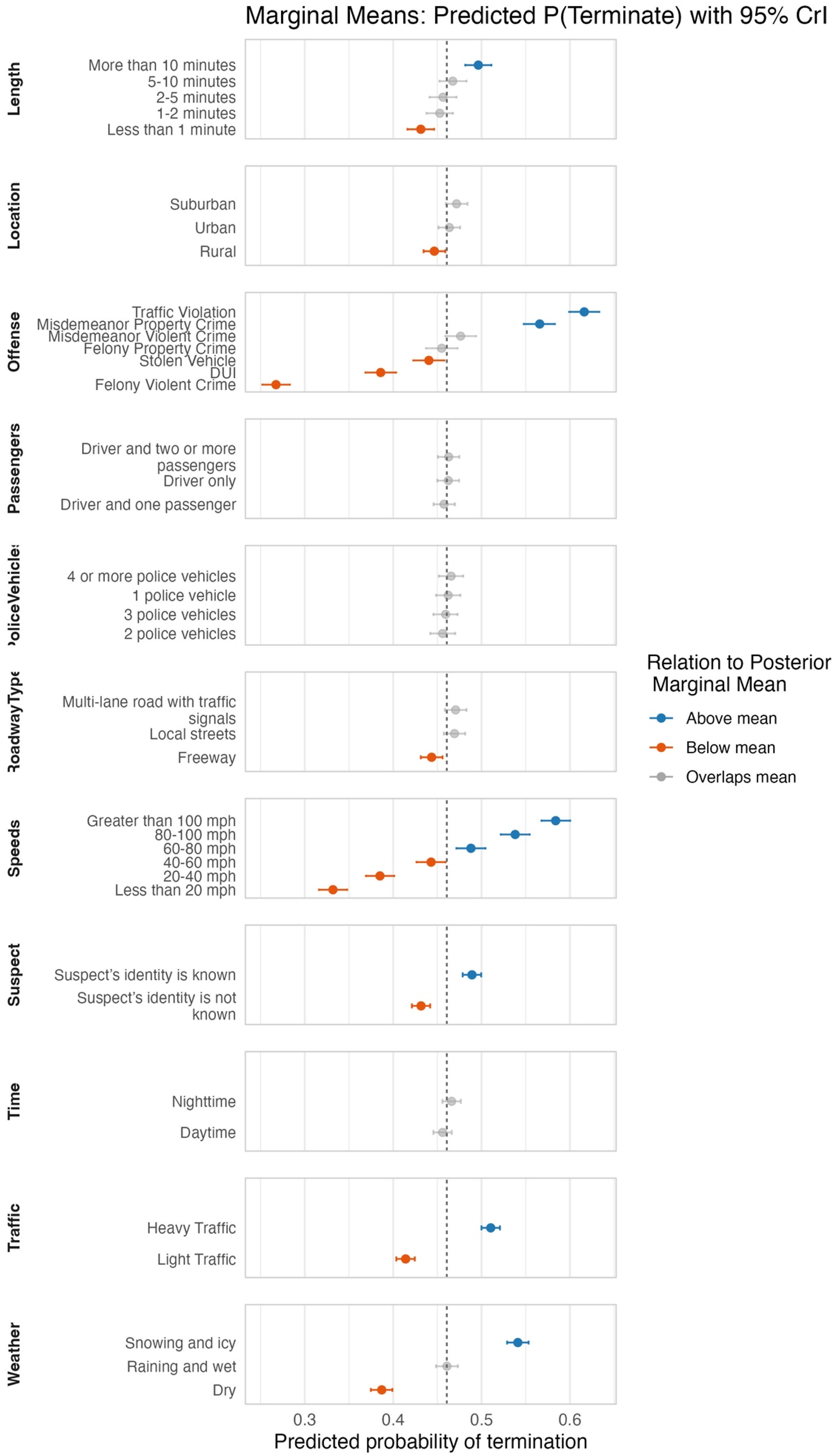
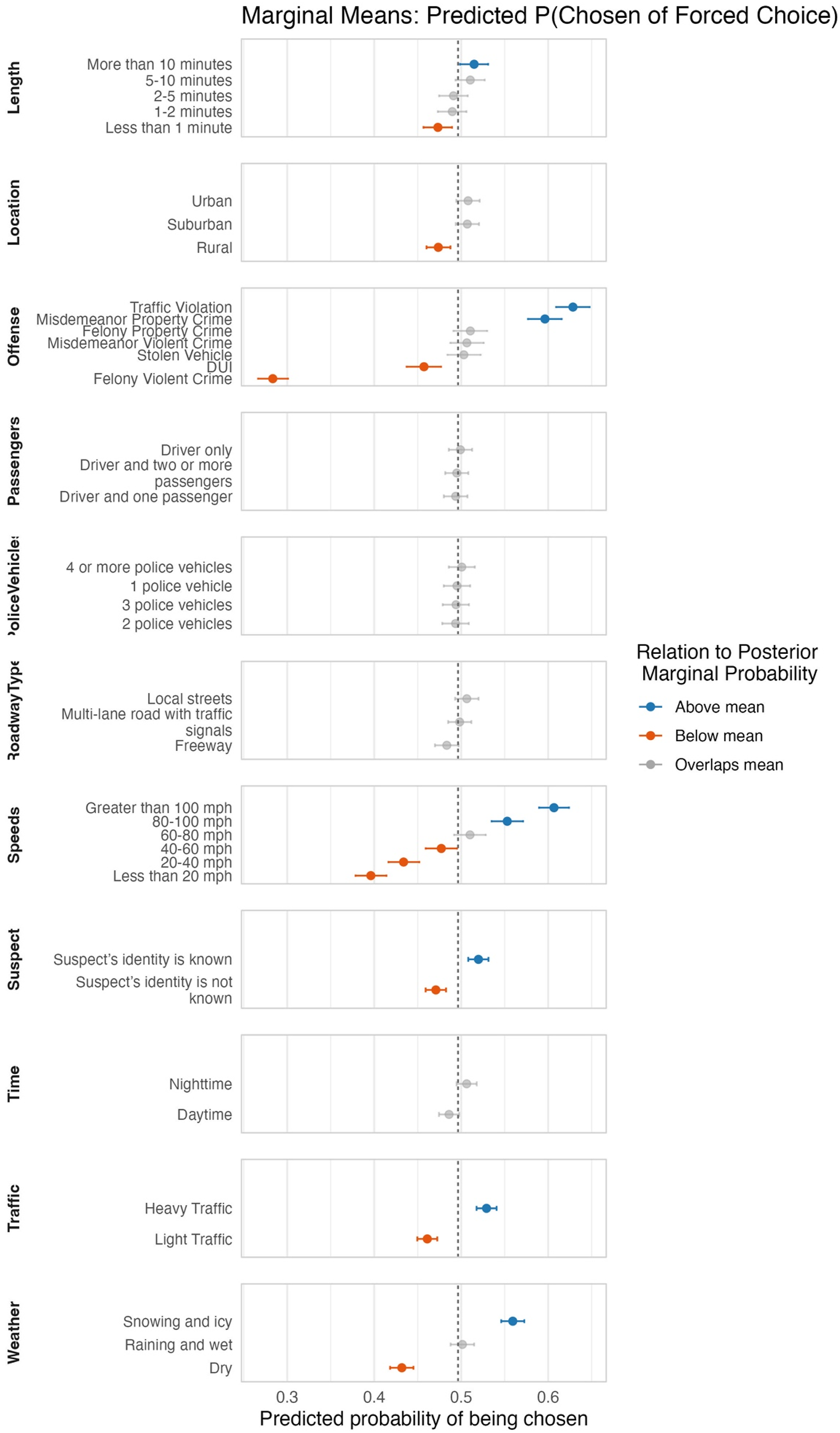
Because all attributes were independently randomized, the estimated Posterior marginal means for the 1–7 perceived risk scale estimated from the cumulative logit model. Points and 95% credible intervals represent Average Marginal Component Effects (AMCEs): the average difference in predicted risk rating when an attribute is set to a given level versus the design-wide mean, averaging over the randomized distribution of all other attributes. The vertical dashed line marks the design-wide grand mean across all levels and attributes. Colors indicate whether the 95% credible interval lies entirely above the grand mean (increased predicted risk), entirely below it (decreased predicted risk), or overlaps it (no clear difference) Posterior marginal probabilities of recommending pursuit termination estimated from the Bernoulli logit model. Points and 95% credible intervals are AMCEs on the probability scale after inverse-logit transformation, averaged over the randomized distribution of all other attributes. The vertical dashed line marks the design-wide grand mean termination probability. Colors indicate whether the 95% credible interval lies entirely above, entirely below, or overlaps the grand mean Posterior marginal probabilities of selecting a pursuit for termination in the forced-choice task, estimated from the conditional logit model. Points and 95% credible intervals are AMCEs on the probability of selection, averaged over all other attributes in the choice set. The vertical dashed line marks the design-wide grand mean choice probability. Colors indicate whether the 95% credible interval lies entirely above, entirely below, or overlaps the grand mean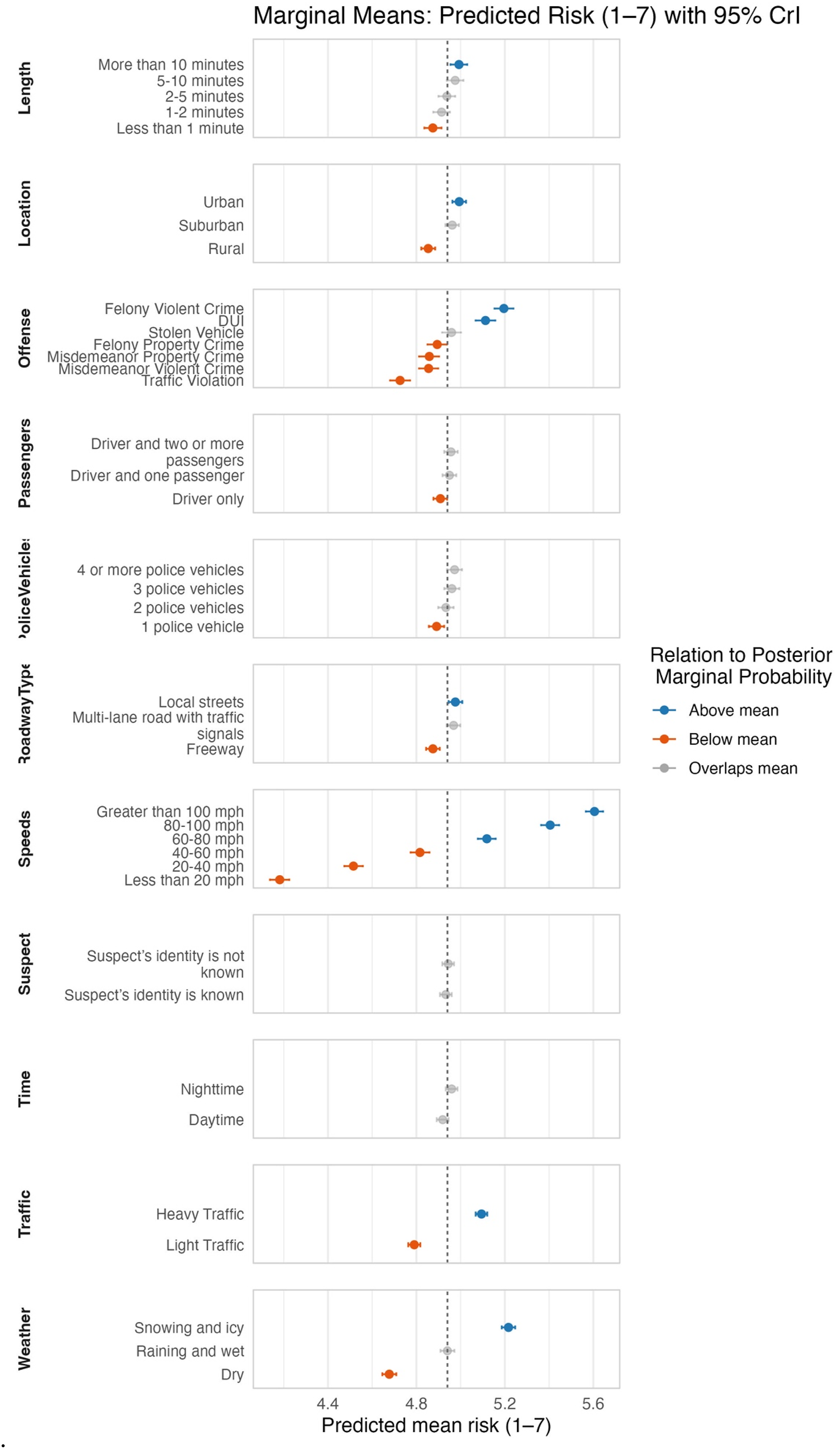
Results
We observe parallel patterns across risk ratings, binary termination decisions, and comparative choices, indicating a coherent underlying judgment process in which both contextual danger and offense severity shape public preferences for pursuit continuation or termination.
Perceived Risk
Figure 1 reports Average Marginal Component Effects (AMCEs) from the cumulative logit model, transformed back to the 1–7 scale. Each point represents the average predicted change in perceived risk when an attribute is set to a given level versus its baseline, averaging over the randomized distribution of all other attributes. The vertical dashed line marks the design-wide grand mean risk rating. Positions to the right or left of this line indicate higher or lower predicted risk relative to the average pursuit profile, holding other factors constant.
In this context, “above” and “below” indicate that the entire 95% credible interval for an attribute’s AMCE lies wholly above or below the design-wide grand mean. This reflects strong posterior evidence that the attribute level’s effect on perceived risk is greater or smaller, respectively, than that of the average pursuit profile. Intervals that overlap the grand mean indicate that the posterior distribution is consistent with both higher and lower effects, given the uncertainty.
Respondents rated scenarios with higher vehicle speeds, adverse weather, heavier traffic, and urban locations as materially riskier than the average pursuit profile, with point estimates exceeding the grand mean by substantively meaningful margins. For example, pursuits at greater than 100 mph were 0.83 scale points above the grand mean (posterior mean 5.61, 95% CrI: 5.57–5.64), whereas speeds under 20 mph were 0.60 points below it (posterior mean 4.18, 95% CrI: 4.14–4.22). Snowing and icy conditions were 0.44 points above the grand mean (posterior mean 5.22, 95% CrI: 5.19–5.25), while dry conditions were 0.10 points below (posterior mean 4.68, 95% CrI: 4.65–4.71). Offense severity had a smaller overall effect but still influenced perceived risk: violent felonies scored 0.42 points above the grand mean, while traffic violations were 0.05 points below it. When examining termination decisions through an “is it worth it” lens (outlined below), that ordering reverses. This pattern suggests respondents view a fleeing violent felon as riskier due to the suspect’s perceived dangerousness, rather than because the pursuit itself carries greater crash or injury risk.
Termination Decisions
Figure 2 presents AMCEs from the Bernoulli logit model, transformed to the probability scale via the inverse-logit. Each point reflects the average change in the probability of recommending termination when an attribute is set to a given level versus the baseline, holding the distribution of all other attributes constant. The dashed vertical line shows the design-wide grand mean termination probability. Credible intervals fully above or below this line represent robust differences from the average profile, conditional on the randomization.
High situational risk factors (greater speeds, adverse weather, heavy traffic, and very short pursuit lengths) shifted termination probabilities upward from the grand mean by 7–12 points. For example, pursuits at greater than 100 mph had a predicted termination probability of 0.584, 9.7 points above the grand mean, while speeds under 20 mph were 14.3 points below at 0.332. Snowing and icy conditions were 7.2 points above the mean at 0.541, compared to dry conditions, which were 6.5 points below at 0.387.
Offense seriousness exerted the expected moderating effect, with felony violent crimes 16.7 points below the grand mean at 0.267, and traffic violations 13.2 points above at 0.616, holding all other factors at their observed distribution in the design.
Forced-Choice Decisions
Figure 3 displays AMCEs from the conditional logit model, showing the average change in the probability of a profile being chosen for termination when directly paired against an alternative. Estimates are averaged over all other attributes in the choice set, and the vertical dashed line represents the design-wide grand mean choice probability. “Above” and “below” designations denote attribute levels whose 95% credible intervals lie wholly above or below this mean, representing consistent, posterior-supported differences in the likelihood of being selected for termination relative to the average pursuit profile.
High-risk situational factors produced positive shifts from the grand mean in the range of 6–11 points. Pursuits at greater than 100 mph were chosen for termination 60.7 % of the time (8.6 points above the grand mean), while speeds under 20 mph were selected 39.6% of the time (12.5 points below). Snowing and icy conditions were 6.9 points above the mean at 55.9 %, compared to dry conditions, which were 5.8 points below at 43.2%.
Offense severity again moderated preferences in the predicted direction. Felony violent crimes were 11.0 points below the grand mean at 0.283, while traffic violations were 13.4 points above at 0.628. 5
Discussion
The results provide consistent and statistically credible evidence that members of the public incorporate situational danger cues and offense seriousness into their pursuit termination judgments in a manner that aligns with the balance test that lies at the core of contemporary pursuit policies. Across three distinct outcome measures (perceived risk ratings, binary termination recommendations, and forced-choice selections between pursuit scenarios), high-risk contextual factors (e.g., traffic, speed, road conditions) reliably shifted judgments in the expected direction while law enforcement concerns (e.g., seriousness of offense and known offender) were also taken into consideration. Unlike in use of force scenarios (Mourtgos & Adams, 2020), public and professional judgments appear nearly entirely aligned with the generally accepted practices governing police pursuits.
The AMCE-based classifications of “above” and “below” relative to the design-wide grand mean show that many situational hazards exert effects that are not only statistically detectable but also substantively meaningful when averaged over the full factorial design. For example, high speeds, adverse weather, and heavy traffic all produced positive shifts in predicted risk and termination probabilities that lay entirely above the grand mean’s posterior credible interval. In policy terms, these shifts suggest that such hazards are interpreted by the public as sufficiently consequential to warrant heightened caution, even when offense seriousness might otherwise support continuation.
Offense severity was associated with the expected pattern, with violent felonies reducing the probability of recommending termination (in some cases shifting point estimates far below the grand mean’s credible range) and more minor offenses increasing it. This pattern reinforces prior work showing that the perceived social harm of the underlying offense operates as a counterweight to situational danger in lay judgments (MacDonald & Alpert, 1998), mirroring the balancing tests articulated in professional guidance such as the IACP model policy (2025).
The forced-choice results are particularly important for understanding preference structures under explicit tradeoff conditions. Unlike the independent termination judgments, the paired-comparison task forces respondents to weigh relative risks and offense severities directly against one another. That the same attribute patterns emerged, with high situational risk increasing selection for termination and violent felonies reducing it, underscores the stability of these preferences across decision frames. In conjoint terms, the convergence across outcomes suggests that the marginal component effects are robust to changes in task structure, lending credibility to their interpretation as general features of public judgment rather than artifacts of a single measurement format.
These findings have three broad implications. First, they suggest that public views are aligned with the principle that pursuits should be discontinued when risks to the public outweigh the benefits of immediate apprehension, a core feature of modern pursuit policies. The old ethos of “chase until the wheels fall off” is clearly not supported by public opinion. Second, they indicate that the public is sensitive to multiple interacting factors, not only offense seriousness but also contextual hazards, in a way that supports the logic of weighted or conditional pursuit guidelines. Third, the AMCE patterns imply that even in a policy environment emphasizing de-escalation and public safety, there remains tolerance for risk when the offense is perceived as especially serious, which may create tension between public preferences and risk-averse administrative mandates.
Although the general direction of public preferences may echo early findings, this study advances the field methodologically and substantively by re-establishing empirical baselines with causal precision in a modern context. It provides the first evidence that public reasoning about pursuits aligns with the proportionality framework embedded in current pursuit policies, helping bridge the gap between community expectations and professional standards.
Future work should build on these findings by examining how these preferences vary across respondent subgroups, including demographic characteristics, prior law enforcement experience, and political orientation, and by exploring whether exposure to pursuit-related incidents or media coverage shifts the weight placed on risk versus offense seriousness. In addition, experimental manipulations that vary the interaction structure of risk and offense could test whether the observed moderation effect is additive or multiplicative in public judgment processes.
In sum, the ACME results demonstrate that public evaluations of pursuit scenarios exhibit a coherent, policy-consistent structure, shaped by both situational danger cues and offense severity, and that these effects are robust across multiple measurement frames. Such stability suggests that conjoint-based public opinion measures can meaningfully inform the development and communication of pursuit policies, particularly when policymakers seek to align operational guidelines with community values. More broadly, the findings underscore the value of integrating empirical measures of public risk tolerance into pursuit policy reform. Agencies revising or evaluating pursuit policies can use this evidence to anticipate community reactions, strengthen legitimacy through transparent risk communication, and ensure that pursuit guidelines reflect both safety priorities and public expectations. By grounding pursuit policy in data that captures how the public itself weighs danger and necessity, law enforcement agencies can better align operational discretion with democratic accountability.
Limitations
As with all survey-based experiments, several limitations should be noted. Although the data were collected from a nationally representative sample using a verified online platform, online participation may differ from in-person decision-making contexts. In addition, while conjoint experiments are well suited for isolating the independent effects of multiple factors, they necessarily simplify real-world decision environments. These limitations are common in experimental survey research and should be considered when generalizing results beyond the survey setting. Nonetheless, the randomized design and representative sampling frame provide strong internal validity for the causal estimates reported here.
Further, prior research comparing online survey panels and experimental samples finds that treatment effects obtained from nonprobability platforms are generally consistent with those derived from probability-based samples (Coppock, 2019; Metcalfe & Wilson, 2025). These studies suggest that treatment effect heterogeneity across online and national samples is limited, providing additional confidence in the generalizability of the present findings. Moreover, conjoint methods are widely validated across the social sciences for approximating real-world tradeoffs in decision-making, and our experimental design closely mirrored the multifactorial structure of actual pursuit evaluations. Taken together, these features support both the internal validity and the broader interpretability of our results despite the inherent limitations of online experimental research.
Conclusion
This study shows that the public’s pursuit termination preferences follow the same proportional risk–benefit logic embedded in modern, generally accepted pursuit policy and practices. Using a fully randomized conjoint design, we find that the public perceives greater danger and is more likely to recommend termination of a pursuit when high-risk situational factors are present, but less likely to recommend termination when the underlying offense involves a violent felony. These effects are stable across independent ratings, binary decisions, and forced-choice tradeoffs, indicating a robust underlying judgment structure. For policymakers, the alignment between public preferences and current policy principles suggests that restrictive, risk-sensitive pursuit guidelines can be defended not only on safety grounds but also as consistent with community values. However, the persistence of tolerance for higher risk in violent felony cases suggests that prohibitive policies may be unlikely to receive public support.
Footnotes

Funding
The authors received no financial support for the research, authorship, and/or publication of this article.
Declaration of Conflicting Interests
Dr. Mourtgos, Dr. Adams, and Dr. Alpert disclose receiving fees and/or reimbursements as expert witnesses in civil and criminal litigation related to police practices, including pursuits, and have been retained by attorneys representing agencies and officers as well as plaintiffs and prosecutors.