




Abstract
Background:
Despite increased awareness of the adverse impact of bullying on mental health, the prevalence of bullying in Australia is uncertain. The aim of the current study was to conduct a systematic review and meta-analysis to estimate the prevalence of bullying (traditional and cyber) among Australian children and adolescents. This study synthesised bullying prevalence studies on victimisation experiences (being bullied) and perpetration experiences (bullying others).
Method:
A systematic review of electronic databases (A+ Education, EMBASE, ERIC, PubMed, PsycINFO and Scopus up to 27 May 2017) was conducted. In addition, reference lists of included studies, theses recorded at the National Library of Australia, and government websites were surveyed to identify local area data as well as state and nationally representative data. Overall, 898 studies were screened and out of the 126 studies assessed for eligibility, 46 satisfied the pre-determined inclusion criteria. Meta-analyses based on quality-effects models generated pooled prevalence estimates for each of the two types of bullying involvement (victimisation and perpetration), as well as distinct models for traditional bullying and cyberbullying experiences by the type of involvement.
Results:
Overall, the 12-month prevalence of bullying victimisation was 15.17% (95% confidence interval = [9.17, 22.30]) and perpetration was 5.27% (95% confidence interval = [3.13, 7.92]). The lifetime prevalence for traditional bullying victimisation was 25.13% (95% confidence interval = [18.73, 32.11]) and perpetration was 11.61% (95% confidence interval = [7.41, 16.57]). Cyberbullying victimisation and perpetration were less common with lifetime prevalence of 7.02% (95% confidence interval = [2.41, 13.54]) and 3.45% (95% confidence interval = [1.13, 6.84]), respectively.
Conclusion:
Bullying is common among children and adolescents in Australia. There is a need to improve the measurement of bullying using a standardised instrument and for prevalence estimates to be collected on a regular basis to assess change over time. Wide implementation of anti-bullying programmes in Australian schools is a viable public health approach for the prevention of mental health problems.
There is widespread recognition that bullying among children and adolescents is a serious public health problem (Bradshaw et al., 2017; Waasdorp et al., 2017), known to have a long-term negative impact on mental and physical health (Copeland et al., 2013; Moore et al., 2017). Studies estimating the prevalence of bullying behaviour are central to research efforts to monitor bullying trends and assess change over time. Self-report is the most widely adopted method for measuring the prevalence of bullying experiences (Thomas et al., 2015). Involvement in bullying behaviour is commonly described in terms of experiences of victimisation (being bullied) and perpetration (bullying others). Some studies further extend the concept of bullying involvement to classify individuals according to a three-part typology: victimisation only, perpetration only and victim-perpetration which includes both being bullied and bullying others at a single time point (Haynie et al., 2001; Thomas et al., 2018). Of particular interest is also the extent to which children and adolescents engage in bullying behaviour across different settings, for example, face-to-face and online.
Bullying behaviour among children and adolescents is commonly defined as the repeated exposure to negative actions from one or more peers that are intended to harm and involves a power imbalance in favour of the perpetrator (Gladden et al., 2014; Olweus, 1993, 2013). This definition was originally intended to characterise what is now termed ‘traditional’ bullying and is used to describe a range of generally face-to-face behaviours that may be physical, verbal or relational in nature. In more recent years, the defining characteristics of traditional bullying have been extended to incorporate bullying behaviour that occurs online. Cyberbullying is defined as an aggressive act involving the use of information and communication technologies to support deliberate, repeated and hostile behaviour by an individual or group which is intended to harm others (Menesini et al., 2012). Over time, studies have begun to incorporate the measurement of both traditional and cyber forms of bullying. The research now demonstrates a significant overlap between traditional and cyberbullying experiences (Modecki et al., 2014; Thomas et al., 2017; Thomas et al., 2019).
Australian studies examining the prevalence of bullying have reported estimates of victimisation experiences ranging between 5% and 65% (Ahmed and Braithwaite, 2004; Cross et al., 2009, 2015; Ford et al., 2017; Mamun et al., 2013; Shin et al., 2016; Spears et al., 2015; Thomas et al., 2017). This wide variation between studies is often explained by differences in the conceptual definition of bullying, the measurement approach and the sampling methodology. While there is now consensus over the definition of bullying, historically this has varied across Australian studies. There is also no standardised measurement approach to estimating prevalence based on self-report methods (Griffin and Gross, 2004; Thomas et al., 2015). For example, studies differ in terms of the reference period used (e.g. past 12 months, past school term), as well as the survey response options, and the frequency cut-off used to classify cases of bullying.
These sources of variation, as well as other methodological factors such as the mode of data collection and the type of sample assessed, lead to differences in the reported prevalence. Unlike other countries (Due and Holstein, 2008; Inchley et al., 2016), there is no recurring national study that reports bullying prevalence in Australia. There is also limited research that can be considered representative of the general population (Thomas et al., 2017). Few have conducted nation-wide or state-wide studies using representative samples of the population to determine prevalence and few have explored both traditional and cyberbullying.
This paper aims to conduct a systematic review and meta-analysis to summarise the present state of empirical research and establish a contemporary prevalence estimate of self-reported experiences of bullying among Australian children and adolescents. We applied the most commonly used definition of bullying (Olweus, 1993, 2013) and included both traditional and cyber forms of bullying across two types of involvement in bullying: victimisation and perpetration.
Methods
This study followed the PRISMA statement (Moher et al., 2010) for processing and reporting systematic reviews and meta-analyses (Supplementary Appendix 1). A review protocol was developed with search methods and inclusion criteria specified in advance (Supplementary Appendix 2).
Inclusion and exclusion criteria
This systematic review and meta-analysis included studies meeting the following inclusion criteria: (1) reported original, empirical research published in a peer reviewed journal; (2) presented prevalence information on the proportion of the population experiencing bullying victimisation, perpetration or victim-perpetration; (3) bullying experiences were defined and measured as either traditional bullying only, cyberbullying only, or combined traditional and cyberbullying and (4) the study was conducted in Australia.
Studies that describe the interpersonal behaviour as peer aggression were excluded from this study as it is defined as a continuum of aggressive behaviours intended to inflict injury or discomfort upon another person of which bullying is only one example. Peer aggression does not need to have been repeated or involve an asymmetric power relationship (Berkowitz, 1993; Olweus, 1972). Scholarly reviews, letters to the editors, comments, news and conference abstracts were excluded. In the few instances where the same data were reported across different publications, the most informative article was selected: for example, studies reporting sex- or age-specific prevalence estimates were selected over those providing combined estimates.
Search strategy
Six electronic databases (A+ Education, EMBASE, ERIC, PubMed, PsycINFO and Scopus electronic databases up to 27 May 2017) were searched to identify the prevalence of bullying experiences among children and adolescents in Australia. The following search terms were used: (bullying* or cyberbullying*) AND (child* or adolescen* or teen* or youth or young people or school student* or kid*) AND Australia. The search was not restricted by language or any other means. The reference lists of included studies were assessed for other relevant studies. In addition, government websites and theses held by the National Library of Australia were surveyed.
Data extraction and quality assessment
After preliminary screening of the title and abstract, articles deemed relevant were retrieved for examination. Data extraction sheets were pilot tested and revised to include data source, study and data characteristics (study design, period of data collection, location, sample size, number of cases and age group), measurement method, case definition, types of experience and prevalence of bullying (Supplementary Appendix 3).
The quality of each study was assessed using a tool for assessing risk of bias in prevalence studies (Hoy et al., 2012). This was adapted for this study to better account for the heterogeneity in bullying measurement across studies. The quality assessment for each study is presented in Supplementary Appendix 3. The total quality score for each study was the sum of the scores for individual assessment items. This was converted to a proportional quality score for use in Meta-XL version 5.3 (the total quality score divided by 10, which was the maximum score possible).
In Item 6 of the quality assessment, we conducted a three-part assessment of the bullying measure for each study: (1) Was a definition presented prior to question? (2) Was bullying measured/operationalised according to frequency (as opposed to a yes/no response)? (3) Was prevalence estimated using a threshold that meets the criteria of repetition (threshold greater than ‘once or twice’)? These three questions were assessed as either ‘yes’ or ‘no’, where ‘yes’ corresponded to the optimal measurement method. If a study received a score of 3/3, the weighting for Item 6 was coded 1. If a study received a lesser score of 2/3 or 0–1/3, Item 6 was coded 0.5 and 0, respectively.
Statistical analysis
This study followed an established meta-analytic method for pooling prevalence data using Meta-XL version 5.3, a plugin software package for Microsoft Excel (Barendregt et al., 2013). All meta-analyses in this study were based on quality-effects models (Doi and Thalib, 2008). A quality-effects model is a modified version of the fixed-effects inverse variance method that allows giving greater weight to studies of high quality and lower weight to studies of lesser quality (Norman et al., 2012). Quality scores calculated for each study were used to weigh studies not only according to sample size but also by study quality (Doi et al., 2011; Doi and Thalib, 2008). Heterogeneity was assessed using the Cochran’s Q and I2 statistics. We pooled the prevalence for all included studies, as well as those studies that reported prevalence based on nationally representative samples.
There was large variation in the measurement and reporting methodology of prevalence information across studies. Some studies measured victimisation experiences, whereas others measured both victimisation and perpetration experiences. Among those that measured both victimisation and perpetration experiences, some studies reported the prevalence based on two groups, whereas others grouped individuals according to three types of involvement: victimisation only, perpetration only and combined victim-perpetration. In order to account for different measurement methods, we calculated prevalence and pooled studies for two exposure groups (1) any bullying victimisation exposure, including victim-perpetration experiences, and (2) any bullying perpetration exposure, also including victim-perpetration experiences. This method allowed us to include the most number of studies in the various meta-analyses. However, we also conducted alternative pooled prevalence estimates based on studies that reported three exposure groups: victimisation only, perpetration only and combined victim-perpetration. In addition to distinctions in reported victimisation and perpetration groupings, studies also differed in the way they reported traditional and cyberbullying behaviour. Some studies reported traditional bullying only, some reported traditional and cyberbullying prevalence estimates separately and others reported traditional bullying and cyberbullying as a single prevalence estimate. All primary analyses reporting the prevalence of bullying victimisation and bullying perpetration experiences included all prevalence estimates, irrespective of whether an estimate referred to traditional and/or cyber forms of bullying.
In a set of secondary analyses, we explored the effects of important demographic and study characteristics on pooled prevalence estimates, where data were available. We conducted several additional pre-specified subgroup analyses by recall-period, gender and year of data collection. In order to further analyse recall-period, we divided studies into four subgroups: (1) in the last year covering 4–12 month period, (2) in the last 3 months covering 2–3 month period, (3) in the last month covering last week to last month and (4) over lifetime or a timeframe was not-specified. Some studies did not report recall-period and mostly used a single global question. Therefore, we categorised the study as ‘not-specified’ and it was assumed to be an estimate of lifetime prevalence. In order to further analyse year of data collection, we classified studies according to two groups: data collection 1990–2005 and 2006–2015. This was to align with when research on cyberbullying began in 2006. The sub-group analyses on year of data collection included only studies that reported estimates of traditional bullying experiences.
Results
A total of 898 articles were identified by the electronic database search, of which 240 were duplicates. Titles and abstracts for 658 unduplicated references were reviewed and a further 542 articles were excluded. In addition, 10 records were identified from additional sources. Of the 126 studies assessed for eligibility, 46 satisfied the pre-determined inclusion criteria (Figure 1). Some studies measured both traditional and cyberbullying (n = 16) while the majority of studies reported prevalence of traditional bullying only (n = 26) and four studies reported prevalence of cyberbullying only. Study characteristics for all included studies are summarised in Supplementary Appendix 3. The methodology for the quality assessment presented in Supplementary Appendix 3 describes the quality assessment procedure and scoring results for each study. Scores ranged from 4.5 to 10. Three out of five studies reporting prevalence based on nationally representative samples achieved scores of 10 (Cross et al., 2011; Shin et al., 2016; Thomas et al., 2017). Four studies achieved scores between 8 and 9 (two based on nationally representative samples). The remaining studies scored between 4.5 and 7.5 (N = 39). Table 1 provides an overview of descriptive information for the 46 included studies. The majority of included studies were conducted in South Australia, New South Wales and Western Australia. Studies on cyberbullying were only available from 2006 onwards.
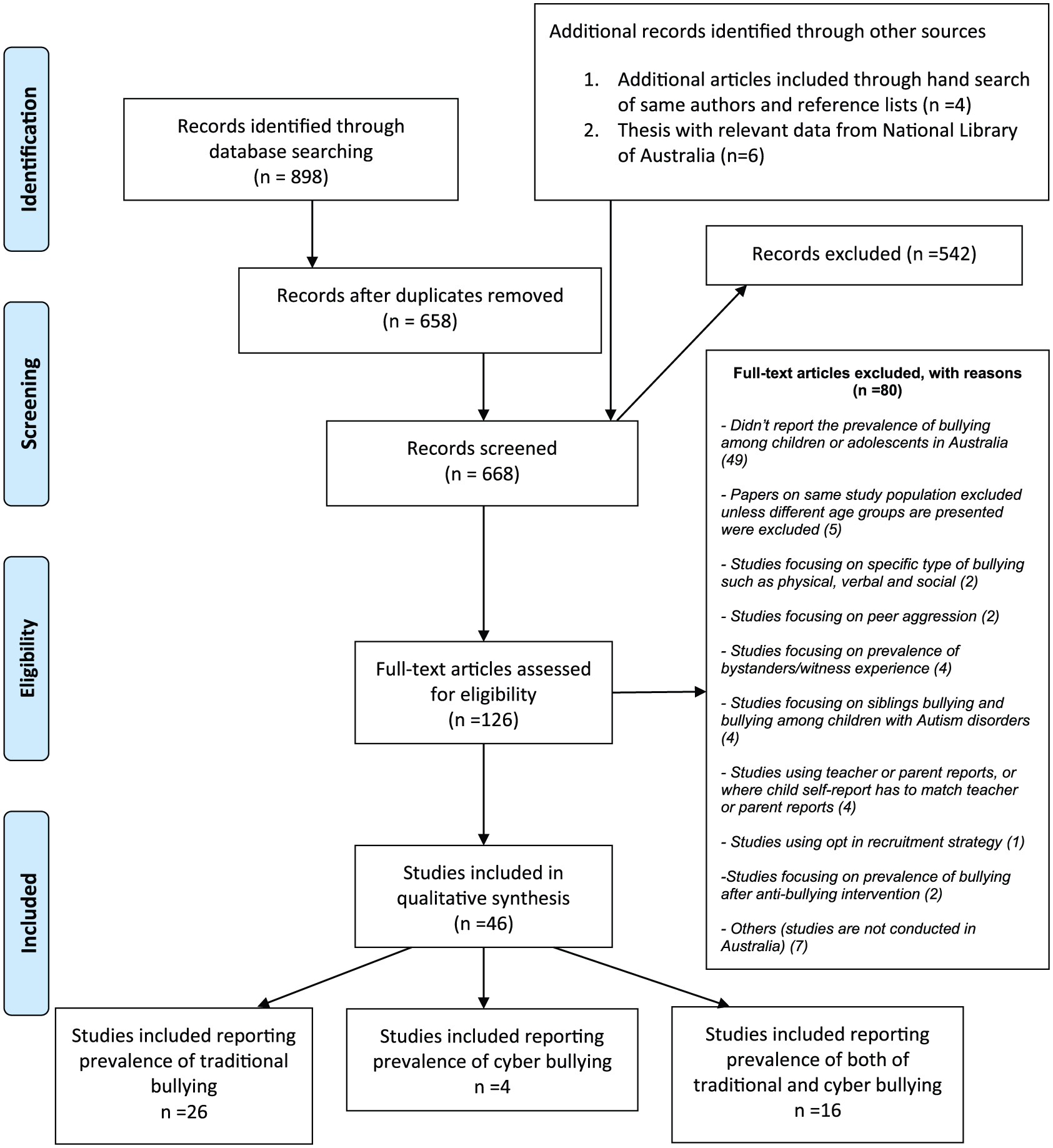
PRISMA flow diagram showing process of study selection for inclusion in systematic review.
Descriptive information of studies included in the meta-analysis.
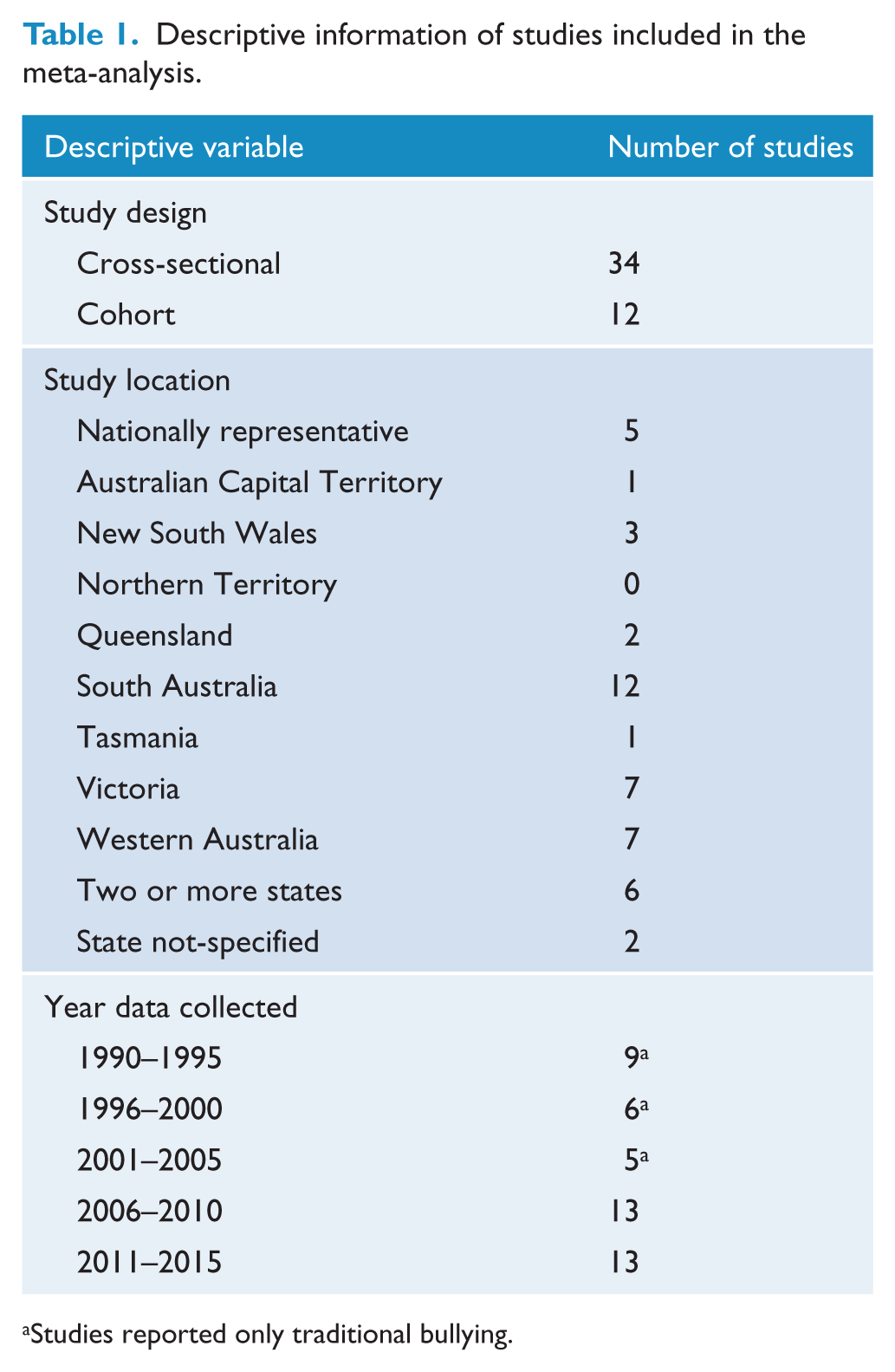
Studies reported only traditional bullying.
Primary analyses
The results of the primary analyses are presented in Table 2. The most common self-reported experience of bullying was victimisation which was estimated at 15.09% (95% confidence interval [CI] = [11.11, 19.56]) while perpetration was estimated at 7.15% (95% CI = [4.69, 10.07]). Pooled prevalence estimates based on nationally representative samples were marginally lower (Table 2). Of the 46 included studies, 14 studies reported prevalence for three exposure groups. Based on a three exposure groups model, the pooled prevalence of bullying victimisation exposure was estimated at 14.85% (95% CI = [10.23, 20.15]) which is similar to prevalence based on the two exposure groups model. The complete results of the three exposure groups model are presented in Supplementary Appendix 4.
Pooled prevalence estimates based on all studies and national representative studies by the type of bullying involvement.
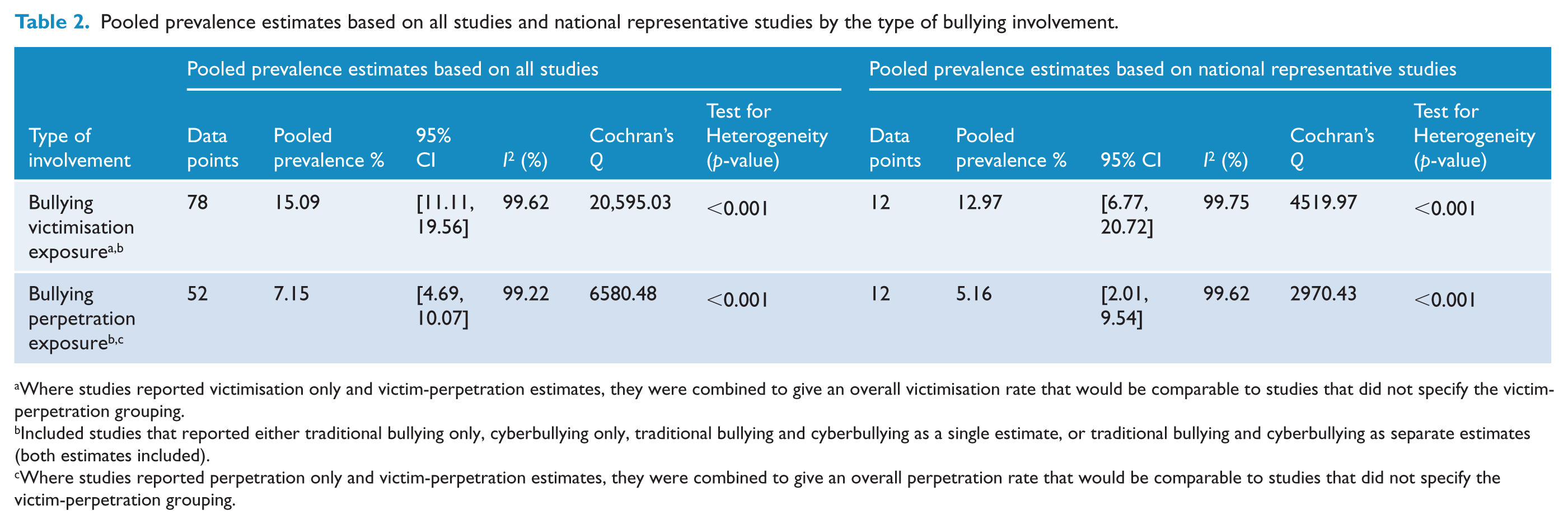
Where studies reported victimisation only and victim-perpetration estimates, they were combined to give an overall victimisation rate that would be comparable to studies that did not specify the victim-perpetration grouping.
Included studies that reported either traditional bullying only, cyberbullying only, traditional bullying and cyberbullying as a single estimate, or traditional bullying and cyberbullying as separate estimates (both estimates included).
Where studies reported perpetration only and victim-perpetration estimates, they were combined to give an overall perpetration rate that would be comparable to studies that did not specify the victim-perpetration grouping.
The pooled prevalence estimates for traditional bullying and cyberbullying based on a two exposure groups model are reported in Table 3. Cyberbullying was less prevalent than traditional bullying for both victimisation and perpetration. The prevalence of cyberbullying was estimated to be 7.02% (95% CI = [2.41, 13.54]) for victimisation and 3.45% (95% CI = [1.13, 6.84]) for perpetration. The test for heterogeneity was highly significant, with p < 0.001 for all forms of involvement in traditional and cyberbullying. Forest plots to visualise individual analyses as well as pooled estimates are presented in Supplementary Appendix 5 (Figures S2–S25).
Pooled bullying prevalence estimates for traditional bullying and cyberbullying by the type of bullying involvement.
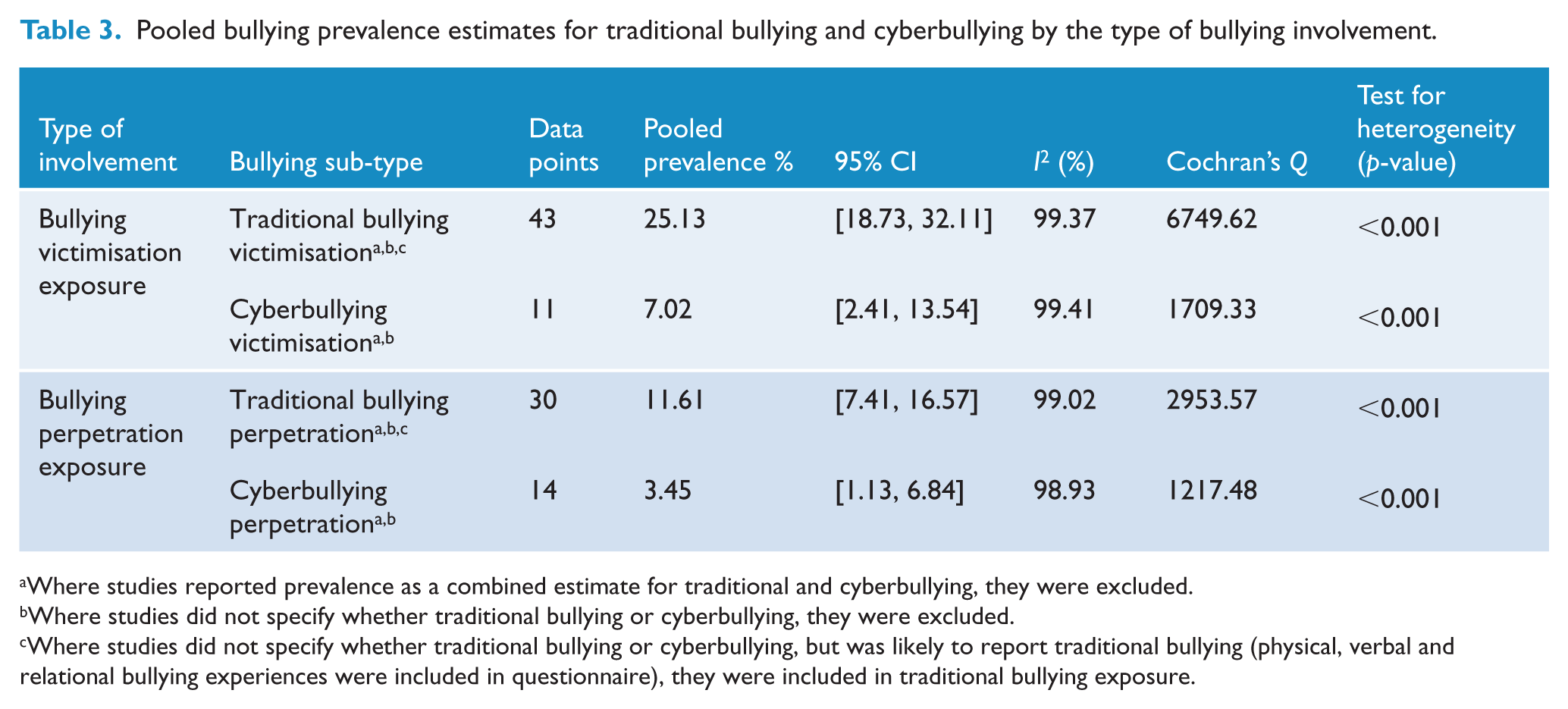
Where studies reported prevalence as a combined estimate for traditional and cyberbullying, they were excluded.
Where studies did not specify whether traditional bullying or cyberbullying, they were excluded.
Where studies did not specify whether traditional bullying or cyberbullying, but was likely to report traditional bullying (physical, verbal and relational bullying experiences were included in questionnaire), they were included in traditional bullying exposure.
Secondary analyses/subgroup analyses
The results of secondary analyses based on recall-period and gender are presented in Tables 4 and 5. Table 4 shows the pooled prevalence of the two exposure groups for recall-period. The majority of studies used last year and last 3 months as the recall-period. The lifetime prevalence of bullying experience was estimated to be higher than measured prevalence over a specified time period. Pooled prevalence of bullying victimisation exposure varies between 18.90% for lifetime period (95% CI = [10.50, 28.98]) and 12.05% for the last month (95% CI = [4.39, 22.48]). For the perpetration exposure, it was estimated to be 7.11% (95% CI = [4.99, 9.57]) and 5.38% (95% CI = [0.86, 12.71]), for lifetime and last month, respectively.
Pooled bullying prevalence estimates for the type of bullying involvement by recall-period.
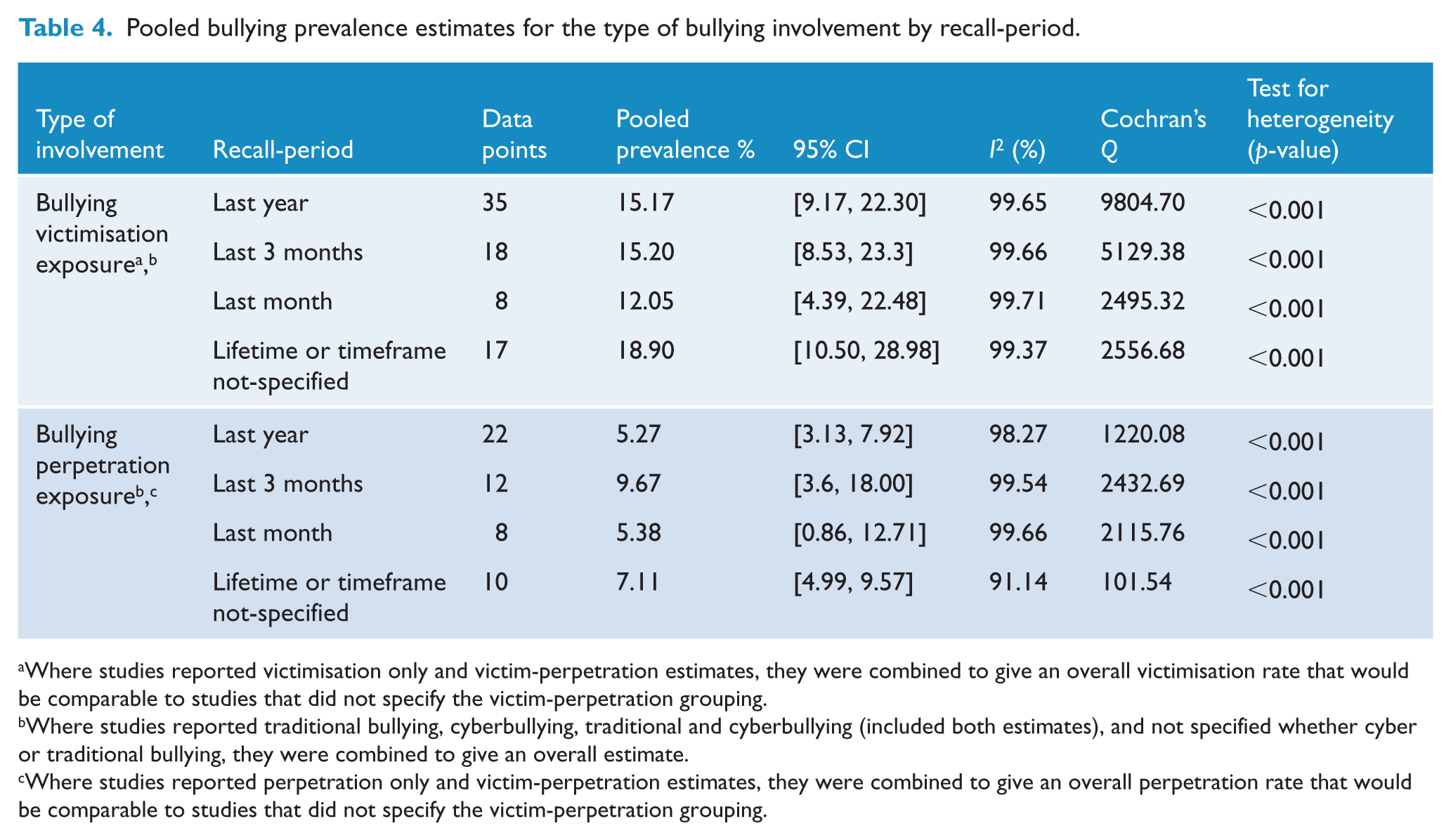
Where studies reported victimisation only and victim-perpetration estimates, they were combined to give an overall victimisation rate that would be comparable to studies that did not specify the victim-perpetration grouping.
Where studies reported traditional bullying, cyberbullying, traditional and cyberbullying (included both estimates), and not specified whether cyber or traditional bullying, they were combined to give an overall estimate.
Where studies reported perpetration only and victim-perpetration estimates, they were combined to give an overall perpetration rate that would be comparable to studies that did not specify the victim-perpetration grouping.
Pooled bullying prevalence estimates for traditional bullying and cyberbullying by the type of bullying involvement and gender.
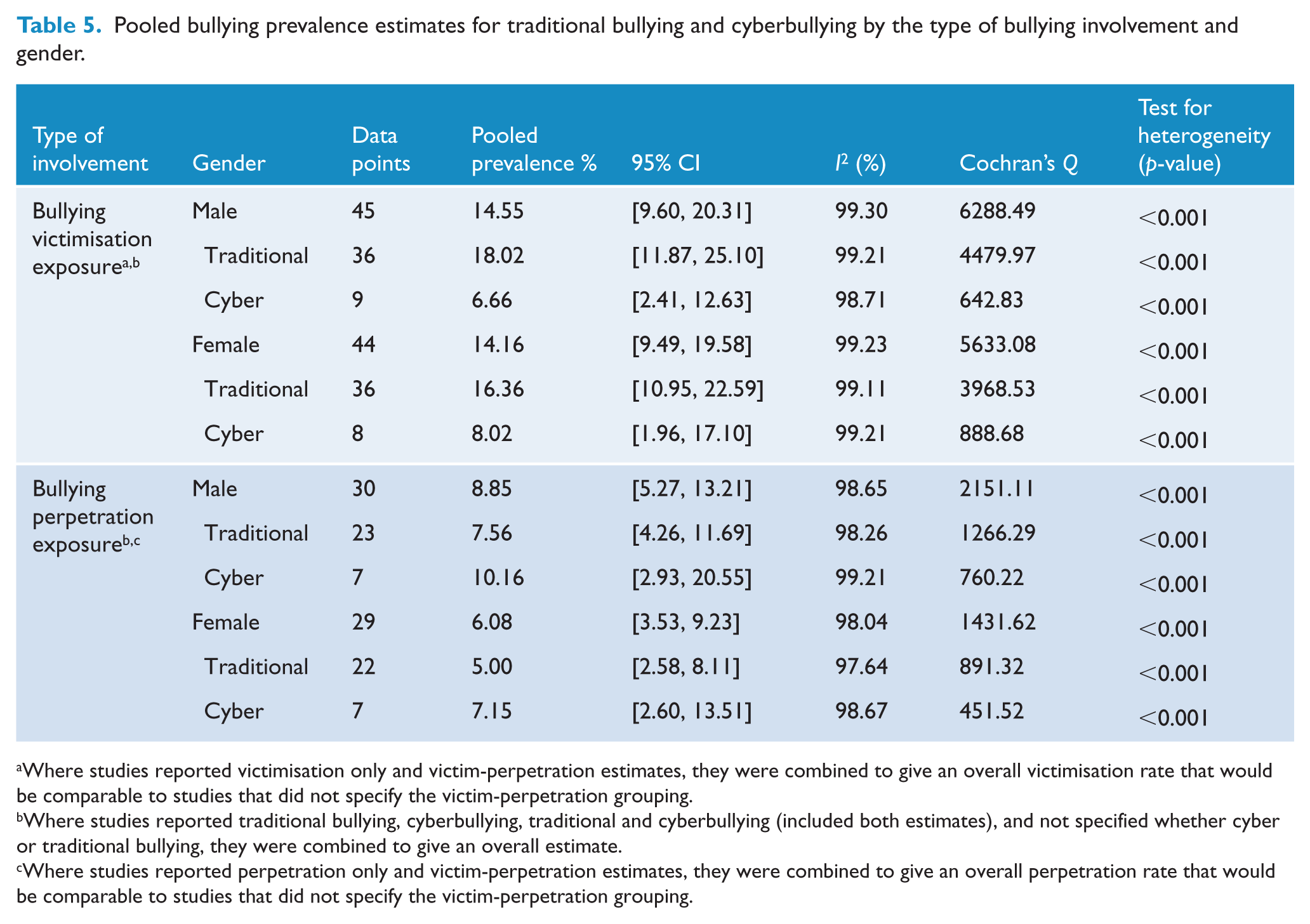
Where studies reported victimisation only and victim-perpetration estimates, they were combined to give an overall victimisation rate that would be comparable to studies that did not specify the victim-perpetration grouping.
Where studies reported traditional bullying, cyberbullying, traditional and cyberbullying (included both estimates), and not specified whether cyber or traditional bullying, they were combined to give an overall estimate.
Where studies reported perpetration only and victim-perpetration estimates, they were combined to give an overall perpetration rate that would be comparable to studies that did not specify the victim-perpetration grouping.
Table 5 presents the pooled prevalence for both types of involvement in bullying for males and females separately. The pooled self-reported prevalence of bullying victimisation and perpetration was estimated to be similar among males and females. The pooled prevalence point estimate of bullying perpetration was estimated to be higher among males (8.85%; 95% CI = [5.27, 13.21]) than females (6.08%; 95% CI = [3.53, 9.23]) but the overlapping CIs suggest this difference is not significant.
Another subgroup analysis was conducted for year of data collection (Table 6). All studies conducted between 1990 and 2005 reported traditional bullying experiences, thus this subgroup analysis was conducted for only traditional bullying experiences. The self-reported prevalence of traditional bullying experience was numerically lower ‘before 2005’ than ‘2006 onwards’ but the overlapping CIs suggests the differences are not significant.
Pooled bullying prevalence estimates for traditional bullying by data collection year.
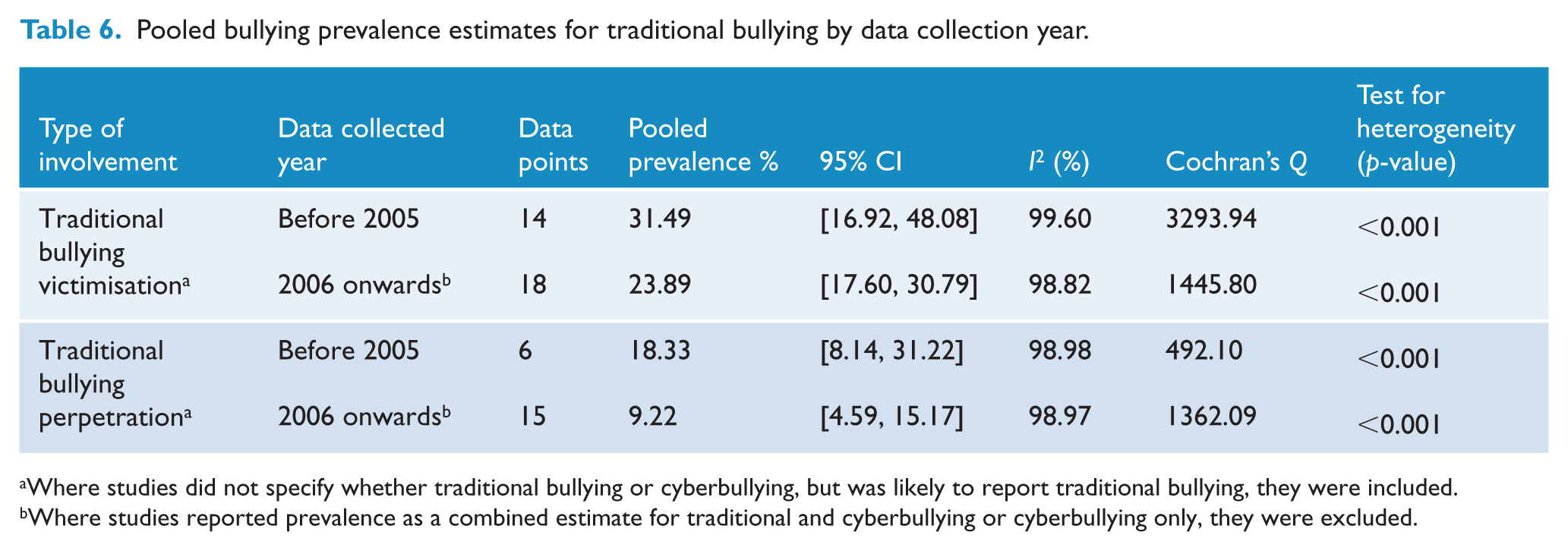
Where studies did not specify whether traditional bullying or cyberbullying, but was likely to report traditional bullying, they were included.
Where studies reported prevalence as a combined estimate for traditional and cyberbullying or cyberbullying only, they were excluded.
Discussion
This is the first systematic review and meta-analysis of Australian studies reporting the prevalence of self-reported bullying victimisation exposure and bullying perpetration exposure among children and adolescents. Using meta-analytical methods based on quality-effects models, this study pooled the prevalence of traditional and cyberbullying from 46 studies for both victimisation and perpetration experiences. When only the nationally representative studies were analysed, the pooled prevalence estimate for both victimisation and perpetration experiences decreased slightly but this difference was not significant. It is important to account for recall-period in order to estimate point prevalence. Informed by the most number of data points, the 12 month prevalence of self-reported bullying victimisation experience among Australian children and adolescents was estimated to be 15.17% for victimisation and 5.27% for perpetration based on both nationally representative and non-representative studies.
Previously, Modecki et al. (2014) found that cyberbullying was less prevalent than traditional bullying for both victimisation and perpetration. In an Australian study, Thomas et al. (2017) reported that of the adolescents who reported being bullied, 71.4% experienced traditional forms of bullying only, 27.4% experienced both traditional and cyber forms of bullying and 1.1% experienced cyberbullying only. Other researchers also report that the majority of cyberbullied children and adolescents also experienced traditional bullying (Przybylski and Bowes, 2017; Wolke et al., 2017). The current study found that for both victimisation and perpetration, cyber forms of bullying were less prevalent than traditional bullying, which is consistent with findings from cross-national (Modecki et al., 2014) and nationally representative studies (Thomas et al., 2017). Although pure cyberbullying was estimated to be much less prevalent than traditional bullying, another important issue is that cyberbullying overlaps with traditional bullying.
Children and adolescents can be involved in three exposure groups: bullying as victims, perpetrators and victim-perpetrators (Haynie et al., 2001; Thomas et al., 2018). In addition to estimating the two exposure groups, we also estimated the prevalence of three exposure groups for a smaller number of studies. The prevalence of victim-perpetration experience was estimated to be 8.13% (95% CI = [4.24, 13.07]) indicating that a significant minority were involved in bullying as victim-perpetrators. According to the results of three exposure groups, approximately 35.4% of victims report perpetrating bullying while approximately 59.6% of perpetrators also report bullying victimisation. This reaffirms the overlap between victimisation and perpetration experiences. Future studies should aim to capture and report prevalence for the three groups to account for the co-occurrence of these types of bullying exposures.
In this systematic review, only studies using self-reported experiences were included. Previous studies have demonstrated that compared to teacher, parent and peer reports, the use of self-report questionnaires can provide more reliable and valid information about victimisation and perpetration experiences, which may be missed by other informants and are more likely to reflect intention and power imbalance (Furlong et al., 2010; Sekol and Farrington, 2013). The lack of a standardised measurement method has led to the use of different measurement and definitions of bullying and a wide variation in reported bullying prevalence (Thomas et al., 2015). The current review highlights how various measurement strategies result in different estimates and provides suggestions for improving the consistency of data collection on bullying behaviour and standardising the measurement method for surveillance and research purposes. We recommend that future studies measure prevalence by assessing both victimisation as well as perpetration and victim-perpetration experiences, across both traditional and cyber domains. There is preliminary evidence that supports a multi-dimensional bullying measurement model that could be used to estimate prevalence in this way (Thomas et al., 2018).
This study also identified substantial variance in methodological approaches on other dimensions, including recall-period. While some studies did not report a recall-period, others measured prevalence over a specified time period, for example, ‘in the last 5 days’, ‘in the last 7 days’, ‘in the last month’, ‘in the past school term or in the past 3 months’, ‘in the last 6 months’ and ‘in the last school year or 12 months’. The current paper found that the recall-period also contributes to the wide variation in bullying prevalence. Reporting bullying experiences over the entire childhood period or lifetime period increases the prevalence of bullying experience compared to reporting bullying experience over a specified time period. Thus, a variation of bullying behaviour estimates could be avoided by using a uniform reference period. Furthermore, other previous studies showed that the temporal reference period influences the measurement of bullying prevalence estimates. Prevalence may be underestimated if a longer time period is used as the reference period while it may be difficult to detect repeated behaviour over a short period of time (Cook et al., 2009). Another study indicated that participants were able to recall events relating to their experiences of bullying within a chronology across one calendar year interval compared to over an extended period (Rivers, 2001). Consequently, further research measuring bullying prevalence should specify reference period within the past 12 months or a briefer period.
When stratifying by gender, the pooled prevalence of bullying victimisation exposure was the same for both sexes. After stratifying by forms of bullying, the pooled prevalence estimates of traditional bullying victimisation, traditional bullying perpetration and cyberbullying perpetration were slightly lower in females than in males whereas cyberbullying victimisation was slightly higher in females. However, each of these estimates had wide and overlapping CIs, which suggests that there is probably no significant difference in prevalence, due to gender. Previous studies showed mixed evidence and different gender patterns in prevalence of bullying for different forms. Some existing studies found that males are more often involved in bullying victimisation and perpetration rather than females (Barlett and Coyne, 2014; Kumpulainen et al., 1999; Seals and Young, 2003). Lapidot-Lefler and Dolev-Cohen (2015) highlighted that the gender difference was greater for traditional bullying than cyberbullying, whereas Wang et al. (2009) reported that males were more likely to be involved in cyberbullying as perpetrators, while females were more likely to be involved as victims.
The year of data collection seems to exert a greater influence on the self-reported prevalence of traditional bullying experience. Compared to ‘before 2005’ subgroup, the self-reported prevalence of traditional bullying experience decreased in the ‘2006 onwards’ subgroup, with the pooled prevalence in later years being half that of before 2006. However, wide and overlapping CIs suggest this difference is not significant. The very large reduction in the pooled prevalence over time, while not significant, suggests there may be a decline in rates of traditional bullying perpetration. This may be the effect of public awareness campaigns; however, it may also be due to a combination of true variance over time as well as differences in measurement methodology. Alternatively, with increased stigmatisation of bullying perpetration, the reduction in prevalence may be a result of a social desirability bias with children and adolescents more reluctant to acknowledge they have engaged in bullying perpetration in self-report surveys.
This study highlights that there is a high prevalence of bullying behaviours among Australian children and adolescents. It is known that bullying is associated with a wide range of adverse mental and physical health problems (Moore et al., 2017) and is a modifiable risk factor for mental illness (Scott et al., 2014). Various intervention programmes have been developed to reduce bullying in schools on average by 15–16% for school bullying victimisation and by 19–20% for school bullying perpetration (Gaffney et al., 2018b). Also, several anti-cyberbullying programmes have been developed which have been shown to reduce cyberbullying victimisation by 14% and cyberbullying perpetration by 10–15% (Gaffney et al., 2018a). Menesini and Salmivalli (2017) reviewed the effectiveness of anti-bullying interventions and concluded that the long-lasting, intensive and complex anti-bullying interventions targeted at all levels of influence had the strongest effect. From a public health perspective, anti-bullying interventions need to have universal components aimed at all students, as well as targeted interventions for students involved in bullying. Traditional and cyberbullying are complex behaviours arising from multiple dynamic interactions within a child’s social-ecological system. Intervention strategies should be delivered to all children and adolescents but also involve adults including parents, teachers and the wider community. This type of whole-school intervention strategy may be more effective in decreasing the prevalence of bullying and has the potential to reduce the adverse health outcomes attributable to bullying.
Limitations
As with all research, there are some limitations that must be acknowledged. This study covers the two broadest types of involvement in bullying, but in-depth analysis of specific types of bullying, such as physical, relational, verbal and damage to property, was not possible. Furthermore, because of the considerable overlap between traditional and cyberbullying (Przybylski and Bowes, 2017; Thomas et al., 2017; Wolke et al., 2017), it is impossible to determine how many children and adolescents were traditionally bullied and cyberbullied. Significant heterogeneity was present in the majority of primary analyses and this heterogeneity remained significant in most subgroup analyses even after controlling for study quality. We aimed to conduct age group analyses, but this was not possible due to overlapping age ranges and imbalanced number of data points for childhood, early adolescence and late adolescence. Only a small number of studies used nationally representative samples to report prevalence estimates. Since self-reported experiences were included, prevalence may have been underestimated particularly for perpetration because individuals may be unwilling to report their own negative behaviour.
Conclusion
Even though methodological differences between studies have an impact on the reported prevalence of bullying, the current meta-analysis shows that bullying is a significant public health issue in Australia with almost one in seven children experiencing bullying victimisation. There is a need to improve the national measurement of bullying using a standardised instrument and for prevalence estimates to be collected on a regular basis. There also needs to be greater investment and uptake of evidence-based intervention programmes that reduce bullying in schools so as to improve the mental health of children and adolescents in Australia.
Supplemental Material
Appendix_1 – Supplemental material for Prevalence of traditional bullying and cyberbullying among children and adolescents in Australia: A systematic review and meta-analysis
Supplemental material, Appendix_1 for Prevalence of traditional bullying and cyberbullying among children and adolescents in Australia: A systematic review and meta-analysis by Amarzaya Jadambaa, Hannah J Thomas, James G Scott, Nicholas Graves, David Brain and Rosana Pacella in Australian & New Zealand Journal of Psychiatry
Supplemental Material
Appendix_2 – Supplemental material for Prevalence of traditional bullying and cyberbullying among children and adolescents in Australia: A systematic review and meta-analysis
Supplemental material, Appendix_2 for Prevalence of traditional bullying and cyberbullying among children and adolescents in Australia: A systematic review and meta-analysis by Amarzaya Jadambaa, Hannah J Thomas, James G Scott, Nicholas Graves, David Brain and Rosana Pacella in Australian & New Zealand Journal of Psychiatry
Supplemental Material
Appendix_3 – Supplemental material for Prevalence of traditional bullying and cyberbullying among children and adolescents in Australia: A systematic review and meta-analysis
Supplemental material, Appendix_3 for Prevalence of traditional bullying and cyberbullying among children and adolescents in Australia: A systematic review and meta-analysis by Amarzaya Jadambaa, Hannah J Thomas, James G Scott, Nicholas Graves, David Brain and Rosana Pacella in Australian & New Zealand Journal of Psychiatry
Supplemental Material
Appendix_4 – Supplemental material for Prevalence of traditional bullying and cyberbullying among children and adolescents in Australia: A systematic review and meta-analysis
Supplemental material, Appendix_4 for Prevalence of traditional bullying and cyberbullying among children and adolescents in Australia: A systematic review and meta-analysis by Amarzaya Jadambaa, Hannah J Thomas, James G Scott, Nicholas Graves, David Brain and Rosana Pacella in Australian & New Zealand Journal of Psychiatry
Supplemental Material
Appendix_5 – Supplemental material for Prevalence of traditional bullying and cyberbullying among children and adolescents in Australia: A systematic review and meta-analysis
Supplemental material, Appendix_5 for Prevalence of traditional bullying and cyberbullying among children and adolescents in Australia: A systematic review and meta-analysis by Amarzaya Jadambaa, Hannah J Thomas, James G Scott, Nicholas Graves, David Brain and Rosana Pacella in Australian & New Zealand Journal of Psychiatry
Footnotes
Declaration of conflicting interest
The author(s) declared no potential conflicts of interest with respect to the research, authorship and/or publication of this article.
Funding
This study was conducted at Queensland University of Technology, Australia, and A.J. is a recipient of QUT Postgraduate Research Award Scholarship. J.G.S. and H.J.T. are employed by The Queensland Centre for Mental Health Research which receives core funding from Queensland Health. J.G.S. is supported by a National Health and Medical Research Council Practitioner Fellowship Grant APP1105807.

Supplemental material
Supplemental material for this article is available online.
References
Supplementary Material
Please find the following supplemental material available below.
For Open Access articles published under a Creative Commons License, all supplemental material carries the same license as the article it is associated with.
For non-Open Access articles published, all supplemental material carries a non-exclusive license, and permission requests for re-use of supplemental material or any part of supplemental material shall be sent directly to the copyright owner as specified in the copyright notice associated with the article.
