




Abstract
Objective:
The rising rate of suicidal behavior among adolescents is a growing concern, and sex differences may induce differential exposure to prescription drug misuse or suicidal behavior. We estimated, among Chinese adolescents, (1) the prevalence of nonmedical use of prescription drugs, suicidal ideation and suicide attempts; (2) whether nonmedical use of prescription drugs was independently associated with suicidal ideation and suicide attempts; and (3) whether there were sex differences in the associations.
Methods:
This was a secondary analysis of the data drawn from the 2015 National School-based Chinese Adolescents Health Survey. A total of 94,911 students completed questionnaires and qualified for our survey (response rate: 93.7%). All analyses were conducted separately for boys and girls.
Results:
There were significant sex differences in the prevalence of opioid or sedative misuse, and the sources and reasons for nonmedical use of prescription drugs (p < 0.05). The prevalence of suicidal ideation or suicide attempts was significantly higher in girls than in boys (suicidal ideation: 17.9% among girls vs 14.1% among boys; suicide attempts: 3.5% among girls vs 2.7% among boys). Among girls, frequent use of opioids was associated with an increased risk of suicidal ideation (adjusted odds ratio = 1.84, 95% confidence interval = [1.57, 2.17]) and suicide attempts (adjusted odds ratio = 2.96, 95% confidence interval = [2.34, 3.74]), and frequent use of sedatives was also positively associated with suicidal ideation (adjusted odds ratio = 2.23, 95% confidence interval = [1.91, 2.60]) and suicide attempts (adjusted odds ratio = 4.02, 95% confidence interval = [3.25, 4.99]). These associations were also statistically significant in boys, but the magnitudes of adjusted odds ratios for the associations between frequent use of opioids and sedatives and suicidal behavior were greater in girls than boys.
Conclusion:
There exist significant sex differences in the prevalence rates of nonmedical use of prescription drugs and suicidal behavior, and the child’s sex plays a role in the association between nonmedical use of prescription drugs and suicidal behavior. The significant sex differences found above may provide a basis for early identification of adolescents at high risk of suicidal behavior.
Keywords
Introduction
Approximately 800,000 people die due to suicidal behavior (including suicidal ideation, suicidal attempts or completed suicide) worldwide every year (World Health Organization (WHO), 2014b), and the rising rate of suicidal behavior among adolescents is a growing concern. Suicidal behaviors among adolescents are significantly associated with disability and various physical disorders, and can cause a heavy economic, social and psychological burdens for the individuals, families and communities (Meltzer et al., 2012). Although the Chinese suicide rates have significantly declined in the past decade, Chinese adolescents are among the particularly vulnerable groups for suicidal ideation and suicide attempts (Zhang et al., 2014). Suicidal ideation and suicide attempts have shown an elevated risk of recurrence and are predictive of future completed suicide in adolescence (Cluver et al., 2015). Most Chinese families have only one child as a result of the government’s prior one-child policy (Falbo and Poston, 1994); however, suicidal ideation and suicide attempts in Chinese adolescents have scarcely been studied. Although suicidal behavior is multifactorial, most people who die from suicide suffer from substance misuse (Mościcki, 2001). However, individuals with substance use disorders are infrequently identified as one of the most at-risk groups of suicidal behavior (Witt and Lubman, 2018). Over the last two decades, increased attention has been focused on the nonmedical use of prescription drugs (NMUPD) among adolescents, which is defined as taking medications without a doctor’s prescription or solely for the feeling or experience caused by the drug. The 2014 National Survey on Drug Use and Health (NSDUH) in the United States reported that prescription drugs were the second most popular drug among adolescents (Hedden et al., 2015). Our prior study also showed that NMUPD was also prevalent among Chinese adolescents, and the prevalence of past-month opioid use and sedative use were 1.6% and 2.0%, respectively (Guo et al., 2018). Previous studies have indicated that individuals who report misusing a prescription drug are more likely to admit to having seriously thought about or attempted suicide (Ford and Perna, 2015). Sex differences may induce differential exposure to prescription drug misuse or suicidal behavior. Boys may have a stronger need for sensation-seeking than girls (Cross et al., 2013), and sensation-seeking is a vital personality trait related to drug misuse (Dubey and Arora, 2008). Girls are reported to be more sensitive to social stress (e.g. unequal chore burdens or exclusion from education) and thus may have higher levels of negative emotions (e.g. depression or suicidal ideation) (WHO, 2014a). In addition, girls are more prone to have suicidal ideation or suicide attempts as a response to stress, but boys are more inclined to die by suicide (e.g. use of more violent methods) (Amitai and Apter, 2012). The prevalence of NMUPD in boys is reportedly greater than girls (Wang et al., 2014), and girls have had higher rates of suicidal ideation and suicide attempts than boys (Cash and Bridge, 2009). Although some studies reported NMUPD was associated with an elevated risk of suicidal behavior (Ashrafioun et al., 2017; Ford and Perna, 2015), little is known about sex differences in this association. Therefore, we hypothesized that the child’s sex plays a role in the association of NMUPD with suicidal ideation and suicide attempts. Adolescent NMUPD and suicidal behavior has been well documented in Western or developed countries, but sporadic surveys have been performed in China. China has seen rapid social and economic changes in the past three decades, and those may have also affected the patterns of NMUPD and suicidal behavior among Chinese adolescents. Therefore, we conducted this large national study in China to estimate the prevalence of NMUPD, suicidal ideation and suicide attempts among Chinese adolescents, to test the independent associations of NMUPD with suicidal ideation and suicide attempts and to assess whether there are sex differences in the associations.
Methods
Sample and procedure
This study analyzed the data drawn from the 2015 National School-based Chinese Adolescents Health Survey (SCAHS). SCAHS is an ongoing study of risky health behaviors among Chinese adolescents (7th–12th grade) that collects large-scale cross-sectional data (conducted every 2 years since 2007) through questionnaires administered in classrooms (Guo et al., 2015). The 2015 SCAHS sampling is structured to obtain representative populations of Chinese adolescents. The procedures for data collection have been described in detail elsewhere (Guo et al., 2017b). Briefly, in stage 1, seven large provinces were selected according to geographic location. We divided each province into three economic stratifications by gross domestic product (GDP) per capita (high-level, middle-level and low-level), then randomly selected two representative cities from each stratus. In stage 2, four general high schools (focusing on educating students for entering university) and four vocational high schools (offering specific vocational training) were randomly selected from each representative city. In stage 3, two classes were randomly selected from each grade within the selected schools. All available students in the selected classes were invited to voluntarily participate in our study, and 94,911 students’ questionnaires were completed and qualified for our survey (response rate: 93.7%). This study was approved by the Sun Yat-sen University School of Public Health Institutional Review Board. To protect the privacy of the students, a rigorously anonymous method was utilized to collect information from the self-report questionnaires, and the questionnaires were administered by research assistants in the classrooms without the presence of teachers (to avoid any potential information bias).
Measures
Dependent variable
Suicidal ideation was assessed by the question ‘During the past 12 months, how many times did you seriously consider attempting suicide?’ Available responses were 0 and 1 or more times. Suicide attempt was defined as responding ‘one or more times’ to the question, ‘During the past 12 months, how many times did you actually attempt suicide?’ (Guo et al., 2016).
Independent variable
In this study, NMUPD included nonmedical use of opioids or sedatives. Opioids included compounded cough syrup with codeine (codeine), compounded licorice tablets (opium), tramadol hydrochloride and diphenoxylate. Sedatives included compounded aminopyrine phenacetin tablets (barbiturates), diazepam or triazolam (benzodiazepines) and scopolamine hydrobromide tablets (barbiturates) (Guo et al., 2017b). Nonmedical use of opioids or sedatives was assessed by the following questions: ‘How many times have you ever used the abovementioned prescription drugs for a nonmedical purpose?’ Students who answered ‘never’ were considered abstainers, those who reported once or twice were considered experimenters and those who admitted at least three times were considered frequent users.
Other variables
Demographic variables included age, sex (boy = 1 and girl = 2), living arrangement, household socioeconomic status (HSS), academic pressure, classmate relations and relationships with teachers. Students’ living arrangements (including ‘living with both parents’ = 1, ‘living with a single parent’ = 2 and ‘living with others’ = 3) was measured by asking students who lived in their primary home. HSS (categorized into ‘excellent or very good’ = 1, ‘good’ = 2 and ‘fair or poor’ = 3) was assessed by asking students about their perception of their family’s economic status. Academic pressure was assessed by the student’s self-rating of his or her academic pressure (responses were coded as ‘above average’ = 1, ‘average’ = 2 and ‘below average’ = 3). Classmate relations and relationships with teachers were measured by asking the student’s perception of their relationships with classmates and teachers (responses range from ‘good’ = 1 to ‘poor’ = 3).
Depressive symptoms were measured with the Chinese version of the Center for Epidemiology Scale for Depression (CES-D), and the Chinese version of this scale has been validated and extensively utilized in Chinese studies and exhibits a satisfactory reliability (total Cronbach’s alpha = 0.88) in Chinese adolescents (Chen et al., 2009). The respondents were asked to rate the frequencies of 20 symptoms of depression by choosing one of the four response options that ranged from ‘rarely or none of the time’ to ‘most or all of the time’. Higher scores were indicative of more severe depressive symptomatology, with a maximum score of 60.
Weight status was categorized into normal = 1 and overweight or obese = 2. According to the standardized growth charts from the Working Group on Obesity for Children (WGOC) in China, body mass index (BMI) z scores (standard deviation [SD]) for each student were calculated to represent the deviation compared with an average child of the same sex and age (Li et al., 2009). Students with a BMI z score less than the 85th percentile were deemed normal, students with a BMI z score between the 85th and 95th percentile were considered overweight and those with a BMI z score above the 95th percentile were thought obese (Mei et al., 2008).
Smoking or alcohol drinking was assessed by asking students the following question: ‘Have you smoked or drunk alcohol at least once during your lifetime?’ Responses were coded as ‘yes’ = 1 and ‘no’ = 2.
Statistical analysis
All statistical analyses were conducted using SAS 9.2 (SAS Institute, Inc., Cary, NC, USA). Given sex differences in the sample characteristics and the prevalence of NMUPD observed in previous work (Wang et al., 2014), analyses were conducted separately for boys and girls. First, descriptive analyses stratified by sex were used to describe the sample characteristics; the chi-square test for categorical variables and t test for continuous variables were used to assess whether there were any statistically significant differences between boys and girls. Second, univariable logistic regression models were performed to explore the potential factors associated with nonmedical use of opioids or sedatives. Multivariable logistic regression models were conducted to investigate the independent associations of NMUPD with suicidal ideation and suicide attempts, and the variables that were significant at the 0.10 level in univariable analyses (Table 1) or widely reported in the literature were entered simultaneously as control variables. Firth’s penalized likelihood approach for the outcomes with low event rates was utilized in the logistic regression models (Wang, 2014). For all relevant variables, the percentage of missing data was less than 0.6. Regarding logistic regression analyses, observations with missing data were eliminated (less than 6.0%). Statistical significance was evaluated at the <0.05 level using two-sided tests.
Sample characteristics stratified by sex (N = 94,911).
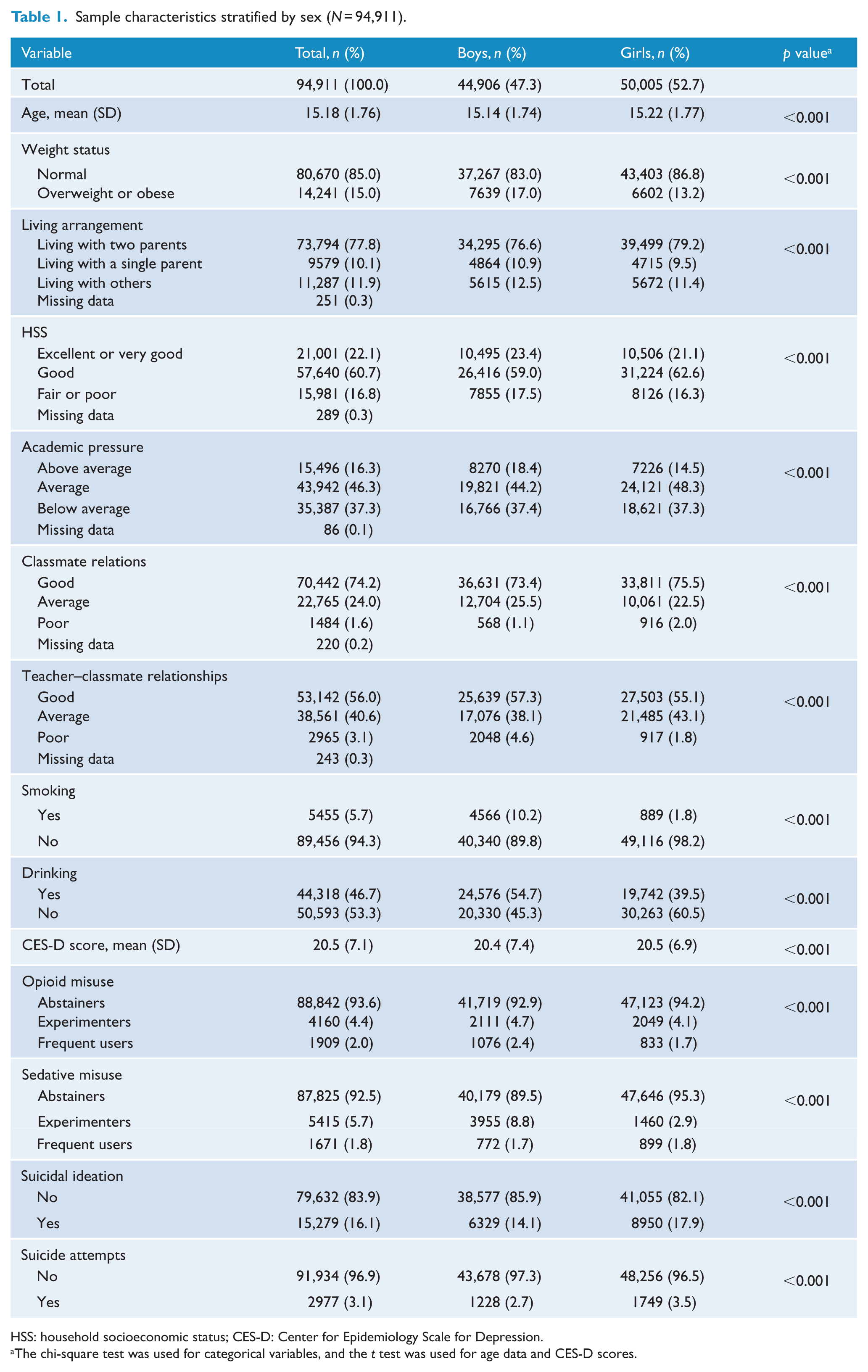
HSS: household socioeconomic status; CES-D: Center for Epidemiology Scale for Depression.
The chi-square test was used for categorical variables, and the t test was used for age data and CES-D scores.
Results
Sample characteristics stratified by sex
Basic demographic information is shown in Table 1. Of the total sample, 47.3% (44,906) were boys, and 52.7% (50,005) were girls. The proportion of students who were overweight or obese was 15.0%. Approximately 5.7% students admitted smoking during their lifetime, and 46.7% students reported drinking alcohol. The mean CES-D score of the students was 20.5 (SD: ±7.1). The proportion of students who frequently used opioids was 2.0%, and the proportion of those who frequently used sedatives was 1.8%. A total of 16.1% students reported having suicidal ideation, and those who admitted having suicide attempts accounted for 3.1%. There were statistically significant differences in the sex distribution of age, weight status, living arrangement, HSS, academic pressure, classmate relations, relationships with teachers, smoking, drinking, depressive symptoms, opioid misuse and sedative misuse (p < 0.05).
Sources and reasons for nonmedical use of opioids or sedatives
As shown in Table 2, the nonmedically used prescription opioids or sedatives among adolescents were most commonly obtained from home (45.0%), followed by from peers (25.9%) and others (21.8%). The most prevalent reason for NMUPD was ‘to relax or relieve tension’ (32.1%), followed by ‘to experiment’ (26.5%) and ‘to feel good or get high’ (12.4%). In addition, the differences in the sex distribution of sources and reasons for nonmedical use of opioids or sedatives were statistically significant (p < 0.05). Girls had a higher proportion of taking prescription drugs ‘to relax or relieve tension’ than boys (52.4% among girls vs 47.6% among boys). In contrast, boys had a greater proportion of taking opioids or sedatives ‘to feel good or get high’ than girls (59.0% among boys vs 41.0% among girls).
Sources and reasons for NMUPD.
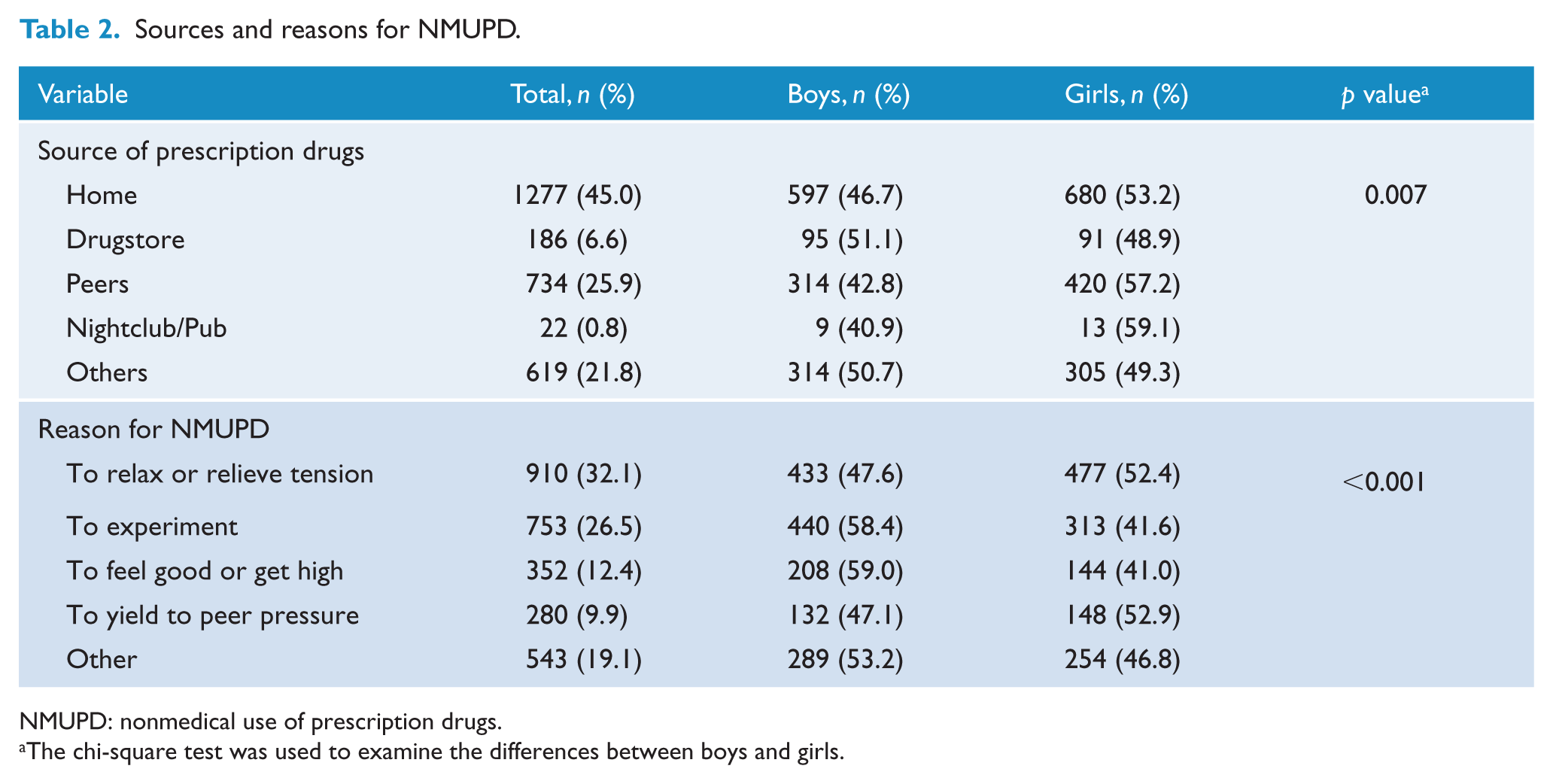
NMUPD: nonmedical use of prescription drugs.
The chi-square test was used to examine the differences between boys and girls.
Prevalence and characteristics of suicidal ideation and suicide attempts
The prevalence of suicidal ideation was 14.1% among boys and 17.9% among girls, and the prevalence of suicide attempts was 2.7% among boys and 3.5% among girls. Without adjusting for other variables, suicidal ideation and suicide attempts were more prevalent among students who were frequent users of opioids (suicidal ideation: 25.7% among boys vs 34.2% among girls; suicide attempts: 8.7% among boys vs 12.7% among girls) and those with frequent use of sedatives (suicidal ideation: 29.9% among boys vs 35.9% among girls; suicide attempts: 12.3% among boys vs 14.0% among girls). Among both boys and girls, nonmedical use of opioids or sedatives, weight status, living arrangement, HSS, academic pressure, classmate relations, relationships with teachers, depressive symptoms, smoking and drinking were correlated with suicidal ideation. However, there were sex differences in the correlates of suicide attempts, and age and weight status were only associated with suicide attempts among girls (Table 3).
Lifetime prevalence, unadjusted odds ratios and 95% confidence interval of suicidal ideation and suicidal attempts among adolescents.
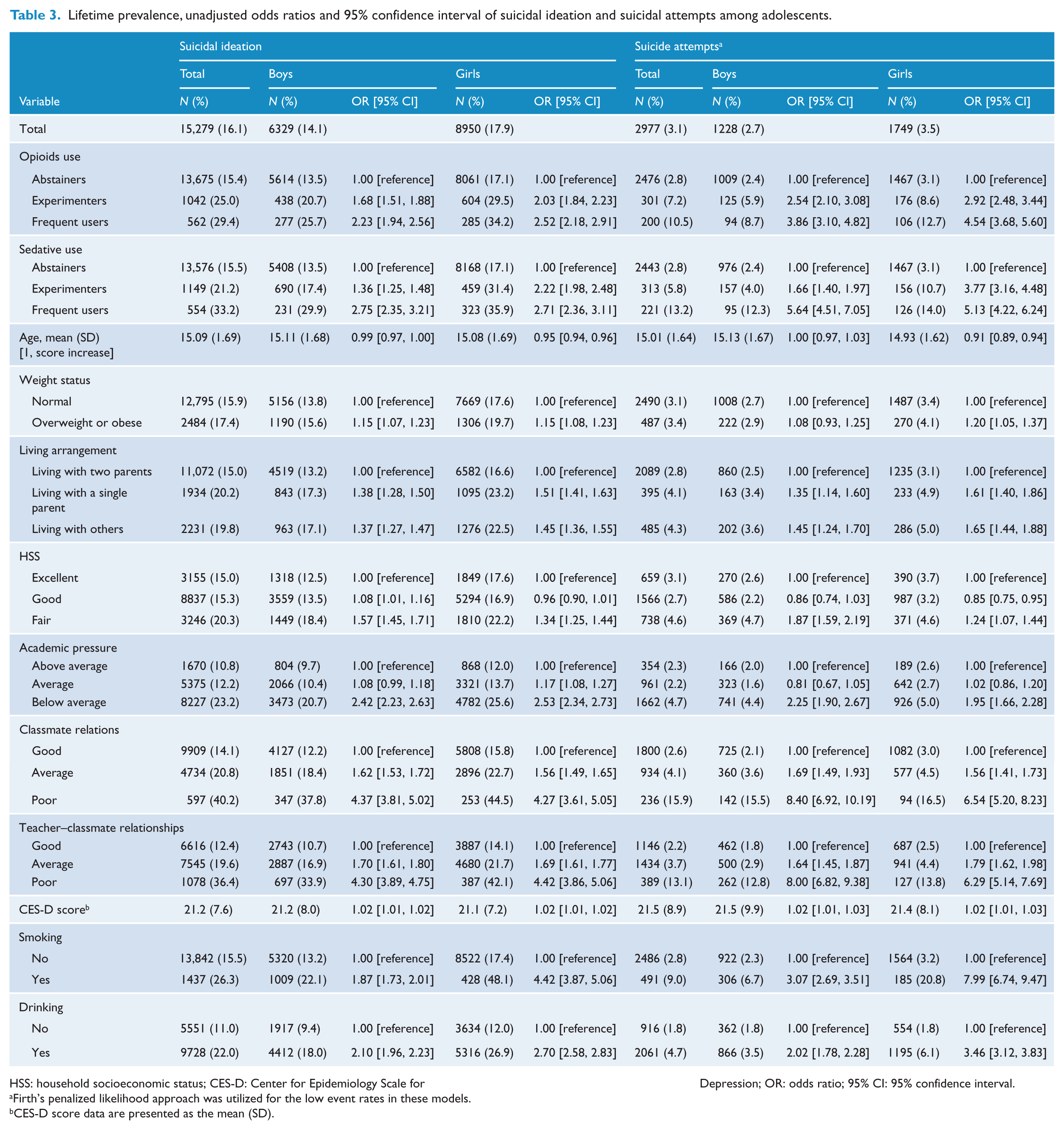
HSS: household socioeconomic status; CES-D: Center for Epidemiology Scale for Depression; OR: odds ratio; 95% CI: 95% confidence interval.
Firth’s penalized likelihood approach was utilized for the low event rates in these models.
CES-D score data are presented as the mean (SD).
Association between nonmedical use of opioids or sedatives and suicidal behavior
The final multivariable logistic regression models for suicidal ideation and suicide attempts are shown in Table 4 and Figure 1. After adjusting for age, weight status, living arrangement, HSS, academic pressure, classmate relations, relationships with teachers, smoking, drinking, and depressive symptoms, experimental and frequent use of opioids were positively associated with suicidal ideation and suicide attempts among both boys and girls. Moreover, girls who were frequent users of opioids were at a higher risk of suicidal ideation, (adjusted odds ratio [aOR] = 1.84, 95% confidence interval [CI] = [1.57, 2.17]) and suicide attempts (aOR = 2.96, 95% CI = [2.34, 3.74]). Among girls, frequent use of sedatives was also positively associated with suicidal ideation (aOR = 2.23, 95% CI = [1.91, 2.60]) and suicide attempts (aOR = 4.02, 95% CI = [3.25, 4.99]). These associations were also statistically significant in boys, but the magnitudes of aORs for the associations between frequent use of opioids and sedatives and suicidal behavior were greater in girls than boys. In addition, the magnitudes of aORs for the significant associations between frequent use of opioids and sedatives and suicidal behavior were greater than those between experimental use and suicidal behavior.
Association between nonmedical use of opioids or sedatives and suicidal behavior.
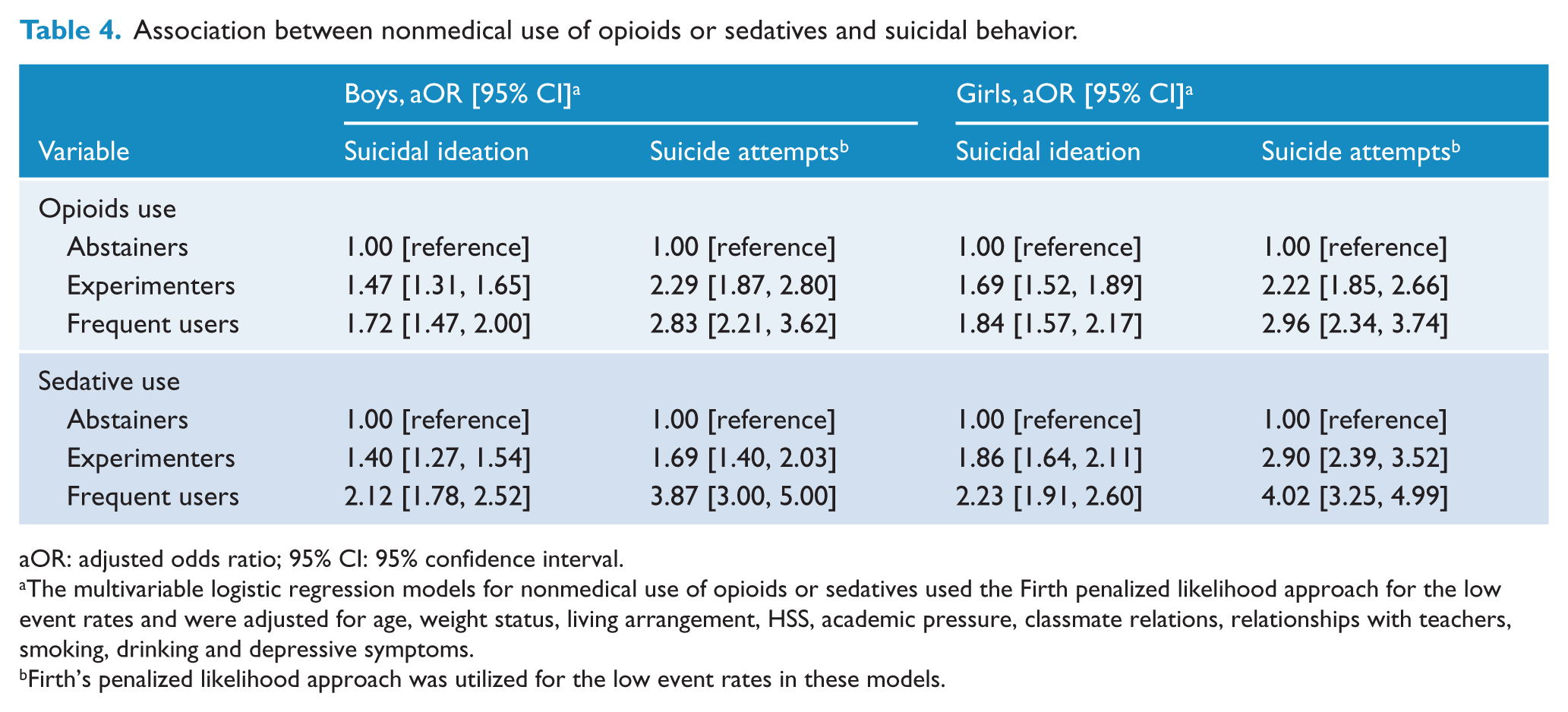
aOR: adjusted odds ratio; 95% CI: 95% confidence interval.
The multivariable logistic regression models for nonmedical use of opioids or sedatives used the Firth penalized likelihood approach for the low event rates and were adjusted for age, weight status, living arrangement, HSS, academic pressure, classmate relations, relationships with teachers, smoking, drinking and depressive symptoms.
Firth’s penalized likelihood approach was utilized for the low event rates in these models.
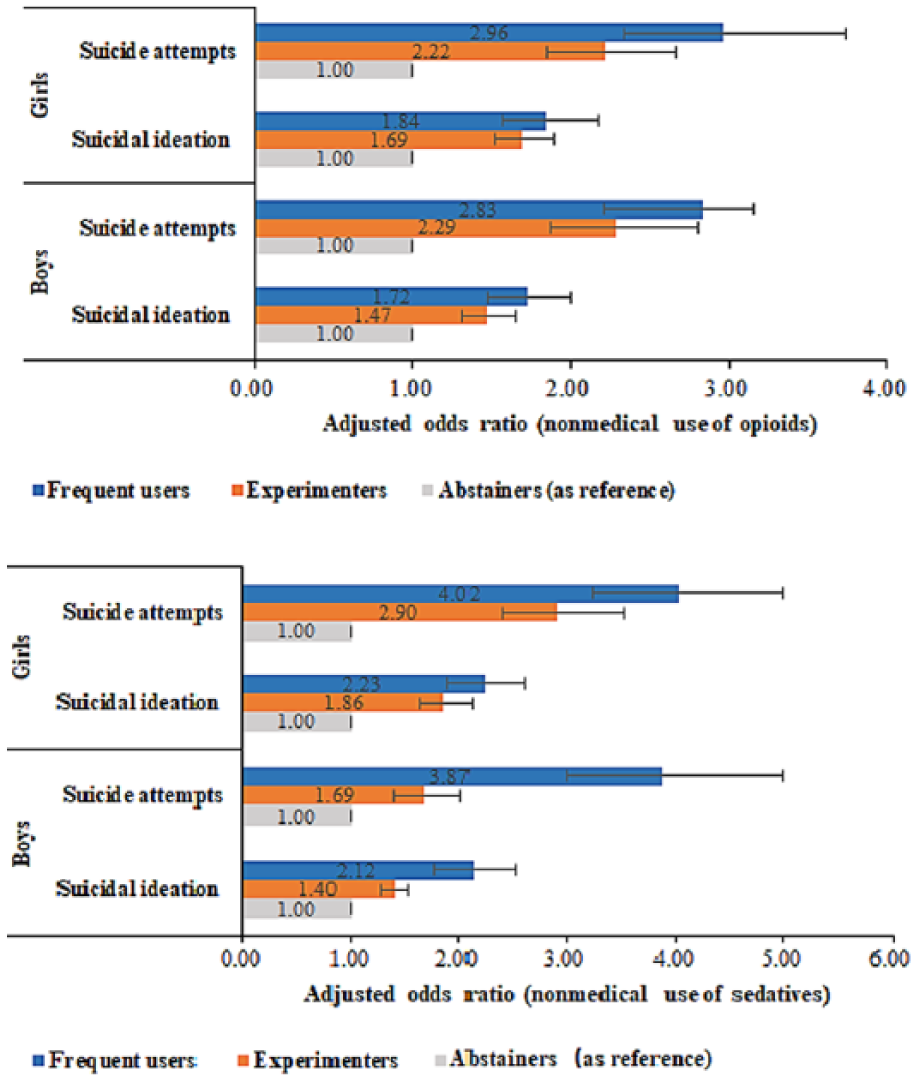
Adjusted associations of nonmedical use of opioids or sedatives with suicidal ideation and suicide attempts.
Discussion
Summary of the findings
Our findings demonstrate that 16.1% of the sampled students reported having suicidal ideation and 3.1% admitted having suicide attempts. These results were aligned with our prior study in Fujian province of China (Guo et al., 2017b) and were lower than those described in a study conducted by the Centers for Disease Control and Prevention (CDC) of the United States, which illustrated that 19.6% of the adolescents reported suicidal ideation and 8.2% reported suicide attempts in the preceding 12 months (Zwald et al., 2018). This study also found that nonmedical use of opioids or sedatives was prevalent among Chinese adolescents. Several studies have suggested that sex differences may exist in NMUPD and suicidal behavior among adolescents. However, there is no agreement on whether NMUPD or suicidal behavior is higher, lower or similar in boys than girls. In this study, we first found that girls had higher prevalence rates of suicidal ideation and suicide attempts compared to boys. WHO has also reported that adolescent girls are more prone to suicidal behaviors, notably due to sex norms and discrimination (e.g. unequal chore burdens or exclusion from education) (WHO, 2014a). In addition, in this study, boys were found to have higher prevalence rates of experimental and frequent use of opioids, but girls were found to have greater prevalence rates of frequent use of sedatives. Wang et al. reported that nonmedical use of opioids was more prevalent in male adolescents (Juan et al., 2015); Cotto et al. (2010) illustrated that although males generally reported more substance use than females, this pattern did not hold for all drugs (e.g. sedatives and tranquilizers) in the youths. One possible explanation might be related to the potential sex differences in vulnerability to use specific drugs. Girls are more likely to use sedatives to decrease anxiety or relieve pain, whereas boys are more likely to nonmedically use opioids to get high (McCabe et al., 2007). In this study, boys had a higher proportion of taking opioids or sedatives ‘to feel good or get high’, but girls were more likely to do so ‘to relax or relieve tension’. Several lines of evidence have also suggested that different drugs are chemically different and have various physical and psychological effects, as well as different users (Dubey and Arora, 2008). Considering the implications of sex differences in vulnerability to different types of prescription drug use, taking the child’s sex into account may be helpful to prevent and treat different pattern of NMUPD.
Our univariable analyses first reported that older girls were less likely to have suicidal behavior. A prior study also illustrated that young adolescents (aged 12–15 years) were more likely to make risky choice than other age groups (aged 16–18 and 25–35 years), and the age at which risk-taking was highest was 14.38 years (Burnett et al., 2010). In addition, we found that adolescents who were overweight or obese were at a higher risk of suicidal behavior. Similarly, Pan et al. (2017) reported that adolescents who were obese were at a threefold increased risk of having suicidal ideation. Overweight or obese adolescents are more likely to experience peer victimization, which is a known factor for suicidal ideation and suicide attempts (Pearce et al., 2002). Unsurprisingly, compared to their corresponding groups, adolescents who admitted smoking or drinking had higher odds of reporting suicidal ideation and suicide attempts. Higher CES-D score and poor relationships with classmates or teachers were positively associated with higher risk for suicidal behaviors. The univariable analysis findings will be useful to identify adolescents who may be at risk of suicidal behavior, and we should focus on high-risk groups who present with the adverse characteristics mentioned above.
After adjusting for demographics, smoking, drinking and depressive symptoms, our stratified multivariable logistic regression results showed that both boys and girls were at an elevated risk of suicidal behavior. Similarly, Ford et al., using the data from the 2012 NSDUH, illustrated that respondents who admitted NMUPD were more likely to report that they had seriously thought about killing themselves (Ford and Perna, 2015). Ashrafioun et al. (2017) also using the data from the 2014 NSDUH reported that nonmedical use of opioids was positively associated with suicidal ideation and suicide attempts. Our previous study using data from 3273 students showed that the relationship between baseline prescription opioid or sedative misuse and subsequent suicidal attempts was statistically significant (Guo et al., 2016). One possible explanation for these results is that prescription opioid or sedative misuse may lead to suicidal behavior through impaired judgment, loss of inhibition or impulsiveness (Crews and Boettiger, 2009). Another explanation is that possessing prescription opioids or sedatives equates to access to means of suicide and increases the risk of suicidal behavior to some extent (Ilgen et al., 2016). Notably, a novel finding of this study was the results of the separate analyses by sex, which showed that the adjusted associations between frequent use of opioids or sedatives, suicidal ideation and suicide attempts appeared slightly stronger in girls than boys. These results might be related to the fact that females are more likely than males to experience psychological and emotional distress and to nonmedically use opioids or sedatives for longer periods and in higher doses (also termed as frequent use) (Back et al., 2011), so females might be at an increased risk for adverse outcomes (e.g. drug dependence or suicidal behavior) from prescription drug misuse. Moreover, a previous study demonstrated that girls aged 12–17 years were more likely to become dependent, and drug dependence has been widely related to suicide risk (Office On Women’s Health (OWH), 2017). In addition, evidence suggests a biological plausibility of the sex difference in the association between NMUPD and suicidal behavior. Girls may exhibit a pattern of neuroendocrine hyperactivity compared to boys who experience similar levels of stress due to the sex differences in stress-related hypothalamus–pituitary–adrenal (HPA) axis reactivity and psychological responses to stress (Guo et al., 2017a; Kudielka and Kirschbaum, 2005). Therefore, girls tend to report higher levels of negative emotions (e.g. suicidal ideation), which appear to result in a reliance on NMUPD to cope with negative emotions (Doom et al., 2013; Guo et al., 2017a). Moreover, these findings suggest providing earlier detection and treatment services to promote resilience among adolescents who are current nonmedical users of prescription drugs to prevent suicidal behavior. In addition, these results may provide preliminary evidence about the importance of focusing on different prevalent drugs and inconsistent reasons for NMUPD between adolescent boys and girls. Given the effect of intervention programs might vary between various population subgroups, sex-specific prevention and intervention strategies are recommended to pay attention to girls who experience psychological distress and boys who have higher probability of risk health behavior.
Our study also showed that the association between NMUPD and suicidal behavior in experimental users of opioids or sedatives was weaker than that in frequent users. Ashrafioun et al. also reported that frequency of nonmedical use of opioids was significantly associated with suicidal ideation, and individuals who admitted ‘weekly or more frequency use’ presented a greater likelihood of reporting suicidal ideation than those who reported ‘monthly to weekly use’ and ‘less than monthly use’ (Ashrafioun et al., 2017). Based on the interpersonal theory of suicide, these results might be related to the fact that compared to experimental users of opioids or sedatives, more frequent users are at a higher risk of becoming dependent users who experience more interpersonal conflict, adverse events and negative physical consequences, leading to suicidal behavior (Van Orden et al., 2010).
Limitations
There are limitations associated with this study. First, the study is based on a cross-sectional design, which indicates that casual relations cannot be determined. It can be only stated that there are significant associations between NMUPD and suicidal behavior. Second, the use of the adolescent self-report questionnaires to collect data may subject our findings to retrospective bias, and some sensitive data (e.g. NMUPD and suicidal behavior) in this study may be underreported due to social desirability. However, the anonymity of the questionnaires is assured, and this method may have helped to collect accurate information from adolescents. Third, the opioids and sedatives covered in this study were only the most widely used drugs among Chinese adolescents, and more prescription drugs need to be included in future studies. Fourth, considering that suicidal ideation and suicide attempts are more common in adolescence, this study only focuses on suicidal ideation and suicide attempts among adolescents, and the completed suicide cases are not included. The strength of our study is that it uses a large-scale sample of Chinese adolescents, which gave us sufficient statistical power to detect the possible associations between nonmedical use of prescription opioids or sedatives, suicidal ideation and suicide attempts even after adjusting for many control variables (including demographics, family and school factors, weight status, smoking, drinking and depressive symptoms). In addition, to our knowledge, no study has specifically considered the influence of the child’s sex on the association of NMUPD with suicidal ideation and suicide attempts. We conducted this study among Chinese adolescents and found a sex-differential association.
Implications
NMUPD and suicidal behavior are major public health concerns in China. The results of this study clearly show that girls have greater prevalence of suicidal ideation and suicide attempts than boys, boys have higher prevalence of experimental and frequent use of opioids compared to girls, and there exist significant sex differences in the sources and reasons for NMUPD. Our study also shows that although both boys and girls who reported nonmedical use of opioids or sedatives are at an increased risk of suicidal behavior, the association between frequent misuse of opioids or sedatives, suicidal ideation and suicide attempts is slightly stronger in girls than boys in China. This finding is an important addition to the existing literature. The significant sex differences found above may provide a basis for early identification of adolescents at high risk of suicidal behavior, such as girls who may have psychological distress or other mental health problems and boys who are more likely to participate in risk- or sensation-seeking behavior. Based on the findings of this study, specific prevention and intervention programs are recommended: (1) to improve adolescents’ awareness of the adverse effects of NMUPD and suicidal behavior through educational campaigns; (2) to promote resilience among adolescents who have engaged in NMUPD by providing suitable health services; (3) to strengthen regulations to limit the sales of prescription drugs to adolescents; and (4) to establish a nation-wide active monitoring system (such as the NSDUH in the United States) to surveil NMUPD, suicidal behavior and other risky health behaviors among adolescents in China.
Footnotes
Acknowledgements
The authors thank all of the participants in our study. L.G. and M.L. equally contributed to this work. W.-H.Z. and C.L. equally contributed to this work.
Declaration of Conflicting Interests
The authors declared no potential conflicts of interest with respect to the research, authorship and/or publication of this article.
Funding
The author(s) disclosed receipt of the following financial support for the research, authorship, and/or publication of this article: This study was funded by the Guangdong Food and Drug Administration and Natural Science Foundation of China (NSFC; grant numbers: GZSW11175FT4055 and 81711530715, respectively).