



Abstract
Laboratory medicine is strong in the basic scientific background that underpins the pathological rationale for considering the use of a test, as well as characterising analytical performance of laboratory procedures. Evidence of the impact of test utilisation on health outcomes and adding value to the patient’s care pathway is more limited. However, purchasers and commissioners of laboratory services, as well as clinicians, are bombarded with a burgeoning literature on new biomarkers and devices, against a backdrop of fiscal constraints. This increasingly critical appraisal of both current practice, as well as new developments, demands that all health professionals are up-to-date in the knowledge of their subject, as well as being able to access and impart this knowledge in real time to their colleagues in the clinical team. This requirement for knowledge means that the laboratory medicine professional can be asked to provide information at any time, from a host of differing scenarios, and with a considerable variation in the depth of response being required. Thus, the biochemist may need to respond to a query from the Emergency Department on the one hand, to preparing the justification for a new test – or disinvestment in an old (and now inappropriate) test, to writing the case for a research grant proposal. All of these scenarios require clarity in the question being asked, and the ability to search for the evidence across a wide range of resources. This review takes the reader through the steps to efficient retrieval of good quality information.
Introduction
Laboratory medicine procedures, often referred to as diagnostic tests, are tools used by clinicians to help make decisions, with the goal of improved outcomes. 1 Responsibility for these procedures lies with laboratory professionals who will be called upon to make technical and policy decisions, and clinical interpretations arising from questions (or problems) from many sources. Questions can range from personal queries arising in daily routine practice through to dealing with major management and policy issues. Whilst experience plays an important part in decision making, there is an increasing emphasis on, and accountability for, decisions being informed by a strong evidence base.
Formulation of the right question is the first step in the Evidence-Based Laboratory Medicine (EBLM) Cycle (Figure 1),
2
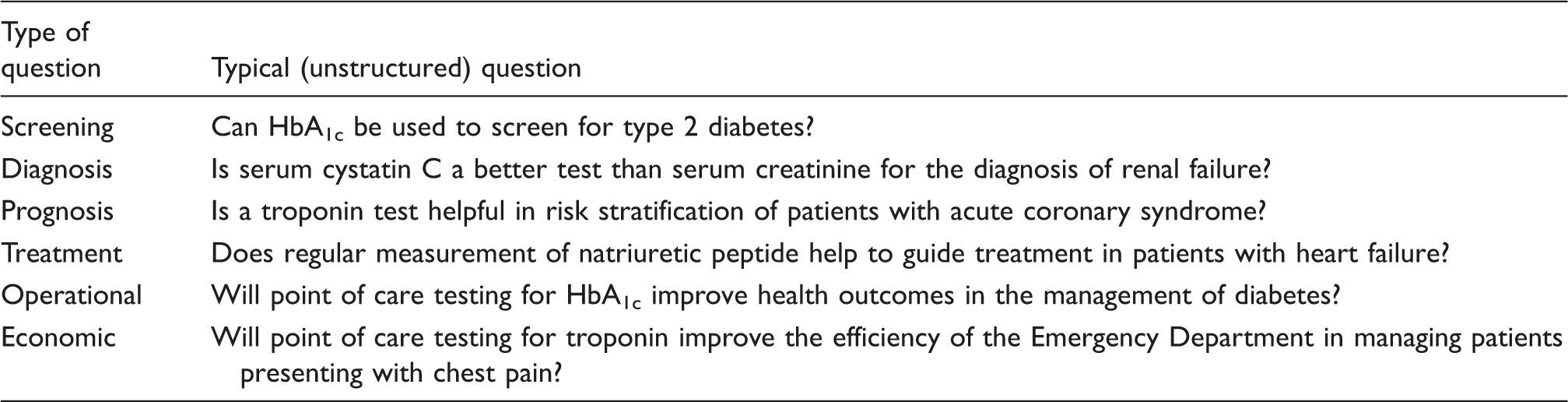
which is comprised of a series of steps that can be followed in evidence-based decision making. Some examples of questions for screening, diagnosis, prognosis, treatment, operational and economic situations are provided in Table 1, and a broader discussion of the topic can be found in an earlier paper.
3
The second step is acquiring evidence through primary research or review of the literature, which is used to inform practice, in commissioning of services and in performance management and quality improvement of services.4,5
The core of the EBLM cycle. Adapted from Reference 1 with permission. Examples of questions that might prompt a search of the literature to find the required evidence.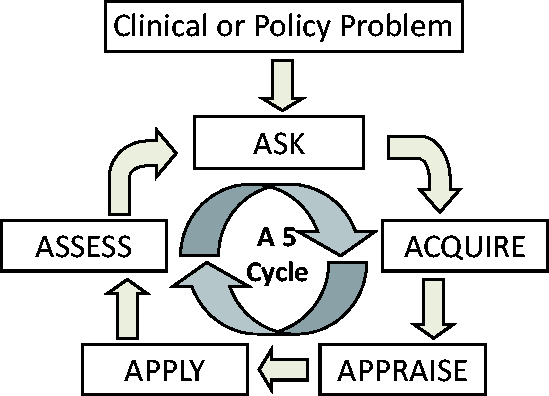
The approach to searching for the evidence will depend on the question being asked and the purpose of the search. In some circumstances, time is of the essence, for example when responding to a question asked during a patient consultation, and a ‘quick and dirty’ or ‘quick and clean’ look at the literature will give the searcher the desired information. This approach is often sufficient if the clinician or laboratory professional needs to verify information or acquire a general overview of the topic. At other times, a more comprehensive and systematic search is required, for example when planning a research study, preparing a systematic review, developing a guideline or initiating large-scale service improvements.
The primary aim of this article was to provide insight into conducting quick searches efficiently and effectively. We will also point out resources that will facilitate more comprehensive, systematic reviews of diagnostic tests and new technologies. We have chosen to use a point of care testing scenario and maintain this throughout the discussion; however, the guidance is equally applicable to individual tests and other technologies.
Question formulation
When information is needed quickly, it is tempting to dive straight in and start searching. However, a more thoughtful and organised approach, in which time is spent considering the question, will pay dividends. As Francis Bacon once said, ‘a prudent question is one half of wisdom’; difficulties in searching are often encountered in the absence of a clearly thought out question. Therefore, successful searching is predicated on formulation of an answerable question
3
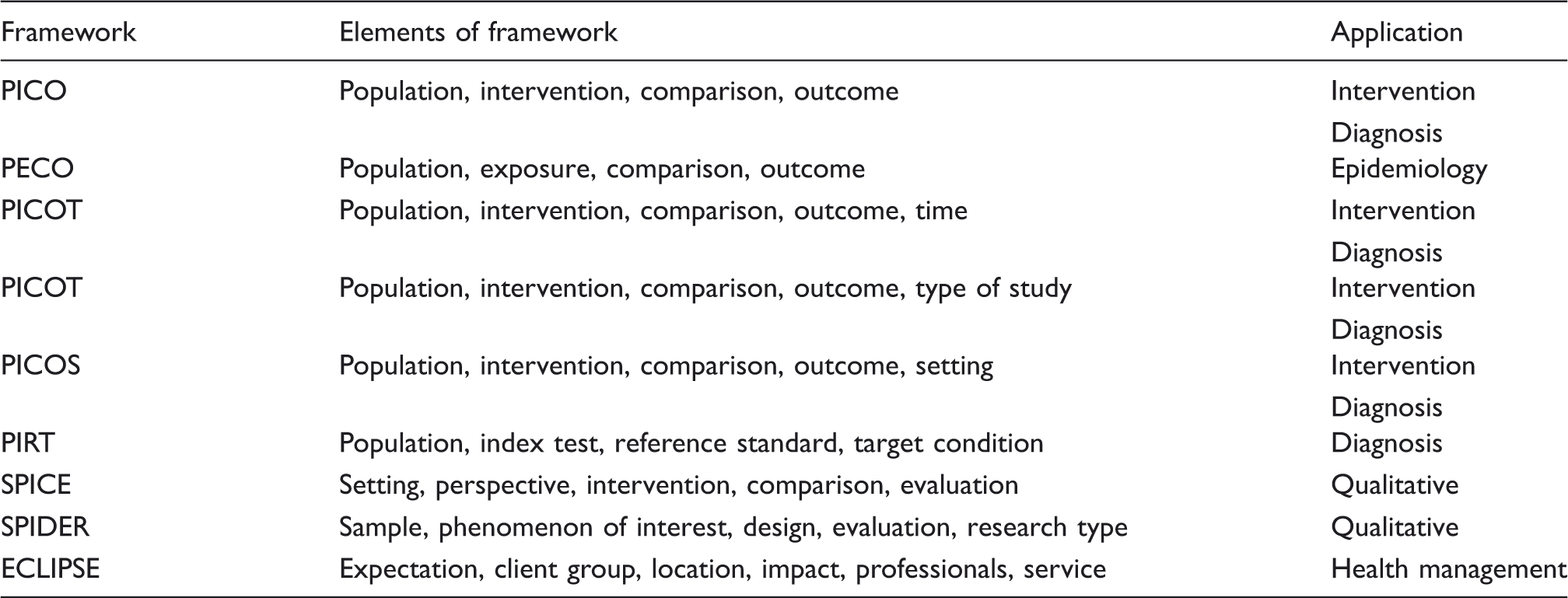
because a clear question underpins the development of a search strategy. It can be helpful to adopt the approach identified in the early years of developing the principles of evidence-based medicine, using the PICO acronym.
6
Over time, the original acronym has been adapted to include variations that are suited to different questions (Table 2), including intervention and diagnosis (PICOS, PICOT, PIRT), epidemiology (PECO), health management (ECLIPSE
7
) or qualitative (SPICE, SPIDER8,9) enquiries. Irrespective of the chosen acronym, it can often be useful to ask the following questions in relation to the topic of interest:
What is the What is the Is there a What is the What is the A summary of frameworks employed for helping with question formulation.
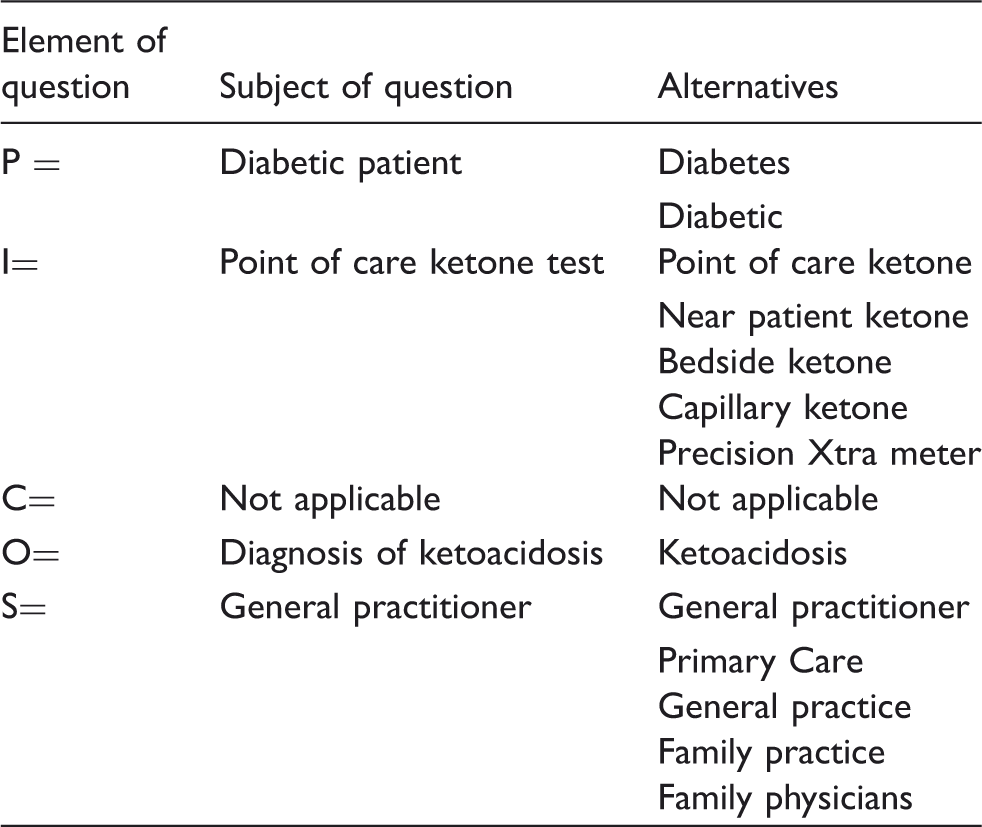
Preparing a structured question to guide the search: in diabetic patients presenting to their general practitioner, does a point of care meter to measure blood ketones improve the diagnosis of diabetic ketoacidosis?
Search techniques
There are a few key points to remember about electronic searching, whether the resource utilised is a web-search engine, an evidence-based ‘point of care’ information tool or a bibliographic database. In order to use resources effectively and efficiently, it is important that searchers become familiar with the search language and techniques used on each individual resource by looking at the help facility, viewing tutorials or consulting local librarians. The following search techniques are frequently common but cannot be applied across all resources (see Figure 2).
Example of a quick search and structured search strategy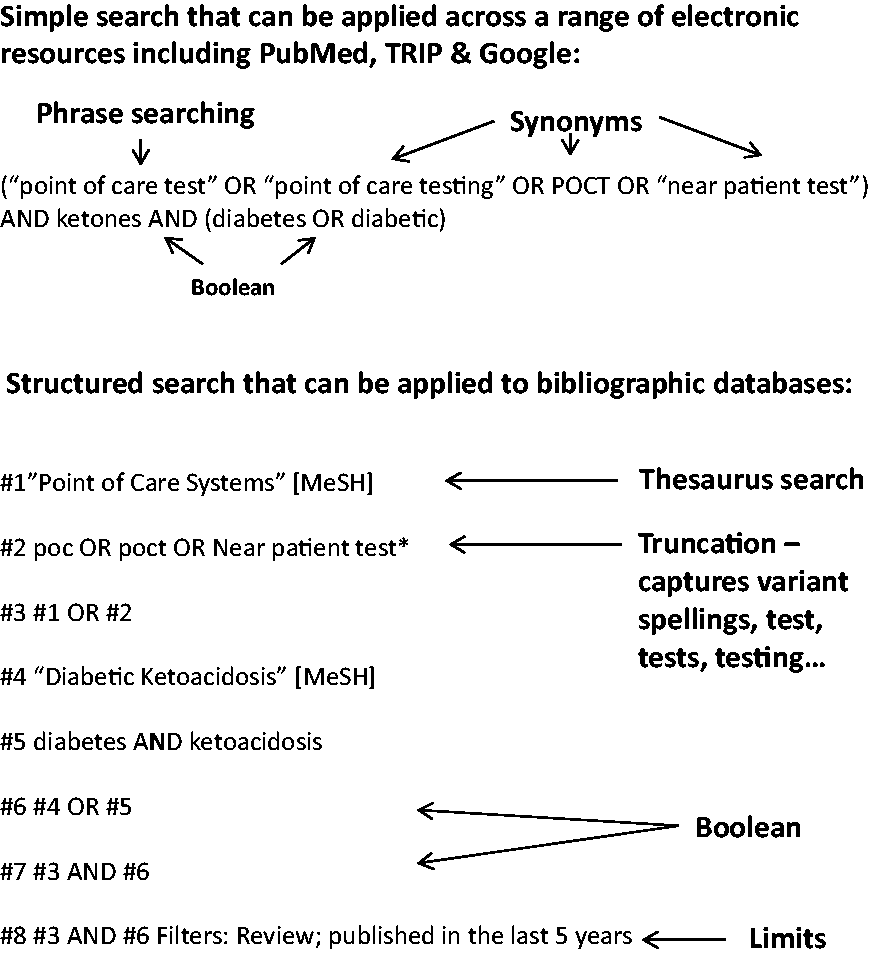
Synonyms
To capture relevant research, searchers need to think about synonyms and variant spellings for their search concepts, to account for the different language used by authors. For example, different terminology is used to describe point of care testing – near patient, bedside, POC, POCT, etc. Some resources have an automatic synonym facility, and in other resources you will need to type in each different search term. Although you may identify search terms and synonyms for all the concepts in the clinical question, these are not always applied in the search. It is often more efficient, particularly with a quick search to rely on searching for the key concepts, in this example, diabetes ‘near patient testing’ ketoacidosis. The results can then be browsed to identify those focusing on diagnosis. If the electronic resource has a thesaurus search, this can be used to identify appropriate search terms.
Boolean logic
In order to develop a focused search strategy, keywords need to be searched in combination rather than in isolation. Boolean logic
10
is used to broaden and focus a search:
OR = to broaden out the search, to include synonyms and variant spellings, e.g. ‘point of care test’ OR ‘near patient test’ OR ‘bedside test’. AND = to narrow the search down, to combine different search concepts, e.g. diabetes AND ‘point of care test’. NOT = to exclude concepts, e.g. diagnosis NOT monitoring.
Grouping search terms
To make the most of Boolean logic, use parentheses to group terms together, and this allows you to use both AND/OR in the search query for a maximised search, e.g. (‘point of care test’ OR ‘near patient test’ OR ‘bedside test’) AND (diabetes OR diabetic).
Truncation and wild cards
Use a truncation symbol (often an *, but could be a $ or ?) to find words that have the same beginning but might have different endings, e.g. test* for test, tests, testing, etc. These symbols can occasionally be used as wildcards within words to replace 0–1 letters where there might be an alternative spelling, e.g. gyn?ecology for gynaecology or gynecology.
Phrase searching
In the case of some web-sites and databases, an implied AND is used to automatically combine search words. To override this and search for phrases, enclose terms in double quote marks, e.g. ‘point of care test’.
Limits
Bibliographic databases have long used limits, for example, language, publication year, age range and publication type to focus searches. These are often also available on web-search engines and ‘point of care’ information tools and can be applied post hoc to reduce the number of references or records retrieved. The publication type limits can be particularly useful at the start of a search process to identify secondary resources (reviews or guidelines) that will give an overview of a topic.
Methodological search filters (‘Hedges’)
Validated search filters have been developed to allow searchers to narrow down subject searches by type of research and are often used for post hoc categorisation of search results. The original work was done to aid the production of systematic reviews by developing a string of reliable search terms for identifying randomised controlled trials. Subsequently, a similar approach was applied to identify studies for other types of questions, for example on PubMed Clinical Queries, ‘diagnosis’, ‘etiology’, ‘prognosis’ and ‘clinical prediction’ guide filters are available. In recent years, filters have also been developed for age groups, disease areas and geographic locations. The InterTasc web-site brings together information on the application and development of search filters. 11
Related articles
Technological advancement has allowed improved linking between individual articles or sources of information. Algorithm-derived related article links on PubMed and Google Scholar, along with topic links within ‘point of care’ information tools allow searchers to find information serendipitously through relationships with the original source. This can be a time-saving technique in a quick search, but also an adjunct to a comprehensive search where reassurance is needed that no key research has been missed.
Thesaurus (MeSH) searching
Traditional bibliographic databases have a thesaurus facility that allows more focused subject searching. The Medical Subject Heading [MeSH] search on PubMed is an example of this and can be used by the searcher to conduct an exhaustive but precise search.
Quick searching
Once the question has been decided upon, the next stage is to choose resources or bibliographic databases for searching. A search as part of an exhaustive research gathering exercise, for example a systematic review, will involve searching a large number of sources for both published and unpublished literature. The key to an efficient and effective quick search is the application of search techniques on one or two appropriate resources. A good start for a quick search is to concentrate on identifying sources of secondary evidence on the topic of interest, from synthesised topic reviews to systematic reviews, guidelines and evidence syntheses.
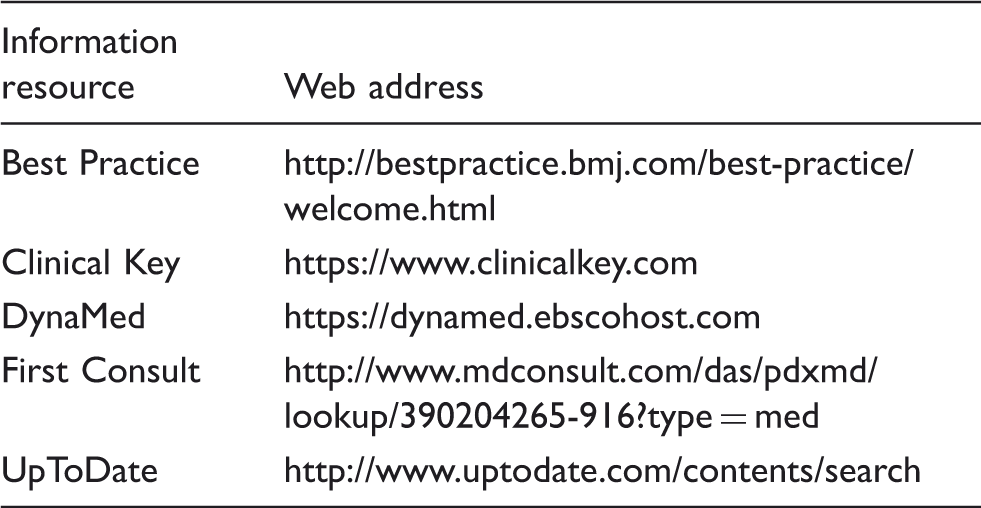
Topic reviews – point of care information tools
Examples of subscription-based point of care information resources.
Finding systematic reviews, guidelines and evidence syntheses – health specific search engines
Example search on TRIPdatabase, accessed 21 November 2013.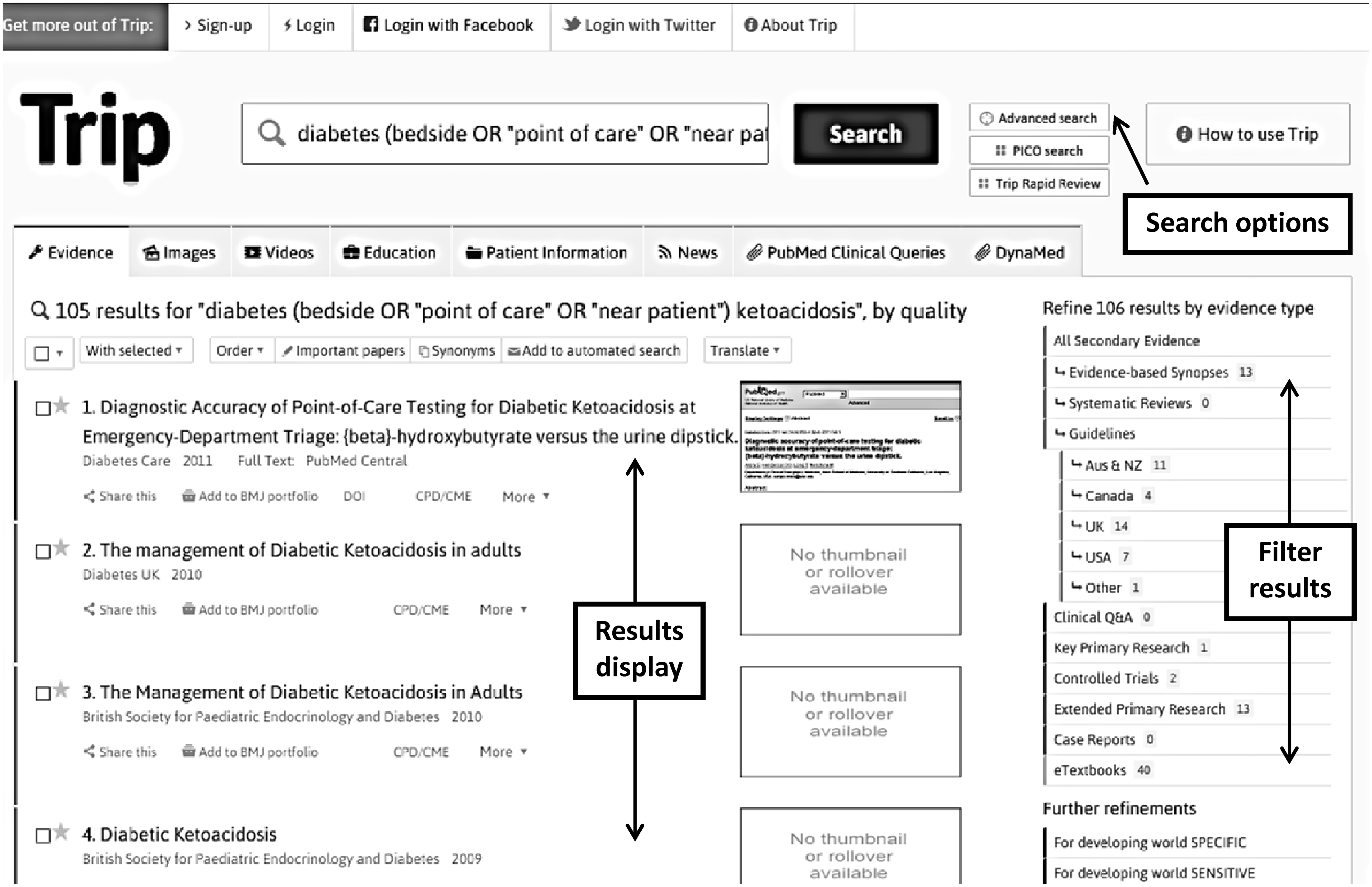
The aforementioned sites search multiple resources concurrently, including websites and databases of systematic reviews, guidelines and evidence syntheses. However, it is also possible to search these resources directly.
There are numerous guideline websites, these include National Guidelines Clearinghouse (http://www.guidelines.gov),
In the absence of appropriate good quality secondary evidence relating to the clinical question, a search for primary research through bibliographic databases or web-search engines may be necessary.
Bibliographic databases
Bibliographic databases contain references to published research, most commonly journal articles, but also conference proceedings, books and theses.
A range of subscription databases may be available through a local institutional library. In health care, these may include:
These bibliographic databases overlap in terms of content, but do also contain unique material, and so it is often necessary to search multiple databases. Bibliographic databases benefit from sophisticated search interfaces and the ability to apply a range of techniques to maximise the effectiveness and efficiency of the search. As a result, it is advisable to familiarise oneself with individual databases through the help facility, viewing online tutorials or consulting local librarians.
Web search engines
Google (http://www.google.com) is often the first point of call for answering quick questions 14 ; as such, it would be difficult to end a section on searching without considering the powerful search capability of Google, Google Scholar (http://scholar.google.com) and other general web search engines. Several studies have been published comparing Google and/or Google Scholar with established bibliographic databases and newer ‘point of care’ information tools.15–18 There is no definitive view on whether the Google products are better or worse than other resources, but the studies have outlined some benefits and drawbacks. The Google products have a familiarity that makes them easy to use and the relevancy algorithm brings useful information to the fore; however, these advantages confer disadvantages. The simplicity of the search function makes it difficult to focus a search and thus it lacks precision, and the relevancy algorithm often means that recent research is further down the list of displayed results. In addition, a greater emphasis will need to be applied to appraisal of retrieved results as they will include both peer reviewed and non-peer reviewed material. The latter may include useful information, e.g. white papers from in vitro diagnostic companies and commercial intelligence white papers. The message for web search engines, as with any of the resources mentioned above, is that they should not be used in isolation, but that they should be part of a suite of resources that are used for searching.
Searching apps
The increasing use and availability of smartphones and tablet computers have created a demand for information resources that are accessible through mobile devices. There are apps or mobile versions available for many of the resources mentioned above, including PubMed (http://www.pubmed.gov), NICE guidance (http://www.nice.org.uk) and UpToDate (http://www.uptodate.com). To find and download the mobile versions, the reader is advised to look at the resource website or the app store for the particular mobile device in question.
Systematic review searching
The approach to searching for studies for inclusion in a systematic review of diagnostic test accuracy includes the development of a structured search strategy based on a well-built clinical question and the application of that strategy across multiple databases. The searcher would also employ additional ‘snowballing’ techniques to identify published and unpublished studies through browsing trial registers, reading reference lists, performing forward citation searches and hand-searching. The difficulties of conducting diagnostic systematic reviews have been extensively studied;19–24 however, methodological guidance has been laid down through work at the Cochrane Collaboration 25 and Agency for Healthcare Research and Quality. 26 It is now common practice to conduct systematic reviews as part of the research process, as a precursor to setting up a trial or part of a PhD submission. In addition, it is often included in the guideline preparation or service improvement process. These guidelines should be considered carefully by anyone starting a search for studies for inclusion in a systematic review.
Conclusions
Laboratory professionals are faced with a range of questions on a daily basis, mostly routine, where the answers are based on experience or laboratory protocols. However, as the field of laboratory medicine expands, and the role of the laboratory professional as a member of the clinical team is more broadly recognised, the need to respond to questions will increase. The search techniques and resources outlined above provide an introduction for those professionals who need to search the literature for further evidence to support decision making, relating to individual patients or general service improvement.
Since Sackett and Strauss first talked about applying evidence during the process of ward rounds, 27 there has been an increasing recognition that searching for evidence has become part of routine clinical practice, rather than simply a research activity.28–31 The laboratory medicine service is a knowledge-based service and thus the ability to search for evidence is an important skill for the laboratory medicine professional to employ – at any time, and in any sphere of his/her work.
Footnotes
Acknowledgements
This article was prepared at the invitation of the Clinical Sciences Reviews Committee of the Association for Clinical Biochemistry. The views expressed are those of the authors and not necessarily those of the NHS, the NIHR or the Department of Health.