




Abstract
I examine how voters perceive gender differences in vote buying, using survey and interview data collected in the Dar es Salaam region, Tanzania. I find that (1) an overwhelming majority of voters disapprove of vote buying, yet view it as remaining prevalent, and (2) they view men as more active vote buyers, mainly due to the gender gap in vote-buying opportunities. The perceived opportunity gap appears to come from a much larger representation of men in electoral competitions, the perceived gender gap in resources, and the absence of women in certain places and times, due to social and cultural norms constraining women’s behaviours, safety concerns, and/or household responsibilities.
Introduction
Political corruption, defined as misuse of public office for personal gains (Chang, 2005: 716; Nyblade and Reed, 2008: 927), has been one of the biggest and most endemic challenges to good governance, which foreign aid donors view as essential for poverty reduction in many developing countries. As more women enter into parliament, mainly due to gender quotas, the impact of such an increase on corruption reduction has emerged as a growing scholarly debate. Some studies on gender and corruption reduction (Dollar et al., 2001; Michailova and Melnykovska, 2009; Swamy et al., 2001) find a negative relationship between the level of female legislative representation and the level of political corruption (more women in politics/less corruption). They assume that women are less likely to tolerate and engage in corrupt behaviours and that their disinclined attitudes towards corruption translate into their political role once they enter into politics. As if substantiating their assumption, Gërxhani (2007), Torgler and Valev (2010), Rivas (2013: 10), and Agerberg (2014) find gender differences in corruption; women are less disposed to corruption than men. These studies tend to focus on individuals’ attitudes towards corruption.
However, others argue that the negative relationship is rather spurious, and disappears if the effects of the contextual factors conducive to the gender differences in attitudes towards corruption are controlled for. Among the reported contextual factors controlled for are regime type (Esarey and Chirillo, 2013; Sung, 2003, 2012), culture (Alatas et al., 2009; Alhassan-Alolo, 2007; Debski et al., 2018), corruption opportunities (Alhassan-Alolo, 2007; Goetz, 2007: 95), and “political and institutional conditions” (Vijayalakshmi, 2008: 1263). These studies do not view women as innately honest and averse to corruption. Mukherjee and Gokcekus (2004: 338) find rather the opposite trend (more women/more corruption) “after a certain threshold” of the proportion of women in public sector organisations. These studies, therefore, cast doubt on the claim that politics becomes cleaner with a greater representation of women.
Missing in this debate are potential gender differences in vote buying, which significantly affects corruption reduction efforts. I argue that any inquiry regarding women as a corruption reduction force should begin with the question of whether female candidates are fairer than male candidates in seeking votes, due to the spillover effect of vote buying on political corruption and corruption reduction efforts. Vote buying is defined as transfer of cash or other material benefits from political parties, candidates, or their agents to voters during election campaigns to influence voters’ choices, to mobilise voters to polling stations, or to buy vote cards from voters (Kramon, 2013: 102; Schaffer, 2007: 5). It spills over to government corruption once corrupt candidates win elections and attempt to recoup the expenses incurred to buy votes. Thus, as Msekwa (2012: 130) states, it is “the primary cause of subsequent corruption.” Furthermore, those whose paths to the elective office are tainted with vote buying may lack the will to fight corruption. Election campaigns expose both male and female candidates to vote-buying opportunities. If women are less likely to engage in vote-buying activities, the collective spillover from vote buying to political corruption may decline with more women in politics. Women whose paths to the elective office are honest are also more likely to be tough on political corruption, if all other variables affecting corruption reduction are equal.
Vote buying is multi-faceted and involves multiple actors (e.g. parties, candidates, their agents, and voters). It is banned in almost all countries (International IDEA, 2020); therefore, candidates and voters are less likely to expose their vote-buying or -selling experiences. The complex nature of vote buying consequently poses many challenges to finding answers to my inquiry about gender differences in vote buying. How, then, do voters, whose votes are targeted by vote buyers, perceive gender differences in vote buying? Voters may have experienced and/or observed vote buying/selling and may have heard about vote-buying activities from various sources. Though perceptions, formed by “personal experiences, as well as external sources such as the media or social contact” (Gonzalez et al., 2019: 226), are subject to individual biases, they may contain enough actual information reflective of reality. The purpose of this study is to examine voters’ perceptions of gender differences in vote buying, using Tanzania as a case study. In Tanzania, the proportion of female parliamentarians has gradually increased over time, and vote buying has been an enduring challenge to the quality of elections and political leadership. Though in 2006 the country’s High Court banned the traditional hospitality (known as takrima) clause, which had allowed candidates and political parties to give food, drinks, clothes, cash, and other material benefits to supporters, vote buying has remained abundant due to cheating and the lack of enforcement of the election law. 1
There are some studies about vote-buying practices in developing countries (e.g. Bratton, 2013; Jensen and Justesen, 2014; Kramon, 2013). Yet to the best of my knowledge, no study has ever examined the question of gender differences in vote buying, which carries over to political corruption and affects the will to fight corruption. Drawing on the original survey and interview data collected in the Dar es Salaam region, with a focus on the 2015 parliamentary election, I find that (1) an overwhelming majority of Tanzanian voters disapprove of vote buying, yet view it as remaining prevalent, and (2) they perceive men as more actively engaged in vote buying, which they attribute to a gender gap in vote-buying opportunities. The perceived opportunity gap appears to come from a much larger representation of male candidates in electoral competitions, the perceived gender gap in resources, and the invisibility of women in certain places and at certain times, due to social and cultural norms constraining women’s behaviours, safety concerns, and/or household responsibilities.
Vote Buying, Political Corruption, and the Lack of Will to Fight Corruption
Vote buying is a form of electoral corruption intended to increase the probability of winning elections (Guardado and Wantchekon, 2017: 1; Lehoucq, 2003; Nyblade and Reed, 2008: 927; Onapajo et al., 2015: 1). Vote buying is most likely to occur in places where electoral competition is stiff, due to the heightened uncertainty of winning (Chang, 2005: 719; Hicken, 2007: 49; Kramon, 2013: 118). In developing countries, widespread poverty, which creates a demand for gifts to meet basic needs, is also a significant cause of vote buying (Bratton, 2013: 126–127; Jensen and Justesen, 2014; Onapajo et al., 2015: 2; Tawakkal et al., 2017: 316). The poor expect handouts, and candidates reciprocate their expectation with gifts to gain their votes (Babeiya, 2011; Jensen and Justesen, 2014; Kramon, 2016: 457). Vote buying, therefore, is a “mutually beneficial exchange” (Kramon, 2016: 458). The gift-expecting and -giving culture further facilitates this kind of exchange (Hicken, 2007: 55; Yeboah-Assiamah et al., 2016: 285).
Vote buying, which “recycles corrupt and depraved politicians” (Schaffer, 2007: 10), undermines corruption reduction efforts in two ways. First, it becomes a source of political corruption (p. 10). Members of parliament (MPs) who bought their way to parliament are more likely to engage in corrupt activities (e.g. taking bribes or misusing public funds) to recover the expenses of vote buying and to secure resources for re-election (Sampson, 2009: 57). Nyblade and Reed (2008: 928), postulating the potential relationship between cheating (vote buying) and looting (political corruption), state, “Great opportunities to loot create greater incentives to cheat and opportunities to cheat allow greater opportunities to loot.” Vote buying and political corruption, therefore, are interrelated. Vote buying significantly elevates campaign costs. Therefore, the anticipated high campaign costs for re-election and the desire to recoup the financial investment in past vote buying may encourage MPs to take advantage of corruption opportunities in the legislature. Such functions as appropriation, budget authorisations, and “influencing appointments” to government positions “create opportunities for legislators to profit from a quid pro quo” (Kpundeh and Dininio, 2006: 43). Second, considering that legislators’ will to fight corruption stems from “the aspirations of individual leaders, a calculation of the benefits, and costs that would result from changes in rules and behaviours,” MPs who won elections through vote buying are less likely to rebuke corrupt government officials and be tough on government corruption against their interests in “self-enrichment” (pp. 41–44). Thus, vote buying consequentially undermines the legislative oversight role over potentially corrupt practices of the executive. The lack of will of those MPs to fight corruption may perpetuate vote buying, as they are likely to repeat the practice. Corruption control requires the “genuine commitment” of the political elite (Abdulai, 2009: 387). Without a strong will to combat corruption, “the most critical starting point for sustainable and effective anticorruption strategies,” anti-corruption efforts are most likely to fail (pp. 389–390).
The spillover effect of vote buying on political corruption may be larger in countries like Tanzania, where there is a fusion of power between the executive and legislative branches. The president draws his ministers and deputy ministers from among MPs. A parliamentary seat, therefore, is a base for a cabinet seat, which allows greater access to state resources. Kijo-Bisimba, in response to a number of corruption allegations levelled against MPs in the Tanzanian legislature, states, “The bribery allegations were hardly surprising, [considering that] many MPs bribed their way to parliament” (Citizen, 2012). Job Ndugai, a former deputy speaker (2010–2015) and the latest speaker (2015–2020), with respect to corruption allegations against MPs, states:
MPs’ conduct was a reflection of moral decadence in society. We in [capital city] Dodoma just receive MPs from the constituencies. These people are employed by [their] voters. We cannot be part of the problem if the people bring to us crooked individuals as their representatives. (Citizen, 2012)
Figure 1 summarises the discussion above.
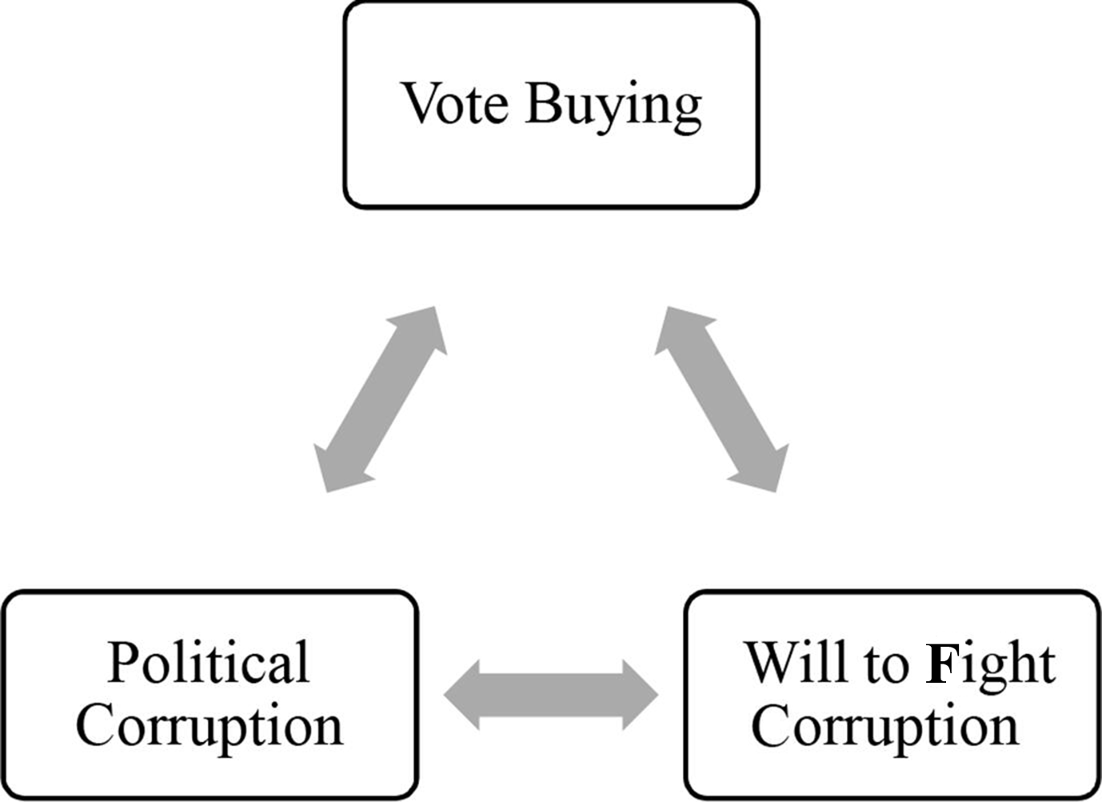
Vote Buying, Political Corruption, and the Will to Fight Corruption.
Vote Buying in Tanzania
Tanzania, which consists of mainland Tanzania (formerly Tanganyika) and Zanzibar, adopted multi-party rule in 1992 and has held multi-party elections every five years since 1995. Like many other African countries, Tanzania is a hybrid regime, which has both authoritarian and democratic characteristics. Freedom House (2018) has labelled the country as “partly free.” According to multiple media sources, the opposition parties and their supporters still face threats from the Chama Cha Mapinduzi (CCM) government. The current president, John Magfuli, in response to opposition rallies, “issued a decree in July 2016 that political parties are not allowed to conduct public rallies until election time. Only parliamentarians and councillors can go on political rallies in their localities” (Kabendera, 2018). In recent years, the police have arrested a number of opposition MPs for criticising the president or participating in protests.
As is the case with other African governments, corruption control also has been a challenge for the CCM government and the party itself, despite the government’s anti-corruption pledges and efforts. The country scored thirty-six and ranked ninety-ninth on the 2018 180-country Corruption Perception Index (CPI) of Transparency International, with zero representing “highly corrupt” and 100 representing “very clean” (Transparency International, 2019). Political corruption in the country has taken such forms as fraud, siphoning of public funds, and taking bribes in return for favours (Kibamba, 2013; Marwa, 2009). Among the factors of the country’s persistent corruption are weak law enforcement, lack of supervision and accountability, weak political institutions, scarcity of resources, lack of political will to curb corruption (Heilman et al., 2000: 503–505; Law Reform Commission of Tanzania, 2004: 14), and vote-buying practices, which carry over to political corruption (Msekwa, 2012: 130).
There are four types of MPs in the country. For example, the just dissolved parliament (2015–2020) ahead of the general election on 28 October 2020 had 393 members, comprising 264 constituency MPs, 113 female special-seat MPs, 5 MPs indirectly elected by the Zanzibar House of Representatives, 10 appointed MPs by the President, and the Attorney General as an ex-officio member (Parliament of Tanzania, 2018). The country uses the single-member plurality system to elect constituency MPs and proportionally distributes special seats based on the percentage of the popular vote each party received in the parliamentary election. Parties should earn at least 5 per cent of the popular vote to be qualified for special seats. The special-seat nomination process has varied across the parties. In the major parties (CCM; the Chama Cha Demokrasis Na Maendeleo [Party of Democracy and Development, CHADEMA]; and the Civic United Front [CUF]), the party’s women’s wing plays a certain role in the nomination process. The CCM women’s wing, Umoja wa Wanawake wa Tanzania (UWT), has the most elaborate process, however (Yoon, 2016: 197).
In Tanzania, people aspire to become MPs due mainly to financial gains (Babeiya, 2011; Gasarasi, 2004; Liviga, 2004: 98). 2 Liviga (p. 97), based on his survey of voters and MPs, finds that remuneration is the top incentive for people to become MPs, followed by the opportunities and prestige that come with MP positions. While the country’s gross national income (GNI) per capita was US$970 in 2016 (about US$81 a month) (World Bank, 2020a), according to Halima Mdee, 3 each MP receives a monthly salary of three million Tanzanian shillings (Sh) (about US$1,378); “when it is combined with allowances and cash from duty roles, it reaches Sh10 million” (about US$4,593) (Halima Mdee, cited in Kimaro, 2016). 4 In addition to salaries and allowances, Tanzania pays each MP a lump sum at the end of each parliamentary term “in gratuity” (Mkinga, 2014). In January 2014, MPs (2010–2015) shocked many by voting for a significant increase in the end-of-term payment from Sh43 million in 2010 to Sh160 million (about US$80,362) to be paid in 2015 (Mkinga, 2014). 5 Serving various commissions “formed by the president, cabinet ministers or parliament itself” also brings them a lot of money (Liviga, 2004: 101). Therefore, aspirants view becoming an MP as “an easy and fast way towards one’s economic success” (Babeiya, 2011: 93). Anne Makinda, the preceding Speaker (2010–2015), at a seminar organised by the Tanzania Women Cross-Party Platform in 2014, warned that “members of parliament should always put national interest first and stop regarding their election [to] the House as a get rich fast venture” (cited in KLH News, 2014).
Most elected leaders in Tanzania, Marwa (2009: 31) states, are “by-products of corruption by way of their emergence.” Paradoxically, vote buying became widespread with democratisation and multi-party elections, largely due to the increase in the use of private funding for campaigns and elevated electoral competition. During single-party rule, the party did not allow candidates to raise funds or use their personal funds for campaigns (Babeiya, 2011; Hyden and Leys, 1972: 409). The party organised, fully funded, and supervised campaigns (Msekwa, 2015). The district party conference in each district selected two candidates and provided equal support for logistics and funding (Hyden and Leys, 1972: 409). The intention of that practice was to prevent potential corruption by individual funds and to level the playing field (Msekwa, 2015). For the same reasons, the government also prohibited door-to-door canvassing (Elections Act of 1985, section 51 [1], b) and “giving or providing food, drink, or entertainment” to influence voters’ vote choices (Elections Act of 1985, section 98) (United Republic of Tanzania, 1995).
The country has amended the 1985 Elections Act multiple times since the adoption of multi-party rule in 1992. For example, for the first multi-party elections, in 1995, the amendment allowed candidates to use private funds and draw resources from their parties, although the National Electoral Commission gave them subsidies (Rickey and Ponte, 1996: 81–82). The 2000 amendment reversed section 98 of the 1985 Elections Act to legalise offering food, drink, or entertainment if done “in good faith” (takrima) (Tanzania Election Monitoring Committee [TEMCO], 2010). Parties, candidates, and their agents had widely used takrima during campaigns to gain votes until the High Court banned the practice in 2006 (TEMCO, 2010). The 2000 amendment also legalised door-to-door canvassing (Mørck, 2006: 17). Some candidates prefer door-to-door (house-to-house) campaigns to big rallies to secure votes through direct person-to-person interactions (Nkwame, 2018). Door-to-door canvassing is also instrumental in reaching out to the electorate unable to attend rallies, and costs much less than holding rallies. However, it creates an opportune environment for gift giving; concealed from the public view, some candidates distribute gifts when campaigning door to door (Legal and Human Rights Centre & Tanzania Civil Society Consortium for Election Observation [LLRC & TACCEO], 2016: 106–107).
The Election Expenses Act of 2010, the latest amendment, also allows private funds for campaigns, but sets a limit on election expenses and excludes the takrima clause to limit the campaign cost and to curb vote buying. Specifically, Part V of the Act prohibits offering “food, drink, entertainment or provision to or for any person, for the purpose of influencing that person, or any other person, to vote or to refrain from voting at such nomination process or election” (section 22 [a]) and “conveyance of voters to and from the polling stations” (section 23 [3]) (United Republic of Tanzania, 2010a). However, the level of vote-buying activities increased significantly despite the Act (LLRC & TACCEO, 2016; TEMCO, 2010). According to Policy Forum and REPOA (2014: 25), some incumbent MPs standing for re-election have even diverted the Constituency Development Catalyst Fund, established in 2009 to provide funding directly to constituency MPs for constituency development projects, for campaign purposes. In addition to handing out gifts to voters and transporting them to and from campaign rallies, candidates pay for journalists’ transportation and food to have media coverage of their campaigns (Ewald, 2010: 233). Though both the ruling and opposition parties have engaged in vote buying, no opposition party has been able to match the vote-buying scale of CCM due to the resource gap (Macdonald, 2018: 57).
Poverty, which creates a climate conducive to vote buying, is an accomplice of vote buying (Babeiya, 2011). In 2015 and 2016, the percentage of the Tanzanian population vulnerable to or living in multi-dimensional poverty was 24.1 per cent and 26.1 per cent, respectively (United Nations Development Programme, 2019). 6 During election campaigns, voters expect candidates to give them “gifts and money in return for attending rallies or for their votes” (Heilman and Ndumbaro, 2002). Most candidates visit their constituencies with gifts, and “the election period for poor people has been a reaping season” (Babeiya, 2011). Candidates and their agents distribute gifts “often at official party rallies and meetings,” during door-to-door canvassing, or at informal gatherings in such places as bars (Macdonald, 2018: 57). Women, who account for over 50 per cent of registered voters 7 and most of whom are poorer than men, are also targeted by vote buyers; parties, candidates, and their agents distribute money, khanga and vitenge fabrics, soft drinks, alcohol, food, clothes, and household items “such as cooking oil, salt, sugar, soap and rice” to women (p. 57). They also funnel money and other gifts to various women’s groups to gain women’s votes and to get women actively involved in their campaigns. 8 Approaching the 2015 general election on 25 October 2015, the Prevention and Combating Corruption Bureau, responsible for investigating corruption cases, warned voters not to take bribes, but to no avail (Guardian , 2015).
Vote buying is not the only practice influencing voters’ voting decisions, however. Many voters base their vote choices on the candidates’ past records of community service (e.g. building schools, dispensaries, fish ponds, irrigations, and roads); they practice retrospective voting (Yoon, 2016: 203). A track record of constituency service through development projects, or at least a strong potential to deliver service to the electorate in the case of untested candidates, is crucial in order to be (re)elected in constituencies. In addition to delivering public goods, having a personal clientelistic relationship with their constituents, to a certain extent, influences the ability of MPs to gain the electorate’s support. Constituents in Tanzania, who view MPs as rich, expect their MPs to provide assistance in meeting their personal financial needs (e.g. funerals, burial services, weddings, health care costs, school fees, fundraising, and debt payments). 9 They often turn to their MPs for money when needs arise. Some voters make their voting decisions based on how their MPs have responded to their personal needs. 10
The 2015 Parliamentary Election
Parliamentary elections in Tanzania have become very competitive over time. The 2015 parliamentary election was particularly competitive due to the invigorated opposition, which increased its proportion of parliamentary seats from 20 per cent in 1995 to 29.26 per cent in 2015 (Wang and Yoon, 2018: 310). Twenty-two registered parties fielded 1,209 candidates for 264 constituencies (214 in the mainland and 50 in Zanzibar) (National Electoral Commission, 2016: 46). Of 1,209, 233 (19.27%) were women (p. 46). To run for a parliamentary seat, a party membership is mandatory. Though a large number of parties have fielded candidates in each election, only the major parties have been able to win a sizeable number of parliamentary seats. In 2015, CCM, CHADEMA, and CUF won 195, 35, and 32 seats, respectively (p. 74). In these major parties, the intra-party competition for nomination is stiff, and aspirants should campaign hard to be nominated. The primary competitions in the party strongholds are particularly fierce because the winners are also likely to win the constituency seats. Most female aspirants in the major parties lose in the primaries. In 2015, only fifty-two women won in the major party primaries: twenty-four in CCM; thirteen in CHADEMA; and fifteen in CUF (p. 46). Among those fifty-two women, twenty-five won constituency seats (Yoon, 2016: 192).
In order to unify opposition votes against CCM, four opposition parties (CHADEMA; CUF; the National Convention for Construction and Reform [NCCR]-Mageuzi; and the National League for Democracy [NLD]) formed a coalition, Umoja wa Katiba ya Wananchi (Coalition of Defenders of the People’s Constitution [UKAWA]). The coalition agreed to nominate a single UKAWA candidate for each constituency. In mainland Tanzania, the coalition allocated and fielded 205 candidates for 214 constituencies as follows: 139 for CHADEMA; forty-nine, CUF; fourteen, NCCR-Mageuzi; three, NLD (LLRC & TACCEO, 2016). According to Halima Mdee, a CHADEMA female MP in the latest parliament, in order to field a single UKAWA candidate in each constituency, UKAWA gave a preference to the opposition incumbents seeking re-election and to the candidates in their respective party strongholds (cited in International Republican Institute, 2016: 24). Of the two small coalition partners, only NCCR-Mageuzi won a seat (National Electoral Commission, 2016: 74).
Article 51 (1) of the National Elections Act of 2010, which “incorporates all the amendments made up to and including 30th June 2010,” states, “Where there is a contested election in constituency the election campaign shall be organised by candidate, the candidate’s political party or by his agent” (United Republic of Tanzania, 2010b). Campaigns usually include such activities as public rallies, meetings, door-to-door canvassing, advertisements (e.g. television, radio, social media, billboards, posters, and fliers), and entertainment (National Electoral Commission, 2016: 54). According to the Act, “The campaign period begins 1 day after nomination and ends 1 day before the election day” (p. 55). Furthermore, candidates can campaign between 8 a.m. and 6 p.m. during the designated campaign period. In 2015, campaigns began on 22 August and ended on 23 October. The maximum amount of election expenses allowed per candidate varies depending on the categories of candidates (presidential, parliamentary, and councillor) and the geographical area size, population, and communication infrastructure of the constituency (Election Expenses Act, Article 10 [1]) (United Republic of Tanzania, 2010a). In 2015, the maximum expenditure allowed per parliamentary candidate ranged from Sh33 million (about US$16,575) to Sh88 million (about US$44,199) 11 (TEMCO, 2016). However, it was not firmly enforced (p. 111), which suggests that some candidates spent more than allowed.
Methods
I use voters’ perceptions of vote buying as a proxy of vote buying. I collected both survey and interview data in the Dar es Salaam region, Tanzania, through my Tanzanian research assistant. While the survey is my primary data source, the interviews supplement the survey data and assess the validity of the survey data. I conducted the survey during the months of September and October 2018 in four of the ten constituencies in the Dar es Salaam region: Kigamboni and Ilala, where CCM won against CHADEMA, and Kibamba and Ubungo, where CHADEMA won against CCM. I collected 366 questionnaires (around ninety in each constituency). 12 These constituencies, accessible by road, railway, or sea, may not necessarily be representative of the entire country, but together resemble the Tanzanian society. They comprise both urban and rural areas and are ethnically diverse. While some people have formal employment or run their own businesses for living, others are engaged in small-scale informal economic activities, such as farming, fishing, street vending, and animal raising. Of forty-two total parliamentary candidates in the four constituencies, only thirteen were women (Figure 2). Though a man eventually won in all four constituencies, one of the top two contenders was a woman in both Kibamba and Kigamboni.
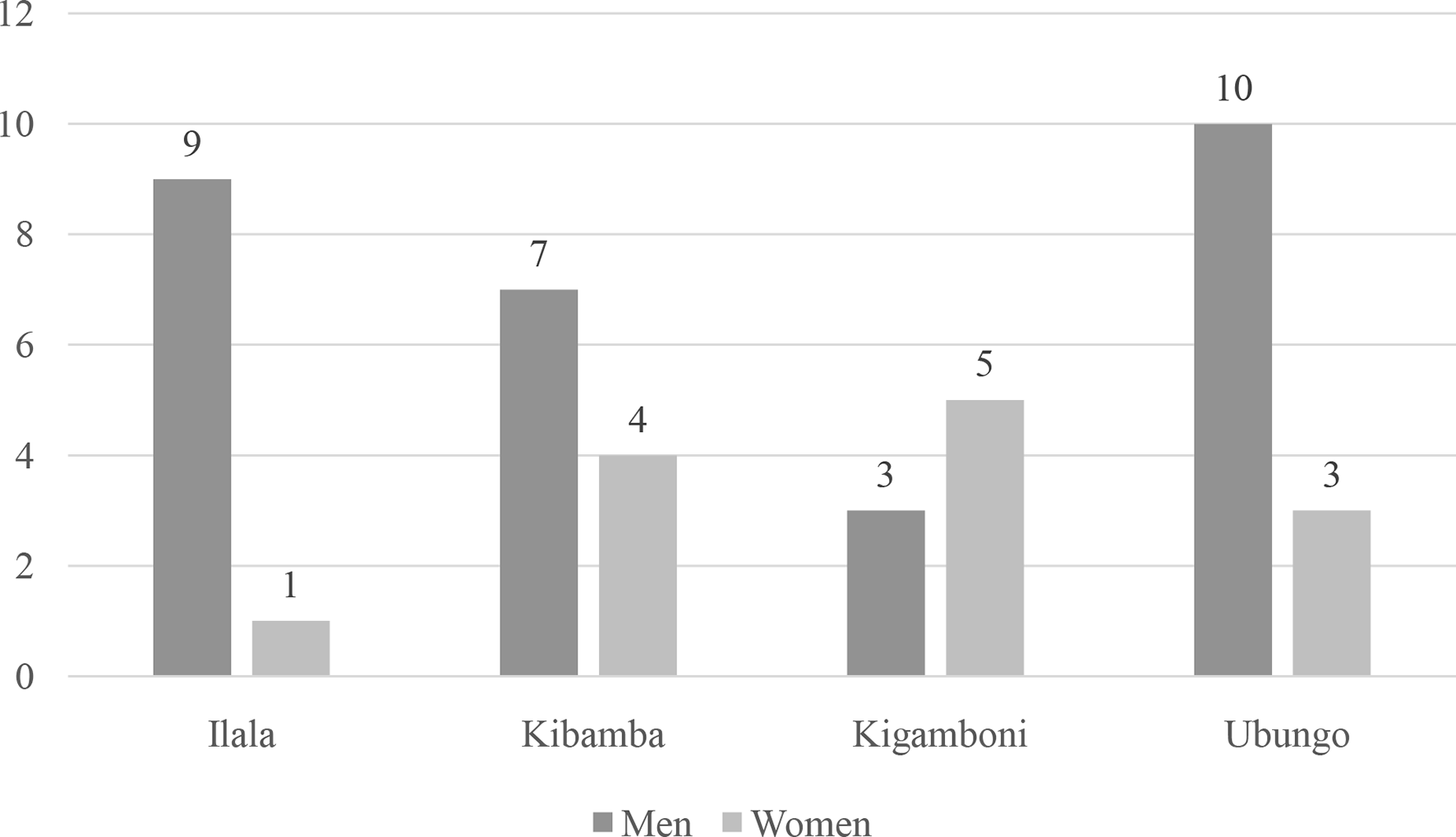
Number of Parliamentary Candidates in the General Election by Constituency and Sex, 2015. Source: United Republic of Tanzania 2016.
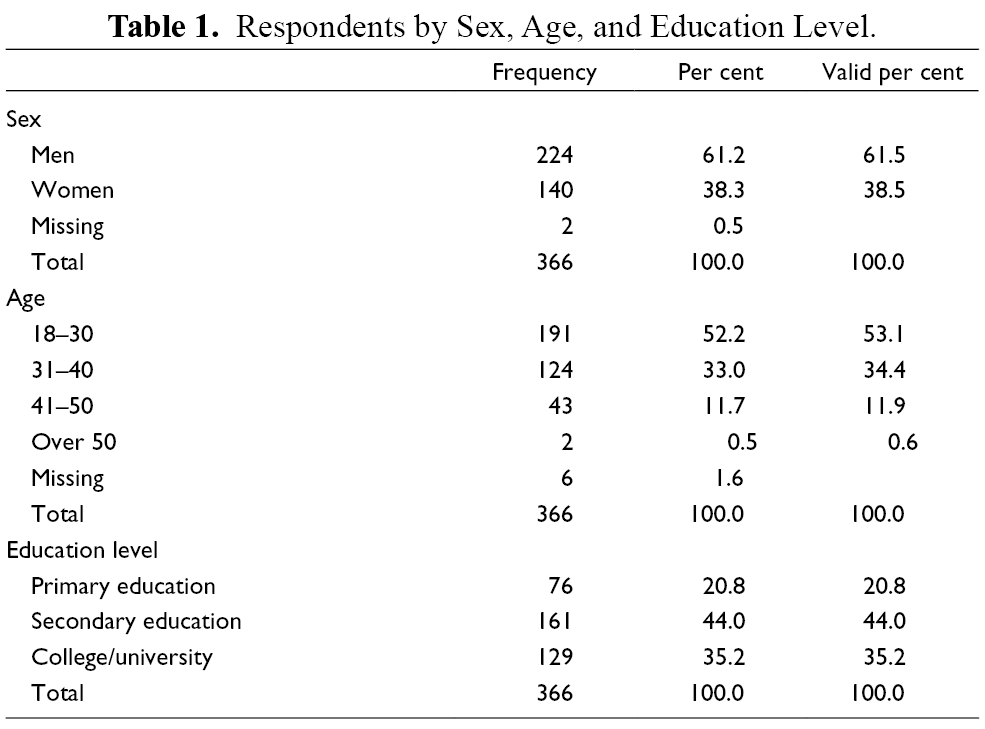
The survey was conducted in such places as bus and ferry terminals, markets, and beaches to gather the views of the general public. Adult individuals were randomly invited to participate in the survey. However, many people were reluctant to participate for fear of repercussions from the authorities, as vote buying is a politically sensitive topic in the country. Considering the current political environment under President John Magfuli, whose administration has restricted much of political, media, and civil society freedoms gained since the adoption of multi-party rule in 1992, their reluctance was understandable, but raised the spectre of sampling bias. It not only reduced the sample size, but also brought about much greater representation of men and younger people, who were more willing to participate in the survey (Table 1).
Respondents by Sex, Age, and Education Level.
A total of fourteen officers (six males and eight females) of the following nine civil society organisations (CSOs) were interviewed in March 2019: Tanzania Media Women’s Association, the Centre for Good Governance and Development in Tanzania, Foundation for Civil Society, Policy Forum, Women Fund Tanzania, Tanzania Gender Network Programme, the Tanzania Centre for Democracy, Tanzania Citizens’ Information Bureau, and Tanzania Women Lawyers Association. I do not disclose the interviewees’ identities to honour our confidentiality agreement. There was a time lag between the 2015 parliamentary election and the survey and interview data collections, but no election likely to influence the survey and interview responses was held in the interim, as local elections in Tanzania are held one year ahead of the general election.
My survey and interviews focused on the following questions. Each survey question had both English and Kiswahili versions. The interviews were conducted in Kiswahili and tape-recorded with permission. They were then transcribed into English.
Is vote buying still widespread in Tanzania? (a) Yes (b) No. If yes, is vote buying more serious in the general election or in the primaries? Is there no difference?
Should candidates give voters gifts to gain their votes? (a) Yes (b) No
During the 2015 parliamentary election campaigns, who were more actively engaged in vote buying? (a) Men (b) Women 13
I added an open-ended question, “why,” to questions (2) and (3) to collect qualitative data. Some studies (Chang, 2005: 718; Hicken, 2007: 53; Nyblade and Reed, 2008: 929) find the probability of vote buying in candidate-oriented intraparty competitions higher than that in party-focused interparty competitions. I examine whether voters in Tanzania share similar views. I also examine whether there are differences in perceptions of vote buying by gender, age, and level of education. Last, I examine whether perceptions of vote buying vary across the four constituencies.
Findings
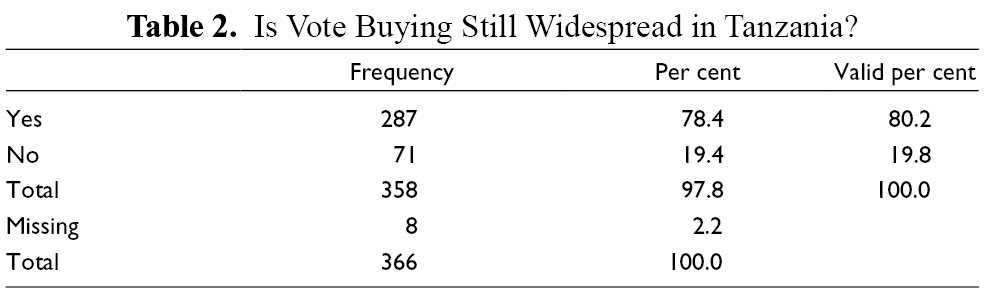
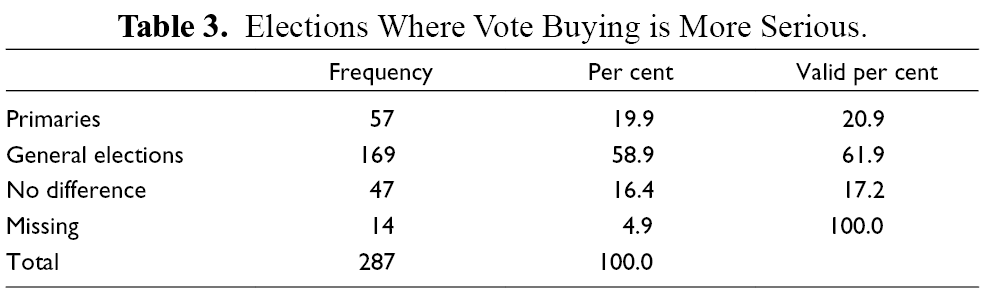
The respondents generally view vote buying as still widespread in Tanzania. Of 358 valid responses, 287 (80.2 per cent) believe so (Table 2). This view is consistent with those of ten out of fourteen CSO officers interviewed. According to some officers, many voters are willing and ready to sell their votes and the size of bribes varies depending on the social and economic status of potential vote sellers. The turnout rate for voter registration in the general election is relatively high, because some voters intend to use their voter identification card to attract vote buyers, as stated by one CSO officer. Among the survey respondents who view vote buying as widespread, 169 (61.9 per cent) see vote buying as more serious in the general election and 57 (20.9 per cent) in the party primaries, while 47 (17.2 per cent) see no difference (Table 3). However, the views of CSO interviewees are slightly different. While five (35.7 per cent) see vote buying as more serious in the primaries, others see no difference, or are unsure. According to those five, vote buying is more serious in the primaries due to stiffer competition, particularly in the major party primaries, and smaller electorates to bribe. Considering that only card-carrying party members can cast votes in the primaries, the number of eligible voters in the primaries is much smaller than in the general election, where all registered voters in the constituency can vote.
Is Vote Buying Still Widespread in Tanzania?
Elections Where Vote Buying is More Serious.
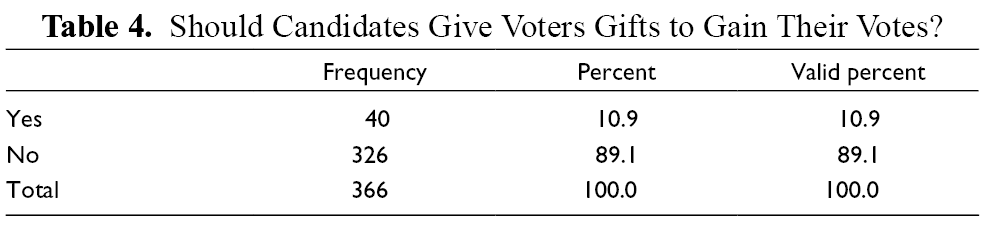
The attitudes regarding vote buying are overwhelmingly negative. Of 366 respondents, 326 (89.1 per cent) believe that candidates should not give voters gifts to gain their votes (Table 4). They view gift giving as bribery and corruption. Considering that many voters actually vote for candidates who offer them gifts, respondents believe that vote buying brings undeserving corrupt leaders into politics, and hinders electing the best-qualified candidates for office. They also believe that vote buying disadvantages resource-poor candidates. Moreover, they perceive that candidates who bought their way to parliament are likely to pursue personal interests and consequently hinder the country’s development. However, forty respondents (10.9 per cent) think that candidates should give voters gifts. These respondents believe that gift giving excites and encourages voters to vote. Some stated that gift-giving candidates generally give a positive impression to voters. They look more persuasive, caring, and capable of delivering services to their communities; they seem to be better leaders deserving their votes. Some respondents would not vote for the candidates who offer no gifts. They view gifts as a token of kindness and appreciation to voters, and as an efficient tool to influence voters’ choices. The CSO interviewees echoed the negative attitudes about vote buying, except one who sees vote buying as a legitimate business transaction that compensates voters for their votes.
Should Candidates Give Voters Gifts to Gain Their Votes?
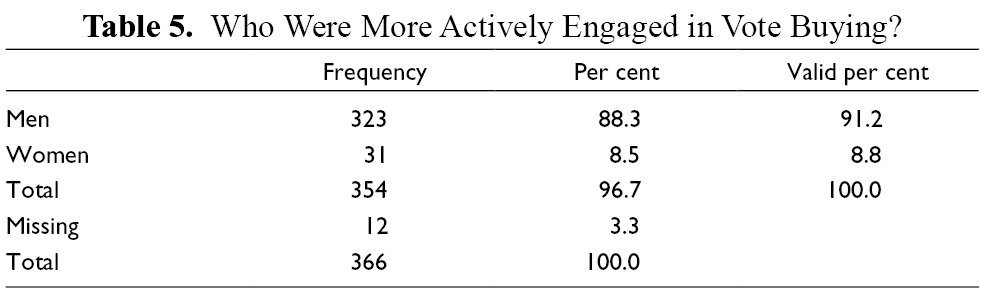
As for the respondents’ views about gender differences in vote buying, of 354 valid responses, 323 (91.2 per cent) perceive men as more active vote buyers than women (Table 5). They believe that more men than women exercise vote buying and their vote buying scale is greater. According to some respondents, many male contestants hire motorcycle drivers to distribute a variety of gifts, even on college campuses. All CSO interviewees had the same view that men engage more in vote buying, except two who were unsure. Why, then, do Tanzanian voters view men as more active vote buyers than women? First, male candidates largely outnumber female contestants (Figure 2), which might shape the view that men engage more in vote buying. A respondent stated, “there are significantly more male candidates than female candidates.” Second, respondents believe that men have more resources at their disposal to buy votes, due to their already well-established social and economic status; the resource gap, in turn, leads to an opportunity gap in vote buying. A respondent stated, “men are financially much more stable, which enables them to bribe voters.” An interviewee stated, “many women candidates cannot afford vote buying due to lack of fund.” The perceived gender gap in resources seems to be consistent with the actualities. Though most of the female constituency MPs in the latest parliament have strong educational and employment backgrounds, 14 many women aspiring to become an MP do not have backgrounds conducive to resource generation for electoral campaigns. The gender gap in resources, therefore, remains to be one of the key obstacles to women’s entry into politics (Yoon, 2016). Tanzania was ranked 71 out of 149 countries on the World Economic Forum’s Gender Gap Index in 2018, with a score of 0.704 out of 1 (parity). The female-to-male ratio in key indexed areas such as (1) wage equality for similar work, (2) legislators, senior officials, and managers, (3) professional and technical workers, and (4) enrolment in tertiary education was 0.64, 0.30, 0.76, and 0. 51, respectively (World Economic Forum, 2018).
Who Were More Actively Engaged in Vote Buying?
Third, some respondents believe that men, who have fewer paths to parliament, have a stronger will to win using whatever means necessary to gain votes. While women have multiple paths to parliament (as constituency MPs, special-seat MPs, or MPs appointed by the president), for men, winning a constituency seat is the only way to enter into parliament, unless appointed by the president. The president, however, can appoint only up to ten MPs. Some survey respondents are of the opinion that men are more active in vote buying because they cannot accept defeat, particularly to women. As stated earlier, of the four constituencies I surveyed, two had a woman as one of the top two contenders. Last, female candidates are absent and invisible in certain places and times, due to the social and cultural norms constraining women’s behaviour, safety concerns, and household responsibilities. These limitations, which affect their campaigns, may contribute to the opportunity gap in vote buying, though to a lesser degree. Female candidates generally campaign freely, but some campaign activities (e.g. going to such places as bars, night door-to-door canvassing unaccompanied by male family members or supporters, and street campaigning at night) are outside the social and cultural boundaries for women and unsafe; therefore, they are offlimits to female candidates. 15 An interviewee stated, “vote buying takes place at night campaign meetings in bars drinking beers. [In Tanzania], it is hard to see women in that kind of environment.” (Multiple media sources report that candidates often campaign at night, though the election law prohibits campaigns after 6 p.m.) Pius Msekwa, a former Speaker (1994–2005), states, “women candidates may campaign anywhere and anytime like their male counterparts, but there are certain things that society just does not expect women to do.” 16 In addition, due to their household responsibilities, women tend to have less time to devote to their campaigns compared with men. 17
To recap, an overwhelming majority of respondents disapprove of vote buying, yet they perceive vote buying as still widespread and men as more active vote buyers. The interview data I used to check the validity of the survey data produced similar findings. I examined whether the survey responses might differ by gender across the questions. The percentage distributions of responses show little difference between men and women (Table 6); χ2 tests of independence also show no significant association between gender and perceptions of vote buying across the questions. Age and level of education are also independent of the differences in perceptions of vote buying. Likewise, the variations across the constituencies are marginal (Figures 3 -5) and statistically insignificant. These findings suggest that perceptions of vote buying in Tanzania do not differ by gender, age, education level, or constituency.
Responses by Sex: Cross Tabulations.
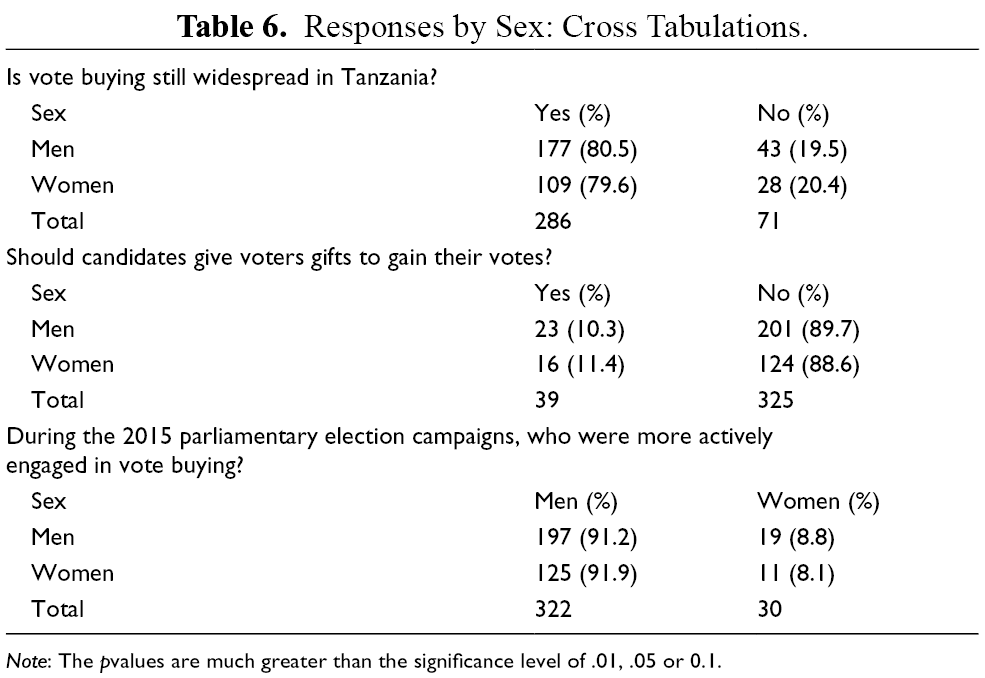
Note: The pvalues are much greater than the significance level of .01, .05 or 0.1.
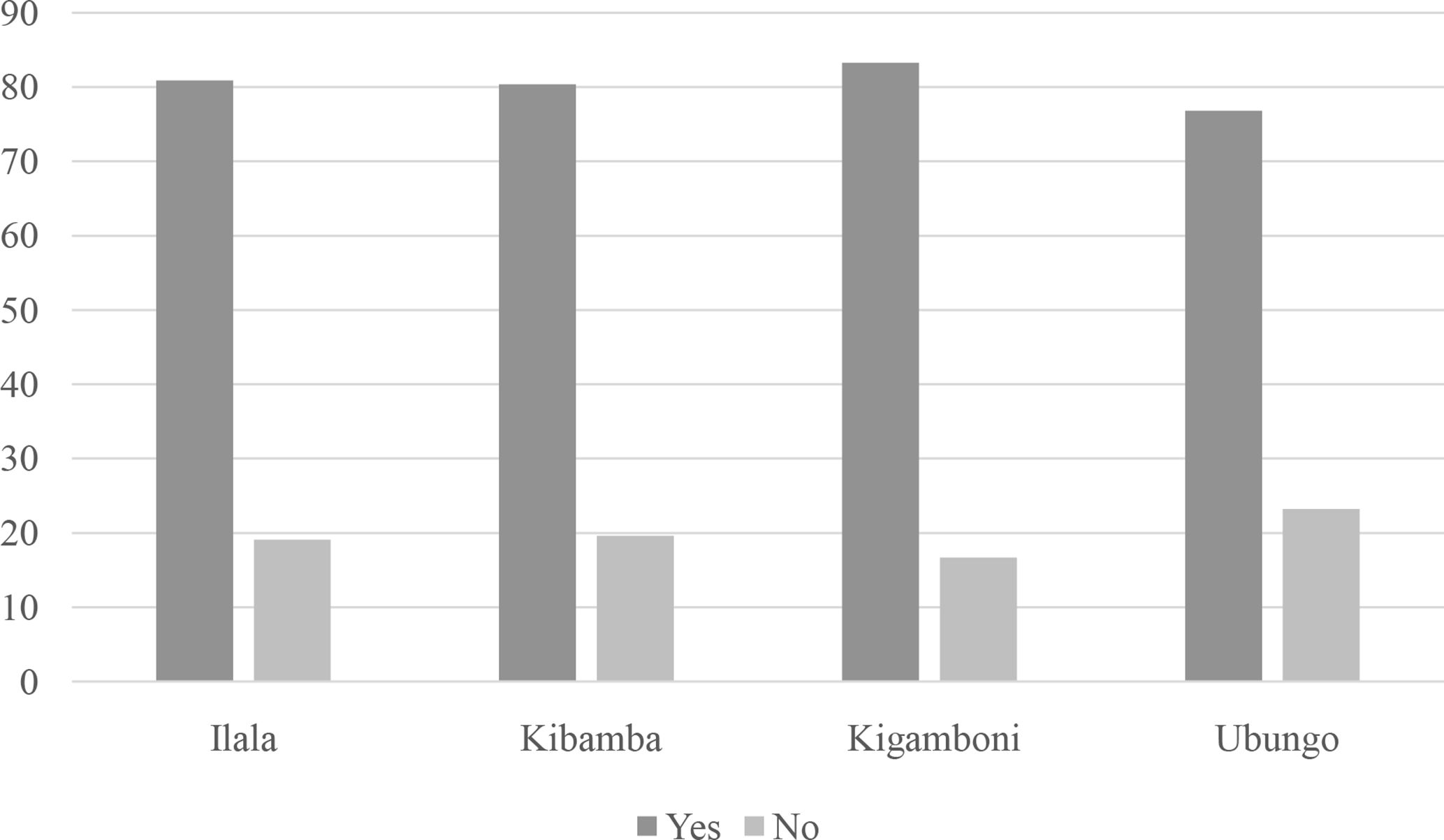
Is Vote Buying Still Widespread? Percentages of Respondents.
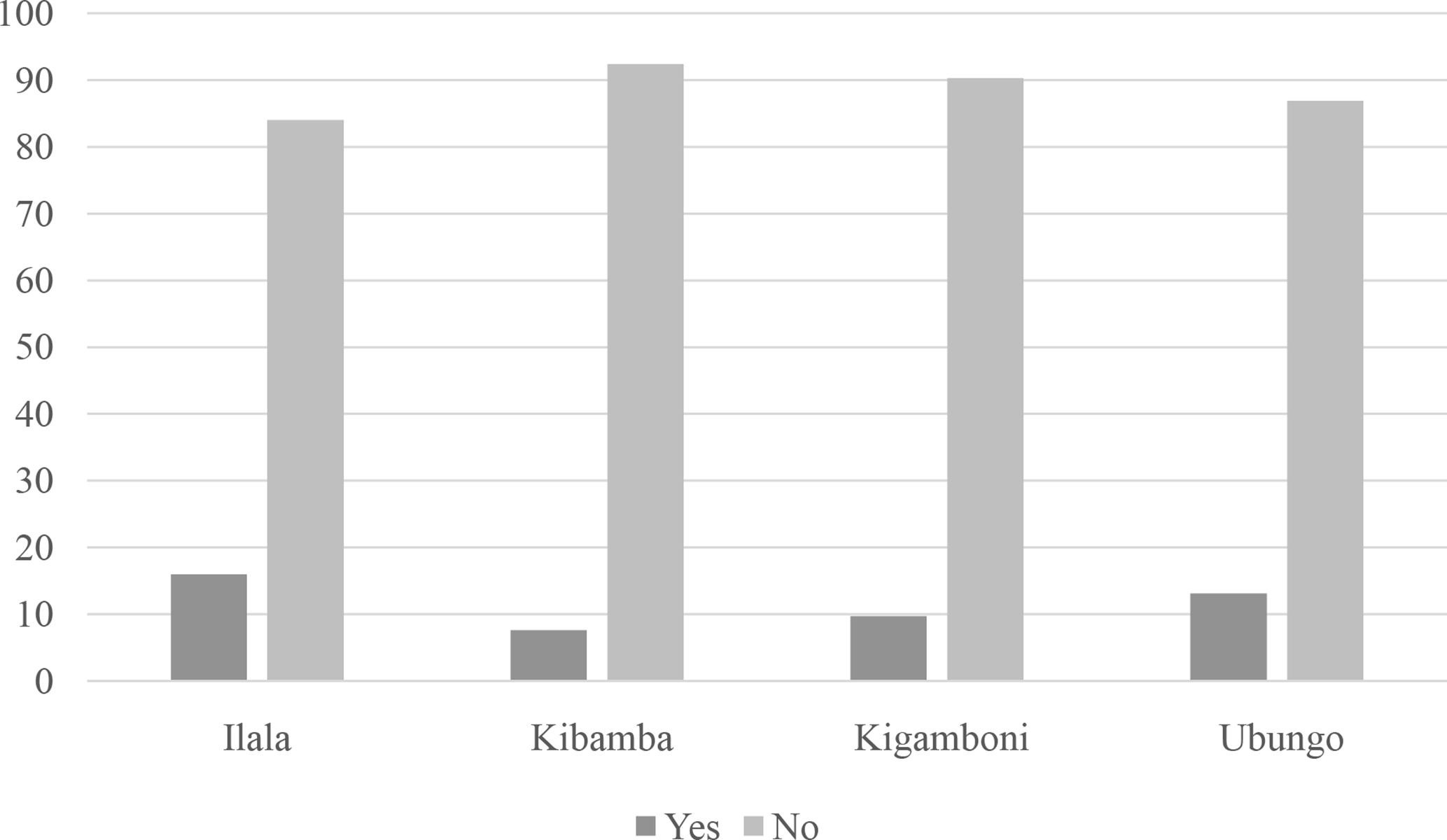
Should Candidates Give Voters Gifts? Percentages of Respondents.
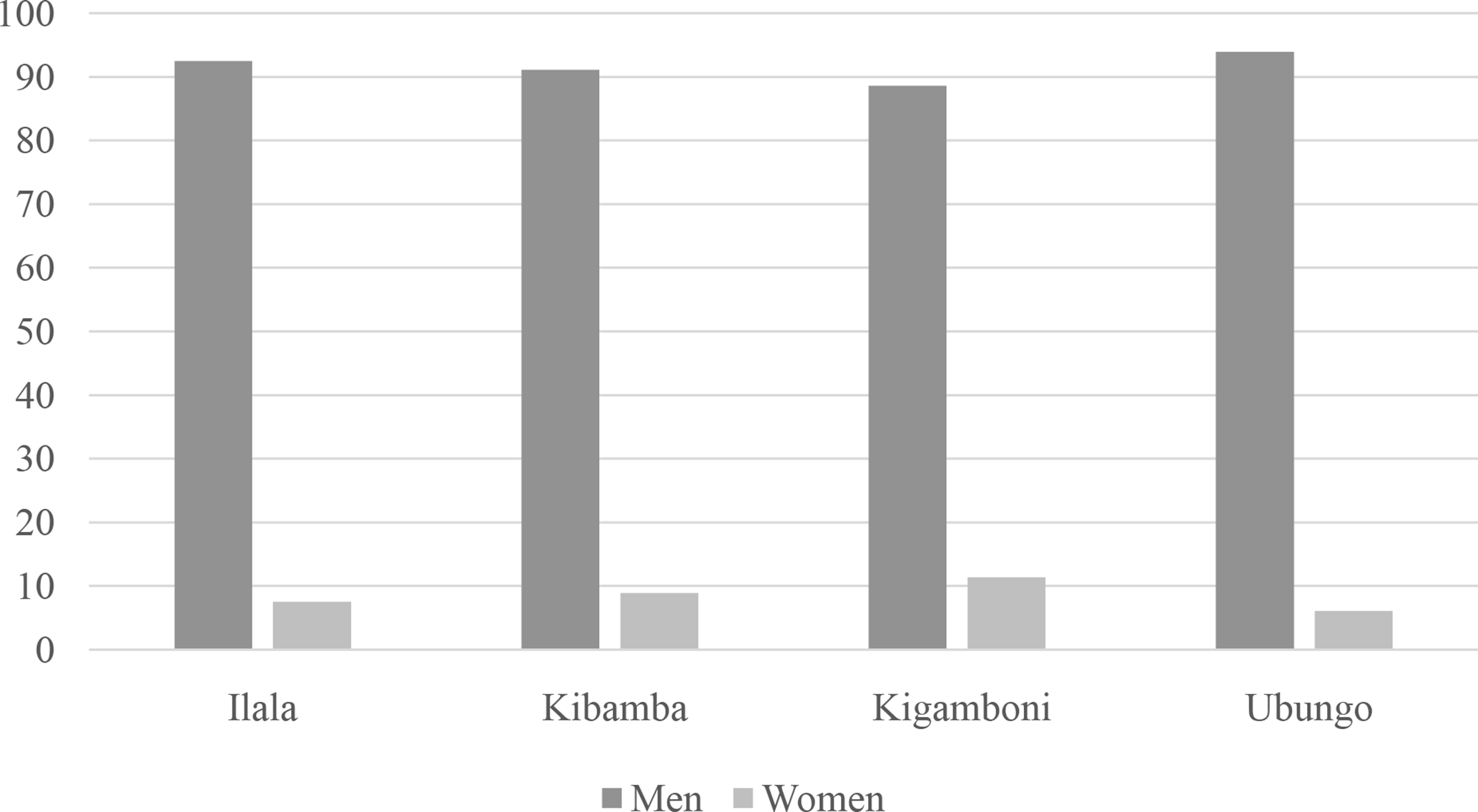
During the 2015 Parliamentary Campaigns, Who Were More Actively Engaged in Vote Buying? Percentages of Respondents.
Conclusion
Since the adoption of the multi-party rule in 1992, more women have aspired to run for constituency seats. Will politics become cleaner if more women enter into politics? Any answer to this question should examine whether women’s path to parliamentary seats is cleaner than that of men. Drawing on the survey and interview data collected in the Dar es Salaam region on voters’ perceptions of gender differences in vote buying, focusing on the 2015 parliamentary election, I found that voters perceive men as more active vote buyers. These views may come from the perceived opportunity gap in vote buying resulting from the perceived gender gap in resources and social and cultural constraints, rather than from gender differences in attitudes towards corruption, as assumed by some studies on women and corruption reduction (Dollar et al., 2001; Michailova and Melnykovska, 2009; Swamy et al., 2001). The findings of this study, therefore, appear to support the corruption opportunity argument by Alhassan-Alolo (2007) and Goetz (2007) instead.
Can greater representation of women in Tanzanian politics, then, become a corruption reduction force? Though most respondents and interviewees view women as less engaging in vote buying, none of them reason that women are less prone to engage in vote buying because they are intrinsically more honest and law abiding than men. Of 354 valid responses, thirty-one (8.8 per cent) even view women as more engaged in vote buying. These findings suggest that the perceived gender gap in vote buying may disappear once the opportunity gap in vote buying disappears. Women-only competitions (e.g. nominations of special-seat MPs and women’s wing elections of political parties) marred by vote buying also suggest that women are not bystanders in vote buying exercises; they can be as active as men in vote buying if given the opportunity.
Thus, the findings of this study and vote-buying exercises in women-only competitions do not suggest that politics will become cleaner if more women enter into politics. If women also buy their way to parliament, they may be inclined to use their office to recoup the expenses of vote buying and to accumulate resources for their next electoral contest. They are also less likely to have a strong will to combat corruption and become a corruption fighting force. Vote buying/selling appears to be an ordinary practice, which has become a culture fed by poverty, despite the overwhelmingly negative views of voters about the practice. Vote buying and subsequent political corruption, however, may significantly decrease if voters take their negative views into action by voting out vote-buying candidates, regardless of gender. However, such action, in order to be materialised, would require improvement in the socio-economic well-being of voters and a cultural change through voter education.
Supplemental Material
Figure S1 - Supplemental material for Voters’ Perceptions of Gender Differences in Vote Buying: The Case of Tanzania
Supplemental material, Figure S1, for Voters’ Perceptions of Gender Differences in Vote Buying: The Case of Tanzania by and Mi Yung Yoon in Africa Spectrum
Footnotes
Acknowledgement
I am grateful to Andrew Mbega, whose help made the survey possible. He helped select the constituencies for the survey, translated the survey questionnaire to Kswahili, and helped me find a research assistant. I also thank Bahati Samson for his excellent research assistance and the Faculty Development Committee of Hanover College for funding his data collection.
Declaration of Conflicting Interests
The author(s) declared no potential conflicts of interest with respect to the research, authorship, and/or publication of this article.
Funding
The author(s) received no financial support for the research, authorship, and/or publication of this article.
Supplemental Material
Supplemental material for this article is available online.
Notes
Author Biography
E-mail: