



Abstract
Monitoring of local oxygen pressure in brain white matter (tipo2) and of local hemoglobin oxygen saturation (rSo2) with near-infrared spectroscopy (NIRS) are increasingly employed techniques in neurosurgical intensive care units. Using frequency-based mathematical methods, the authors sought to ascertain whether both techniques contained similar information. Twelve patients treated in the intensive care unit were included (subarachnoid hemorrhage, n = 3; traumatic brain injury, n = 9). A tipo2 probe and an NIRS sensor were positioned over the frontal lobe with the most pathologic changes on initial computed tomography scan. The authors calculated coherence of tipo2 and rSo2, its overall density distribution, its distribution per data set, and its time evolution. The authors identified a band of significantly correlated frequencies (from 0 to 1.3 × 10³ Hz) in more than 90% of the data sets for coherence and overall density distribution. Time evolution showed slow but marked changes of significant coherence. By means of spectral analysis the authors show that tipo2 and rSo2 signals contain similar information, albeit using completely different registration methodologies.
Despite medical and technological advances in neurosurgical intensive care, severe traumatic brain injury and severe subarachnoid hemorrhage still carry a poor prognosis. Invasive monitoring of cerebral oxygenation has recently been proposed as a means for the detection and prevention of cerebral ischemia in comatose patients (Vinas et al., 1998). This is even more desirable, inasmuch as it is assumed that episodes of insufficient cerebral oxygenation enhance secondary brain damage (Purves, 1972). Thus several new continuous oxygen monitoring technologies, like the registration of regional brain tissue P
Registration of the regional partial oxygen pressure (tip
Reports about the usefulness of NIRS are contradictory as regards its technical reliability and clinical value (Büchner et al., 2000; Henson et al., 1998). Some of these studies report technical insufficiencies (Büchner et al., 2000; Kiening et al., 1996) of the measuring device itself; others question the results produced by the device, as being unrealistic for physiologic reasons (Schwartz et al., 1996). Other studies (Lewis et al., 1996), however, report useful and reasonable results with this methodology.
It is our opinion that both methods have potential for clinical application. Our goal, therefore, was to find a solution to these inconsistencies and contradictions. We approached the issue under the following assumption: tip
Herein we report the first steps of our work, the frequency analysis of the tip
MATERIALS AND METHODS
Patients and data monitoring
Twelve patients with closed traumatic brain injury (n = 9) and aneurysmal subarachnoid hemorrhage (n = 3) were included in the study prospectively. All patients were automatically ventilated and sedated through registration time. Eleven patients were male; 1 was female. Mean age was 34 years (range 18–76 years). The study was approved by the local ethics committee, and the relatives of the patients had given their informed consent. The treatment of these patients was performed according to the general guidelines used in the neurosurgical intensive care unit and was not influenced by the study.
A flexible polarographic Clark-type microcatheter (LICOX System; GMS mbh, Kiel, Germany) designed for continuous brain tip
The cerebral oximeter sensors (INVOS 3100; Somanetics, Troy, MI, U.S.A.) consisted of one near-infrared light transmitter and two detectors (placed at a distance of 30 and 40 mm from the transmitter) housed within an adhesive strip. Near-infrared light at 730- and 810-nm wavelengths was used for maximum tissue penetration. It is postulated by the manufacturer that, using this sensor, near-infrared light is scattered by the tissues in two parabolic curves. The detector placed 30 mm from the transmitter receives light scattered predominantly from the scalp and skull, whereas the detector placed at 40 mm receives light scattered from the skull, scalp, and the brain tissue.
The distance of the two detectors allows intracranial penetration of more than 15 mm. The device measures a mixed venous–arterial oxygen saturation of the brain cortex based on hemoglobin saturation. Hereby 70% of the oxygen seen by the sensor originates from the venous compartment, 30% from the arterial compartment. This distribution is based on the assumption that cerebral vasculature has a greater volume of venous blood than arterial. The data are presented as rS
A multichannel digital-to-digital and analog-to-digital recording system was used for data storage. All patients were under camera observation during the registration period. The mean recording time was 4.5 days. Pertinent patient data and related information are shown in Table 1.
General clinical data
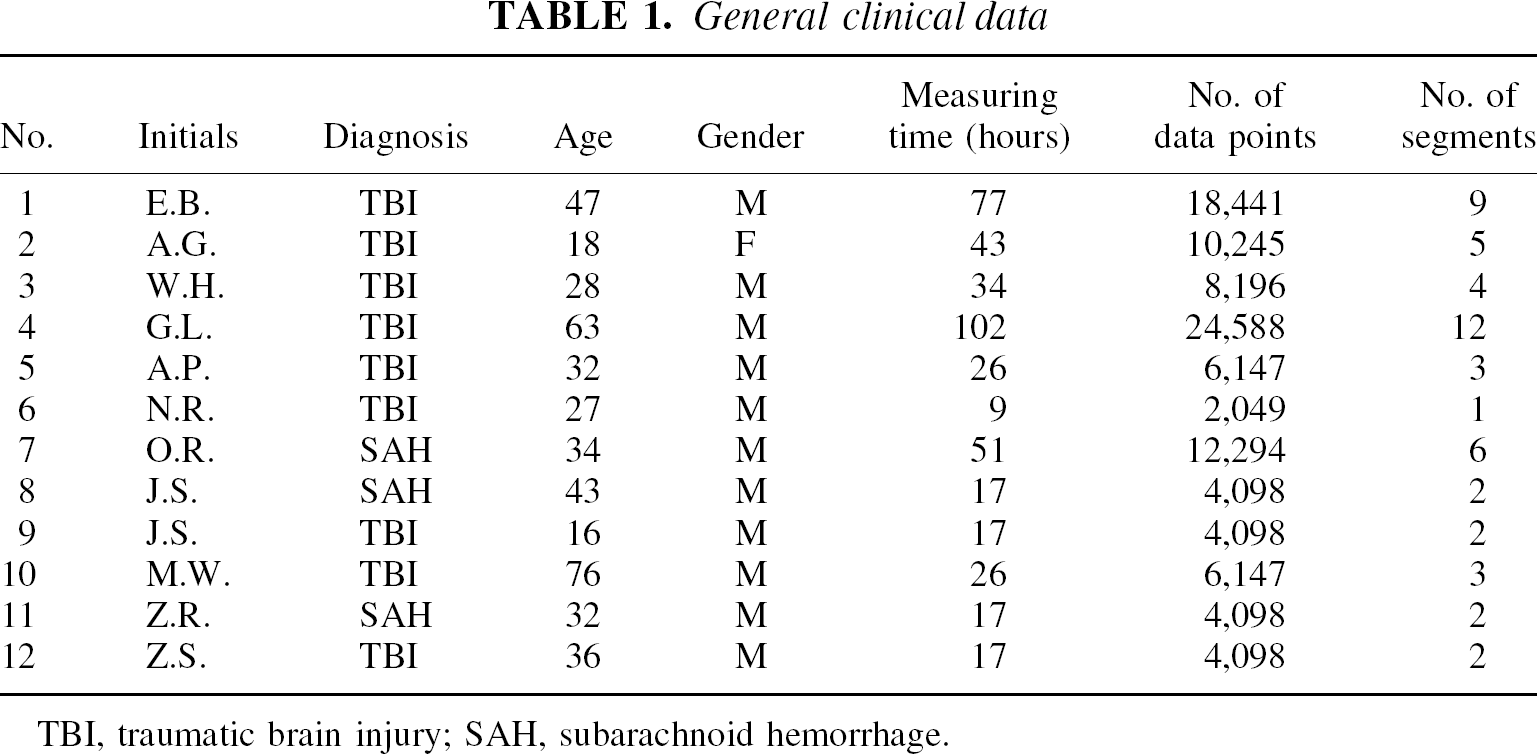
TBI, traumatic brain injury; SAH, subarachnoid hemorrhage.
Data preparation
All data were registered in 15-second intervals (0.07 Hz). First, we defined the time segments that were suitable for further analysis. We checked the quality limits, which were set by the manufacturers of the devices. We took into account only tip
Our next step was to split the remaining data sets of both signals in corresponding time-synchronized segments of 2,049 points, corresponding to approximately 8.5 hours each. This odd length was chosen for numerical reasons, to obtain optimal information by the algorithms used. However, we considered this interval to be long enough to contain relevant dynamical fluctuations. As a result we achieved 50 data sets comprising 427 hours of measuring time.
Data analysis
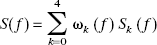

A second advantage of the MTM is a built-in statistical test, similar to the well-known F test, to check for the significance of each occurring frequency. Each figure in our work depicts lines pertaining to different levels of significance. This F variance–ratio test (Thompson, 1982) for the significance of line components can be constructed through the statistics F(f):
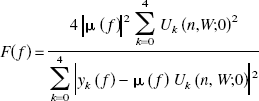
In this formula the spectral estimates are represented by the function yk(f), which is defined as:

The real spectral estimates are therefore simply the absolute square of yk(f):

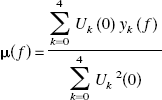
The function Uk(n,W;f - f0) is defined as the FFT of vt,k(n,W), which again means the kth 3π taper. Thus the choice of the tapers has a direct influence on the statistical test (i.e., the significance of each occurring frequency).
Based on these two mathematical concepts, we calculated the coherence or crosscorrelation of corresponding INVOS and LICOX data. The coherence is a well-known mathematical instrument for calculating the amount of common information enclosed by different time series. Because this method is also based on an FFT, it shows, for each frequency, whether the corresponding sinusoidal wave is a part of both time series and therefore common information. First, the MTM spectra of each single time series is obtained; the coherence is then calculated by the following formula, where we again used 5 × 3π tapers:
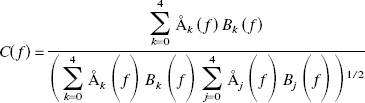
Our first step was to find out whether the significantly coherent frequencies were concentrated in a specific frequency window or were scattered throughout the total spectrum. We counted how often each frequency occurred as significantly coherent through all the data sets. The resulting number for each frequency was normalized by division through the number of coherence computations (= data sets). Because we could identify a well-defined frequency band of high correlation, for our second step we calculated the percentage of significant coherent frequencies with significance greater than or equal to 90% within this band for each data set. The corresponding results were compared with the corresponding percentage of correlation of two uncoupled white noise signals. This procedure was necessary to make sure that within each single data set this frequency window was relevant and to exclude the possibility that the results of step one were merely the result of a summation over all data sets.
The third step was to evaluate the time course of the coherence through the total unsplit data set of each patient, enabling us to find exact time segments of high coherence and their duration. We therefore chose a window with a fixed length of 2,049 points and calculated the percentage of coherent frequencies according to the analysis of each data set. We then shifted the window by 4 points (corresponding to one minute) and did the same calculation again. This procedure was repeated until we reached the end of the patient's data set.
Finally, as a fourth step we reconstructed new curves by means of the significant frequencies to compare them to the original ones.
RESULTS
Step 1
Figure 1 shows typical MTM spectra on which the coherence analysis is based. The tip
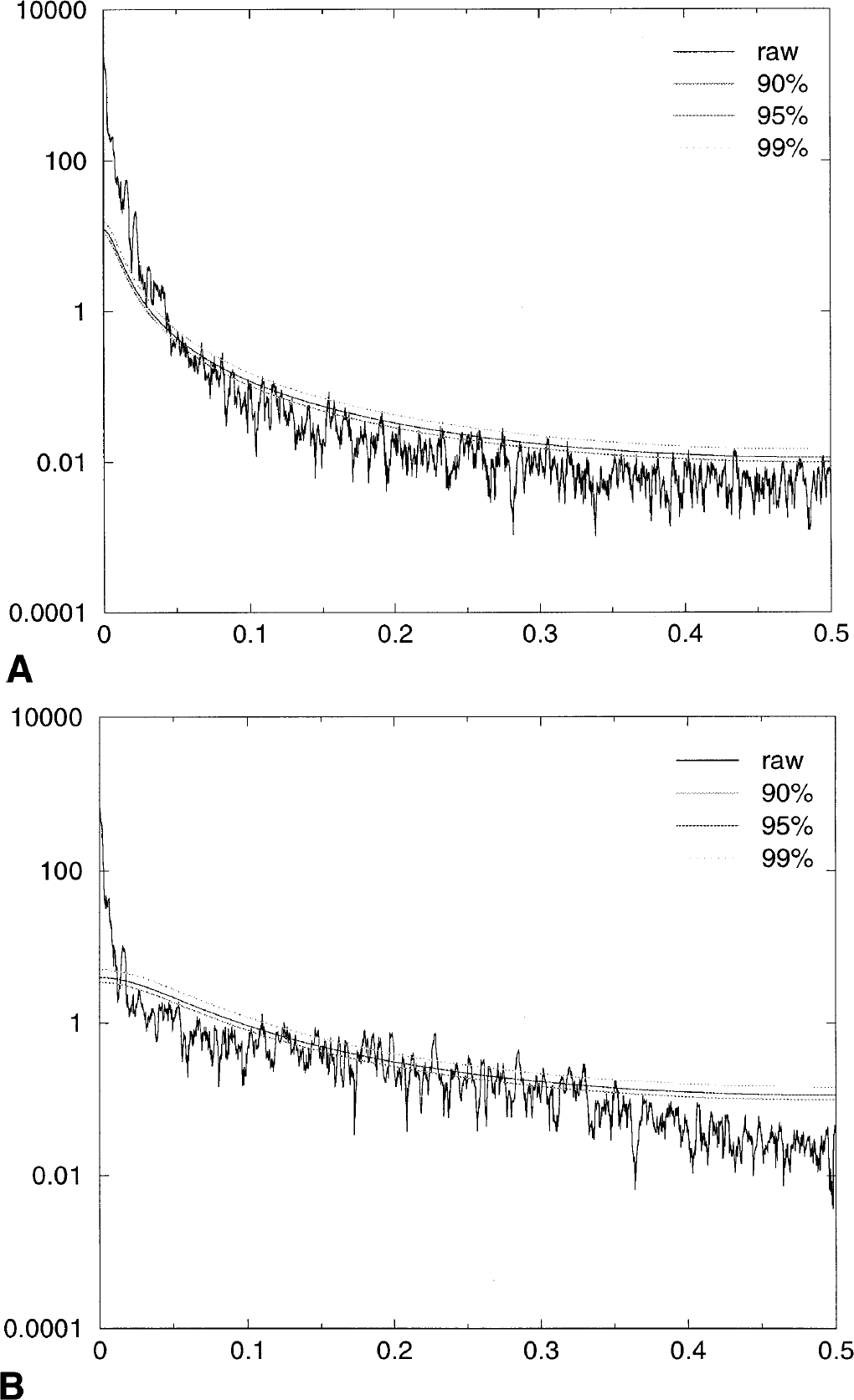
A typical multitaper method (MTM) spectrum of a tip
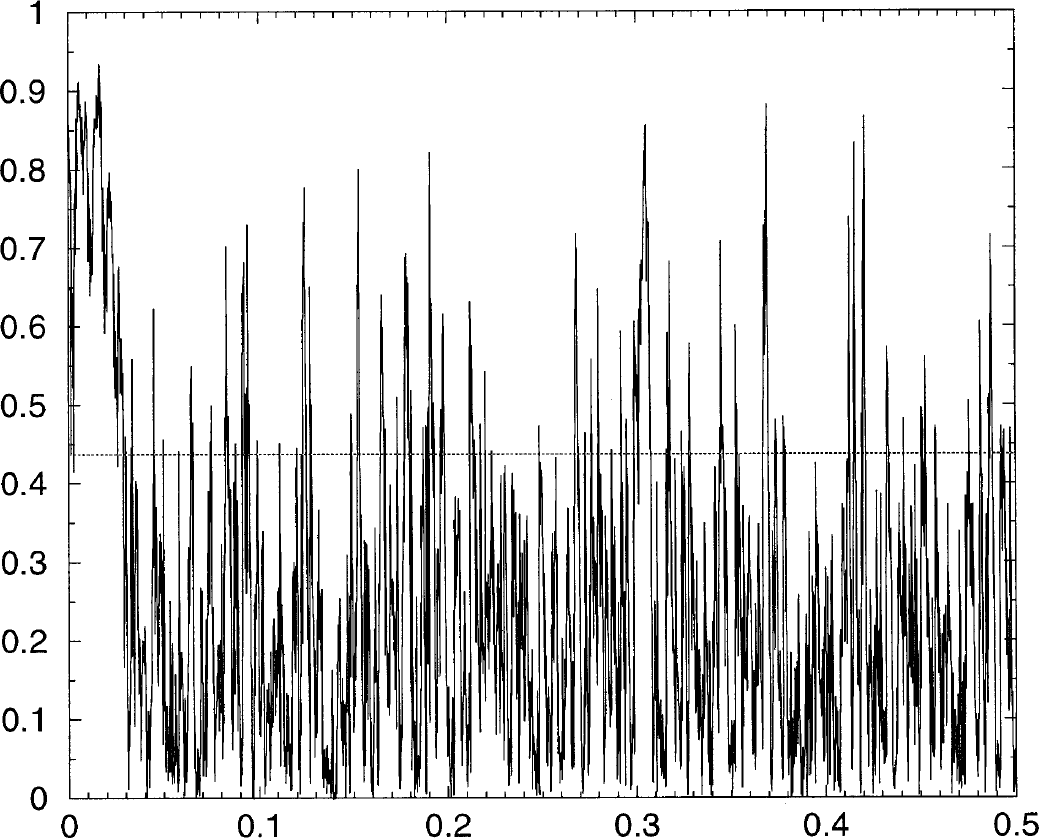
The coherence spectrum of both data sets of Figs. 1A and 1B. The x-axis represents the frequencies in units of the Rayleigh frequency; the y-axis shows the coherence of each occurring frequency, which is a unit-less number between 0 and 1. The horizontal line corresponds to the 90% significance level.
Figure 3 shows the normalized distribution of the significant frequencies summed up over all data sets. The line at 0.1 corresponds to pure white noise. We found a clear continuous peak in a frequency band from 0 to 1.4 × 10³ Hz, corresponding to a time resolution of maximally 12.5 minutes. This shows that most of the significant coherences are located within a well-defined frequency band and are not scattered through the total spectrum.
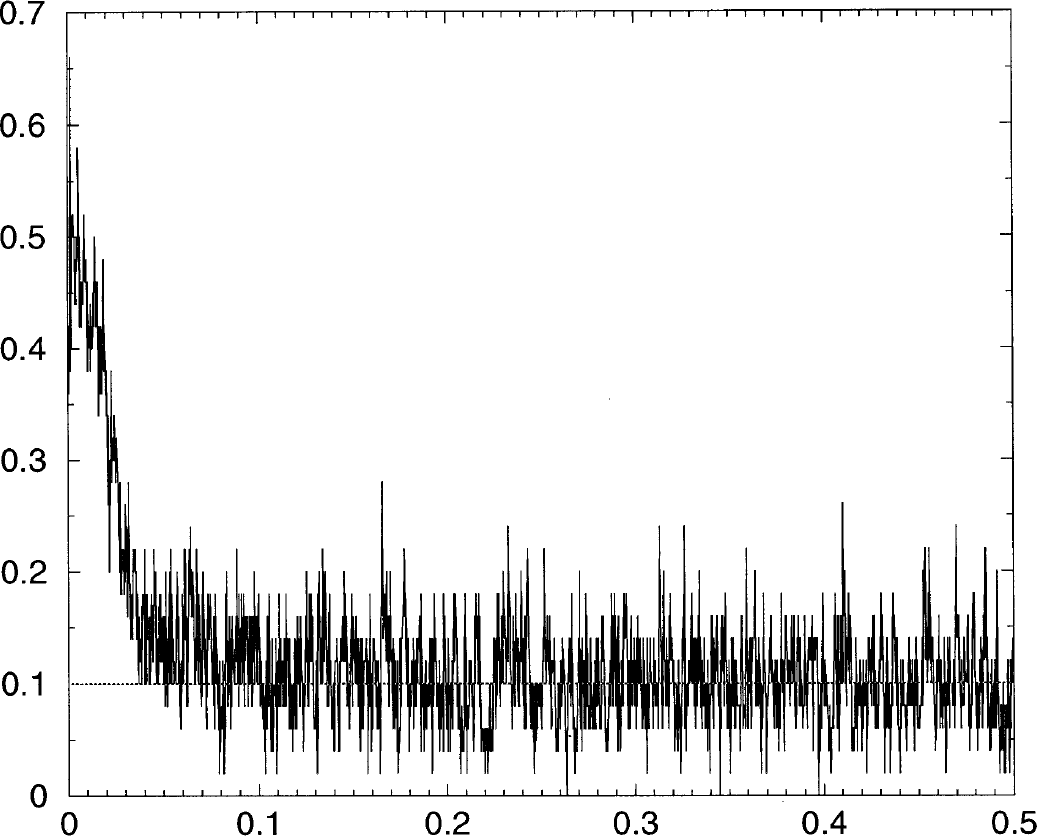
The distribution of significant coherent frequencies through all data sets. The x-axis represents the frequencies in units of the Rayleigh frequency; the y-ordinate represents the percentage of data sets with significant coherence for the particular frequency. The line at 0.1 belongs to the theoretical result for 2 uncorrelated white noise signals.
Step 2
Analysis within the single data sets yielded the result that 46 out of 50 sets had more significant coherent frequencies within this window as compared with uncoupled white noise signals (Fig. 4). This corresponds to 88% of all data sets.
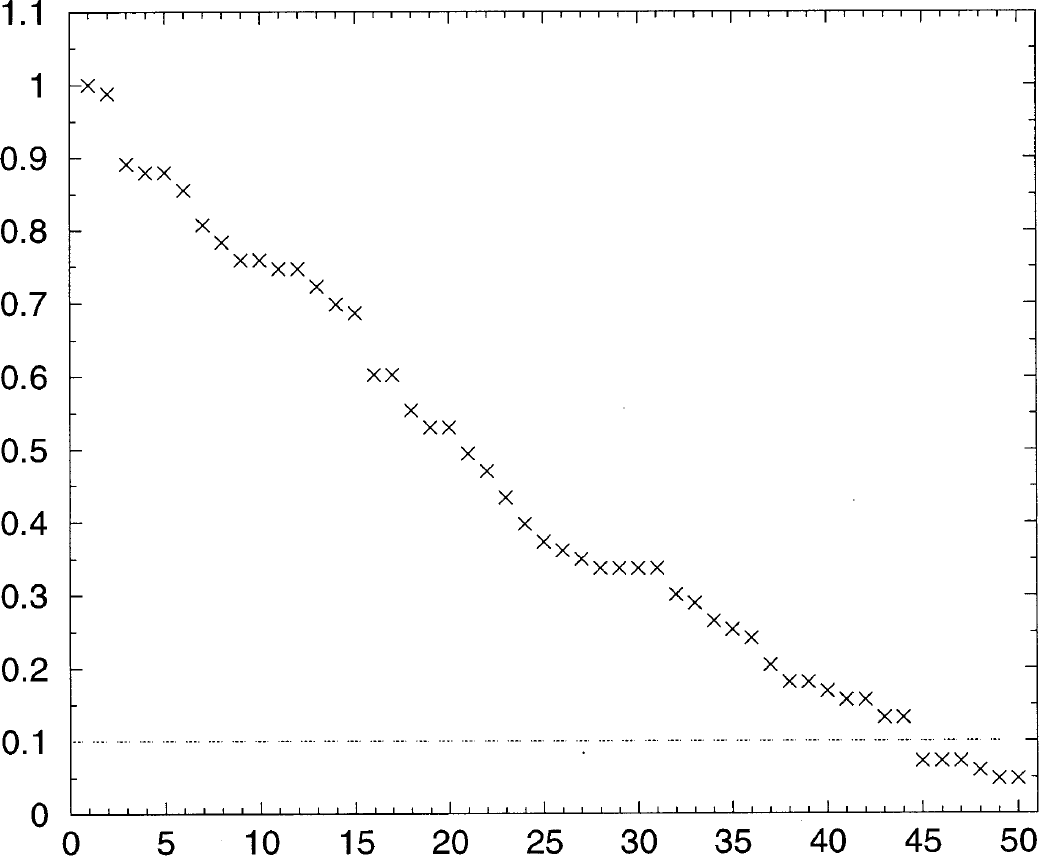
The percentage of the significant frequencies of each data set within the frequency band from 0 to 0.02 in units of the Rayleigh frequency. The x-axis represents each single data set denoted by a number; the y-axis, the percentage of significant frequencies. The horizontal line at 0.1 represents the theoretical result for uncorrelated white noise signals.
Step 3
We performed 23 windowed coherence computations through the total registration time of each patient. We observed time periods with a high coherence, which alternated with periods of low correlation (Fig. 5). We found, however, no clear time-dependent pattern behind those changes. We can therefore simply state this fact. Figure 5 shows a representative example of such a time evolution of coherence for patient 1.
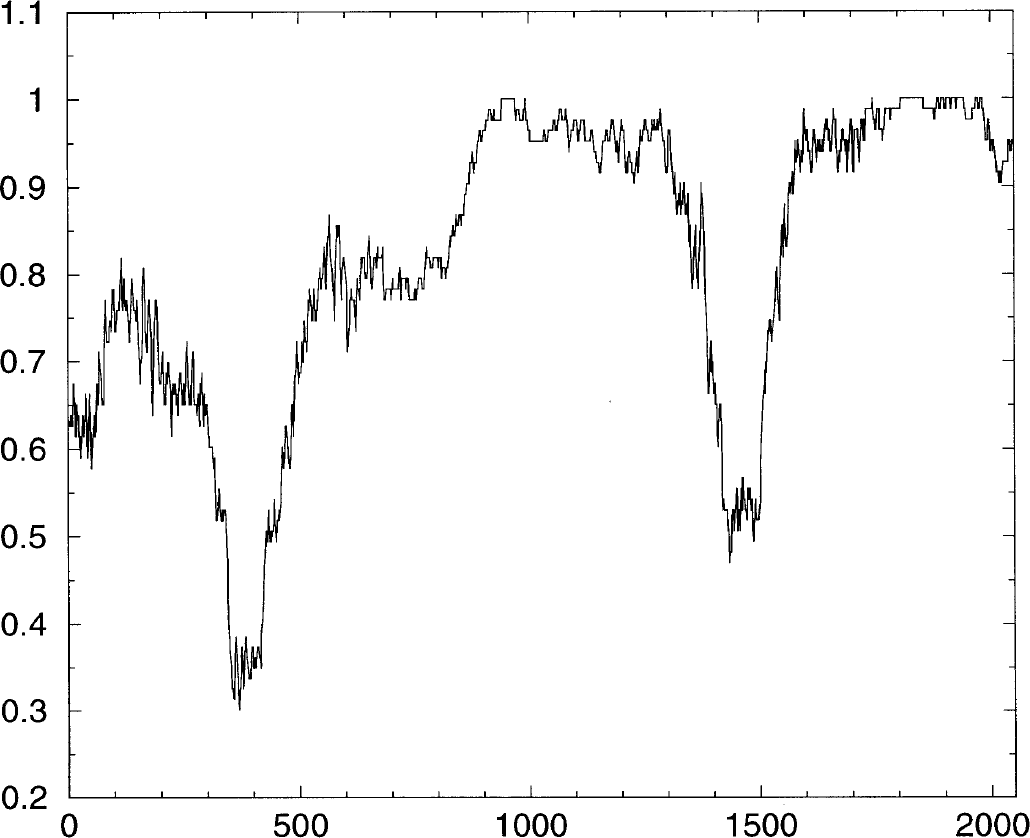
Windowed coherence of the complete data set of patient 5. The x-ordinate gives the number of time steps corresponding to the number of time-shifted coherence calculations that were done. The y-axis shows the percentage of significantly coherent frequencies within the defined frequency band of 0 to 0.02 for each window.
Step 4
Using the significant frequencies within the identified frequency band we reconstructed both signals. Figure 6A shows an original and reconstructed tip
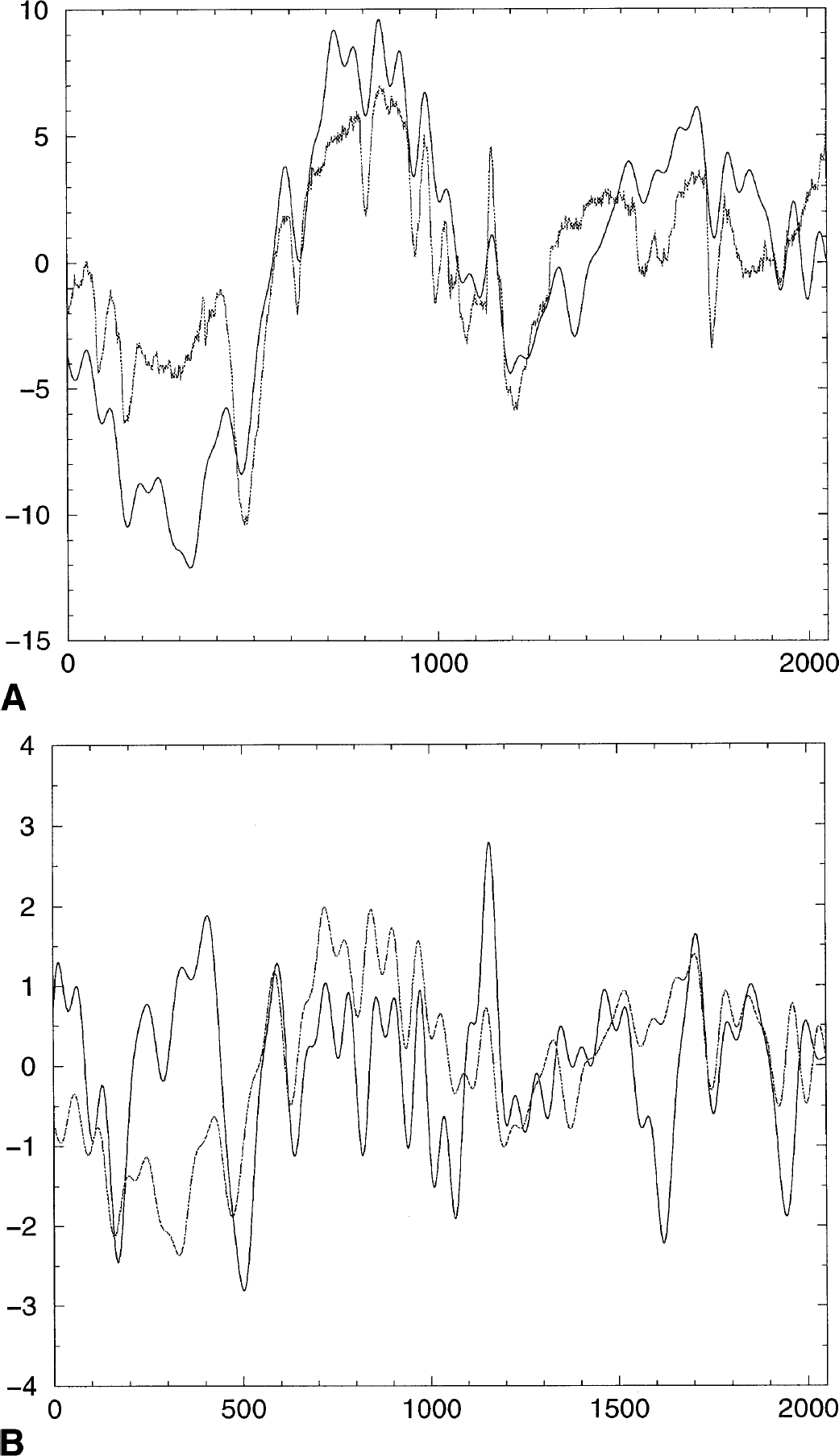
The original tip
DISCUSSION
The MTM used here provides a novel means for spectral estimation (Thompson, 1982) and signal reconstruction (Park et al., 1987) of a data set that is believed to exhibit a spectrum containing both continuous and singular components. The MTM analysis is therefore able to detect low-amplitude harmonic oscillations in a relatively short and noisy data set with a high degree of statistical significance. Provided enough background information about the data under analysis is present, more meaningful information about harmonic, anharmonic, and quasiperiodic elements and background noise of the data can be deduced. This method has been widely applied to problems in geophysical signal analysis, in which data are short and noisy. Because our data showed comparable properties we chose this methodology.
Our results demonstrate a significant correlation between tip
There are several other points that have the potential to underline the validity of our results. The use of only a part of the total coherence frequency spectrum emphasizes the reasonability of our findings, because it is rather unlikely that two methodologies measuring different parameters at different locations should have an absolutely identical frequency spectrum. Furthermore, we had introduced an additional criterion for significance besides mathematical testing versus white noise: the significant frequencies should not be single peaks but rather a broad band. This implies stability and precludes spurious results, which can occur despite statistics. In our study the significant coherence is located over a broad frequency band (Fig. 2). We did not take into account single significant peaks in this study, despite possible relevance. Similarly, our results seemed realistic because, in the windowed analysis (Fig. 5), the significantly coherent periods were longer lasting events. These again represent more stable conditions of the system and, therefore, have a higher probability. A fast switching of coherence to noncoherence and vice versa and a short duration of each condition would make us more suspicious in terms of stability of our findings. In general, of course, we want to emphasize that a higher time resolution of the monitoring devices could give additional insights and further relevant information for the faster frequencies.
The discussion about the reliability of the NIRS methodology as applied in our study can be answered in a positive manner. Our analysis shows that the rS
One general prerequisite, however, is the careful application of NIRS technology. In our study we applied the NIRS sensor according to the manufacturer's prescription, without, however, any further specific measures. In addition, we had to check overall data quality before further evaluation. This is, however, a necessary precaution for every long-time registration procedure of data of any kind.
From a physiologic point of view both methods are able to reflect similar dynamical changes of cerebral oxygen metabolism within the selected time resolution. The assumption that tip
We believe that our analysis could be a good starting point for future research in the field due to our discovery of several basic points: tip