





Abstract
Introduction:
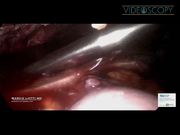
Hyperthermic intraperitoneal chemotherapy (HIPEC) is delivered after cytoreductive surgery in patients with several kinds of peritoneal surface malignancies. Different methods for delivering HIPEC have been proposed, substantially being variations between two modalities: the open technique and the closed technique. The open technique improves the distribution of the cytotoxic solution, with the disadvantage of heat loss at the surface of the perfusion fluid and leakage of cytotoxic drugs. The closed technique prevents heat loss and drug spillage, increases drug penetration, but does not warrant adequate circulation and homogeneous distribution of the perfusion fluid. 1 This video shows the technical details of a novel procedure, 2 in which a laparoscopic approach to the closed abdomen was applied to stir the abdominal contents, to untie any adhesions, and to achieve optimal distribution of heat and cytotoxic drugs. This procedure aims to combine the advantages and overcome the weaknesses of both open and closed techniques.
Materials and Methods:
A feasibility study of the technique was performed in eight patients. Average age of the patients was 52±12 years (range 37–71 years). Average PCI score was 8±6 (range 2–20).
Results:
No intraoperative complications were recorded. Five patients developed mild postoperative complications (three transient thrombocytopenia and two transient renal failure) that recovered without treatment. Average duration of postoperative ileus was 3±1 days (range 2–5 days). No postoperative mortality was observed. Average postoperative stay was 16±7 days (range 10–34 days) and was less than 15 days in 75% of the patients. During the perfusion period, intraoperative adhesions between the loops of the bowel or between the bowel and the abdominal wall were observed and divided by means of laparoscopy in 62.5% of the patients. The average difference observed between temperatures of the inflowing fluid and the abdomen was 1.5±0.5°C.
Conclusions:
Laparoscopic-enhanced HIPEC technique is feasible and allows the surgeon to handle the abdominal content during a closed-abdomen intraperitoneal perfusion, to divide and prevent intraoperative adhesions, and to achieve uniform distribution of heat and cytotoxic drugs in the abdominal cavity.
No competing financial interests exist.
Runtime of video: 8 mins


Keywords
Get full access to this article
View all access options for this article.
References
Supplementary Material
Please find the following supplemental material available below.
For Open Access articles published under a Creative Commons License, all supplemental material carries the same license as the article it is associated with.
For non-Open Access articles published, all supplemental material carries a non-exclusive license, and permission requests for re-use of supplemental material or any part of supplemental material shall be sent directly to the copyright owner as specified in the copyright notice associated with the article.
