





Abstract
Introduction:
Multicystic peritoneal mesothelioma is a rare cystic mesothelial lesion, and less than 200 cases are reported in the surgical literature. 1 Pathogenesis of multicystic peritoneal mesothelioma is still unclear; however, the majority of cases occur in reproductive aged female, who had a history of endometriosis, abdominal surgery, leiomyomas, or pelvic inflammatory disease. 2,3 Symptoms of presentation include abdominal distension, vague pain, tenderness, and constipations. 4 At CT scan, multicystic peritoneal mesothelioma usually presents as large multicystic masses with thin-walled septa, localized mainly in the pelvic peritoneum. MRI allows differentiation between pure liquid content cysts and mucoid content cysts. The gross aspect of the lesions is typical: multiple grape-like translucent cysts. It is usually considered as a benign disease; however, the recurrence rate after surgery alone is high (30%–75%). Although there is not a lot of literature regarding this item, cytoreducive surgery combined with hyperthermic intraperitoneal chemotherapy (HIPEC) is now considered the best treatment option for multicystic peritoneal mesothelioma. 5
Materials and Methods:
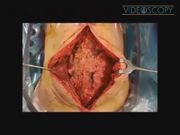
A 53-year-old woman with a medical history of pelvic endometriosis, previously submitted to laparoscopic hysteroannessiectomy, was referred to our hospital after the discovery of multiple peritoneal cysts at abdominal ultrasound examination. MRI showed the pelvic peritoneum multiple confluent cysts (max size 2 cm), with enhanced thin septa and liquid content. The diagnosis of pseudomyxoma peritonei or multicystic peritoneal mesothelioma was proposed. The patient was subjected to a laparoscopic biopsy that confirmed the suspect of multicystic peritoneal mesothelioma. A diagnostic laparoscopy showed multiple cysts of omentum, pelvic, and visceral peritoneum of the left colon and mesentery of the small bowel. After a collegial discussion with surgeons and oncologists, the patient was candidate to cytoreductive surgery and HIPEC. She was submitted to cytoreductive surgery consisting of parietal and diaphragmatic peritonectomy, pelvic peritonectomy, omentectomy, appendectomy, and cholecystectomy (peritoneal cancer index 12). 6 HIPEC with cisplatin (160 mg) and doxorubicin (60 mg) was performed. Histological examination confirmed the diagnosis of multicystic mesothelioma. Postoperative course was complicated by recurrent bilateral pleural effusion, treated with ultrasound-guided drainage. No surgical complications were recorded. After 1 year of follow-up, the patient is disease free.
Results and Conclusions:
Multicystic peritoneal mesothelioma is an uncommon disease that can be treated with a cytoreductive surgery and HIPEC. For the difficulty of the procedure and for the rarity of this disease, patients suffering from multicystic peritoneal mesothelioma should be treated in centers with experience in peritoneal surface diseases to obtain the best results in term of disease-free survival and survival rate.
No competing financial interests exist.
Runtime of video: 6 mins


Keywords
Get full access to this article
View all access options for this article.
References
Supplementary Material
Please find the following supplemental material available below.
For Open Access articles published under a Creative Commons License, all supplemental material carries the same license as the article it is associated with.
For non-Open Access articles published, all supplemental material carries a non-exclusive license, and permission requests for re-use of supplemental material or any part of supplemental material shall be sent directly to the copyright owner as specified in the copyright notice associated with the article.
