





Abstract
Introduction:
We report a new combined surgical approach for the treatment of men with both prostate and kidney cancer in a single robot-assisted procedure. The steps of the surgical procedure and the outcomes are described in the video [1–4].
Materials and Methods:
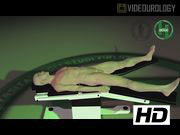
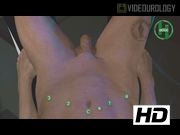
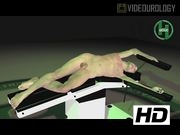
The three patients treated, 67-, 68- and 73-year-old, with median body mass index of 26 kg/m2, came to our center with an elevated PSA of 12, 9, and 18 ng/mL, respectively. A prostate biopsy showed Gleason adenocarcinoma of 6 (3+3), 7 (3+4), and 8 (4+4), respectively, whereas clinical stage was T1c in all cases. Bone scans were negative in all cases. CT scans showed no evidence of pelvic lymphadenopathy in all patients, but revealed incidental heterogeneously enhancing solitary solid masses of the right kidney, measuring 2.4, 3.7, and 3.4 cm, respectively, suspicious for renal cell carcinomas. Preoperative creatinine levels of all patients were normal. Transperitoneal robot-assisted radical prostatectomy and an endoscopic robot-assisted simple enucleation with da Vinci Si robotic surgical system, in one single procedure, were our treatment of choice; informed consent was obtained from the patients. To improve cosmetic results, we optimized the use of trocar insertion sites, reusing three of the six previously applied trocars, so we inserted just one more trocar for the second procedure. The last trocar on the left was used for the drainage tube. This strategy allowed us to complete the combined procedure by adding just one more trocar to the previous setup, to be used for robotic arm number 1. The robotic simple enucleation was performed in all cases after our standard procedure, already described in the literature. No particular modification of the technique was necessary in the described cases as the trocar insertion sites were perfectly fitting our needs.
Results:
Mean operation time was 320 minutes (range: 270–350 minutes) and the mean console time was 192 minutes (range: 170–230 minutes). Mean warm ischemic time was 12 minutes (range: 10–15 minutes). Mean blood loss was 150 mL and hemoglobin loss was 1.9 g/dL. No significant complication was reported. Mean hospital stay was 4 days. Pathologic outcomes are reported hereunder.
Conclusion:
The strength of simultaneous surgery had the following benefits. Single preoperative assessment with a single anesthesia, minimal port placement, and reuse of robotic instruments, shortened time of hospitalization and recovery, and moreover a remarkable cost reduction. Potential limitations to combining a robotic partial nephrectomy with a robotic prostatectomy include the location of the renal mass. Combination of the two procedures is recommended if the mass is located at the lower pole. If the mass is in the interpolar or upper pole of the kidney, the reuse of ports is more challenging, because a more superior port placement is sometimes necessary for partial nephrectomy. Patients with medical comorbidities may not be ideal candidates because of potential complications of prolonged anesthesia and pneumoperitoneum. These challenging procedures must be performed only by skilled surgeons in tertiary referral centers; to optimize the benefits, further investigations are needed to verify the long-term safety and efficacy of this experimental technique.
No competing financial interests exist.
Runtime of video: 6 mins 2 secs
Keywords
Get full access to this article
View all access options for this article.