





Abstract
Introduction:
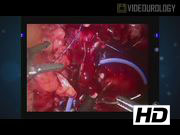
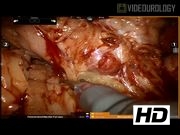
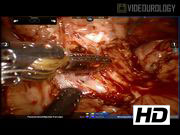
Today, most renal tumors can be managed with a minimally invasive approach. 1 Robotic surgery has increased the utilization of partial nephrectomy, and with increasing experience, larger more complex tumors are being treated with robot-assisted partial nephrectomy (RAPN). 2,3 The feasibility of RAPN for renal cell carcinoma (RCC) involving main and/or segmental renal vein(s) has been described. 4 Most of the reported cases were identified on preoperative imaging. However, venous tumor thrombi (VTT) can be discovered incidentally during the surgery. We describe our experience with five patients undergoing RAPN in the setting of VTT.
Materials and Methods:
We identified five patients at our institution with RCC who had undergone RAPN and were found to have a VTT. Our technique for hilar dissection and clamping for all patients were performed through standard RAPN as previously published. 5 –8 The renal artery(s) was dissected circumferentially with vessel loop placed around it before arterial clamping by bedside assistant. Renal artery only clamping using Aesculap laparoscopic bulldog clamp was performed in four cases. In one case with preoperatively known VTT, both the vein and artery were clamped. Patient characteristics and outcomes were reviewed, including RENAL nephrometry score, tumor complexity, conversion rate, length of stay (LOS), and complications.
Results:
The mean age was 64 years (range 61–71 years); BMI was 32 kg/m2 (range 28–38 kg/m2). The mean tumor nephrometry score was 9.6 (range 8–11), with the mean pathologic tumor size of 5.0 cm (range 3–8 cm). The mean warm ischemia time was 33 minutes (range 32–36 minutes) and the mean estimated blood loss was 700 mL (range 300–1000 mL). In four patients the VTT was discovered incidentally in a segmental renal vein during surgery and in one patient it was known preoperatively. RAPN with the removal of VTT was performed in four patients while one patient with a completely endophytic tumor whose thrombus did not readily expel from the vein was converted to radical nephrectomy to ensure a safe oncologic outcome. Lymph node dissection was performed in two patients (cases 1 and 4). In case 1 with preoperatively known VTT and case 4 after conversion to robot-assisted radical nephrectomy. There were no intraoperative complications. The mean LOS was 2.2 days (range 1–4 days). There were no readmissions. All patients had negative surgical margins with clear cell RCC pT3a. At a mean follow-up of 15.1 months (range 1.5–26 months), all patients but one showed no evidence of disease recurrence or metastasis. Regional metastasis to retroperitoneal lymph nodes biopsy proven to be metastatic clear cell RCC occurred 14 months after RAPN in one patient (case 3). There was no RCC-related death in any patients.
Conclusions:
VTT may be discovered incidentally during RAPN. Surgeons performing partial nephrectomies need to be aware of the potential to encounter a VTT and should have a plan to manage it. Many VTT can be successfully removed during RAPN, but it is imperative to keep oncologic principles in mind and conversion to open partial and or radical nephrectomy may be prudent in certain cases.
Runtime of video: 9 mins 59 secs
Keywords
Get full access to this article
View all access options for this article.