





Abstract
Introduction:
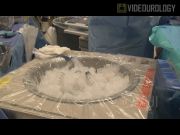
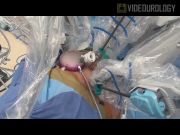
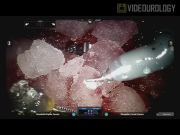
The ability to ice the kidney and grossly evaluate the excised tumor during open partial nephrectomy has been difficult to replicate in a reliable fashion using a minimally invasive approach. We previously described a robotic partial nephrectomy (RPN) technique with intracorporeal cooling and extraction (I.C.E.) for cold ischemia and intraoperative tumor assessment. 1 We present a video of our I.C.E. technique. 2 Recent evidence suggests a potential benefit of cold ischemia for preserving renal function. 3,4 The total run time for our video is 8 minutes 2 seconds.
Materials and Methods:
A total of eight patients underwent the I.C.E. modification of RPN by transperitoneal (
Results and Conclusions:
All RPN cases were successfully completed with introduction of ice slush for hypothermia and tumor extraction while on clamp. The mean preoperative glomerular filtration rate (GFR) was 76.83 mL/min/1.73 m2 (range 57–93), the median R.E.N.A.L. nephrometry score was 8.5 (range 6–10), and there was one solitary kidney. The mean cold ischemia time was 20.3 minutes (range 8–37), mean estimated blood loss was 290.6 mL (range 50–1000), mean total operative time was 277.8 minutes (range 196–384), and median postoperative stay was 2 days (IQR 1). Renal parenchymal temperatures of <16°C were achieved within seven minutes of cold ischemia and there was no drop in core body temperature over 0.5°C during any procedure. Intraoperative assessment of the excised tumor showed adequate gross margins in all cases and final pathology confirmed negative surgical margins. Mean postoperative GFR at one month follow-up was 70.9 mL/min/1.73 m2 (range 48–96). The I.C.E. RPN technique facilitates ice slush delivery and early specimen evaluation during RPN. Renal hypothermia during RPN could potentially expand the indications for RPN.
Run time: 8 mins 7 secs
Keywords
Get full access to this article
View all access options for this article.