





Abstract
Introduction and Objectives:
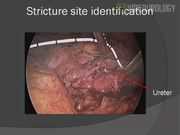
Iatrogenic ureteral strictures have been on a rise. In the management of upper urinary tract stricture, open ureteroureterostomy is the gold standard in treating ureteral stricture. As the surgical procedure moves toward minimally invasive with either laparoscopic or robot assisted, surgical methods have moved away from tactile sensation and rely more on visual cues. When performing ureteral reconstruction for cases of iatrogenic ureteral strictures, the main challenges are identifying and determining the length of the stricture. In this study, we would like to demonstrate using the retrograde ureteral catheter method in identifying the ureteral stricture site.
Methods:
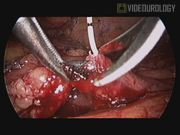
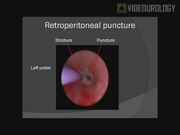
After the anesthesiologist safely intubates the patient, the patient is then placed in a lithotomy position for the ureteroscopy procedure. After the stricture site is identified, ureterotomy is performed using Holmium laser distal to the stricture site. Ureteroscopy was then inserted into the ureterotomy to make sure it extends into the retroperitoneal space. A retrograde catheter is then inserted into the retroperitoneal space to help with identification of the stricture site. After the retrograde catheter is secured to the urine catheter, the patient is placed in a lateral 45° position and a pneumoperitoneum is created. With the help of the retrograde catheter extending outside of the ureter at the most distal portion of the stricture site, we were able to identify the ureter and stricture site with a faster pace and more accuracy compared to previous ureteroureterostomy.
Results:
A single surgeon performed laparoscopic ureteral reconstruction for iatrogenic ureteral stricture on a total of nine patients at our hospital using this exact method. A total of three recurring strictures were noted during follow-up. Recurring strictures were treated with endoscopic laser ureterotomy and prolonged catheter stenting.
Conclusions:
In our method, the retrograde catheter was used as a guide to identify the most distal point of the ureteral stricture. The markings on the catheter can act as a measuring device for a more accurate measurement of the ureteral stricture. Using readily available catheters, our method is easily reproducible in the hands of an experienced laparoscopic surgeon. A larger study with a control group will be needed to compare our method to other conventional methods.
No competing financial interests exist.
Runtime of video: 5 mins 17 secs
Keywords
Get full access to this article
View all access options for this article.