





Abstract
Introduction:
Robotic assistance has facilitated the performance of many complex reconstructive procedures previously relegated to an open approach with numerous reported advantages. Distal ureteral reconstruction and reimplantation is one such procedure often performed laparoscopically with robotic assistance using the da Vinci robotic surgical system. We evaluated perioperative and long-term outcomes among patients who underwent treatment with robot-assisted laparoscopic ureteral reimplantation (RALUR) at a single center.
Materials and Methods:
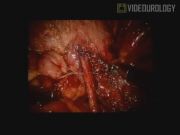
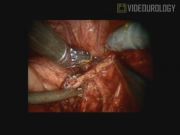
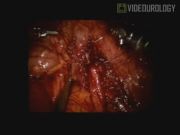
Patients who underwent RALUR between July 2006 and October 2012 were identified. In all procedures, the distal ureter was spatulated for 1.5 cm. An ∼1 cm cystotomy was created. The ureterovesical anastomosis was completed in a triangular manner, including two arms of 4-0 polydioxanone suture up the sides of the spatulation and a third arm anteriorly following stent placement to form a widely patent refluxing anastomosis. All procedures were performed at a single institution. A retrospective review of perioperative and clinical data was performed assessing the operative time, estimated blood loss, length of admission, and success of procedure as indicated by the absence of obstruction on follow-up imaging.
Results:
A total of 21 patients underwent RALUR in the study period. The mean age of patients was 43.2 years. Twenty of the 21 RALUR were completed robotically with conversion to open in one patient. Etiology of stricture included 11 due to gynecologic procedural injury and three secondary to iatrogenic ureteral injuries. The remainder comprised congenital, nongynecologic surgery, radiation, and idiopathic. Thirteen required the psoas hitch procedure as well. The mean operative time was 237 minutes. The mean estimated blood loss was 85 mL. The average length of hospital admission was 3.1 days. Currently, all patients remain nonobstructed by a Lasix renogram at mean follow-up of 12.4 months.
Conclusions:
RALUR with psoas hitch (when indicated) is a safe and effective option for distal ureteral reconstruction. Further investigation will help to more clearly refine patient selection and delineate patient benefits in comparison to an open procedure.
No authors with conflicts of interest to disclose.
Runtime of video: 5 mins 45 secs
Keywords
Get full access to this article
View all access options for this article.