





Abstract
Introduction:
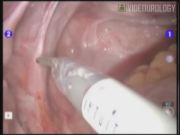
Robot-assisted reconstructive urological procedures have expanded rapidly due to its obvious advantages. The main drawback of robotic approach is the lack of tactile feedback; thus, the surgeon relies heavily on visual clues during dissection. We demonstrate in our HD video a novel technique wherein a Fogarty's catheter is used as an aid to identify the location of a ureteric stricture.
Methods:
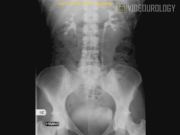
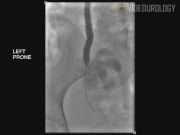
A 31-year-old woman developed a left lower ureteric stricture after laparoscopic surgery for endometriosis. She had recurrence after unsuccessful endoscopic balloon dilation. In this video (run time: 08:01), we will demonstrate robot-assisted excision of ureteric stricture and end-to-end anastomosis. After retrograde studies, a 6-Fr ureteric stent was inserted. A 3-Fr Fogarty's arterial embolectomy catheter was passed alongside, and the balloon inflated once the catheter was at the distal end of the stricture under fluoroscopy. Movement of Fogarty catheter localized the exact level of stricture that was excised, and a spatulated end-to-end anastomosis was carried out after.
Results:
The total operative time was 4 hours. The total blood loss was 30 mL. The total in-hospital stay was 2 days. Intravenous urogram after removal of the JJ stent showed no evidence of recurrence of the stricture.
Conclusion:
We demonstrate for the first time in the video the novel use of Fogarty arterial embolectomy catheter to localize the ureteric stricture during robotic approach. This technique adds to the existing knowledge of a very few techniques to identify the exact location of the stricture. 1 Our technique should help the surgeon to most expeditiously identify the ureteric stricture and minimize excessive tissue dissection.
None of the authors have anything to disclose.
Runtime of video: 8 mins
Keywords
Get full access to this article
View all access options for this article.