





Abstract
Introduction:
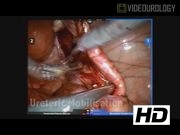
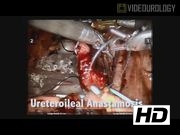
With increasing confidence in robot-assisted urinary diversion and its perceived benefit in reducing benign ureteroenteric anastomotic strictures (BUAS), 1 we evaluate surgical technique and outcomes between intracorporeal (InC) and extracorporeal (ExC) urinary diversion following radical cystectomy. In this video, we describe the technical components during the InC technique to ensure a tension-free, well-vascularized, ureteroenteric anastomosis.
Patients and Methods:
A retrospective analysis of a prospectively maintained single-center database was performed. One hundred three patients with a mean age of 68 years underwent robot-assisted radical cystectomy. Complete follow-up was available for 100 patients with a median follow-up of 24 months. Thirty-six patients who underwent InC diversion were matched against 64 patients undergoing ExC diversion. They were matched on the basis of gender, age, pre- and postoperative stage, grade of tumor, and the use of preoperative neoadjuvant chemotherapy.
Results:
Following 51 ExC urinary diversions and a learning curve of 5, the InC urinary diversion became the standard following radical cystectomy. BUAS were defined as uni- or bilateral hydronephrosis requiring intervention. This was 0% for patients undergoing InC urinary diversion
Conclusion:
BUAS are related to the surgical technique. There is a clear advantage favoring InC diversion. Observed differences may be explained by accurate vascular preservation, decreased ureteric tension, and reduced ischemia.
Runtime of video: 7 mins 37 secs
Keywords
Get full access to this article
View all access options for this article.