





Abstract
Introduction and Objective:
With the introduction of the Da Vinci robotic system (Intuitive Surgical Inc.), many urological reconstructive procedures have been performed through this minimally invasive approach. Recent studies have suggested that robotic surgeries may reduce perioperative morbidity and hospital stay. This technique may be useful in patients who are chronically debilitated secondary to advanced neurological disease, such as multiple sclerosis. In this video, we demonstrate an incisionless approach to create dual urinary and intestinal diversions using the Da Vinci robotic system.
Methods:
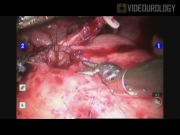
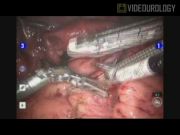
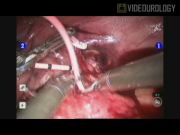
Three female patients with progressive multiple sclerosis and refractory urinary and fecal symptoms underwent robotic-assisted dual urinary and intestinal diversions at the Indiana University between 2007 and 2010. Preoperative evaluations included upper-tract imaging (renal ultrasound or computed tomogram urography), urine cultures, and blood profile. All patients were admitted to the hospital the day before surgery for bowel preparation and intravenous empiric antibiotic therapy. The procedure began with placement of bilateral lighted ureteral stents to facilitate identification of both ureters. The ureters were mobilized and divided as distal to the bladder as possible. A sigmoid colon conduit of 15 cm in length was isolated by dividing both ends with an endoscopic gastrointestinal anastomosis stapler. The proximal and distal staple lines became the end colostomy and the Hartmann's pouch, respectively. Ureterointestinal anastomoses were accomplished intracorporeally using a modified Wallace technique. The right robotic arm port became the urostomy, and the left robotic arm port became the colostomy. Both stomas were matured extracorporeally. Ureteral stents and Jackson-Pratt drains were removed when patients tolerated regular diet and before hospital discharge. Intraoperative and postoperative outcomes were reported. All patients had long-term follow-up with repeat upper-tract imaging and serum creatinine.
Results:
The mean operative time was 6 hours, and the mean robotic time was 4 hours. The mean estimated blood loss was 70 mL. All patients demonstrated a normal colostomy function by postoperative day 2 and were advanced to regular diet by postoperative day 3. There were no perioperative complications. One patient developed right ureteroenteric stricture requiring a repeat robotic-assisted revision procedure 8 months after her original surgery. At 1 year follow-up, all had unremarkable upper-tract imaging with a mean serum creatinine of 0.6 (range 0.4–0.9).
Conclusions:
Dual urinary and intestinal diversions can be achieved intracorporeally using the Da Vinci robotic system. The lack of small-bowel anastomosis provides early return of the bowel function. This approach may be advantageous in select patients who are chronically immobilized secondary to advanced neurological diseases and subsequently, at an increased risk for postoperative complications.
No competing financial interests exist.
Runtime of video: 8 mins
Keywords
Get full access to this article
View all access options for this article.