





Abstract
Introduction:
We illustrate our “retrograde technique” for robot-assisted laparoscopic heminephrectomy (RAL-HN). We also describe the clinical outcomes using this approach in the pediatric population with duplicated systems (DS).
Materials and Methods:
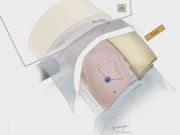
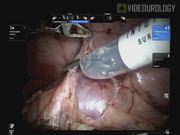
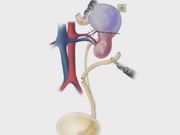
A 3-month-old M with a history of left DS with a nonfunctioning upper moiety and hydroureter. Voiding cystourethrogram (VCUG) revealed ectopic insertion of the left upper pole ureter. He developed a urinary tract infection at 1 month of age and subsequently a recommendation for HN was made. A retrograde technique was used to help identify vasculature to the diseased moiety. The diseased moiety ureter is separated from the healthy moiety and transected; it is then passed posterior to the renal hilum cranially to allow better visualization of the vascular anatomy.
Results:
The surgery was uncomplicated. The patient was discharged on postoperative day 1 after an uneventful hospital stay. After 26 months of follow-up, the patient is doing well with ultrasound revealing excellent function in the remnant moiety. We have completed 16 transperitoneal RAL-HN between 2009 and 2014. The mean age at surgery was 37.5±49.2 months, and the mean operative time was 135±36 minutes, with an estimated blood loss of 10±5 mL. No patients required open conversion. The mean hospital stay was 2±0.8 days, and no major complications were observed. The mean follow-up was 22.1±17.2 months. Two patients required secondary ureterectomy for recurrent urinary tract infection due to a refluxing ureteral stump. No patients lost their remaining healthy moiety. The mean change in renal function based on nuclear scan of the duplex kidney was −2.7%±4.6%.
Conclusions:
RAL-HN is a safe surgical option for pediatric patients with duplex moieties with appropriate surgical outcomes. The retrograde technique allows easy identification of the upper moiety vessels and transection without traction on the hilum of lower moiety.
Runtime of video: 6 mins 37 secs
Get full access to this article
View all access options for this article.