





Abstract
Introduction:
Keratinizing squamous metaplasia (KSM) of the urothelium is uncommon and affects the bladder more frequently than the upper urinary tract. The etiology is unknown but believed to be secondary to chronic infection and inflammation. Patient can present with nonspecific lower urinary tract symptoms when the bladder is involved and with renal masses and flank pain when the upper urinary tract is involved. The ureteral orifices are usually spared, and ureteral obstruction has only rarely been documented. We describe the management of KSM of the bladder with ureteral involvement and recurrent obstruction.
Materials and Methods:
Between 1994 and 2013, one man and two women with a mean age of 62 years were treated at our institution with pathologically confirmed KSM of the bladder. Two of the patients carried a diagnosis of interstitial cystitis and recurrent urinary tract infections (UTIs), whereas the third had a remote history of carcinoma in situ previously managed with intravesical chemotherapy and immunotherapy. All patients were surveilled with annual cystoscopy.
Results:
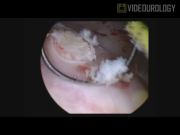
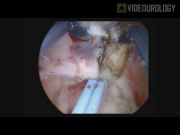
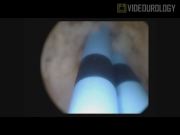
The mean follow-up was 6 years, and no patient developed urothelial malignancy during the follow-up. Bladder lesions were treated transurethrally. In a single patient, lesions involved the right ureteral orifice and distal ureter causing recurrent obstruction, flank pain, and renal compromise. After failing treatment with intermittent single ureteral stenting, the patient was managed ureteroscopically with the extraction of keratinized slough, ureteral meatotomy, and tandem indwelling ureteral stenting with the resolution of symptoms and normalization of renal function. A single UTI was noted after tandem ureteral stenting.
Conclusions:
Symptomatic KSM of the bladder and ureter can be effectively managed endoscopically. Associated ureteral obstruction can be safely treated with ureteroscopy, ureteral meatotomy, and tandem ureteral stenting.
No competing financial interests exist
.
Runtime of video: 6 mins, 46 secs
Keywords
Get full access to this article
View all access options for this article.