





Abstract
Purpose:
Chronic pelvic pain (CPP) is a challenging and devastating syndrome that affects patients' daily functions and quality of life (QoL), and can be caused by pudendal neuralgia. The pudendal nerve entrapment (PNE) between the sacrospinous and sacrotuberous ligament is the most frequent etiology of pudendal neuralgia. With the increasing use of laparoscopy in urology, laparoscopic pudendal nerve decompression (LaPND) is an optional treatment modality besides conservative options like analgesics, physiotherapy, pudendal nerve block, and open surgical nerve decompression. This study was aimed to evaluate the efficacy of LaPND in the treatment of CPP due to pudendal neuralgia.
Patients and Methods:
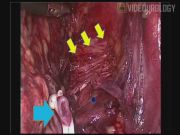
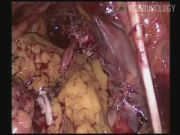
Prospectively documented, consecutive 23 patients had diagnosis of PNE between September 2010 and January 2012. All patients, who were refractory to conservative treatment modalities, underwent LaPND. Long-term refibrosis around the nerve was prevented by LaPND and transposition with omental protection. The degree of the pain was assessed with the visual analog scale (VAS), and the impact of the pain was evaluated with the impact of symptoms and QoL, pre- and postoperatively.
Results:
Preoperative pain scores during daily life and pain attacks were compared with the postoperative VAS. The mean VAS scores of 23, 23, 16, and 7 patients were 0.7, 1.5, 1.9, and 1.3 in the 1st, 3rd, 6th, and 12th month postoperatively. Statistically significant reduction in VAS scores was observed in overall patients (p<0.0001). In 16 patients who were followed for more than 6 months, the decrease in VAS scores and the increase in QoL indices in the postoperative period were statistically significant. The same situation has been found to be valid for the seven patients who were followed for more than 12 months postoperatively.
Conclusions:
LaPND seems to be a new promising treatment modality when compared to the previously described open surgical decompression techniques for the cautiously selected patients with pudendal neuralgia. In addition, using the omental flap and protection of the nerve are one of the most important advantages of laparoscope. As a minimal invasive surgery, the laparoscopic approach can be offered with its promising results in the treatment of the selected patient with CPP syndrome due to PNE.
No competing financial interests exist.
Runtime of video: 10 mins
Keywords
Get full access to this article
View all access options for this article.