





Abstract
Introduction and Objectives:
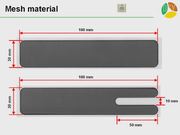
The aim of this study was to describe our initial single surgeon experience with laparoscopic sacropexy (LSC) using a titanized polypropylene mesh (pfm, Germany). The titanized polypropylene mesh is a compound material with a covalent bound nanotechnologic titanium layer and laser-cut mesh edges. We evaluated our first 20 consecutive patients undergoing LSC including our learning curve.
Materials and Methods:
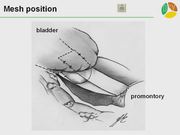
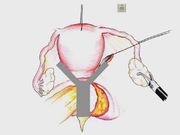
Between June 2009 and April 2010, we performed 20 laparoscopic sacropexies using a titanized polypropylene mesh. The video describes our surgical technique and data were analyzed with respect to average operation time, hospitalization, complications, and postoperative outcome.
Results:
Mean operation time for LSC was 196 minutes (range: 96–316 minutes). A significant reduction of operation time was seen after 11 procedures. The mean hospitalization after laparoscopic sacropexy was 6.3 days. No major complications were observed. Two patients had to be converted to open sacropexy. Reoccurrence of the prolapse did not occur in any patient. Biocompatibility of the titanized polypropylene mesh was excellent as no erosions were observed to this date.
Conclusions:
Despite a time-consuming learning curve, LSC using a titanized polypropylene mesh was associated with a low complication rate and no observed mesh erosion.
No competing financial interests exist.
Runtime of video: 7 mins 30 secs
This video was presented in 2013 at the American Urological Association Meeting in San Diego, California.
Keywords
Get full access to this article
View all access options for this article.