





Abstract
Introduction:
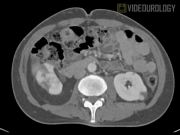
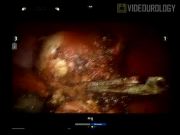
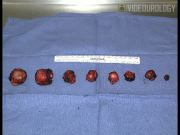
Robot-assisted partial nephrectomy (RAPN) has emerged as a viable alternative to open surgery for small renal tumors in selected patients. 1 However, the role of RAPN in the treatment of multiple ipsilateral tumors is not well established. Warm ischemia time (WIT) has typically limited the utilization of RAPN in these patients. Recently, laparoscopic partial nephrectomy (LPN) and RAPN without clamping of the renal hilum have been described in patients with multiple tumors. 2,3 The accompanying video (5:24) demonstrates the application of our off-clamp RAPN technique in a patient with eight ipsilateral tumors. Our sliding-clip renorrhaphy technique has been previously described. 1
Materials and Methods:
To date, we have managed three patients with multiple ipsilateral renal tumors with off-clamp RAPN. One patient suffered from known von-Hippel-Lindau disease. Operative, radiologic, laboratory, and pathology data were obtained from a retrospective chart review. Estimated glomerular filtration rate (eGFR) was calculated with the Chronic Kidney Disease Epidemiology Collaboration formula. 4
Results and Conclusions:
Three patients with a mean age 48.9 years (range=37.0–55.1) underwent off-clamp RAPN for 13 tumors. Mean preoperative eGFR was 110 mL/minute/1.73 m2 (range=93–128). The mean tumor size was 1.68 cm (range=0.8–3.9). The mean operative time was 208 minutes (range=121–304), and the mean estimated blood loss was 750 mL (range=300–1500). All three cases were completed entirely off-clamp, resulting in a mean WIT of 0 minutes. Final pathology found seven Fuhrman grade III clear cell carcinomas and one atypical cyst in the first patient, two Fuhrman grade II clear cell carcinomas in the second patient, and three Fuhrman grade II–III papillary carcinomas in the third patient. Surgical margins were negative in 12 out of 13 tumors, with a positive margin occurring in a 0.8-cm papillary carcinoma. The mean length of postoperative stay was 2 days (range=1–3), with only one postoperative complication consisting of a blood transfusion (Clavien II). Mean decline in eGFR was 4.8 mL/minute/1.73 m2 (range=0–7.6) at mean follow-up of 154 days (range=1–233). The off-clamp RAPN technique, which eliminates WIT, was both safe and effective in the treatment of multiple ipsilateral tumors in our early experience. The operation must be performed by an experienced surgeon, and the patients must be selected carefully. Before off-clamp RAPN can be widely recommended, further evaluation of renal functional as well as oncologic outcomes are required. Additionally, comparative studies with traditional clamped RAPN are needed to definitively demonstrate the potential benefits of an off-clamp approach.
No competing financial interests exist.
Runtime of video: 5 mins 24 secs
Keywords
Get full access to this article
View all access options for this article.