





Abstract
Introduction:
Vesicovaginal fistula (VVF) may be attributed to iatrogenic, obstetric, or neoplastic etiologies. Although a wide range of repairs exist, laparoscopic repair has been favored for superior morbidity profile with appreciable outcome. 1 We present our experience of VVF repair in different circumstances. The video demonstrates the conduction of this procedure following vaginal mesh erosion.
Methods:
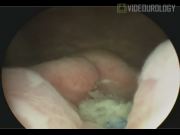
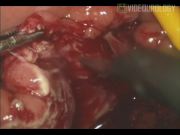
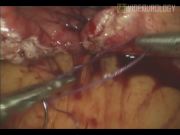
All patients were evaluated with detailed history, presenting complaints, details of comorbidities, and blood profile. Imaging was carried out preoperatively to delineate the pathology. All patients underwent cystoscopy and vaginoscopy prior to definitive reconstruction. Repair was undertaken following O Connor s technique: transperitoneal transvesical approach for VVFs. 2 A vascularized omental flap was interposed between the vagina and bladder, followed by vesical closure. Postprocedure patients were allowed oral intake once comfortable, and drain and catheter removal was conducted as merited. Postoperative parameters were recorded. Postoperatively, patients were followed up periodically and follow-up imaging was conducted at 6 months postprocedure.
Results and Discussion:
Eight patients underwent laparoscopic VVF repair between June 2005 and October 2010. One patient underwent simultaneous laparoscopic bilateral ureteric reimplantation along with laparoscopic VVF repair. Seven cases revealed supratrigonal VVF and one case revealed complete loss of trigonal anatomy with nondiscernible ureteric orifices following vaginal mesh erosion. Mean age was 54.5 years (range: 42–68 years). Mean body mass index was 23.6 kg/m2 (range: 22.2–25.1 kg/m2). Etiology was iatrogenic in all. Preoperative American Society of Anesthesiologists (ASA) grade was I in 6 and grade II in 2. Preoperative renal profile was normal in all. Mean time interval between inciting event and definitive procedure was 62.13 days (range: 45–92 days). All procedures were completed laparoscopically. Mean operation duration was 175 minutes (range: 150–225 minutes) and mean blood loss was 75 mL (range: 50–100 mL). All patients tolerated orals within 24 hours postprocedure and drain removal was possible within 48 hours in all cases. Mean duration of hospital stay was 3.5 days (range: 3–4 days). Catheter removal was undertaken at 3 weeks postprocedure. Ureteral stents were removed at 6 weeks postprocedure. All patients reported subsidence of urine leak postcatheter removal and no recurrence of fistula was experienced. No patients reported any voiding dysfunction. Follow-up imaging revealed satisfactory reconstruction in all. Laparoscopic approach for VVF repair is feasible and may be applied in different circumstances. As in open approach, multilayered closure with interposition of vascularized flaps remains the key for successful laparoscopic reconstruction in these scenarios. The procedural morbidity is limited and the outcome is appreciable.
No competing financial interests exist.
Runtime of video: 7 mins 57 secs
Keywords
Get full access to this article
View all access options for this article.