





Abstract
Introduction:
Long segment lower ureteral strictures may be reconstructed through creation of Boari flap ureteroneocystostomy. Although conventionally performed through incisional approach, Boari flap may also be attempted through laparoscopic approach. 1 We present a video demonstration of this procedure in solitary and bilaterally functioning units and narrate our experience with this procedure.
Methods:
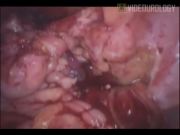
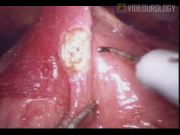
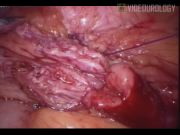
Patients were evaluated in detail, including presenting complaints, clinical parameters, and blood profile. Imaging protocol included ultrasonogram (USG), computed tomogram urography, or magnetic resonance urogram (CTU or MRU). Preprocedure cystoscopy and retrograde pyelogram was performed. Patients were positioned in Trendelenberg decubitus. Four ports were utilized: 1–10-mm camera port and 3–5-mm working ports. Ureter was disconnected before stricture level and spatulated. Usage of thermal energy was restricted during ureteric mobilization. Anterior mobilization of bladder was performed and space of Retzius was entered. Psoas hitch was taken. A wide flap was generated based on posterior bladder with an apex-to-base ratio of 3:1. The ease of access of the flap to the transected ureter was assessed, and further mobilization was performed as necessary. The apex of the flap was anastomosed to lower ureteral margin with 3-0 polyglactin suture. Ureteral stent was placed retrograde and the flap was tubularized. Bladder closure was conducted with endostitch device and 2-0 polyglactin. Operative and postoperative parameters were recorded. Ureteral stents were removed at 6 weeks. All patients underwent 3-month follow-up. Follow-up USG was performed at 6 months and 1 year, and follow-up CTU (or MRU if creatinine >1.4 mg/dL) was performed at 1 year.
Results and Discussion:
Since January 2006 till January 2010, three cases of laparoscopic Boari flap were performed. Mean age was 31.3 years. Two patients were male and one was female. Mean body mass index was 22.13 kg/m2. Presenting complaints were flank pain and recurrent urinary infection (n=3). One patient presented with stricture segment involving solitary functioning unit and preoperative creatinine was 2.8 mg/dL. Other two patients had bilaterally functioning unit with normal renal profile preoperatively. Mean stricture length was 5.66 cm. All procedures were completed via laparoscopic approach. Mean operation duration was 201.67 minutes. Mean blood loss was 100 mL. Mean hospital stay was 3.67 days. No major intraoperative or postoperative happenings were recorded. All patients were asymptomatic at follow-up with stable renal profile. Follow-up imaging revealed resolution of upper tract dilatation and good drainage in all. Laparoscopic Boari flap demands technical expertise and may be attempted even in solitary functioning unit with deranged renal profile. Familiarity with pelvic anatomy and proficiency in intracorporeal suturing is mandated. The flap should be well vascularized and ureterBoari flap approximation should be carried out without tension. 2 The procedure offers excellent morbidity profile and durable long-term outcome.
No competing financial interests exist.
Runtime of video: 6 mins 24 secs
Keywords
Get full access to this article
View all access options for this article.