





Abstract
Introduction:
It is essential to see and analyze the complications of laparoscopic procedures to minimize their occurrence. The objective of this video is to illustrate examples of areas in which special care must be taken during upper urinary tract laparoscopic procedures.
Materials and Methods:
This video will demonstrate the steps in the management of the following seven intraoperative complications in upper urinary tract surgery: duodenal perforation, renal vein bleeding, pleura perforation, aortic aneurism injury, two cases of vena cava injury, and one consisting of renal vein bleeding combined with vena cava injury.
Results:
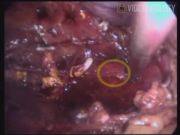
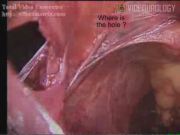
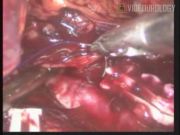
Conversion was necessary in two transperitoneal radical nephrectomies. One was because of perforation of the duodenum during dissection of the medial side of the right kidney by scissor, and the other case was renal vein bleeding supplied by nondissected adrenal vein. While performing two retroperitoneal adrenalectomies, vena cava injuries caused by a metal clip placed over the vena cava and too much traction of the adrenal vein were repaired by laparoscopic clipping. While performing retroperitoneal ureterolithotomy, the expected ureterolithiasis proved to be an aortic aneurism and conversion was also necessary for a scalpel incision injury to the aortic aneurism. While performing another retroperitoneal right adrenalectomy, the trocar was inserted without checking the entry tract and the pleura was perforated. A chest tube was inserted after performing the operation laparoscopically. In the last case the renal vein was injured by the tip of a right angle dissector and vena cava was perforated by the tip of weg clip applicator. Thereafter, the renal vein was clipped using a weg clip and vena cava was sutured laparoscopically instead of being clipped as in the two adrenalectomies, which were performed 5 years ago at a time when the surgeon was less experienced.
Conclusions:
In parallel with our increasing experience, the frequency of conversions has decreased and we have developed an ability to decide whether to continue the procedure laparoscopically, using techniques such as laparoscopic suturing, instead of performing laparoscopic clipping as in the nephrectomy case presented at the end. If the surgeon has insufficient experience in laparoscopic suturing, to perform a safe procedure the surgeon should convert to open surgery instead of clipping vena cava. Currently, we have minimized the number of complications and improved our management of those complications that do occur. Although gas insufflation is necessary, it does pose a low risk of venous air embolism. Suspected gas embolus is a rare but well-documented complication. As an anesthetic precaution for possible gas emboli, nitrous oxide should be avoided and the patient ventilated with 100% oxygen in the Trendelenburg or left lateral decubitus position.
No competing financial interests exist.
Runtime of video: 10 mins
Keywords
Get full access to this article
View all access options for this article.