





Abstract
Purpose:
Vascular injuries during laparoscopic procedures may occur by blunt applicators, such as an aspirator. 1 The aim of this video is to illustrate and to point ways of managing these complications.
Method:
In this video, vascular injuries due to aspirator dissections and the management of them during laparoscopic transperitoneal partial nephrectomy, transperitoneal radical nephrectomy, adrenal dissection of retroperitoneal radical nephrectomy, and retroperitoneal hand-assisted nephroureterectomy were presented.
Results:
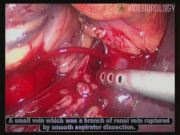
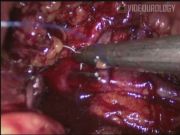
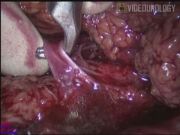
In the first case, a small vessel, which was a branch of the circumaortic vein, was ruptured by a smooth aspirator dissection over the vein. Initially, metal clips were placed on the injured area. Because it was a planned partial nephrectomy, the metal clips may displace during ischemia and this may cause major bleeding. So that, we performed suturing in the injured area over the clips. Before securing the sutures, the clips were taken out for a tensioned ligation. At the end of the operation, oxidized cellulose was placed over the repaired area. In the second case, a small vein, which was a branch of the renal vein, was ruptured by a smooth aspirator dissection. Traction of the vein decreased the bleeding, and the Hem-o-lok® clip was placed on the renal artery immediately. Thereafter, the Hem-o-lock clips were placed on the proximal and distal sides of the perforated area in the renal vein. In the third case, the accessory adrenal vein was injured by a smooth aspirator dissection. The metal clips were placed on both the accessory and main adrenal veins. In the last case, an injury occurred at the junction of the adrenal and renal veins by a smooth aspirator dissection. Bleeding was controlled by hand assistance to place a clip. An absorbable ligating clip was placed on the proximal side of the injured area in the renal vein. Afterward, the adrenal vein was secured with the metal and Hem-o-lok clips. Thereafter, nephrectomy was completed, securing the renal vein. All the operations were completed laparoscopically in 220, 170, 120, and 150 minutes, with a mean blood loss of 400, 500, 150, and 250 cc, respectively. No blood transfusion was required for any patient.
Conclusion:
Despite smooth and gentle dissections, serious vascular injuries may occur during blunt dissection by applicators, such as the aspirator, especially performing a dissection in the hilar area during laparoscopic renal surgery. Complete visual identification of the renal vein and artery with their branches and delicate dissection of renal hilum should be performed. In case of any bleeding, adequate traction of the vessel and increasing the pressure may help the surgeon to provide homeostasis. An additional laparoscopic port for suction may be helpful for better visualization of the bleeding area. The tip of absorbable ligating clips does not have a clicking system that may injure any other tissue. Because of that, they are very useful for securing vessels, in which there was inadequate dissection at the posterior side of the vessel, especially during bleeding. Furthermore, the management of vascular injuries depends on the experience of surgeons.
Runtime of video: 8 mins 5 secs
Keywords
Get full access to this article
View all access options for this article.