






Abstract
Abstract
Introduction:
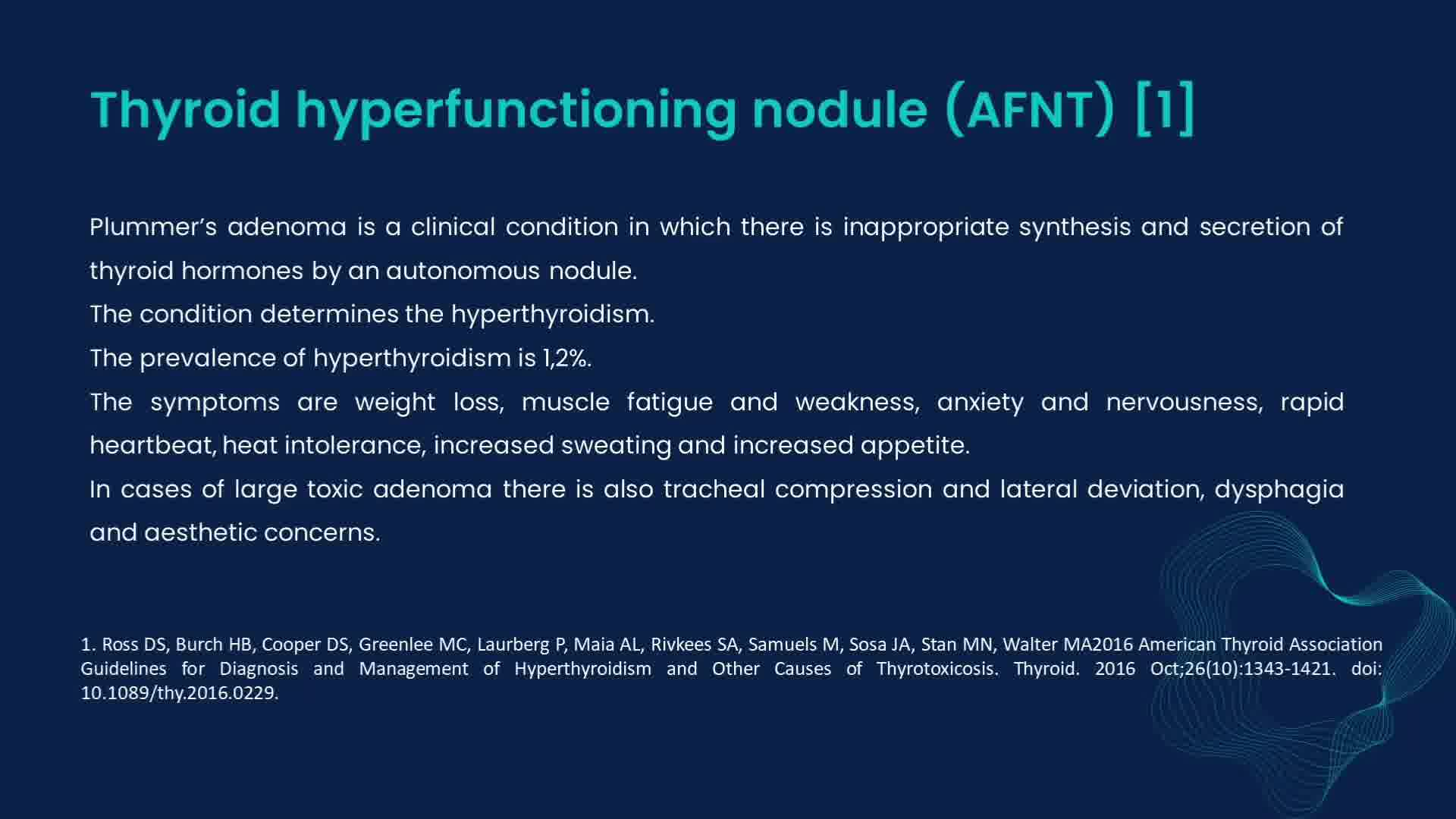
The Plummer's adenoma is a clinical condition in which there is inappropriate synthesis and secretion of thyroid hormones by an autonomous nodule. The diagnosis is made on clinical presentation and biochemical assessment. In addition, are essential the ultrasound examination and thyroid scintiscan with technetium-99m, to make differential diagnosis. Surgery and radioactive iodine therapy represent the gold standard for autonomous functioning thyroid nodule (AFTN) when it becomes symptomatic. If autonomous thyroid diseases therapy or surgery is at risk or not practicable, alternative therapy should be selected, as the radiofrequency thermal ablation (RFA).1–11
Materials and Methods:
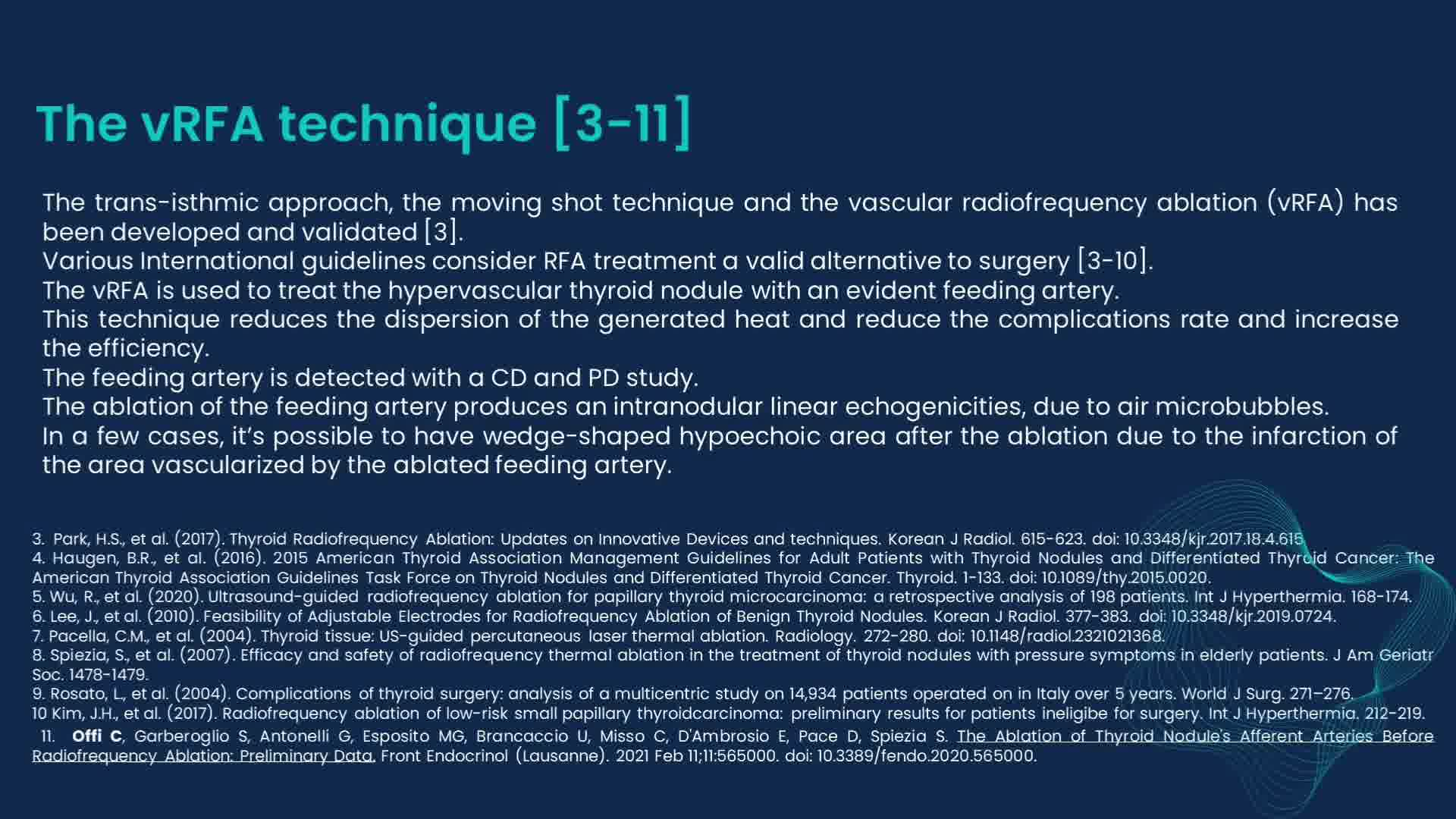
The RFA may be considered in young patients with AFTN because it restores normal thyroid function without irradiation. Recently, minimally invasive ultrasound-guided techniques have been introduced into clinical practice as an alternative treatment. The RFA has been validated in various international guidelines. The vascular radiofrequency thermal ablation is used to treat the hypervascular thyroid nodule with an evident feeding artery. This technique reduces the dispersion of the generated heat and reduces the complications rate and increases efficiency. The ablation of the feeding artery produces intranodular linear echogenicities, caused by air microbubbles. The RFA uses a needle with an active tip. The active tip has a cooled internal needle antenna. The generator produces monopolar energy, which is delivered through the needle.
Results:
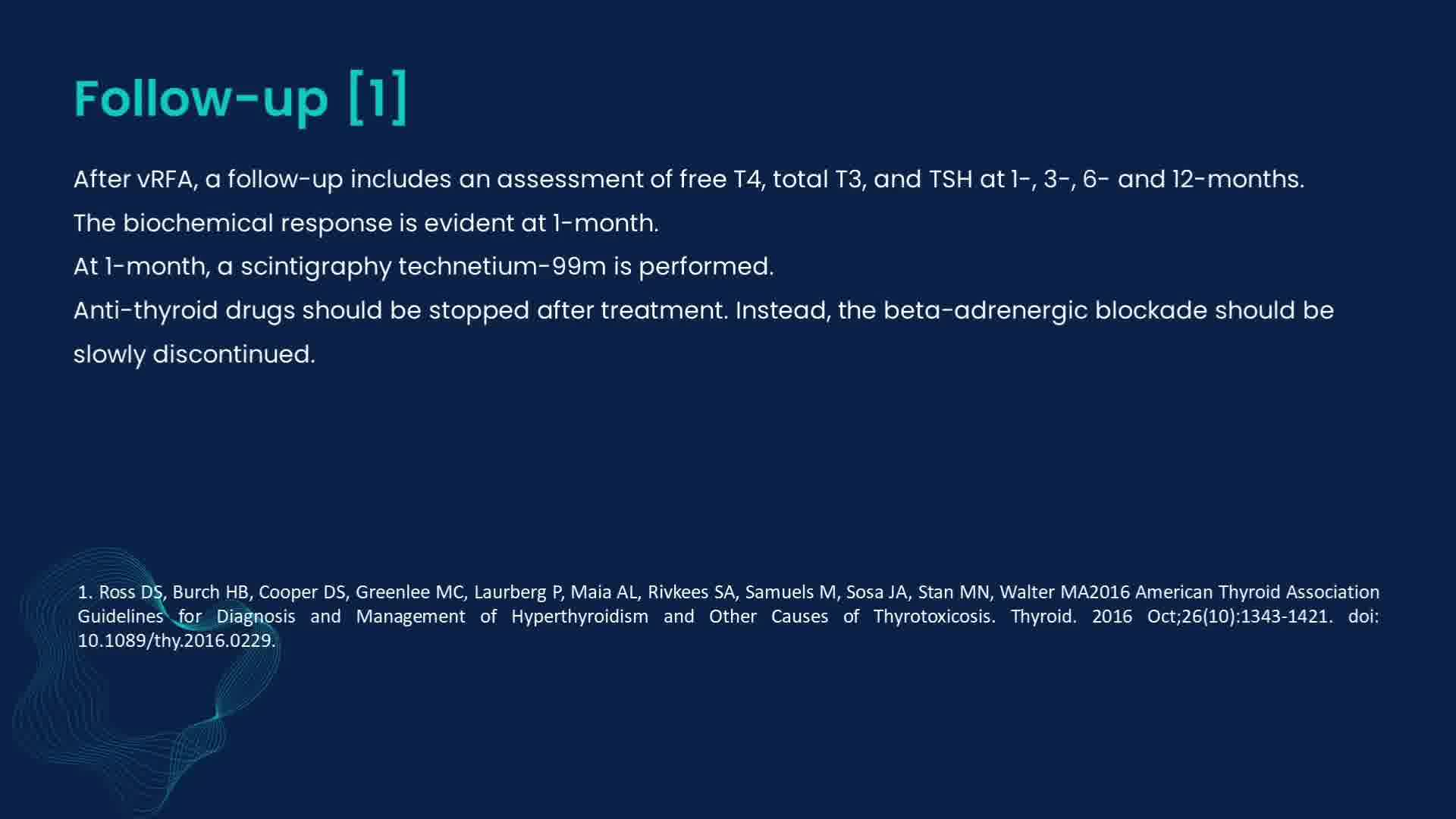
The video shows the clinical case of a woman treated with vRFA. At 1 month, we recorded a complete normalization of the biohumoral values, the volume reduction, and the disappearance of pre-existing symptoms. The scintiscan identifies the absence of uptake of the nodule and the recovery of functionality of the gland.
Conclusions:
RFA represents a safe, an effective, and a minimally invasive alternative to surgery in the treatment of autonomous thyroid nodule. The vRFA is used to treat the hypervascular thyroid nodule with an evident feeding artery.
No competing financial interests exist.
Runtime of video: 10 mins 59 secs
Keywords
Get full access to this article
View all access options for this article.