






Abstract
Abstract
Introduction:
Minimally invasive, safe, and effective, the ultrasound-guided radiofrequency ablation (RFA) of the benign thyroid nodules has been extensively studied, and progress in technical development has been made in the past decade. In this presentation, standard and advanced techniques for optimizing the RFA outcome for benign thyroid nodules are discussed.
Materials and Methods:
A comprehensive RFA procedure of benign thyroid nodules with various techniques (standard and advanced techniques) is presented.
Results:
Ultrasound surveillance of neck anatomy before the procedure is crucial in minimizing the procedure-related complications.
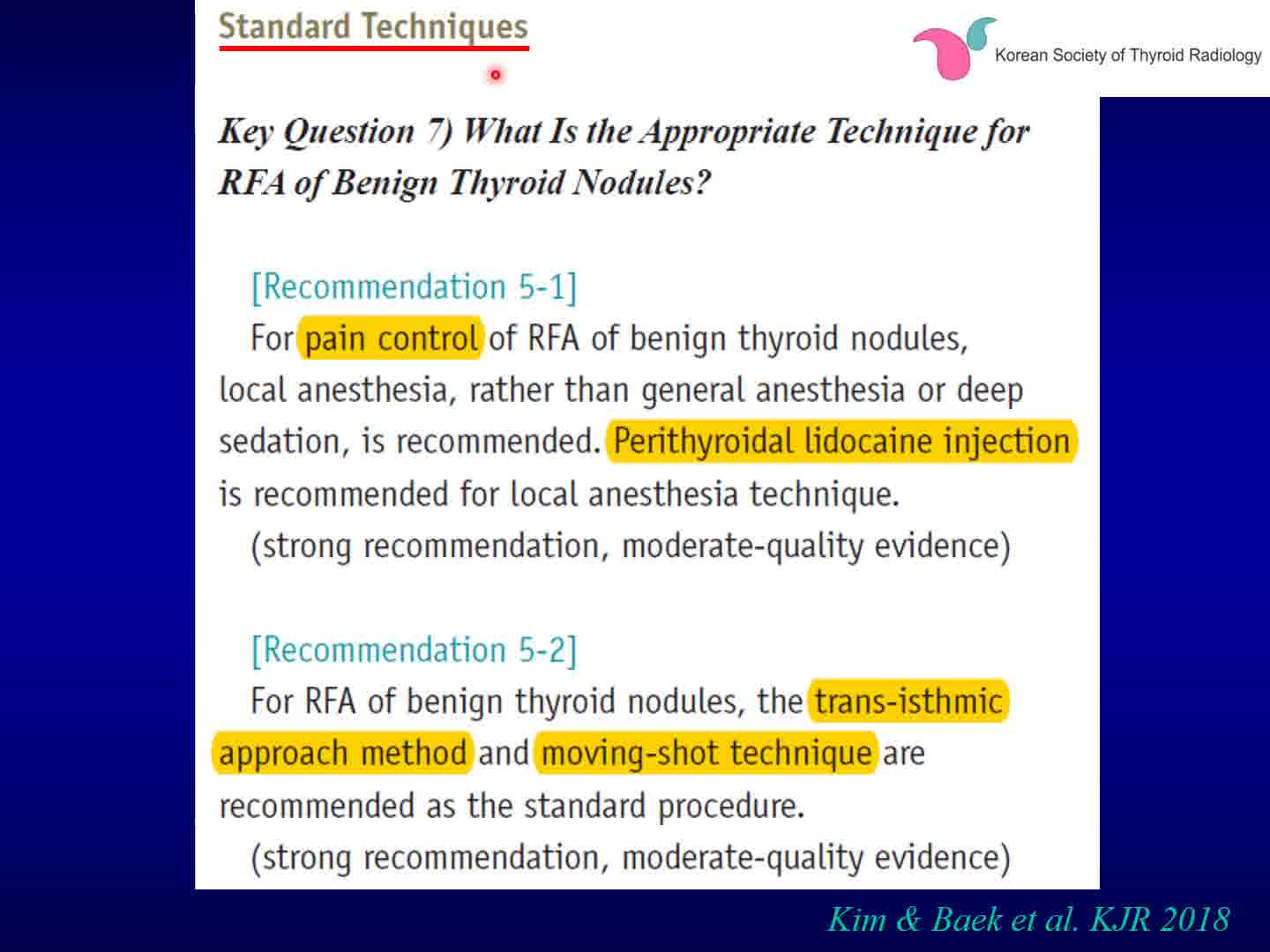
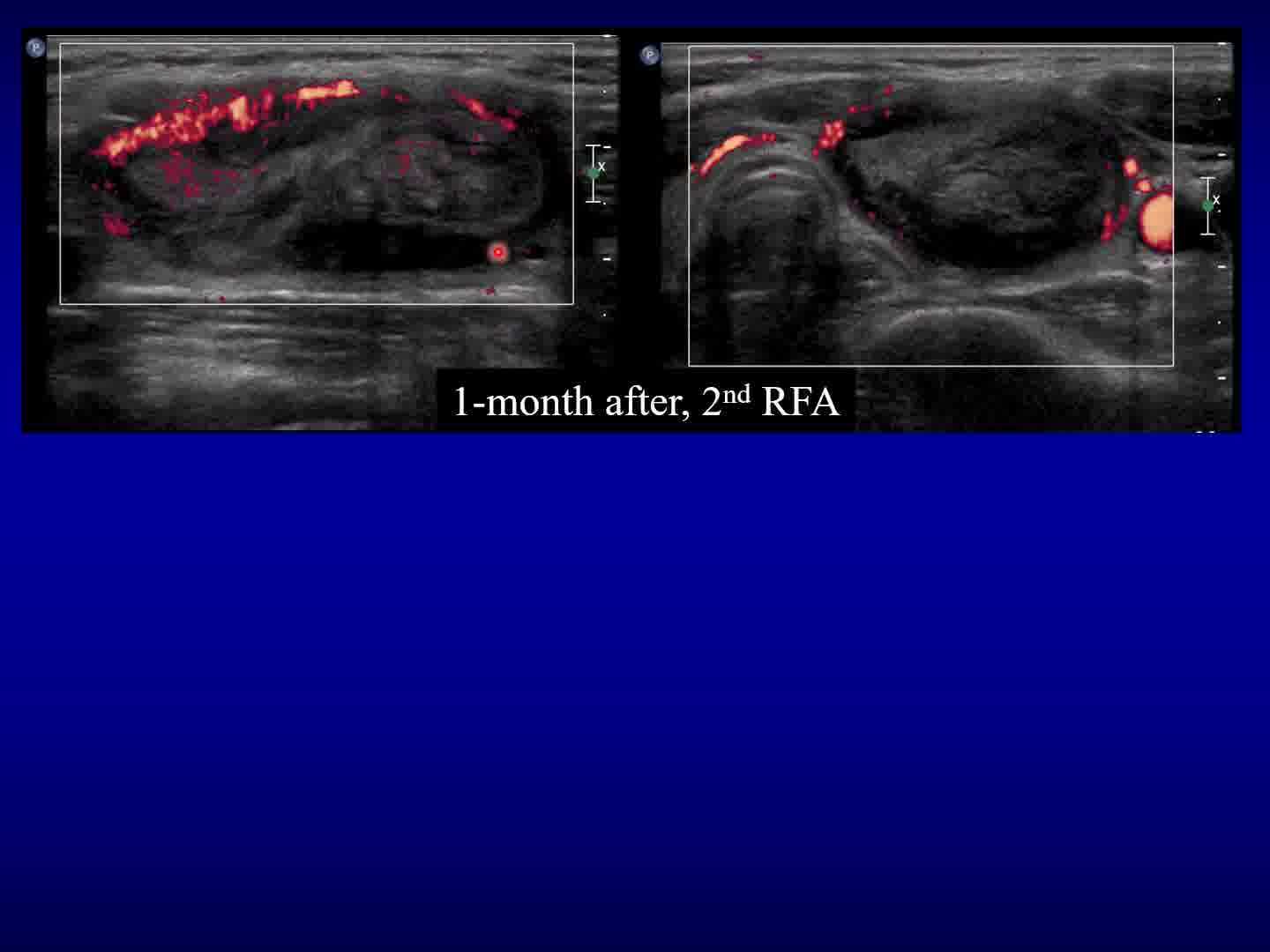
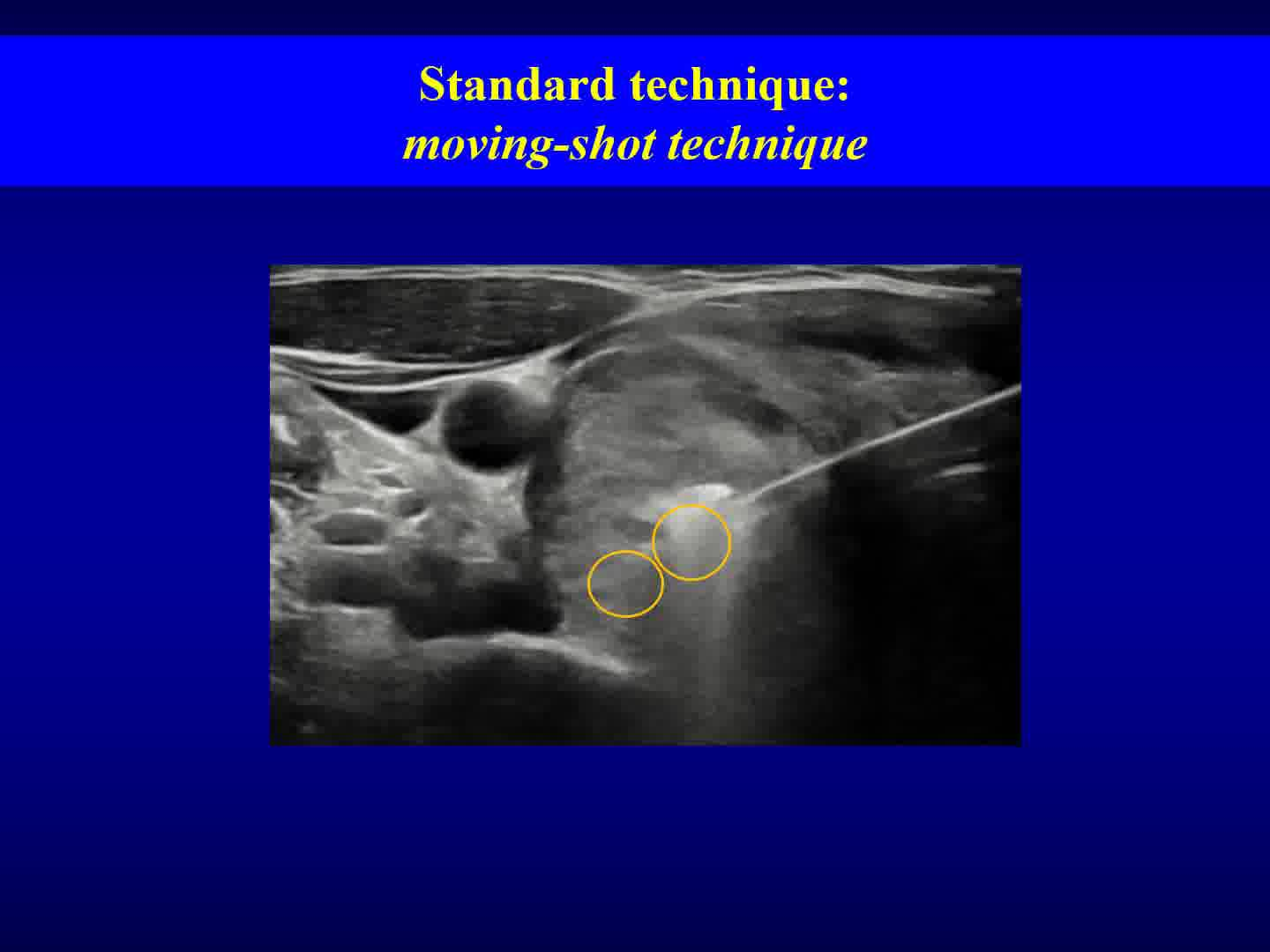
(1) For pain control, Korean Thyroid RFA Guideline suggests local anesthesia at perithyroidal soft tissue (thyroid capsule). (2) Transisthmic approach and moving-shot techniques are standard techniques to ablate thyroid nodules. These techniques can maximize the efficacy of RFA, while minimizing the complications. (3) To prevent marginal regrowth at long-term follow-up, we recommend vascular ablation technique (artery-first and marginal venous ablation techniques). Marginal venous ablation technique is more important to minimize marginal regrowth. (4) During the ablation, anterolateral hydrodissection is a simple and useful technique to control pain and minimize thermal damage to surrounding critical structures.
During the procedure, optimization of the RFA can be achieved utilizing the following techniques: (1) moving-shot technique, (2) hydrodissection technique, and (3) vascular ablation technique.
Conclusion:
RFA of a benign thyroid nodule is safe and effective, and its outcome can be optimized by utilizing the proper techniques.
No competing financial interests exist
.
Runtime of video: 10 mins 18 secs
Get full access to this article
View all access options for this article.