





Abstract
Abstract
Background:
Primary hyperparathyroidism (pHPT) is a common endocrine disease often caused by a single parathyroid adenoma. The only curative therapy for pHPT is parathyroidectomy. Bilateral neck exploration is the conventional technique but various techniques have been developed to minimize the incision, operative time, and/or length of hospital stay, including endoscope-assisted or endoscopic methods.1–7 The open minimally invasive parathyroidectomy (MIP) may be performed under local, cervical block anesthesia with shorter operative time and excellent cure rates in the ambulatory setting.8–12
Methods:
The aim of this video is to provide detailed instructions of minimally invasive parathyroidectomy.
Results:
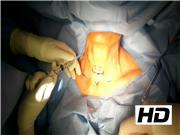
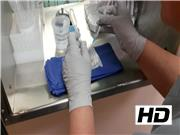
The diagnosis of pHPT is established by biochemical evaluation followed by preoperative imaging. The patient is placed in the semi-Fowler position. Local cervical block anesthesia is performed by the surgeon. An abbreviated Kocher incision is done, subplatysmal flaps are elevated superiorly, and the median raphe is opened. The recurrent laryngeal nerve is identified and preserved, then the end arterial supply to the parathyroid gland is individually ligated and divided. The parathyroid adenoma is excised, and PTH measurements of the aspirate from the lesion are used to confirm PTH-producing tissue. Intraoperative parathyroid hormone is routinely used to verify biochemical cure.
Conclusions:
The MIP is superior to other techniques of pHPT treatment. In our experience, 89.4% can be effectively performed without conversion to general anesthesia, the curative rate is higher than standard technique (99.4% vs 97.1%), and fewer complications (1.45% vs 3.1%) with minimized postoperative pain in the outpatient setting.8–11
No competing financial interests exist.
Runtime of video: 7 mins 25 secs
Keywords
Get full access to this article
View all access options for this article.