





Abstract
Abstract
Introduction:
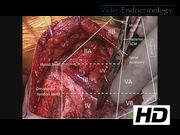
This video is intended as an introductory review of key surgical landmarks for performance of a safe and thorough selective neck lymph node dissection for metastatic papillary thyroid carcinoma.
Case:
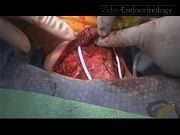
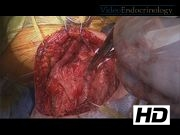
The patient is an 11-year-old boy with metastatic papillary thyroid cancer. His initial diagnosis was made on fine needle aspiration of a palpable right thyroid mass. Preoperative computed tomography scan demonstrated extensive bilateral cervical lymphadenopathy and pulmonary metastatic disease. The patient underwent attempted total thyroidectomy, which was aborted due to extensive locally invasive disease. He was then referred to our Thyroid and Parathyroid Center, a tertiary referral center for complex thyroid cancer surgery. A comprehensive preoperative and multidisciplinary evaluation was performed. A completion thyroidectomy was performed with comprehensive bilateral central neck dissection (performed by Mira Milas), followed by staged bilateral neck dissections. This video highlights all the critical cervical nerves exposed during the left selective neck dissection (performed by Maisie Shindo) with focus on safe operative steps of identification and illustration of anatomic relationships.
Conclusions:
Surgery remains the primary modality for treatment of papillary thyroid carcinoma with lymph node dissection as the mainstay in treatment for clinically evident cervical lymph node metastases. Surgeons performing this procedure should be familiar with the critical structures in the neck and strategies to avoid iatrogenic injury. In addition, compartment-based 1 en-bloc removal of lymph node groups, as shown here, is favored over isolated “berry picking” of grossly involved nodes, with studies suggesting improvement in the mortality rate according to the American Thyroid Association guidelines. 2
To be presented at the ACS meeting in Chicago on October 7, 2015.
No competing financial interests exist.
Runtime of video: 8 mins 24 secs
Get full access to this article
View all access options for this article.
References
Supplementary Material
Please find the following supplemental material available below.
For Open Access articles published under a Creative Commons License, all supplemental material carries the same license as the article it is associated with.
For non-Open Access articles published, all supplemental material carries a non-exclusive license, and permission requests for re-use of supplemental material or any part of supplemental material shall be sent directly to the copyright owner as specified in the copyright notice associated with the article.
