






Abstract
Interest in the brain's circulation dates back more than a century and has been steadily growing. Quantitative methods for measurements of cerebral blood flow (CBF) and energy metabolism became available in the middle of the 20th century and gave a new boost to the research. Scientific meetings dealing with CBF and metabolism were arranged, and the fast growing research led to a demand for a specialized journal. In this scientific environment, the
Keywords
Introduction and early history of cerebral blood flow
Interest in cerebral blood flow (CBF) and metabolism dates back to at least the 19th century. For many years, studies on CBF were indirect and based first on observations of pressure changes in the brain tissue, direct observation of diameters of cerebral blood vessels, etc. (e.g., Fog, 1938; Roy and Sherrington, 1890), and then later on changes in local tissue temperatures or cerebral arteriovenous oxygen differences (Wolf, 1936; Sokoloff, 1959). The first truly quantitative method for measuring CBF and metabolism was the bubble-flow meter method of Dumke and Schmidt (1943), but this method required such extensive surgical interventions in the cerebral vasculature that it was used only in monkeys under general anesthesia. The field was entirely revolutionized when Kety and Schmidt (1945, 1948) published their nitrous oxide method for the quantitative determination of rates of CBF and metabolic rates in unanesthetized, conscious human subjects.
The nitrous oxide method contributed enormously to knowledge of the physiology, pharmacology, and pathophysiology of the overall cerebral circulation and energy metabolism, but it failed to show any relationships between normal functional activities of the brain and its blood flow and energy metabolism. This failure was believed because the method measured only average blood flow and metabolism in the brain as a whole, whereas functional activities were localized to specific regions of the brain. What was needed were methods to measure blood flow and metabolism in localized regions of the brain.
Kety (1951) published his theory of inert gas exchange between blood and tissues. He had previously applied these principles to measure local blood flow in muscle on the basis of the time course of the clearance of 24NaCl after its injection directly into the tissue (Kety, 1949). Tissue clearance of 24NaCl could not, however, be used for measuring CBF because Na+ does not freely diffuse across the blood–brain barrier The same principles, however, were, subsequently, applied to develop a method to measure local CBF (Landau et al, 1955). A freely diffusible, chemically inert, radioactive gas, [131I]trifluoroiodomethane, was used as the tracer, and quantitative autoradiography was used to determine local tracer concentrations in the brain from which, together with the history of the tracer's arterial concentration, local blood flow could be calculated. Applications of this method in cats showed that local blood flow in the brain did indeed change with altered local functional activity, and its autoradiographic images provided the first demonstrations of functional brain imaging on the basis of local blood flow (Sokoloff, 1961). The [131I]trifluoroiodomethane method was, however, not widely used because the tracer is a gas and, therefore, difficult with which to carry out autoradiography, and also it was not commercially available and required frequent organic synthesis within the laboratory. These limitations were, subsequently, overcome first by Reivich et al (1969) who adapted the method for use with the nonvolatile tracer [14C]antipyrine, and later by Sakurada et al (1978) who used the more diffusible [14C]iodoantipyrine.
In the 1950s, Niels Lassen had modified the Kety–Schmidt nitrous oxide method for use with the radioactive inert gases, 85Kr or 133Xe. Subsequently in the 1960s, in collaboration with David Ingvar and others, Lassen adapted the 24NaCl clearance technique (Kety, 1949) for measurement of regional CBF (rCBF) in humans by labeling the brain via direct injection of the 85Kr or 133Xe into the internal carotid artery and then recording its clearance from various regions of the brain by means of a battery of critically positioned scintillation counters (Lassen and Ingvar, 1961; Hoedt-Rasmussen et al, 1967). This method was the first to achieve measurements of regional CBF in humans and was widely used by Lassen et al (1978) to study the local changes in CBF in a variety of normal and pathological functional states. Obrist et al (1967), subsequently, modified this method by replacing the intraarterial injection with inhalation of 133Xe, a modification preferred by many investigators.
The regional cerebral blood flow meetings
The availability of the 133Xe methods led to a flood of studies of regional CBF throughout the world, which stimulated demand for international meetings where new developments and ideas could be presented and discussed. The initiators of these methods, Lassen in Copenhagen and Ingvar in Lund, had very active programs in rCBF research at home and in a network of collaborations internationally. They together provided the driving force to organize meetings, named rCBF Symposia, in which research in the field could be presented. The first one was held in Lund in 1965, and the next one in Lund and Copenhagen in 1968.
Thereafter, the rCBF Symposia were held, at first annually and then biennially, at various places in the world (Table 1). Because the rCBF methods were limited to measurements of CBF, the contents of the rCBF meetings were mainly about the cerebral circulation. The field was, however, greatly expanded from its focus on CBF to include cerebral metabolism after the development in the 1970s of the [14C]deoxyglucose method for measuring local rates of cerebral glucose utilization in animals with autoradiography (Sokoloff et al, 1977) and its subsequent adaptations for use in humans with [18F]fluorodeoxyglucose, first with single-photon imaging by Reivich et al (1979) and then with positron emission tomography (PET) by Phelps et al (1979). The availability of these methods was soon followed by a further proliferation of studies, now not only on the blood flow but also on the energy metabolism of the brain.
The 25 CBF/Brain meeting from 1965 to 2011
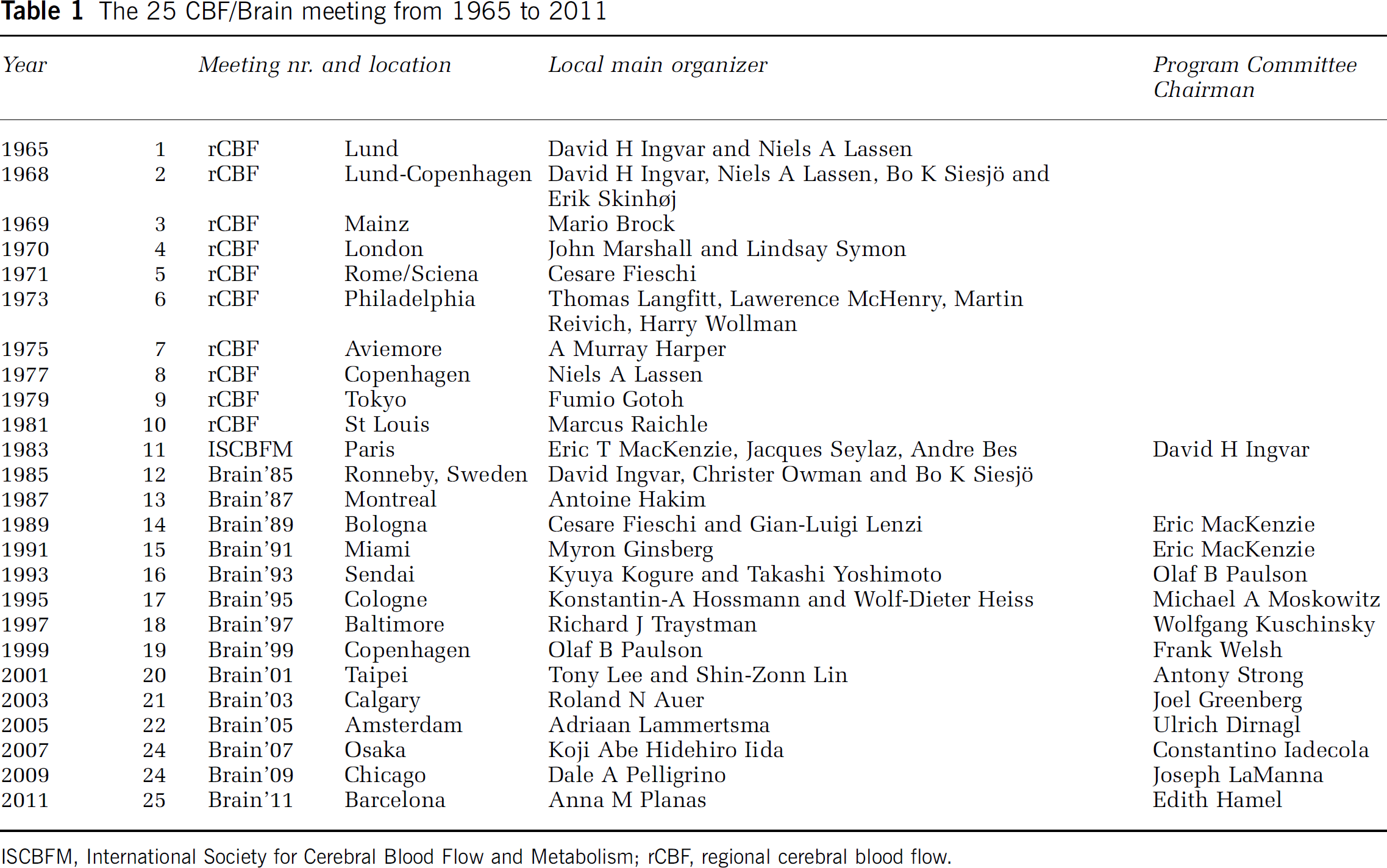
ISCBFM, International Society for Cerebral Blood Flow and Metabolism; rCBF, regional cerebral blood flow.
Origin of the Journal of Cerebral Blood Flow and Metabolism and the International Society for Cerebral Blood Flow and Metabolism
The idea to establish a society specifically devoted to the field of CBF and metabolism evolved from some casual conversations between Bo K Siesjö and Louis Sokoloff. Siesjö thought that, in view of the explosion of studies in the field, there was need for a more specific forum through which research in this area could be published. The relevant literature in this field was then scattered in a number of journals dedicated to the basic sciences as well as to clinical journals. He, therefore, sought Sokoloff's advice on how to establish such a journal. Sokoloff had previously been Chief Editor of the
The informal discussions between Siesjö and Sokoloff about the new society and its journal culminated in March 1980 at a scientific meeting in Paris where plans to organize their establishment were formulated. A steering committee, serving as a provisional council, was selected to implement these plans. The committee, chaired by Louis Sokoloff, included Bo K Siesjö, Cesare Fieschi, Konstantin-A Hossman, David H Ingvar, Igor Klatzo, Niels A Lassen, Eric MacKenzie, Marcus Raichle, Martin Reivich, and Fred Plum. Fred Plum accepted the responsibility of consulting lawyers and formulating the By-Laws for the proposed ISCBFM. The committee chose Murray Harper to be the first Editor-in-Chief of the Society's new journal,
The ISCBFM was formally established at the meeting in St Louis. The provisional council appointed Seymour Kety as honorary President for Life and Sokoloff as president for a 2-year term. The decision was also made to hold the Society's first official organizational meeting in Paris in 1983 and their international meetings biennially thereafter.
The Society's first meeting in Paris was notable for a number of reasons. First of all, the By-Laws, which define the Society's rules and procedures and are essential for legal incorporation, were ratified by those attending the business meeting. Second, the choice of Raven Press to publish the Journal on behalf of the Society was approved. Third, the meeting was the first one for which the number and diversity of abstracts required parallel scientific sessions to be held, reflecting the growth of the research field. Finally, a new president had to be elected because Sokoloff's term was expiring at the end of the 1983 meeting. Because there had not previously been any By-Laws, procedures for election of a president had not been defined before the meeting, and an
The second meeting of ISCBFM (12th rCBF meeting) was held in 1985 in Ronneby, Sweden. It was at this meeting that David Ingvar, Chairman of the Local Organizing Committee, introduced the term ‘
ISCBFM presidents, secretaries, and treasures
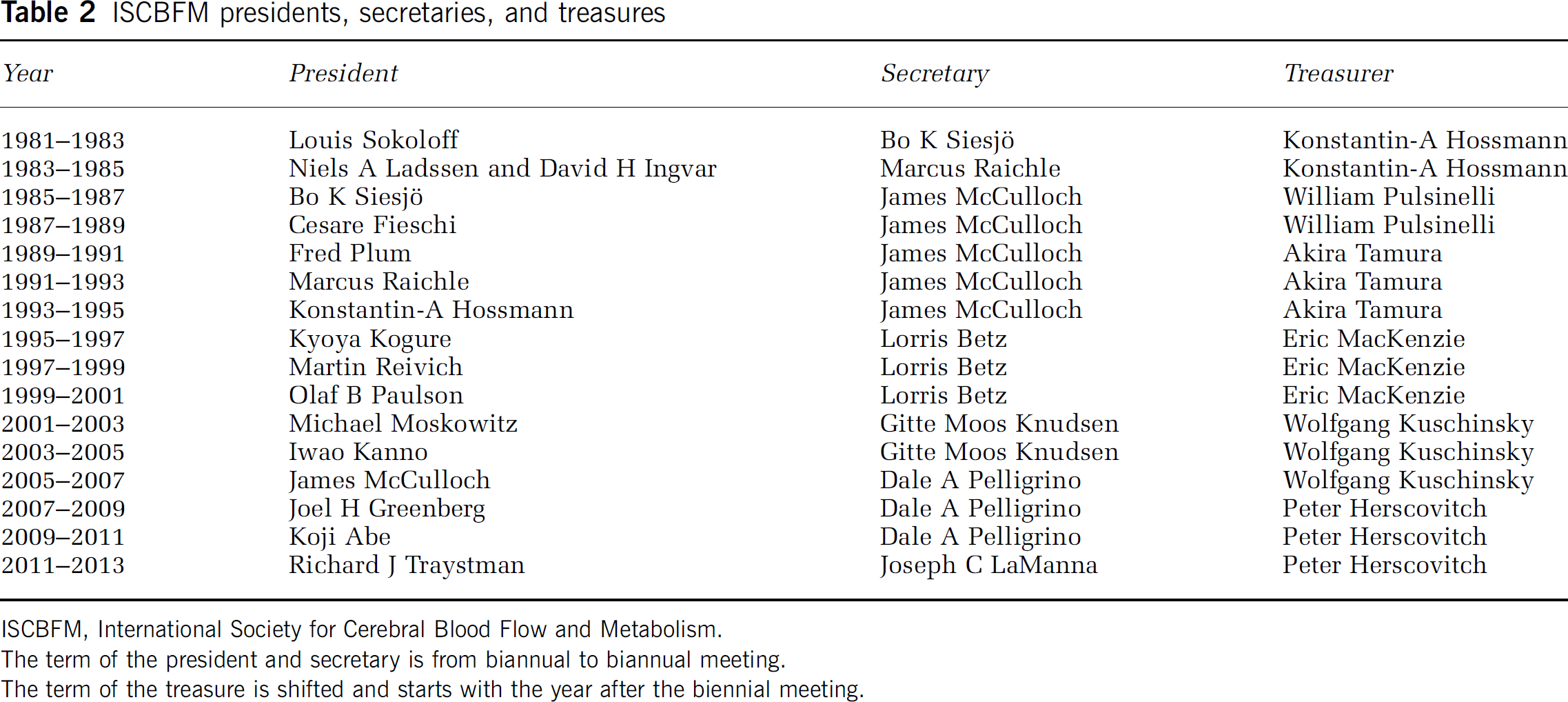
ISCBFM, International Society for Cerebral Blood Flow and Metabolism.
The term of the president and secretary is from biannual to biannual meeting.
The term of the treasure is shifted and starts with the year after the biennial meeting.
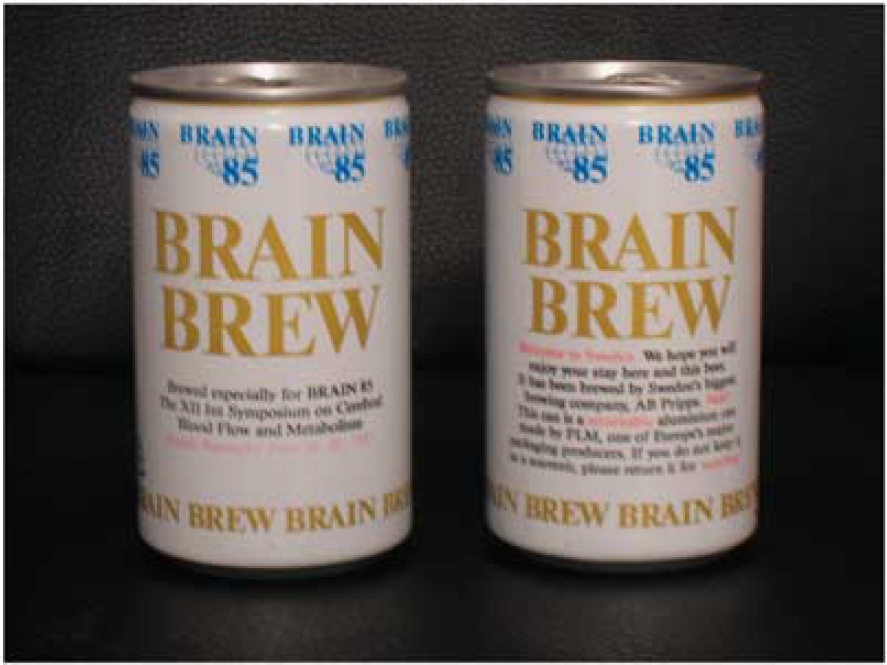
Brain brew. A happening with Swedish beer prepared for the Brain’85 meeting in Ronneby, Sweden. It was the first time the International Society for Cerebral Blood Flow and Metabolism (ISCBFM) meeting was called Brain’XX and the name has remained for all subsequent meetings.
The International Society for Cerebral Blood Flow and Metabolism
Since 1981, seventeen distinguished scientists have served as president, seven as secretary, and six as treasurer of the ISCBFM (Table 2). The society is financially sound. Most meetings have had a balanced budget or produced a small surplus, the journal has provided a steady income, and capital has accumulated. This has allowed the society to support activities related to its meetings and educational courses, including travel grants for young scientist attending the Brain’ and BrainPET meetings (the latter are described below).
Special features, which permeated research meetings in the field of CBF from its earliest origins, are commitments to develop young investigators and to maintain an interactive social program in our biennial meetings (and Summer Schools, satellite meetings, and Gordon Conferences). Promotion of informal interactions between senior and junior researchers at our meetings with the involvement of young investigators (via their own committee) in the affairs of the society has been a distinctive feature of our meetings for decades and will be maintained in the decades to come.
The Organ, newsletter from 1990
The Newsletter of the ISCBFM was created in 1990 to promote communication among the membership under the editorship of James McCulloch. The Newsletter takes its name, ‘Complex Heterogeneous Organ,’ from the opening line of a paper by the first president of the society (Sokoloff et al, 1977). From 2005 on, it has just been called ‘The Organ’.
Summer schools
Summer schools or educational satellite courses in connection with the biennial meetings were established in 1994 and have since been a regular event.
Lifetime achievement awards
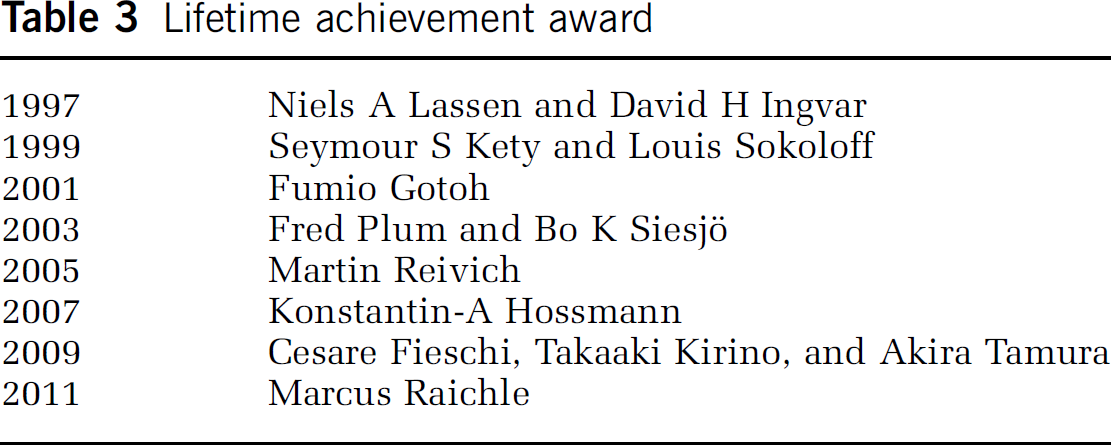
This award was established in 1997 and is awarded to a scientist for his outstanding contributions to the field of CBF and metabolism and the ISCBFM. The recipient of the Life Time Achievement Award receives a medal at the award ceremony at the opening of the biennial meeting. The recipients are listed in Table 3.
Lifetime achievement award
Lassen award recipients
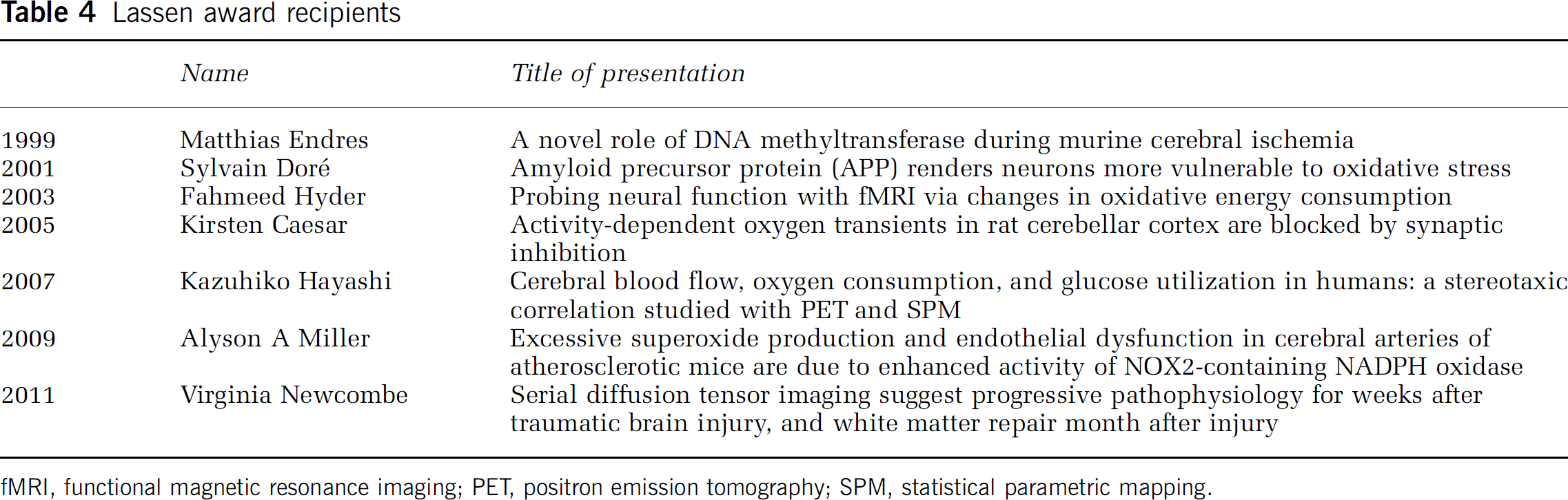
fMRI, functional magnetic resonance imaging; PET, positron emission tomography; SPM, statistical parametric mapping.
Lassen award
The Lassen award was established in 1999 in memory of Niels A Lassen (1926 to 1997) whose influence, not only generally on the field of CBF and metabolism but also on the young investigators, was so profound. The award recognizes an outstanding scientific contribution made by a young scientist. The recipients have been selected based on an abstract submitted for presentation at the biennial meeting of the Society. In 2005, the procedure was modified, and a shortlist of the top ranked abstracts was selected for oral presentation in a special session. Based on the presentations, a final decision on the recipient was then made. The award consists of a bursary to partially defray the expense of attending the Brain’ meeting, a certificate of recognition, and a small cash prize. The recipients of the Lassen Award are listed in Table 4.
Technological advances and the research fields
In the last three decades of the 20th century, new brain imaging methods were developed, for example, PET, single-photon emission computed tomography (SPECT), and magnetic resonance imaging (MRI), which became important tools in the investigation of CBF and metabolism and exerted major impact on the field. The earliest demonstration of a relationship between regional cerebral glucose utilization and functional activity in the brain was achieved with the autoradiographic [14C]deoxyglucose method in animals (Kennedy et al, 1975) and, subsequently, in the human brain with PET and [18F]fluorodeoxyglucose (Phelps and Mazziotta, 1985). After Lassen's and Ingvar's demonstrations in the 1970's of changing landscapes of regional CBF with altered functional activities in the working human brain (Lassen et al, 1978), two milestones have contributed enormously to the development of functional imaging. Fox and Raichle (1986) showed a mismatch between CBF and cerebral oxygen metabolism under normal physiological brain activation which surprised the neuroscience community. Then, Ogawa et al (1990) showed that the blood oxygenation level-dependent signals in MRI could be used to localize neural responses during functional activation. It was soon realized that the blood oxygenation level-dependent effect reflected the relatively greater increase in CBF than in oxygen utilization during neuronal activation. The discovery of the blood oxygenation level-dependent effect stimulated a new flood of investigations into the mechanism behind it. Many of these focused on physiological variables like blood flow, blood volume, hematocrit, blood oxygenation, oxygen consumption, energy balance, etc. Understanding the mechanisms of how blood flow and oxygen supply are regulated in response to neuronal stimulation and inhibition, spiking, and field potentials, and the role of glial cells remain some of the main interests of the ISCBFM.
Recent investigations of neurovascular coupling have used a variety of new modern techniques. One example is two-photon laser microscopy. By using fluorescent dyes and endogenous fluorescent transgenic mouse models, one can visualize the 3-dimensional network structure of vessels, glia, neurons, fibers, and various molecular behaviors. Many other topics and goals of current research, including, for example, molecular and genetic aspects, are also presented at the brain meetings.
Positron emission tomography, SPECT, and MR have also had a broader impact on the field. Positron emission tomography and SPECT have made possible molecular mapping and mapping of neurotransmitter and receptor binding, and MR spectroscopy has enabled measurements of regional metabolite concentrations in the brain.
The development of focal CBF techniques underpinned the tremendous expansion of brain ischemia research throughout the 1980s and 1990s. The biochemical cascades that lead to ischemic cell death were elucidated in animal models together with mechanisms (physiologic, pharmacologic, and genetically) by which they could be manipulated. Notable examples of this research are Tamura's studies on a focal ischemia model (Tamura et al, 1981), the Ginsberg group demonstration of the impact of small temperature changes on brain damage (Busto et al, 1987), and Siesjö and Bengtsson's review (1998) on mechanisms of ischemic damage.
In addition to the methodological developments, CBF regulation, cerebral ischemia, and brain mapping have throughout the years remained major topics at the Brain meetings. Important subtopics contributing to the highlights of the meetings have been control of cerebral blood vessels, mechanisms of injury, neuroprotection, neurobehavior, model development, and role of genetics, for example, in injury.
Satellite meetings
In 1973, Fred Plum unofficially organized a satellite meeting on severe hypoxia and brain oxygen consumption to be held in New York after the rCBF meeting in Philadelphia. Officially sanctioned satellite meetings began with a satellite meeting on the blood–brain barrier, organized in Copenhagen by Olaf B Paulson and co-workers, after the biennial meeting of the ISCBFM in Ronneby, Sweden in 1985. Since then, satellite meetings have been held in association with the biennial meetings and have been arranged to be held in the vicinity (bus transportation) of the main meeting. They emerged from the interest of scientists who had the desire of organizing smaller symposia focusing on subtopics of special interest, preferentially for researchers who attended the main meeting. There is a strong preference that such satellites are held after and not before the main meeting to not distract the attention from the main event.
The BrainPET’ meetings
The number of participants and topics at the main Brain meetings grew rapidly and thus left limited time for detailed discussion on some methodological issues. This led to a desire for more communications, particularly about PET studies. As a consequence, in Miami in 1991, Terry Jones, Jim Holden, Jean-Claude Baron, and Iwao Kanno agreed to organize a meeting focused on PET methodology and quantification. That meeting, the first BrainPET, was held in Akita as a satellite of the main Brain meeting in Sendai in 1993. Under the title ‘Quantification of Brain Function using PET’, the meeting aimed not only to improve the exchange of ideas, but also more ambitiously strove to set new and higher standards for PET research. It was a success, and since then BrainPET meetings have been continued. As many would like to attend both the Brain meeting and the BrainPET satellite, and as the number of international meetings was increasing rapidly, discussions were undertaken by the BrainPET organizers of the Bethesda Brain PET satellite meeting in Brain’97 and the organizers of Brain’99, especially Gitte Moos Knudsen. The decision was made to include the BrainPET sessions as an integral part of the next biennial ISCBFM meetings to be held in Copenhagen. Brain’99 was thus called ‘Brain’99 and BrainPET’99’. It proved to be a success, and since then, BrainPET has been an integral part of all subsequent Brain’XX meetings.
In response to developments in neuroscience PET research, the main topics of the BrainPET meeting have expanded from studies of CBF and metabolism to include quantification of molecular biochemical processes (e.g., neurotransmission, neurodegeneration, and neuroinflammation).
The organization for human brain mapping
That local CBF is increased by local functional activation was first demonstrated and visualized in cats by means of the autoradiographic [131I]trifluoroiodomethane method (Sokoloff, 1961). Lassen et al (1978) were the first to show with their 133Xe methods that measurement of rCBF could also be used for mapping local brain functions in the human brain. The subsequent development of SPECT, PET, and functional MRI methods for mapping local changes in cerebral glucose utilization or blood flow in human subjects led to an enormous proliferation of studies on the mapping of functional activities in the human brain. In the early 1980s, <1% of brain research involved PET, MRI, and SPECT, and, reflected only a minor part of the activities in the ISCBFM when the society was established in 1981. Since then, human brain mapping has steadily grown, and now PET and MRI studies account for just above 20% of all brain research (PubMed search using the queries ‘positron emission tomography (MeSH Terms) OR magnetic resonance imaging (MeSH Terms) AND brain (MeSH Terms) AND year (dp)’ and ‘brain (MeSH Terms) AND year (dp)’). This led in the late 1980s and the early 1990s to discussions by the Board of Directors of the ISCBM about whether the names of the society and its journal should have added to them the term ‘and Function’, for example, ‘ISCBFM’ and ‘Journal of Cerebral Blood Flow, Metabolism, and Function.’ Many were reluctant to such a name change because it might create confusion and move the scope of the journal away from its original orientation toward more broad-based science related to CBF and metabolism. Some expressed the opinion that molecular biology was just as important as or maybe even more so than function reflected by blood flow and energy metabolism. No changes were, therefore, made in the names of the society and journal.
In 1995, after the ISCBFM meeting in Cologne, a satellite meeting on human brain mapping was held in Paris. There it was decided to create a new society, the
Gordon conferences
The Gordon conferences on CBF and metabolism have taken place during the last decade and represent one of the major activities of the ISCBFM. The initiative came from Martin Lauritzen, who proposed it to the Board of ISCBFM Directors after the Brain-BrainPET’01 meeting, and the first Gordon Conference was held in 2004. These meeting have taken place biennially since then in the years between the biennial Brain/BrainPET meetings. They are independent on the ISCBFM, but organized by members of the Society and also receive the Society's financial support. The primary topic of the biennial Gordon Conference on CBF and metabolism has been the basic physiological aspects of CBF and metabolism regulation. The main Brain meetings are too big and often cannot provide an atmosphere where researchers can discuss their results in depth and at length. Under these circumstances, the Gordon Research Conferences provide an excellent platform where cutting edge results can be presented and discussed in depth in a relatively informal manner.
Footnotes
Acknowledgements
The authors are thankful and appreciate to have received valuable comments to the manuscript by Lorris Betz, Joel Greenberg, Konstantin-A. Hossmann, Gitte Moos Knudsen, Wolfgang Kuschinsky, and James McCulloch.
Disclosure/conflict of interest
The authors declare no conflict of interest.