






Abstract
Introduction
Casualties with accidental hypothermia are evacuated using multilayer wraps, typically including a chemical heat blanket (CHB), a vapor barrier, and an insulating outer bag. We investigated CHB performance against dry, damp, and wet fabric, in a multilayer wrap, in response to a case report indicating diminished performance when wet.
Methods
We wrapped a torso manikin in a base layer, CHB, vapor barrier, casualty bag, and vacuum mattress, recording CHB panel temperatures at intervals of up to 7 h. Experimental conditions were dry, damp, and wet clothing, with 2 blankets tested in each condition. We subsequently used a forward-looking infrared camera to assess whether the panels heated evenly and heat flux sensors to quantify heat transfer across 2 dry, 1 damp, and 1 wet fleece under CHB panels.
Results
Chemical heat blankets maintained heat output for >7 h inside the wraps. Median (IQR) panel steady state temperatures were 52°C (39–56°C) against dry fleece, 41°C (36–45°C) against damp fleece, and 30°C (29–33°C) against wet fleece. Peak panel temperature was 67°C. The heat flux results indicated that CHBs generated similar quantities of heat in dry and damp conditions, as the lower temperatures were compensated by more efficient transfer of heat across the moist clothing layer. Chemical heat blanket heat output was diminished in wet conditions.
Conclusions
Rescuers should cut off saturated clothing in a protected environment before wrapping casualties, but damp clothing need not be removed. Because of the high peak temperatures recorded on the surfaces of CHBs, they should not be placed directly against skin, and compression straps should not be placed directly over CHBs.
Keywords
Introduction
Accidental hypothermia is defined as an involuntary drop in core temperature to below 35°C. 1 Mountain rescue teams (MRTs) are often called on to assess and treat casualties in cold and wet environmental conditions. The Mountain Rescue England and Wales database recorded that 169 of 4225 (4 %) casualties were hypothermic in the years 2019 through 2021, while a study from Scottish Mountain Rescue identified 46 of 333 (14 %) casualties suffering from the effects of cold or exhaustion. 2 International guidelines have been published to assist MRTs in assessing and managing casualties with hypothermia.3,4 These recommend that casualties with a core temperature of <32°C and those who require stretcher evacuation should be placed in a multilayer wrapping system to provide insulation and protection from the environment.1,3
Various materials and systems have been studied to determine the optimum composition for a hypothermia wrap. 5 Mountain Rescue England and Wales teams use a wrap consisting of a chemical heat blanket (CHB) applied on top of a casualty’s base layer, then a vapor barrier, surrounded by an insulating fiber pile bag with a wind and waterproof outer layer. The wrapped casualty is supported in a vacuum mattress, which provides additional insulation and mechanical stability for injuries and aids careful moving and handling. 6 Chemical heat blankets have been shown to produce about 300 kJ of heat and reliably deliver this over several hours. 7 In mildly hypothermic, shivering casualties, exogenous heat will attenuate shivering heat production equal to the amount of heat donated. However, the addition of heat may still be of net benefit in increasing comfort and conserving body energy stores. Adding endogenous heat may decrease pain, cardiac work, and oxygen consumption in injured or sick casualties. 8 In nonshivering casualties or those in whom shivering is reduced due to age, trauma, or depleted oxygen or energy supplies, the provision of exogenous heat may reduce the depth and duration of the afterdrop and increase rate of rewarming (depending on the energy stores). 8 -10 A case report described the use of a CHB to successfully rewarm a hypothermic patient in the mountains. 11 However, the authors reported a failure of some panels of their CHB. It was unclear from the report whether they attributed this to premature exposure to oxygen or being unprotected from the rain, but they stated that “the CHB will not work when wet.” In a mountain rescue environment, it may not be desirable or even possible to completely remove clothing or dry a casualty prior to wrapping. There is also a case report of burn injuries from heat pads in the treatment of hypothermia. 12 Finally, the manufacturer’s instructions are to open the CHB to the air and allow 15 min to reach operating temperature. It is therefore common practice for MRTs to open the CHB and leave it loose on the top of a rucksack before arriving at the casualty, but it is unknown whether this compromises performance of the CHB. The questions of how well CHBs work against wet fabric and when opened early are of practical significance to rescue teams. In this series of experiments, we measured the performance of the Ready-Heat II CHB torso-only version (TechTrade LLC, Orlando, FL) against dry, damp, and wet fabric. The Ready-Heat II CHB is used by several MRTs in the UK. The blanket contains 6 independent panels arranged in a grid. Each panel contains a 10 cm × 13 cm sachet activated by exposure to atmospheric oxygen, releasing heat via an exothermic reaction. The panels are protected on their exterior (“non–patient-facing”) surface by a water-resistant membrane built into the blanket.
Our first study investigated the performance of the CHB in a wrap. We then undertook bench tests to address specific questions arising from that experiment. These were 1) whether the panels heated evenly, and if so, whether the single point measures of temperature in the wrap experiments were representative of overall panel temperatures, and 2) whether the panels were generating different amounts of heat in each condition or whether they were working equally well, but the heat was being transferred to the water in the clothing.
Methods
We used a torso manikin (Little Anne, Laerdal, Stavanger, Norway) to provide the surface area and volume of a patient (Figure 1). We clothed the manikin in a base layer (Pamenta T, Paramo, Wadhurst, UK) and then wrapped it in a CHB. We zipped a midweight polyester fleece (Keela, Fife, UK) and a waterproof jacket (Gore-Tex, Sprayway Equipment, Hyde, UK) over the CHB. Then, we wrapped the dressed manikin in a vapor barrier (Blizzard AMB Trauma Blanket, Blizzard Survival, Bethesda, North Wales, UK), a fiber pile casualty bag (Mountain Equipment, Hyde, UK), and a vacuum mattress (Aiguille, Kendal, UK). We sealed the vapor barrier at the feet and head using the drawcord. We minimized the dead space by rolling the blanket on itself. We closed the fiber pile bag using the drawcord around the head.
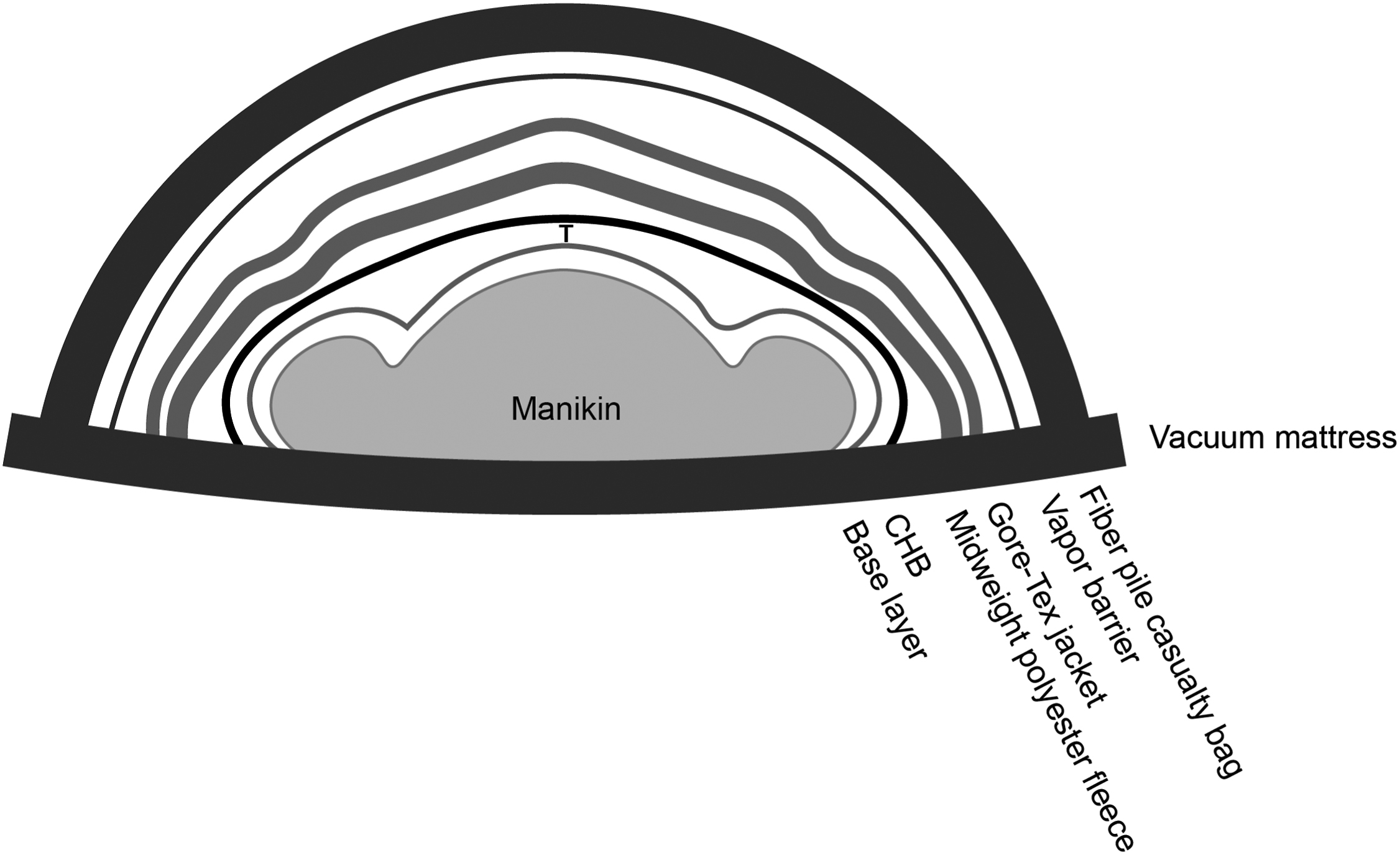
Experimental setup for hypothermia wrap. T indicates the temperature sensor position; CHB, chemical heat blanket.
We shook the blankets to expose them to the open air according to the manufacturer’s instructions. We left 2 in the open air as controls, while those that went into the wraps were kept loosely in a rucksack for 30 min to simulate mountain rescue practice. The controls were to clarify whether being placed in a rucksack made the CHB faster or slower to activate and whether the wrap might ultimately suffocate the panels. We recorded temperatures intermittently with a digital industrial thermometer (Signstek 6802 II) and K-type thermocouple (accurate to 0.1°C) attached to the centers of the “patient-facing” sides of each of the 6 CHB panels. We took measurements at 15-min intervals for 3 h and then at 30-min intervals for up to 7 h without opening the wraps. The 3 experimental conditions were 1) dry, 2) damp (clothes soaked in 15°C water and then centrifuged for 2 min at 400 RPM), and 3) wet (clothes soaked in 15°C water and held vertically for 2 min to allow excess water to drip away).
In subsequent bench tests, we positioned a thermal camera (A320, FLIR Systems UK, West Malling, UK) above the non–patient-facing side of a CHB to assess distribution of heat generation across a panel (Figure 2). We attached combined thermistor and heat flux sensors (Concept Engineering, Old Saybrook, CT) to the center of the “patient-facing” side of the panels, resting on a single 100% polyester fleece layer (Primark, Madrid, Spain), with a second heat flux thermistor under the fleece, all on top of an insulating foam base. Heat flux thermistors measure the rate at which heat is transferred per unit area, per unit time, in addition to temperature. The resolution of the heat flux component of these sensors was ∼150 W/m2/mV. We connected the thermistors to a Squirrel Temperature Data Logger (Omni Instruments, Dundee, UK), recording temperatures every minute. We tested 2 panels side by side in 2 experiments. In both experiments, the left panel was against dry fleece. In the first experiment, the right panel was against damp fleece (dampened with 0.02 g/cm3 of 15°C water), and in the second experiment, it was against wet fleece (soaked with 0.2 g/cm−3 of 15°C water).
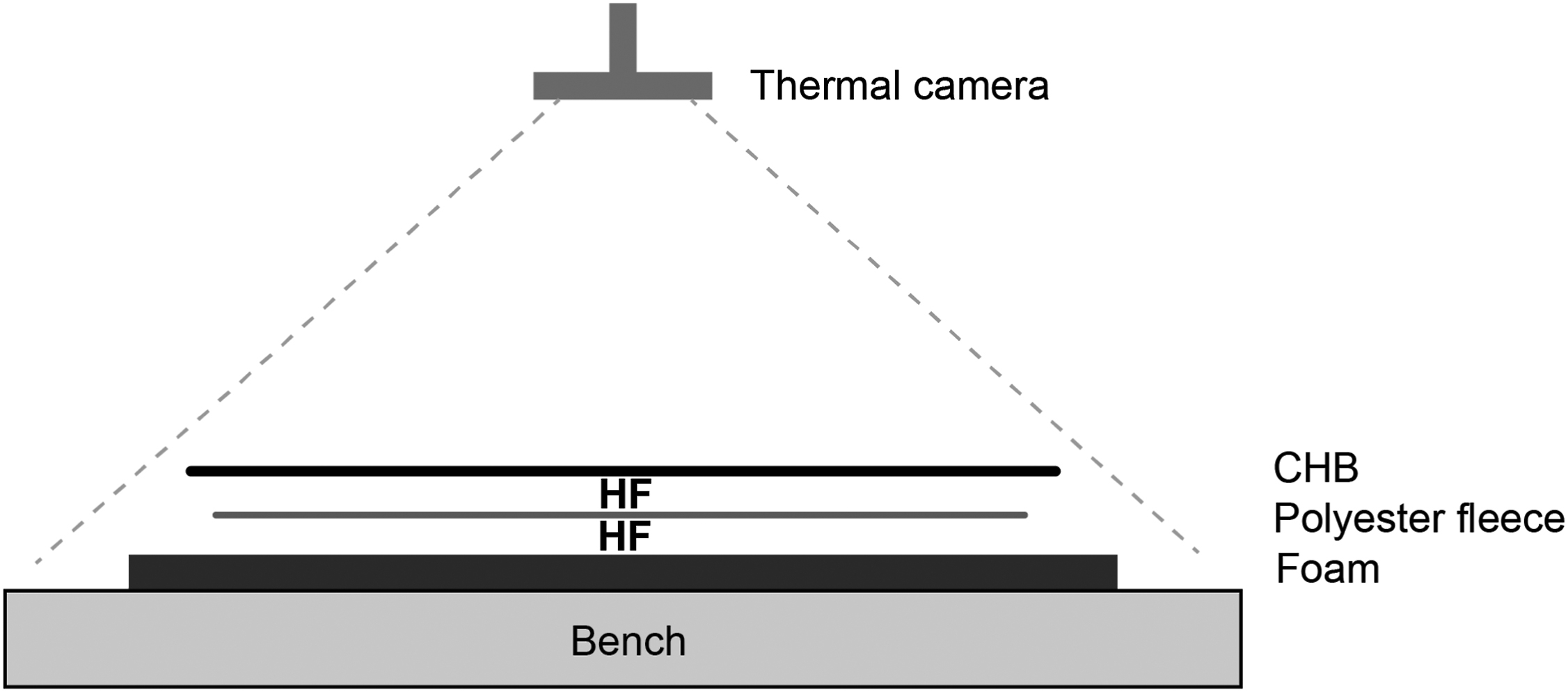
Experimental setup for bench tests. HF indicates the heat flux sensor position; CHB, chemical heat blanket.
We conducted all the tests indoors in ambient air temperatures of 17 to 21°C (wrap testing) and 17 to 19°C (bench testing). We defined steady state as a variation in temperature of <1°C over a 30-min period. We analyzed the results using R Studio (v1.0.143, R Core Development Team v3.4.1) and assessed them using descriptive methods (skewness, outliers, and distribution plots) and inferential statistics (Shapiro-Wilk test). We reported nonparametric results as median (IQR).
Results
The blankets left in the open air warmed more slowly than those in the rucksack. At 30 min, before being placed in the wrap, the panels in the rucksack were 43°C (38–49°C), compared to 32°C (30–34°C) in the open air (Figure 3). Once in the wrap, the panels generated the highest temperatures when placed against dry fleece (52°C [39–56°C]) at steady state. The highest single temperature recorded directly against a panel was 67°C. There was also the greatest variation among panel temperatures when against dry fleece. Panel temperatures were lower against damp fleece (41°C [36–45°C]) and lowest against wet fleece (30°C [29–33°C]), with reduced variation among panel temperatures. The time to reach steady state was longer against dry and damp fleece than against wet fleece (median, 180 vs 120 min). Steady state temperatures were maintained until the end of the experiment (7 h) in all conditions.
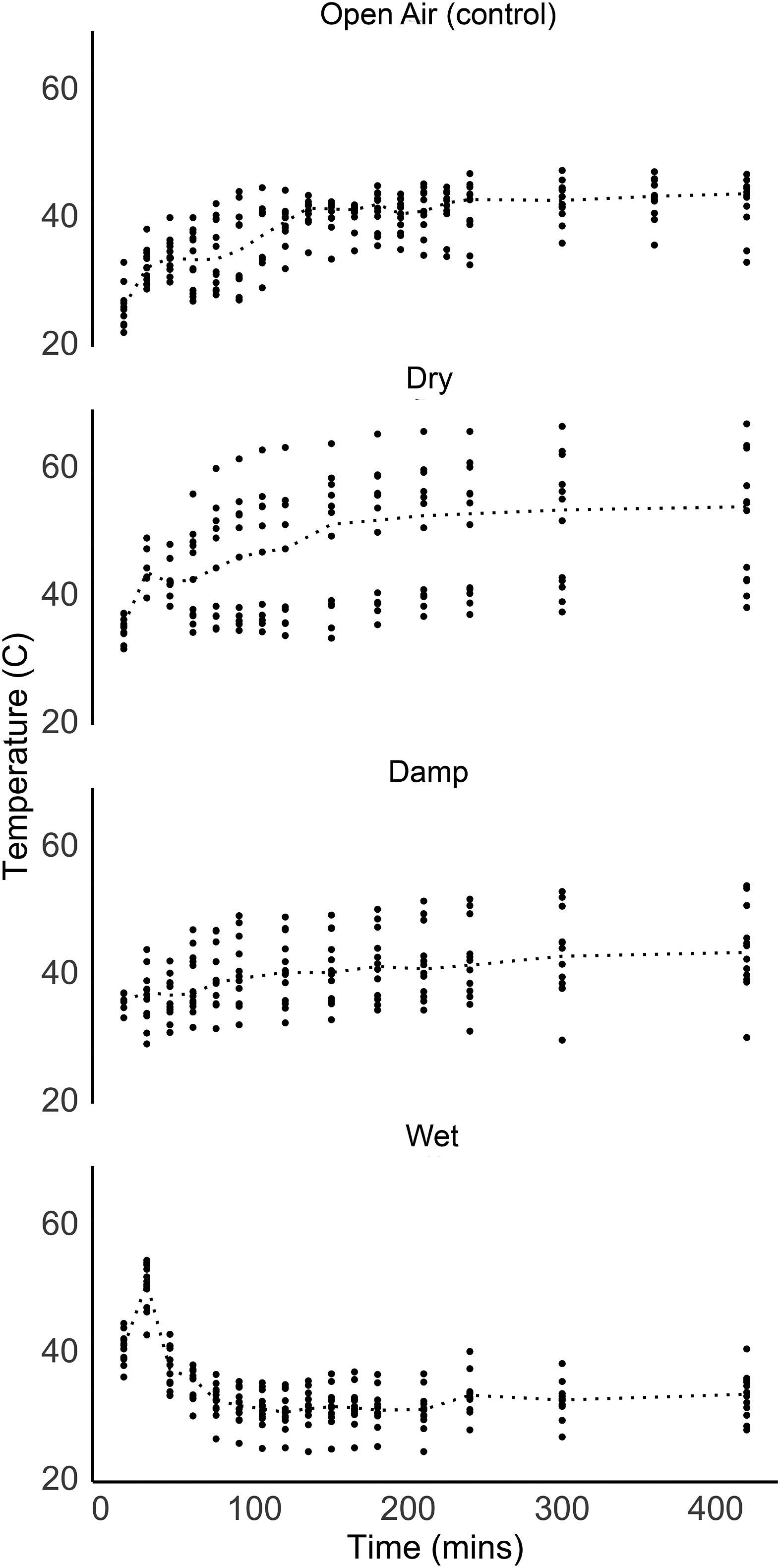
Panel temperatures recorded during the hypothermia wrap experiments. Points indicate individual panel temperatures; dotted lines indicate median temperatures.
In the bench testing, we recorded temperatures and heat flux from 2 panels side by side. The left panel was laid against dry fleece and the right against damp fleece and then wet fleece. The thermal camera demonstrated that the panels emitted heat most vigorously from the areas where the volume of reactive powder was greatest, generally at the centers but with some variation across the panel surfaces. Panel temperatures were higher against dry (53°C and 48°C) rather than damp (42°C) or wet (32°C) fleece at steady state. The temperatures under the fleece (analogous to the patient’s skin) were lower than those measured directly against the panel but followed similar trends (dry, 46°C and 38°C; damp, 41°C; and wet, 31°C). The difference between the temperatures against the panel and underneath the fleece was greatest with dry fleece and least with wet fleece. Heat flux from the panels was highest when they were placed against dry fleece and lowest against wet fleece (Figure 4). The dry fleece conducted the lowest proportion of heat from the panels to the sensor underneath the fleece (47% and 39%), compared to that for damp (65%) and wet (59%) fleece.
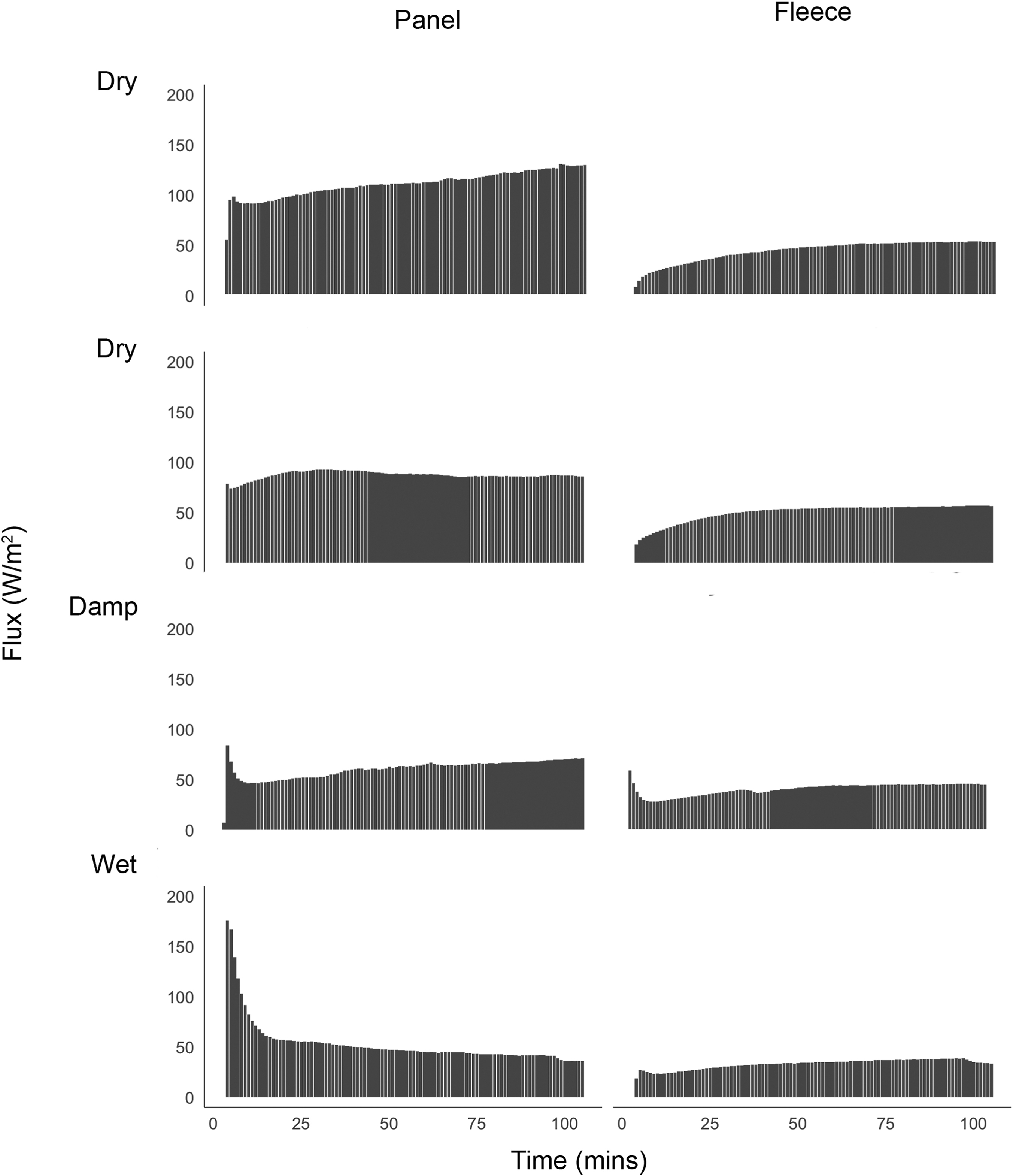
Heat fluxes recorded during the bench testing.
Discussion
The panels reached higher temperatures faster when kept in a rucksack than in the open air. However, the heat flux results demonstrated that heat is transferred to a patient from the moment of panel activation. Application of a CHB should not be delayed if there is no opportunity to open it early. The CHBs in our simulations lasted for at least 7 h, implying that rescuers would not need to consider checking or changing them before 7 h. It is not necessary to open the wrap to let in more oxygen. Steady state temperatures in the dry wrap were higher than those in the open air, presumably because of the added insulation.
Many casualties in the British mountains have damp or wet clothing. The heat flux results indicated that the panels performed equally well in dry and damp conditions. We recorded lower temperatures when the panels were placed against damp clothing, but the moisture increased the efficiency of heat transfer to the layers below, so the amount of heat transferred through the clothing was comparable. The scenario of very wet clothing, saturated with water, is a worst-case situation in the mountains or might represent a person rescued from the water. When we opened our wrap in the wet condition, the manikin was lying in a pool of water, and the clothing was still saturated. The CHBs were warm to touch, and the material was wet. Heat flux results indicated diminished panel performance in the wet condition, not simply lower temperatures because of increased heat transfer to the water. We think that a very wet environment caused water to surround the panels, compromising the chemical reaction and decreasing heat production. However, none of the individual panels failed, in contrast to the case report cited in the introduction. We recommend that damp clothing be left on a casualty, as removing the clothing might risk further cold exposure, and the damp clothing will not compromise heat production from a CHB. We recommend that rescuers cut off saturated clothing before wrapping a casualty. At the incident site, an emergency shelter to protect the casualty and the CHB would assist with this maneuver.
Because of the high temperatures measured at the surface of the CHBs when used against dry fleece, CHBs should not be placed directly against the skin. The dry fleece conditions also had the biggest variations in temperature, possibly because the addition of water helped distribute the heat more evenly in the other 2 conditions. Risk of skin injury is determined by the intensity and duration of the heat applied. The earliest perception of pain occurs just above 43°C in adults, while burn injury, defined as irreversible necrosis of the dermal surface, occurs when the temperature at the junction of the dermis and epidermis exceeds 44°C. 13 Compression increases heat transfer by improving the contact interface between the surfaces. 14 The peak temperatures measured in the experiments (67°C against a panel; 46°C under a dry fleece) suggest that rescuers should continue to place a layer between the CHB and the skin and should avoid tight compression strapping directly over a CHB, especially in unconscious casualties or those who cannot complain of pain.
Next steps would include accounting for the thermal properties of the human body using a thermal manikin and testing various models of blankets under a variety of environmental conditions.
Limitations
We examined the performance of one specific model of CHB, so our results cannot be generalized to other products. Because of experimental constraints, the wrap and bench tests were performed on separate occasions at separate locations, with thermocouples used in the wrap experiments and thermistors used in the bench experiments. It was also not possible to instrument both sides of the clothing in the wrap, which would have given a clearer indication of temperatures against a casualty’s skin. Both thermometers made “point measures” of approximately 1 cm2 of panel surfaces. It was an assumption that the point measures were representative of the temperatures produced across the whole panel, and the model could not represent temperatures during the exothermic reaction. The wrap model also did not isolate or control for the availability of atmospheric oxygen. We conducted the experiments in warm, still conditions, rather than the cold, windy scenarios where CHBs are typically employed. The bench testing setup and the torso manikin did not conduct, circulate, produce, or store heat in the same manner as a human body. Therefore, the model could not represent how heat generated by a CHB would be distributed to a patient.
Conclusions
Opening the CHB before reaching the casualty and enclosing it in a rucksack did not compromise the activation of the panels. Rescuers can expect performance to be maintained for 7 h without opening the wrap. We recommend that rescuers cut off saturated clothing in a protected environment before wrapping the casualty, but damp clothing need not be removed. Our finding of high peak panel temperatures suggests that CHBs should not be placed directly against the skin and that rescuers should avoid tight compression straps directly over CHBs.
Footnotes
Acknowledgments
The authors gratefully acknowledge the assistance of James Bull, University of Portsmouth, for advising on thermodynamic aspects of this study; HL Gordon in designing the Mountain Rescue England and Wales hypothermia guidelines and identifying the case study that prompted this study, and Ready-Heat for providing information relating to their chemical heat blanket construction and performance.
Author Contributions: study concept and design (MG, GL, KG, MW); data acquisition (MG, GL, KG, MW); data analysis (MG, MW); drafting of the manuscript (MG, MW); revision and approval of final manuscript (MG, GL, KG, MW).
Financial/Material Support: This work was supported by Kendal Mountain Rescue and Search Team via provision of equipment and the University of Portsmouth Extreme Environments Laboratory via the use of its facilities for testing.
Disclosure: MG and KG are longstanding members of Mountain Rescue England and Wales.