






Abstract
Introduction
Wildland firefighters (WLFF) work long hours in extreme environments, resulting in high daily total energy expenditure. Increasing work-shift eating episodes and/or providing rations that promote convenient eating has shown augmented self-selected work output, as has regular carbohydrate (CHO) consumption. It remains unclear how current WLFF feeding strategies compare to more frequent nutrient delivery. Our aim was to determine WLFFs’ self-selected field total energy intake (TEI), composition, and feeding patterns during wildland fire suppression shifts.
Methods
WLFF were deployed to fire incidents across the United States throughout the 2018 fire season. Preshift food inventories collected at basecamp provided item-specific nutrient content (kilocalories, CHO, fat, protein). Work shift consumption (TEI, feeding frequency, episodic composition) was monitored in real time by field researchers on fireline via observational data capture using mobile tablets. Shift work output was also quantified via actigraph accelerometry.
Results
Eighty-six WLFF (27.5±6.4 y; 16 female, 70 male) worked 14.0±1.1 h shifts, with a TEI of 6.3±2.5 MJ (1494±592 kcal) (51±10, 37±9, 13±4% for CHO, fat, and protein, respectively). WLFF averaged 4.3±1.6 eating episodes (1.4±1.3 MJ [345±306 kcal] and 44±38 g CHO·episode-1). WLFF who consumed >20 kcal·kg-1 averaged less sedentary activity than those consuming <16 kcal·kg-1. Data are presented as mean±SD.
Conclusions
Not including fire camp meals (breakfast, dinner), the present work-shift TEI approximates 33% of previously determined WLFF total energy expenditure and demonstrates that current WLFF consumption patterns may not deliver adequate nutrients for occupational demands.
Introduction
Wildland firefighters (WLFF) are regularly exposed to myriad environmental and physical demands, including extended work shifts (≤24 h) in adverse conditions (heat, altitude, and low humidity), compromised diet, and sleep deprivation. 1 -4 The hardships of a fire assignment depend on the fire intensity, geographic location, and respective ambient conditions. Using doubly labeled water methodology, our laboratory previously determined the total energy expenditure (TEE) of the WLFF to be 11.4 to 26.2 MJ·d-1 (2719–6260 kcal·d-1). 1 Fifteen years later, we reported a similar range of TEE (12.3–25.5 MJ·d-1 [2946–6083 kcal·d-1]) with an average output of 19.1±3.9 MJ·d-1 (4556±943 kcal·d-1), 4 again demonstrating the arduous yet consistent nature of the WLFF profession.
Despite former promotion of high protein intake for individuals performing large amounts of work, it has more recently been established that diets primarily consisting of carbohydrates (CHO) are advantageous to optimize total work output by those engaged in strenuous occupational or physical training. 5 -8 Previously reported nutritional records suggest that WLFF’s total CHO intake in fire camps may be inadequate owing to the self-selection of foodstuffs containing dietary fat and protein quantities greater than those recommended for arduous work. 1 Moreover, the timing of intake has shown improved maintenance of steady work output and prevention of gastrointestinal discomfort. 9 -13 Supplemental feedings during long-duration exercise (>2 h) have consistently demonstrated increased ability to complete physical work, 7 -26 a notion later confirmed by auxiliary feeding interventions that elicited improved work output during latter work-shift hours. 27 Additionally, our laboratory demonstrated significant muscle glycogen preservation in males and females when CHO was regularly supplied during a 10 h exercise trial. 25 Enhanced work performance was further indicated via supplemental consumption by way of augmented episodic frequency using a redesigned military ration system (first-strike ration). 28
The occupational requirements of WLFF necessitate consumption of foods that meet energy demands and impart adequate satisfaction to sustain consumption patterns for the entirety of work shifts, which can last for up to 24 h, and the fire season duration, typically extending from April to October. Currently provided WLFF work-shift rations are composed of a sack lunch of approximately 5.4 to 8.4 MJ (1300–2000 kcal), 29 although it is not well established whether this provides sufficient energy to maintain required work efforts. Furthermore, it remains uncertain whether current sack lunch provisions and packaging promote apposite feeding frequency. The aims of the present study, therefore, were to ascertain the average caloric and macronutrient (CHO, fat, protein) intake and distribution of all work-shift foods, as well as WLFF feeding behavior and corresponding work output throughout extended fire suppression shifts.
Methods
Participants
Participants deployed to 12 different wildland fire incidents across 6 regions of the western United States during the 2018 fire season were eligible for study participation. On the basis of their fire assignments, participants were recruited and enrolled by volunteer self-selection the night before the observed work shift. Prospective participants must have been deployed to fire incident for at least 1 complete day before study involvement to ensure having consumed at least a full day’s worth of fire camp and line meals. Before study participation, participants provided written, informed consent by signing a university-approved institutional review board consent form, after which participant data (anthropometrics: height, body weight; and demographics: age, sex, location) were documented.
Work-Shift Food Inventory
A complete inventory of all work-shift food items was conducted via manual and photographic data capture 30 -33 before leaving base camp (preshift food inventory), after which all registered food items were entered into a mobile tablet for ensuing work-shift observation. Caloric and macronutrient profiles of all inventoried foods were later catalogued in Food Processor Nutrition Analysis Software 11.1 (ESHA Research, Salem, OR) for future evaluation.
Field Consumption
All members of the research field team were detailed from current WLFF crews and trained in mobile tablet program manipulation and data capture at the United States Department of Agriculture Forest Service National Technology & Development Program office in Missoula, Montana, before any data collection at the beginning of the fire season. Field research members’ prior experience working as WLFF improved the reliability of their data collection efforts because their familiarity with the context and occupational setting enabled them to monitor participant field behavior with minimal influence or interruption.
Each day, 1 research team member was assigned to a WLFF (1:1) and used a previously compiled mobile tablet inventory approach to surveil and record feeding habits (food items consumed, amount and corresponding time of respective item intake) in real time throughout the work shift, thus minimizing the potential for recall or self-report inaccuracies.1,34-39 Alignment of previously inventoried foods’ nutritional information with work-shift consumption observations enabled subsequent chronologic determination of caloric and macronutrient profiles of all individually consumed items and the average intake and distribution throughout the work shift and per feeding episode. For analytical purposes, a “feeding episode” was defined as any work-shift period during which intake of all foods occurred, with no more than 10 min elapsed between items consumed.
Actigraphy
Actical actigraphy units (MiniMitter, Bend, OR) were used to determine participant total body activity and movement while on shift. Monitors were distributed to participants on the morning of observation; to protect against damage and ensure stable positioning, monitors were secured on a white foam core square and placed in left chest pocket of participants’ Nomex fire shirt. Unit placement was standardized for all data collection owing to WLFFs’ frequent use of the upper body to perform daily job duties, thus providing the greatest likely capture of work performed.27,28,40 In accordance with previous studies, per-minute activity counts were classified into distinct ranges (sedentary [≤99 counts·min-1], light [100–1499 counts·min-1], and moderate/vigorous [≥1500 counts·min-1]), allowing for subsequent analysis of various work-shift intensities.27,28 For comparative intake analysis, work-shift consumption was examined in relation to participant body mass (kcal·kg-1) and divided into subcategories (low, <16; medium, 16–20; and high, >20).
Statistics
One hundred twenty-five participants from various WLFF crew types volunteered for work-shift observation. If, on the day of study participation, participants did not complete a full work shift owing to reassignment or spike camping, consume all meals provided per current catering contract, or have all foods consumed during shift captured in both preshift food inventory and mobile tablet (ie, data loss), they were excluded from further analysis. Such exclusions resulted in a final pool of 86 WLFF participants for dietary and feeding assessment. Actigraphy examination necessitated additional exclusions because of data loss, yielding 74 WLFF participants for subsequent analyses of work-shift activity.
All analyses were performed using Microsoft Excel 2016 (Microsoft, Seattle, WA) and R (R Core Team, Vienna, Austria). All descriptive data are presented as mean±SD. Independent t-tests were performed to examine sex-based differences among anthropometric measures and work-shift observations (consumption, activity). A 1-way analysis of variance was used to explore differences in work-shift activity, feeding episodes, caloric intake per kilogram body weight, and other behavioral and consumption metrics. Statistical significance is indicated by P values <0.05.
Results
Participants
Among all participants (27.5±6.4 y), a difference in height and body weight between females and males was observed (P<0.05) (Table 1).
WLFF demographic and work-shift demographic characteristics
WLFF, wildland firefighters.
P<0.05 vs female.
Work Shift Feeding
WLFF work shift duration was 14.0±1.1 h with a total energy intake (TEI) of 6.3±2.5 MJ (1494±592 kcal) and distribution of 51±10%, 37±9%, and 13±4% for CHO, fat, and protein, respectively. Additionally, respective sodium and potassium consumption were quantified as 2417±1174 and 1323±864 mg. Breakfast and dinner consumption was similarly measured and resulted in an estimated daily total consumption of 15.4±6.3 MJ·d-1 (3684±1493 kcal·d-1) (Table 2). Total caloric intake was lowest and greatest during the first and third quintiles of the work shift, respectively (P<0.05). Conversely, average energy intake was shown to steadily rise throughout the work shift (Figure 1), during which the number of eating episodes ranged from 2 to 9.
Caloric, macronutrient, and electrolyte composition of consumed fire camp meals and estimated daily totals
EDT, estimated daily total (sum of total work shift provision and fire camp consumption).
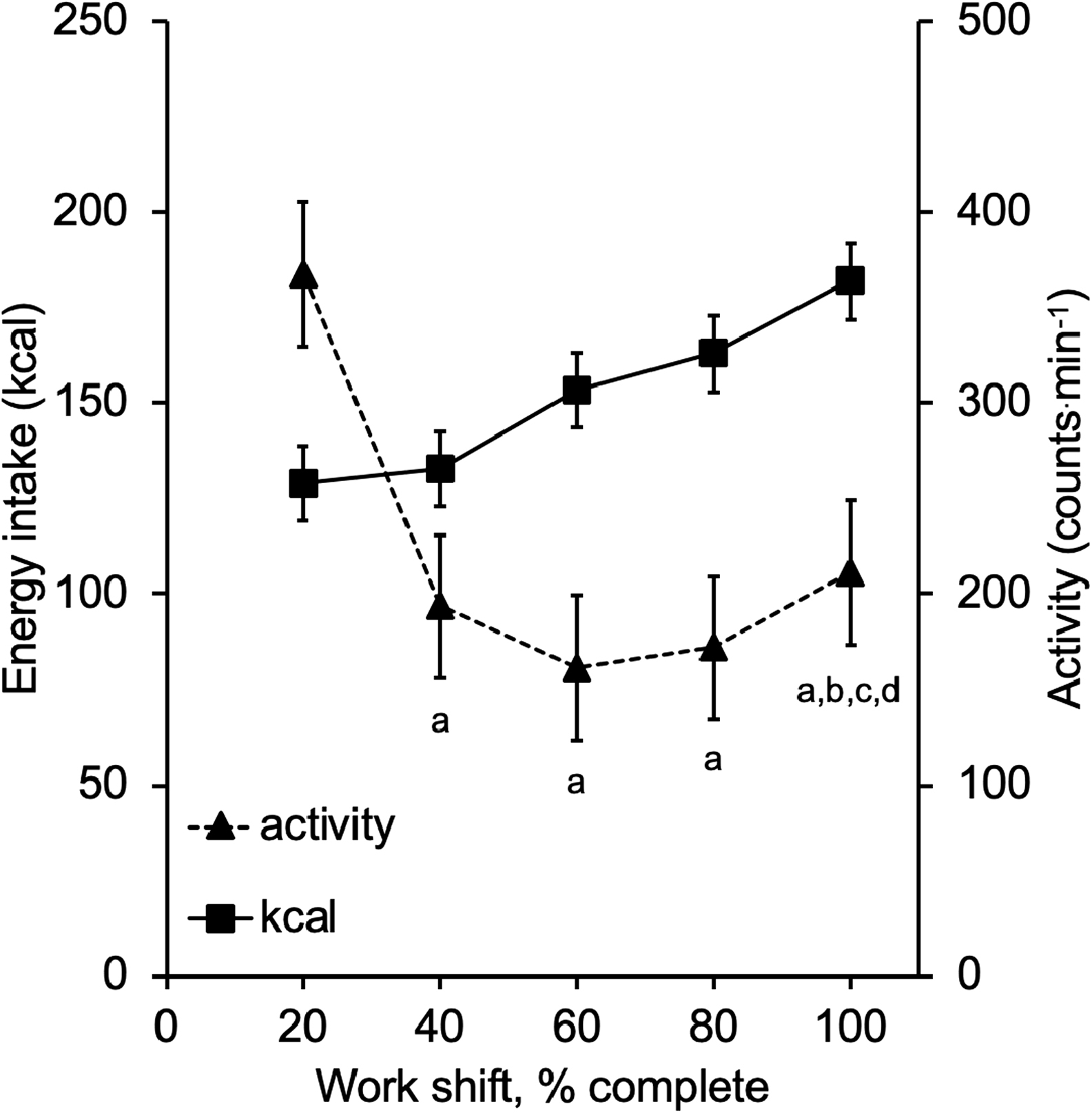
Caloric consumption and activity during wildland fire suppression shifts (mean±SEM). A, P<0.05 vs 20% work shift; b, P<0.05 vs 40% work shift; c, P<0.05 vs 60% work shift; d, P<0.05 vs 80% work shift.
Females exhibited a greater CHO intake, both as a percent of total caloric intake and per kilogram body weight, as well as consistently lower protein and sodium intake than their male counterparts (Table 3). Although no relationship was determined (P=0.0506), males undertook fewer feeding episodes than did females throughout the work shift, during which there was a greater intake of calories, fat, and protein per episode (Table 4).
Total caloric, macronutrient, and electrolyte intake and distribution during wildland fire suppression shifts
P<0.05 vs female.
Episodic consumption and distribution during wildland fire suppression shifts
P<0.05 vs female.
Actigraphy
For 74 of the 86 participants, 689±73 min of activity was noted throughout the work shift. Overall work-shift activity was 220±168 counts·min-1 and was composed of 63±17%, 33±17%, and 4±5% sedentary, light, and moderate/vigorous intensity, respectively. Activity counts exhibited a nearly 50% decrease from the first to third quintiles of the work shift, before slightly increasing over the latter quintiles (Figure 1), likely representing the ingress and egress hike to and from the fire line. Examination of episodic feeding frequency did not show a relationship with average work shift activity (P>0.05). There was a noted difference in the amount of moderate/vigorous activity performed (41±32 vs 24±31 counts·min-1 and 6±4% vs 4±5% for females and males, respectively; P<0.05); however, no differences were seen between the sexes in output of sedentary or light-intensity work.
Observed caloric intake per kilogram body weight was stratified into groups of equal proportion (<16, 16–20, and >20 kcal·kg-1, respectively) for further analysis. Although caloric intake per kilogram body weight and work-shift activity counts were not statistically associated, subsequent contrast of work intensity did elicit a relationship (P<0.05). WLFF who consumed greater than 20 kcal·kg-1 spent more of their individual work shifts (percent, total minutes) performing light intensity work (100–1499 counts·min-1) than sedentary activity (≤99 counts·min-1) (Table 5). No associations between caloric intake per kilogram body weight and moderate/vigorous-intensity work (≥1500 counts·min-1) were observed among any of the groups. A difference was observed between work-shift feeding episode count per group (<16 and >20 kcal·kg-1, respectively; P<0.05).
Total energy intake relative to body mass (kcal·kg-1) and the differences in self-selected work output distribution.
P<0.05 vs <16 kcal·kg-1.
Discussion
WLFF are routinely subjected to unfavorable and potentially injurious conditions (rough terrain, acute altitude, low humidity, high ambient and radiant heat) 41 -43 during extended work shifts. Ingress hikes to the fire line have demonstrated the greatest metabolic demand during fire suppression shifts, 44 which often emphasize greater need for long-term endurance than high-intensity efforts. 45 Previous base camp nutritional records have evinced greater-than-advised fat and protein consumption, 1 despite recent promotion of diets rich in CHO for those performing great amounts of labor. 5 -8 It was recently indicated that WLFF incurred diminished health measurements over the duration of the fire season, 46 namely increased total cholesterol and low-density lipoprotein and elevated total body and visceral fat. Intrahepatic lipid was also noted to trend upward at season’s end, despite the lack of significant difference. Although these maladaptations cannot be fully attributed to deficient nutrient and fuel delivery throughout the fire season, they may suggest ramifications of the seasonal lifestyle alterations and arduous occupational demands of WLFF.
Improved feeding occurrence has also demonstrated efficacy in minimizing gastrointestinal distress while maintaining steady work output over training or work periods of 2+ h, 7 -26 and our laboratory has illustrated preservation of muscle glycogen via regular CHO ingestion during prolonged exercise. 25 Ancillary work shift feedings have also demonstrated enhanced WLFF occupational performance, especially in a shift’s latter hours.27,28 Furthermore, we have shown that 8.2±1.3 and 7.6±1.1 eating episodes for different sack lunch provisions (first-strike rations and meals ready-to-eat, respectively) during a 2-d ration intervention among actively deployed WLFF. 28 Under similar observation, 64% of participants were noted to have eaten between 2 and 4 times throughout the work shift (Figure 2), despite heightened caloric and macronutrient consumption as a result of increased frequency of eating (Figure 3). Sex-based feeding differences (Tables 2 and 3) are also in line with our laboratory’s previous findings. 1 Potentially stemming from fire activity and corresponding shift duties or food item–specific packaging, discrepancies between observed feeding episodes may have a direct effect on self-selected feeding behaviors. It is imperative that WLFF and those in comparable prolonged-performance occupations (eg, military personnel) have reliable access to appropriate shift provisions to ensure acceptable work output and minimize safety risks.
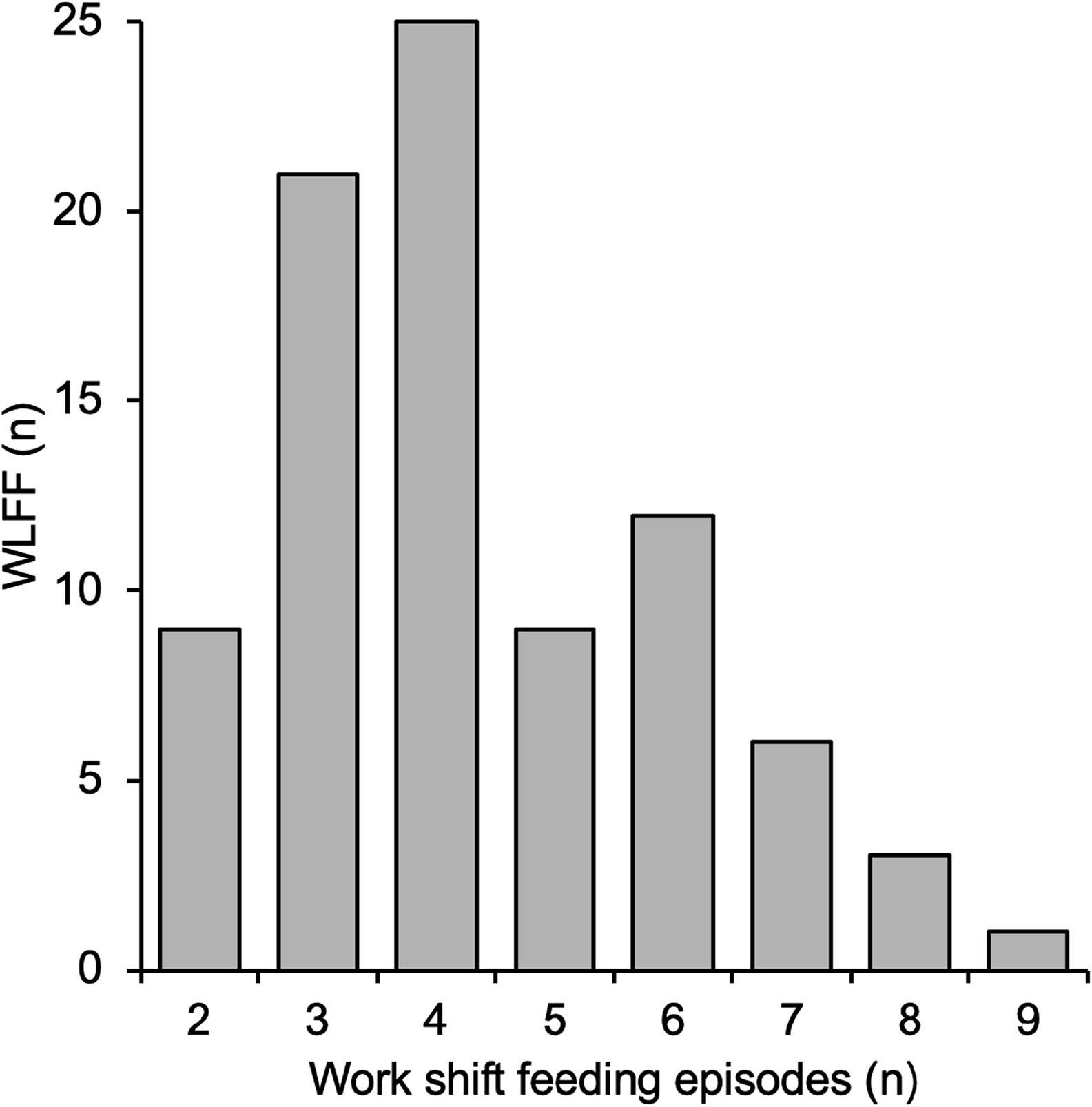
Observed feeding episodes during wildland fire suppression shift; n=86.
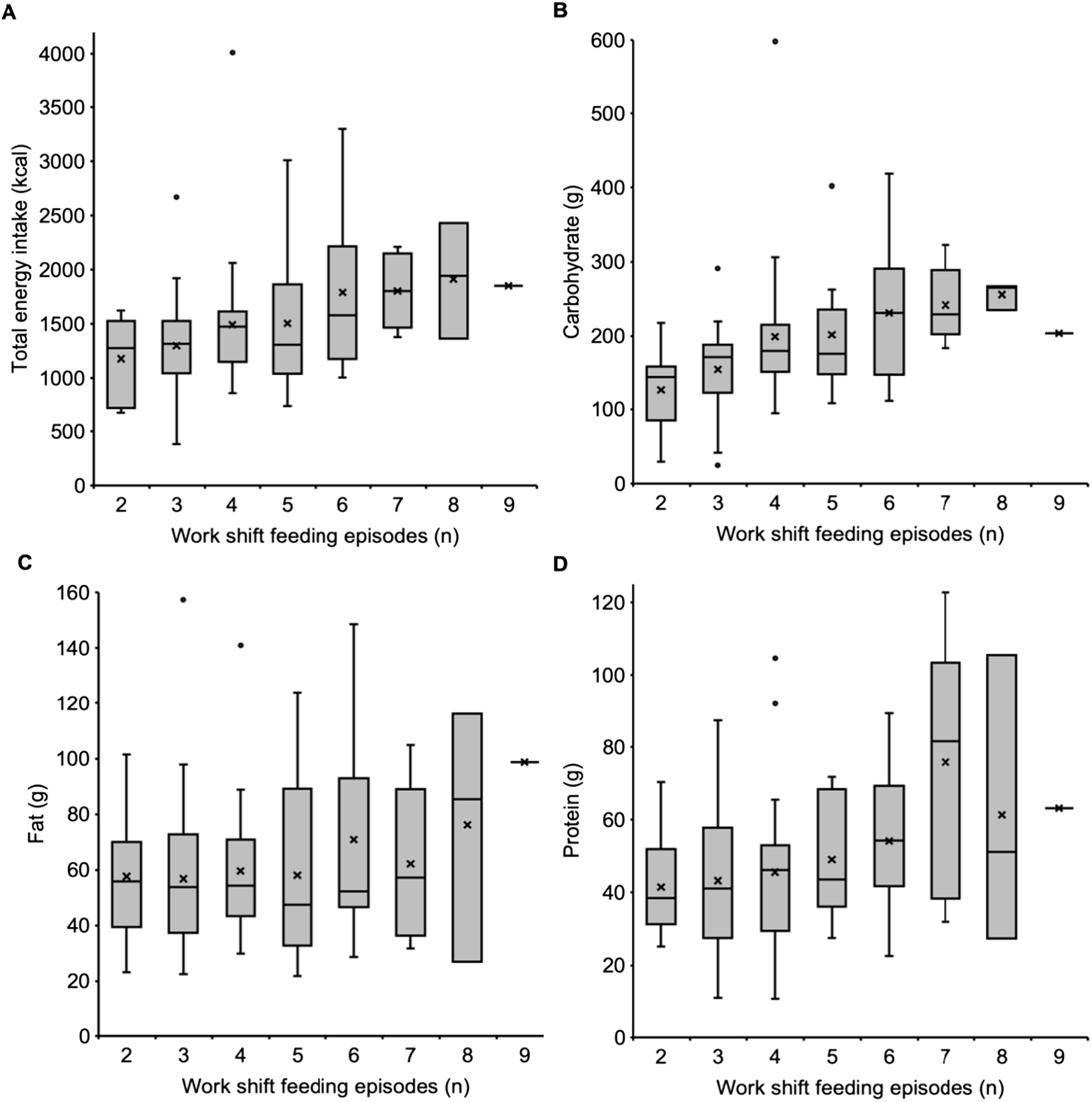
Caloric consumption (A) and macronutrient distribution (B–D) relative to eating episodes during wildland fire suppression shifts.
WLFF work tasks require foods that provide sufficient energy for the duration of the shift. The peak total consumption observed during the middle of the shift likely indicates the typical “lunch break” that may be practiced by some crews. Although average caloric intake was noted to steadily increase over the course of the work shift (Figure 1), fat and protein constituted a greater percentage of the overall composition as the shift progressed (Figure 4). Accordingly, the majority of the work shift was spent performing sedentary or light activity (Figure 5), which is comparable to previous findings from our laboratory that demonstrate increased work demands associated with ingress and egress hikes to and from the fire line in the work shift’s bookend hours.4,44 Actigraphy data from our prior studies exhibited higher work rates (335±218 and 338±83 counts·min-1, respectively)27,28 compared to values in the present study (220±168 counts·min-1).
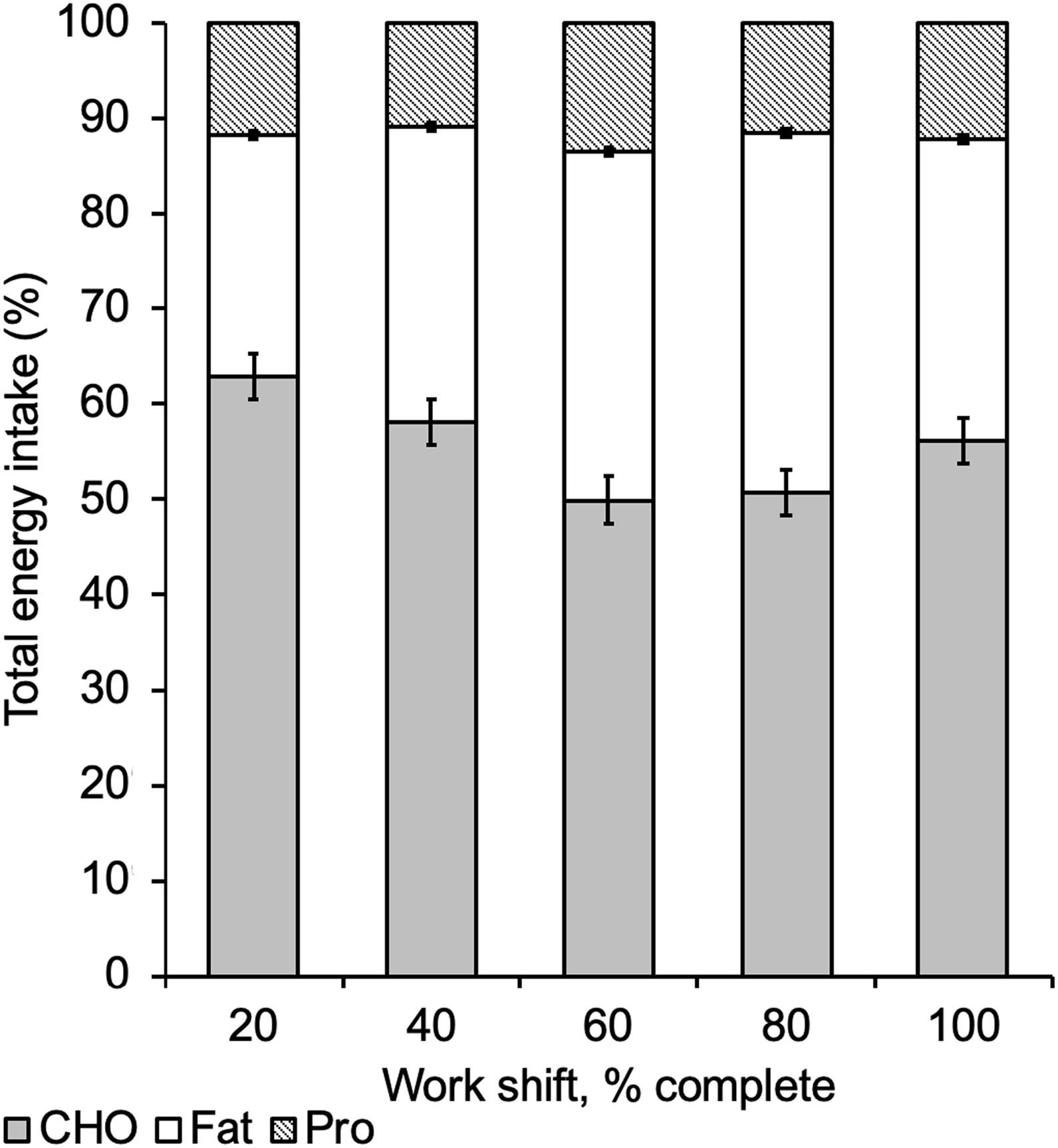
Wildland fire suppression work shift macronutrient composition.
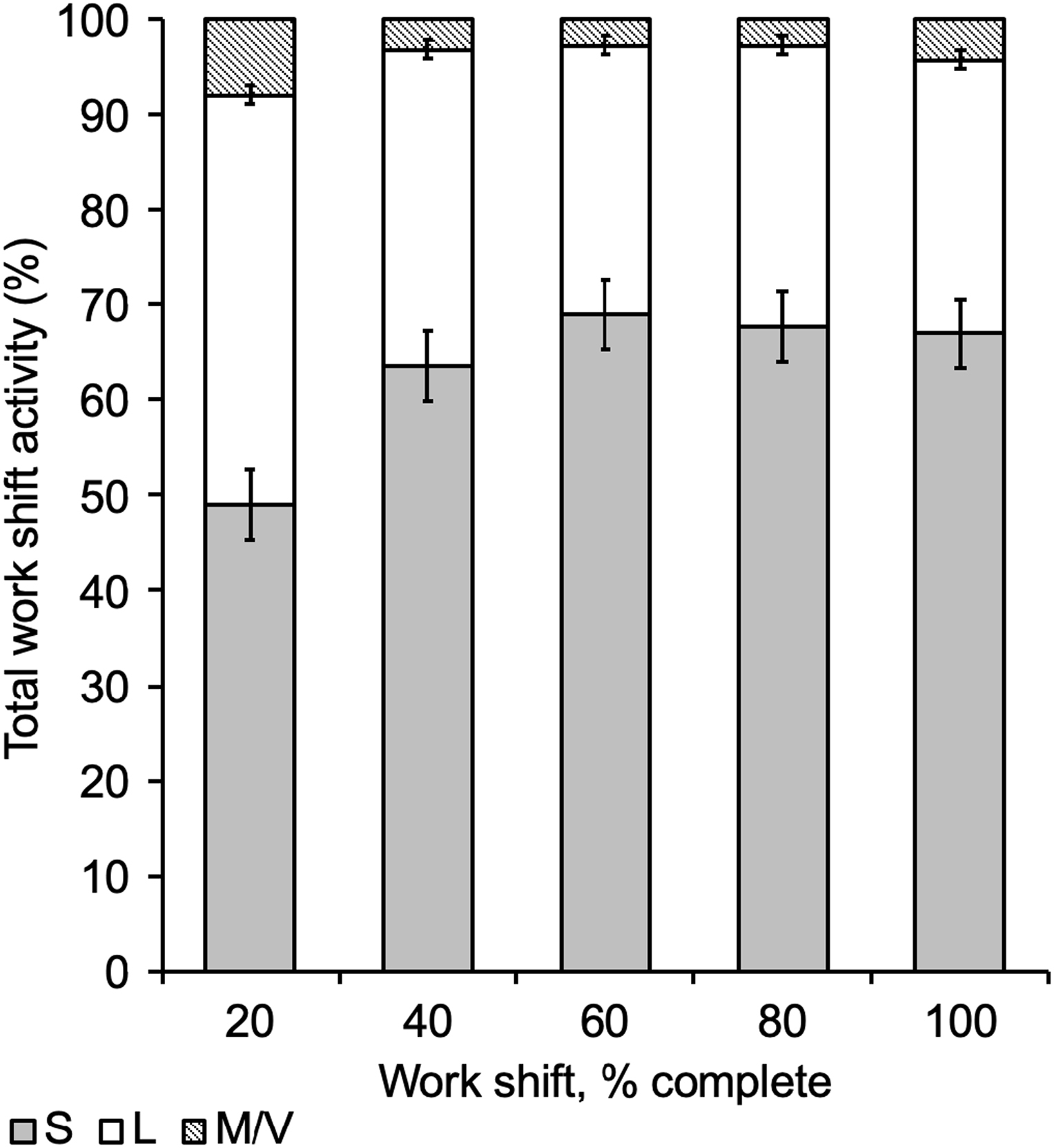
Wildland fire suppression work shift intensity composition (% total activity); S=sedentary (≤99 counts·min-1), L=light (100–1499 counts·min-1); M/V=moderate/vigorous (≥1500 counts·min-1).
As indicated by standing interagency policies, National Wildfire Coordinating Group fire resource crews typically adhere to standard 14-d deployments throughout a nearly 6-mo fire season. Contemporary WLFF work shift provisions include an isocaloric sack lunch 29 that is often supplemented with more favorable/preferred food items. Roughly 78% of WLFF participants were noted to have consumed accessory food items (ie, not provided in the caterer-supplied sack lunch), which ultimately accounted for 32% of their respective work shift calories. Furthermore, 72±38% of the calories WLFF took with them for the day, including catering provisions and supplemental foods, were noted to have been consumed during the shift. Although it has not previously been established whether shift rations currently provide adequate energy to maintain required work efforts or promote optimal feeding incidence, our results ultimately indicate that work-shift TEI supplies roughly 33% of the previously observed TEE (19.1±3.9 MJ·d-1 [4556±943 kcal·d-1]), 4 revealing a substantial disparity with WLFF’s commonly elicited work-shift output. Threats to WLFF safety and performance may increase if undertaken acutely, especially in the shift’s latter hours when fire behavior is often the least predictable and potentially volatile; however, season-long reliance on external fuel sources may elicit greater occurrence of negative energy balance if somehow unavailable (eg, financial or geographical limitations). Similarly, lack of dietary diversity may discourage appropriate work-shift feeding, consequently resulting in threats to seasonal energy balance preservation. Current standard fire orders highlight the importance of “fire line group and personal safety” and the need to “fight fire aggressively, having provided for safety first,” 47 and these data suggest that more aggressive fire suppression operations likely demand improved coordination of feeding frequency and availability of diverse provisions.
This is the first study to appraise the free-living (ie, without intervention) feeding habits of WLFF during unscripted fire suppression work shifts. The techniques used to monitor behavior did not rely on individual recall or self-report, as has historically been a hindrance of dietary and nutritional data collection,1,34-39 thus imparting improved reporting accuracy. Although researchers following WLFF throughout their shift may have engendered unnatural feeding behavior, all members of the study team also worked as fire line personnel and were thus fit to minimize interruption of WLFF habitual feeding and activity. The greatest limitation, therefore, is likely the inconsistency of specific work-shift tasks owing to the varying fire activity and conditions inherent to the WLFF position.
Conclusions
Current WLFF feeding practices and rations likely do not provide sufficient fuel consummate with labor assignments, as indicated by the noted discrepancy between our laboratory’s TEE1,4 and TEI findings. Present data also provide an association between relative energy intake (kcal·kg-1) and self-selected work activity. Moreover, work shift feeding episodes were shown to influence relative consumption (kcal·kg-1), although no relationship was observed between feeding frequency and work output, perhaps owing to insufficient statistical power within our participant pool. Future studies should therefore seek to determine optimal nutrition delivery and ideal dietary diversity to sustain appropriate intake for the duration of the fire season. Further explication of the influences of work shift provisions on overall patterns of self-selected work output should also lead to development of optimal work-shift rationing to encourage requisite consumption.
Footnotes
Acknowledgements
Acknowledgments: The authors thank all fire crews for their volunteer efforts; the field research team of Logan Fisher, Molly West, Tim LaRoche, and Zane Cuthill for their meticulous efforts in collecting all work-shift data; and John Cuddy for his assistance in analyzing activity data.
Author Contributions: Study concept and design (JAS, JWD, BCR); obtaining funding (JAS, JWD); data acquisition (JAS, MRW); data analysis (ANM); drafting of the manuscript (ANM, BCR); critical revision of the manuscript (BCR); approval of final manuscript (BCR)
Financial/Material Support: Support provided by National Technology & Development Program, United States Department of Agriculture, Forest Service.
Disclosures: None.
Project presented via oral (American College of Sports Medicine Northwest Regional Conference in Bend, OR; March 2, 2019) and poster presentations (American College of Sports Medicine National Conference in Orlando, FL; May 28, 2019).