






Abstract
Introduction
Recent analyses of data show a warming trend in global average air and sea surface ocean temperatures. The atmosphere and ocean have warmed, the amounts of snow and ice have diminished, the sea level has risen, and the concentrations of greenhouse gases have increased. This article will focus on climate change and projected effects on venomous marine and amphibious creatures with the potential impact on human health.
Methods
Retrospective analysis of environmental, ecological, and medical literature with a focus on climate change, toxinology, and future modeling specific to venomous aquatic and amphibious creatures. Species included venomous jellyfish, poisonous fish, crown-of-thorns starfish, sea snakes, and toxic frogs.
Results
In several projected scenarios, rising temperatures, weather extremes, and shifts in seasons will increase poisonous population numbers, particularly with certain marine creatures like jellyfish and crown-of-thorns starfish. Habitat expansions by lionfish and sea snakes are projected to occur. These phenomena, along with increases in human populations and coastal development will likely increase human−animal encounters. Other species, particularly amphibious toxic frogs, are declining rapidly due to their sensitivity to any temperature change or subtle alterations in the stability of their environment. If temperatures continue to rise to record levels over the next decades, it is predicted that the populations of these once plentiful and critically important animals to the aquatic ecosystem will decline and their geographic distributions will shrink.
Conclusion
Review of the literature investigating the effect and forecasts of climate change on venomous marine and amphibious creatures has demonstrated that temperature extremes and changes to climatic norms will likely have a dramatic effect on these toxicological organisms. The effects of climate change on these species through temperature alteration and rising coastal waters will influence each species differently and in turn potentially affect commercial industries, travel, tourism, and human health.
Keywords
Introduction
Recent analyses of data show a clear warming trend in global average air and ocean temperatures. 1 The past 4 years (2014–2017) have been the warmest on record since 1880. Each of the last 3 decades has been successively warmer at the Earth’s surface than any preceding decade since 1850. In the Northern Hemisphere, 1983 to 2012 was likely the warmest 30-year period of the last 1400 years. The global average of combined land and ocean surface temperature data as calculated by a linear trend, show a warming of 0.9°C (±0.2°C) over a period 1880 to 2012, when multiple independently produced data points exist. 2
The surface 300 m of the world’s oceans has warmed by 9.3°C since the mid-1950s. 3 Climate models project that global warming due to human influences will be 0.1 to 0.2°C per decade for the next 2 decades, and that sea surface temperatures (SSTs) will rise nearly everywhere.4,5
Due to such temperature increases, glaciers have diminished and the mean sea level has risen. Over the period 1901 to 2010, global mean sea level rose by 0.19 m, which is higher than the mean rate estimated for the previous 2 millennia. 2 Rising coastal waters, however, do not necessarily equate to more marine habitat. Certain environments, such as marshes, mangroves, and other biogenic shoreline habitats, will experience “habitat squeeze” due to rising sea levels and continued human development in these areas. This degradation and loss of habitat may decrease native venomous aquatic species. Conversely, these creatures may begin to appear in new areas where they were not previously described.
By the end of this century, it is predicted that over 50% of the world’s population will be living within 100 km of a coastline. With increasing population and coastal development, more humans are venturing into aquatic environments for recreational activities, vacations, tropical destinations, and coastal living. 6 As a result, the opportunity for humans to encounter venomous marine life that inhabit reefs and shallow marine waters increases. 7 Additionally, the risk and the spectrum of marine envenomation are often unknown to nonindigenous travelers. As reported in 1 study, returning travelers in recent years were more likely to encounter coral-related injuries and experience marine envenomation from jellyfish and stonefish. This was followed in frequency by starfish, stingrays and lionfish. 8
This article will uniquely focus on climate change and its affect upon toxinology (the scientific discipline dealing with microbial, plant, and animal venoms, poisons, and toxins) specific to venomous marine and amphibious creatures. To our knowledge, a review of this kind does not exist in the literature apart from species-specific investigations. The effects of climate change on these species will potentially affect commercial industries, travel, tourism, and human health. Our objectives are to describe i) how climate change affects the species’ habitat, ii) how species are responding, and then iii) discuss the effects upon human health.
Methods
A search of Web of Science core database collection including MEDLINE, Biological Abstracts, and SciELO Citation index to include citations since 1970 with identified keywords was undertaken. Keywords included the following: climate change, anthropogenic climate change, climate, global warming, temperature change, environmental change, envenomation, venomous, distribution, jellyfish, box jellyfish, Portuguese man o’ war, sea nettle, Irukandji venomous fish, stingrays, lionfish, scorpion fish, stonefish, crown-of-thorns, sea snakes, sea kraits, blue-ringed octopus, puffer fish, porcupine fish, poison dart frogs, and poison arrow frogs, (common and scientific names were used for species). Each keyword was used independently and, when appropriate, in combination with additional keyword(s) to identify relevant articles. The coauthors screened titles and abstracts of all articles identified by the search. Eligibility criteria included peer reviewed, published studies. In particular, we analyzed multiple “ecological niche model” studies that project future species distribution given a set of climatic predictor variables, which were relevant to the topic.
Results
Jellyfish
Coelenterates (phylum Cnidaria) include sea anemones, corals, and jellyfish, whose stings are the most common marine envenomation. Although most species are typically found in temperate and tropical waters,
7
jellyfish encounters also occur in colder marine regions such as Scandinavia.
8
Of the roughly 10,000 jellyfish species, there are approximately 100 that comprise the majority of human envenomations.
9
The sea nettle (
Recent evidence is accumulating that jellyfish populations have increased in many regions of the world.14,15 These populations, however, undergo large, worldwide oscillations with approximately 20-year periodicity, including a well-documented rise in the 1970s 16 and again in the 1990s in addition to smaller cyclical oscillations. 17 Their unpredictable reproductive and lifecycles can lead to blooms with spatial and temporal variability in abundance, making populations difficult to estimate. One recent study represents the first rigorous demonstration that jellyfish populations are increasing in coastal ecosystems worldwide, although it may be too early to conclude definitively (Figure 1). 15 Other time-series investigations have shown major changes in jellyfish abundance and statistical links with climatic indices. 14 ,17–21
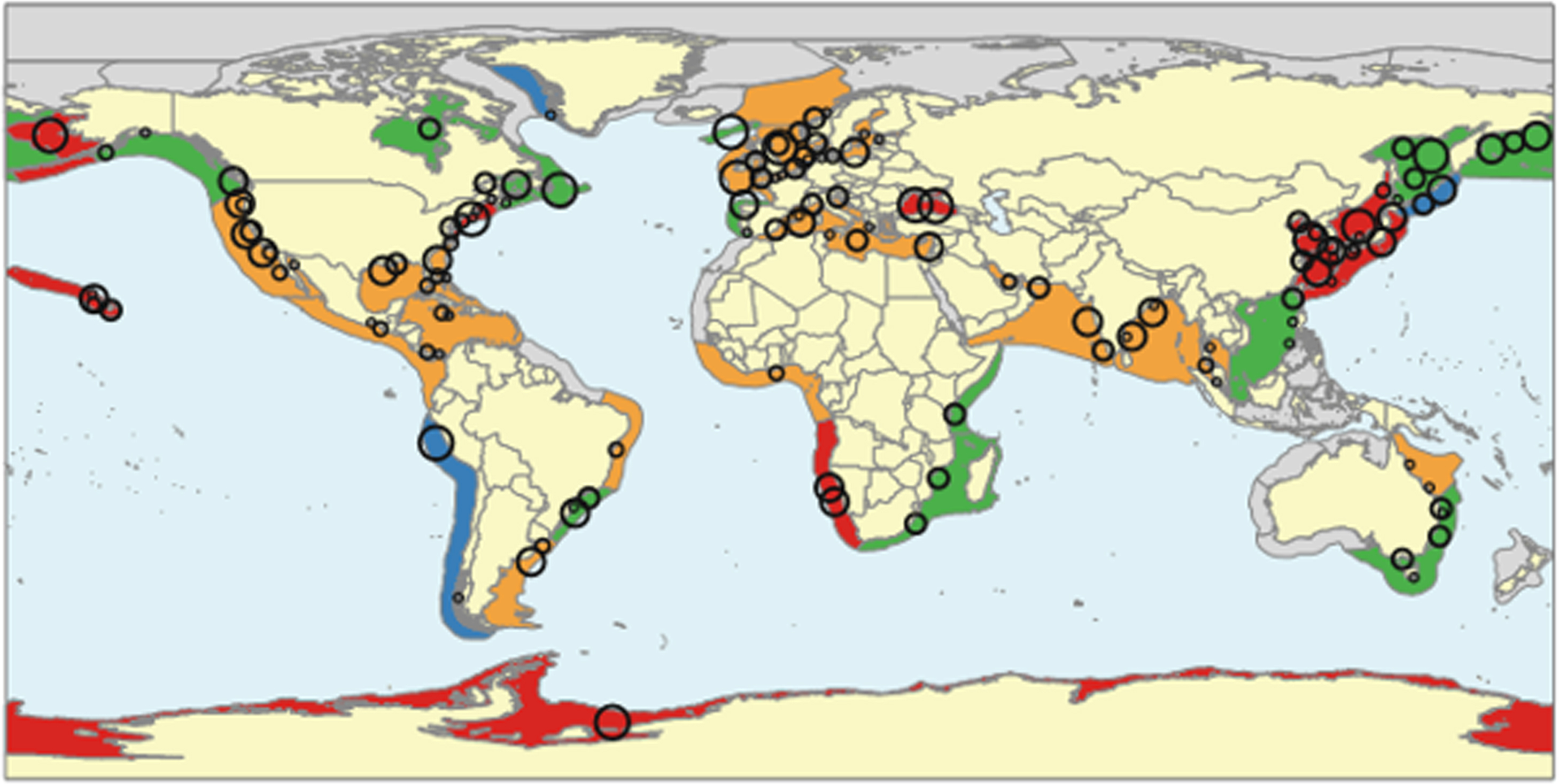
Map of population trends of native and invasive species of jellyfish. Red, increase (high certainty); orange, increase (low certainty); green, stable/variable; blue, decrease; gray, no data. Circles represent discrete chronicles with relative sizes reflecting the confidence index. 15 Used with permission.
Proposed climate change factors affecting jellyfish abundance and distribution include changes in temperature, salinity, pH, water currents, weather anomalies, predator–prey interactions, and species competition (Figure 2; Figure 3).
14
,17–19,22 Warmer temperatures were related to large population sizes in subtropical, temperate, and subarctic environments.
17
Experiments on temperate species show greater and more rapid production of medusa and accelerated growth at warmer temperatures.23,24 Jellyfish biological reactions to increasing temperatures include increased egg (ephyrae) production17,23 and accelerated asexual budding.
25
Additionally, within appropriate ranges for an organism’s functioning, low temperatures slow and high temperatures accelerate metabolism and reproductive activity.
17
Specifically, higher temperatures accelerated
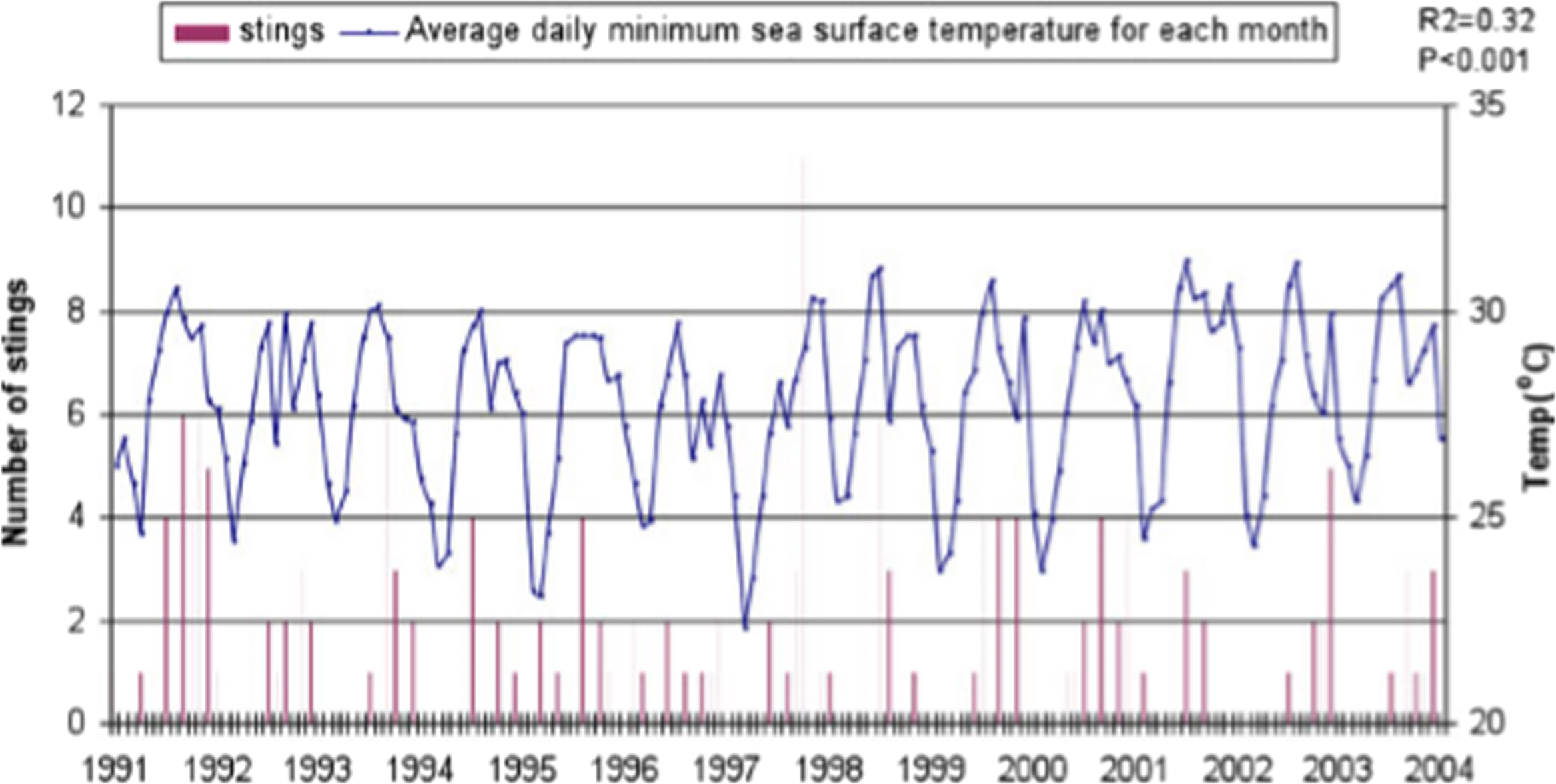
Monthly
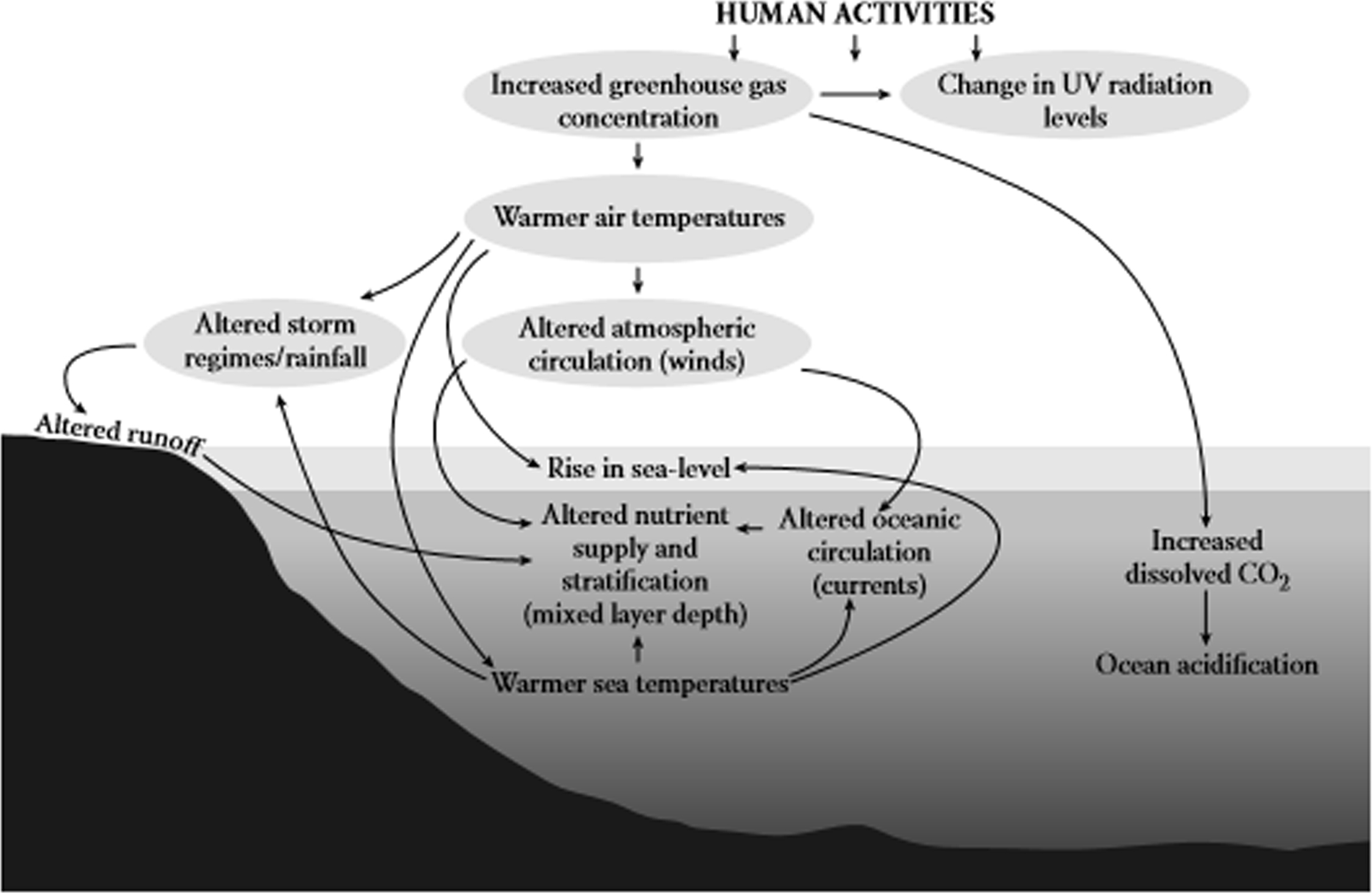
Important physical and chemical changes in the atmosphere and oceans as a result of climate change. 46 Used with permission.
Increasing temperatures also result in longer reproductive seasons.
17
Climate change may also alter ocean currents, evaporation rates, and rainfall patterns, ultimately increasing the variance of ocean salinity, while increases in atmospheric carbon dioxide increase ocean acidity. 27 –29 The effects of changing salinity on jellyfish populations has mixed evidence in the literature from no effect to increasing numbers. 23 –25,30,31 In the Black Sea, for example, pollution has produced low salinity, eutrophication, and alterations of the natural environment potentiating jellyfish numbers. 32 Increased atmospheric carbon dioxide concentrations dissolve into the oceans resulting in ocean acidification that alters the carbonate balance. Unlike most marine life, jellyfish increase as pH declines. 31 Jellyfish are less affected by ocean acidification because they have no calcium carbonate components in their body plan. Acidification can contribute to overall ecosystem degradation (eg, rising temperatures, stratification of water layers, and eutrophication), allowing the more adaptable jellyfish to outcompete others at its trophic level (such as plankton and other fish).
Additionally, jellyfish populations tend to respond positively to climate-induced extremes. For example, increases in jellyfish populations may be related to North Atlantic Oscillation (NAO), El Niño Southern Oscillation, and Pacific Decadal Oscillation, 30 ,33,34 all climatic oscillations that occur sporadically but predictably with associated changes in temperature, sea surface temperature, salinity, upwelling, and rainfall patterns. Jellyfish numbers in the North Sea are positively related to the NAO, 31 and a recent study in Peru postulated that jellyfish numbers may be positively correlated with the effects of El Niño Southern Oscillation. 35 These natural oscillations are thought to be exacerbated by climate change. 36
Climate change may also cause negative effects on jellyfish and their competition.
23
,24,37,38 Both low and high temperatures can disable enzymes and transport systems, which physiologically restricts organisms to their adapted temperatures.17,39 Decrease in native populations of jellyfish may occur with higher temperatures once they reach their metabolic threshold since they are unable to tolerate further warming (upper limit 34–35
Invasion of nonindigenous populations frequently involves species of jellyfish. In one investigation, 47% of marine systems studied involved invasive jellyfish.
15
Invasive migration is directly related to increased temperatures and indirectly due to associated changes in salinity.
17
,23,40,41 These conditions favor invasive species over native.42,43 Examples of invasive jellyfish species include
With the potential increase of jellyfish population concentrations and expanded distributions, the venomous jellyfish−human encounters are also changing. Increasing populations of Portuguese man o’ war have been reported in the Mediterranean Sea, which is likely due to recent alterations in NAO linked to climate change.
44
Increase in bluebottle jellyfish
The box jellyfish
Potential increases in jellyfish encounters should be met with heightened awareness, advanced life support measures, and available antivenom. In most cases of jellyfish stings, treatment includes tentacle removal, application of vinegar (4–8% acetic acid by volume) for box jellyfish, and hot water immersion (45°C for 20 min) for bluebottle jellyfish stings. Advanced life support is essential for severe marine envenomation that results in cardiac collapse or paralysis. Irukandji syndrome causes severe generalized pain from autonomic excess, which may require large amounts of analgesia. Rarely, myocardial depression and pulmonary edema occur. Box jellyfish (
Venomous Fish
There are more than 250 species of venomous fish, consisting mostly of shallow water reef or inshore fish found near the coast. Stingrays are the most commonly encountered venomous fish, with more than 2000 stings reported annually, and 11 species found in US coastal waters. When frightened or stepped on, the stingray thrusts its spiny tail upward and forward, driving its venom-laden stinging apparatus into the foot or lower extremity of the victim.
49
While we found a paucity of data in the literature regarding the effects of climate change on stingray distribution and human encounters, 1 report documents that new encounters with the roughtail stingray
In this same study, the long-spine porcupinefish
Lionfish
Lionfish (
The limits of the lionfish’s introduced range, currently determined by the 10°C isotherm, is set to expand as the isotherm shifts north and south in the 2 hemispheres due to climate change. 54 Many aspects of lionfish life history and behavior are expected to be temperature-dependent. A shorter pelagic larval duration is linked to dispersal potential, which leads to less drifting and less spreading. However, this reduction is more than an order of magnitude smaller than the current annual rate of their expansion in the Caribbean. The prey consumption rate, an important determinant of impacts of lionfish on native prey, is exacerbated by the current imbalance between lionfish consumption and prey production rates.
Using projections of future ocean temperatures and salinities, one study explored potential lionfish habitat through the year 2100 under conditions of anthropogenic climate change.
68
Without culling efforts, the spatial extent of suitable year-round lionfish habitat is expected to increase 45% on the southeast United States continental shelf (SEUSCS) during the 21st century, covering 90% of the region. In the summer months, they are now found as far north as New York. The SEUSCS is expected to warm substantially over the coming decades, likely allowing lionfish to permanently invade structured benthic habitat on the continental shelf of Georgia and the Carolinas, but not the continental shelf of the northeast United States. Winter temperatures are currently too cold for the fish to tolerate, due to convergence of the Gulf Stream and Northern Bight, with the warmer Gulf Stream currents not flowing that far north. Elsewhere in the Atlantic Ocean, lionfish
In terms of human−lionfish contact, lionfish presence has strongly progressed in regions of the Caribbean and Atlantic seacoast resulting in increasing envenomation cases (Figure 4).
60
Recommended management includes immersion of the affected body part in hot water at 35 to 40°C for 60 to 90 min, analgesics, and antibiotics.
70
Regarding other fish envenomations, stonefish (
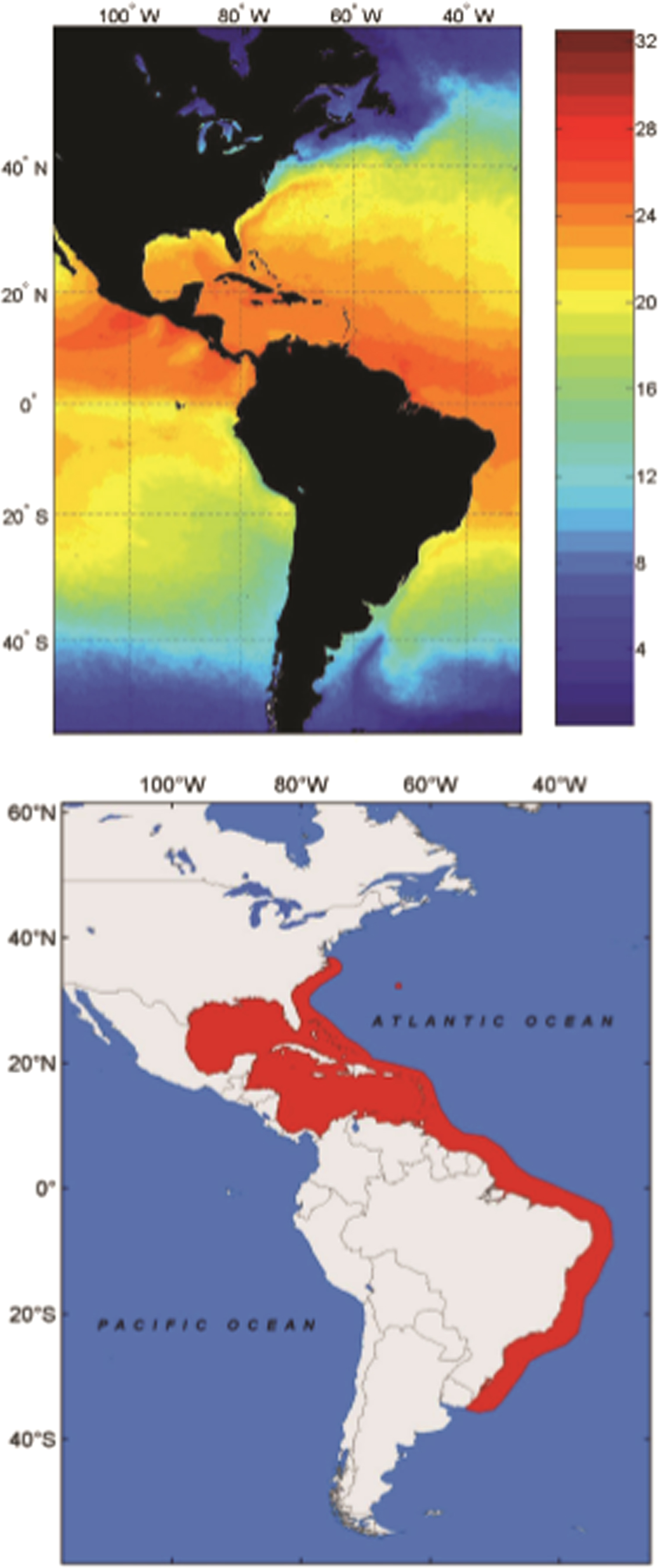
Average annual sea surface temperatures and potential future range of lionfish based on the lethal thermal minimum of 10°C. Source:
Crown-of-Thorns Starfish
Crown-of-thorns starfish (COTS),
Although many factors may potentially be linked to these COTS outbreaks including reef characteristics and position, ocean currents, and direct anthropogenic stressors, direct links to climate change have also been found. One study found that in addition to influxes of nutrients from human activities, increased temperature also affected the larval development of COTS. A 2°C increase in temperature sped up larval development by 4.2 to 4.9 times over a 10-day period. 72 Ocean acidification may also play a role in increased COTS densities. Lower ocean pH weakens the structure and defenses of crustose coralline algae, which are an integral food source for juvenile COTS, while leaving the sea stars themselves unaffected. Juveniles grown at a lower pH grew faster and were overall more successful. 77
The greatest risk to humans is the COTS’s iconic toxic spines. The spines themselves can puncture skin causing pain, inflammation, and possible infection.
78
Additionally, the spines house toxins such as phospholipases A2,
79
deoxyribonucleases II,
80
and an anitcoagulant factor
81
that can cause further complications. Effects on the liver including potential hepatic toxicity have been reported in humans
82
and while rare, anaphylactic shock leading to mortality has also been reported.
83
Treatment generally includes wound irrigation, spine removal, and antibiotic coverage for marine microbes such as
Sea snakes
Sixty species of sea snakes are currently recognized, many of which are highly venomous, although venom injection is rare when bites occur.
84
Sea snakes primarily inhabit tropical and subtropical regions of the Indian and Pacific Oceans;
85
however, recent reports have identified sea snakes outside of their distribution range, including the yellow-bellied sea snake (
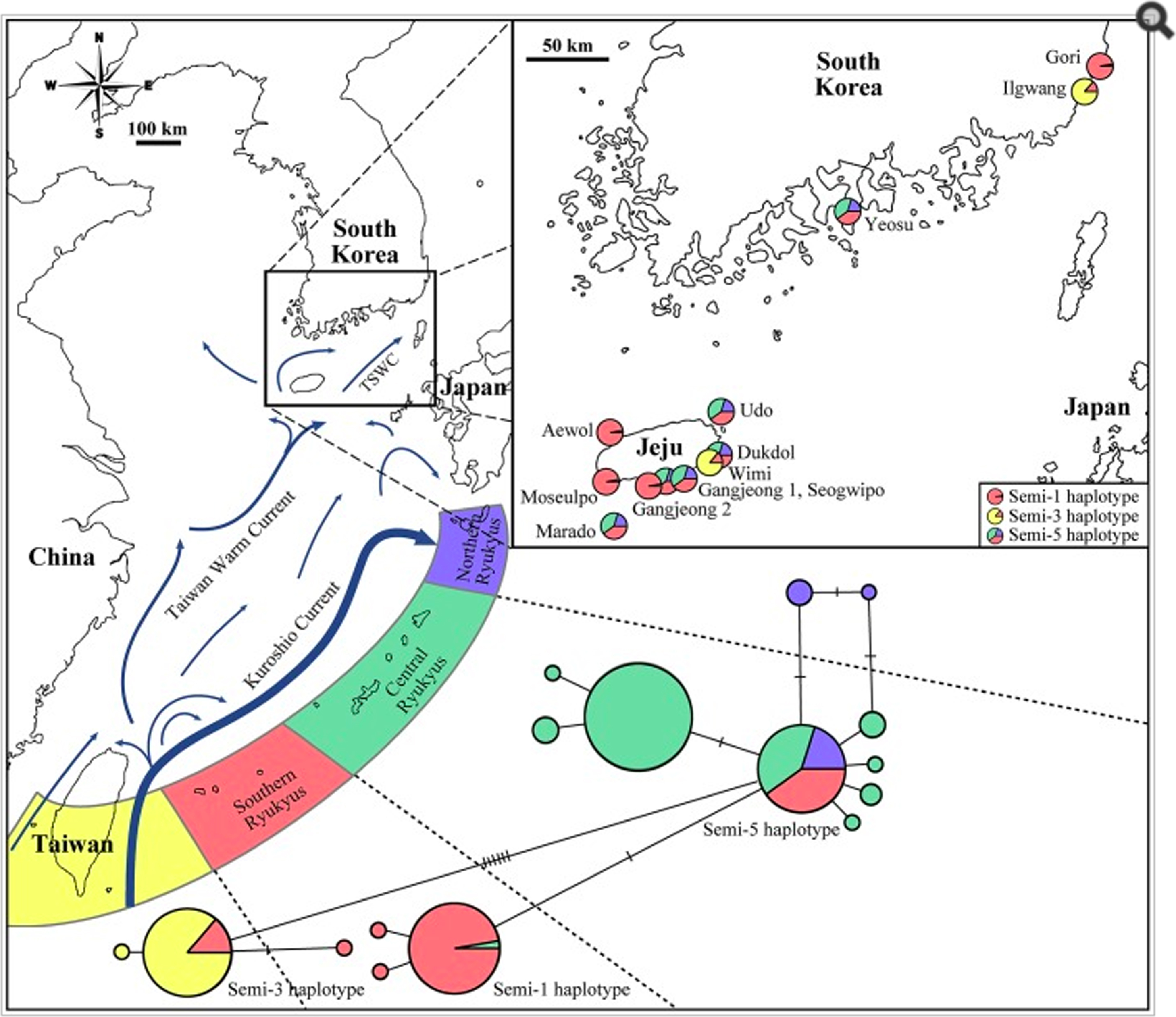
Haplotype network of
Recent studies have recognized that several species of sea snakes cannot maintain a water balance and dehydrate without a source of freshwater, and as a result fresh water sources and local precipitation are key in species distribution.92,93 One observational study in the coastal waters of Taiwan demonstrated a positive correlation between the number of amphibious sea snakes and local cumulative rainfall over a 6-y period with mean abundance in wet years nearly threefold greater than in dry years. 94 Given the anticipated precipitation pattern changes due to climate change, future distribution may be drastically altered, including extinctions if climate change significantly reduces precipitation in this region as climate models have predicted. 95
Another observational study tested the genetic origin of 12 black-banded sea kraits (
Changing population distributions for sea snakes may alter the human populations exposed to venomous bites. For example, the northward dispersal of
Amphibians
Globally, amphibian populations are declining dramatically with more than 32% of species listed as vulnerable, endangered, or critically endangered by the International Union for Conservation of Nature. Some estimate that as many as 122 species have gone extinct since 1980. 99 The largest instances of die-offs and population declines of frogs and toads are occurring in Australia, Central America, and the western United States. 100 –102 While habitat destruction and degradation along with disease are considered the biggest and most direct causes of this dramatic decrease, other factors such as contaminants, introduced predators, and climate change also make the list.99,100 To our knowledge, very little literature exists on the effects of climate change on venomous species of frogs (poison dart frogs specifically); however, their range over Central and South America is a hotbed of amphibian extinction and research attempting to link this phenomenon with climate change.103,104
Poisonous dart frogs
Poisonous “dart frogs” are so called due to South and Central American indigenous use of their curare-like toxic secretions to poison the tips of blow darts. Of the over 170 species, only 4 from the genus
The negative effects of climate change on amphibian populations in general have been a major area of study. As a group, amphibians are incredibly sensitive to external conditions and therefore particularly susceptible to changes in their environment, particularly rapid ones. 105 Specifically, changes in temperature and moisture could seriously and directly affect the biology and physiology of amphibians.106,107 Water availability is extremely important for the reproductive cycle of most amphibious species as well as for the survival of adult individuals. Temperature also plays a role in gametogenesis and larval growth rates. 100 Additionally, spring temperatures are vital in determining the timing of breeding as well as hibernation cycles in many species.100,108 These shifts in phenology along with other stressors associated with climate change such as longer dry seasons, drier soil, greater variation in rainfall, and more severe weather events could be direct threats to the survival of the species.100,106 If climate change cannot be explicitly linked to amphibian population declines now, these changes will certainly have negative effects into the future. 99 ,105,106
Other, more indirect effects of climate change on amphibian populations have also been debated. In the Monteverde region of Costa Rica, about half of the 50 species found in the area had disappeared by 1990.
102
This die-off was attributed to a disease known as chytridiomycosis caused by the fungus
For poison dart frogs, the environmental changes associated with climate change could still serve to exacerbate weakened amphibious species and indirectly lead to population declines. Additionally, although amphibians are generally immobile organisms, adding to the threat of climate change as they struggle to escape inhospitable conditions, some studies have shown that they are capable of elevation range changes in response to changing temperatures.99,110 Although the link may be tenuous due to lack of current data, amphibian populations have been steadily and dramatically declining in recent years and climate change poses a serious threat if not now, then in the future to this fragile group of organisms.
The most toxic of poison dart frog species is the golden poison frog
Discussion
The effects of climate change on these species through temperature alteration and other climatic shifts will potentially affect commercial industries, travel, tourism, and human health. Current warming trends are causing venomous creatures to expand poleward and tropical venomous creatures may soon encounter population centers in Europe, North and South America, and Australia with regional hotspots and problematic blooms despite potentially no global increase in abundance. Conversely, these changes are also causing local and global declines, even to the point of extinction, for some species that are not able to expand their ranges.
Most marine stings result in minor clinical symptoms and do not require medical attention. A majority of marine injuries are caused by jellyfish stings and penetrating injuries from spiny fish, stingrays, or sea urchins. 12 Severe and systemic marine envenoming are less common, and include box jellyfish stings, Irukandji syndrome, major stingray trauma, and blue-ringed octopus envenoming. (In our systematic review, no literature linking blue-ringed octopi to climate change was found.) Limited supplies of antivenoms are available for treating envenomation by certain sea snakes, stonefish, and box jellyfish.47,111
In regards to human health, perhaps more important than change in abundance are the changes in phenology and distribution; therefore, unexpected blooms are expanding and certain species are appearing in places and seasons that have not been previously described. As geographic location and timing are altered, this can result in more human−animal contact and encounters in particular regions of the world.
32
For example, as winter temperatures have increased over the last decades,
In contrast, amphibians show the alternative effect of climate change. Globally, species in all taxa are going extinct at unprecedented rates in what many are calling the “sixth mass extinction” due to anthropogenic pressure including climate change. 112 This rapid decline is particularly pronounced in amphibians, but other species are also negatively affected. For example, although sea snakes are expanding their ranges and coming into contact with humans in unprecedented locations, globally their populations are in decline. The interplay between venomous species and climate change can be complex and examining not just species abundances, but also range and phenological shifts and their potential impacts on human health will be important moving forward.
Limitations
Many important venomous marine and amphibious species were not described in this review due to little or a lack of published studies. Specifically, future investigations focusing on stingrays, certain poisonous fish (eg, scorpionfish and stonefish), and other toxic species such as the blue-ringed octopus would provide further insight in to the effects of climate change on their habitats, distribution, and potential human encounters.
Of the studies included in this review article, the authors acknowledge that many of the papers were based on future modeling, which are speculative in nature and based on current-day information and projected data.
Conclusion
For those who travel and venture into the wilderness with intentions of preserving natural surroundings and resources, increased awareness and education regarding the potential effects of climate change on venomous creatures are important. Our review of the literature investigating the effect and forecasts of climate change on venomous aquatic and amphibious creatures has demonstrated that temperature extremes and changes to climatic norms could have a potentially dramatic effect on these toxicological organisms. In some cases, rising temperatures, weather extremes, and shifts in seasons will increase poisonous population numbers, particularly with certain marine creatures like jellyfish and crown-of-thorns sea stars. Range expansions by lionfish and sea snakes are also projected to occur. Human encounters with these types of creatures are likely to increase, resulting in potential human morbidity and mortality. The effects of climate change on these species through temperature alteration and rising coastal waters will potentially affect commercial industries, travel, and tourism.
Others, particularly amphibians, are declining rapidly due to their sensitivity to any temperature change or subtle alterations in the stability of their environment. If temperatures continue to rise and fall to record levels over the next decades and century, it is predicted that many of these once plentiful and critically important animals to the ecosystem will suffer, populations will dramatically decline, and geographic distributions will shrink. Several species may become endangered and eventually go extinct resulting in a global decline of biodiversity.
Author Contributions: Literature review (RN, IN, TE); analysis of literature (RN, IN, TE); drafting of manuscript (IN, TE); critical revision of manuscript (RN, IN, TE); approval of final manuscript (RN, IN, TE).
Financial/Material Support: None
Disclosures: None