






Abstract
Objective
The purpose of the study was to compare the effectiveness of head vs torso warming in rewarming mildly hypothermic, vigorously shivering subjects using a similar source of heat donation.
Methods
Six subjects (1 female) were cooled on 3 occasions in 8°C water for 60 minutes or to a core temperature of 35°C. They were then dried, insulated, and rewarmed by 1) shivering only; 2) charcoal heater applied to the head; or 3) charcoal heater applied to the torso. The order of rewarming methods followed a balanced design. Esophageal temperature, skin temperature, heart rate, oxygen consumption, and heat flux were measured.
Results
There were no significant differences in rewarming rate among the 3 conditions. Torso warming increased skin temperature and inhibited shivering heat production, thus providing similar net heat gain (268 ± 66 W) as did shivering only (355 ± 105 W). Head warming did not inhibit average shivering heat production (290 ± 72 W); it thus provided a greater net heat gain during 35 to 60 minutes of rewarming than did shivering only.
Conclusions
Head warming is as effective as torso warming for rewarming mildly hypothermic victims. Head warming may be the preferred method of rewarming in the field management of hypothermic patients if: 1) extreme conditions in which removal of the insulation and exposure of the torso to the cold is contraindicated; 2) excessive movement is contraindicated (eg, potential spinal injury or severe hypothermia that has a risk of ventricular fibrillation); or 3) if emergency personnel are working on the torso.
Introduction
Accidental hypothermia results from prolonged immersion in cold water. The rate of core cooling during immersion depends on water temperature, insulation, anthropometrics, amount of body surface area exposed to the water, sea state, body position, and movement. 1
Skin cooling during cold water immersion results in the initiation of shivering thermogenesis, which increases the metabolic heat production as much as 5 to 6 times the resting metabolic rate in mildly hypothermic persons.2,3 Vigorous shivering prevents 4 or attenuates 5 the rate of core cooling during cold exposure. Moreover, a mildly hypothermic, vigorously shivering person can rewarm at a rate of 3° to 4°C per hour. 6 Inhibition of shivering results in a greater post-cooling fall (afterdrop) in the core temperature (Tc) and a reduction in the rate of rewarming. 7 As shivering heat production can effectively rewarm a mildly hypothermic person, application of external heat is not necessary, but it may still be beneficial in conserving energy stores and decreasing the physiological strain. If there is no external heat source available, the benefits of shivering should be maximized by drying the patient and providing a vapor barrier and maximal insulation. 6 External heat application is necessary, however, when the shivering response is absent, as in the case of severe hypothermia. 8
Several methods of external rewarming have been studied in mildly hypothermic, shivering subjects, such as body-to-body contact, 9 a charcoal heater, 6 and forced-air warming. 10 These rewarming methods increase skin temperature, reduce the stimulus for shivering, and thereby suppress shivering heat production. The rate of rewarming is similar for both external rewarming and shivering-only methods. The amount of heat donated by these external heat sources is approximately similar to the amount of shivering heat production that is inhibited. 6 ,9,10
A series of head submersion studies from our laboratory demonstrated that with the body insulated or exposed in 17°C water, immersing the whole head results in an increased rate of core cooling with no additional increase in metabolic heat production.5,11 A surprising result of these studies was that head-only immersion resulted in the same rate of core cooling as did body-only immersion (0.7 ± 0.5°C per hour). 5 Possible explanations for these similar core cooling rates include: 1) less total heat loss in the head-only cooling condition offset by a much smaller increase in shivering heat production compared with the body-only cooling condition; 5 2) greater relative heat loss from the head secondary to a lack of vasoconstriction of scalp vasculature; 12 and 3) if head-only cooling caused a greater overall peripheral vasoconstriction than body cooling (thus reducing the effective perfused mass), a given amount of heat loss from the head would have an exaggerated cooling affect on this reduced thermal core. 13
Although we have shown that head cooling is very effective in decreasing core temperature, less is known about warming the core through the head in a cold-stressed person. Head rewarming could be more effective than torso rewarming if head warming does not suppress shivering, or head warming does not increase the size of the effective perfused mass compared with torso warming, or both. In that case, a given amount of heat donation through the head might be more effective in rewarming a hypothermic person than heat donation through the torso.
Because head cooling does not elicit a shivering response during cold exposure,5,11 it is possible that head warming will not suppress shivering during warming. That could be possible on the basis of the following mechanism: cooling of the head results in minimal to no shivering heat production either due to less or not enough decrease in the total mean skin temperature, thereby not providing enough thermal stimulus to elicit a shivering response, or due to direct inhibition of shivering. Similarly, warming the head in a cold person could minimally reduce the thermal stimulus for shivering and remove shivering inhibition.
During cold-water immersion, peripheral vasoconstriction reduces the peripheral blood flow resulting in a smaller effective perfused mass. Head warming could be expected to induce a smaller increase in peripheral blood flow (and therefore a smaller increase in effective perfused mass) than torso warming. Thus, the convective component of core temperature afterdrop would be less during head warming. Also, if head warming results in a smaller effective perfused mass than does torso warming, then a given amount of heat donation to this reduced mass will result in a greater rate of core rewarming.
To date, however, the effects of head warming after cold stress have not been determined. The purpose of the study is to compare the core rewarming effectiveness of the same amount of heat donation through the head or torso in rewarming mildly hypothermic persons. We hypothesized that, compared with torso warming, head warming will result in greater shivering heat production, smaller afterdrop, and greater rate of rewarming.
Methods
Subjects
Six healthy and physically active volunteers were studied. Subjects were recruited after ensuring they did not have Raynaud’s syndrome or any other condition (including asthma) that could be aggravated by cold water immersion. They were asked to complete a Physical Activity Readiness Questionnaire (PAR-Q) to ensure the absence of any cardiorespiratory diseases. The Biomedical Research Ethics Board at the University of Manitoba approved the protocol. Written informed consent was obtained from each subject before participation.
Instrumentation
Subjects wore a swimsuit and were instrumented at an ambient temperature of approximately 22°C. A single-channel electrocardiogram was monitored continuously throughout the experiment for safety reasons, and heart rate was measured with a Hewlett-Packard monitor/defibrillator (model 43100A, Hewlett-Packard, Palo Alto, CA). Core temperature was measured by a thermocouple inserted into the esophagus (Tes) to the level of the heart. This site provides the best noninvasive measure for intracardiac temperature 14 and is a standard procedure for our laboratory.
Skin temperature (Tskin), in °C, and cutaneous heat flux (HF), in W·m−2, were measured at 12 sites with thermal flux transducers (Concept Engineering, Old Saybrook, CT) taped to the skin according to the standard procedures used in our laboratory. 15 The 12 sites were forehead, right cheek, left temporalis, top of the head, dorsum of the head, anterior chest, anterior abdomen, upper back, left shoulder, right anterior forearm, right posterior thigh, and left anterior calf. A light mesh hood was used to hold the transducers on top of the head and the dorsum snuggly against the hair on the head. For heat flux, positive values indicate heat loss from the skin.
Oxygen consumption (


Rewarming Methods
The active rewarming methods for this study were selected on the basis of the following criteria: 1) ability to deliver heat to the head or to the torso; 2) quantifiable heat delivery; 3) continuous heat delivery; 4) practicality; 5) comfort; and 6) ability to cover the whole head or the torso. Pilot studies were conducted with a charcoal heater 6 and a forced-air warming device 16 as both met the selection criteria. Because the charcoal heater offered greater comfort than did the forced-air warming device when applied to the head, it was chosen as the rewarming method for this study. After immersion, subjects were dried and placed in a vapor barrier lined sleeping bag and warmed in 1 of 3 conditions, as follows.
Shivering only (control)
In this condition, no external heat was provided, and the subject rewarmed spontaneously through endogenous shivering thermogenesis.
Head warming
A charcoal heater (HeatPac, Emergco Technical Solutions, Vancouver, BC, Canada) was used that consists of a combustion chamber, an internal fan (powered by a 1.5 Volt D cell battery), a canister containing a charcoal fuel briquette, and a branched heating duct; it produces 250 W of heat with each briquette lasting 8 to 12 hours. The combustion chamber was placed on the right side of the face with the 4 flexible ducts wrapping across the face, around behind the head, over the top of the head, and down around under the chin (Figure 1, top).
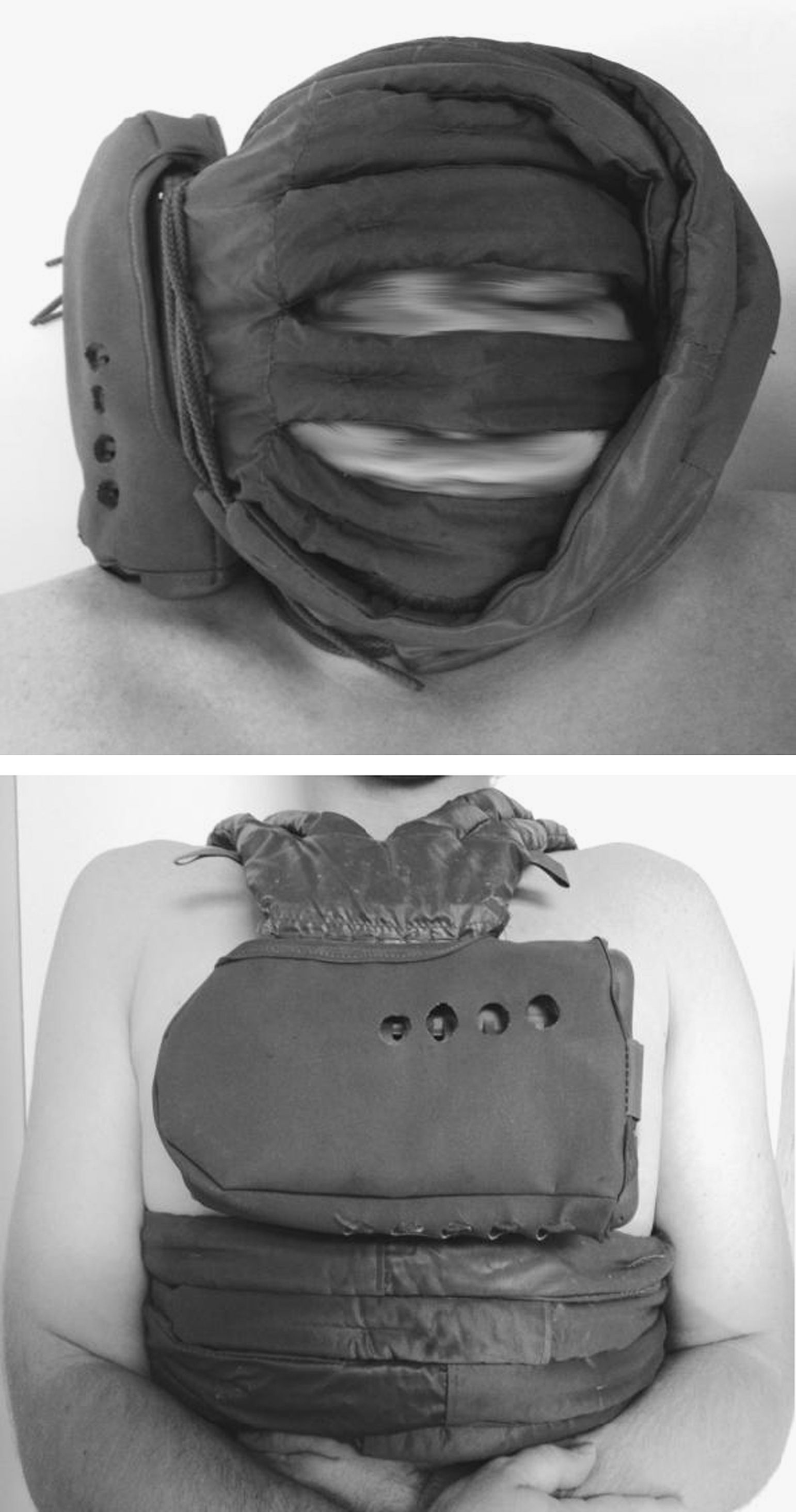
(Top) Charcoal heater applied to the head. (Bottom) Charcoal heater applied to torso. Please note, to allow better visualization of duct configuration, hands are not placed on the heater (as was the case during actual trials).
Torso warming
The same charcoal heater was used for torso warming. The combustion chamber was placed on the chest, and the flexible ducts were applied over the shoulders (2 ducts over either shoulder), to the neck, anteriorly under the axillae, and across the anterior upper torso (Figure 1, bottom). The hands were placed on the combustion chamber, and the person was enclosed in a sleeping bag. The torso warming sites have previously been shown to be areas of high heat transference. 17
Protocol
Each subject was cooled on 3 different occasions, separated by at least 48 hours. The experiments were conducted at the same time of day to control for circadian effects. Subjects were instructed to abstain from alcohol, medications, or vigorous physical activity for a 24-hour period before the study. They were also instructed to have a small breakfast and no other food within 2 to 3 hours before immersion. The female subject was consistently studied in the early or late luteal phase.
Upon arrival at the laboratory, instrumentation took about 45 minutes. The subjects then sat quietly, and baseline measurements were taken for 10 minutes. With the help of an electrically isolated hoist, they were immersed to the sternal notch in an approximately 21°C stirred water bath. Water temperature was then lowered to 8°C over a period of 10 minutes by the addition of ice and held constant. Subjects remained in the water until one of the following criteria was met: Tes reached 35°C, 60 minutes elapsed, a researcher advised exit for any reason, or the subject wished to terminate the immersion. None of the immersions was terminated for either of the latter 2 reasons.
Subjects were towel dried, placed in a supine position, and wrapped in a vapor barrier (2 m × 1.5 m plastic sheet) within a sleeping bag. They were then rewarmed by 1 of the 3 treatment methods: shivering only, head warming, or torso warming. The order of warming methods followed a balanced design. Treatment continued for a period of 60 minutes or until Tes rose to 37°C. After that, subjects were transferred to a warm water bath (40° to 42°C) until the Tes rose to 37°C (if necessary) or they wished to exit.
After their last trial, subjects were asked to compare the 3 rewarming methods based on warmth, comfort, and preference. They were also asked to provide any feedback related to the discomfort associated with any of the methods.
Data Analysis
Rate of core cooling (°C·h−1) was calculated by linear regression for Tes data from the point of a steady decrease in Tes to exit from cold water. Afterdrop (AD), in °C, was calculated as the difference between Tes on exit from the cold water and its nadir. Length of the afterdrop period, in minutes, was calculated as the time between exit from cold water until Tes returned to the original exit Tes. Rate of rewarming (°C·h−1) was calculated by linear regression for Tes data from its nadir to 35 minutes of rewarming and from 35 to 60 minutes of rewarming. Head skin temperature (TskHead in °C) and heat flux (HFHead in W) were calculated from area-weighted average of the temperatures at forehead, right cheek, left temporalis, top of the head, and head dorsum sites. Upper torso skin temperature (TskUTorso) and heat flux (HFUTorso) were calculated from area-weighted average of the anterior chest, upper back, and left shoulder sites. Total skin temperature (TskTotal) and heat flux (HFTotal) were calculated from area-weighted average of all sites.
Metabolic heat production was determined from the oxygen consumption (


Respiratory heat loss was calculated in dependence of the metabolic heat production 18 as follows: RHL (W) = 0.09 * M
Net heat balance was calculated by subtracting the respiratory heat loss and total cutaneous heat flux from the metabolic heat production, as follows: Net heat balance (W) = M − RHL − HFTotal. Positive values indicate net gain, negative values indicate net loss. Positive values of total heat flux indicated heat loss.
Data for the 3 conditions were compared using repeated measures analysis of variance for all the variables except heart rate. Heart rate data were analyzed using a 2-way repeated measures analysis of variance to compare the 3 conditions among each other and over 4 periods (baseline, cooling, and the 0- to 35-minute and 35- to 60-minute rewarming periods). Post hoc analyses for significant differences between treatments were accomplished using Tukey’s post hoc test. Time to Tes nadir and time to maximum metabolic heat production were compared using paired t test for each of the conditions, using a significance level of 0.017 (Bonferroni correction). Similarly, combined rewarming rates of the 3 conditions were compared for the 2 rewarming periods (nadir to 35 minutes and 35 to 60 minutes) using a paired t test. Results are reported as mean ± SD or mean ± 95% confidence interval; P < .05 identified statistically significant differences.
Results
Six subjects (1 female) completed the study; they were (mean ± SD) 28 ± 5.1 years old, 172.8 ± 11.0 cm tall, weighed 72.5 ± 13.5 kg, had 1.86 ± 0.23 m2 body surface area, and had 20% ± 7% body fat.
Core Temperature
There were no significant between-condition differences in any core temperature parameters (Figure 2). Baseline Tes was 37.2 ± 0.2°C and the core cooling rate was 2.9 ± 1.0°C·h−1. Three subjects were immersed for the entire 60-minute period in all 3 conditions. With the other 3 subjects, only 1 immersion lasted 60 minutes because the target Tes of 35°C was reached within 39.5 to 58 minutes in the other 8 immersions (Figure 2). There were no significant differences in exit Tes between conditions. Individual subject data for mean esophageal temperature are presented in Figure 3. There were no significant between-condition differences for afterdrop amount, afterdrop length, and rewarming rates for either the nadir to 35-minute rewarming or 35- to 60-minute rewarming periods (Table 1). The combined warming rate for all of theses conditions from nadir to 35 minutes (2.9 ± 1.2°C·h−1) was greater than from 35 to 60 minutes (1.5 ± 0.9°C·h−1; P < .001).
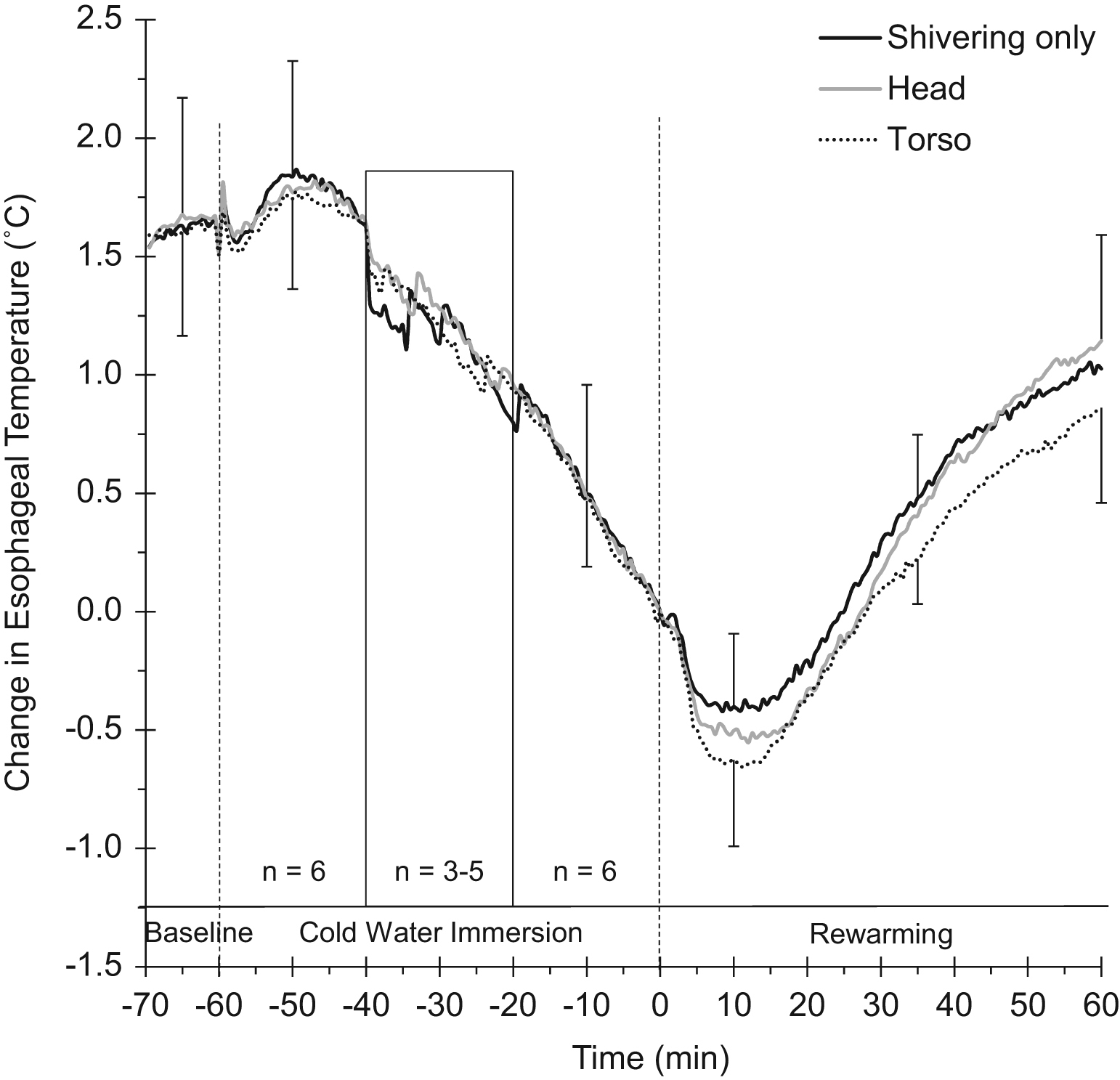
Mean change in esophageal temperature (°C) during baseline, up to 60 minutes of immersion in 8°C water, and during 60 minutes of rewarming in the shivering-only condition (black line), head condition (gray line), and torso condition (dotted line). Time 0 minutes and temperature 0°C indicate exit from cold water (bars, SD). Only 3 subjects were immersed for the entire 60-minute period in all conditions. With the other 3 subjects, only 1 immersion lasted 60 minutes, whereas the target Tes of 35°C was reached within 39.5 to 58 minutes in the other 8 immersions. To show what the whole group did at the beginning and the end of immersion, data for trials less than 60 minutes are presented for the first 20 minutes, with the remainder adjusted so that the exit time is lined up for everyone at time 0. As a result, n = 6 for data from −60 to −40 minutes and from −20 to 0 minutes. In the period between −40 and −20 minutes, n = 3 to 5.
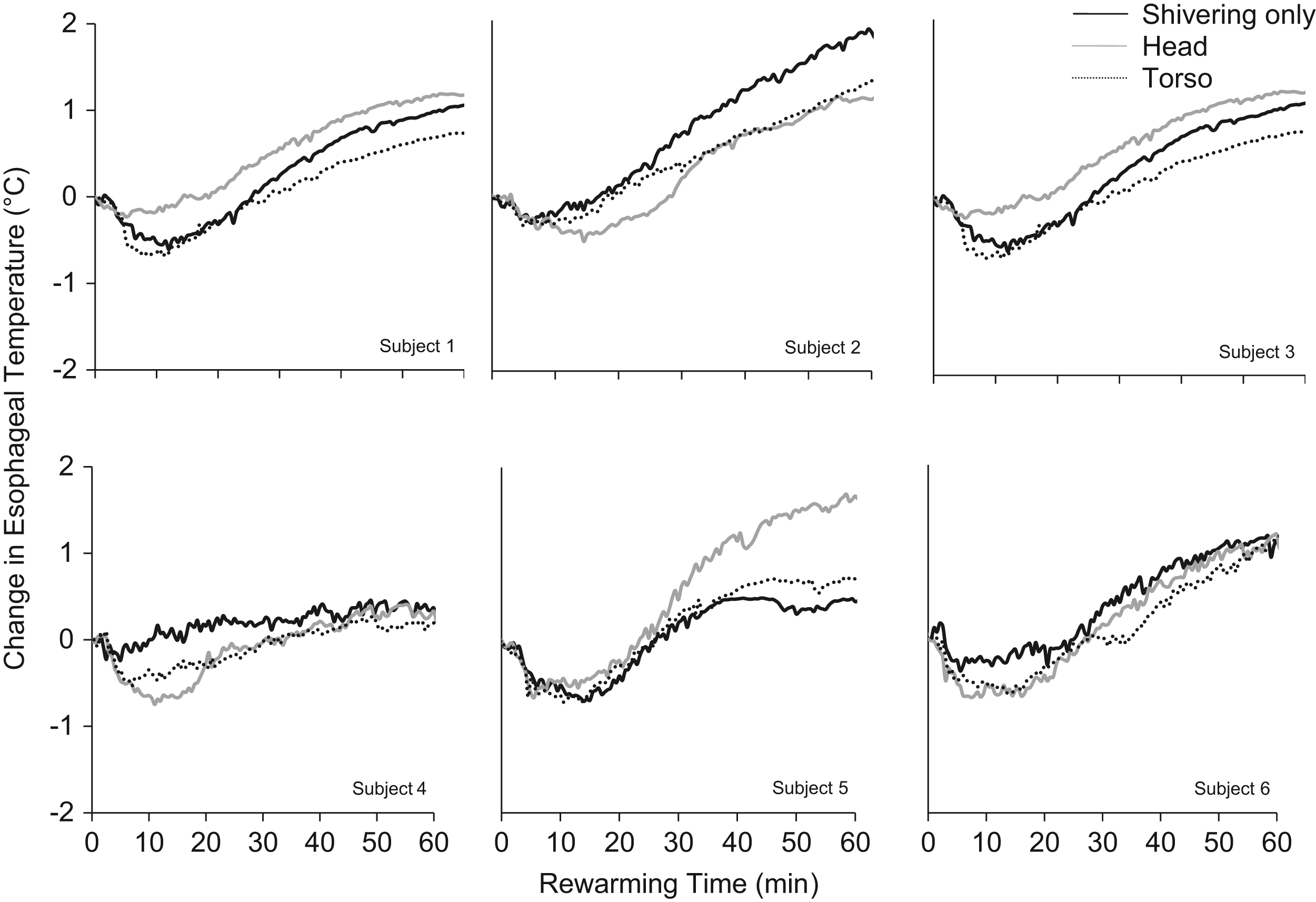
Esophageal temperature (°C) during rewarming period for each of the 6 subjects. Black lines indicate shivering-only condition; gray lines indicate head condition; and dotted lines indicate torso condition.
Results of afterdrop amount, afterdrop length, rewarming rates, and heat flux by condition during rewarming
Values are mean ± SD values for amounts, mean (95% confidence interval) for rates.
HF, heat flux (n = 5); UTorso, upper torso.
Significant difference from head warming (P < .05) and torso warming (P < .001).
Significant difference from the other 2 conditions (P < .001).
Average Skin Temperature
There were no significant differences among the 3 conditions for TskTotal, TskHead, or TskUTorso during the baseline and cooling periods (Figure 4). The TskTotal was significantly higher at 10 minutes of rewarming in the torso condition than the shivering-only condition (P < .05), but neither of these conditions was significantly different from the head condition. There were no significant differences in TskTotal among the 3 conditions at 20 minutes and 30 minutes of rewarming. The TskHead during 0 to 35 minutes and 35 to 60 minutes of rewarming was significantly higher in the head condition (P < .001). The TskUTorso during 0 to 35 minutes and 35 to 60 minutes of rewarming was significantly higher in the torso condition (P < .001).
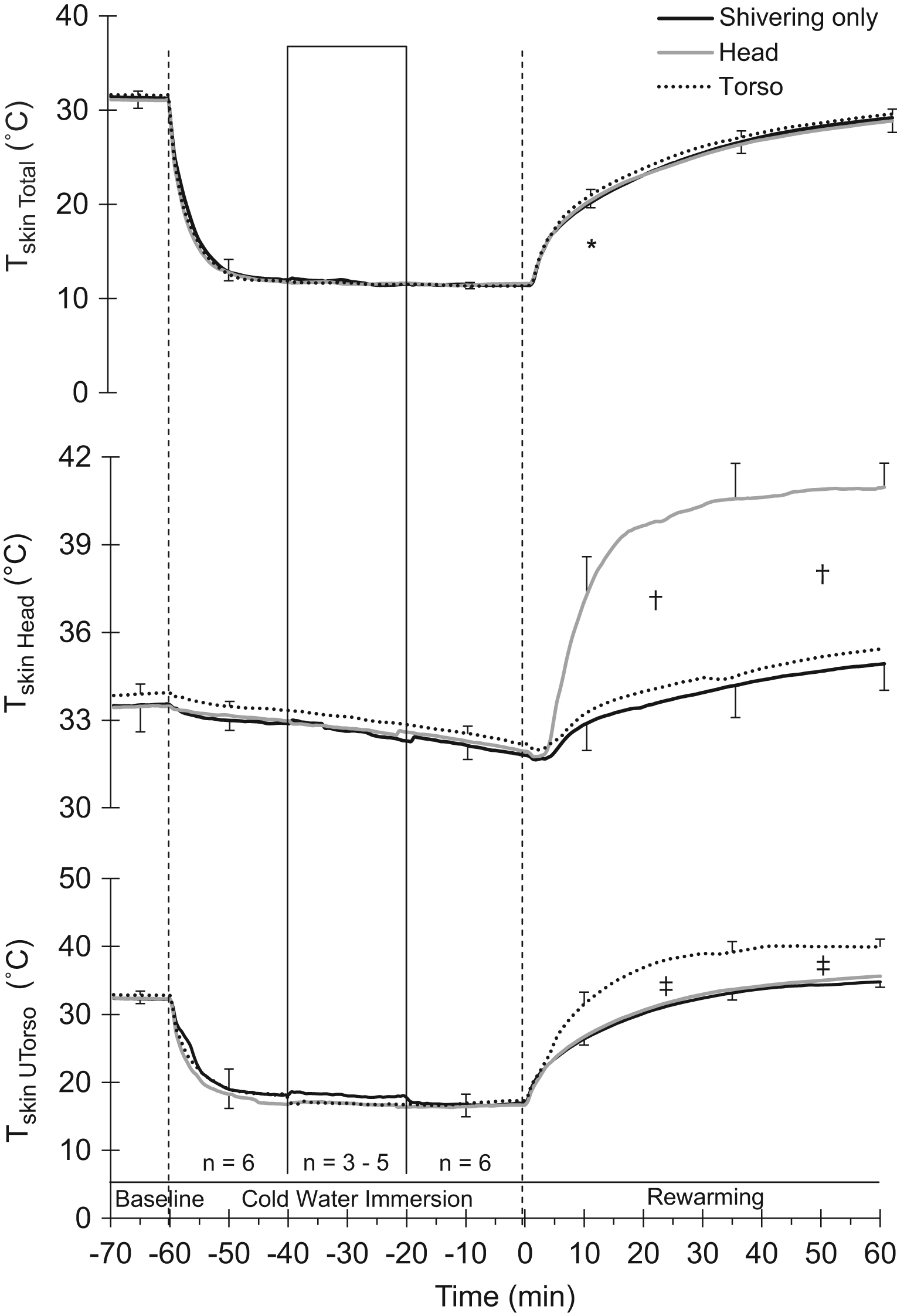
(Top) Total body skin temperature (TskTotal); (Middle) head skin temperature (TskHead); and (Bottom) upper torso skin temperature (TskUTorso) during baseline, up to 60 minutes of immersion in 8°C water, and during 60 minutes of rewarming in the shivering-only condition (black lines), head condition (gray lines), and torso condition (dotted lines). Time 0 minutes indicates exit from cold water (bars, SD). Only 3 subjects were immersed for the entire 60-minute period in all conditions. With the other 3 subjects, only 1 immersion lasted 60 minutes, whereas the target Tes of 35°C was reached within 39.5 to 58 minutes in the other 8 immersions. To show what the whole group did at the beginning and the end of immersion, data for trials less than 60 minutes are presented for the first 20 minutes, with the remainder adjusted so that the exit time is lined up for everyone at time 0. As a result, n = 6 for data from −60 to −40 minutes and from −20 to 0 min. In the period between −40 and −20 minutes, n = 3 to 5.
Heart Rate
There were no significant heart rate differences among the 3 conditions during the baseline, cooling, or rewarming periods. When the values for the 3 conditions were combined, heart rate significantly increased from baseline values of 70 ± 5 beats/min to 81 ± 14 beats/min during cooling (P < .05). After cooling, there was no significant change during 0 to 35 minutes of rewarming (82 ± 17 beats/min). Heart rate then decreased significantly to 65 ± 12 beats/min during 35 to 60 minutes of rewarming (P < .05).
Metabolic Heat Production
During one trial, the VMax system shut down in the middle of the cooling period. In this trial, the metabolic heat production data were lost for the baseline and cooling periods. The VMax system was restarted, and data were successfully collected for the entire rewarming period. Metabolic heat production data for the baseline and cooling periods were subsequently removed for this subject for all 3 trials. Therefore, data analysis for metabolic heat production includes n = 5 for the baseline and cooling periods and n = 6 for the rewarming period.
There were no significant differences for metabolic heat production among the 3 conditions during the baseline and cooling periods (combined values presented in Table 1). After cooling, metabolic heat production continued to increase to maximum values of 521.5 ± 100.2 W in all 3 conditions within the first 14.0 ± 6.5 minutes of rewarming (Figure 5, top). In all 3 conditions, the time to Tes nadir (9.7 ± 3.8 minutes) was not significantly different from the time to maximum metabolic heat production (14.0 ± 6.5 minutes).
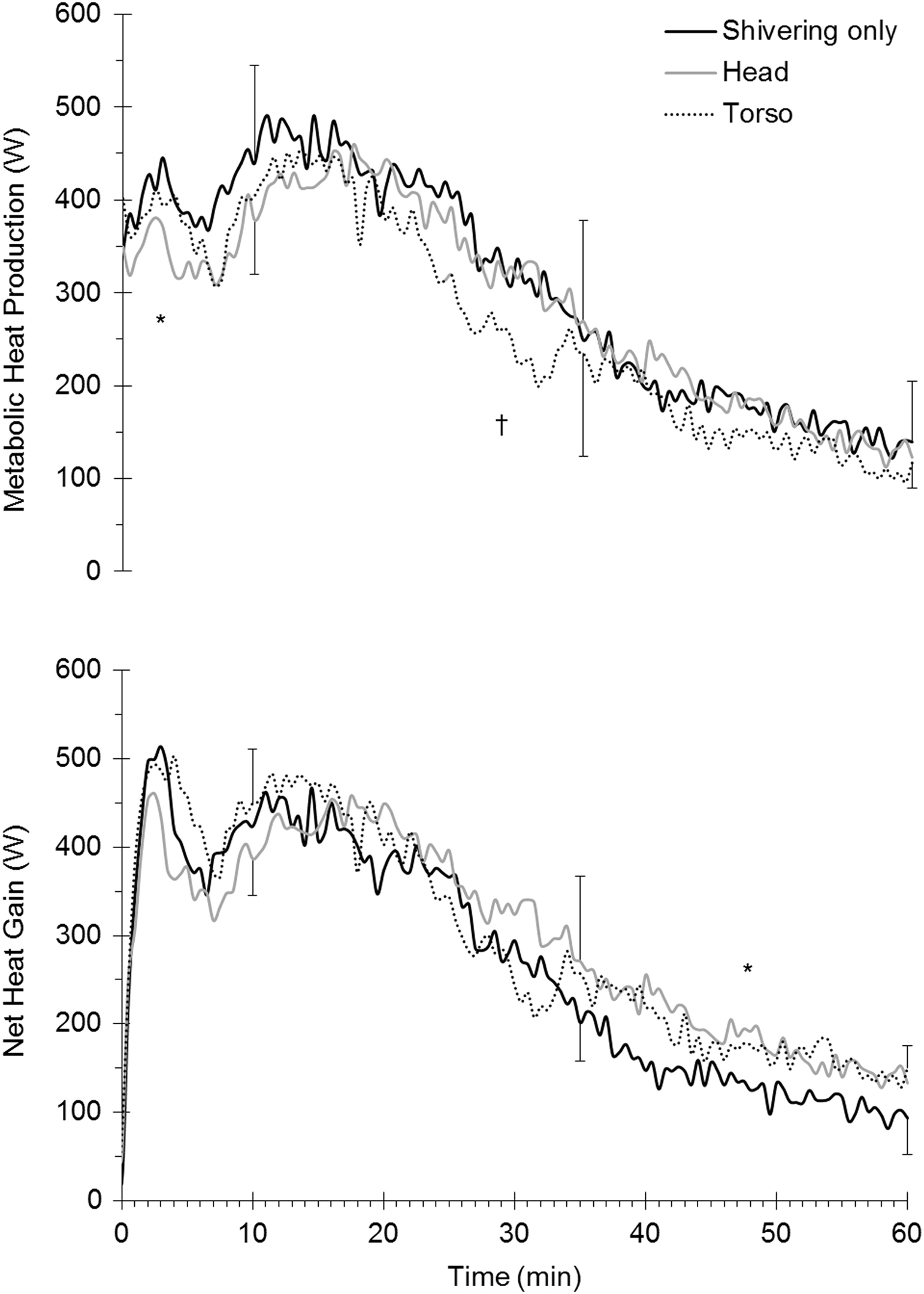
(Top) Metabolic heat production (W; n = 6) and (Bottom) net heat gain (W; n = 5) during 60 minutes of rewarming. Black lines indicate shivering-only condition; gray lines indicate head condition; and dotted lines indicate torso condition. *Significantly lower in head condition than shivering-only condition (0 to 5 minutes; P < .05). †Significantly lower in torso condition than shivering-only condition during 20- to 35-minute and 0- to 60-minute periods (P < .05) (Bars, SD).
Metabolic heat production was analyzed for shorter periods of rewarming (0–5, 5–10, 10–20, 20–35, and 35–60 minutes) and over the entire rewarming period (0–60 minutes). During 0 to 5 minutes, metabolic heat production was significantly lower in the head condition than in the shivering-only condition (P < .05). During 20 to 35 minutes, metabolic heat production was significantly lower in the torso condition than in the shivering-only condition (P < .05). The average metabolic heat production during the entire rewarming period (0 to 60 minutes) was significantly lower in the torso condition (268.0 ± 65.8 W) than the shivering-only condition (306.6 ± 64.7 W; P < .05), but neither of these conditions was significantly different from the head condition (289.7 ± 71.7 W).
Heat Flux
During the first trial of the study, 2 heat flux discs malfunctioned. Therefore, this subject’s heat flux data were eliminated for all 3 trials, and n = 5 for all heat flux and net heat balance data during baseline and cooling (combined values presented in Table 2). During rewarming, total heat loss was greater in the shivering-only condition (positive value indicates heat loss) than in the head and torso conditions (negative value indicates heat gain) (Table 1).
Results of metabolic heat production and heat flux during baseline and end of cooling periods
There were no between-conditions differences; therefore, data are combined for all 3 conditions and reported as mean ± SD.
HF, heat flux (n = 5).
Net Heat Balance
During 0 to 35 minutes of rewarming, net heat gain increased rapidly for all 3 conditions with no intercondition differences (Figure 5, bottom). During 35 to 60 minutes of rewarming, net heat gain in the head condition was significantly greater than in the shivering-only condition (P < .05); however, neither of these conditions was different from the torso condition.
Subjective Evaluation
Four of the 6 subjects found the torso condition to be most comfortable, 1 felt that the head condition was the most comfortable, and 1 found both the torso and head conditions to be equally comfortable; 3 subjects actually found the head condition to be uncomfortable (eg, unnatural, claustrophobic). Three subjects stated that the charcoal heater felt warmer on the torso than on the head, 2 stated that the heater felt warmer on the head, and 1 subject rated the heater on the head and torso as feeling equally warm. Four of the 6 subjects preferred torso warming as the method of choice and 2 preferred head warming.
Discussion
This was the first study to compare the effectiveness of a similar source of heat donation through the head or torso for rewarming hypothermic persons. We hypothesized that, compared with torso warming, head warming would result in greater shivering heat production, a smaller afterdrop, and a greater rate of rewarming. Our results did not support these hypotheses, as there were no differences between the head and torso warming conditions for any of these variables.
In comparison with the shivering-only condition, torso warming increased skin temperature and inhibited shivering heat production, and thus resulted in a similar afterdrop and rate of rewarming as the shivering-only condition. Whereas in the head warming condition, shivering heat production was only inhibited for the first 5 minutes and then was similar to the shivering-only condition during the remainder of the warming period. That resulted in a greater net heat gain during the final 25 minutes of rewarming in the head warming condition compared with shivering-only condition.
Potential Mechanisms for the Results
Compared with shivering only, head warming did not inhibit average shivering heat production from 5 to 60 minutes of rewarming. Thus, a similar heat production combined with heat donation resulted in greater net heat gain during the last 25 minutes of rewarming. The lack of effect of thermal stimulus to the head on shivering heat production is consistent with previous head cooling studies5,11 in which head cooling reduced core temperature, but did not stimulate shivering. This cause of this phenomenon could be that heat donation through the head does not provide enough increase in overall skin temperature to reduce the thermal stimulus for shivering. Heat was donated in both the head and torso conditions; however, net heat gain was only found to be significantly greater than the shivering-only condition with head warming. In the torso condition, net heat gain was not significant owing to the greater effect on the inhibition of shivering heat production in this condition.
Head warming resulted in a similar afterdrop and rate of rewarming as torso warming and shivering only. The similar afterdrop and rewarming rate values for torso warming and shivering only confirm previous studies using a charcoal heater and other heat sources for shivering subjects, 6 ,9,10 with the exception that forced-air warming decreased afterdrop by approximately 30%. 10 Rewarming methods have resulted in cutaneous heat gain of only 60 W greater than shivering (body-to-body warming) 9 or as high as 213 W greater than shivering (forced-air warming), 10 but the relative rewarming rates remain the same.
The similar afterdrop and rewarming rates for head and torso warming could potentially be explained on the following basis: First, during cold stress, there is a generalized decrease in the peripheral blood flow and thus a reduction in the effective perfused mass (or thermal core). 13 Head warming would have resulted in a small increase in the effective perfused mass. We expected that compared with head warming, torso warming would result in a larger increase in the effective perfused mass due to effect of a larger area of skin warming. However, this effect would be somewhat offset by a decrease in shivering heat production that would tend to decrease peripheral muscular blood flow. Hence, there were no intercondition differences in the afterdrop. That shivering heat production and rewarming rate were not significantly different between the head and torso conditions is consistent with a similar effective perfused mass in the 2 conditions. Further work is required to quantify the effective perfused mass in these 2 conditions. Second, contrary to expectations, head warming did not result in a significantly greater shivering heat production than torso warming. Because there were no significant differences in either shivering heat production or total heat flux between the head and torso conditions, net heat gain was similar in the 2 conditions.
Even though the same heat source was applied to the head and the torso, there was less heat donated to the head (−20.6 ± 4.5 W) in the head condition than to the upper torso (−40.5 ± 7.9 W) in the torso condition. It is unlikely that this reduced heat delivery to the head is related to the 50% smaller surface area of the head compared with the upper torso. However, the size and spherical geometry of the head necessitated some overlap (about 14%) of the heater and ducts; that may have contributed to a decreased heat delivery. Alternatively, some of the heat from the heater and ducts would have escaped through the hood opening during the head condition, but that would not have occurred in the torso condition.
It should also be noted that in the torso condition the hands should be placed on the heater chamber. That can decrease the risk of a cold injury in the hands and decrease the amount of heat lost from the outward facing surface of the heater to the sleeping bag. Once blood flow returns to the body, that may also result in increased heat donation to the blood and core.
Study Limitations
We studied a relatively small number of subjects owing to the discomfort of the protocol. However, analysis indicated that the sample size provided enough power for this study. The sample was limited to a healthy, younger (aged 22 to 36 years) population because of the physical stress of the trials. Persons who participate in wilderness activities—the group most likely to require prehospital treatment for hypothermia—are likely to be healthy when engaging in these activities. In addition, the relative results for rewarming are unlikely to be different for an older population. It was not possible for this study to be blinded; however, it is unlikely that knowledge of the rewarming protocol could influence physical or physiological responses to cooling or rewarming.
Metabolic heat production and skin heat transfer values in this study are estimates from a metabolic cart and heat flux probes. Although these estimates are always subject to error, these errors are consistent between conditions. 19
Finally, there were technical difficulties with the charcoal briquettes, many of which were defective and could not be ignited; only those that ignited and burned properly as confirmed by expected skin temperatures on the chest and back (in the torso condition) or forehead and cheek (in the head condition) were used in the study (Figure 1). This defect with the fuse mechanism is being addressed by the manufacturers but was not solved at the time of this writing. It is suggested that if this product is to be used, quality assurance measures, such as confirming that the product was produced after the defect-resolution date and performing random sampling from each new batch, should be undertaken before use in the field.
Practical Implications
In mildly hypothermic, vigorously shivering subjects, heat donation through the torso did not provide a rewarming advantage compared with shivering only. However, it may have other benefits resulting from lowered shivering heat production, such as decreased cardiac work, preservation of energy stores, and increased physical and psychological comfort. This study shows that head warming is as effective for core rewarming as torso warming; therefore, an external source of heat donation could be applied to either the head or the torso with similar results.
Previous research has shown the effectiveness of the charcoal heater in comparison with other methods of rewarming. Finding that the head condition was not significantly different allows for identical comparisons without additional trials. One additional study to consider would be the use of 2 charcoal heaters, 1 on the torso and 1 on the head, to see any differences in the rewarming rate versus other rewarming methods of similar heat donation.
Although torso warming was generally a more comfortable and preferred method than head warming in our study, head warming could be more useful and practical in several situations. First, in a field situation where a hypothermic victim is already wrapped up and insulated, external heat could easily be applied to the head without requiring exposure of the torso to the cold environment. That would be especially important in extreme weather conditions. Second, head warming may provide an advantage in conditions where minimal movement of the victim is prescribed, for example, in the case of a severely hypothermic victim who is at risk of ventricular fibrillation, or a victim with a potential spinal injury (with appropriate caution to minimize neck movement). Third, if emergency medical personnel are working on the victim’s chest, heat could be simultaneously donated through the head.
Finally, carbon monoxide production should be considered. 20 The briquettes should be lit outside of any enclosed space. Once the initial smoke production subsides, the unit can be applied to the patient in a confined space such as an ambulance or tent as long as the space is ventilated. The 1-m-long exhaust hose should be positioned to ensure the discharge end is as far away from the patient’s face as is possible or practical.
Conclusions
When a similar heat source was applied to the head or the torso, the heating was equally effective in rewarming the core of mildly hypothermic subjects. There were no differences between torso warming and head warming in shivering heat production, afterdrop, or rate of rewarming. Head warming may prove useful in conditions where access to the chest is difficult or contraindicated. Further study should be done using a human model of severe hypothermia (shivering heat production pharmacologically inhibited in mildly hypothermic subjects) 7 to compare head and torso rewarming in the absence of shivering heat production, a condition for which effective core warming is more crucial.
Footnotes
Acknowledgments
We would like to thank the Natural Sciences and Engineering Research Council of Canada for financially supporting this project. A special thanks to the Faculty of Kinesiology and Recreation Management, University of Manitoba, for their financial support by KRM Stipend and Graduate Research Assistantship. We would also like to thank our subjects for participating in the study.
☆
Financial support obtained from the Natural Sciences and Engineering Research Council of Canada and the Faculty of Kinesiology and Recreation Management at the University of Manitoba.