






Abstract
Miniaturizing experimental sample volumes to the nanoliter volume range is one of the most economical ways to perform mid- and high-throughput compound screening experiments. Existing automation platforms for nanoliter fluid handling can be bulky, expensive, and require periodic calibration to provide consistent liquid dispensing. In addition, even with frequent calibration, significant instrument-to-instrument variation in low-volume dispensing can occur between different instrument platforms. Many of these issues can be addressed by the use of PocketTips. PocketTips are tips with a defined internal pocket designed to hold specific nanoliter volumes of compound dissolved in dimethylsulfoxide. Although the overall liquid-handling process with PocketTips uses the aspirate/dispense features of the specific liquid-handling device being used, the dispensed nanoliter volume is solely based on the dimensions of the pocket of the PocketTip and thus, the liquid-handling device itself need not have nanoliter dispensing capabilities. In this report, we demonstrate the performance of PocketTips on different automation platforms. In addition, we used a cell-based β-lactamase reporter assay system to demonstrate that compound delivery by PocketTips compares favorably with a standard compound addition technique.
Keywords
Introduction
In recent years, high-throughput studies have played a major role in advancing new lead discovery in both pharmaceutical companies and academic research laboratories. 1,2 The goal of high-throughput screening campaigns is to discover active compounds (“hits”) and often involves determining the biological activity of up to millions of small organic molecules through the use of in vitro screening assays. 3,4 The expense of this type of screening can be formidable and has driven a trend toward smaller assay volumes through miniaturization. 5 As a result, a number of low-volume liquid-handling instruments/techniques have evolved. Some of these include liquid dispensing using surface acoustic waves, 6 pin tools, 7 high-speed flow sensors, 8 electromagnetic bellows, 9 and acoustic droplet ejectors. 10 In general, these systems are capable of accurately delivering nanoliter volumes of liquids. However, the costs associated with the purchase, setup, and maintenance of these instruments can in some cases be prohibitive. An alternative to purchasing new instrumentation is to adapt pre-existing liquid-handling platforms to perform the function of nanoliter liquid dispensing.
One option for performing economical nanoliter volume dispensing is via the use of PocketTips (Fig. 1). The dimensions and geometry of PocketTips are similar to that of normal pipette tips except that PocketTips contain a defined pocket with uniform dimensions that can capture and then release nanoliter volumes of liquid. A major advantage of PocketTips is that they can confer the ability to perform nanoliter liquid dispensing to pre-existing liquid-handling platforms that are not normally capable of performing this operation. This is possible because the instrument depends on the nanoliter capacity of the PocketTip coupled with the instrument's ability to aspirate and dispense liquids to deliver nanoliter volumes of liquids. This is accomplished in three simple steps (1) filling the pocket in the PocketTip by aspirating fluid to be transferred above the pocket, and then dispensing the remaining liquid back to the source well, (2) rinsing the PocketTip below the pocket, and (3) aspirating fluid from the destination well above the pocket and then dispensing (including the content of the pocket) to the final destination well.
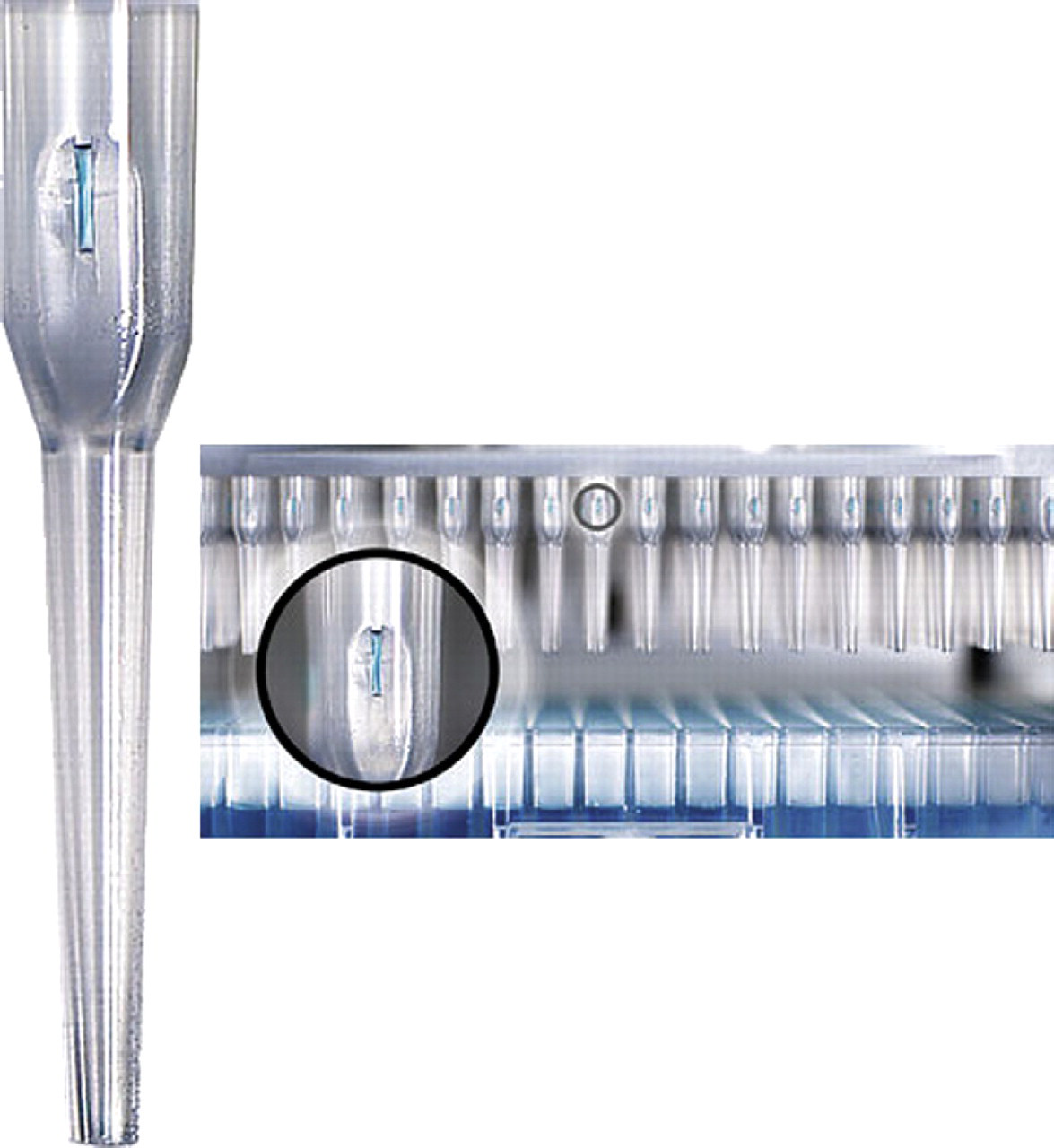
PocketTip: A single PocketTip and PocketTips arranged in a tip magazine over a 384-well plate are shown. The tips in the magazine are arranged in a manner to show the pocket toward the front. All tips are filled with a blue dye to clearly show the pocket.
In this report, we demonstrate the ability of PocketTips to deliver nanoliter volumes of liquids and describe their performance on various automation platforms. In addition, by using a cell-based β-lactamase reporter assay system, we demonstrate that the measurement of biological activity of compounds delivered by either PocketTips (nanoliter delivery) or standard tips (microliter delivery) produces similar assay results.
Materials and Methods
Automation Platforms and PocketTip Versions
The robotics and automation used for PocketTips include instruments from different vendors. The present study uses only the aspirate/dispense features of the instruments. Detailed information about the specific features of the automation platforms can be obtained from the respective vendor sites: Matrix PlateMate and Matrix Hydra DT automation platforms (Thermo Fisher Scientific, Hudson, NH), Hamilton STARlet automation (Hamilton, Reno, NV), Biomek FX automation (Beckman Coulter, Brea, CA), Perkin Elmer MiniTrak automation (Perkin Elmer, Boston, MA). Disposable Automation Research Tips (DART) PocketTips 50, 100, and 250 nL for Matrix PlateMate and Matrix Hydra DT automation (Thermo Fisher Scientific Cat #s 5757–50, 5757–100, 5757–250); Pocket-Tips for Biomek FX automation (Thermo Fisher Scientific Cat # FX384 P30–100); PocketTips for Perkin Elmer automation (Thermo Fisher Scientific Cat # PE96 P235–100); PocketTips for Hamilton Starlet automation (Thermo Fisher Scientific Cat #s Star 384 P30–50, Star 384 P30–100, Star 384 P30–250).
Using the PocketTips
The use of PocketTips involves three steps namely (1) loading the pocket by aspirating the sample and dispensing the excess back into the source plate, (2) rinsing below the pocket with water to wash away any residual sample, (3) dispensing the sample into the assay plate by mixing inside the tip with assay reagents. Optimized software programs are available for this process on Matrix PlateMate automation on request. The steps in the process are illustrated in Figure 2.
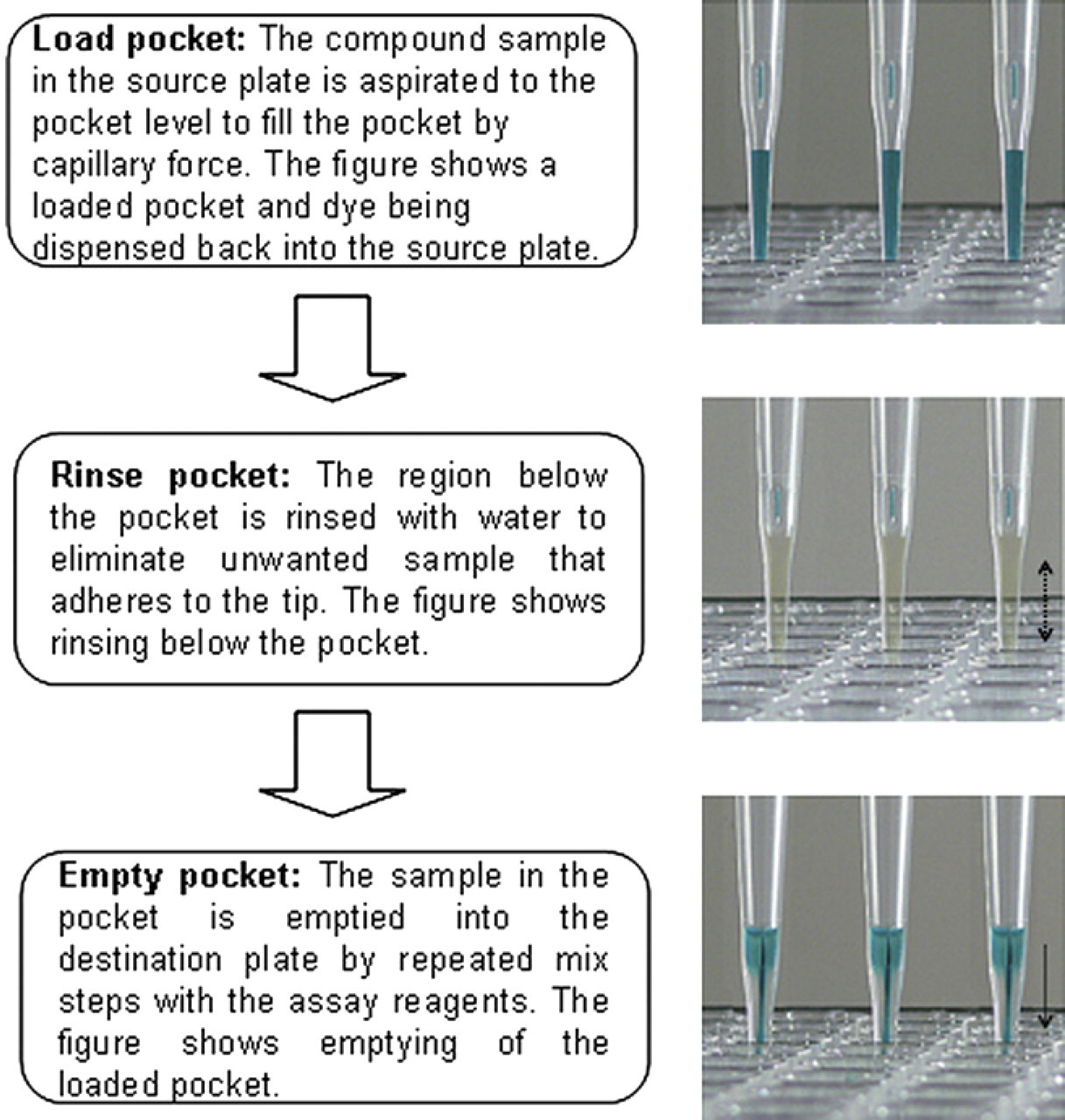
PocketTip workflow: Steps involved in the use of the PocketTips are shown. A blue dye was used to illustrate the individual process steps. The details of the process step are indicated in the text boxes and the direction of the flow of reagent is indicated by arrows. The double-headed arrow indicates the up and down movement of liquid.
Determining the Volume Accuracy of the PocketTips
The accuracy of volume dispensed by PocketTips is calculated using a standard curve prepared with different dilutions of Oregon green (Invitrogen, Cat # D6145; Carlsbad, CA) dissolved in dimethylsulfoxide (DMSO). The dilutions for the standard curve were performed in a black polystyrene plate in triplicate (Thermo Fisher Scientific Cat #4318). Briefly, 95 μL of distilled water was added to well A1 and 50 μL of distilled water was added to wells B1 through H1. Five microliters of 100-μM Oregon green stock solution was then added to well A1 and mixed thoroughly using a standard pipette. Fifty microliters of sample from well A1 was transferred to well B1, and from well B1 was transferred to well C1, and the process was repeated through well H1. Samples were mixed thoroughly after each transfer using a pipette. Fluorescence was measured using a Tecan GENios microplate reader. The values were recorded and plotted as a standard curve (Fig. 3A). For duplicate and triplicate standard curves, the same procedure was repeated in wells A2 to H2 and A3 to H3, respectively. The error bars were obtained by calculating the standard deviation for each data point between the three standard curves. To determine the volume dispensed by PocketTips, an average of 24 independent fluorescence unit values was generated for each of 50-, 100-, and 250-nL PocketTips on Matrix PlateMate instrumentation using the procedure discussed in method #4 below. The average values for each volume are shown graphically (Fig. 3B).
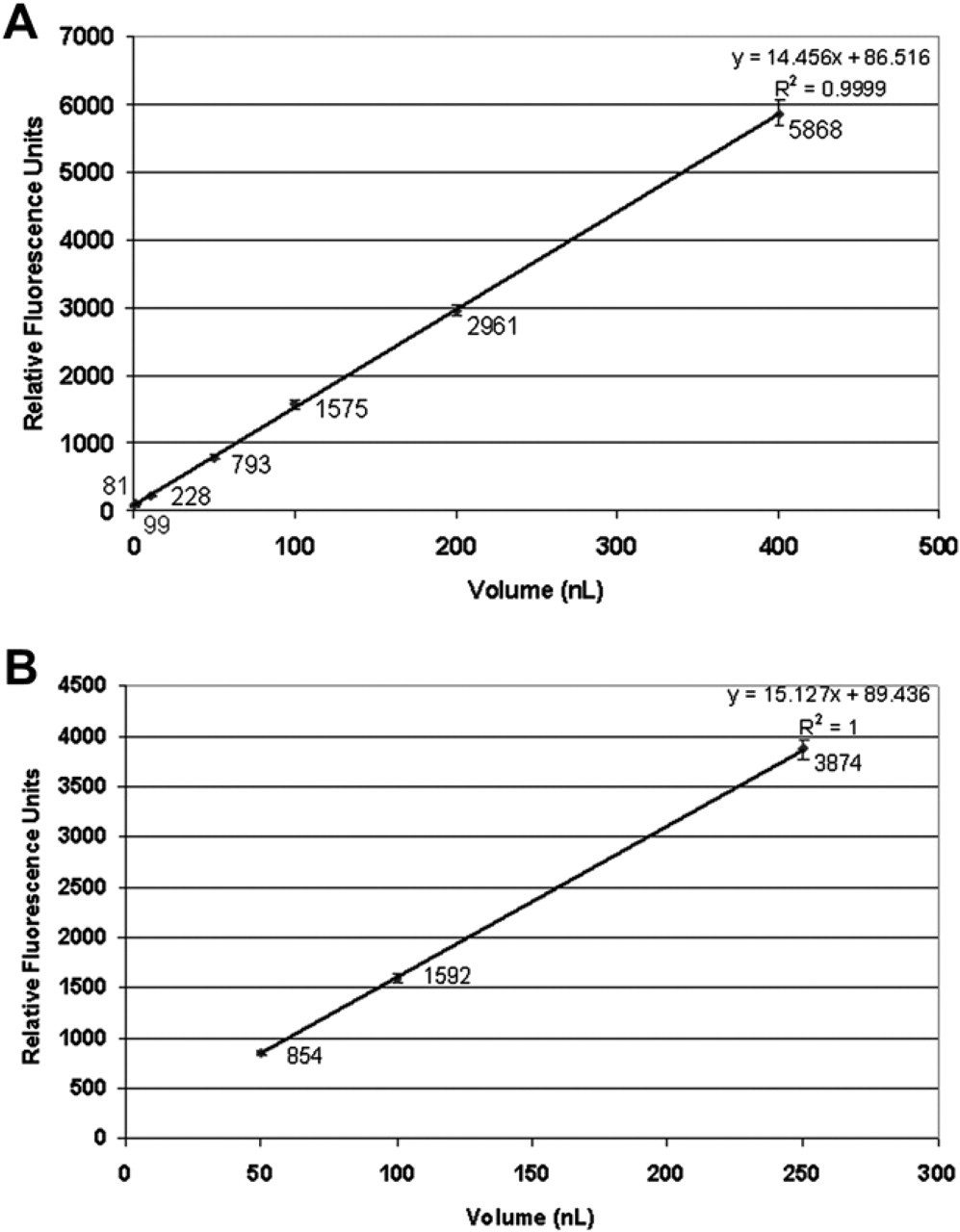
Typical standard curve with Oregon green to determine volume accuracy of PocketTips: Standard curve with fluorescence units obtained from various dilutions of Oregon green in DMSO is plotted (A). An average of 24 independent fluorescence unit values was generated for each of 50-, 100-, and 250-nL PocketTips. The average values were shown graphically (B).
Determining the Precision Performance of the PocketTips
Oregon green dissolved in DMSO to a final concentration of about 100 μM was aspirated and dispensed using the 96- or 384-PocketTip magazines into a flat-bottom black polystyrene plate (Thermo Fisher Scientific Cat #4318). Fluorescence was measured using a Tecan GENios micro-plate reader. The values were recorded and used to determine performance characteristics.
Compound Addition for EC50 Assay
Compound transfers for both standard (DART) and PocketTip assays were performed with a Matrix PlateMate Plus automation. Standard assay compound dilution and additions were performed with standard volume DARTs (Disposable Automation Research Tips, Thermo Fisher Scientific Cat # 5326). PocketTip additions were performed with 100-nL PocketTips (Thermo Fisher Scientific Cat # 5757–100).
EC50 Assay Procedure
The assay used in this study uses a cell-based (receptor-CRE β-lactamase) reporter construct where agonist activation of human receptor is coupled to β-lactamase production via a cyclic AMP response element (CRE).
11
Activity is then measured using a FRET-enabled β-lactamase substrate, CCF4-AM (Live Blazer FRET-B/G Loading kit, Invitrogen Cat
Results
Performance of PocketTips
Use of PocketTips on liquid-handling platforms includes three simple steps namely loading the tips, rinsing below the tips with water, and emptying the tip contents into the destination plate. Aspiration of liquid sample from the source plate just above the pocket level loads the pocket with a specific nanoliter volume depending on the type of Pocket-Tip used. Any nonspecifically adhering liquid below the pocket is rinsed away with water and the pocket is emptied by repeated aspirations and dispenses using the reagent liquid in the destination plate. The three steps in the workflow are shown in Figure 2. Performance of PocketTips was determined using fluorescence measurement as described in the Methods section. Statistical analysis of the raw data obtained from 50-, 100-, and 250-nL 384-well PocketTip fluorescence validation is shown in Figure 4. PocketTips are compatible with several automation platforms and will alleviate any liquid-handling performance variations that may be inherent to the automation platform. To determine the use and performance of PocketTips on different automation platforms, the PocketTips were adapted to different commercially available automation platforms, and coefficient of variance (precision) and volume accuracy were measured. Precision performance of 50-, 100-, and 250-nL PocketTips on three independent automation platforms is shown in Table 1. Precision performance of the 100-nL PocketTips on five independent automation platforms is also shown in Table 2. In all cases, comparable performance data was obtained between different automation platforms and a precision correlation in the order of 2–4% was observed (Tables 1 and 2). The actual volume dispensed by 50-, 100-, and 250-nL PocketTips was calculated using a standard curve as discussed in the Methods section and corresponding volumes are presented in Table 3.
Coefficient of variance (CV) of PocketTips with 50, 100, and 250 nL dispensing capability on three different automation platforms
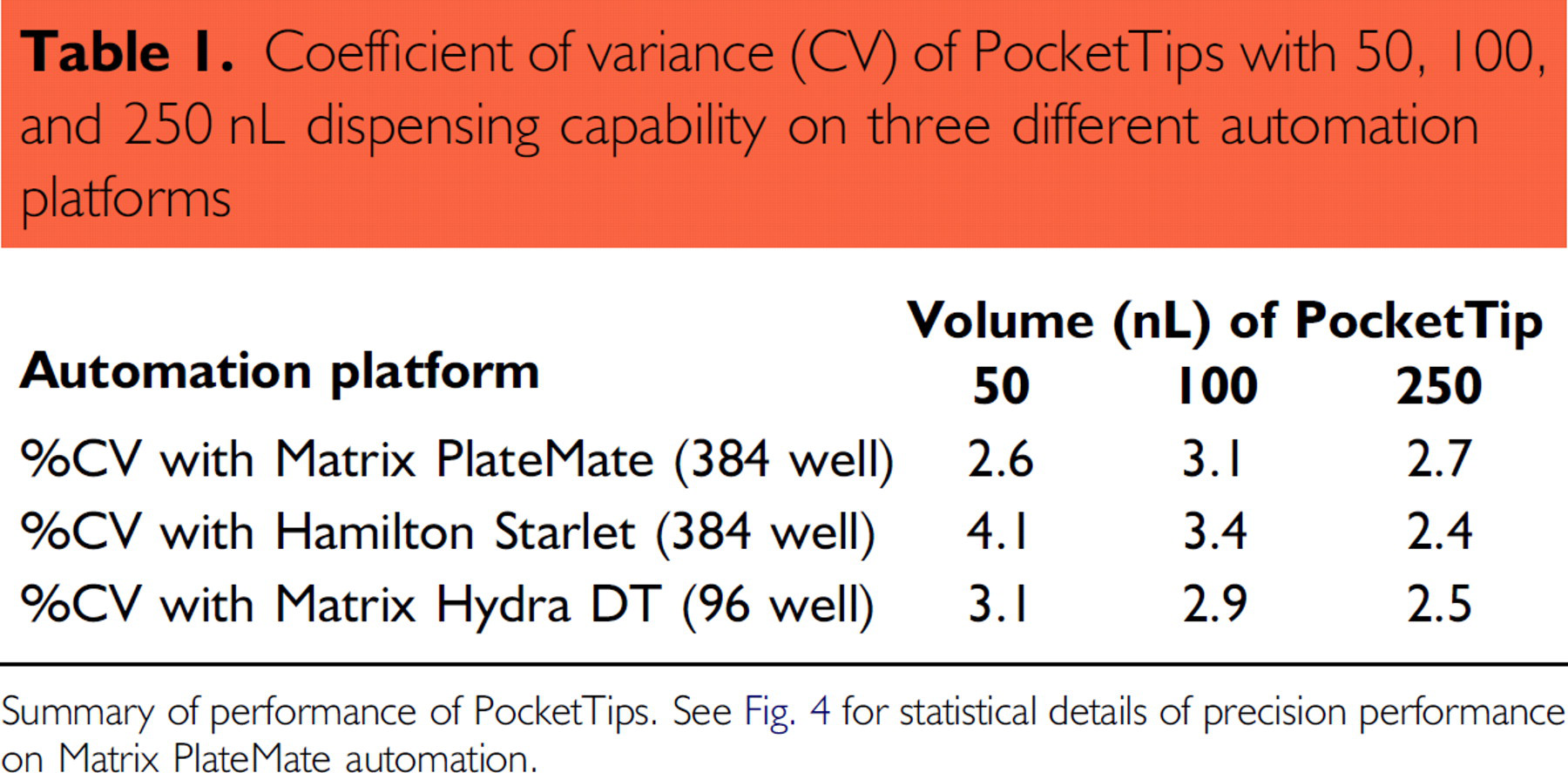
Summary of performance of PocketTips. See Fig. 4 for statistical details of precision performance on Matrix PlateMate automation.
Coefficient of variance (CV) of performance of 100-nL volume PocketTips on five different automation platforms
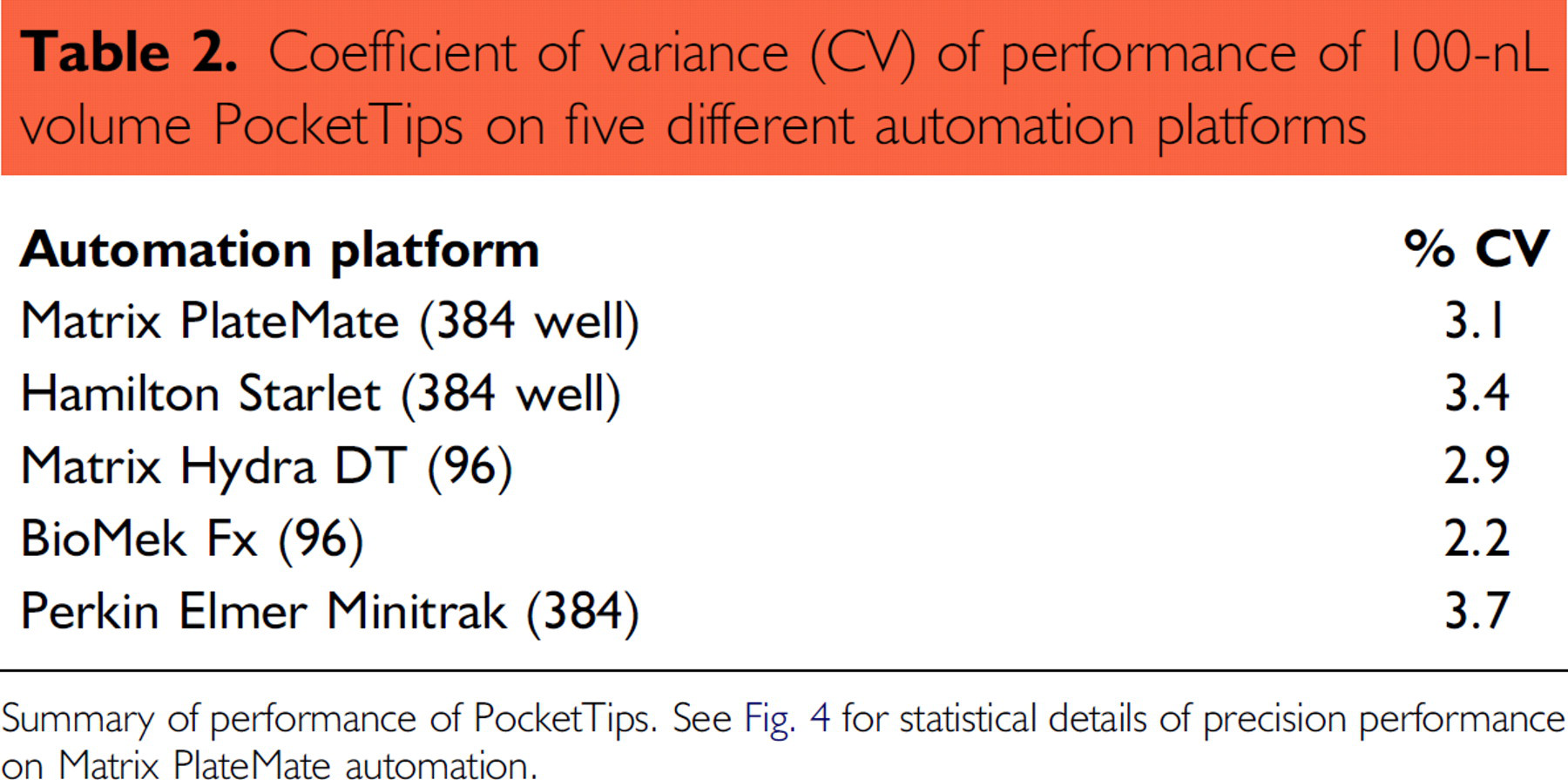
Summary of performance of PocketTips. See Fig. 4 for statistical details of precision performance on Matrix PlateMate automation.
Volume accuracy with PocketTips of three different volumes
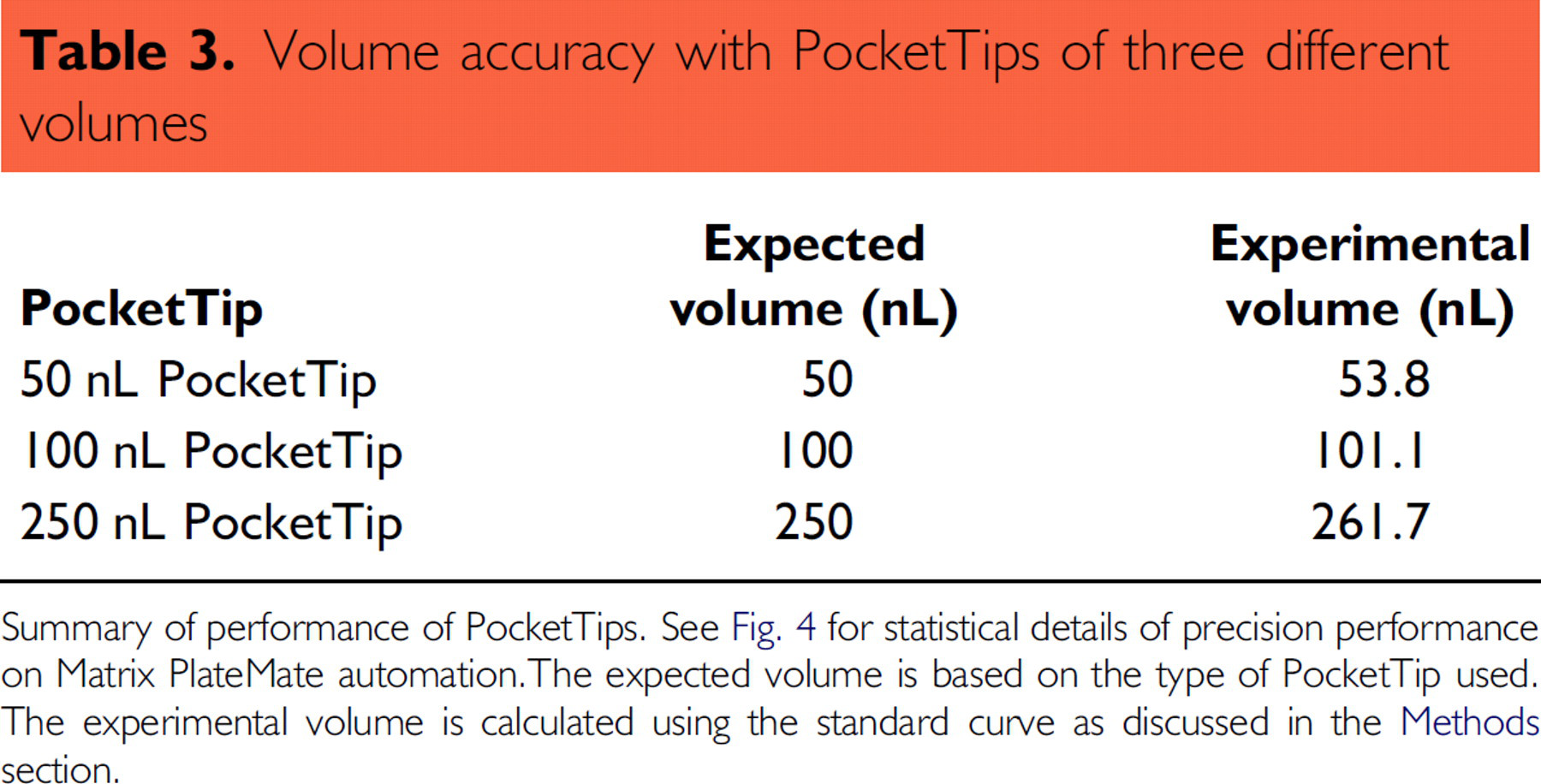
Summary of performance of PocketTips. See Fig. 4 for statistical details of precision performance on Matrix PlateMate automation. The expected volume is based on the type of PocketTip used. The experimental volume is calculated using the standard curve as discussed in the Methods section.
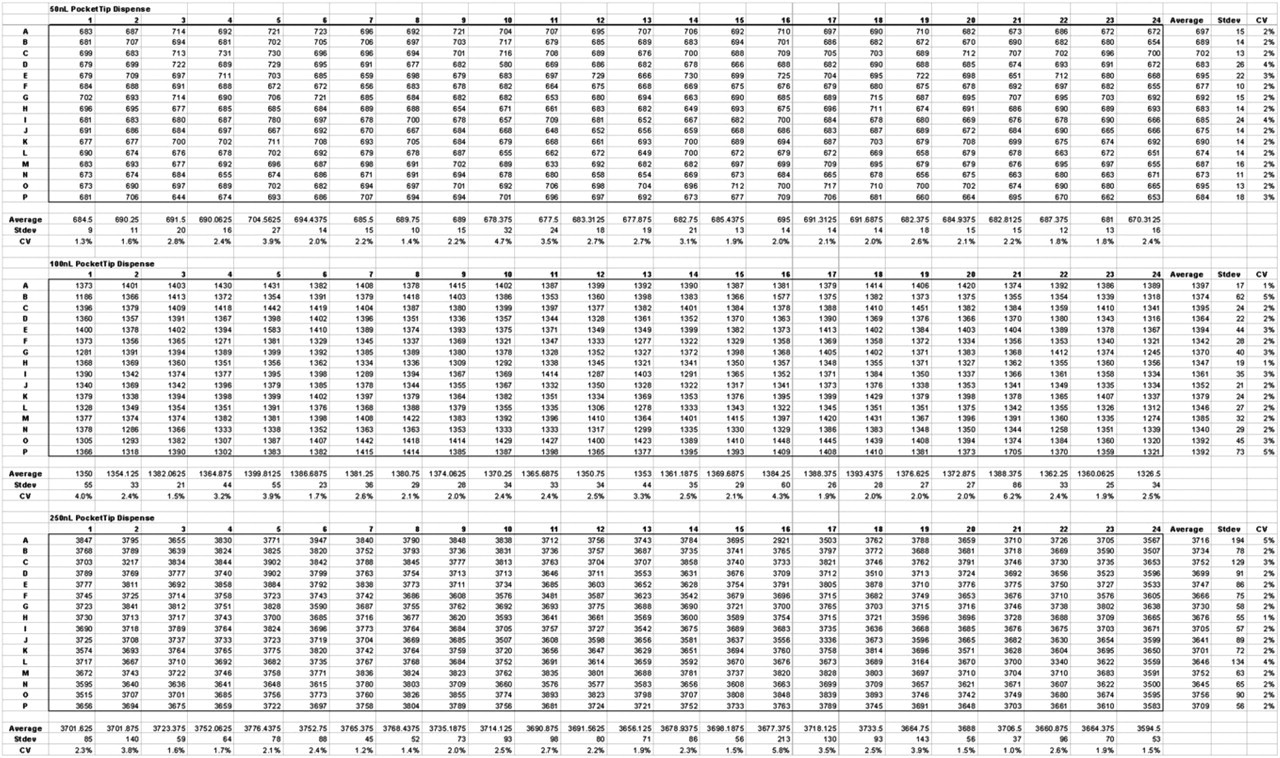
Precision statistical data of PocketTips: Statistical analysis of relative fluorescence data with 50-, 100-, and 250-nL PocketTips on Matrix PlateMate automation is presented. Average (average), standard deviation (Stdev), and coefficient of variance (CV) were calculated for all rows and columns.
Comparison of EC50 Values Generated by Either Standard or PocketTip Compound Addition in a β-Lactamase Reporter Assay System
In this study, we determined the effect of compound addition by either standard volume (μL) tips or PocketTips (nL) on the ability of compounds to stimulate agonist activity in a cell-based β-lactamase reporter assay system.
11
In either case, compound additions were performed using a PlateMate Plus automated liquid pipettor. In general, the resulting agonist curves generated by PocketTip compound addition produced EC50 values, asymptote maximums, and slopes that were similar to those produced from agonist curves generated by standard tip compound addition (example shown in Fig. 5). Although replicate data was slightly scattered for agonist curves generated from compound addition by PocketTip, the EC50 values generated from these curves correlated well with EC50 values generated from curves generated by standard tip compound addition (Fig. 6; Pearson
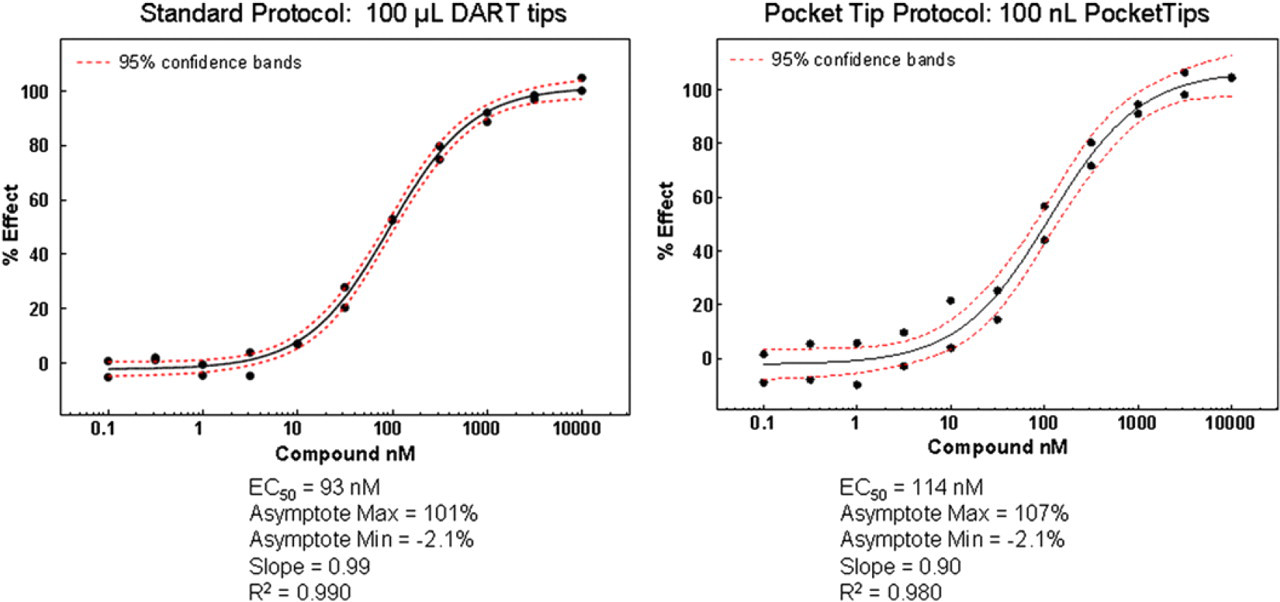
Comparison of EC50 curves generated by standard volume or PocketTips: Example of EC50 curves generated from data produced by compound addition with either standard volume tips (DART 100 μL) or PocketTips (100 nL) is shown. In either case, compound additions were performed using a PlateMate Plus automated liquid pipettor. Agonist curves were analyzed with a proprietary curve-fitting program using a four-parameter logistic dose–response equation.
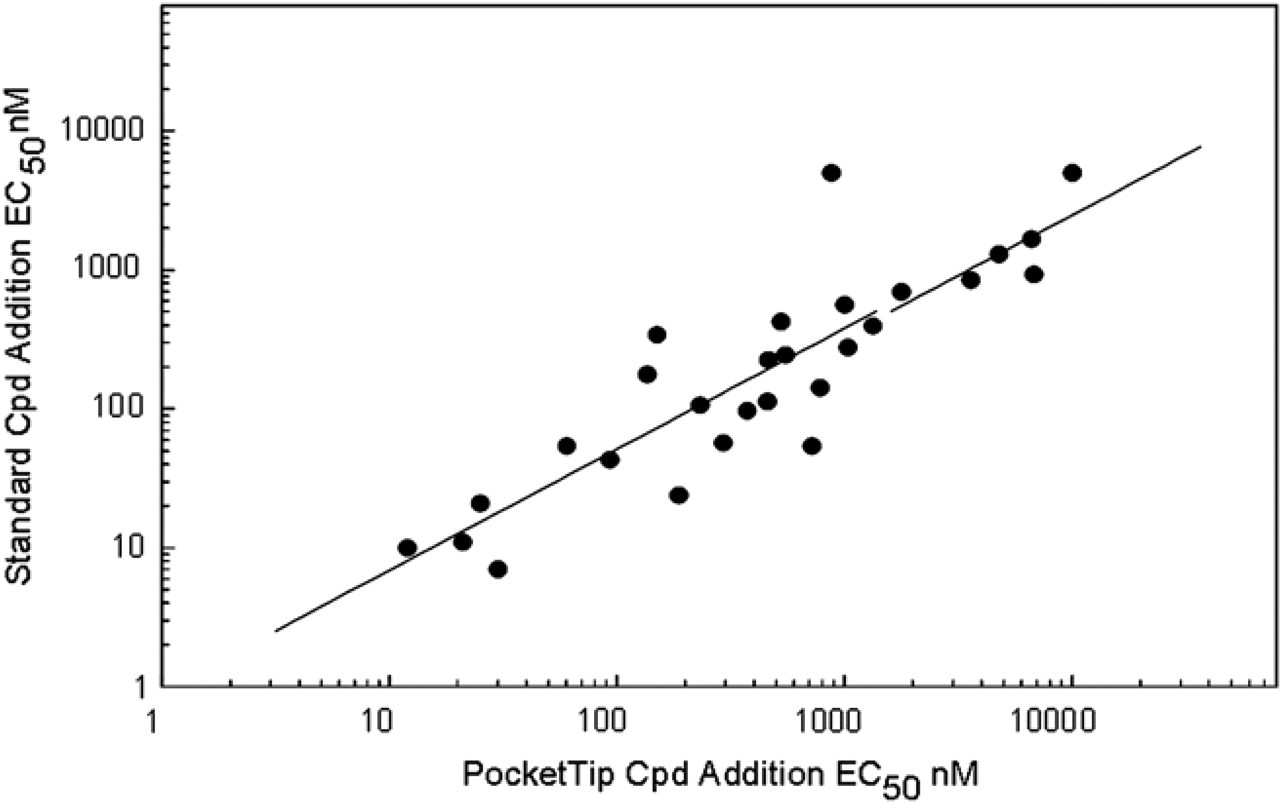
Correlation of results of β-lactamase reporter assay generated by standard and PocketTip workflows. The graph represents 29 XY pairs and a confidence interval of 95%. An
Discussion
In this study, we report the successful methodology of performing nanoliter volume compound screening using PocketTips. Over the past two decades, several liquid-handling instrument manufacturers designed ingenious mechanisms that dispense nanoliter volumes of liquids. Although these instruments offer precise dispense volumes, they are associated with initial investment costs and periodic maintenance costs. Upgrading the older instruments to perform accurate nanoliter dispenses may not be technically and/or economically feasible. The use of PocketTips thus is an alternative approach to add on a low-volume dispense feature to existing instrumentation. One such example on evolution precision pipetting platform (Perkin Elmer, Boston, MA) for biochemical inhibition assays was previously reported. 13 Using any new technologies should always be validated and compared with the existing methods. We addressed this issue by developing a validated workflow and using it in cell-based compound screening experiments. The PocketTips are readily suitable for use with liquids having low surface tension such as DMSO. This makes these tips most appropriate for small molecule screening experiments where most of the commercially available small molecules/compounds use DMSO as a solvent. In our study, the performance of PocketTips was determined using a fluorescence assay and it should be noted that some of the variation in performance is contributed by the assay itself and/or the detector used for measurement.
Because the dispensed volume depends solely on the pocket dimensions in the tip, the precision and accuracy of liquid dispense are independent of the instrument. Although the PocketTips can be used on several instrument platforms, the instrument head-tip interface varies between different instruments. To address this issue, different versions of PocketTips compatible with popular instrument platforms have been produced. Because a similar pocket is used for liquid dispenses across instruments, instrument-to-instrument variations are significantly minimized. Pocket sizes that hold less than 50 nL have also been tested, but the current need for the volume ranges between 50 nL and 1 μL in the pharmaceutical laboratories far exceeded the need for volumes lower than 50 nL. In most screening laboratories, the need for PocketTips with higher volume was minimal. Apparently this was because most existing automation platforms perform reliable dispenses in the microliter range. Hence, a product with capability to dispense volume ranges from 50 to 250 nL appeared to be the most desirable during the recent years.
In general, routine screening operations are faced with two sets of challenges (1) the cost of the experiment and instrumentation, and (2) the operational issues associated with liquid handling. A part of the former challenge is often addressed by miniaturizing experimental volumes on automation. Although the miniaturized volume decreases the experimental cost significantly, the cost associated with purchase and maintenance of the instrument continues to persist. The second set of challenges includes process issues such as well-to-well and instrument-to-instrument variation, inaccurate dispense volumes, sample evaporation leading to precipitation, sample dropouts, need for intermediate dilution steps, and assay-specific variables. 14 Evidently, toidentify the desired lead compounds in high-throughput assays with reduced background noise, it is necessary to address these issues and minimize any variations that may arise because of technological limitations. Several automation platforms including those used in this study are indeed capable of performing nanoliter volume operations. However, to offer superior performance at nanoliter volumes, the instruments need to be precise and thoroughly calibrated via regular maintenance. The need to address significant variations between instruments and the need for a common calibration method was previously reported. 14,15 Moreover, older instruments that have encountered user-dependent crashes require repeated periodic maintenance and may underperform over time, making data comparisons difficult. All these deficiencies either increase the overall cost of the experiment or lead to inconsistent results. Depending on the assay and screening operation, the PocketTips may be able to address some of these deficiencies.
In this study, we also investigated how PocketTip technology might be applied to a pre-existing assay process. This was accomplished by measuring the biological activity of compounds that were transferred to cells with a PlateMate Plus automated pipettor using either standard DART pipette tips (μL transfer) or PocketTips (nL transfer). The compounds used for this study were selected for their range of potency (EC50; ∼10 to > 10,000 nM) and hydrophobicity (cLogP; 1.24–5.57) and were located randomly on the source plate. As seen in the Results section, we observed a significant correlation of the biological activity of compounds whether added by standard (microliter) or PocketTip (nanoliter) compound addition methods. Although we did not specifically correlate transfer performance with the cLogP of individual compounds, the overall good correlation of compound activity between PocketTip and standard tip compound addition combined with the range of cLogP of the test compounds indicates that PocketTip transfer of compounds with varying degrees of hydrophobicity does not appear to be an issue. Future studies with larger sets of test compounds would help to confirm this conclusion.
Although the potency of compounds (EC50 values) added by either standard or PocketTip were correlative, replicate data for compounds added by PocketTip was somewhat more variable than that seen for compounds added with standard DART tips (Fig. 5). This was likely the result of cells lifting off the assay plate (based on microscopic visual inspection of plate wells after compound addition) during the five mixing steps that were used to ensure complete removal of the compound from the pocket of the PocketTip. Disruption of the cell monolayer at the time of compound transfer can result in well-to-well variability with regard to the number of viable cells that are present in each well after overnight incubation. This in turn has a direct effect on the variability of the fluorescent signal seen in individual wells as only viable cells are capable of taking up the CCF4/AM substrate used to measure β-lactamase activity. 11 It is possible that further refinement of the protocol (with regard to speed of dispensing and number of washes used to remove compound from the pocket) might decrease disruption of the cell monolayer and improve data quality further. However, the slight increase in data scatter observed in compound activity from curves derived from PocketTip-mediated compound transfer does not alter the overall observation that compound delivery (as measured by compound ability to induce cAMP production linked to β-lactamase production) by either standard tips (μL delivery) or PocketTips (nL delivery) was comparable.
Our observations with fluorescent dyes indicate that PocketTips can be reused at least more than once and five wash cycles completely eliminate carry over (data not shown). However, drying the pockets would be necessary. Moreover, because every assay ingredient mixture consists of different biological molecules with varying adsorption properties, a preliminary validation of the specific assay may be needed before considering reuse of PocketTips in high-throughput experimentation. The PocketTips are a disposable technology and it is best to use new PocketTips for every assay. We have used only new tips for our experiments in this study. However, if they need to be reused, we suggest a preliminary validation with the specific assay reagents before the reuse of PocketTips. Using PocketTips in cell-based compound screening experiments has other advantages. For example, mixing of compound can be performed in situ in the tip, using a small volume of sample thereby minimizing the cell-destruction effect in the destination plate and also minimize scattering of data discussed above. Furthermore, from our initial observations, it appears that precipitation of some compounds during a standard intermediate dilution step in the regular procedures can be eliminated while using the PocketTips, and studies along these lines are in progress. At present, performing DMSO-based compound screening was found to be most ideal with PocketTips. Development of optimized workflows with PocketTips for other applications is underway. Another common advantage of using PocketTips in high-throughput assay development is the transition of screening assay procedures from manual single/multichannel pipettes to automation platforms. It is a general practice to perform initial standardization of assay development using manual single/multichannel pipettes before using automation. In regular procedures, slight volume differences between manual pipetting and automation-based transfers may show a significant discrepancy in results. This discrepancy can potentially be eliminated if PocketTips are used throughout during assay development (with manual pipettes) and high-throughput screening (using automation). In conclusion, we show that precise nanoliter-volume liquid-handling capability can be imparted on a variety of liquid-handling platforms via PocketTips. We further demonstrate the successful use of an automated PlateMate-PocketTip workflow for cell-based compound screening assays.
Acknowledgment
The PocketTips, PlateMate, and Hydra automation platforms are products of Thermo Fisher Scientific. Performance validation data on various instrument platforms was generated at Thermo Fisher Scientific and by nAscent Bio Sciences, which is now also a part of Thermo Fisher Scientific. The biological experimental work was performed at the R&D facility of Pfizer Inc.