



Abstract
The article describes the new proprietary spot-on™ technology developed by Allegro Technologies, Ltd., for nanolitre and microlitre dispensing of liquids for the drug discovery, genomics and proteomics industries. We analyze the requirements of the drug discovery industry for low volume liquid handling technologies and briefly summarize some the more common technologies currently available.
A detailed description is provided of the new spot-on™ technology in terms of function and operation as well as the relevant features and potential benefits to using this new method of nanolitre dispensing.
Introduction
Over the past decade a number of innovations have been successfully employed to miniaturize assays in life sciences, particularly in the areas of drug discovery and clinical diagnostics. They have enabled a manifold reduction in the sample volume and an increase in the density of well plates to 384 and 1536-well format. One can expect that the trend towards higher density well plates is to continue driven primarily by reagent cost reduction factors.
Most stages of the high throughput screening process can readily handle high-density plates. It has clearly emerged however, that the lack of adequate liquid handling and sample preparation technologies has become one of the most serious obstacles hindering further assay miniaturization. Analysis of various factors preventing a more rapid move towards higher density assays is presented elsewhere. 1
Besides cost reduction due to lower consumption of expensive reagents there are also other reasons making it necessary to have an arsenal of low volume dispensing tools in an assay facility. These include reduction in the waste disposal costs, reduction in the time of the screen campaign, reduction in the well plate storage costs. Comprehensive description of these factors is given. 2
In addition to established applications in high throughput screening that are driving assay miniaturization, a range of new applications has emerged that require sub-microlitre volume liquid handling including genomics, proteomics, and microaraying. It is also important to note that there is an increasing number of cell based assays in the screening process, a notable consideration for the dispensing technique employed.
We believe that the ongoing shift to low volume dispensing will be a gradual process meaning that over the next few years, the volume range of 100 nL to 1 microlitre will be very important. This also means that any low volume dispenser is more likely to be accepted as industry standard if it is capable of handling volumes in the range of 1 to 10 microlitres as well as in submicrolitre range. For example we are likely to see a lot of applications whereby some reagents for the assay are added in the volume range of 50 or 100 nL and others are in the range of 1 to 10 microlitres.
REQUIREMENTS OF LOW-VOLUME DISPENSING TECHNOLOGIES
In this section we summarize the main requirements for a low-volume liquid handling technology and expand on the rationale behind some of these.
Non-contact dispense
Preferably, the liquid should be dispensed in non-contact mode to avoid cross contamination and also to improve speed and reliability of the process. The advantages of non-contact dispensing over the contact mode are described in detail elsewhere.
Complete flexibility of volume range
Ideally, low-volume dispensing technologies for high-density assays must be capable of delivering volumes in the range of 1nL-10mL. They must also be compatible with 96, 384 and 1536 well plates. Dispensers that do not cover all these parameters will still be compatible with a number of applications.
High accuracy and precision
For most applications the CV accuracy of dispensing of 5 to 10% is sufficient. When dealing with lower volumes the accuracy of the measuring methodology becomes very important and must be carefully controlled.
Low dead volume
For many applications it is desirable to either eject all the liquid into the target locations or have the capability to return the excess liquid from the dispenser back to the source plate. The subsequent wash procedure becomes an important criterion. Ideally, a dead volume of zero is required but a dead volume of less than one microlitre is somewhat acceptable.
Low service cost and maintenance
It is beneficial to have the option of simple replacement of the dispensing tip to reduce the downtime when blockages occur. If this is a task that can be easily performed by the operator, then it becomes more advantageous.
In most cases it is not necessary to replace the tip after each dispensing, and it is perfectly sufficient to have an easily replaceable rather than a fully disposable tip. Other aspects of servicing and maintaining the performance of the system are important considerations.
Easy configuration and operation
The dispenser should not require complex set up and calibration procedures. It should possess user-friendly control software to design and perform assays.
Flexible integration
The dispensers should lend themselves to seamless integration with various robotic platforms and other equipment required to perform an assay.
EXISTING LOW-VOLUME DISPENSING TECHNOLOGIES
In recent times a number of new liquid handling technologies geared towards the low volume market have emerged. These technologies have been assessed for all the parameters mentioned in the previous section. Varying degrees of success have been achieved and in certain application areas some of these low volume technologies have made a substantial improvement on the existing equipment used for that function.
However, given the list of the stringent requirements discussed thus far, it is not surprising that despite a number of these new and emerging low-volume dispensing technologies, the one that is commonly accepted as an industry standard has not occurred.
Reviews of the existing low volume dispensing technologies are given. 2 , 3 It is clear that significant changes are to happen in the market segment of this equipment over the next year or so. In this chapter we briefly mention some key technologies, their strengths and weaknesses.
The conventional syringe dispenser is the most common and robust dispensing tool. Syringe dispensers are capable of dispensing reliably down to the low microlitre range although in contact mode they can dispense volumes down to some 0.5 microlitres or even somewhat lower.
A number of dispensers utilize piezo-based technologies derived from ink jet printing. Ink jets perform well with purpose-formulated liquids (ink) but they are not easy to use with liquids having a wide range of properties. The drawback also is that the volume of a single dispensing is usually fixed and the liquid is dispensed in multiples of this dose. There are other issues related to the cost of the tip and tip blockage.
Several interesting low-volume dispensing technologies are based on solenoid valves sometimes in combination with other drivers. These can well fulfill some of the requirements listed previously but clearly not all. One of the limitations of these technologies lies in the use of system liquid. The system liquid is the potential path to cross-contamination. Besides, the system liquid adds inertia to the system that translated into reduced accuracy at low volume. If the system liquid is not used and the valve is filled with sample liquid, the chances of cross contamination increase. The issue of cross-contamination is important in the case of valve due to its design complexity and also due to the fact that the solenoid valve is usually permanently fitted onto the dispenser and cannot be easily replaced. Even when the system liquid is used, the danger of cross-contamination cannot be removed completely. Furthermore, when small drops are dispensed at high repetition rate, the valve can easily overheat, as it has to be actuated with high peak currents.
There is a new interesting technology launched on the market this year utilizing the capillary action in a multichannel head configuration. This undoubtedly will fulfill applications in the well plate reformatting area, something missing for a long period of time.
PRINCIPLE OF THE SPOT-ON™ TECHNOLOGY
Having in mind these requirements, Allegro Technologies, Ltd., (www.allegro-technologies.com) have developed a proprietary technology for low volume dispensing. In our opinion it is the most complete liquid handling solution available. This proprietary technology labeled spot-on™ is covered by a portfolio of patent applications, extensively tested in house and at a number of external sites including pharmaceutical companies and life science laboratories.
The technology is based on the unique dispensing tip and smart electronic method of its control. A diagram of the tip is shown in Fig 1. The tip contains a boss made of magnetic material coated with a chemically inert polymer. The boss is a very small component with a diameter of only 1–2 millimeters and length of only 4–6 millimeters. The boss is placed in a plastic dispensing tip terminated in a capillary. The boss can move inside the tip body as electric current is applied to actuating coils placed around the tip (Fig. 1). During dispensing, the tip is connected to a pressure source generating pressure in the range of 7 to 50 PSI. During aspiration it is connected to a vacuum source. The volume within the tip around the boss and above it, is filled up with sample liquid. As the boss moves up, the sample liquid is ejected from the tip if it is connected to the pressure source or aspirated into the tip if it is connected to the vacuum source. Therefore, the volume of the liquid dispensed or aspirated is determined by the time during which the boss is lifted from the nozzle. The entire volume of the sample liquid stored in the tip can be dispensed over a large number of drops. Alternatively, it could be dispensed in a single dose dispensing. This means that the volume of the drop is freely adjustable. No system liquid is required for the dispenser.
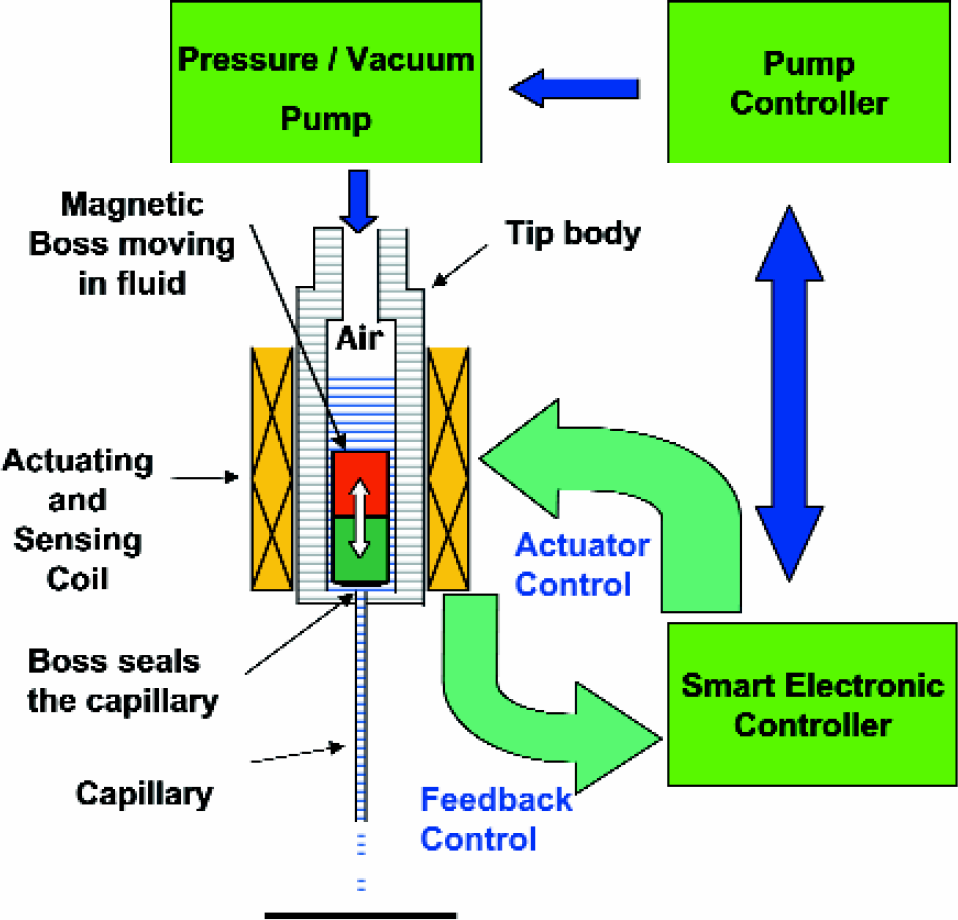
Spot-On™ Dispensing Mechanism.
There is sophisticated feedback monitoring of the movement of the boss so that the moments of the start and end of the boss' movement are well timed to ensure the accuracy of the dispensing volume. Accounting for the improvement of the accuracy of the dispensing volume, the feedback also enables additional smart functional features.
The design of the dispensing tip is very compact so that tip with the actuating and sensing coils can be placed in an array with nine millimeters separation between the nozzles, i.e., eight tips per width of the standard well-plate footprint. View of the dispensing tip with the boss removed is shown in Fig. 2. The stainless steel capillary has internal diameter typically in the range of some 150 to 250 micrometers.
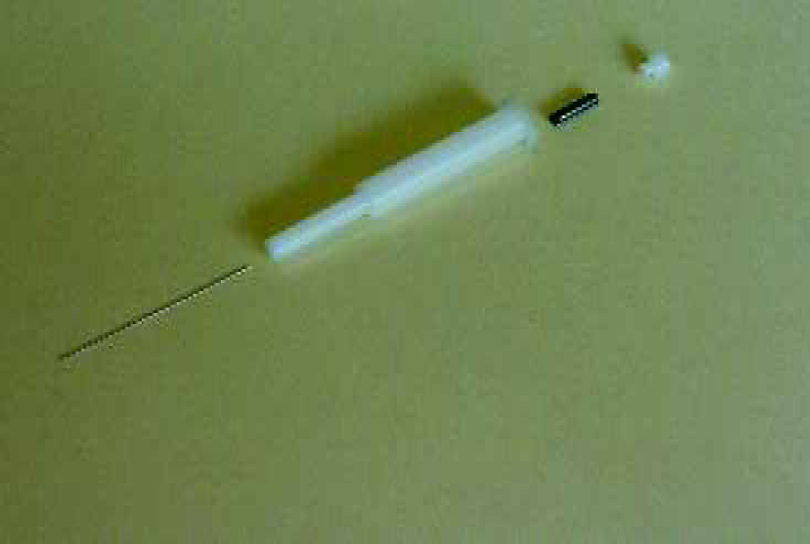
Photograph of dispensing tip. This shows the capillary, the tip body, the magnetic boss and stopper.
DISPENSING RANGE, ACCURACY AND SPEED
The accuracy of the dispensing has been extensively characterized using a range of low- and high-viscosity liquids. The list of liquids used in tests includes water with and without various fluorescence markers (Eosin-Y and Ethidium bromide), nondiluted and diluted DMSO, blood, blood serum and also liquids with high viscosity such as nondiluted glycerin and enzyme solutions. At third party testing sites similar liquids were employed to complement the above list. The volume measurements were performed using the Spectra Fluor Plus optical fluorescence reader from Tecan (Switzerland) that was calibrated by means of the precision balance (SARTORIUS MODEL MC-5). Rhodamin was used as fluorescent marker. 384 flat bottom well plates from Greiner were used for the tests. The tip used in this particular test had the internal volume of 100 microlitres. The typical dispensing error CV was found to be 2% at 500 nanolitres volume and 5% at 50 nanolitres and 4% in the volume range of 50–500 nanolitres.
The dispensing tip is designed to be readily replaceable and it is expected that many users will replace it relatively frequently as the cost of the tip is not prohibitively high. The tip can readily last for hundreds of thousands of dispensing cycles. To test the durability of the tip the following experiment was performed. The tip was back filled with water. The dispenser was set to dispense 100 nL droplets at the rate of ten drops per second. The volume of every single droplet was measured. A total of 750,000 drops was recorded. The overall CV error averaged over the 750,000 drops was only 4%. The difference between the average volume of the first 500 drops and the last 500 drops in the series is only 3.7 nL. This means that a single tip could last through the entire number of dispensing cycles in a typical screening campaign without any degradation and displaying a high degree of robustness and reproducibility. These results are presented in Fig. 3. The pink line shows the volumes dispensed for the first 500 drops and the blue line for the last 500 drops.
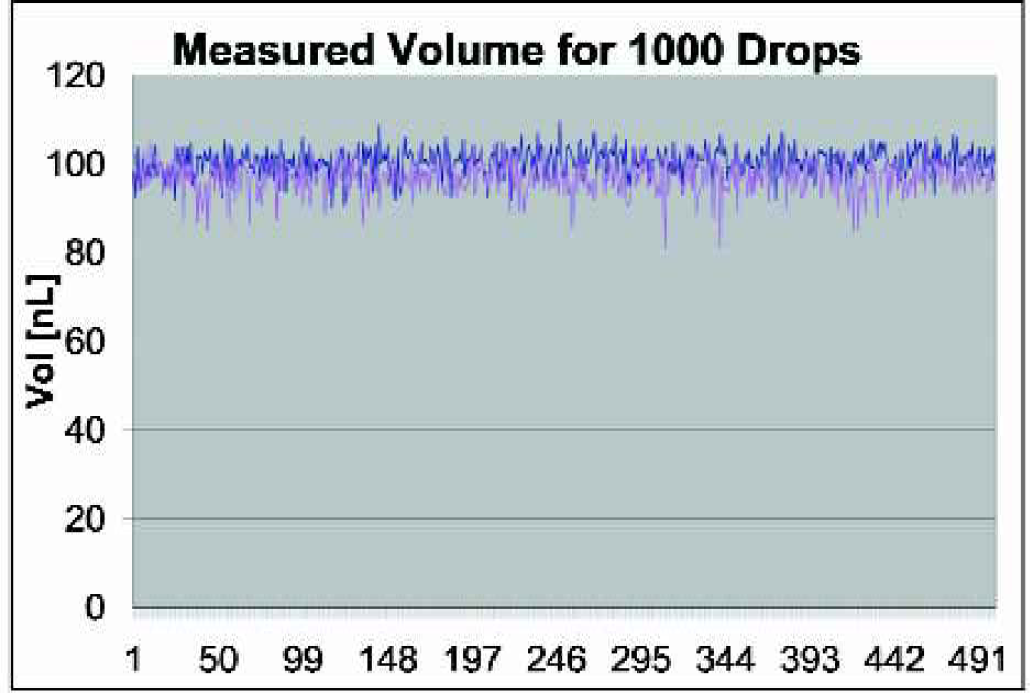
Graph of the volumes of first 500 and the last 500 drops out of a series of 750,000 drops with the requested dispense volume of 100 nL shown by the pink and blue lines.
The technology offers high dispensing speed. These are the typical repetition rates for dispensing drops of different volumes:
60 drops/sec for 100 nL
30 drops/sec for 1μL
3 drops/sec for 10μL
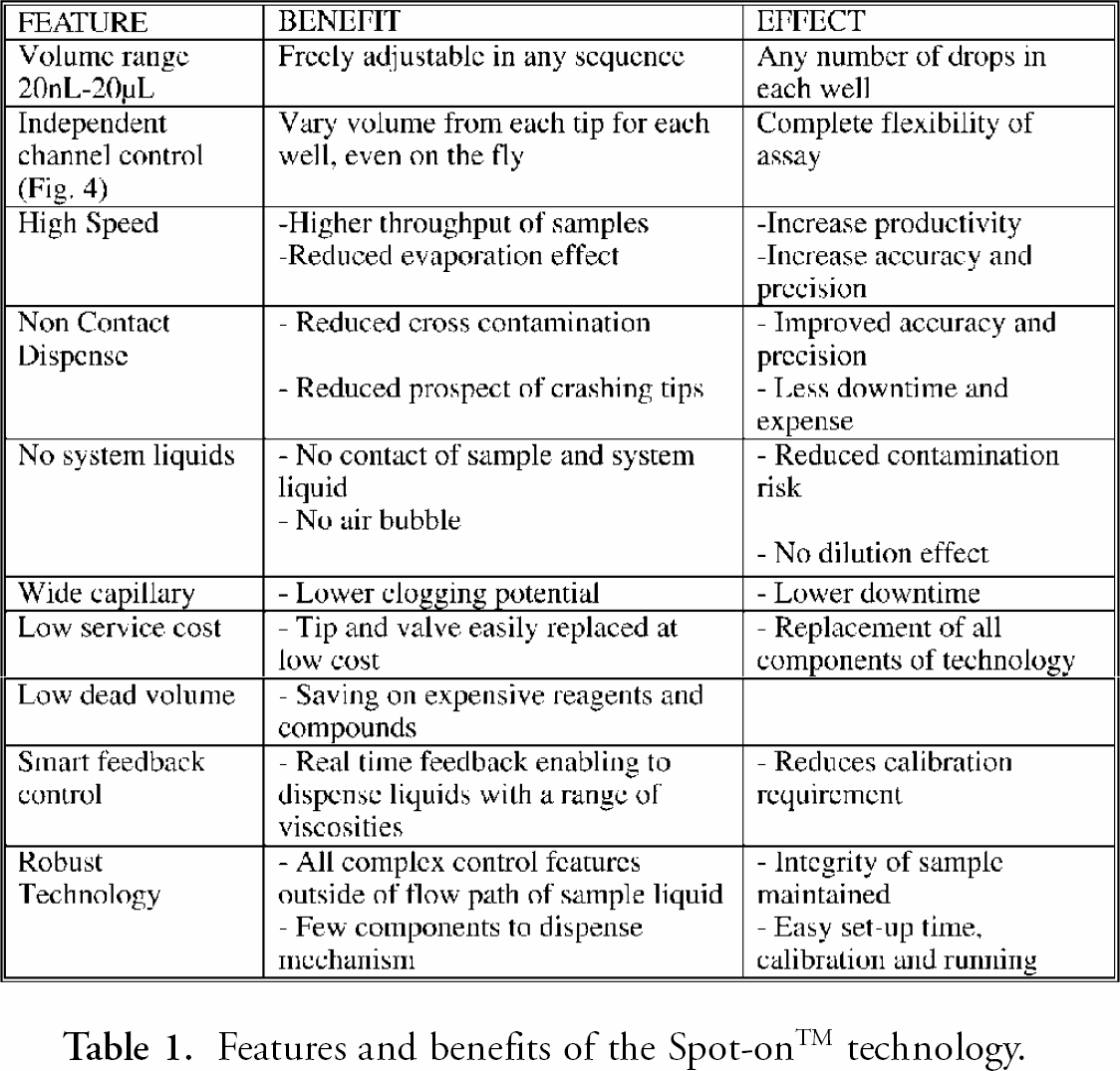
Table 1 on the previous page displays the features discussed thus far regarding spot-on™ technology and the distinct advantages offered by this technology.
Features and benefits of the Spot-on™ technology.
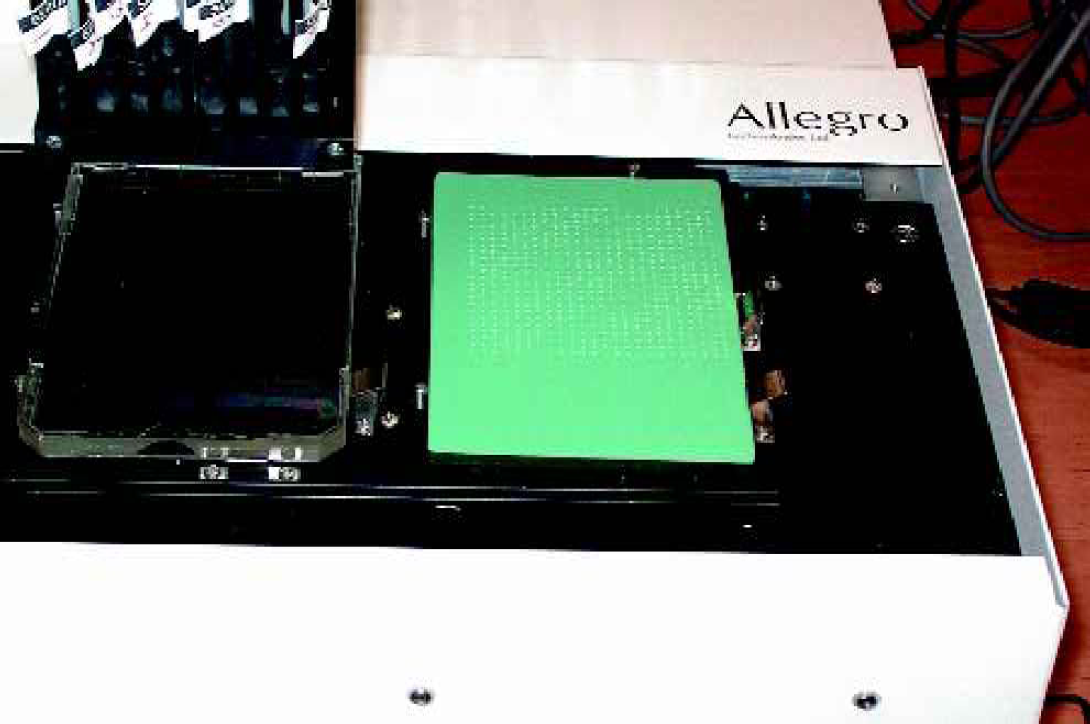
Eight-channel dispenser. The electronic coil assemblies are external to the tip bodies and individually control the volume dispensed from each tip.
POTENTIAL APPLICATIONS OF THE SPOT-ON™ TECHNOLOGY
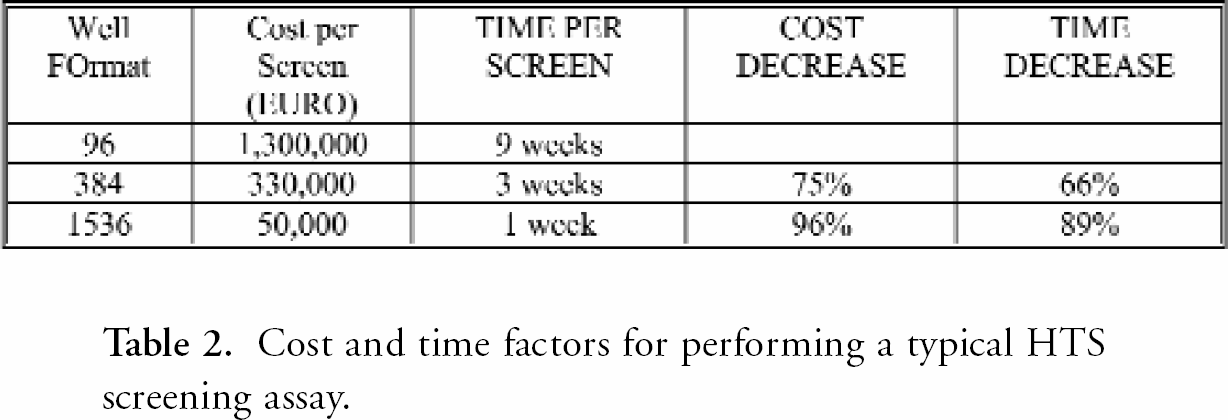
Performing assays in high-density well plates results in saving on reagents. Table 2 shows figures displaying the cost and time savings by moving towards miniaturized assays.
Cost and time factors for performing a typical HTS screening assay.
One point hindering a faster move to high-density assays is the issue of result reliability. Researchers need not only high-density but also high quality assays. The issue of the quality of high density assay to a large extent hinges on the quality of the low volume dispensing.
There is a strong advantage of the spot-on™ technology in that it can handle liquids in the large range of volumes from below some 20 nL to over 20 microlitres. Therefore, the technology could serve as the bridge between the conventional microiltre liquid handling and the emerging nanolitre applications.
As well as performing aspirate-dispense functions required in many applications in drug discovery, the dispenser can also be back filled with liquid as it can be readily connected to a pressurized liquid container. This opens up the avenue for another interesting application, so-called bulk reagent dispensing. In this application all the wells on a plate are filled with the same liquid. At present the most popular technology used for this application is based on a peristaltic pump. The accuracy of such a pump may not be adequate in the low volume range. Spot-on™ Technology could be used for this application.
Another interesting application of the spot-on™ technology comes from the fact that it can handle liquids with a broad range of viscosities. For example, we have tested our technology on liquids with high viscosity such as nondiluted glycerin. Fig. 5 shows results of the dispensing of various volumes of nondiluted glycerin. The glycerin was stained with blue ink to make the shape of the drops more visible. Fig. 6 shows the drops of blood serum with the volume of 18 nL dispensed using the spot-on™ technology.
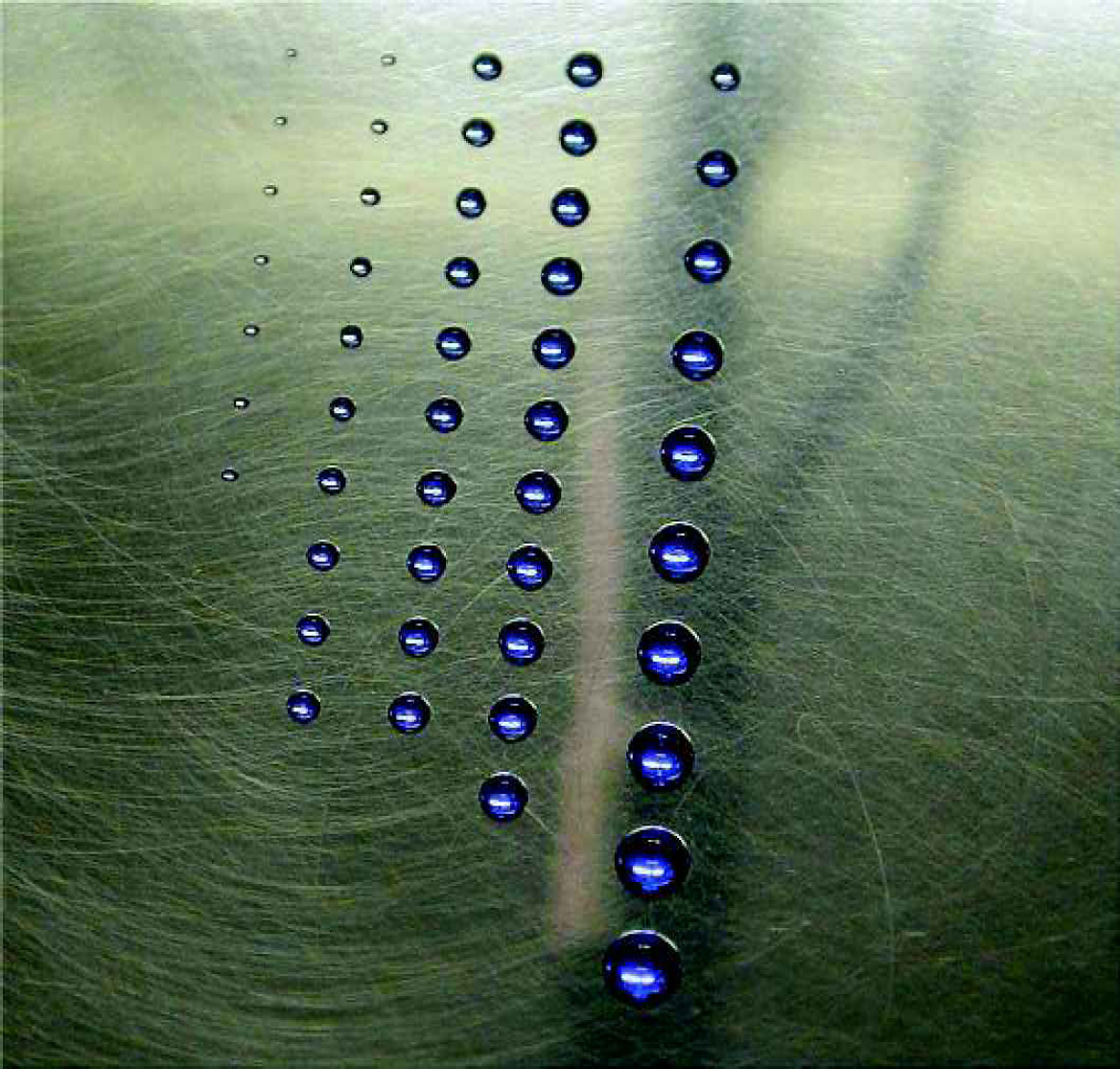
Display of range of drop volumes of highly viscous liquid: undiluted glycerol in the range of 15nL-10μL. Flat surface is used for visual purposes. 48 drops have been dispensed with the incremental volumes starting from 15 nL (left upper corner) and up to 10 μL (right lower corner). The glycerol is stained with blue ink for improved visibility.
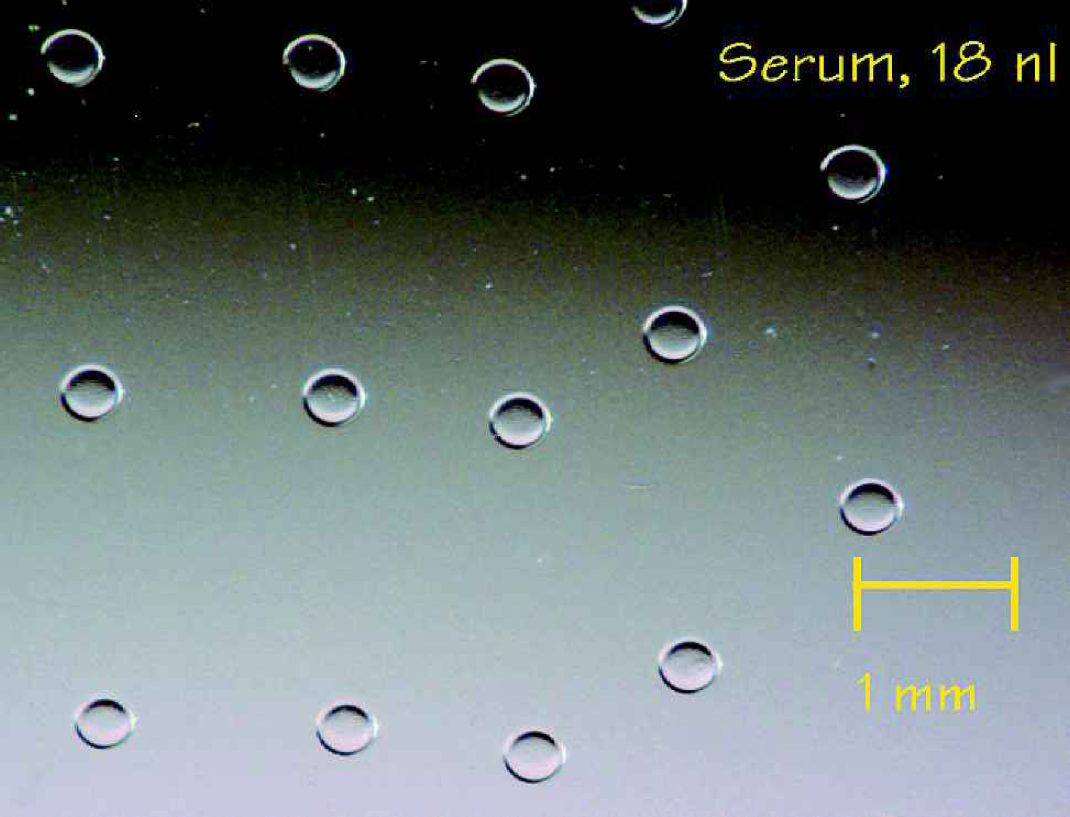
Display of drops of human blood serum with the volume of 18 nL. The scale bar corresponds to 1mm.
The ability of a dispensing technology to handle liquids with a wide range of properties is crucial for another rapidly growing application: proteomics and protein crystallography. For this application, increasing the density of the well plate is not important since the throughput in a typical experiment is still relatively low (this will certainly change as the number of known proteins steadily increases). However, decreasing the volume consumed of the valuable proteins and improving accuracy of the dispensing are crucial factors.
We are currently testing the spot-on™ technology for cell based assay applications. Preliminary results indicate that cell suspensions can be dispensed successfully. In particular we have tested the dispenser with the human blood T-cells. The results indicate that the cells are vibrant after the dispensation and no adverse effects by the dispenser on the cells were found when compared with the control group of T-cells.
The spot-on™ technology is capable of dispensing on the fly. For example, we have achieved the dispensing time of less than 10 seconds for filling 1536 well plate using an 8-channel dispenser utilizing the spot-on™ technology. In this case 50 nL drop was placed in each well of the plate. This opens the possibility for a range of applications where the dispensing speed is essential, perhaps where volatile solvents are required.
It is often difficult to outline all the possible applications of a new enabling technology, the reason being that new applications may be driven by the technology itself. Laboratory scientists often open up new areas of application once a new tool becomes available to them. Spot-on™ technology allows for the flexibility in the control of the separate channels. A typical spot-on™ dispenser can eject any required volume from any of the channels. This means, for example that complex patterns of liquids can be printed on-the-fly such as the one shown in Fig. 7. Time will show what new applications may result from such interesting features of the technology.
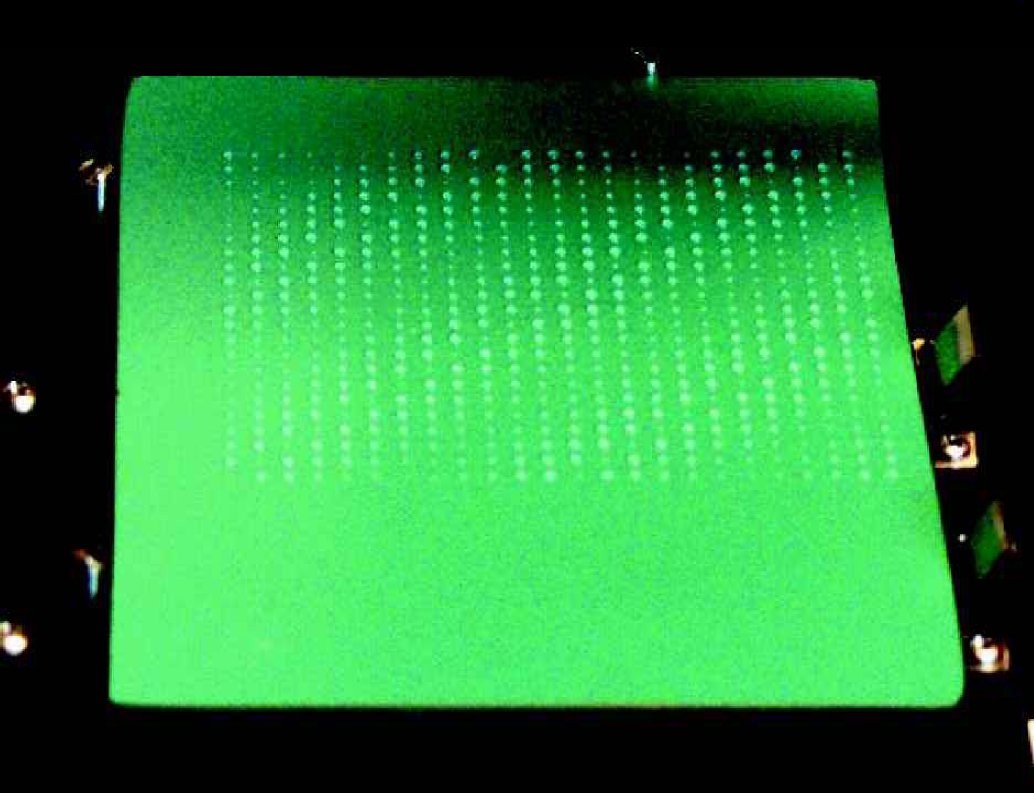
Diagonal pattern of drops with various volumes displays capability of individual control of volume from each tip in single program. Volume range from 50nL- 5μL dispensed in a time of 20 seconds. Flat surface used for visual purposes. To print the pattern all the channels must dispense on the fly. The volumes dispensed must be different for different channels at any given time and they must also change from one line to another.
FUTURE DEVELOPMENTS OF THE SPOT-ON™ TECHNOLOGY
The spot-on™ technology utilizes smart feedback control enabling numerous new beneficial features that can be incorporated into the dispenser. For example, movement of the boss is sensed in real time during the liquid dispensing. As the boss is immersed in the sample liquid, its movement is affected by the properties of the liquid. In simple terms, the force required to move the boss according to the predetermined schedule depends on the properties of the liquid dispensed. Therefore, by monitoring the force acting on the boss, we can establish the properties of the liquid such as its viscosity and its density. We can also detect the moment when the dispenser runs out of the liquid. We have tested these features successfully at the prototype level and the future generation products will incorporate them.
Non-contact dispensing is an important feature used in the manufacture of DNA microarrays. 4 The consistency and reproducibility is the key consideration for the authenticity of the data obtained from such arrays and previous techniques used in the past to manufacture microarrays have been a source of such inconsistencies. Future developments of spot-on™ technology to lower nanolitre volumes may overcome many of these issues and provide a solid foundation for accurate and reproducible results. In addition to DNA microarrays the advent of protein arraying also poses potential problems to existing arraying instruments in terms of accurately dispensing these liquids. Spot-on™ technology advancements should yield a highly accurate dispense of protein solutions for such arrays.