




Abstract
The accurate transfer of biological reagents represents a fundamental step in the drug screening process, and the elimination of carryover is critical for the generation of accurate measurements of biological activity. The introduction of automated liquid robotics into screening laboratories has transformed the drug screening process, enabling accurate and reproducible transfer of liquids to become a high-throughput activity, but has also introduced a new challenge for drug discoverers: to establish screening workflows that limit analyte carryover for the generation of high-quality screening data. The widespread use of pipetting tips on automated liquid handlers often necessitates the use of optimized wash protocols for removing contaminants and frequently requires the use and disposal of large quantities of organic solvents. Furthermore, many chemical and biological reagents are recalcitrant to removal from pipetting tips by treatment with organic solvents. The use of cold atmospheric plasma technology provides an alternative approach for removal of contaminants and offers many advantages over traditional decontamination protocols commonly used during biological screening. This report describes the evaluation of a cold plasma tip-cleaning system for reducing carryover in a range of biological screening assays requiring the transfer of low molecular weight compound, nucleic acid, and bacterial liquid transfers. The validation of this technology for biological screening assays is presented, and the impact of this technology for screening workflows is discussed.
Introduction
The development of automated liquid-handling systems has enabled scientists to routinely perform precise and programmable bulk liquid transfers and serial dilution of experimental samples. Consequently, robotic systems have found widespread utility in pharmaceutical, biotechnology, forensic science, environmental science, and clinical diagnostic laboratories.1–3 Within the pharmaceutical industry, the handling and transfer of chemical compounds represents a critical step within the drug screening workflow. The precise dispensing and transfer of large numbers of compounds with diverse physicochemical properties represents an important challenge for drug discoverers. A key issue to overcome during implementation of automated liquid-handling procedures is the potential loss or carryover of compounds or reagents during liquid transfers. 4 The term carryover is commonly used to describe a process by which materials are carried into a reaction mixture to which they do not belong. 5 The failure to adequately address this issue can result in increased false-positive hit rates during high-throughput screening and inaccurate determinations of compound potency following serial dilution, particularly for compounds with a high logD or low solubility.
A variety of automated liquid-handling systems are commonly used for compound preparation and dispensing, including systems that employ acoustic dispensing, fixed tips, or disposable tips. Noncontact acoustic droplet dispensers (e.g., Labcyte Echo; Labcyte, Sunnyvale, CA) offer rapid plate-to-plate transfer of nanoliter-sized droplets for use in preparing compound titrations and for performing low-volume compound additions. 6 Although this technology provides a high degree of reproducibility, the high initial capital costs, a requirement for specific plate types and a potential for insufficient compound mixing, prevent universal adoption of this technology. Other commonly used liquid-handling automation includes systems with fixed tips such as pin tool (e.g., Biomek FX; Beckman Coulter, Brea, CA) or capillary manifold systems (e.g., CyBio Cybiwell Vario; CyBio, Jena, Germany). Fixed tip systems have a liability for carryover and require the careful implementation of adequate wash protocols to minimize such risks. 7 In contrast, disposable tips are widely used as they offer the convenience of rapid and automated replacement of tips between sample transfers, thus eliminating the risk of carryover; however, the replacement of tips following each liquid transfer step during high-throughput screening, hit confirmation, or hit-to-lead optimization is often economically unfeasible. Consequently, screening workflows routinely incorporate wash steps to enable the reuse of disposable tips while minimizing carryover of analyte. For low molecular weight compounds, this typically involves cleaning tips with a mixture of organic solvents (e.g., DMSO or ethanol) followed by a physiologically buffered solution (e.g., phosphate-buffered saline [PBS]) or water. The efficiency of cleaning with solvents is highly dependent on the nature of the contaminant and is often ineffective for highly lipophilic compounds. Furthermore, the use of organic solvents generates considerable waste and contributes an additional environmental cost to the screening process.
In recent years, the development of instrumentation for using cold atmospheric plasma has provided an attractive alternative approach that may allow screening scientists to establish tip-washing protocols that enable the reuse of tips without the need for extensive organic solvent wash steps while limiting carryover. The TipCharger is a plasma-generating device that can be integrated into automated liquid handlers and is suitable for cleaning both disposable tips and pin-tool systems. The device is based on plasma-generating technology currently established for use in a variety of industries ranging from the aerospace, automotive, metallurgy, and packaging industries,8,9 mainly to clean materials where solvents cannot be used. Plasma can be defined as partially or wholly ionized gas with a roughly equal number of positively and negatively charged particles, often referred to as the “fourth state of matter” due to the similarities in behavior with liquids and gasses. Naturally occurring plasma discharges can be observed in atmospheric lightening strikes, whereas artificially generated plasma is generated in fluorescent lights and neon signs. When gas molecules travel through a strong electric field, gas atoms are ionized, resulting in very reactive free electrons producing unstable, highly reactive species, including atoms, molecules, ions, electrons, free radicals, highly reactive metastable atomic species, and a characteristic glow or light associated with plasma. Traditionally, the process for artificially generating plasma is carried out under low pressure or vacuum. With the advent of efficient dielectric materials, such as ceramic-coated electrodes, an insulating layer is provided that allows a stable electrical discharge to occur and the generation of plasma at atmospheric pressure in the absence of inert gasses or a vacuum. By continually switching the polarity of the electrodes, the electrons constantly move at high velocity between the electrodes, resulting in the generation of an electron avalanche. Any air drawn between the electrodes will result in the fracturing and/or activation of the atmospheric gasses by these electrons, generating a “cold” or “nonthermal” plasma, resulting in the ionization or activation of atmospheric gasses and generation of metastable atomic species. These metastable atomic species are highly reactive due to the displacement of electrons to outer shells within the atoms. The ionization of atmospheric gasses results in the generation of highly reactive species such as –OH, Ox, COx, NOx, Nx, and Hx. Importantly, these species are capable of decomposing organic matter by way of electrophilic and nucleophilic reactions and have the potential to be effective at removing organic contaminants from plastic materials.
In this article, we describe the evaluation of a TipCharger cold plasma cleaning system for use with disposable tip liquid-handling systems and present key data from case studies. In these studies, cold plasma tip cleaning was implemented into screening workflows in a range of biological assays requiring compound, nucleic acid, and bacterial liquid transfers.
Materials and Methods
Calcium Mobilization Assay
Calcium mobilization was assayed in ChemiScreen EDG2 cells (Millipore, Billerica, MA) using a FLIPR Calcium 4 Assay kit (Molecular Devices, Sunnyvale, CA). Cells were harvested using trypsin/EDTA and 1.2 × 10⁴ cells/well were seeded into black 384-well clear-bottom plates (Corning Life Sciences, Lowell, MA) and incubated overnight at 37 °C, 5%CO2. On the day of the experiment, the media were replaced with 20 µL of calcium loading buffer and incubated for a further 45 min. Agonist EC50 determinations were made by preparing a serial dilution of 18:1 lysophosphatidic acid (Avanti, Alabaster, AL) in 100% DMSO. Each serial dilution step was performed with fresh tips. An intermediate dilution was prepared in Hank’s buffered salt solution (HBSS) buffer containing 20 mM HEPES and 0.1% (v/v) bovine serum albumin (BSA), using fresh tips. Diluted agonist was then directly added online to the cell plate using a Hamamatsu FDSS7000 (Hamamatsu, Bridgewater, NJ), or secondary intermediate plates were prepared using tips subjected to different cleaning procedures ( Fig. 1 ) and the ligand was subsequently added to the cell plate using fresh tips. All changes in intracellular fluorescence were monitored using an FDSS7000. Drug concentration-response curves were fitted to data by nonlinear regression with variable slope using GraphPad Prism (version 5.0; GraphPad Software, La Jolla, CA), and results are expressed as the mean ± standard error of the mean from three separate experiments.
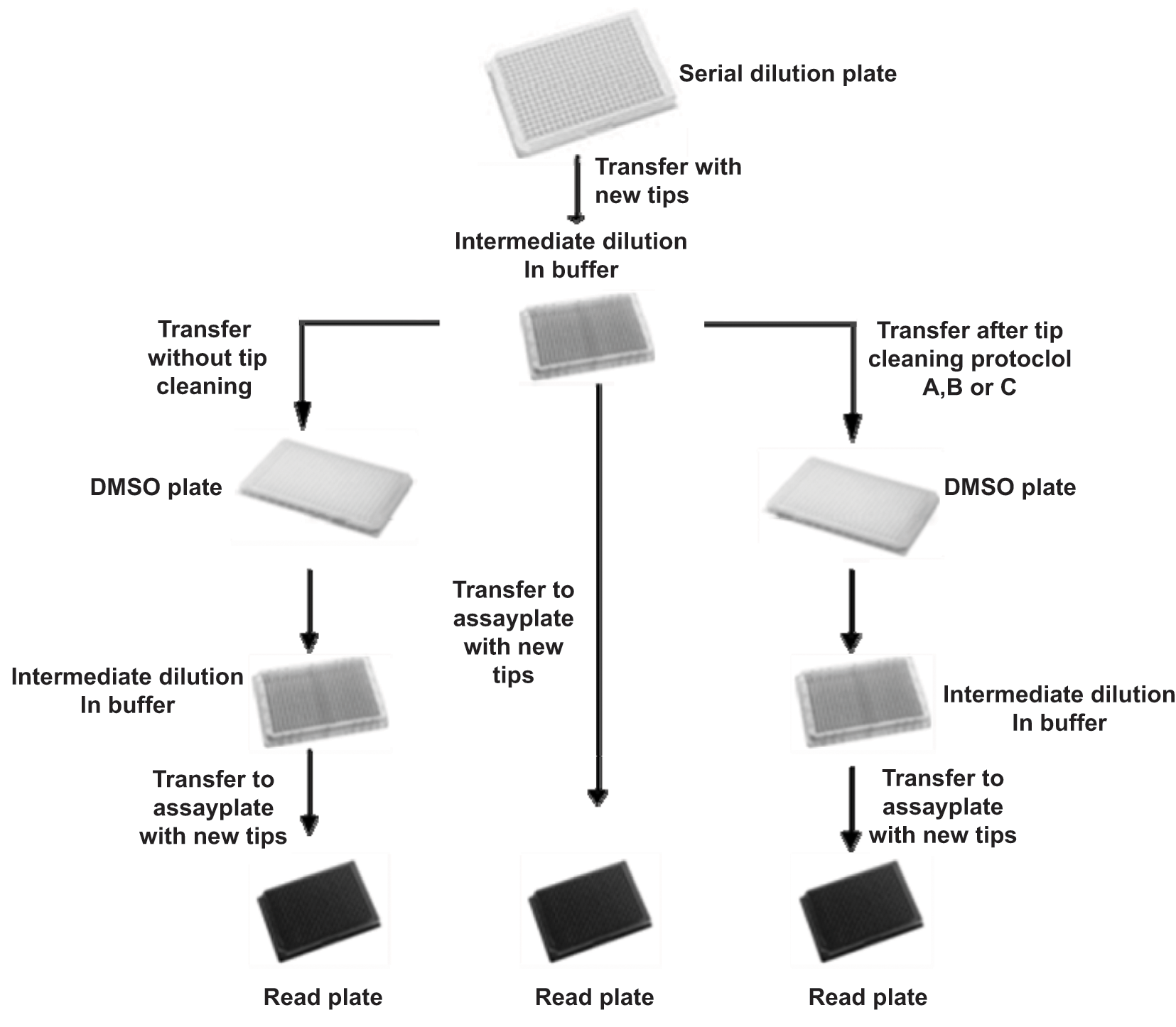
Tip-cleaning workflow. Reagents were serially diluted and transferred to an intermediate dilution plate with fresh Biomek FX P30 polypropylene tips for direct use in an assay or for further intermediate dilution with different tip-cleaning protocols: A, water wash followed by solvent wash, with or without plasma clean; B, solvent wash, with or without plasma clean; and C, DMSO wash followed by solvent wash, with or without plasma clean.
GloSensor cAMP Assay
Analysis of cAMP accumulation was performed using HEK293 cells coexpressing the prostacyclin (PTGIR) receptor (NM_000960) and the GloSensor cAMP biosensor (Promega, Southampton, UK). On the day of the experiment, cells were thawed in a 37 °C water bath and resuspended in 10 mL of CO2-independent medium (Invitrogen, Paisley, UK) containing 10% (v/v) fetal bovine serum (FBS) and 5 µM rolipram. Four percent (v/v) GloSensor reagent was added to the cell suspension immediately prior to seeding the cells in black 384-well, clear-bottomed plates (Corning Life Sciences) at a density of 2 × 10⁴ cells/well, after which the plates were incubated at room temperature for 2 h in the dark. Agonist EC50 determinations were made by preparing a serial dilution of iloprost (Tocris Bioscience, Bristol, UK) in 100% DMSO, with each serial dilution step performed using fresh tips. An intermediate dilution was prepared in CO2-independent medium containing 10% (v/v) FBS, using fresh tips. Diluted agonist was then either directly added online to the cell plate using a Hamamatsu FDSS7000 or secondary intermediate plates were prepared using tips subjected to different cleaning procedures ( Fig. 1 ) and the ligand was subsequently added to the cell plate using fresh tips. All changes in intracellular luminescence were monitored using an FDSS7000. Cells were stimulated with diluted agonist for 15 min and increases in luminescence monitored on a Hamamatsu FDSS7000. For each individual experiment, data have been normalized to the amount of cAMP accumulation detected after addition of assay buffer alone. Graphs were fitted to data by nonlinear regression with variable slope using GraphPad Prism (version 5.0; GraphPad Software), and results are expressed as the mean ± standard error of the mean from three separate experiments.
Bacterial Decontamination Assay
A suspension of DH5alpha Escherichia coli was grown overnight in LB broth at 37 °C in a shaking incubator. Immediately prior to the experiment, the bacterial culture was diluted 1:50 into sterile HBSS buffer. Possible precontamination of tips with bacteria was determined by transferring 5 µL of sterile water to a 10-cm Petri dish containing protein-rich agar media using fresh tips. A baseline of maximal bacterial carryover was established by transferring 5 µL of bacterial broth to an agar plate and immediately using the same tips to transfer 5 µL of sterile water to a new agar plate. New tips were then contaminated in the same manner, and the tips were cleaned using sterile water alone or cleaned with sterile water followed by a cold plasma clean, after which tips were used to transfer 5 µL of sterile water to a fresh agar plate. To determine bacterial carryover, agar plates were subsequently incubated overnight at 37 °C.
Quantitative PCR
A pcDNA3.1 mammalian expression plasmid containing the human EDG2 cDNA (NM_001401) was serially diluted in DNAse-free water using a Biomek FX (Beckman Coulter). Each serial dilution step was performed with fresh tips. The plasmid DNA was then diluted 1:100 into DNAse-free water in an intermediate plate using fresh tips (transfer tips) and subsequently transferred to a quantitative PCR plate (Applied Biosystems, Foster City, CA) using fresh tips or reusing the transfer tips with or without inclusion of wash steps. cDNA was quantified by TaqMan using the Hs00173500_m1 EDG2 primers/probe set and Fast Universal PCR Mastermix using a 7900HT Fast Real-time PCR system (Applied Biosystems).
Tip-Cleaning Procedure
To determine the efficacy of different tip-cleaning protocols for reducing carryover, we established and integrated a number of tip-cleaning protocols into an automated screening workflow. A baseline was established with each biological assay by preparing assay plates with the use of fresh tips at each liquid transfer step. The efficacy of tip-cleaning protocols was then determined by introducing an intermediate transfer step with or without the incorporation of one of three tip-cleaning protocols: (A) water wash followed by solvent wash, with or without plasma clean; (B) solvent wash, with or without plasma clean; and (C) DMSO wash followed by solvent wash, with or without plasma clean. In each case, the solvent used consisted of 44% ethanol, 44% methanol, and 12% water ( Fig. 1 ). The TipCharger tip-cleaning procedures were carried out using a plasma voltage of 35.9 and a vacuum pump air speed of 12.5L/min.
Results and Discussion
To investigate the utility of cold plasma to decontaminate disposable tips, we investigated the effectiveness of cold plasma at removing a range of chemical and biological reagents. We evaluated reagents that are notoriously problematic with respect to carryover, including a phospholipid, a prostanoid receptor ligand, nucleic acid, and bacteria.
Decontamination of Low Molecular Weight Ligands
An evaluation of different decontamination protocols for lysophosphatidic acid (LPA) and iloprost using second-messenger assays as a measure of receptor activation demonstrated that without tip washes, both ligands were strongly retained on the disposable tips, resulting in cross-contamination ( Fig. 2 ). This resulted in sufficient carryover of both ligands to reproduce full concentration-response curves with approximately 10- to 100-fold shifts in agonist potency compared with using new tips for each liquid transfer. A reduction in carryover was observed for both ligands following water washes or a combination of water and solvent washes, but marked contamination was still evident at the highest ligand concentration, resulting in a false-positive signal greater than 50% of the maximal response. Importantly, a reduction in tip contamination to near background levels was only achieved by introducing a cold plasma cleaning cycle after the main water/solvent washing regimens.
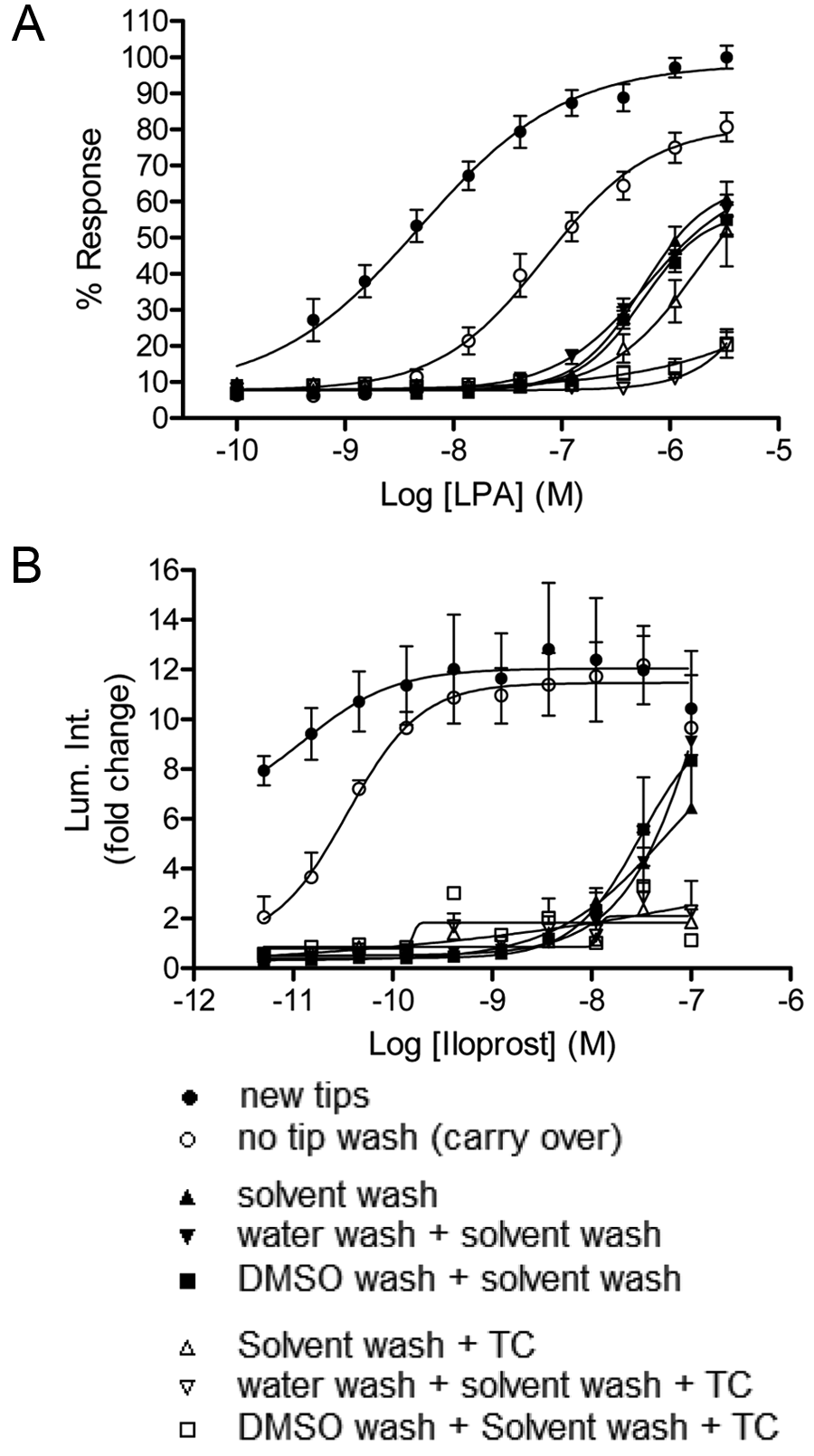
Evaluation of tip-cleaning protocols for eliminating low molecular weight compound contamination. The effectiveness of different cleaning methods in preventing carryover of lysophosphatidic acid (LPA) and iloprost was evaluated using Ca2+ mobilization (
Decontamination of Nucleic Acid
The ability of the cold plasma to remove DNA contamination from disposable tips was determined by generating a serial dilution of plasmid DNA, which was subsequently used as a template for quantitative PCR ( Fig. 3 ). The effectiveness of the cold plasma in removing the nucleic acid from the tips was demonstrated by the complete elimination of nucleic acid carryover following tip washing in solvent followed by a tip-cleaning cycle using cold plasma. Surprisingly, the addition of an extra water wash step preceding the solvent and plasma clean appeared to reduce the effectiveness of the cold plasma at removing nucleic acid at the highest concentrations tested.
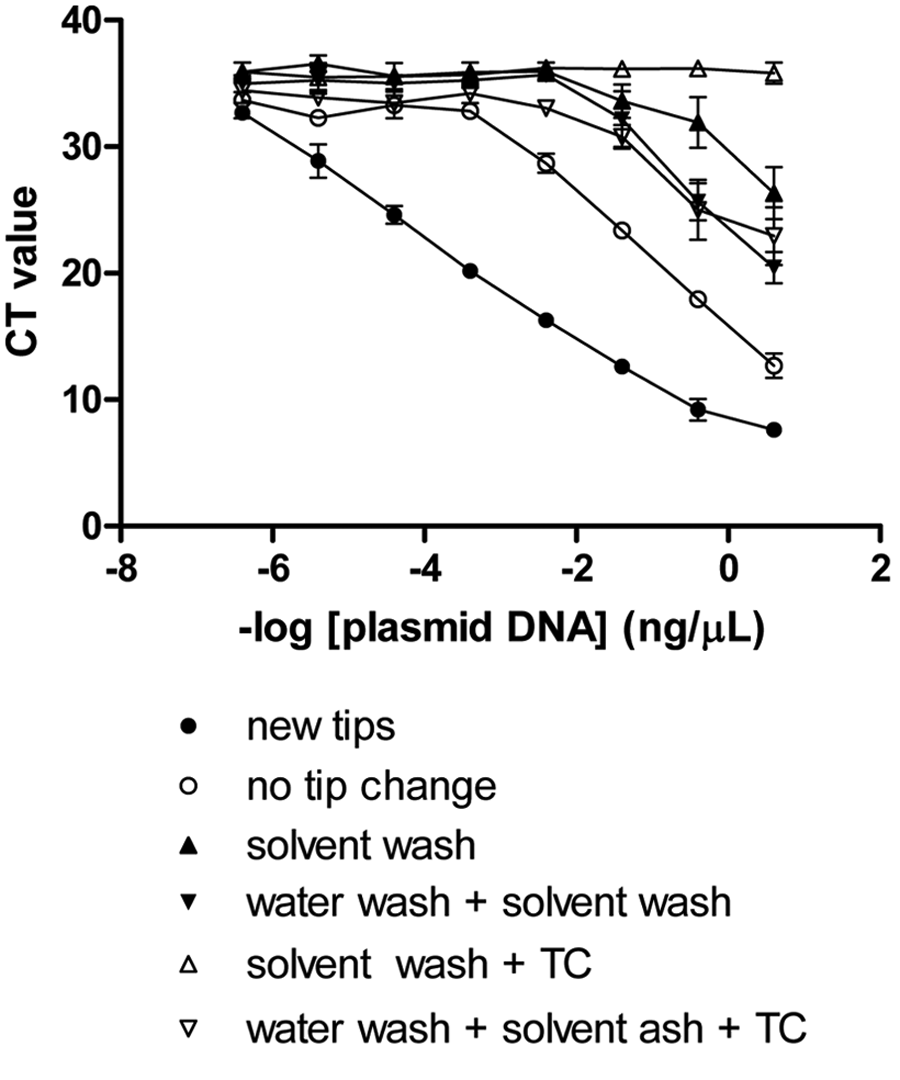
Evaluation of tip-cleaning protocols for eliminating nucleic acid carryover. The effectiveness of different cleaning protocols in preventing contamination of plasmid DNA was determined by quantitative PCR. The baseline for carryover was established using new tips during each step of the serial dilution. For all other assays, tip-cleaning regimens were performed as described in Figure 1 . Data points are mean (±SEM) of three independent experiments. TC, TipCharger; CT, cycle threshold.
Decontamination of Bacteria
The effectiveness of cold plasma in removing bacterial contamination from tips was determined by transferring sterile water to a series of agar plates following tip contamination with E. coli. First, the possibility of any bacterial contamination from the use of the nonsterile tips was evaluated by transferring sterile water to an agar plate using new tips. No bacterial contamination of new tips was observed (data not shown). Maximum contamination was determined by transferring 5 µL of bacterial broth directly to agar plates, which resulted in substantial colony formation ( Fig. 4A ). Bacterial carryover was then assessed by retaining the previously used tips and transferring 5 µL of sterile water to a second agar plate, which resulted in reduced yet significant colony formation ( Fig. 4B ). Further bacterial contamination was removed by applying a tip wash in water ( Fig. 4C ); however, the complete removal of bacterial contamination from the tips was only achieved with the addition of a cold plasma cleaning cycle ( Fig. 4D ).
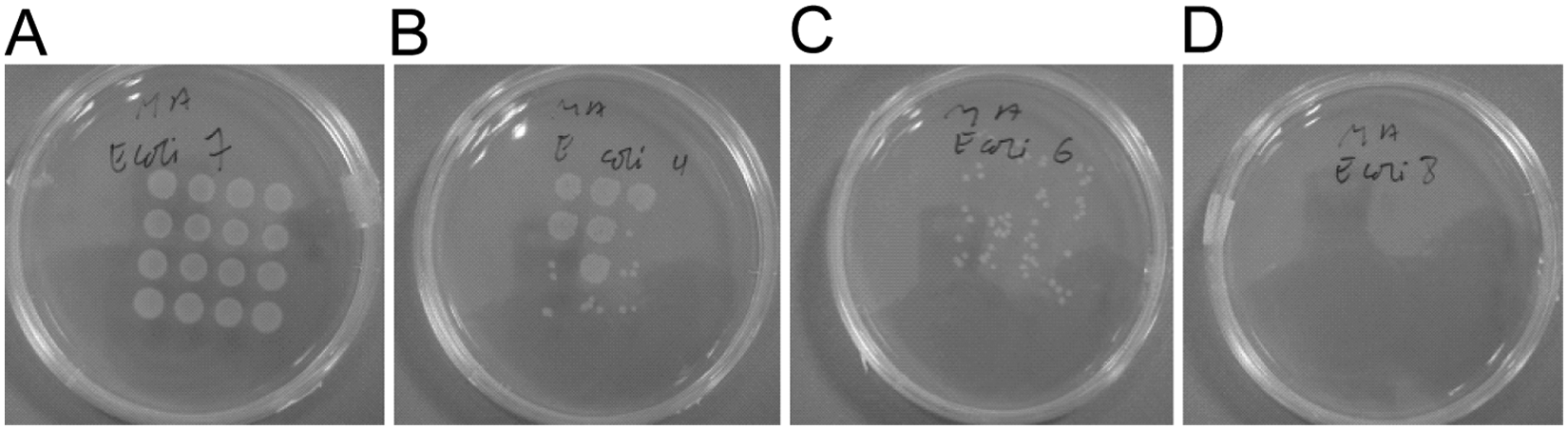
Evaluation of tip-cleaning protocols for eliminating bacterial contamination. The effectiveness of different cleaning protocols in preventing carryover of Escherichia coli was determined by visualizing the extent of bacterial growth on agar plates following bacterial inoculations. Maximal carryover was established by transferring 5 µL/tip of bacterial broth to a Petri dish using 12 Biomek FX P30 tips (
Tip Integrity Test
The utility of the TipCharger cold plasma device depends on its ability to repeatedly clean tips without detrimentally affecting the accuracy of the liquid transfer. To assess the reusability of tips cleaned in the TipCharger device, we investigated the performance of polypropylene tips that had undergone an intensive cleaning protocol consisting of 50 cold plasma and solvent cleaning cycles. Close inspection of the tips following this cleaning procedure showed a progressive hazing of the tip apex (
The incorporation of cold plasma tip-cleaning protocols into typical screening workflows has been demonstrated to be very effective at removing a range of biological and chemical contaminants from disposable tips. Contamination of particularly adherent ligands such as LPA and iloprost, which could not be removed from the tips by washing the tips in DMSO, water, or a combination of water and solvent washes, was removed almost completely by subsequently cleaning the tips in cold plasma. The cold plasma was also very effective in removing biological contamination from the tips, such as bacterial and nucleic acid contamination.
In addition to the reduction in carryover and associated improvement in data quality, there are many other benefits apparent from the introduction of cold plasma cleaning protocols into screening workflows. The savings in plastic consumables is an obvious cost benefit associated with reusing disposable tips; indeed, the tip integrity evaluation within this study indicates a potential for a 98% reduction in costs. DMSO consumption for tip washing during high-throughput screening has a considerable impact on the overall consumables budget, and optimized wash protocols are often implemented to minimize this cost. 10 The integration of standard tip-washing protocols typically demands the use of large quantities of solvents in recirculating water baths, which adds an additional cost, both at the point of purchase and for disposal of the solvent waste. This is particularly true for fixed tip systems, which by their very nature must have a tip-cleaning cycle to prevent carryover of contaminants. Using cold plasma to clean disposable tips for reuse overcomes many of these challenges as only small noncirculating solvent reservoirs are required to remove the bulk of the contamination from the tips prior to cold plasma treatment. The incorporation of cold plasma cleaning devices on liquid-handling systems within the laboratory environment may also offer other logistical benefits and efficiency savings, for example, by reducing the requirement for consumable storage capacity within the laboratory, reducing manual handling and experimental setup time between runs, and reducing consumables required to be preloaded onto automation platforms, which may lead to an enhanced screening capacity. The length of a cold plasma cleaning cycle can be optimized depending on the nature of the contaminant, with cleaning cycles typically taking 30 to 120 s per tip box. Without the need for a large initial capital investment or continued use of specialized consumables, the overall cost benefit of cold plasma cleaning technology compares very favorably with acoustic dispensers ( Table 1 ).
Cost Comparison of Liquid Dispensing Technologies.

The studies described in this report have used a TipCharger device installed on a Biomek FX. The physical dimensions of the cold plasma device conform to the Society for Biomolecular Sciences (SBS) footprint standards for robotic compatibility (ANSI/SBS 1-2004) and can be readily integrated into most common liquid-handling platforms, including the Tecan, Packard MiniTrak, and the Agilent Bravo systems. As the device is passive when in operation, there are no associated integration costs, and in our experience, minimal maintenance is required to ensure continual performance. However, one limitation to using cold plasma to clean fixed or disposable tips is the unsuitability of this technology for cleaning tips impregnated with graphite as the resulting electrical conductance along the tip presents a potential fire risk.
In conclusion, we have demonstrated that cold plasma can be used effectively to remove a variety of chemical and biological contaminates from disposable tips on an automated liquid-handling platform. We have successfully used this technology to remove low molecular weight compounds, lipids, nucleic acid, and bacterial contamination from disposable tips. Within a screening laboratory, the integration of cold plasma devices offers a potential for improved data quality, financial savings, and a reduction in the laboratory’s environmental footprint.
Footnotes
Declaration of Conflicting Interests
The authors declared no potential conflicts of interest with respect to the research, authorship, and/or publication of this article.
Funding
The authors received no financial support for the research, authorship, and/or publication of this article.

References
Supplementary Material
Please find the following supplemental material available below.
For Open Access articles published under a Creative Commons License, all supplemental material carries the same license as the article it is associated with.
For non-Open Access articles published, all supplemental material carries a non-exclusive license, and permission requests for re-use of supplemental material or any part of supplemental material shall be sent directly to the copyright owner as specified in the copyright notice associated with the article.
