






Abstract
Drug candidates with poor physicochemical properties (such as solubility) tend to have low bioavailability. For example, basic compounds might dissolve under acidic stomach conditions but then precipitate because of a change in pH under the neutral conditions found in the intestines. Therefore, it is essential to prevent precipitation and maintain high drug concentrations in the intestines to improve in vivo plasma exposure. Substances that act as antiprecipitants have been reported as well as bio-relevant media that mimic conditions in the stomach and small intestine. This report describes the development of an antiprecipitant screening system for basic model compounds using 96-well plates and bio-relevant media. Fourteen potential antiprecipitants were screened on one plate, which resulted in the identification of four substances that maintained a supersaturation state. To confirm these results, supersaturation studies were conducted according to the United States Pharmacopeia (USP) II dissolution method, and the results of the newly developed system correlated well with those of the USP II method. This novel system is useful for small-scale formulation screening during early preclinical development. This 96-well plate system will be available for the easily automated system in comparison with the conventional USP II system.
Introduction
Most drug candidates are identified from combinatorial and library approaches by methods such as identifying compounds that show high activity toward the target protein. However, the compounds identified can have undesirable physicochemical properties such as high hydrophobicity and poor solubility. Physicochemical properties (such as solubility, hydrophobicity, and permeability) are essential features for absorption of oral drug candidates. 1,2 Drug candidates that have poor solubility and poor permeability tend to possess low oral bioavailability that results in low plasma concentrations. 3,4 For example, basic compounds might dissolve under acidic stomach conditions but then precipitate because of a change in pH under the neutral conditions of the intestines. To resolve these solubility issues, several formulations have been reported that prevent the precipitation of poorly soluble drugs and maintain the supersaturation state to improve oral bioavailability. 5 –8
Understanding the supersaturation state of basic compounds is important in the identification of drug candidates because ca. 75% of drugs have basic functional groups. 9 In general, the solubility of basic compounds is high at acidic pH values (stomach conditions) and low at neutral pH values (intestinal conditions), because they can become uncharged under neutral conditions. Therefore, a basic drug may dissolve completely in the stomach but then precipitate in the intestine because of rapid pH increase or extensive dilution of excipients. It is important to prevent precipitation and maintain the supersaturation state of basic compounds in neutral media, which improve the absorption of the basic drugs with poor solubility.
Bio-relevant media (simulated gastric fluid [SGF] and fasted-state simulated small intestinal fluid [FaSSIF]) have been proposed as fluids for estimating drug absorption in vitro. 10 The composition of bio-relevant media mimics physiological conditions in vivo; these media are widely used for drug solubility studies related to exposure enhancement. 11,12 The studies are usually conducted using a conventional United States Pharmacopeia (USP) II dissolution system, 13 –15 which requires hundreds of milligrams of active pharmaceutical ingredient. Thus, during the early stage of drug development, small-scale dissolution systems that mimic physiological condtions in vivo must be developed.
Systems using 96-well plates are widely used for screening assays in the drug discovery stage because they require a small amount of active pharmaceutical ingredient and automated high-throughput systems are available. A high-throughput log D and solubility screening system using 96-well plates have been reported. 16 –18 An antiprecipitant screening method for neutral compound using 96-well plates also has been reported. 19 Based on these technologies, an antiprecipitant screening system for basic model compounds using 96-well plates and bio-relevant media was developed and is described here.
The objective of this study was to develop a small-scale (milligram drug level) system for 14 types of antiprecipitants to determine which antiprecipitant could maintain supersaturation of basic model compounds in bio-relevant media (SGF and FaSSIF). Fourteen potential antiprecipitants were screened on one plate, which resulted in the identification of four substances that maintained a supersaturation state. To confirm these results, supersaturation studies also were conducted on the conventional scale of USP II dissolution method. The results from the newly developed system correlated well with those of the USP II method. As a result, a well-validated 96-well plate antiprecipitant screening system for basic model compounds using bio-relevant media (SGF and FaSSIF) was developed. This novel system is useful for small-scale formulation screening in the early preclinical stage of drug development. This 96-well plate system will be available for the easily automated system in comparison with the conventional USP II system.
Experimental
Chemicals (Materials and Reagents)
Basic model compound (compound X free base crystalline material) was obtained from Merck Process Research (Rahway, NJ). Hydroxypropyl methylcellulose-acetate succinate (HPMC-AS) was purchased from Shinetsu (Tokyo, Japan). Vitamin E d-α-tocopheryl polyethylene glycol 1000 succinate (TPGS) was purchased from Eastman (Kingsport, TN). Captisol was purchased from CyDex (Terrace Lenexa, KS). Hydroxypropyl-β-cyclodextrin (HP-β-CD), sodium lauryl sulfate (SLS), Polyoxyl 40 monostearate, and N-methylpyrrolidone (NMP) were purchased from Wako (Osaka, Japan). Cremophor was purchased from Nacalai (Kyoto, Japan). PEG 400 was purchased from Maruishi (Osaka, Japan). Tween 80 was purchased from ICN Biomedicals (Santa Ana, CA). Poloxamer 407 was purchased from BASF Japan (Tokyo, Japan). Gelucire 50/13 was purchased from Gattefosse (Saint-Priest, France). HPC SL (hydroxypropyl ethers, SL grade) was purchased from Nippon soda (Tokyo, Japan). Eudragit S100 was purchased from Degussa Japan (Tokyo, Japan). Sodium taurocholate was purchased from Spectrum (Northamptonshire, UK). Lecithin was purchased from Alfa Aesar Japan (Tokyo, Japan). Potassium chloride (KCl), sodium hydroxide (NaOH), sodium chloride (NaCl), hydrochloric acid (HCl), and HPLC-grade phosphoric acid were purchased from Wako (Osaka, Japan). Water was purified using a Milli-Q Gradient A 10 system (Millipore, Billerica, MA). HPLC-grade acetonitrile (MeCN) was purchased from Junsei Chemical (Tokyo, Japan).
Preparation of SGF and FaSSIF
SGF (pH 1.8: 34.2 mM NaCl and 17.5 mM HCl in water) was prepared as follows: 2.0 g of NaCl, 1.4 mL of concentrated HCl, and water were mixed in a volumetric flask (1000 mL). FaSSIF (pH 6.5: 3 mM sodium taurocholate, 0.75 mM lecithin, 28.7 mM KH2PO4, and 103.4 mM KCl in water) was prepared as follows: 1.61 g of sodium taurocholate, 0.56 g of lecithin, 3.9 g of KH2PO4, 7.7 g of KCl, and water were mixed in a volumetric flask (1000 mL) and adjusted to pH 6.5 by titration of NaOH using a Mettler Toledo SevenMulti pH meter (Mettler Toledo, Schwerzenbach, Switzerland).
Preparation of 0.4 w/w% Antiprecipitant in Water
As antiprecipitants, 14 types of polymers, organic solvents, and surfactants were prepared (HPMC-AS, vitamin E TPGS, Captisol, HP-β-CD, SLS, Cremophor EL, PEG 400, Tween 80, Poloxamer 407, Gelucire 50/13, Polyoxyl 40 monostearate, NMP, HPC SL, and Eudragit S100). An amount of 2.0 g antiprecipitant and 50 mL water were mixed at 40 °C in a water bath to produce 4.0 w/w% antiprecipitant. An amount of 2 mL of 4.0 w/w% antiprecipitant was diluted by 18 mL of water, and 0.4 w/w% antiprecipitant was obtained.
Equipment and Experimental Conditions of HPLC/UV
HPLC/UV analyses were performed using a 1100 series HPLC system fitted with a binary pump, plate auto sampler, thermostat in the column compartment, and diode array detector controlled by Chemstation, version 9.03 (Agilent Technologies, Palo Alto, CA). Chromatography was conducted using a Capcelpak MG C18 column (50 × 4.6 mm; particle size 3 μm; Shiseido, Tokyo, Japan). The mobile phase was composed of a mixture of 0.1% phosphoric acid in water (solvent A) and MeCN (solvent B). The gradient was delivered at 1 mL/min as follows: 0 min, 5% solvent B; 3.0 min, 90% solvent B; 3.5 min, 90% solvent B; 3.51 min, 5% solvent B; and 6 min, 5% solvent B; loop time = 6.0 min. The column was maintained at 40 °C. The diode array detector was set at 290 nm. Any other peaks that prevented the quantification of the compound × were not observed at 290 nm. A volume of 5 μL of sample was injected onto the column by an auto liquid sampler.
Physicochemical Measurement of Compound X
Physicochemical characters (log D at pH 7.4, pK a, and solubility in SGF and FaSSIF) were measured as follows. The log D 7.4 was measured by the 96-well plate shake method combined with water plug aspiration/injection technique. 16,18 The pK a was measured by the pH-metric titration method using GLpKa (Sirius, East Sussex, UK). 20 For the solubility assay, 5 mg of compound ×and 1 mL of media (SGF and FaSSIF) were mixed and incubated for 24 h at 25 °C. After 24 h of incubation, samples were centrifuged for 5 min at 20,000g to separate the precipitations observed in the each media. Then, 10 μL of supernatant was diluted by 990 μL of 50% MeCN (100-fold dilution) and injected into the HPLC. For the standard sample, 1 mg compound ×was dissolved in 10 mL of 50% MeCN (St: standard 0.1 mg/mL). Solubility of compound ×(SGF and FaSSIF) was calculated from the integrated peak area using the following equation:

The 96-Well Plate Antiprecipitant Screening
For the sample plate, 50 μL of water was placed in A line of a 96-well plate as a control, and then 50 μL of each antiprecipitant at 0.4 w/w% was placed in B-to-H lines (Fig. 1). Then, 100 μL of 4 mg/mL compound ×in SGF solution was added to each well using an eight-channel electronic Biohit Proline pipette (Biohit OYJ, Helsinki, Finland), and the plate was sealed with a silicone preslit well cap. The plate was shaken vigorously on a Taitec E36 plate shaker (Taitec, Saitama, Japan). After 5 min of shaking at 500 rpm, the plate was centrifuged for 5 min at 950g (Hitachi Himac CF-8DL; Hitachi Koki, Ibaraki, Japan) and the plate seal removed. A volume of 400 μL of FaSSIF was added to each well (time course 0 [t 0]). The concentration of compound ×at t 0 was 0.73 mg/mL, with 0.036 w/w% antiprecipitant in water/SGF/FaSSIF (1/2/8) at pH 6.5. The plate was incubated in a Taitec M-BR-022UP plate incubator (Taitec) at 37 °C. After 1 h of shaking at 500 rpm, the plate was centrifuged for 5 min at 950g (Hitachi Himac CF-8DL) to prevent the clogging of the filter and the plate seal removed. A volume of 100 μL of the sample was transferred into a MultiScreen HTS filter plate (Millipore) using an eight-channel electronic pipette, and it was centrifuged for 5 min at 950g to separate the precipitate. The filtrates were diluted 10-fold with 50% MeCN (1 h, 10-fold dilution sample). The same sampling procedure was carried out at 2 and 4 h from the different wells (Fig. 1). The 10-fold dilution samples (1, 2, and 4 h) were injected into the HPLC. For the standard sample, 1 mg of compound ×was dissolved in 10 mL of 50% MeCN (St 0.1 mg/mL). The concentration of compound ×with antiprecipitant was determined by the corresponding integrated peak area of the chromatogram using the following equation:
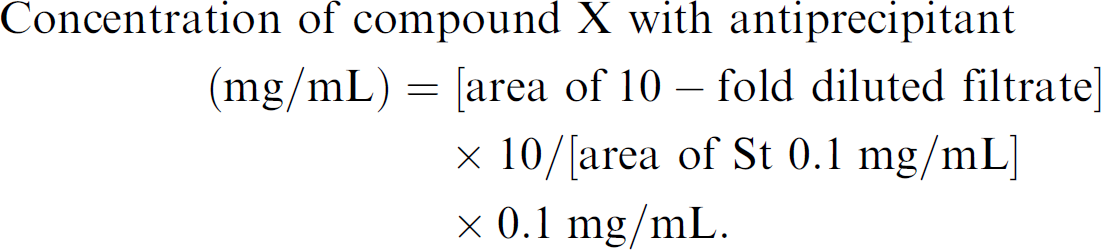
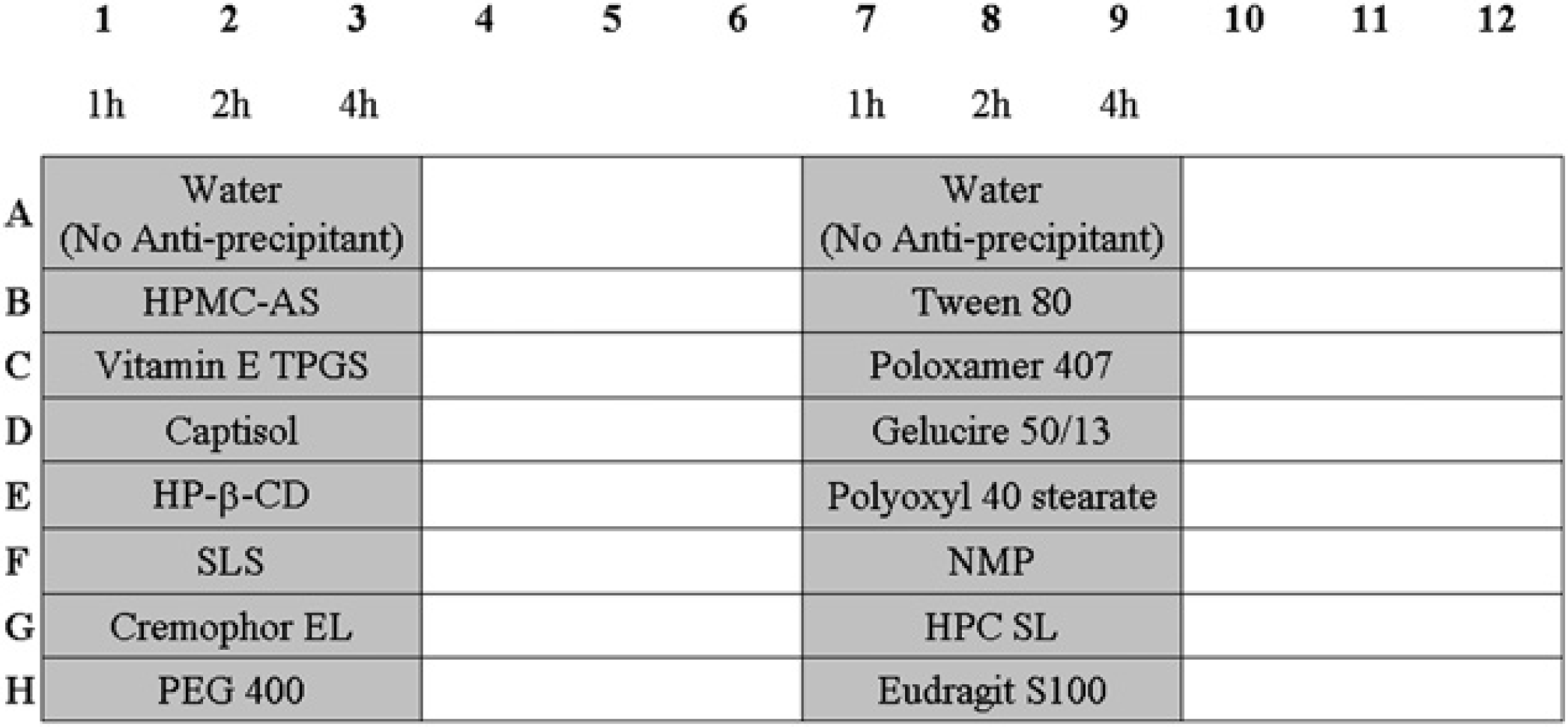
Plate map of the 96-well antiprecipitant screening method.
Supersaturation Study in USP II
A supersaturation study also was examined using the USP II dissolution system. A volume of 160 mL of 4 mg/mL compound ×in SGF solution and 80 mL of 0.4 w/w% antiprecipitant were mixed in the USP II system (VK 7010; Varian, Paolo Alto, CA) for 5 min. A volume of 640 mL FaSSIF was then added to each vessel (at t 0). Concentrations at t 0 were 0.73 mg/mL compound ×and 0.036 w/w% antiprecipitant in water/SGF/FaSSIF (1/2/8). A supersaturation study was conducted at 37 °C. After 0.5 h of mixing at a paddle speed of 100 rpm, 1 mL of the sample was removed and centrifuged for 5 min at 950g (Hitachi Himac CF-8DL). Then, 100 μL of each supernatant was diluted with 900 μL of 50% MeCN (10-fold dilution) and injected into the HPLC. The same sampling procedure was conducted at 1, 1.5, and 2 h. For the standard sample, 1 mg of compound ×was dissolved in 10 mL of 50% MeCN (St 0.1 mg/mL). Concentration of compound ×with antiprecipitant was determined by the corresponding integrated peak area of the chromatogram using the following equation:

Results and Discussion
Physicochemical Property of Basic Model Compound X
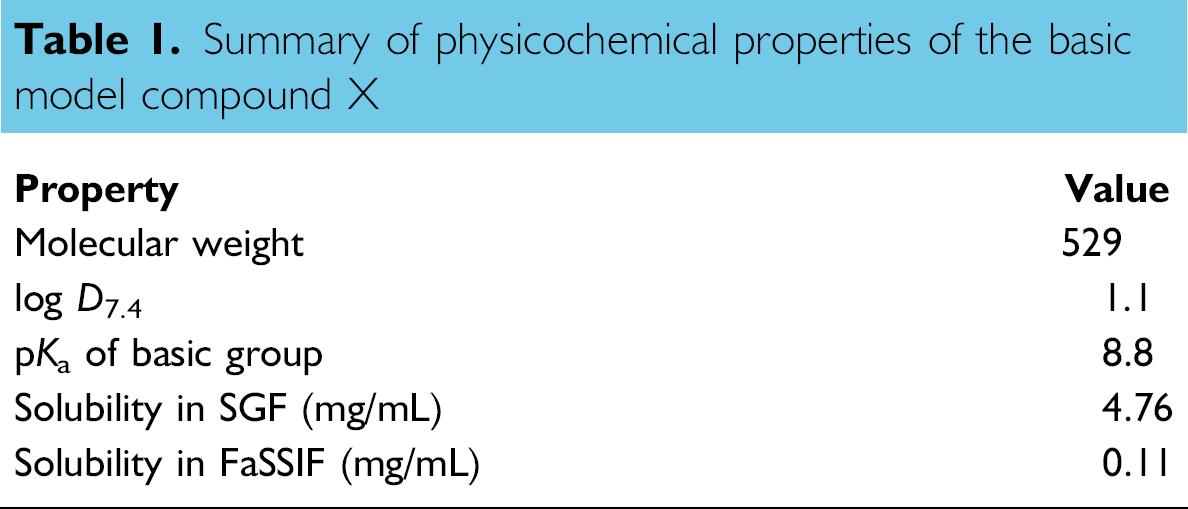
table 1 shows the physicochemical properties (molecular weight, log D at pH 7.4, pK a, and solubility) of basic model compound ×(free-base crystalline material). The pK a was 8.8. Compound ×showed high solubility in SGF (4.76 mg/ mL) but poor solubility in FaSSIF (0.11 mg/mL). These results indicated that compound ×may precipitate in the intestines at high dosing in vivo.
Summary of physicochemical properties of the basic model compound X
Antiprecipitant
Fourteen types of polymers, organic solvents, and surfactants were evaluated as antiprecipitants. The antiprecipitants evaluated in this study were selected based on previous reports: cyclodextrin (HP-β-CD and Captisol), 21 cellulose polymer (HPMC-AS 7 and HPC 22 ), poloxamer 23 (Poloxamer 407), polyoxyethylene alkyl ethers (Cremophor EL 21 ), polyethylene glycol 24 (PEG 400), polyoxyethylene sorbitan fatty acid esters (Tween 80), 21 glycerol esters of fatty acid 25 (Gelucire 50/13), polyoxyethylene alkyl esters 26 (Polyoxyl 40 monostearate), polymethacrylate 27 (Eudragit S100), anionic surfactant (SLS), 28 vitamin E TPGS, 6,21 and small molecule organic solvent (NMP). 29
The 96-Well Plate Antiprecipitant Screening
Figure 2A and Figure 2B shows the results of 96-well plate antiprecipitant screening. At first, compound ×was dissolved in SGF at high concentration (4 mg/mL) to monitor the super-saturation effect clearly. The concentration of compound ×in SGF was determined by the solubility results in table 1. An amount of 4 mg/mL compound ×in SGF solution was diluted 5.5 times with FaSSIF (t 0), followed by monitoring of the concentration of compound × at 1, 2, and 4 h. Conditions (t 0) of this screening sample were 0.73 mg/mL compound × as initial concentration and 0.036 w/w% antiprecipitant in water/SGF/FaSSIF (1/2/8) at pH 6.5. The ratio of water/SGF/FaSSIF (1/2/8) was determined to keep the condition at pH 6.5 for the supersaturation study that mimicked the intestinal condition. The experiment with no antiprecipitant confirmed that compound × was precipitated by adding FaSSIF, and the concentration of the supernatant was ca. 0.5 mg/mL. However, for Cremophor EL, Tween 80, Gelucire 50/13, or Polyoxyl 40 stearate as antiprecipitants, the supersaturation of compound × was maintained for 4 h at a concentration of ca. 0.7 mg/mL and no precipitation was observed. The effect of the four antiprecipitants at a lower concentration also was evaluated at 0.0036 w/w% antiprecipitant in water/SGF/FaSSIF (1/2/8) (data not shown). However, none of the antiprecipitants at that level led to supersaturation, and the concentration of compound × was ca. 0.5 mg/mL. The cellulose polymers (HPMC-AS and HPC SL) have been widely used as antiprecipitants. 7 HPMC-AS and HPC SL did not produce super-saturation, and precipitation of compound × was observed as shown in Figure 2A and Figure 2B (0.036 w/w% antiprecipitant). Higher concentrations of these antiprecipitants were evaluated (0.36 w/w% antiprecipitant) in water/SGF/FaSSIF (1/ 2/8) (data not shown), and they prevented precipitation at that level. The anionic antiprecipitants (SLS and Captisol) formed an ionic complex with the basic functional group of compound × in SGF, and precipitation was observed without FaSSIF. As a result, the concentration of compound × was quite low with SLS and Captisol (Fig. 2A).
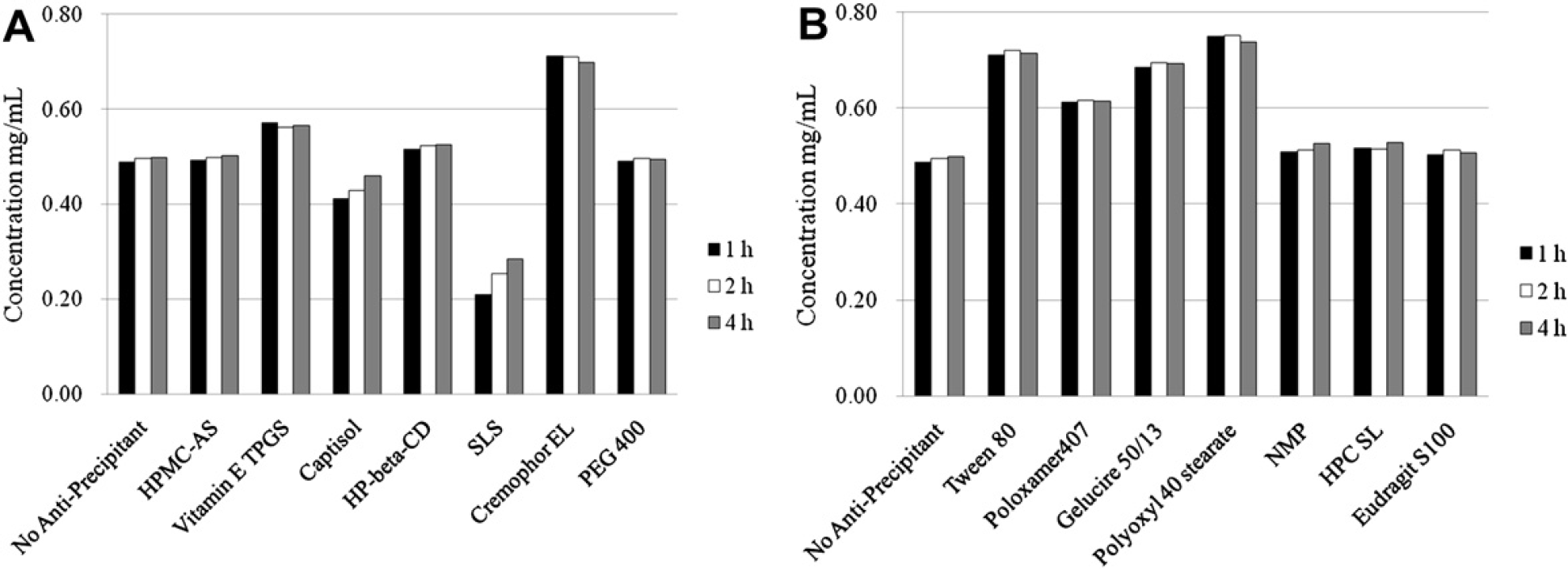
Results of the 96-well plate antiprecipitant screening (mean, n = 3, except for no antiprecipitant n = 6). (A) The results of HPMC-AS, vitamin E TPGS, Captisol, HP-β-CD, SLS, Cremophor EL, and PEG 400. (B) The results of Tween 80, Poloxamer 407, Gelucire 50/13, Polyoxyl 40 stearate, NMP, HPC SL, and Eudragit S100.
To determine the amounts of antiprecipitants in the 96-well plate system, the supersaturation studies were carried out at 0.0036, 0.036, and 0.36 w/w% in water/SGF/FaSSIF (1/2/8) (data not shown). Nine antiprecipitants showed the supersaturation effects at 0.36 w/w%, whereas four antiprecipitants (Cremophor EL, Tween 80, Gelucire 50/13, or Polyoxyl 40 stearate) showed them at 0.036 w/w%. None of the antiprecipitants at 0.0036 w/w% led to supersaturation. As a result, the amount of 0.36 w/w% was selected because of simple classification of the antiprecipitant effects.
The reproducibility of the 96-well plate antiprecipitant screening system is shown in Table 2 (n = 3, except no antiprecipitant n = 6). The relative standard deviation was within 5% for most samples, indicating a robust screening system.
Summary of the 96-well plate antiprecipitant screening results (average and RSD, n = 3, except no antiprecipitant n = 6)

RSD = relative standard deviation.
Systems using 96-well plates are widely used for screening assays in the drug discovery stage because they require a small amount of active pharmaceutical ingredient and automated high-throughput systems are available. Thus, this 96-well plate system will be available for the easily automated system in comparison with the conventional USP II system.
Supersaturation Study by the USP II Method
To confirm the result of the 96-well system, supersaturation studies of three antiprecipitants were conducted using the conventional USP II system. SLS, Poloxamer 407, and Polyoxyl 40 stearate, which showed the low, medium, and high antiprecipitant effects in the 96-well plate method, were selected in the USP II study. Figure 3 shows the results of the USP II method. Figures 4A and B shows the correlation between the USP II method and the 96-well plate method (R 2 = 0.9690 at 1 h, Fig. 4A; R 2 = 0.9764 at 2 h, Fig. 4B), and the same classification results of antiprecipitant effects were obtained in both the systems. The results of the USP II method (640 mg of active pharmaceutical ingredient) for one formulation were reproduced with the 96-well plate method (1 mg of active pharmaceutical ingredient). Totally, 14 kinds of antiprecipitant screening were carried out with 19 mg of active pharmaceutical ingredient.
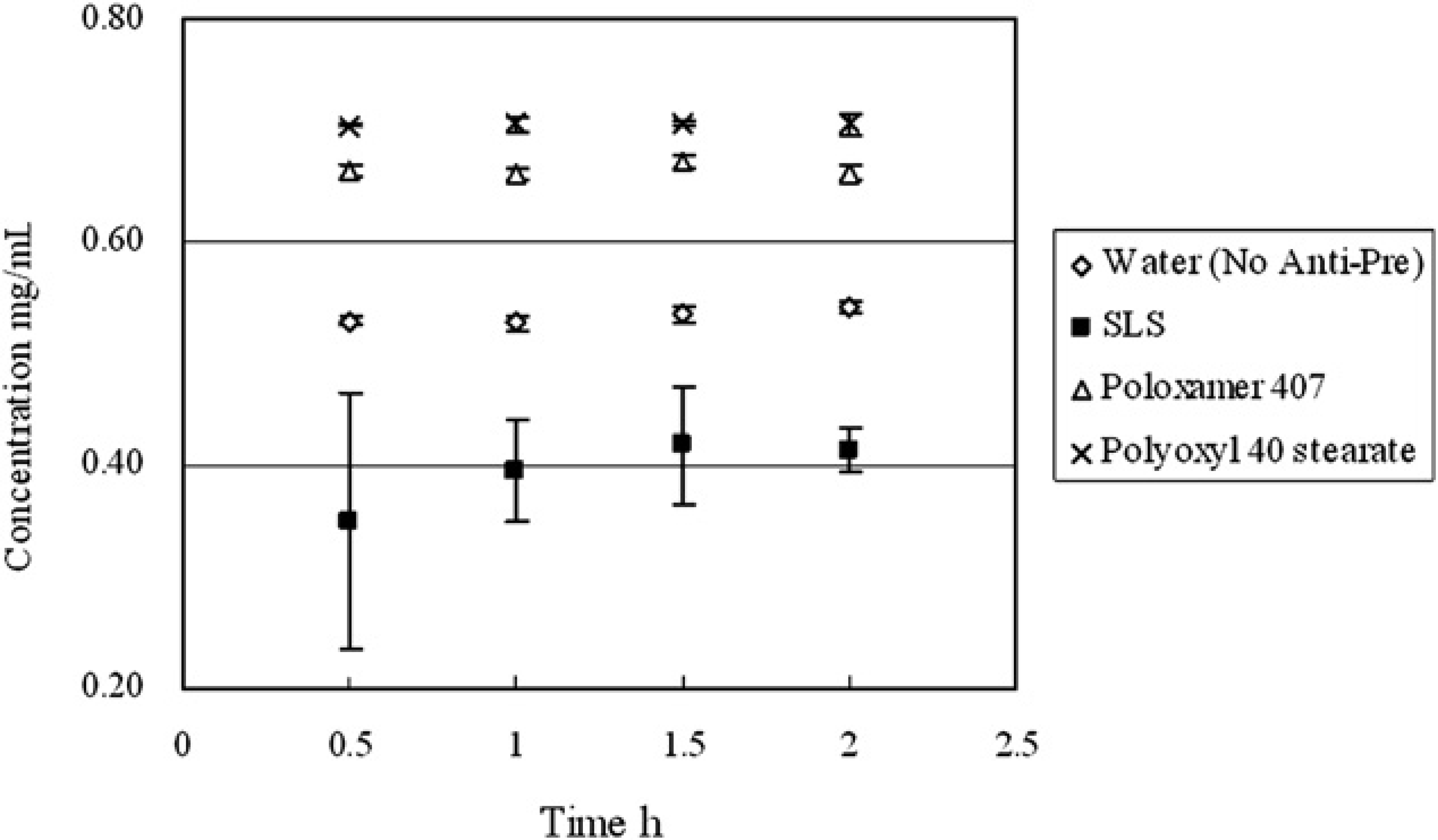
Results of the supersaturation study using the USP II method (mean and standard deviation, n = 3).
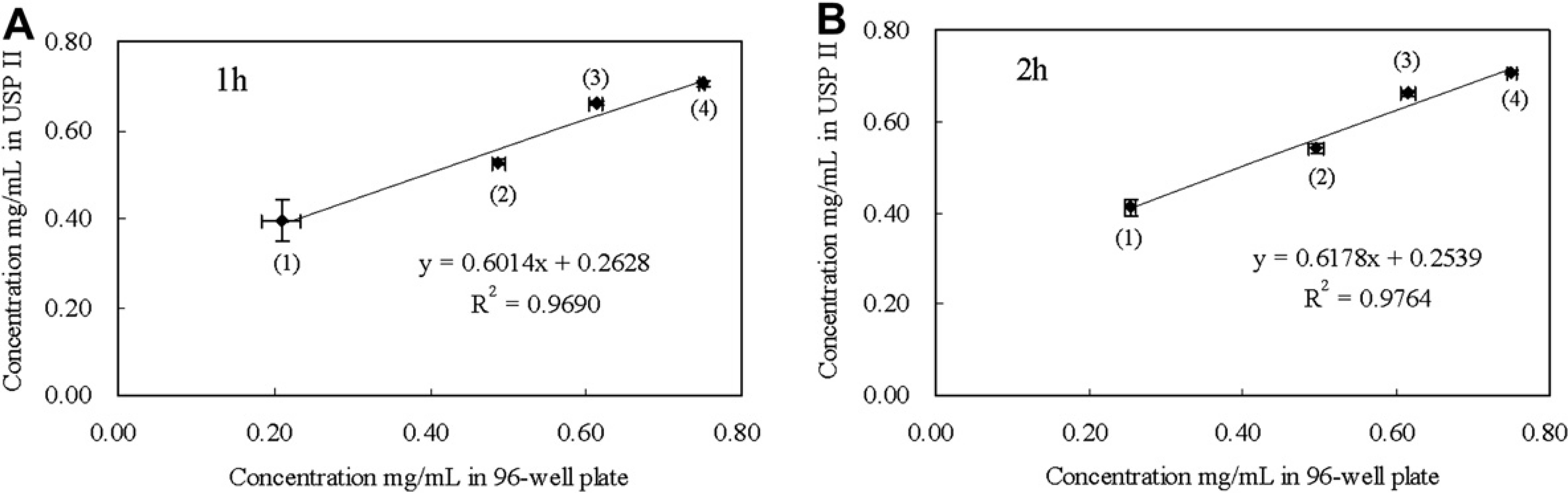
Correlation between the results of the supersaturation study using the USP II method and 96-well plate method: (1) SLS, (2) no antiprecipitant, (3) Poloxamer 407, and (4) Polyoxyl 40 stearate at (a) 1 h and (b) 2 h (mean and standard deviation, n = 3). (A) The results of 1 h. (B) The results of 2 h.
Conclusions
Supersaturation in the intestines is considered essential to improve the plasma exposure of poorly soluble basic compounds in vivo. Basic compounds that dissolve under acidic stomach conditions may precipitate in the neutral intestinal conditions because of a change in pH. Therefore, preventing precipitation and maintaining a high drug concentration in the intestines are necessary to improve plasma exposure in vivo. Several studies on substances that function as antiprecipitants have been reported. In addition, several reports on bio-relevant media that mimic conditions in the stomach and small intestine have been published. This report describes the development of an antiprecipitant screening system for basic model compounds using 96-well plates and bio-relevant media. Fourteen types of antiprecipitants were screened on one plate, which resulted in the identification of four antiprecipitants that maintained the supersaturation wstate. To confirm these results, supersaturation studies were conducted using the conventional USP II dissolution method, which correlated well with the results of the 96-well antiprecipitant screening system. These results validate the 96-well plate antiprecipitant screening system for basic model compounds using bio-relevant media. This novel system is useful for small-scale formulation screening during early pre-clinical drug development. This 96-well plate system will be available for the easily automated system in comparison with the conventional USP II system.
Acknowledgments
We thank Shuntaro Furukawa, Kimimasa Suzuki, and Makoto Harumoto for discussions about this work (BANYU); Kiyoshi Tamura and Yoshiaki Kato for financial support (BANYU); and the staff members of Preclinical Development at the Tsukuba Research Institute (BANYU).
Competing Interests Statement: The authors certify that they have no relevant financial interests in this manuscript.