






Abstract
We developed a simple, inexpensive, and automated procedure for the extraction of genomic DNA from dried blood specimens (DBS) collected on filter paper. This DNA extraction method involves two simple steps. First, the DBS is treated with methanol. Genomic DNA is then extracted with Tris buffer in a heat incubation step. The use of common inexpensive chemicals such as methanol and Tris buffer makes this method very cost efficient. The isolated DNA samples can then be used for high-throughput genotyping assays. Both DNA extraction and PCR setup steps have been adapted for use with a Beckman Coulter core robotic system.
Keywords
Introduction
Population-based newborn screening was first introduced in the 1960s with the development of the bacterial inhibition assay for phenylketonuria and the first use of a dried blood specimen (DBS) collected on a filter paper card. 1 The primary goal of newborn screening is to identify treatable disorders very early in life before irreversible health damage occurs. In the United States, the newborn screening coverage is greater than 99%. 2 Enzyme assays, immunoassays, HPLC, electrophoresis, and tandem mass spectrometry are routinely used for primary newborn screening. 3 –6 The methodologies, however, have their limitations. DNA-based primary screening or second-tier testing offers a very attractive alternative or supplement to existing screening methodologies, which, in turn, may significantly increase the number of disorders that could be detected through newborn screening programs in addition to increasing the sensitivity and specificity.
The DBS collected on filter paper cards is routinely used for newborn screening. This is easily shipped through regular mail, provides an extremely stable analyte matrix, and can be conveniently stored. In addition, samples other than blood can also be collected on filter paper. Progress has been made toward collection and storage of plasma, bile, saliva, and urine samples on filter paper. The use of DBS creates a system, which simplifies the collection, shipment, and storage of samples to a centralized testing facility.
Many DNA extraction methods have been developed. Whereas a number of DNA extraction kits are commercially available, most were not developed for use with DBS. For a population-based newborn screening program, the need for a high throughput, automation friendly, and cost efficient extraction method presents additional challenges. Several DNA extraction kits are commercially available for the use with DBS. Both QIAamp DNA mini and microkits (Qiagen, Valencia, CA) can be used to extract DNA from DBS. However, the use of microcentrifuge tubes makes them less automation friendly. Automated DNA purification from FTA cards using automated liquid handling system has been described. 7 Another automated DNA purification protocol for DBS using the Generation kit (Gentra System, Minneapolis, MN) was also developed. 8 However, both protocols require multiple washing steps and fresh tips for each step. The presence of filter paper can be a potential problem when multiple aspiration steps are involved. In addition, the need for fresh tips for each washing step can generate a large volume of plastic waste in a high-volume laboratory, and the costs of commercial kits are relatively high for population- based newborn screening programs. In this work, we have developed a simple DNA extraction method for DBS. This method consists of only two simple steps. The use of common chemicals makes this method very cost efficient. Because liquid is only added and not aspirated out of assay plates, there is no need to replace tips between assay plates. This method is adopted on a core robotic system with Biomek FX liquid handler (Beckman Coulter, Indianapolis, IN) that was designed and installed in our laboratory (Fig. 1). This system is used for both DNA extraction and PCR setup.
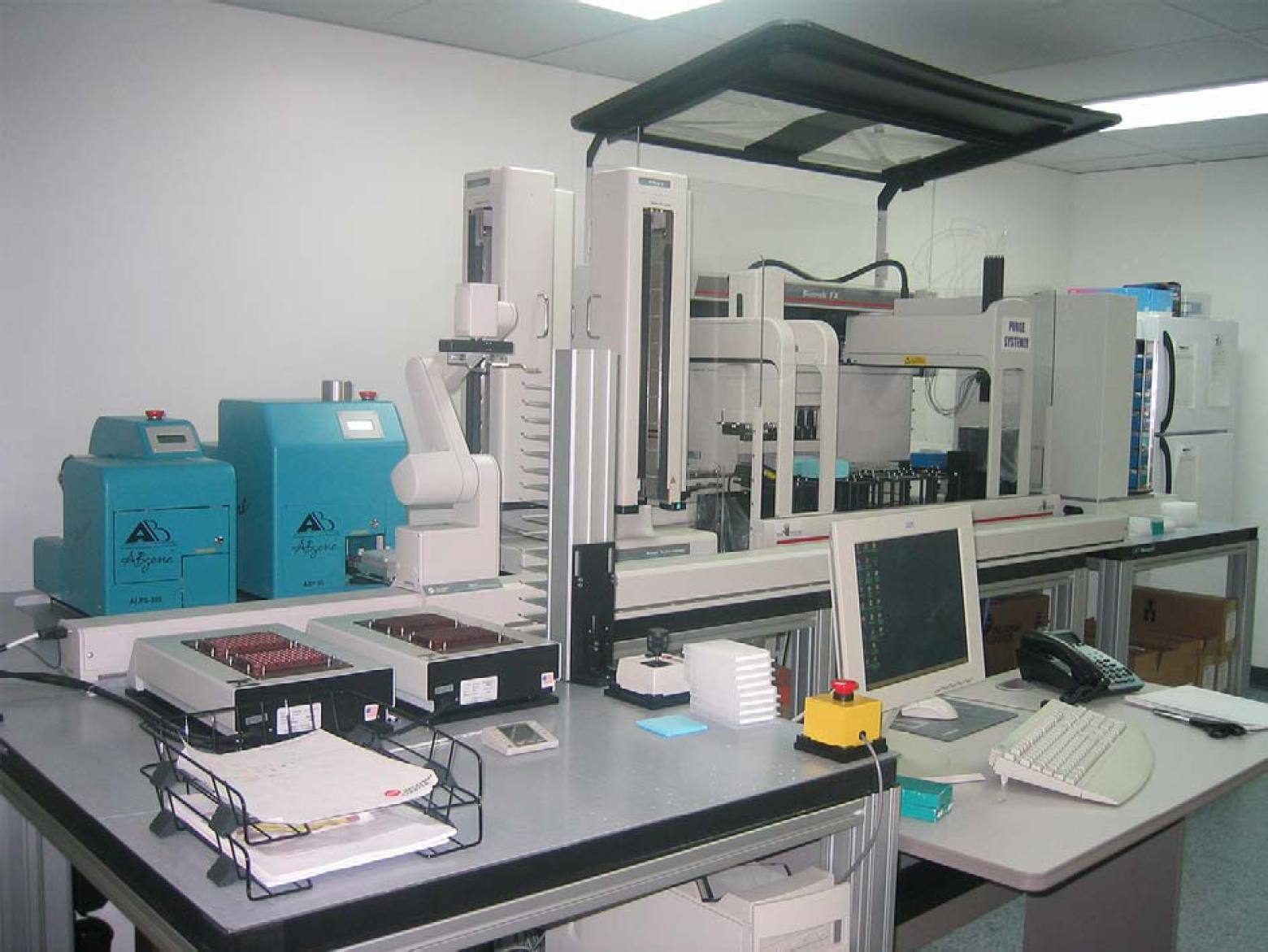
Beckman Coulter Biomek FX core robotic system. This modular system has a Biomek FX liquid handler, two heat blocks, automatic plate sealer and plate piercer (Abgene, UK), three plate and tip box storage devices, and a robotic arm to transport assay plates between each modular component. The liquid handler has both a 96-channel and an 8-channel pipetting head, which allows liquid transfer to either a full or a partial assay plate.
The quality of DNA extracted with this method was examined by PCR reaction and the yield measured using the PicoGreen dsDNA quantitation kit (Molecular Probes, Eugene, OR). Genomic DNA extracted with this method was used in a genotyping assay for the common hemoglobin E mutation. This genotyping assay is a melting temperature analysis using the LightTyper instrument (Roche Diagnostics, Indianapolis, IN). This newly developed DNA extraction method is routinely used for the primary DNA-based newborn screening of hemoglobinopathies. It has been validated using a large number of DBS and shown to have a specificity and sensitivity greater than 99%. 9
Materials and Methods
Dried blood specimens
DBS collected on S&S #903 filter paper (Schleicher & Schuell, Keene, NH) are analyzed in our laboratory with the routine newborn screening tests. All DBS cards are visually inspected to ensure adequate amount of blood for screening tests. All samples are archived after screening.
DNA extraction
A 4.8-mm diameter dot was punched from each DBS card into a 96-well Falcon round bottom plate (BD Bioscience, Palo Alto, CA). DNA extraction was carried out on the Beckman Coulter's Biomek FX core robotic system. All assay plates with DBS specimens were placed into the Cytomat, a storage device, and presented onto the deck of the liquid handler one plate at a time. The Biomek FX liquid handler added 30 μL of HPLC-grade methanol into each well. The assay plate was transported onto the heat block for a flexible 15-min incubation at 110 °C to evaporate the solvent. The plate was put back onto the liquid handler and 100 μL of 30 mM Tris (pH = 8.5) added to each well. The plate was then sealed using the automatic plate sealer. Genomic DNA was extracted by putting the sealed plate on the heat block for incubation at 110 °C for 30 min. Once the assay plate was cooled, it was centrifuged briefly and pierced using the automatic plate piercer.
DNA Quantitation
PicoGreen dsDNA quantitation kit (Molecular Probes, Eugene, OR) was used for quantitating double-stranded DNA extracted from DBS. The assay was carried out as suggested by the manufacturer. Briefly, 20 μL of extracted DNA sample was added to 80 μL of TE (pH 7.5). Diluted specimen was mixed with 100 μL of diluted PicoGreen (1:200 dilution in TE). The mixture was incubated at room temperature for 5 min. Samples were excited at 480 nm and the fluorescence emission intensities measured at 520 nm using the FLx800 microplate fluorescence reader (Bio-Tek, Winooski, VT). Standard curve was generated with DNA sample provided with the kit.
PCR Reaction
PCR primers were designed to amplify a fragment of the human beta-globin gene
covering the hemoglobin E mutation site and synthesized by Idaho Technology, Inc.
(Salt Lake City, UT) (Table
1). Each PCR reaction contained 50 mM Tris (pH 9.1), 16 mM ammonium
sulfate, 1.5 μg BSA, 3.5 mM MgCl2, 200 μM dNTPs, 0.1 μM of forward primer,
0.5 μM of reverse primer, 0.05 μM of labeled probe, 0.5 unit of Klen
Genotyping method
Fluorescent-labeled probe was synthesized and HPLC purified by Idaho Technology, Inc. (Salt Lake City, UT) (Table 1). The cycling conditions were the same as mentioned above. Upon completion of PCR reactions, the PCR plate was placed in a LightTyper instrument. The camera exposure time was determined automatically. The plate was heated from 40 to 85 °C at 0.1°C/s ramp rate. Melting data were analyzed using the LightTyper software and genotype was determined for each sample based on the melting peak profile.
Sequences of PCR primers and detection probe
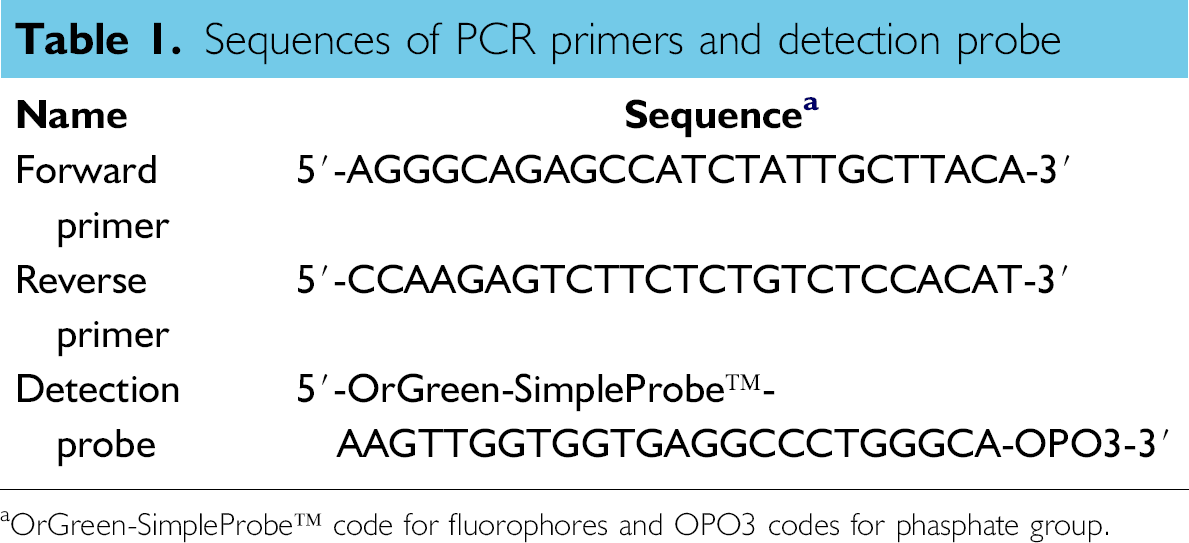
OrGreen-SimpleProbe™ code for fluorophores and OPO3 codes for phasphate group.
Results
DBS on a filter paper collection card, commonly called the “Guthrie card”, has been routinely used for population-based newborn screening. In an effort to develop primary DNA-based newborn screening tests, we developed a simple high-throughput DNA extraction method for the use of DBS in an automation system. A single 4.8 mm diameter punch from the DBS represents 7.6 μL of whole blood. 10 Detection of the human beta-globin gene by PCR was used to evaluate the success of the genomic DNA extraction using our automated method. To demonstrate that the automated DNA extraction method does not result in cross-contamination between adjacent wells, blank filter paper discs and DBS discs were placed in the same assay plate in an alternating pattern. PCR amplicons were analyzed on 8% polyacrylmide gels (Fig. 2). No cross-contamination was observed between adjacent wells. Although the PCR yield varies from sample to sample, a 241 bp band was detected for every PCR reaction with DNA extracted from DBS specimens but not with that of blank filter paper. The yield of DNA was measured using the PicoGreen dsDNA quantitation kit. DNA extracted from a total of 88 DBS specimens was quantified with an average yield of 0.5 ng/μL (Fig. 3).
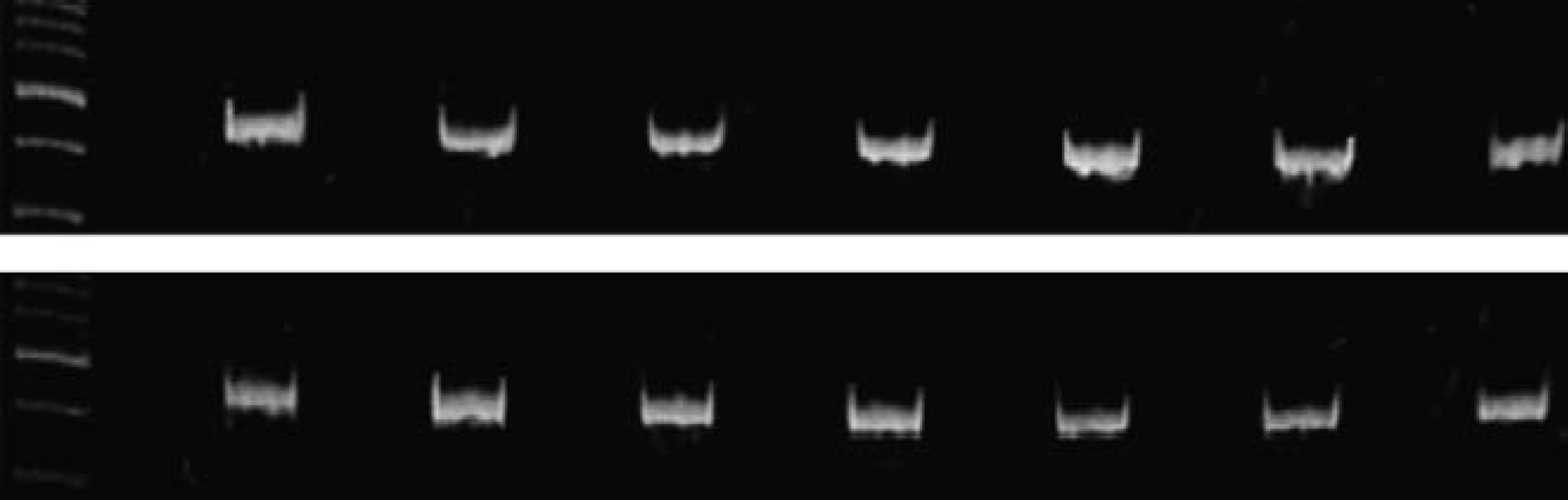
A total of 14 blank filter paper discs and 14 dried blood spot discs were placed in the same 96-well plate in an alternating pattern. DNA extraction and PCR amplification were performed as described. No cross-contamination was observed between adjacent wells.
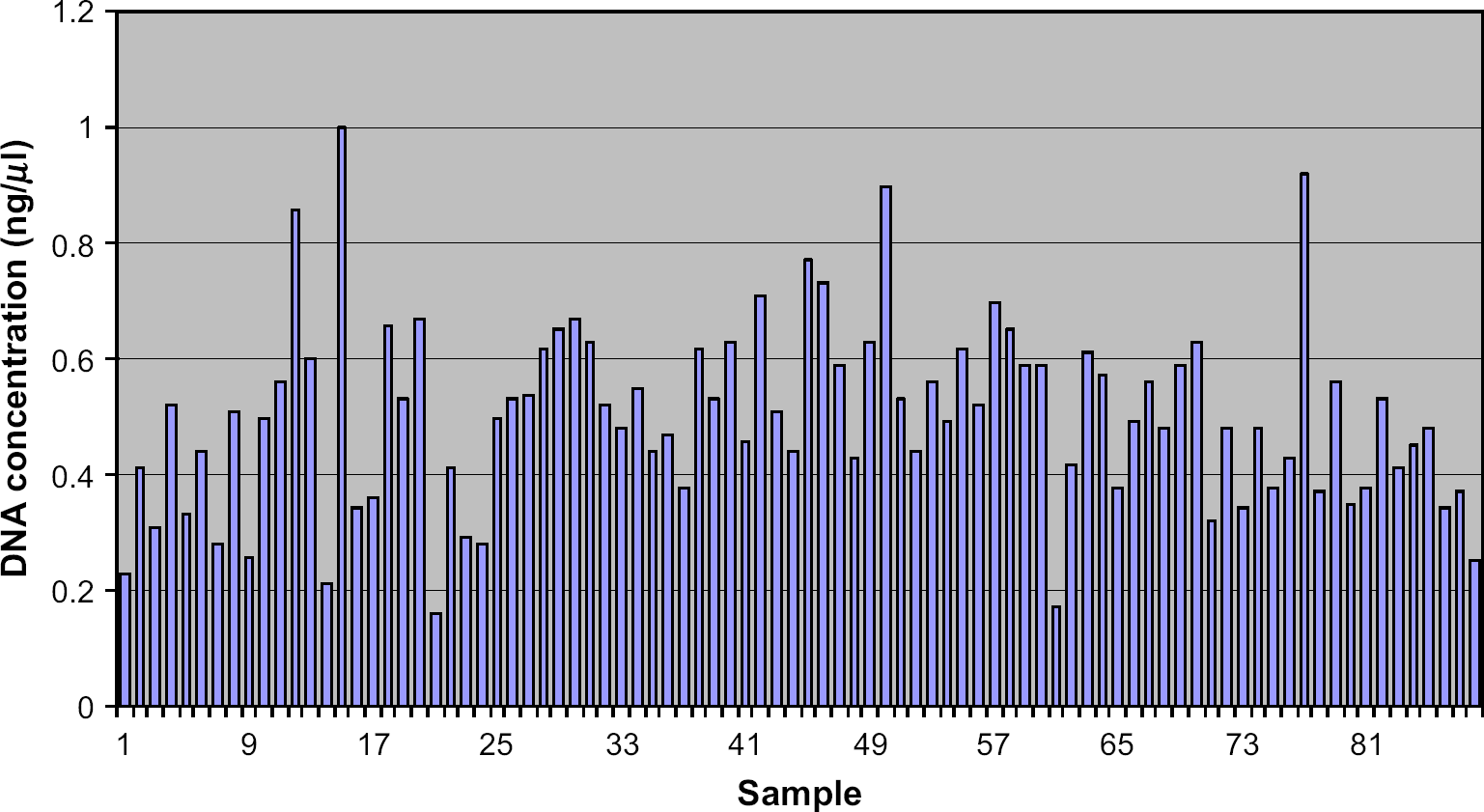
Concentrations of genomic DNA extracted from a total of 88 DBS specimens were quantitated using the PicoGreen dsDNA Quantitation kit. The average concentration was 0.5 ng/μL.
To further validate the success of our DNA extraction method, isolated genomic DNA
was used for a high-throughput genotyping assay. The genotyping assay was developed
based on melting temperature analysis using the LightTyper instrument.
Fluorescent-labeled probe was added during PCR setup, which eliminated the need for
any post-PCR sample handling step. Asymmetric PCR was carried out to enrich one
strand for probe binding. The probe was designed to perfectly match the wild type
allele of the hemoglobin E mutation. During post-PCR melting analysis, bound probes
were melted off their templates. This resulted in a decrease in the fluorescent
signal, detection of melting curve, and determination of melting temperature
(
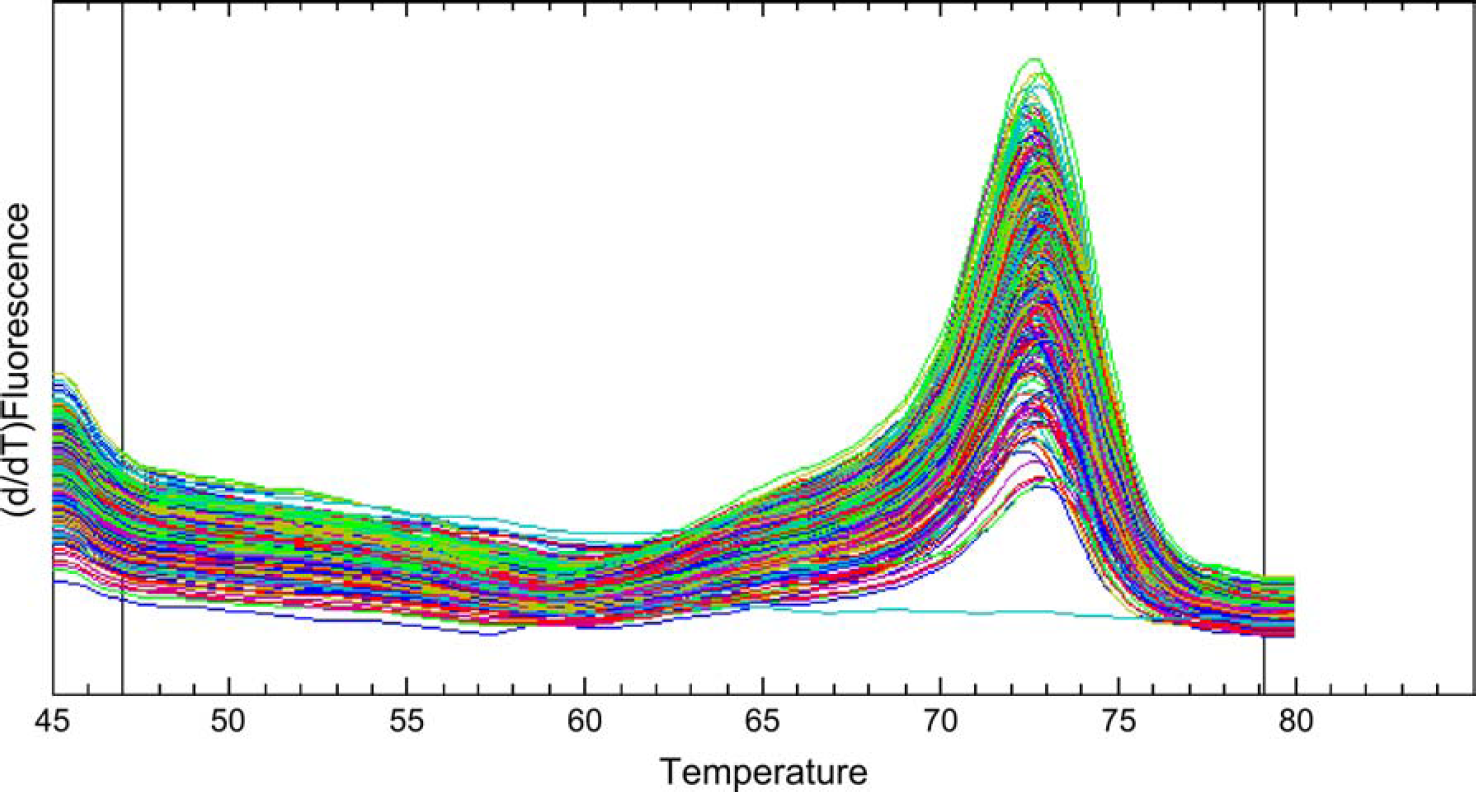
Melting peak profiles of a 384-well PCR plate. A total of 383 isolated DNA samples were used, with one no-DNA control. A single peak at 73 °C was detected for all 383 samples. No peak was detected for the blank control.
Discussion
We have developed a high-throughput DNA extraction method for the use with DBS. This method requires only two simple liquid transfer and heat incubation steps, which make it easily adaptable to most automation systems. The use of methanol and Tris buffer makes this method very cost efficient and ideal for population-based newborn screening. The consumable cost for this DNA extraction method is about 3.4 cents per sample, which results in substantial saving when compared to most commercial DNA extraction kits. The amount of DNA extracted from a single 4.8 mm punch can be used to set up 20 PCR reactions. Based on our system configuration, it takes 1 h 46 min to extract DNA from 1152 DBS samples. Because heat incubation is the rate-limiting step, additional heat blocks will significantly reduce the sample processing time.
Different DNA extraction buffers need to be tested for different downstream applications. We found that Tris buffer gave us the best result when KlenTaq was used. Extraction in H2O led to a lot of heme being released, affecting PCR and downstream fluorescence detection. The concentration of the extracted DNA can also be adjusted by changing the number of DBS dots punched and the final volume of the extraction buffer used. Quantity of blood applied to a filter paper, lack of homogeneity of blood distribution within the spot, the position of the laboratory sample within the blood spot, and variation in the number of white blood cells from baby to baby affect the yield of genomic DNA from each DBS. Because the average yield of this DNA extraction method is 0.5 ng/mL, PCR primer pairs and cycling conditions need to be optimized to ensure efficient amplification of such trace amounts of genetic material.
In addition to the Guthrie card, other filter papers are available for archiving blood or other biological samples. One example is the Whatman FTA card (Clifton, NJ) for collecting at room temperature, shipping, and archiving of nucleic acids from a wide variety of biological samples. Another example is the IsoCode DNA isolation and archiving matrix from Schleicher & Schuell (Keene, NH). Although it has not been tested, it is believed that the DNA extraction method developed in this work can also be used to extract DNA from these paper matrixes. Genomic DNA has been successfully extracted from DBS stored for more than 1 year at room temperature, 11 –13 indicating that DBS can be used as archival media for long-term storage of biological samples. In addition to DNA, RNA has been extracted from DBS stored at room temperature for a year. 14
In this work, we present a simple, automated, and cost efficient method for extraction of genomic DNA from DBS. This method makes it possible to develop high-throughput genotyping tests for population-based newborn screening. Currently with this system, an average of 1000 DNA extractions, 2000 PCR reactions, and 4000 genotype analyses are performed each day for primary DNA-based newborn screening for glucose-6-phosphate dehydrogenase deficiency. In addition, DNA can be isolated from biological samples collected on the filter paper under field conditions using this method. It can also be used in forensic analysis, population genetic research, and epidemiological studies.