



Abstract
The authors established a system for real-time reporting of clinical laboratory test results utilizing the mailing function of a cellular telephone service. The reporting system is composed of systems for sample transportation and automatic analysis, verification of test results, and reporting of test results. The introduction of the system has completely eliminated time delays at all stages of the laboratory testing process from start of testing to reporting of the test result. This has enabled doctors to receive test results in a timely manner wherever they are and to respond promptly to the patient condition.
INTRODUCTION
Recently, the introduction of a system for sample transportation and automatic analysis in large-scale hospitals has enabled swift reporting of clinical laboratory test results. At Saga Medical School Hospital, a system for sample transportation and automatic analysis (CLINILAN and CLINILOG, A&T Corporation) was implemented in August 2000, and has been used to carry out non-stop testing of samples 24 hours a day, 365 days a year, and has allowed reporting of test results within 30–60 minutes.
Sample transportation and automatic analysis systems introduced in the past were principally aimed at prompt processing of samples received at a clinical laboratory unit and immediate entry of the test results into the computer system. These systems have a disadvantage, however, in the case of emergency testing where time is critical and medical doctors are unaware that test results are available until they access a system terminal, resulting in delayed treatment for the patient concerned. In addition, when medical doctors move to a place where no terminal units are available, it is not possible to obtain test results.
In order to resolve these problems, the authors undertook the construction of a real-time reporting system for emergency laboratory test results utilizing a cellular telephone service: the system uses the telephone's calling-in chime to notify the doctor of the availability of the emergency test result, which is then relayed through the telephone's mailing function.
With this real-time reporting system, doctors are made aware of the availability of the test result as soon as it is obtained and can check the result as soon as they wish, regardless of whether they happen to be inside or outside the hospital or in the vicinity of a system terminal; they can thus promptly prescribe treatment or take other necessary action for the patient's benefit.
SYSTEM CONFIGURATION
The system consists of a sample transportation and automatic analysis system, a test result verification system, and a test result reporting system (Figure 1).
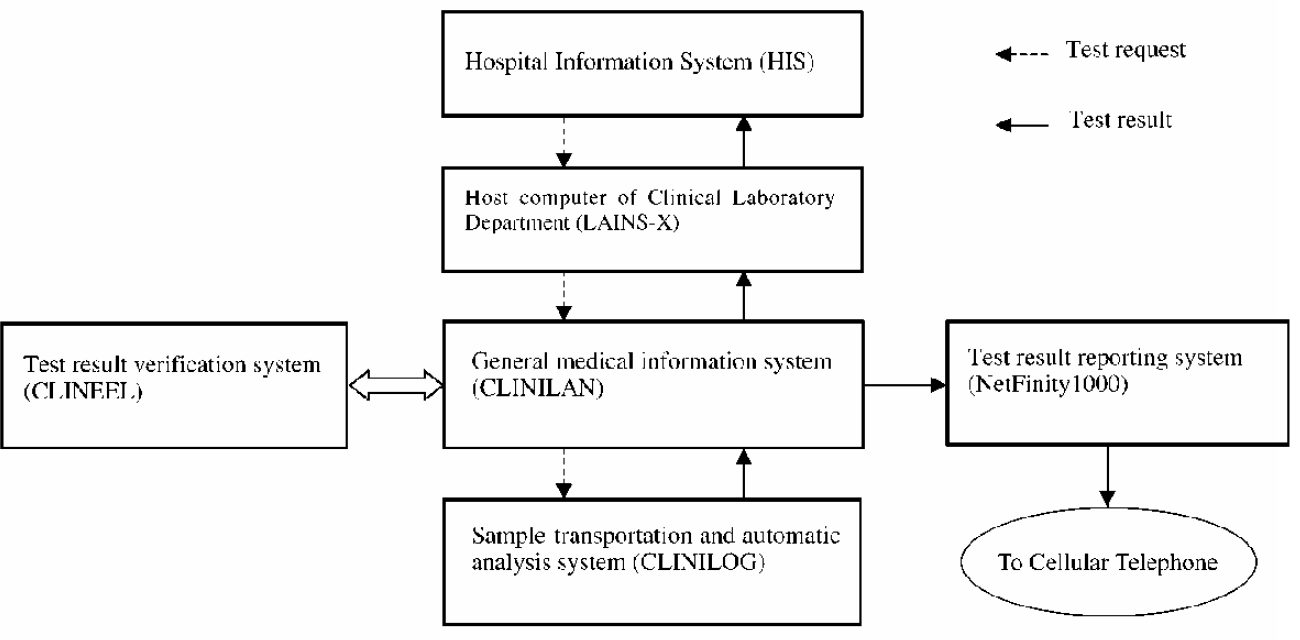
System configuration
SAMPLE TRANSPORTATION AND AUTOMATION ANALYSIS SYSTEM
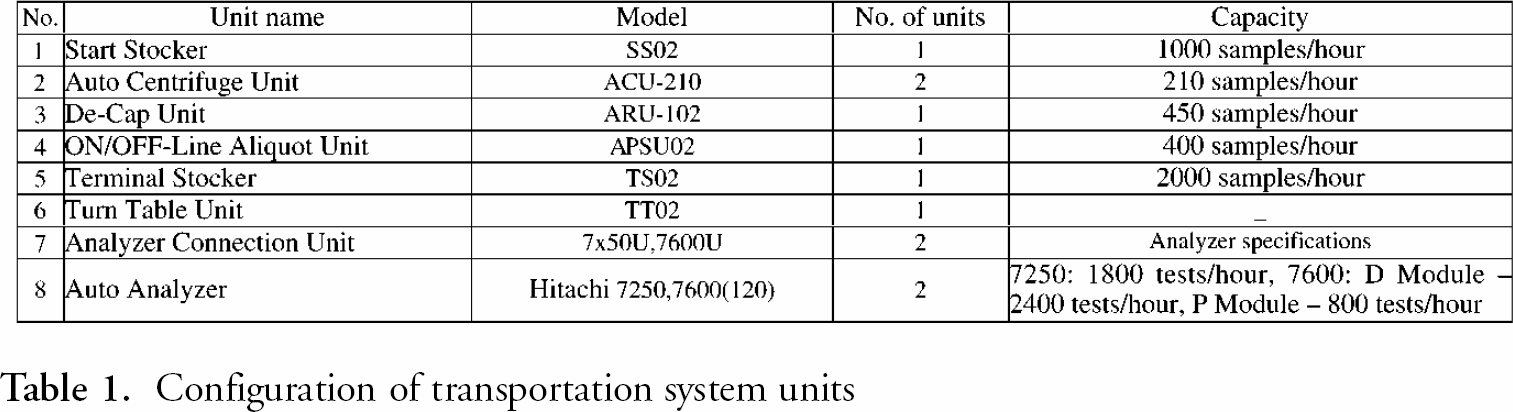
The sample transportation and automatic analysis system (CLINILOG V2.0 A&T Corporation) consists of a seven-unit transportation system and two automatic analyzers (Figure 2). To ensure that emergency samples are analyzed at the greatest possible speed, the transportation system possesses a function ensuring graded-priority in-feeding of emergency sample racks and a function allowing emergency sample racks to overtake others. In addition, the system releases racks onto the transportation line in step with the processing capacity of the various units and analyzers connected to the line, thus eliminating jams and ensuring that emergency racks are swiftly transported to the necessary analyzer. Figure 3 and table 1 show the configuration of units making up the transportation system. The HITACHI Automatic Analyzer Model 7600 is composed of multiple automatic analyzer modules and performs biochemical and immunoserological analysis in a single unit. Our Clinical Laboratory Department selected a combination of DPP (D: multiple-sample processing module, P: multiple-parameter processing module). Identical parameters are set in both P modules and one is used during working hours and the other outside of working hours. With this alternating use, replenishment of reagents and maintenance of the equipment can be performed in turn, allowing non-stop system operation 24 hours a day, 365 days a year.
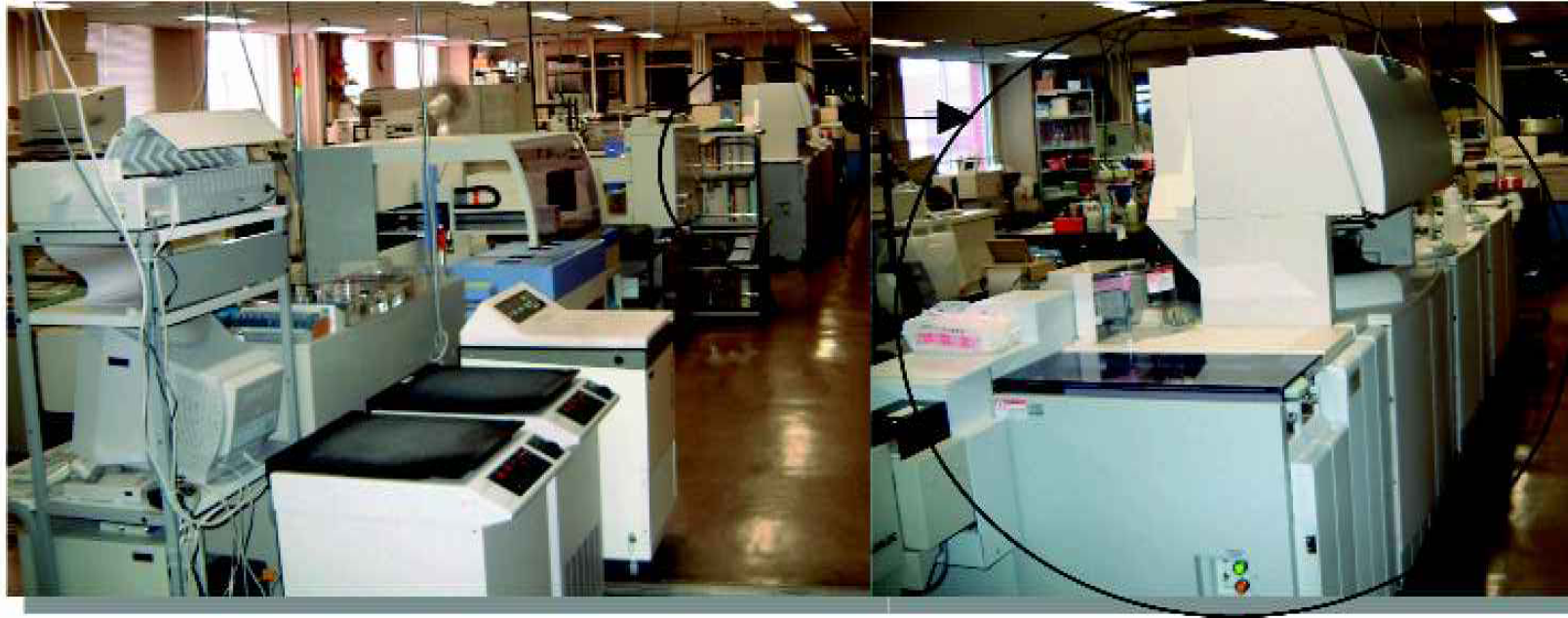
System overview
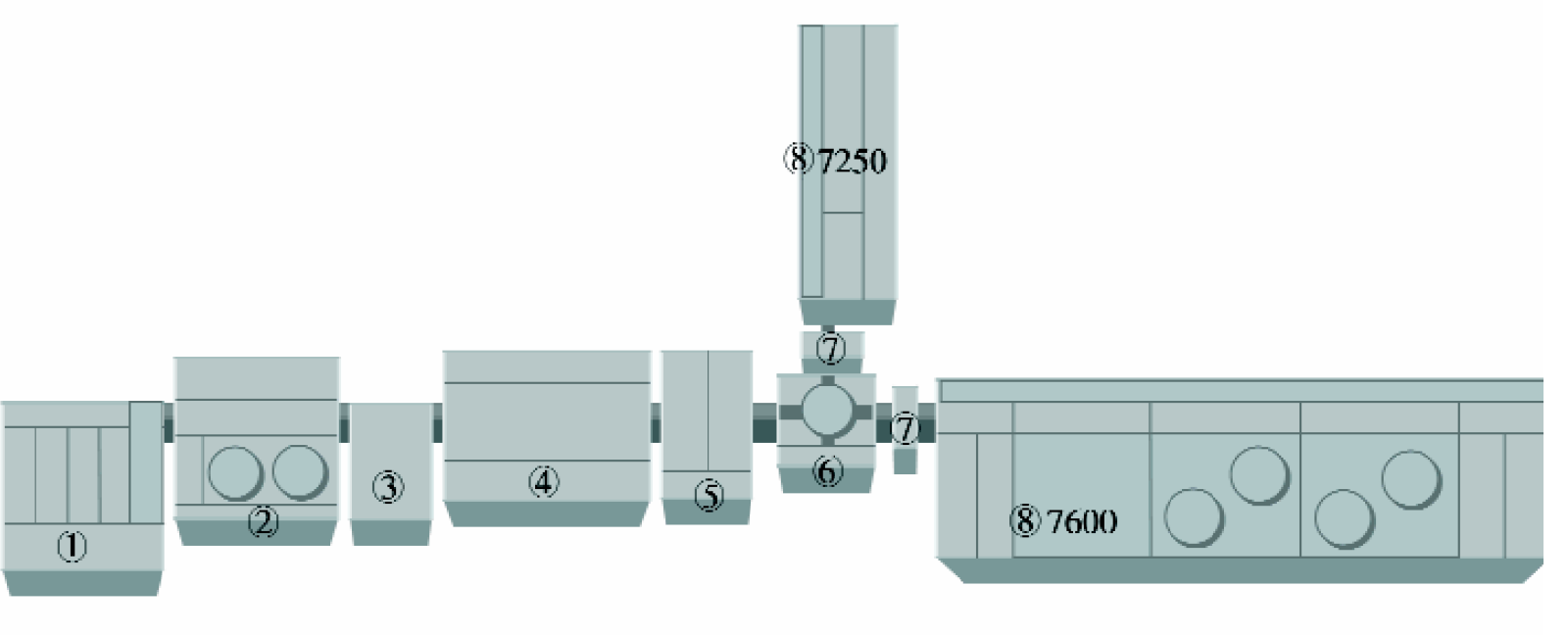
Plane Figure of the LAS
Configuration of transportation system units
The equipment of the sample transportation and automatic analysis system outlined above is controlled by a general medical information system (CLINILAN NT/GL, A&T Corporation), which is in turn connected to and exchanges data with the host computer of our Clinical Laboratory Department (LAINS-X, Fujitsu) (Figure 4).
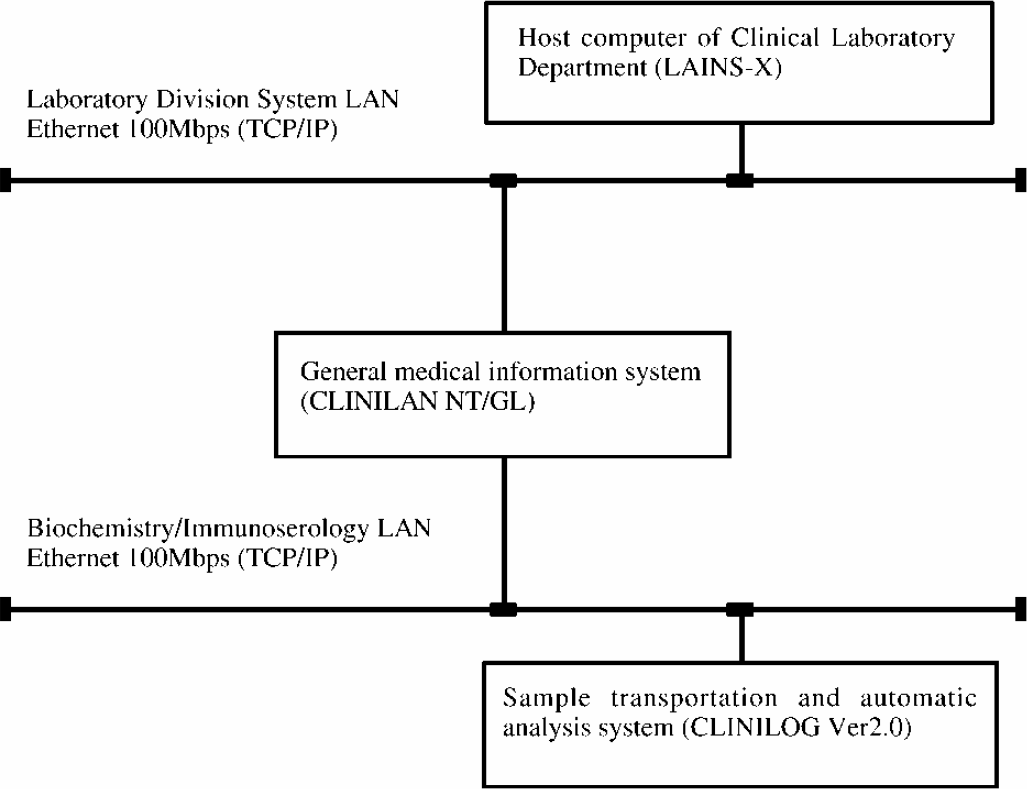
Computer network system
Test tubes containing blood samples, each with a bar code attached, are fed from a start stocker and the blood sample is separated into serum and clot by an automatic centrifuging unit. The test tube is then transported to an automatic opener and a pipetting unit dispenses portions of the sample into a sub-rack for the automatic analyzers (HITACHI Models 7250 and 7600) and into sample cups for the other off-line analyzers. The test tube is then ejected into a terminal stocker and the sub-rack transported to the automatic analyzers. Analysis results are subjected to a panic-value check within the analyzers and then sent to the up-stream system. The sample transportation and automatic analysis system analyzes samples non-stop 24 hours a day, 365 days a year, and sends analysis results to an up-stream computer within 30–60 minutes.
TEST RESULT VERIFICATION SYSTEM
The general medical information system employs zonal verification as the method of verifying test results received from the sample transportation and automatic analysis system. The actual-result-based zonal verification method consists of a check for upper and lower limits of individual parameters (panic-value check), a check against previous value in four stages according to interval (in days) since previous test, and a check for correlation between parameters. On the basis of the combined results of the individual checks, an overall judgment is made in real time as to the acceptance or exclusion of the test result.
TEST RESULT REPORTING SYSTEM
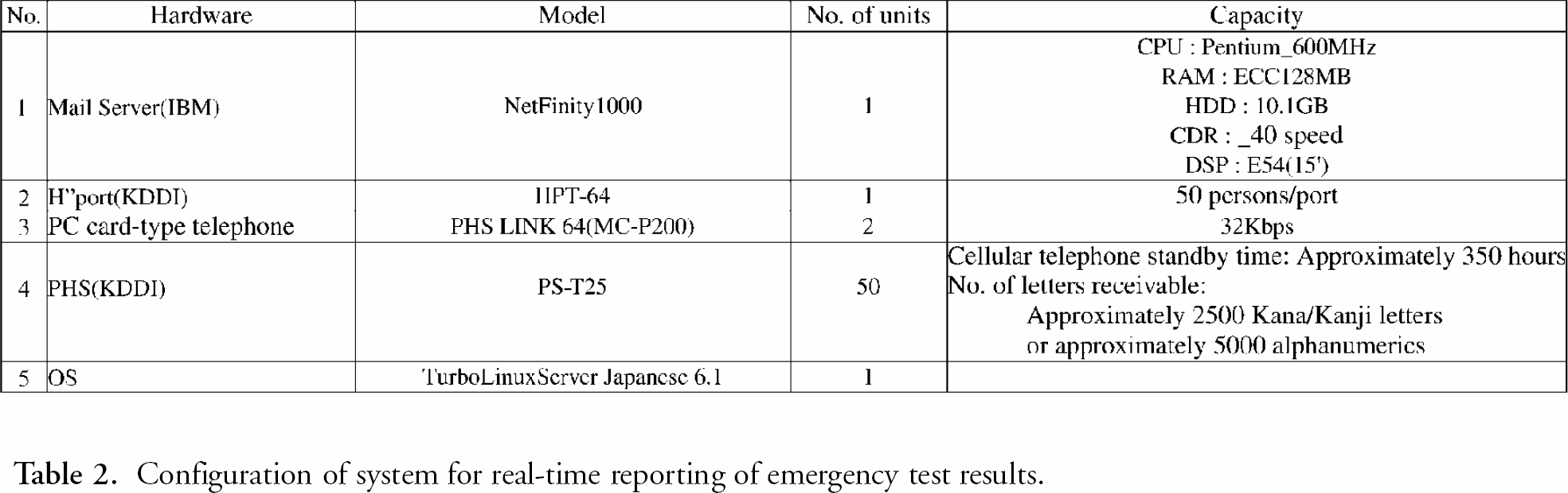
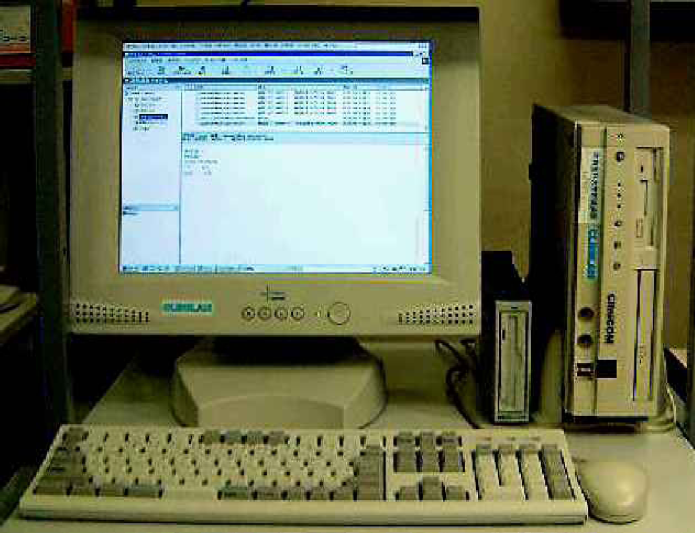
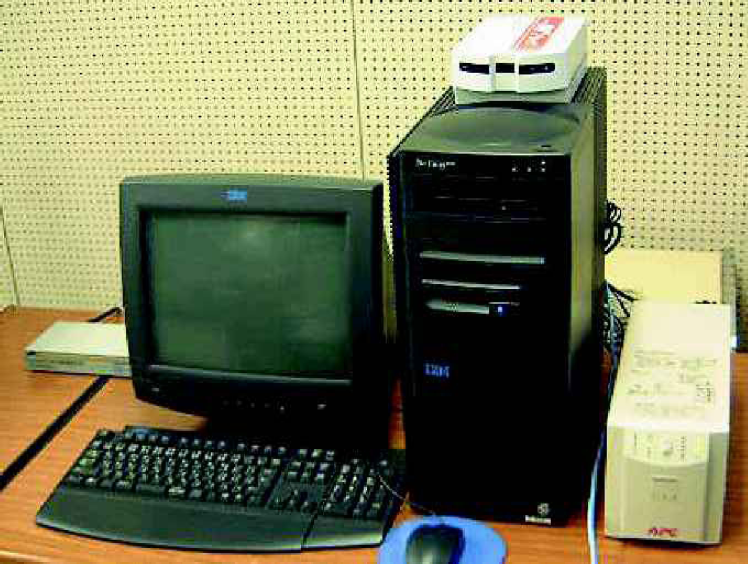
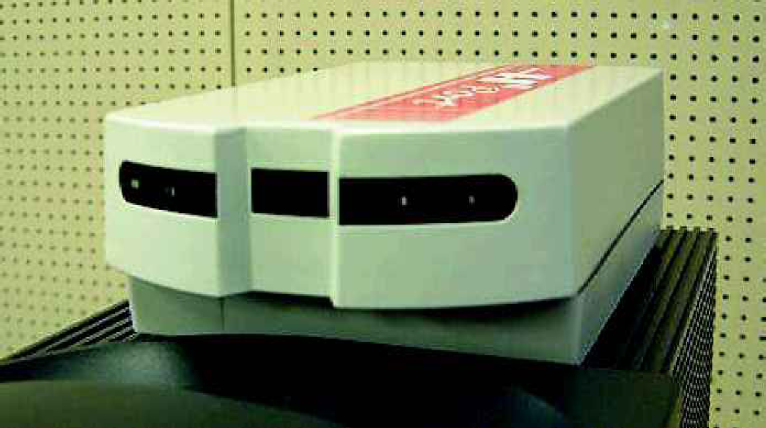
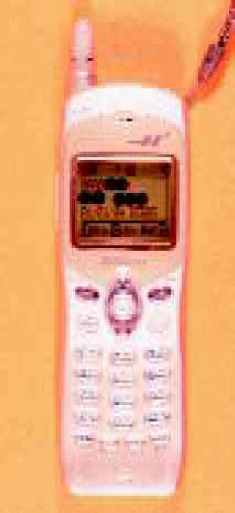
table 2 shows the hardware and OS used in the test result reporting system. The server used is a mail server. On the basis of overall evaluation of reliability, operability, ease of maintenance and cost-effectiveness, we selected NetFinity 1000 (IBM) (Figure 5). The “H” port (KDDI, Figure 6) is a device that allows access to a mail server, database, and so forth, from any location at any time for retrieval of necessary information. These data do not pass through the Internet and there are therefore no problems in terms of security. In the present system, “H” port functions as a mail client for the mail server, receiving mail on behalf of all registered users and forwarding incoming mail messages to a cellular telephone with P mail DX compatibility. The PHS LINK 64 (MC-P200) (Figure 7) is a card-type telephone able to communicate with a cellular telephone. Two cards are inserted into the “H” port. The cellular telephone (KDDI, PS-T25) (Figure 8) is equipped with a twin-wave function which switches continuously during transmission to the optimum base station of the moment, giving a high resistance to disconnection, and is capable of handling 64 k data transmission, P mail DX and P mail. TurboLinuxServer Japanese 6.1 was employed as the OS.
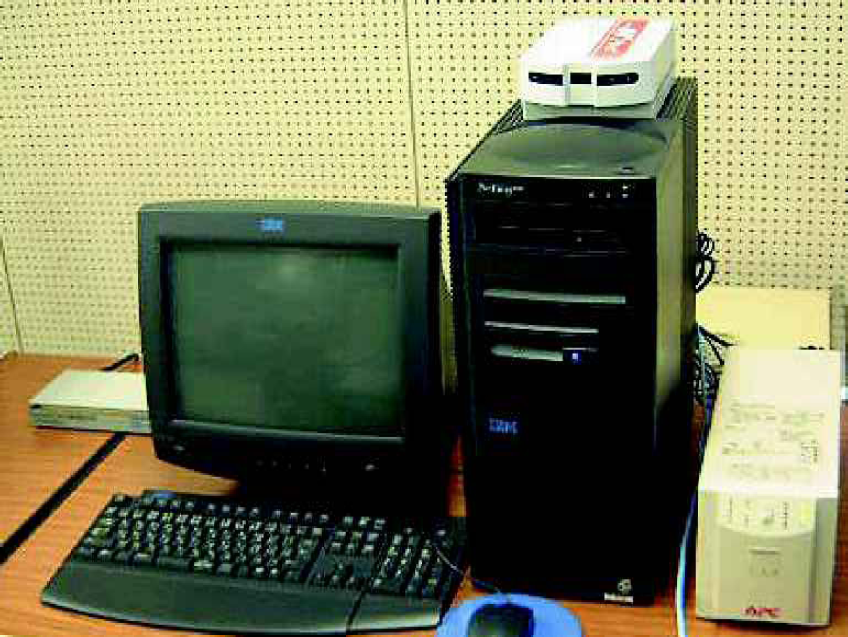
Mail Server NetFinity1000
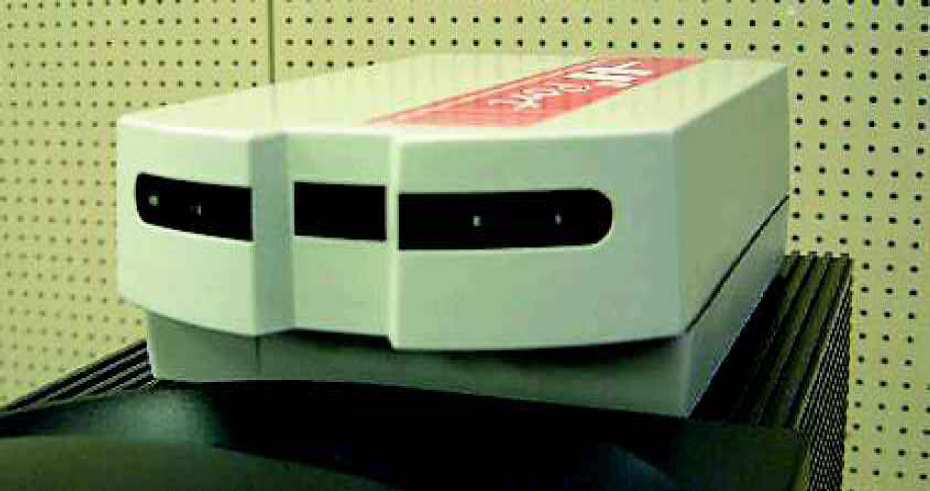
“H” port
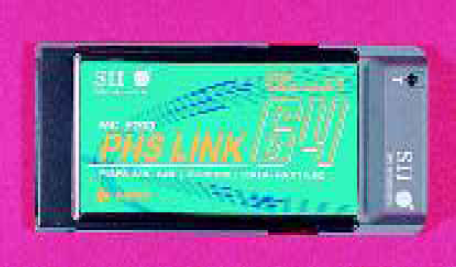
PHS LINK 64(MC-P200)
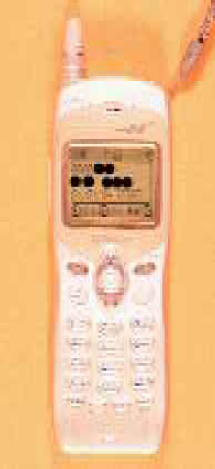
PHS (PS-T25)
Configuration of system for real-time reporting of emergency test results.
When an emergency test result is received from the sample transportation and automatic analysis system, it is processed by the test result verification system. The verified test result is then sent as an Outlook Express mail message from the general medical information system (CLINILAN NT/GL) to the mail server, and forwarded thence via “H” port to a cellular telephone carried by the doctor.
SYSTEM OPERATION
A doctor requesting a laboratory test enters a user ID, password and department code to log in to the Hospital Information System (HIS) (Figure 9). This user ID serves as a key when an emergency test result is sent to the cellular telephone. When the laboratory test is requested, details of the request are sent from the Hospital Information System to the host computer of the Clinical Laboratory Department (Figure 10). The request details received by the host computer of the Clinical Laboratory Department are transmitted to the general medical information system when the relevant blood sample test tube is checked in.

HIS, Log-in Menu
Emergency Test Request
At the Clinical Laboratory Department, the blood sample test tube is checked in, a bar code is attached, and the tube is fed into the sample transportation and automatic analysis system (Figures 11 and 12). The test result obtained by the sample transportation and automatic analysis system is checked by the general medical information system (MIS) and then sent to the host computer of the Clinical Laboratory Department (Figure 13).
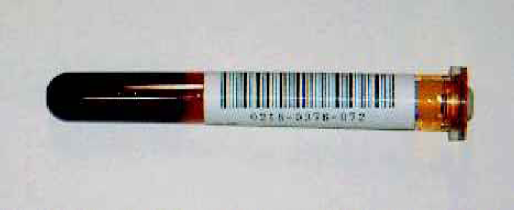
Bar-coding
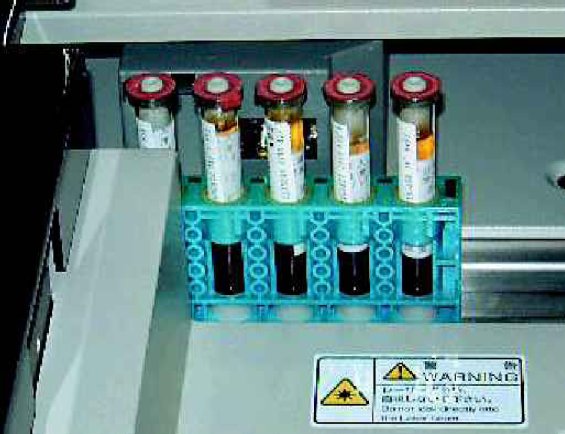
LAS Sample Inlet
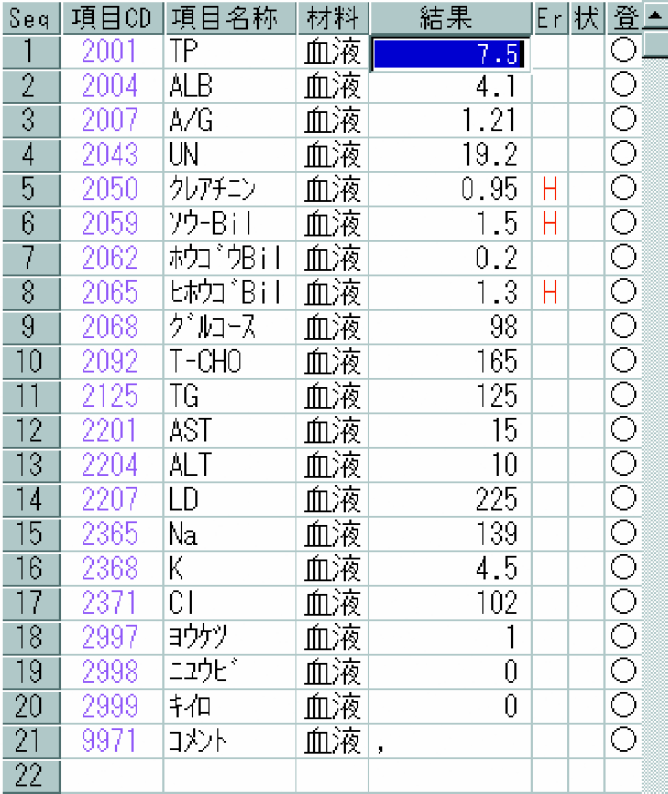
CLINILAN MENU
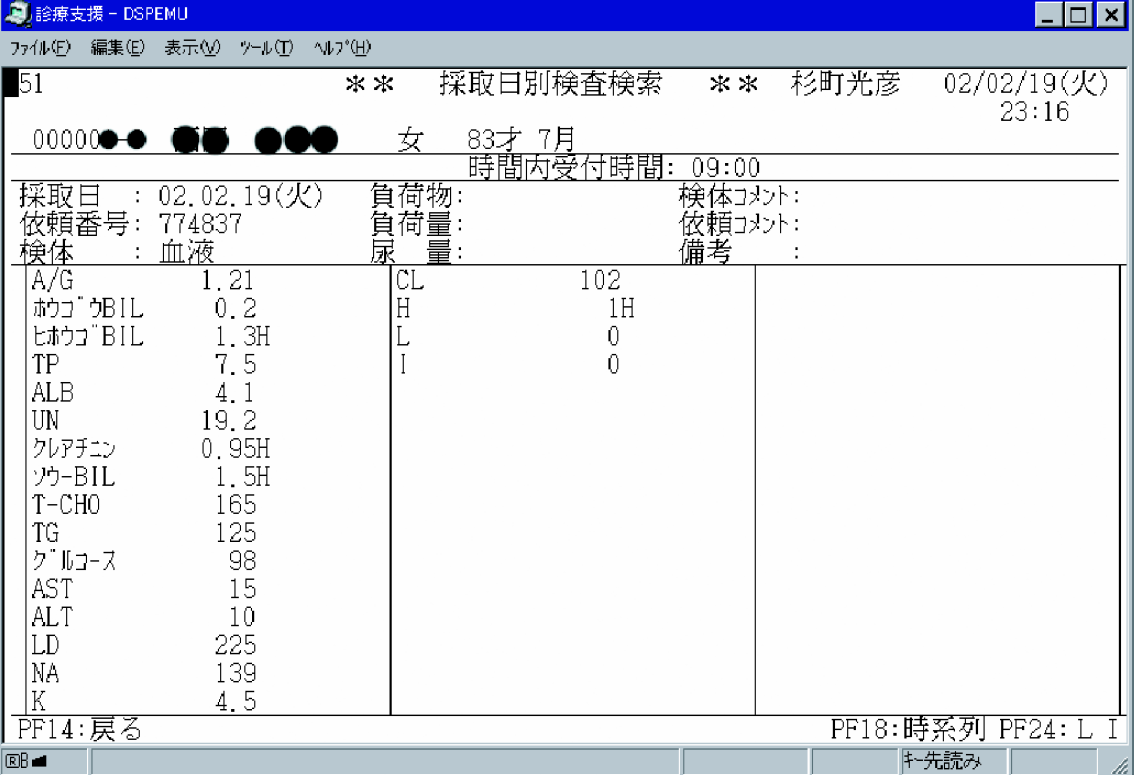
Conventionally, the result received by the host computer of the Clinical Laboratory Department was immediately sent to the Hospital Information System so that it could be retrieved at any of the terminals located in wards and outpatient clinics (Figs. 14 and 15). Doctors did not find out test results until they accessed system terminals to retrieve them. With the new method, at the same time the test result is checked by the general MIS, it is sent from the LIS reporting terminal as an Outlook Express mail message to the mail server (Figures 16 and 17). “H” port monitors the mail server every five minutes for incoming mail and immediately forwards the emergency test result as an Outlook Express mail message to the cellular telephone carried by the relevant doctor. The doctor is alerted to the receipt of the emergency test result by the calling-in chime (Figures 18 and 19).
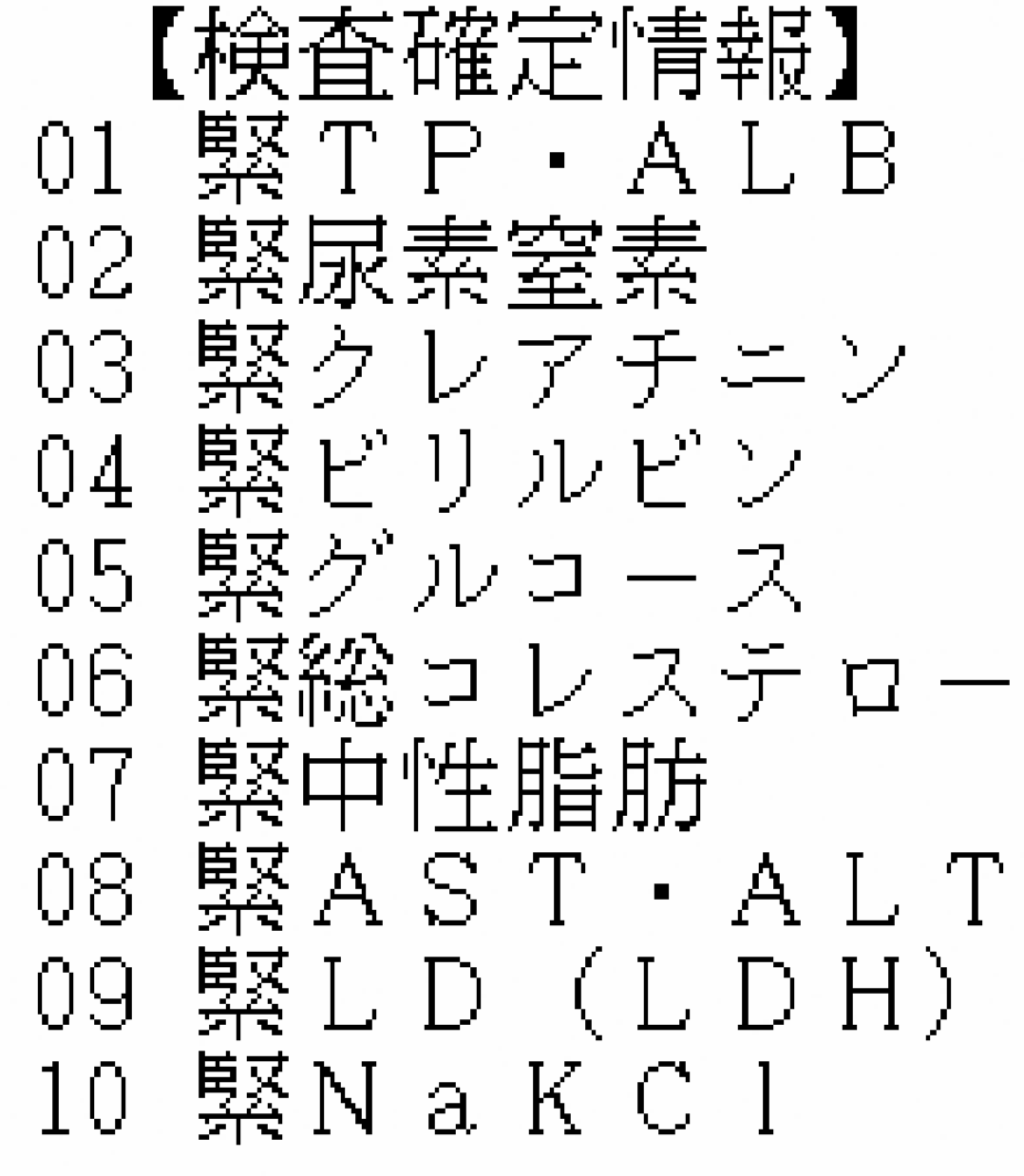
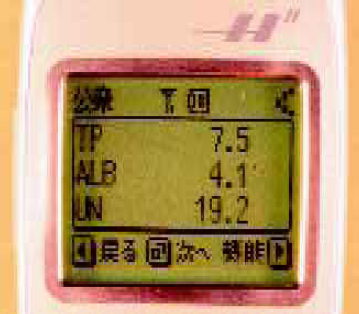
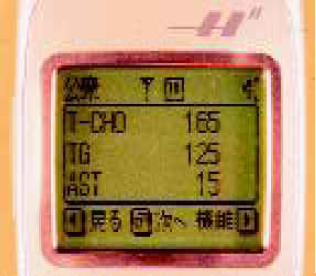
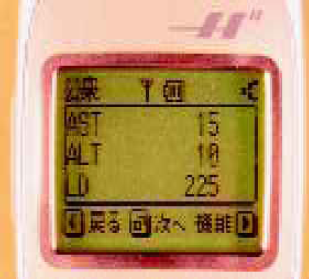
The cellular telephone's liquid crystal display shows patient code number, patient name, date of testing, sample code number, and other relevant details (Figure 20). Scrolling allows the emergency test results to be viewed one by one (Figures 21–24).
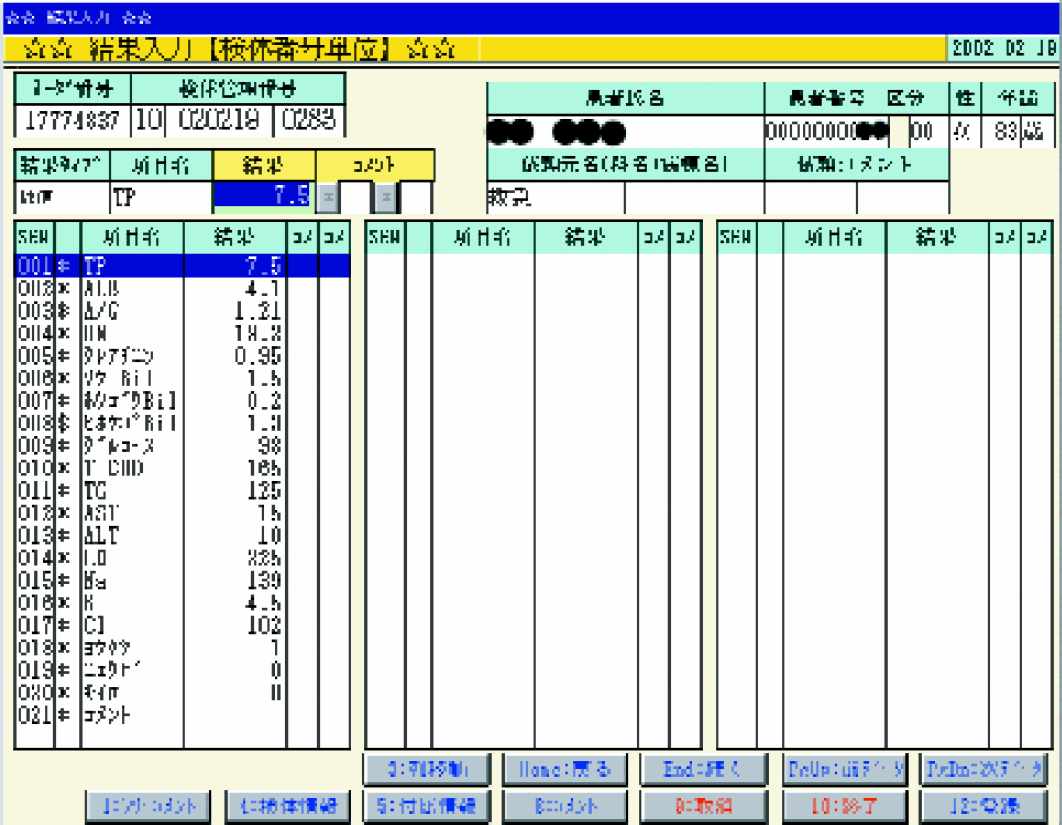
LAINS-X Screen MENU
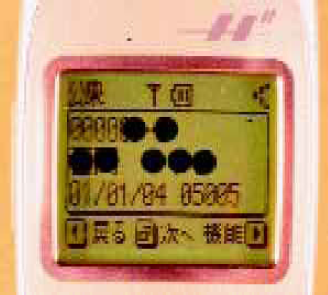
Patient ID, Name, Date
DISCUSSION
As the authors wanted a system which would allow analysis results to be swiftly incorporated into the data system and would allow doctors to be notified of results without time delay, consideration was given in its design to including the following features:
Use of the same analysis line 24 hours a day, 365 days a year, with no need for separate analyzers for working hours and off hours, and functions to prioritize emergency samples and to eliminate sample delivery jams so as to ensure prompt processing of emergency samples (Sample Transportation and Automatic Analysis System),
Verification of analysis results within the system (System for Verification of Test Result verification systems),
A cellular telephone service which, at the same time as the result is incorporated into the data system, notifies the relevant doctor of its availability and relays it using a mailing function (System for Reporting of Test Result reporting system).
HIS MENU Screen
LIS Reporting Terminal
Mail Server
“H” port
PHS
Test Result 1
Test Result 2
Test Result 3
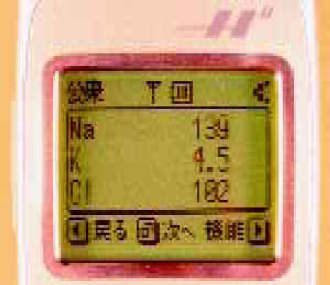
Test Result 4
We employed an analyzer incorporating multiple automatic analyzer modules. This system allows measurement by the same analyzer by night or day so that the same analysis line operates 24 hours a day, 365 days a year, eliminating the need for a separate analyzer dedicated to out-of-hours emergency tests and contributing to labor and space saving. In addition, we designed the system to have a sample inlet dedicated to emergency racks, allowing emergency samples priority access to the sample transportation line over ordinary samples fed in through the regular port. This feature contributes to rapid transportation of emergency racks to the target analyzer and allows prompt testing. 1––3
The system has been designed such that the validity of test results is verified by the zonal verification method, which checks data against a database of actual past test results. This verification comprises a check for upper and lower limits of individual parameters (panic-value check), a check against previous values, and a check for correlation between parameters. On the basis of the combined check results, an overall judgment can be made in real time to indicate, for instance, the necessity of a re-test, even at times when the duty technician is not a laboratory test specialist. This system provids ensures judgment as objective as that of a skilled laboratory technician even if an individual who is not specialized in laboratory testing is on duty and performs testing, and allows real-time reporting of test results. 4,5
The system swiftly outputs the analysis results provided for transportation and automatic analysis system, and the System for Verification of Test Results, verification system, etc., and which then automatically verifies test results then sends them to an up-stream computer on a real-time basis. Together with the introduction of the cellular telephone-based System for Reporting of test result reporting systems means utilizing a cellular phone service so that doctors are no longer obliged to spend time accessing a support system terminal, which is wasted time if the test result is not yet available. Doctors now are notified of the availability of their emergency tests result by the calling-in chime of their cellular telephones and can utilize the telephone's mailing function to retrieve the results
In our hospital, emergency tests account for approximately 32% of total all tests: they represent approximately 95 samples/day and there are twenty-four different parameters to be returned reported to a doctor's cellular telephone. Even if a doctor makes a requests for all parameters, this is still within the capacity of a single mail message. For the “H” port, it is possible to operate with up to eight ports, at a maximum and to send mail messages to up to 400 doctors simultaneously. We have so far experienced no incidents such as a prematurely terminated or otherwise abnormal mail transmission.
To utilize the system, Doctors need to register their mail addresses with the mail server when they wish to utilize this system. As soon as they have done this, they are ready to receive emergency test results which they have requested until their mail addresses are registered.
With the present system available, a doctor cannot determine when requesting an emergency test whether to have emergency test results forwarded to his/her cellular phone or not when he/she make a request. The system automatically sends the results of all requested emergency tests to the all doctors registered. However, if doctors judge it unnecessary to have test results forwarded to his/her their cellular phone, he/she can delete their mail address from the mail server.
CONCLUSION
The establishment of the system has increased the speed of emergency testing and analysis. The system saves doctors time spent on accessing system terminals and, in addition, allows doctors to instantly retrieve test results using a cellular telephone service and to respond swiftly to a the patient's condition.
It should be noted, however, that the present system is not without some problems:, for instance, a doctor cannot determine when requesting an emergency test whether to have the results forwarded to his/her cellular telephone. There is some room for improvement, including the screen used for requesting a test via the Medical Consultation Supporting Hospital Information System.
Our institution has already decided to introduce a cellular telephone system hospital-wide and plans to integrate it with the cellular telephone-aided real-time reporting system for emergency laboratory test results.