



Abstract
Protein-protein interactions are a vital component in both the function and regulation of virtually all biological processes. In the yeast two-hybrid system, one of the most commonly-used methods for studying protein-protein interactions, protein-protein interactions are detected by expression of a reporter gene driven by the interaction between bait and prey proteins. We report here the development of an automated system, the MegaMate, for carrying out high throughput (over 100,000 clones per day) yeast two-hybrid screens with full data tracking.
Keywords
Introduction
Protein-protein interactions are a vital component in both the function and regulation of virtually all biological processes, so there is considerable academic and commercial interest in their study in order to better understand biological systems and also to develop new drug therapies and potential targets for genetic engineering. The yeast two-hybrid system has become one of the most widely used methods for investigating protein-protein interactions due to its simplicity, the fact that it is an in vivo assay and because it requires no prior knowledge of the proteins being studied. 1
In the yeast two-hybrid system, protein-protein interactions are detected by co-expression of bait and prey proteins in yeast as fusions with the DNA-binding and activation domains, respectively, of a transcription factor. 2 If the bait and prey proteins interact, a functional transcription factor is reconstituted and drives expression of a reporter gene, thus allowing detection of the interaction.
The plasmids carrying the sequences for the bait and prey fusions are typically introduced into the same diploid cell by mating haploid strains of opposite mating type, each carrying either the bait or prey fusion. 3,4 This mating strategy is easier to automate than the alternative method of co-transformation of the plasmids into the same cell. Usually, a bait protein has been screened against a random library encoding prey proteins and the identities of the interacting proteins were determined by DNA sequencing. 1,5 However, if a prey library is to be screened against a number of bait proteins, interactors that are common to several screens will have to be sequenced each time to confirm their identities. If the screen is carried out in a colony array format, such that each clone is spatially addressed within the array, the identity of each interacting prey protein only has to be determined once. Such arrays allow a systematic approach to the study of the entire protein complement of an organism, e.g. yeast 6 and also facilitate the identification of false positives by comparing the results of many screens. 1 Smaller scale array-based screens can be used to study defined sets of proteins. For example, Finley and Brent used this approach to study the interactions between Drosophila cell cycle regulatory proteins. 7
Array-based screens are particularly amenable to automation. At Genetix, we have developed an automated solution, the MegaMate (Fig 1), for carrying out high throughput (over 100,000 clones per day) yeast two-hybrid screens in an array format. The entire process can be carried out on the MegaMate, from initial picking of the prey library colonies through to detection of interactions. We are also developing a data tracking system to facilitate rapid analysis of results and export to user LIMS systems.
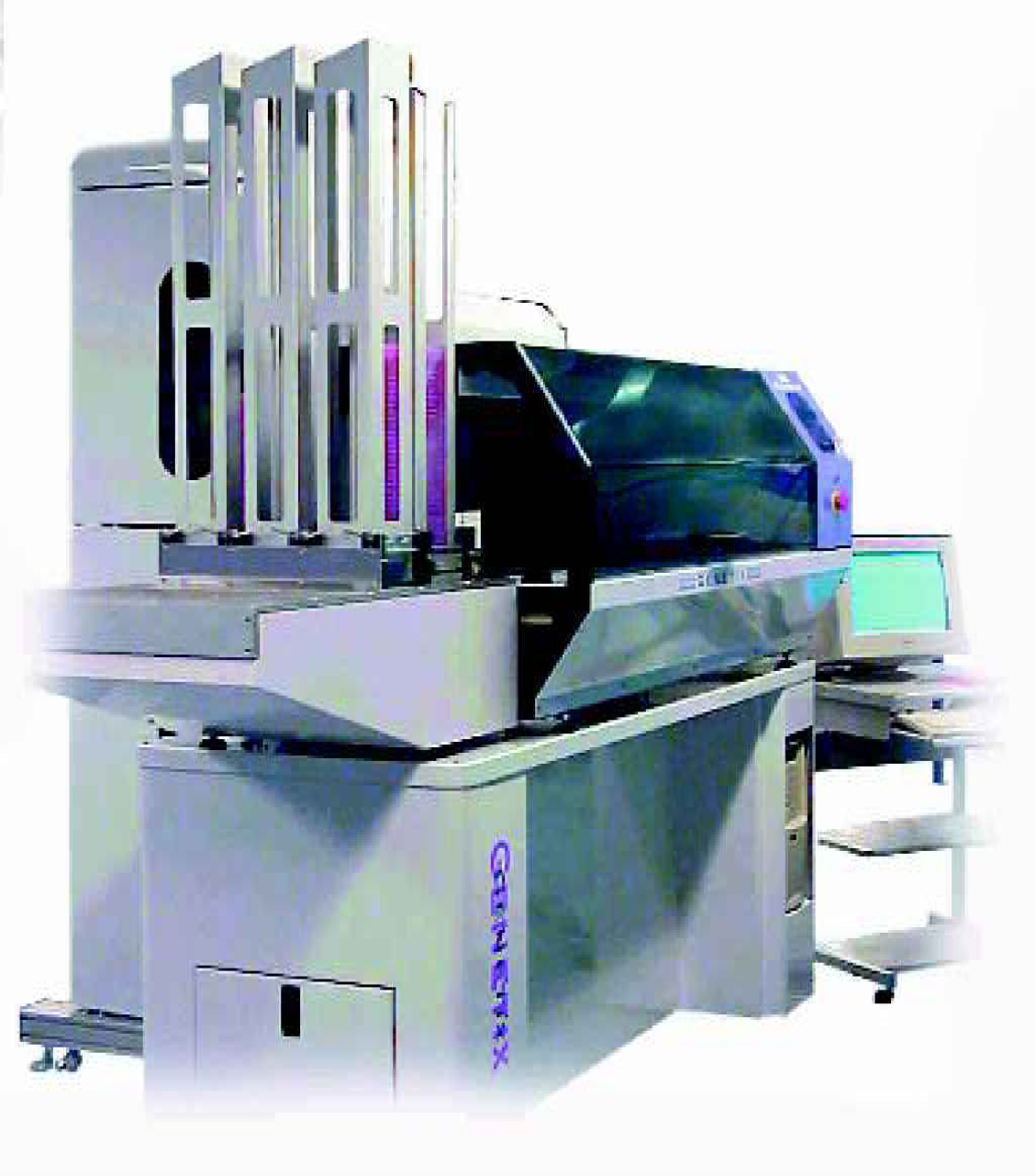
The Genetix MegaMate.
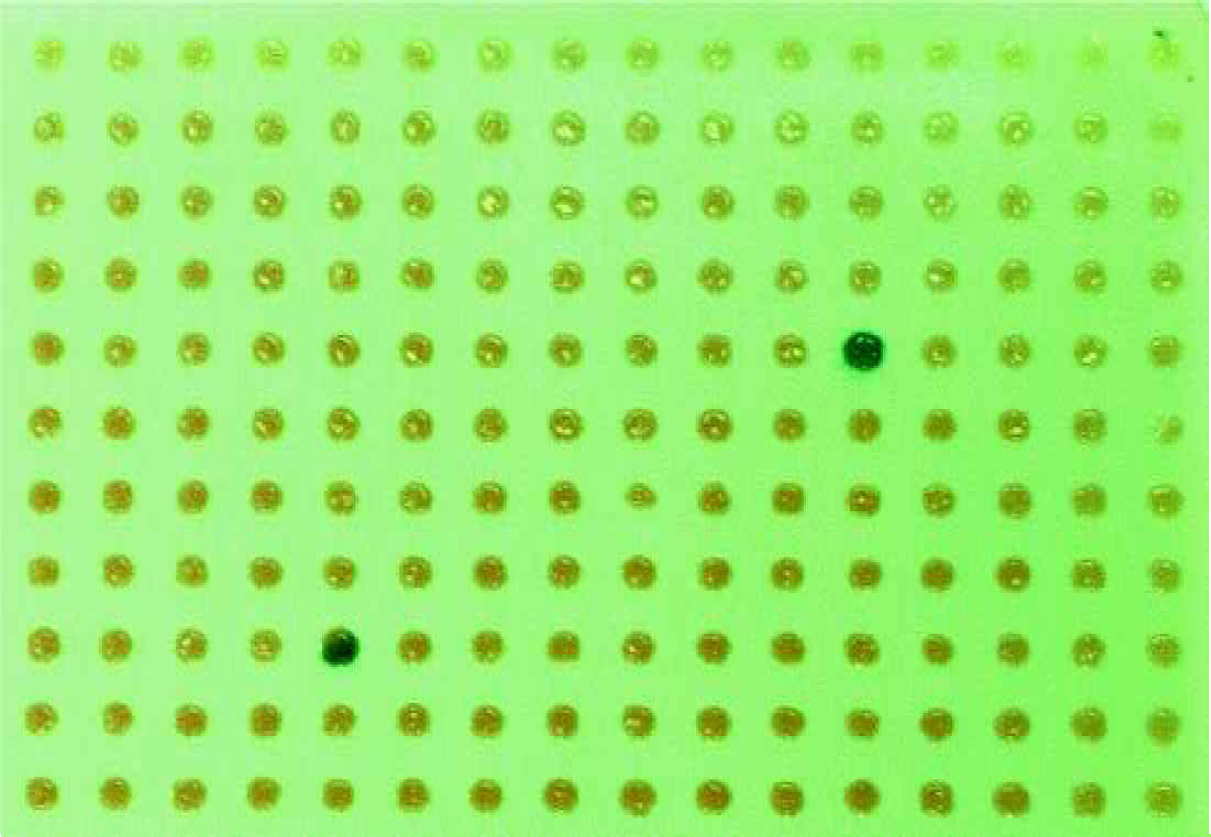
Picking and Gridding of the Prey Library
The prey library is plated out on 22.2 × 22.2 cm QTrays and picked into 384-well microplates using a 96 pin picking head. There are stackers for both the QTrays (capacity 50 trays) and the microplates (capacity 210 plates), thus allowing extended unattended runs. Following incubation, the yeast prey clones in the wells of 384-well microplates are gridded directly onto rich agar medium in QTrays to form an ordered array (Fig 2). The clones are gridded in six fields, typically at 384 spots per field (= 2304 spots per QTray), but higher densities are possible. Similarly, the bait clone is gridded onto the prey clone spots from a culture in a reservoir plate and the QTray is incubated to allow growth and mating to occur. Clones can be gridded in duplicate to assist in detection of false positives.
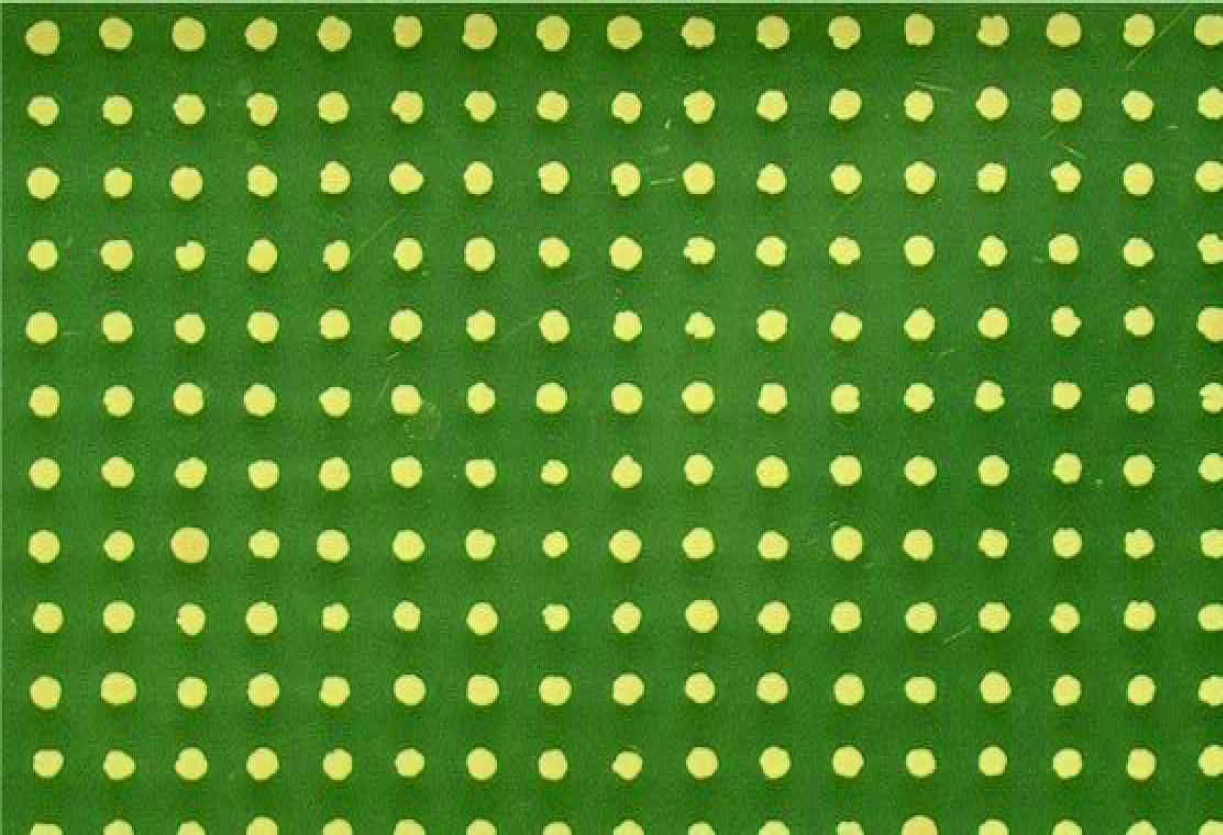
Yeast colonies arrayed on a QTray at a 4.5 mm spacing using a 384 pin gridding head.
Imaging and Replica Gridding
The incubated QTrays are imaged, using the onboard camera, to score all the colonies for growth according to user-defined criteria. The growth data are stored in the data tracking software. The colonies are then replica gridded onto diploid-selective medium in QTrays, maintaining the original gridding pattern. The trays are again imaged following growth and the diploid colonies are replica gridded onto an auxotrophic selection medium to detect colonies expressing interacting proteins. Imaging during these intermediate stages identifies false negative results due to a failure of colony growth prior to the interactor selection; it has been observed that some DNA-binding domain: bait protein fusions inhibit mating. 3
Interactor Selection
The interactor selection QTrays (Fig 3) are imaged on the MegaMate, colony growth is scored and the details stored in the data tracking system. This process can be repeated several times during extended incubations to detect slow-growing colonies. To confirm positive interactions identified by auxotrophic selection, β-galactosidase assays can be performed on colonies replica gridded onto nylon filters laid on QTrays (Fig 4).
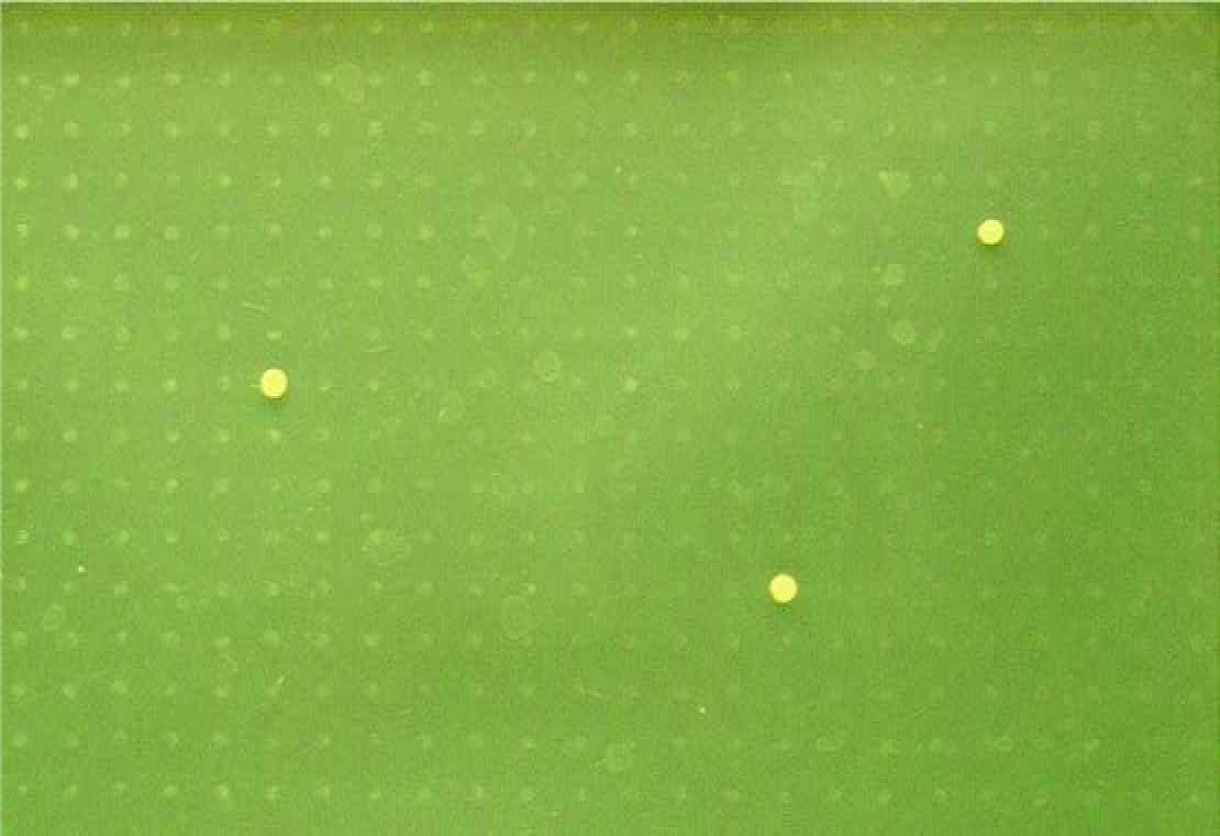
Colonies expressing interacting proteins following replica gridding onto interactor-selective media.
With yeast strains incorporating the MEL1 reporter gene, 8 direct blue/ white selection of positive interactor colonies on agar is possible. The imaging system can discriminate between blue and white colonies.
Data Tracking Software
The QTrays and microplates are all barcoded and the imaging system can determine the relative position of each colony in the QTrays and track it back to the original prey clone. Within the software, all the data and setup parameters associated with each screen are stored and can be called up. Data can also be exported to users' databases and LIMS in XML format. The system can track several screens running simultaneously.
Conclusions
The MegaMate is a fully automated solution for high-throughput (over 100,000 clones per day) yeast two-hybrid screening in an array format. It can use a variety of reporter gene systems and the data tracking is in XML format, ensuring compatibility with a wide range of databases and LIMS.
The use of high-throughput, array-based yeast two hybrid screens has enormous potential for the study of both defined sets of proteins and the entire protein complement of organisms. Such systems are also applicable to the many variants of the ‘classical’ yeast two-hybrid system, such as the Ras/SOS system and the split ubiquitin method. 9,10
Acknowledgements
We are grateful to Prof. Jean Beggs and Dr. Veronica van Heyningen for kindly supplying yeast clones.