



Abstract
Advances in the field of automation have meant hitherto complex manual cell-based assays can now be automated. These improvements have brought significant enhancements in throughput, data fidelity and consistency, and allowed a re-allocation of constrained resources.
Building upon these improvements, we have linked our automated cell-based screening system, Assay Platform™, to Activity Base (IDBS), a software package designed to automate the analysis of HTS data. Customisation of this package has resulted in software that can identify ‘active’ compounds and re-pick them ‘on the fly’ from the original compound plates for triplicate re-testing without operator intervention.
Based on an operator initially defining ‘normal’ parameters for assay activity in Activity Base, combined with an automated quality control software module that checks data fidelity, wells containing ‘active’ compounds can be re-picked and re-tested at the end of an automated screening run. Automating cell-based assays has significantly improved productivity, and, with the synergism of Activity Base, has given us greater power to complete each screening run and report ‘active’ compounds to Chemistry more rapidly. This article presents our approach to the automation of cell-based Fluorescent Imaging Plate Reader (FLIPR) screening together with automated active re-test confirmation using Activity Base.
Keywords
INTRODUCTION
Until recently the automation of cell-based High Throughput Screening (HTS) was considered to be improbable, involving numerous assay steps and inappropriate equipment. Recent advances in equipment, notably the Cytomat 6000 from Heraeus, together with more sophisticated software scheduling packages (SPRINT™, RTS Thurnall) have resulted in the automation of a number of complex assays including those on the FLIPR.
Predominantly, FLIPR is used to measure the mobilisation of intracellular calcium that occurs as part of the activation cascade following cell-surface receptor interaction with proteins and small molecules, typically G-proteins. The major advantage of the instrument is its ability to measure events in all wells of a plate simultaneously, resulting in very short read times, often under two minutes. However, while data generated on FLIPR tends to be of high quality, these assays are labour intensive, causing bottlenecks in the HTS pipeline. From an economic viewpoint, the automation of FLIPR assays significantly improves the speed of the pipeline.
Another bottleneck, until recently, was HTS data analysis, and in particular, re-test screening. Re-test screening requires the re-requesting and re-screening of compounds initially identified as ‘active’ in the screen. Re-requesting these compounds is achieved through the compound management chain, and there can sometimes be a significant lag time between data analysis and the re-test compounds returning for re-screening.
However, in FLIPR assays, plates containing compounds are pre-diluted before an aliquot is transferred into the screening plates, often leaving a substantial amount of pre-diluted compound behind. With an appropriately dynamic information technology (IT) system, active compounds identified in the screen can be re-picked from these pre-diluted plates into new re-test plates and re-screened in triplicate within the same screening run. To do this, we have modified a commercially available HTS data analysis package, Activity Base, to include additional functionality, connected to a retest-picking workstation on the Assay Platform™.
MATERIALS AND METHODS
Assay Platform™ has been designed by RTS Thurnall to be a robust, easily configurable, small footprint automation system operated using a user-friendly software scheduling package (SPRINT). Our system contains the following components: Staubl RX-90 fixed rotational robot arm, Cytomat 6000 incubator (Heraeus), Storer X-40 incubator (Liconic), two Embla 384 well washers (Molecular Devices), four multidrop dispensers (Labsystems), a carousel (Heraeus), a Platemateplus (Matrix Technologies) and a barcode reader combined within a cabinet designed with safety in mind. However, the Assay Platform™ is designed in such a modular way that it is capable of housing virtually any combination of different laboratory instruments.
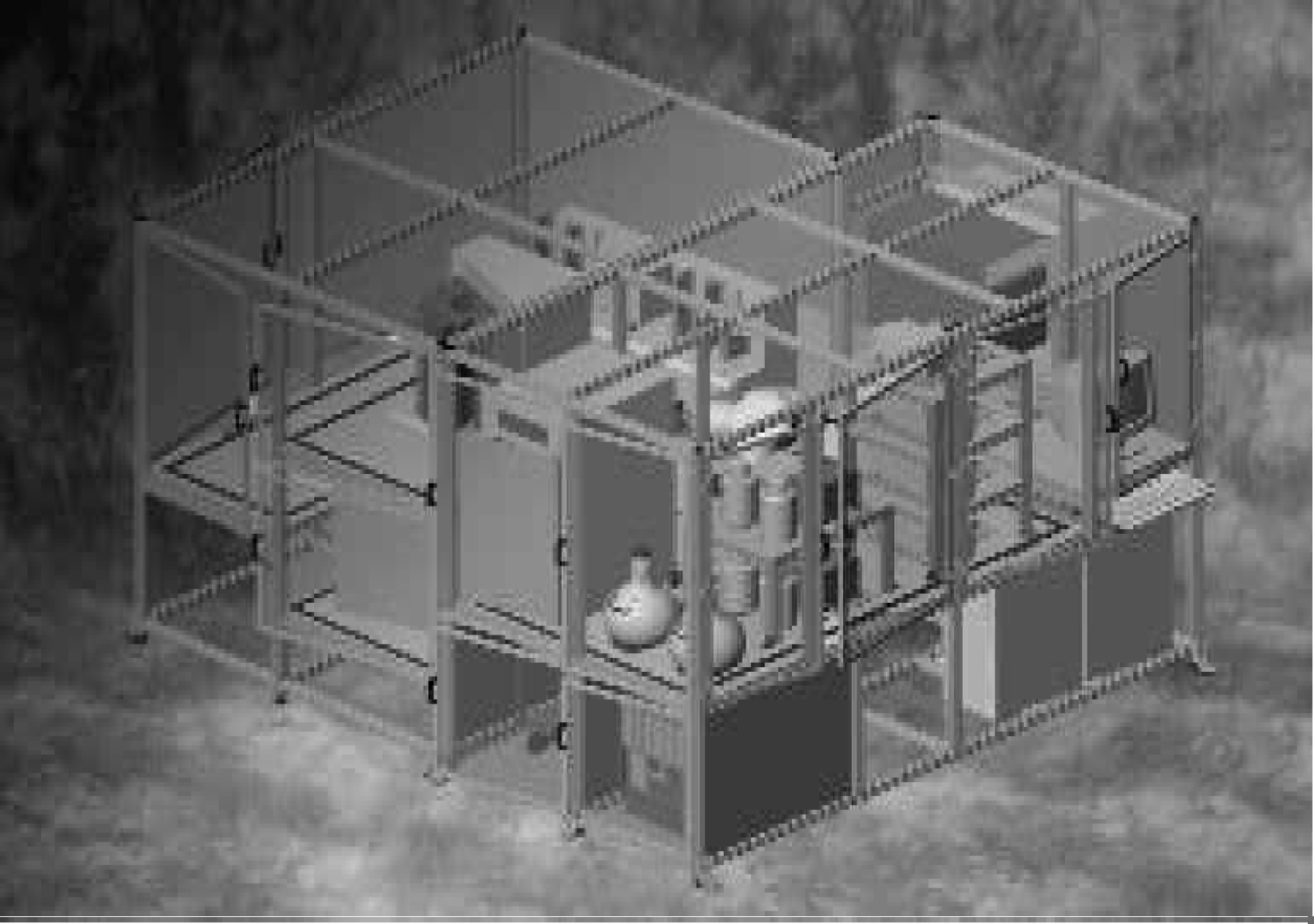
The Cytomat 6000 is a humidified incubator with variable temperature and CO2 control designed to contain a carousel and plate handling system. Microtitre plates can be housed within any of the 21 positions on each of nine demountable stackers (189 plates in total). Automated plate delivery and retrieval is achieved through a ‘letterbox’ style opening designed to minimise environmental fluctuations in the incubator. Similarly, the Storer X-40 is an automation-friendly incubator possessing climate control for temperature, CO2 and humidity with a similar plate retrieval mechanism. Without the carousel its capacity is limited to forty plates, but with the advantage of a smaller footprint.
Both the Embla washers and the multidrops are used for bulk reagent handling; the Embla has 192 aspirate and 192 dispense needles and addresses 384 well plates in two passes. The multidrop is a peristaltic pump-based dispenser with a dispensing accuracy in the range of 20 to 200μl for both 96 and 384 well plates. In most adherent cell based assays, compounds are added to wells containing confluent monolayers of cells. Therefore, a carousel is used to store compound plates on-line prior to the assay. This links together with a Platemateplus, which in this case contains a 384 well dispensing head and is designed to transfer small volumes (0.5 to 12.5μl) of reagent to and from discrete wells of each compound and cell plate respectively.
FLIPR is a laser line scanning plate reader which uses CCD based camera technology to record time dependent changes in fluorescent emission from cells following the addition of an on-line stimulant. This is added to all wells using an integrated dispensing head capable of addressing 384 well plates. Each piece of equipment has its own software driver under the control of the scheduling software management program SPRINT™.
ASSAY BIOLOGY
Adherent immortalised clonal cell lines over-expressing a receptor of interest are dispensed into lidded black wall clear bottom 384 well plates (Nunc) at 10,000 cells per well in 50μl of media using a multidrop (off-line). Cells are incubated overnight (37°C, 5% CO2) in Cytomat stackers within BB6220 incubators (Heraeus). Stacks of plates are transferred into the Cytomat 6000 which acts as a physiological input buffer for cell plates during the 24 hour screening run. Polypropylene 384 well (Matrix) plates containing 1μl of compound per well at 10mM in neat dimethylsuphoxide (DMSO) are manually transferred into the carousel (one compound plate for each cell plate).
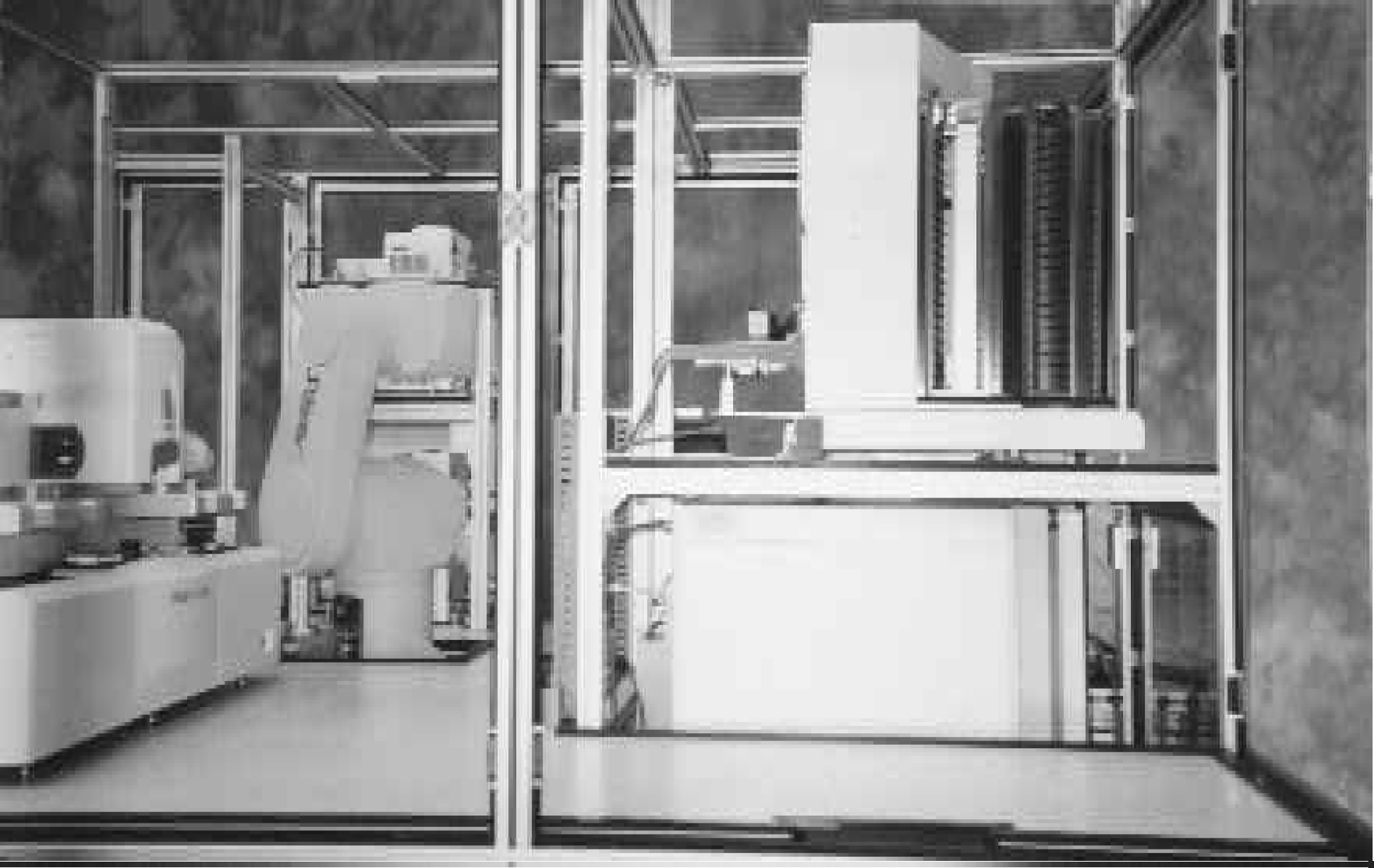
Within the assay, each cell plate is removed from the Cytomat 6000 in a scheduled manner and transferred to the Embla washer. All media are removed from all wells (to waste) and 50μl of cell loading buffer is dispensed to each well by the washer.
The plate is then transferred to the Storer X-40 for a 60 minute incubation (37°C, 5% CO2) to allow time for the fluorescent dye (Fluo-3; Molecular Probes) to enter the cells. Following incubation, the plate is moved to the second washer, where the loading buffer is removed and the plate is transferred immediately to a multidrop for the addition of 35μl of assay buffer.
Then the cell plate is moved to the Platemateplus. Simultaneously (within the constraints of the scheduler), a plate containing compounds is moved from the carousel to another multidrop and 50μl of assay buffer is added to all wells of the plate. This plate is then transferred to the Platemateplus where 5μl of each compound is transferred from the compound plate to the cell plate.
Following this procedure, the cell plate is returned to the Storer X-40 for a further 15 minute incubation to allow the compound time to interact with the receptor, while the compound plate is transferred to the retest-picking equipment (Biomek FX – Saigen Beckman). After the incubation, the cell plate is moved to the FLIPR for measurement of fluorescence once a stimulant has been added to all wells. These assay stimulant stock plates are cycled from the carousel to the FLIPR on a regular basis, while the assay plate is disposed of.
Data generated on the FLIPR are pre-filtered by the FLIPR software and automatically uploaded into Activity Base under its uHTS module. An automated quality control (auto QC) program runs on the control wells of each plate to calculate the mean, standard deviation and Z-factor. If outliers are identified, the auto QC package deletes a single outlier and re-iterates the Z-factor. If, after iteration, the Z-factor is acceptable (<0.4), the plate passes and percentage inhibitions for each compound are calculated automatically. This process occurs for a statistically operator defined number of iterations.
If the percentage inhibition values are greater than an operator defined cut-off, then they are considered ‘active’ and the well locations of these compounds are returned to the Biomek-FX which re-picks the ‘active’ well into a new plate. If, after a number of iterations, the Z-factor remains unacceptable, the data remains unprocessed and is ‘flagged’ to the operator for manual intervention.
These new re-test plates are stored on the Biomek-FX until the end of the screening run (up to 20 hours) and are then re-introduced into the Assay Platform™ and re-screened in triplicate using the same assay methodology.
RESULTS
Using our Assay Platform™ for typical FLIPR calcium assays, we have observed throughputs of up to 120 × 384 plates per 24 hour screening run. This compares with manual operation in which two operators can screen approximately 50 to 60 of the 384 well plates per eight hour day on one FLIPR. Therefore the throughput is at least doubled.
In addition, assay quality and data fidelity have significantly improved. In manual operation, Z factors in a number of FLIPR calcium assays on each day varied from 0.5 (acceptable) to 0 (unacceptable). Automation has improved consistency, with Z factors of between 0.5 and 0.8 within the same screening run being commonplace.
Introducing Activity Base into the automation process and implementing retest ‘on the fly’ have improved not only productivity but have also increased the value of the data generated at the retest stage. The number of compounds re-tested per screening run is dictated by the assay plate throughput time.
Instruments such as the Biomek FX and the Genesis RSP (Tecan), using their eight independent liquid handling probes, can pick and dispense at least eight wells per minute with a tip wash cycle or tip replacement. Therefore, for a 10 minute plate throughput time, up to 80 cherry-picks can be performed, constituting 25% of a 384 well plate (assuming 320 compounds per plate). This means that the number of compounds that can be re-picked from the original source plate and re-tested on the same day within the same screening run increases up to fivefold. This value is far in excess of the number of compounds claimed and returned by Compound Management for re-test in the traditional manner.
Re-picking ‘on the fly’ also reduces the variability between percentage inhibition values observed in our original process (e.g. fewer ‘false positives’), because identical assay reagents and cells are used within the same screening run to re-confirm ‘actives’.
SUMMARY
The implementation of automation in cell-based FLIPR assays has introduced significant improvements not only in throughput but also in data quality. Automation has also increased the utilisation of an expensive instrument from eight to twenty-four hours per day and allowed the re-allocation of constrained resource.
A major criticism of cell-based HTS, which by its very nature has inherently variable cell populations, has been its inability to maintain quality control of data. This is further compounded by manual screening, which, in order to achieve reasonable throughput, tends to batch together the processing of plates through assay steps. Each plate has different assay conditions and consequently variable data. These arguments have inhibited the progression of functional assays within HTS. The implementation of an appropriate automation scheduler significantly reduces variability by managing each plate independently, improving data fidelity and quality control.
Further improvements in data fidelity and throughput have been introduced using Activity Base combined with in-house customisation. Implementation of the automated uHTS module of Activity Base together with automated quality control, linked to a workstation dedicated to delivering compounds for re-test from the original source plate on the Assay Platform™ is a major advantage in HTS. There is an increase in the efficiency of the whole process, screens are completed more rapidly, data reproducibility between wells containing the same compound in primary and retest screening is more comparable, thus increasing the numbers of re-test confirmed ‘active’ compounds.
A surprising advantage of the implementation of automated re-test ‘on the fly’ is that more compounds can be re-tested, which lowers the assay ‘cut-off’ (i.e. the percentage inhibition value above which all compounds are considered to be ‘active’). This value varies from screen to screen and its magnitude is often dictated by the compound supply process.
By automating this process, assays with extreme retest rates can be screened. This increase in data and its fidelity on the less ‘active’ compounds has allowed chemists to analyse structural activity relationships more thoroughly. Generating this 'supporting evidence’ for less ‘active’ but more chemically ‘attractive’ pharmacophores has improved the possibility of identifying more than one lead series per target. This is particularly important given the lack of structural diversity in the compound collections of most pharmaceutical companies.
Extending the concept of automated re-test, we are now progressing to the possibility of re-iterating the process again and performing dose-response screening ‘on the fly’. This concept is dependent on the concentration of the compound in the original plate and the highest concentration required in the dose-response screening process. This is presently being investigated.
A major disadvantage in the automation of cell-based HTS, is shifting the throughput bottle-neck from HTS to the production and supply of cells. Generating enough cells of consistent quality and quantity to maintain throughput utilises the previously alleviated resource. In collaboration with other instrument companies and RTS Thurnall, we are in the process of building a robotic system designed to automate cell-culture specifically to meet this challenge.
Gary Allenby
Team Leader, Astra Zeneca Charnwood, Loughborough, UK Gary Allenby (Ph.D. 1990), did post-doctoral work at Hoffmann La Roche (USA) studying retinoid biology. In 1996 he joined Glaxo Wellcome (U.K.), Lead Generation where his knowledge of mammalian, yeast and microbial cell assay development and HTS was expanded. He was responsible for the development of automated robotic systems designed to perform cell-based HTS (particularly FLIPR) plus cell-based assay miniaturisation. In 1999 he joined Lead Generation at Astra Zeneca (Loughborough, U.K.), were he lead a group responsible for HTS in addition to implementing technologies that will enhance the feasibility, throughput and quality of cell-based HTS.