This is a visual representation of the abstract.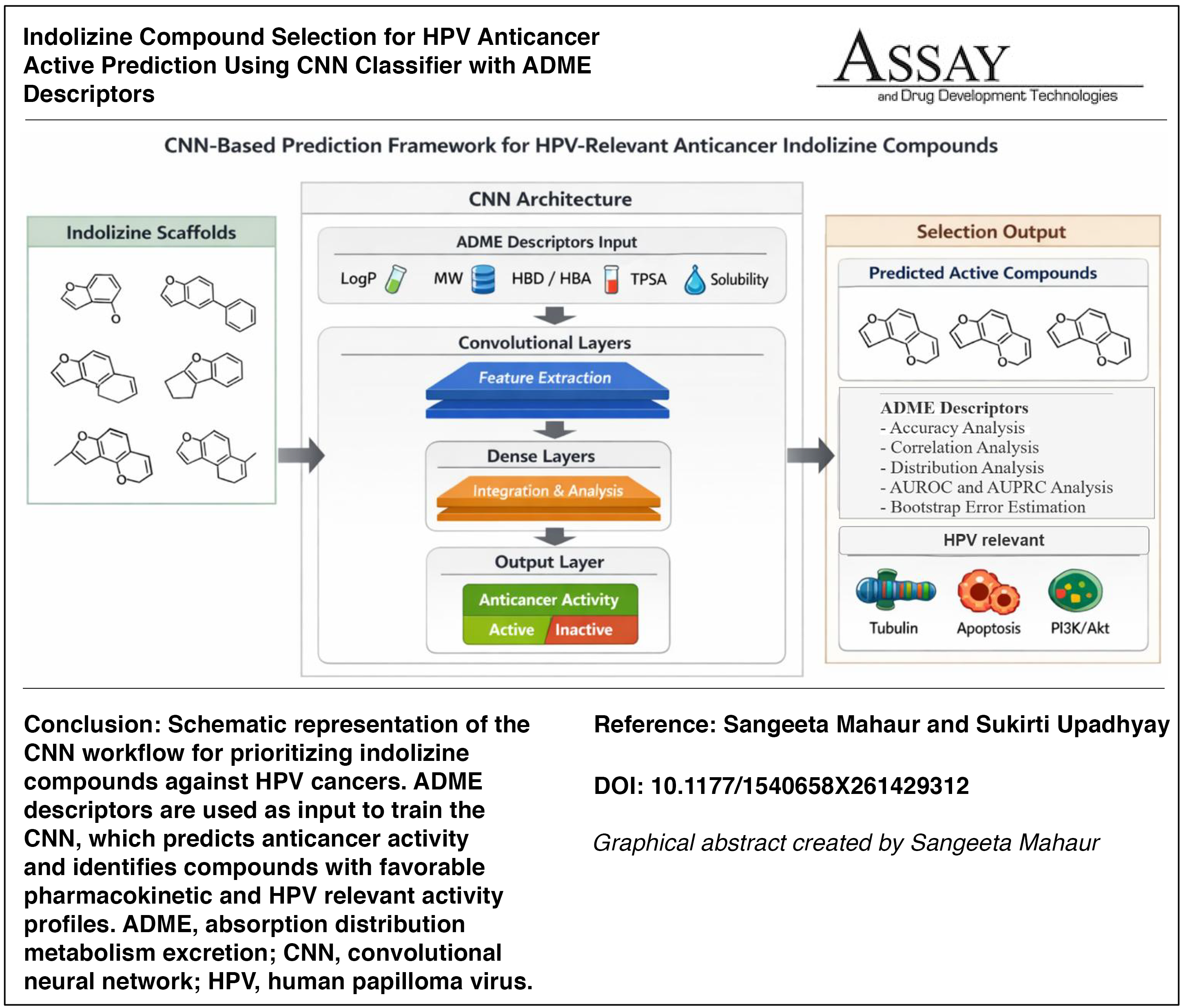


Select search scope: search across all journals or within the current journal


 Restricted accessResearch articleFirst published July, 2026pp. 381-413
 , Sukirti Upadhyay
This is a visual representation of the abstract.
Restricted accessResearch articleFirst published July, 2026pp. 414-430, Yujun Cong, Lulu Li , [...]Ischemic stroke (IS) is an important disease leading to high disability and mortality, and the current clinical treatment is limited. Tongnao Decoction (TND) is a traditional Chinese herbal formula for treating IS, but its pharmacological mechanism remains unclear. This study aims to elucidate the molecular mechanism through network pharmacology, molecular docking, and related experimental verification. First, the bioactive components of TND, along with their potential targets and IS-related gene targets, were identified through multiple databases. Subsequently, an “herb-active component-disease gene target” network and a protein–protein interaction (PPI) network were constructed. Combined with enrichment analysis, key biological processes and signaling pathways were identified. Following this, molecular docking experiments were conducted to preliminarily validate drug–target interactions. Finally, the efficacy of the relevant pathway targets was validated in a photochemically induced mouse cerebral ischemia model. A total of 90 active compounds and 615 target genes were screened. PPI network analyses suggested that TP53, EGFR, STAT3, AKT1, and IL-6 were the hub targets. TND significantly modulates inflammatory biological processes and the PI3K-Akt signaling pathway during IS treatment. Molecular docking analysis indicated that the primary components of TND may exhibit favorable binding affinity to multiple hub target proteins, including TP53, EGFR, STAT3, AKT1, and IL-6. Further
Restricted accessResearch articleFirst published July, 2026pp. 431-443, Fuming LiuThis study demonstrates through an integrated computational and experimental approach that classical calcium channel blockers (CCBs) from four distinct structural classes possess previously unrecognized Mu-opioid receptor (MOR) activation capabilities. Virtual screening revealed stable binding modes between the investigated compounds (verapamil, cinnarizine, diltiazem, and flunarizine) and the 7SBF protein target, with cinnarizine exhibiting the most favorable interaction profile through strong hydrogen bonding with TYR-236 and GLN-124. Molecular dynamics simulations confirmed binding stability, particularly for cinnarizine, which maintained a root-mean-square deviation below 0.3 nm. Experimental validation via cAMP inhibition assays demonstrated significant MOR activation by all compounds, with cinnarizine showing superior potency (IC50 = 21.4 ± 1.5 nM) and efficacy (Imax = 70% ± 2%). The conserved MOR activation across structurally diverse CCBs supports a polypharmacological mechanism where these drugs concurrently modulate both calcium channels and opioid receptors. These findings not only elucidate a novel aspect of CCB pharmacology but also suggest new avenues for drug repurposing and the development of multi-target cardiovascular therapeutics.
Restricted accessResearch articleFirst published July, 2026pp. 444-454This study aimed to design and develop flurbiprofen-loaded chitosan nanoparticles for ophthalmic drug delivery, with the objectives of enhancing formulation stability, sustaining drug release, and improving patient comfort. This study introduces an optimized chitosan-based nanoparticle system for ocular delivery of flurbiprofen, achieving high encapsulation efficiency, physiological compatibility, and sustained release for 20 h. The findings demonstrate a practical, patient-friendly approach that enhances drug bioavailability and stability compared with conventional eye drops. Flurbiprofen-loaded nanoparticles were prepared using gelation and optimized through a Box–Behnken design. The influence of formulation variables (0.1%–0.3% w/v chitosan concentration, 0.2–0.6 mL/min dropping rate, and 500–900 rpm mixing speed) was assessed. The optimized nanoparticles were evaluated for particle size, polydispersity index (PDI), zeta potential, pH, osmolarity, and entrapment efficiency (%). The optimized formulation was achieved at 0.2% (w/v) chitosan concentration, a dropping rate of 0.4 mL/min, and a mixing speed of 700 rpm. The nanoparticles exhibited a particle size of 110.0 ± 2.20 nm, PDI of 0.347 ± 0.03, and zeta potential of + 15.4 ± 3.8 mV. The entrapment efficiency was 80.89%. The formulation was adjusted to physiological conditions (pH 6.7, osmolarity 300 mOsm/kg).