Editorial
Select search scope: search across all journals or within the current journal

The value and impact that ceramic coatings have had in the development of modern mechanical systems and protection of components exposed to harsh environments are often overlooked and understated. Modern equipment must be capable of withstanding substantial attrition, impact damage, erosion and corrosion that degrades materials across a variety of applications. Ceramic coatings enable a robust protective barrier for underlying substrates that outperforms most alternative film barrier materials (i.e. polymers, metals, glasses). In this work, a comprehensive review of modern ceramic coatings for barrier protection against mechanical wear and chemical attack is discussed in detail over a large breadth of relevant topics and case studies. This review highlights many critical aspects including various coating functionalities, design architectures, processing effects, material classes and promising future directions for engineering high-performance ceramic coating.
This review article outlines the authors’ previous works on environmental barrier coatings (EBC) for non-oxide ceramics and discusses what has been revealed since then. It also provides an overview of the research on eutectic coatings as EBC's that has been carried out in recent years. The authors have developed EBC for Lu2O3-doped silicon nitride ceramics. Since preliminary material screening tests revealed that Lu2Si2O7 phase has superior resistance against water vapour corrosion, the development was carried out mainly on EBC's based on this phase. This review addresses recession behaviours in static state and dynamic steam jet water vapour environments for some oxides, as well as under steam jet test for silicon nitride ceramics with EBC's, in addition to fabrication of EBC's with oxides eutectic structure. One example of the authors’ works is described here, since it can fabricate a crack-free Al2O3–HfO2 eutectic coating.
Wear characteristics of a fine-grained dual-phase high-entropy (Ti0.14Zr0.2Nb0.2Hf0.2Ta0.26)C + (Ti0.38Zr0.18Nb0.22Hf0.115Ta0.105)B2 were investigated using the ball-on-flat technique/dry sliding in air. The experimental material showed very high density with a value of 8.72 g/cm3 and a small grain size of HEC and HEB grains with values of 0.95 ± 0.30 and 0.99 ± 0.27 μm, respectively. The nano-hardness of the HEC and HEB grains is very high with mean values of 37.4 ± 2.3 and 43.0 ± 2.9 GPa, respectively with the micro-hardness of the dual system HV1 29.4 ± 2.0 GPa. The friction coefficient values during the test with 5 and 10 N increased from a value of 0.4 and reached the values 0.65 and 0.77 at the sliding distances of approximately 1500 and 1000 m, respectively. The specific wear rate decreased with increasing sliding distance at 5 N load, from 4.75 × 10⁻⁷ mm3/Nm to 4.2 × 10⁻⁷ mm3/Nm and at 10 N from 2.1 × 10⁻⁷ to 1.7 × 10⁻⁷ mm3/Nm. The dominant wear mechanisms in both cases were an oxidation-driven tribo-chemical reaction and tribo-layer formation in boride grains and mechanical wear in carbide grains.
The volume erosion rate of the slip cast monolithic and composite ceramics was studied using SiO2 and SiC particles as erodents, under different impact angles (30°, 60°, 90°), at room temperature. Therefore, three groups of samples were prepared: (i) monolithic alumina (Al2O3); (ii) composite alumina–zirconia (Al2O3–ZrO2) containing 99 wt-% Al2O3 and 1 wt-% ZrO2 and (iii) composite alumina–zirconia (Al2O3–ZrO2) containing 90 wt-% Al2O3 and 10 wt-% ZrO2. Erosion mechanisms of all prepared ceramic samples were evaluated by the volume erosion rate (
The most widely used ceramic material is aluminium oxide, known as alumina. Due to its superior properties such as chemical stability, high wear resistance, refractoriness and so on, it is ideal for applications in aggressive environment. This type of environment often includes exposure to corrosive solids, liquids and gases. When ceramics come in contact with corrosive medium, several corrosion mechanisms can occur, depending on a number of parameters. Therefore, the corrosion behaviour of cold isostatically pressed (CIP) high purity alumina ceramics was observed under different conditions: 0.5, 1.25 and 2 mol dm−3 of nitric acid at 25°C, 40°C and 55°C through 10 days. Purity of used alumina ceramics was 99.8345 wt. % with 0.1655 wt. % of both sintering aid (MgO) and impurities (SiO2, CaO, Na2O and Fe2O3). The results show that Al2O3 ceramics exhibit good corrosion resistance in nitric acid. Al2O3 corrosion behaviour varies depending on the temperature, time and HNO3 concentration. In view of the reaction kinetics, it proceeds in the near-parabolic law in HNO3 aqueous solution and decreases with an increase of the HNO3 concentration.
An alumina-toughened zirconia (ATZ) material, fabricated using a procedure consisting of the common sintering of two different zirconia powders, was tested using the ball-on-disc method in a temperature range between room temperature and 400°C. Tetragonal zirconia balls were used as a counterpart. Two different types of microstructure were designed, one consisting of separated alumina inclusions in a zirconia matrix and another one which was a combination of two continuous phases, penetrating the whole volume of the composite. It was detected that at elevated temperatures both materials showed a distinct decrease in the wear rate. Composite with a low alumina content showed minimal wear rate at 300°C and composite with higher amount of alumina showed it at 400°C. There are some observations that this minimal wear rate result is connected with a pseudoplastic behaviour of a layer formed between co-operating elements of tribological pair. This layer is composed of the debris of both, sample and counterpart, and its behaviour during sliding is connected with the mean grain size of this debris which is correlated with the mean grain size of sintered material.
Vitreous ceramic-like enamel coatings can be applied onto low-alloy and carbon steel components of various configurations, including tubulars, by different cost-effective technological methods achieving thicknesses up to 300 µm. Corrosion resistance of the enamel coatings in acidic environments, boiling brines and high temperature – high pressure (HT-HP) steam with a presence of CO2-H2S containing gases simulating some processes in refinery, oil & gas and geothermal production was tested and evaluated. Specifically, the testing in simulating HT-HP downhole production conditions was conducted for the enamel coatings for the first time. Microstructural examination and analysis of the obtained enamel glassy coatings revealed their insignificant compositional and structural degradation. A high level of steel protection by enamelling in considered environments demonstrated these coatings’ potential for different corrosion-related industrial processes.
The Albertan oil sands surface mining industry recovers and processes large quantities of ore to remove the bitumen from the oil sands. The scale of the operations and the abrasive nature of the ore results in very aggressive wear conditions. The high levels of abrasive and impact wear can lead to equipment reliability issues, with associated costs and lost production. As such, it is common to augment the durability of mining components by the application of wear-resistant materials. For critical equipment tungsten carbide-based composite overlays are commonly selected to improve reliability and extend service life. The performance of the overlay is very much dependent on the service conditions. This paper will describe how the selection of tungsten carbide-type can determine the performance of a composite overlay in a range of abrasive and impact wear conditions. The paper will demonstrate how the effective selection of the composite to match the expected service conditions can improve the durability of mining equipment.
This study presents a novel approach for surface repairs of high-strength, cold-worked aluminium (Al) alloys, without negatively affecting the base material strength. Low-pressure cold spraying was used to fabricate Al–Al2O3 metal matrix composite overlays, with varying concentrations of Al2O3 deposited on an Al alloy. Friction stir processing (FSP) was employed to disperse and consolidate the overlay coating on the base material. The FSP was found to improve the Al2O3 particle distribution in the coating and reduce the mean free path between Al2O3 particles. The coating hardness increased after FSP. The post-FSPed overlays also exhibited lower wear rates compared to the as-sprayed condition. Remarkable improvement was observed in the tensile properties of the coatings, which were attributed to the improved dispersion of Al2O3 particles in the matrix, while the enhanced ductility was attributed to the possible grain refinement that occurred due to the recrystallisation of Al during FSP.
CuCr2O4 spinel is a candidate coating material for central receivers in concentrating solar power to protect structural alloys against high temperature oxidation and related degradation. Coating performance and microstructure of dip-coated and sintered coatings is dictated by the initial particle size of the CuCr2O4 and sintering temperature, but can be compromised by particle agglomeration. In this study, sub-micron particles were synthesised through the Pechini and modified Pechini sol–gel methods. Phase composition was confirmed via X-ray diffraction. Particle growth during calcination of the nanoparticles at different temperatures (650°C, 750°C, 850°C) and times (between 1 and 24 h) was measured via laser diffraction and scanning electron microscopy. The modified Pechini method displayed evidence of smaller particle sizes and greater agglomeration. The kinetics of particle growth observed are consistent with a diffusion limited inhibited grain growth model.
Steels are commonly used in high-performance demanding applications due to their favourable mechanical properties. Various surface engineering techniques have been developed for steels, among which chromizing is an affordable high-throughput case-hardenig process for improved surface hardness and wear resistance while retaining the substrate ductility and toughness. In this work, tribological testing along with nano- and micro-indentation and morphological and composional characterisation were used to understand the effects of the chromizing process on the AISI 1095 carbon steel, 52100 bearing steel and A2, D2 and M2 tool steels. The results of this study demonstrate that the chromizing treatment of low-cost 1095 and 52100 steels significantly improves their wear and hardness properties to a level comparable to the more costly tool steels. While chromizing also increased the hardness of the tool steels, it had little improvement on the wear resistance for the D2 and M2 tool steels.
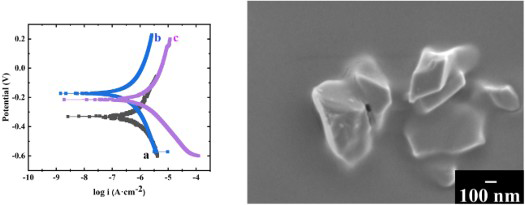
This investigation is motivated by increasing interest in polymer-diamond coatings for biomedical applications in implants and sensors. A conceptually new strategy is based on the feasibility of solubilisation of polyethyl methacrylate (PEMA) in isopropanol using 18β-glycyrrhetinic acid (GRA) and rhamnolipids (RLP) as solubilising agents. This approach offers benefits for biomedical applications by avoiding the use of traditional toxic solvents for PEMA dissolution. The ability to obtain concentrated solutions of high molecular mass polymer is a crucial factor for the development of a dip coating method. Potentiodynamic and impedance spectroscopy studies indicate that PEMA films provide corrosion protection of stainless steel in 3% NaCl solutions. The use of GRA facilitates the fabrication of films with improved protective properties. PEMA films are obtained as monolayers or multilayers of controlled film mass. Another important finding is a good dispersion of chemically inert microdiamond and nanodiamond particles using GRA and RLP. For the first time composite PEMA-diamond films are obtained using GRA and RLP as solubilising agents for PEMA and dispersing agents for diamonds in isopropanol solvent. The detailed analysis of film microstructures provides an insight into the influence of chemical structure of GRA and RLP on their interactions with PEMA and diamonds. Moreover, microstructure analysis indicates that such interactions are important for preventing defects in the composite films. The benefits of steroid-like dispersants are discussed. Composite films are obtained as monolayers with different diamond content or PEMA-diamond multilayers of different composition and film mass. The method represents a versatile strategy for the fabrication of alternating PEMA/PEMA-diamond multilayers. The benefits of the obtained microstructures for biomedical applications are discussed. The approach developed in this investigation opens an avenue for the fabrication of other polymer coatings containing various functional materials.
Carbide-derived carbon (CDC) was previously proposed as a surface modification method for hip implant applications since it showed excellent tribocorrosion performance under open-circuit potential (OCP) conditions. Nonetheless, a systematic evaluation of the CDC's tribocorrosion properties was still missing. Therefore, our objective is to test CDC's tribocorrosion performance under various electrochemical conditions and to identify the synergism between wear and corrosion. Based on the findings, the variations in OCP for CDC (0.626 mV) are smaller than Ti6Al4V (1.91 mV), and CDC showed lower induced current than T6Al4V for all potentials, suggesting CDC is more stable than Ti6Al4V under tribocorrosive conditions. Eventually, the weight loss of Ti6Al4V (50.662 ± 5.19 μg) was found to be significantly higher than that of CDC (4.965 ± 5.19 μg), which agrees with the electrochemical results. In summary, CDC showed better tribocorrosion performance than Ti6Al4V and was determined as an Antagonism regime.
The solid particle technology usage in concentrated solar power plants as direct heat absorption and storage medium necessitate well selection of the materials for the components such as transport and sluice systems, which are in direct contact with moving and falling hot particles up to 1500 ˚C. Beyond mechanical properties, chemical inertness and high-temperature stability, abrasion/erosion resistance are one of the key properties, for which, there is no easy-applicable and rapid test method exist enabling controlled lab-scale parametric studies. A novel particle impact test was established using a resonance acoustic mixer, in which ceramic particles are strongly accelerated and collide with the ceramic surface within a closed vessel. After determination of the most representative parameters such as ceramic ball size, vessel diameter, and retainment/removal of debris, selected experiments were conducted on three candidate materials aimed to be used as high-temperature transport/port systems; dense C 799 Al2O3, porous water-plasma sprayed Plascera-type Al2O3 and WHIPOX-type Al2O3/Al2O3 ceramic matrix composites with porous matrix; with and without porous protective Al2O3 coating. The distinct mass loss behaviour of candidate materials highlighted the viability of the test method and the relevance of microstructures of porous Al2O3 materials on abrasion resistance.