






Abstract
Preoccupation with weight status and a desire to lose weight appears common. Many individuals seek “magic bullet” approaches to weight loss and waive the risks of using these products. In this paper, we review the challenges of weight maintenance, highlight some unhealthy weight control practices, and discuss the futility and potential danger of unregulated weight control agents. Novel clinical strategies are discussed that health care providers may use to triage patients with obesity in an attempt to make ethical and personalized treatment decisions.
Keywords
Introduction
There appears to be an ever-increasing desire for personal control over one's body weight. Whether this preoccupation with weight status is driven by the rising rates of obesity, the social desirability for “thinness” often promulgated through popular media outlets (ie, TV, magazines, the Internet), and/or the unregulated weight-loss industry promoting unrealistic norms, there seems to be a common desire to lose weight in the absence of clinical indications. The Canadian weight-loss industry is a multimillion dollar juggernaut. 1 This suggests that many people are looking for “magic bullet” approaches to weight loss and are willing to waive the inherent risks of using non-evidence-informed products. However, the evidence is clear: when it comes to controlling the multifactorial complexity of energy balance, there are no simple solutions.
Thus, the objective of this mini review is to briefly discuss the challenges of weight maintenance in our current obesogenic environment and highlight some common unhealthy weight control practices. Given the limited evidence and underreporting on popular weight-loss techniques, we aim to educate the reader on the futility and potential danger of unregulated weight control agents. Lastly, with respect to clinical weight management, we outline strategies not yet widespread in standard practice that health care providers may use to triage obese patients in an attempt to make ethical and personalized treatment decisions about weight.
Why is Weight Regain so Common?
The human body naturally resists weight loss and promotes weight gain over time, which is of utmost importance from an evolutionary perspective when storage of energy in times of nutrient scarcity was essential for survival.2,3 Yet, for people struggling with excess weight, effective and sustainable weight reduction programs often come up short in part due to the high rates of recidivism 4 expected in the “obesogenic” (forced and socially accepted sedentarism—sitting, widespread availability of energy-dense nutrient-poor foods) environment of present day. These relapses may instigate feelings of helplessness that lead individuals to seek alternative ways to achieve their weight-loss goals and spawn a continual search for nonmedicinal, unregulated commercial products.
Individuals who are able to lose weight with a hypocaloric diet and/or physical activity (PA) are faced with a greater challenge—maintaining their newly established weight. 3 Short-term weight loss is achievable, but only a small number of patients with obesity are able to maintain lost weight because thermogenesis adapts to the lower body weight and further efforts are required if negative energy balance is to be maintained. In fact, many individuals embarking on a weight-loss journey regain lost weight over time, a phenomenon attributed to strong psychobiological factors (eg, hunger, leptin, ghrelin, PYY) involved with the homeostatic regulation of appetite and body weight.5,6 This is certainly a sad reality that people should be aware of when starting a weight-loss program—the battle never stops.
It is actually these strong psychophysiological and adaptive responses driving weight regain, which may be exacerbated with repeated weight cycling. Each subsequent weight-loss attempt becomes more challenging and requires aggressive action and significant variation (ie, drastic caloric restriction and/or energy expenditure) to induce negative energy balance as the body defends any weight perturbations. Consequently, weight cycling may encourage weight gain over time and increase the risk of adipose-related comorbidities. These findings transcend the oversimplistic, commonly held belief that voluntary resumption of old behaviors are the sole determinants of weight regain.7,8
Unhealthy Weight Control Practices
Both men and women report engaging in unhealthy weight control behaviors, although the evidence is likely an underestimate of reality given the self-report nature of surveillance. Common behaviors and/or agents used to control weight include, but are not limited to meal-skipping and fasting, smoking for appetite reduction, and compensatory exercise, as well as consuming stimulants such as caffeine, ephedrine, prescription drugs, and energy drinks.9–12 Indeed, roughly 12% of adolescent women and 8% of men engage in extreme weight control behaviors including taking diet pills, laxatives, diuretics, or purging. 13 Despite attempts to control weight, those who engage in unhealthy dietary practices commonly weight-cycle and regain over time, 14 show signs of depression, 15 and have eating disorders 16 : a trend that increases with rising body mass index (BMI) and disproportionately affects women. 13
Furthermore, maintaining lost weight is a challenging task, leading many individuals to seek alternative options for weight control in the form of supplements. When ephedrine evolved from its recreational use and became widely recognized as a stimulant-like agent with weight control properties, it evaded regulation 1994 as a “dietary supplement”. With respect to the original recreational use of ephedrine that emerged in the 1950s, American reports suggest that adolescents abused it nearly as much as alcohol or marijuana, which prompted Federal regulation that was later redacted. It was these initial legislative attempts that aimed to limit unindicated use of ephedrine for all purposes (recreational, athletic performance, etc.). 17 Overall, several factors, including general safety reports, abuse of the drug leading to death in professional athletes, and its potential use as a precursor in the production of illicit drugs prompted regulation of ephedrine in America. North of the border, Canadian regulations state that “ephedrine, its salts and any plant containing ephedrine or its salts” are subject to regulatory requirements under the Controlled Drug and Substances Act and advises against the use of ephedrine and/or its products in combination with other stimulants (eg, caffeine) for all purposes (recreational, athletic, etc.) citing serious health risks. 18 For primary and allied care providers, it is important to note that although ephedra is a commonly cited weight control agent, other readily available over-the-counter (OTC) products and supplements, including bitter orange as a replacement for ephedra and/or high doses of caffeine are often hidden or undisclosed behind multiple herbs. However, a recent randomized controlled trial (RCT) reported that caffeine/ephedrine supplementation (200 mg/20 mg) produced modestly effective weight loss (−6.0%) and reduced fat mass (−10.0%) when medically supervised. 19
Despite these apparent benefits, one must keep in mind that the controlled and supervised nature of research trials does not match recreational, unsupervised supplementation with inappropriate dosing. In fact, a systematic review and meta-analysis (52 RCTs and 65 case reports) examining the adverse effects of ephedrine/caffeine use for weight loss stated that supplementation increased risk of psychiatric, autonomic, or gastrointestinal symptoms, and heart palpitations. 10 Chang and Chiou 20 explored the use of weight-loss supplements as an appealing alternative to weight management and reported that their usage induces overly optimistic assessments of progress toward weight reduction at the expense of psychological abdication of dietary control. Simply put, taking weight-loss supplements elicits liberation from dietary control, induces a false sense of progress in weight control, and leads to suboptimal dietary regulation.
How to Successfully Maintain Weight Loss?
The United States National Weight Control Registry (NWCR) is the largest prospective study of long-term successful weight-loss maintenance (kept off 30 lb. (13.6 kg) for >1 year). Participants were predominately women (80%), lost on average 66 lb. (30 kg), and maintained the loss for 5.5 years. Successful maintainers reported consuming a low-calorie, low-fat diet, engaging in high levels of PA (90% exercise on average 1 h/day), eating breakfast daily (78%), self-weighing at least once a week (75%), and limiting television time. 21 Thus, specific behaviors appear to be advantageous for successful weight maintenance.
There is considerable variation in how each individual loses and maintains weight, which may come at the expense of excessive exercise, dietary restraint, and/or mental health concerns/preoccupation with weight. Graham et al. 22 Evaluated the effects of behavior change on weight-loss trajectories over a 10-year follow-up in NWCR participants and noted that the majority (>87%) maintained lost weight at 5 and 10 years. Conversely, greater weight regain was associated with decreased leisure-time PA, less dietary restraint, lower frequency of self-weighing, increased energy intake from fat, and disinhibited eating (Fig. 1). Although long-term weight control is possible, it requires meticulous attention and sustained behavior changes. Monitoring dietary intake, understanding caloric literacy and energy balance, regular contact with a dietitian, higher protein intake, and tracking progress in lifestyle-based weight management programs appear to have the most beneficial effects on weig ht control23–25 (Fig. 2).
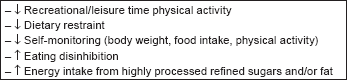
Factors associated with weight regain following loss.

Factors associated with weight loss maintenance.
With respect to mental health, a systematic review and meta-analysis examining the effects of weight loss on health-related quality of life (HRQL) in 53 RCTs suggests that, while modest improvements in physical health were noted (ie, improved physical component score and improved physical functioning domain scores), no significant associations between weight loss and HRQL improvement or mental health emerged. However, because of suboptimal endpoint reporting, quantitative data pooling could only be performed using 25% of the trials in any model, which makes it challenging to discern the independent factors contributing to altered metal health scores and HRQL that assessed 20 different instruments. Nonetheless, these findings suggest that weight loss alone is insufficient to improve mental health 26 and that, in the absence of a clinically relevant reason to lose weight, it is not advantageous to embark on a futile weight reduction journey and risk weight cycling, given the many societal and biological factors promoting regain. More importantly, it is vital that all individuals discover and routinely participate in activities and healthful behaviors that they enjoy and perceive as meaningful (ie, walking with their partner, preparing meals as a family, etc.). Independent of body weight modifications, routine engagement in a healthy lifestyle has numerous benefits on well-being and uniquely positions behavior modification, not weight, as the focal point of the clinical encounter. On the other hand, if clinically indicated, interventions that focused on daily self-weighing did not cause adverse psychological outcomes, including increased depressive symptoms, anorectic cognitions, susceptibility to hunger, or binge eating. 27 This is relevant in weight management given the importance of self-monitoring for long-term weight control.
Lastly, there is a lack of consensus as to which modality best prevents weight regain. While exercise alone has beneficial effects on weight-loss maintenance, 28 a recent systematic review and meta-analysis of RCTs (n = 3017) provides novel insights with respect to the contribution of diet. Johansson et al. 29 Evaluated the effects of anti-obesity drugs, diet, or exercise on weight-loss maintenance after an initial very low calorie diet (VLCD; <1000 kcal/day). Following the VLCD, subjects lost ∼12 kg, with the majority regaining weight during follow-up. Anti-obesity drugs improved weight-loss maintenance by 3.5 kg over 18 months, meal replacements by 3.9 kg over 12 months, high-protein diets by 1.5 kg over 5 months, whereas exercise (0.8 kg over 10 months) and dietary supplements (0 kg over 3 months) did not improve maintenance. Thus, this meta-analysis suggests that there are several ways in which patients can successfully maintain lower body weight following intervention with certain modalities adding greater risk compared to others (ie, drug vs high-protein diet). Although exercise did not result in clinically meaningful weight maintenance, one cannot disregard its importance for overall health.
The Need to Set Realistic Weight Management Goals
Health care providers should consider making recommendations that address the underlying causes of positive energy balance and encourage patients to engage in self-monitoring, reduce sedentary time, increase PA, and improve the macronutrient composition of the diet (higher protein), as these modalities are virtually accessible to everyone and pose limited risk. Additional attention should address the gap between weight-based recommendations for health benefit (5–10% weight loss) versus patient expectations for weight loss mainly for cosmetic reasons. Patient expectations are exceedingly high and unrealistic when participating in the best behavioral and/or pharmacological treatment programs. Often, successful patients most responsive to intervention (ie, greatest weight loss) are left disappointed. 30 Also, patients with the highest pretreatment weights are the most likely to have unrealistic expectations for success. 31 The dramatic disparity between patient expectations and professional recommendations highlight the need for patient education concerning realistic outcomes that encourage acceptance of modest weight loss, as slight reductions in body weight yield substantial health benefits.30,32 Here, the concept of “best weight” rather than “ideal weight” is likely a more realistic and feasible option to highlight for long-term success by shifting the focus away from BMI. 33 In brief, best weight is whatever weight a patient can achieve while living the healthiest lifestyle they can enjoy, acknowledging that there comes a point when a person cannot eat less and exercise more and still like their life. (For a concise, practical guide on obesity management, see: http://www.obesitynetwork.ca/best-weight.) 33 Overall, for most individuals weight maintenance is not a simple feat, it is a lifestyle that requires lifelong commitment and dedication to weight stability, and more importantly, access to appropriate clinical care.
Clinical Recommendations—Initiating a “healthy” Dialog in Primary Care
The desire to modify body weight is often accomplished by unhealthy means and not clinically indicated. Given the increased prevalence of obesity, it is timely to see the Edmonton Obesity Staging System (EOSS) emerge as a novel tool that directly assesses obesity-related comorbidities and functional status prior to making clinical recommendations for weight reduction. In contrast to BMI, the EOSS offers clinical utility and is able to independently predict mortality better than contemporary methods. 34 Moreover, the EOSS assesses obesity-related health risk, not simply one's relationship with gravity (ie, weight), knowing that weight alone is a poor marker of health status. Consequently, the EOSS offers the ability to prioritize treatment in a publically funded health care system based on how “sick” one is and not solely on weight alone. Furthermore, the EOSS is a welcome addition to the clinician's tool box, as it may reduce weight bias and discrimination (not all patients with obesity are unhealthy or sick). In fact, individuals with obesity can be at equal or lesser health risk when compared to unhealthy “normal weight” individuals; after all, healthy behaviors trump weight status. Overall, the EOSS encourages a clinical investigation aimed to address the underlying causes of obesity-related ill health in an attempt to improve the quality of life for those struggling with excess weight. For a printable pocket card designed to aid care providers with patient assessment and staging, see http://www.drsharma.ca/wp-content/uploads/edmonton-obesity-staging-system-pocket-card.pdf
Indeed, the Canadian Obesity Network (CON) has created several tools designed to aid health care providers with weight management in the clinical setting, including the EOSS-Pediatric version and the 5 As of Pediatric Obesity Management, the 5 As for Adult Obesity Management, and the 5 As for Healthy Pregnancy Weight Gain 35 (Fig. 3). The purpose of these tools is to initiate a healthy dialog about weight management in an empathetic, patient-centered manner, using simple, easy-to-follow acronyms and frameworks. By addressing the underlying causes of positive energy balance and the drivers of weight gain, there is hope that patients and providers will become aware that a pivotal step in weight management is first halting weight gain and acknowledging the importance of weight stability rather than instantaneous weight loss. In the absence of a clinically indicated reason to lose weight (eg, hyperlipidemia), the ethics of weight-loss recommendations come into question given the high rates of relapse following intervention, the strong psychobiological drivers promoting weight regain, and the psychological impact unsuccessful attempts may have on the patients' outlook, future engagement in healthy behaviors, and overall well-being. Accordingly, the “5 As” tool kits can help health care providers determine what recommendations are clinically indicated, and when.

Conclusion
Society appears fascinated by popular commercial weight-loss products and magic bullet approaches to weight management. Moreover, in light of the popular myth that one can “out-train“ a poor diet (ie, exercise trumps caloric reduction for weight loss) coupled with “recommendations” from pseudo-scientific television doctors who make fallacious health claims, it is important for health care providers, researchers, and public health advocates to reduce weight bias by educating patients and the public alike about the complex regulation of energy balance and body weight. Only then will realistic expectations be met without undue skepticism when addressing the causes and consequences of obesity and unhealthy weight control behaviors.
Footnotes
Author Contributions
Wrote the first draft of the manuscript: ZMF. Contributed to the writing of the manuscript: ZMF, SP, JPC. Agree with manuscript results and conclusions: ZMF, SP, JPC. Jointly developed the structure and arguments for the paper: ZMF, JPC. Made critical revisions and approved final version: ZMF, SP, JPC. All authors reviewed and approved of the final manuscript.