






Abstract
It is always desirable to achieve maximum sample clean-up, extraction, and pre-concentration with the minimum possible organic solvent. The miniaturization of sample preparation devices was successfully demonstrated by packing 10 mg of 11 electrospun polymer nanofibers into pipette tip micro column and mini disc cartridges for efficient pre-concentration of 1-hydroxypyrene in urine samples. 1-hydroxypyrene is an extensively studied biomarker of the largest class of chemical carcinogens. Excretory 1-hydroxypyrene was monitored with HPLC/fluorescence detector. Important parameters influencing the percentage recovery such as fiber diameter, fiber packing amount, eluent, fiber packing format, eluent volume, surface area, porosity, and breakthrough parameters were thoroughly studied and optimized. Under optimized condition, there was a near perfect linearity of response in the range of 1-1000 μg/L with a coefficient of determination (r2) between 0.9992 and 0.9999 and precision (% RSD) ≤7.64% (n = 6) for all the analysis (10, 25, and 50 μg/L). The Limit of detection (LOD) was between 0.022 and 0.15 μg/L. When compared to the batch studies, both disc packed nanofiber sorbents and pipette tip packed sorbents exhibited evident dominance based on their efficiencies. The experimental results showed comparable absolute recoveries for the mini disc packed fibers (84% for Nylon 6) and micro columns (80% for Nylon 6), although the disc displayed slightly higher recoveries possibly due to the exposure of the analyte to a larger reacting surface. The results also showed highly comparative extraction efficiencies between the nanofibers and conventional C-18 SPE sorbent. Nevertheless, miniaturized SPE devices simplified sample preparation, reducing back pressure, time of the analysis with acceptable reliability, selectivity, detection levels, and environmental friendliness, hence promoting green chemistry.
Introduction
1-hydroxypyrene is a major metabolite of polycyclic aromatic hydrocarbons (PAHs). 1 It is the most extensively studied biomarker for PAH exposure1–5 and has strongly been linked with an increased risk of cancer.2,6 PAHs are of serious environmental and health concerns due to their persistence, carcinogenicity, teratogenicity, mutagenicity, genotoxicity, neurotoxicity, immunotoxicity, cytotoxicity, and acute reproductive toxicity in minute concentrations.7–14 Given that 1-hydroxypyrene is often found in ultra-trace concentration (ppb) in the complex matrices of body fluids, its determination has posed a great challenge to analytical chemists. 1 2 Hence, the demand for an efficient sample pre-concentration step to bring these concentrations to a detectable range is on the rise.
Solid-phase extraction (SPE) is the most popular sample preparation technique and it has already replaced the classic liquid–liquid extraction in most laboratories.15–21 In SPE, the type of sorbent, its structure, and its interactions with the solute play important roles in obtaining higher extraction efficiencies of analytes.17–22 Retention is usually because of reversible hydrophobic, polar, and ionic interactions between the analyte and the sorptive material.17–22 Sorption can also be non-specific, in that case, weak dispersive interactions such as van der Waals forces will dominate. However, sorbents with high surface area utilizing specific interactions resulting from analyte polarity, ionic nature, or the presence of specific functional groups are preferred.17,19
Recently, sample preparation trends have been towards developing the capacity to use smaller initial sample sizes even for trace analyses; increased selectivity and potential for automation; and the reduction or elimination of organic solvents in line with green chemistry. 20 21 It is anticipated that a reduction in sorbent bed mass as well as particle size will fulfill most of the current sample preparation requirements. The use of electrospun nanofibers (ENs) with high specific surface area allows for a reduction in sorbent mass. Thus, it is possible to develop efficient miniaturized sample preparation devices for performing quick SPE experiments on a semi-microscale with minimal solvent. In addition, sorbent packing format is an important aspect in making SPE more efficient. 19 The nanofiber sorbents may be packed in different formats: filled micro columns, cartridges, or discs. Some argue that discs provide shorter sample processing time on account of their large cross-sectional area and decreased pressure drop, allowing higher sample flow rates. 23 Others believe that cartridges and packed columns have considerably higher bed heights when compared to disks. The bed height is an equally important parameter when evaluating the performance of a sorbent.
In this study, electrospun nanofiber sorbents fabricated from eleven polymers [poly (styrene-co-methacrylic acid) [ST/M.Acid], poly (styrene-co-divinyl benzene) [SDVB], poly (styrene-co-acrylamide) [ST/A.Amide], poly (styrene-co-p-sodium styrene sulfonate) [ST/S.SO3], polystyrene [PST], poly vinylbenzylchloride [PVBC], cellulose acetate [C.A], polyethyleneterephthalate [PET], polysulfone in pyridine [PSO/PYR], polysulfone in dimethylformamide [PSO/DMF]] were packed into mini disc and micro column devices. These devices were evaluated for their pre-concentration efficiencies of 1-hydroxypyrene from urine samples. The effect of the different packing format on the efficiencies of these fibers was also investigated.
Experimental Methods
Reagents and materials
All chemicals were of pure analytical grade. Polystyrene (Mw = 192,000), tetrahydrofuran, (98.0%), N,N-dimethylformamide (99.0%), acetone (99.8%), methanol, pyridine, Nylon 6, cellulose acetate, polysulfone, polyethylene terephthalate, 4-vinylbenzylchloride, styrene monomer, acryl amide, methacrylic acid, p-sodium styrene sulfonate, and divinyl benzene were purchased from Merck Chemicals (Wadesville, South Africa) and Sigma Aldrich (Cape Town, South Africa). The hydroxypyrene standard was obtained from Sigma-Aldrich (Saint Louis, MO, USA). All glassware were washed and rinsed thoroughly in ultra-pure water generated from a MilliQ system (Billerica, MA, USA).
Solutions
Standard stock solution (1 mg/L) was prepared by dissolving an appropriate amount of 1-hydroxypyrene in few drops of methanol and made up to the expected volume with 33% methanol. Working solutions were prepared by an appropriate dilution of the stock solutions with 33% methanol. All solutions were stored in the refrigerator at 4 °C.
Fabrication of nanofibers
Appropriate amount of the readily available polymers and synthesized polymers were dissolved in suitable solvents to give 12% cellulose acetate, 20% polystyrene, 30% polyethyleneterephthalate, 16% nylon, and two sets of 20% w/v polysulfone dissolved in pyridine and dimethylformamide (DMF), 18 wt% each of poly (styrene-co-methacrylic acid), 20 wt% each of poly (styrene-co-p-sodium styrene sulfonate) and poly (styrene-co-acrylamide), 33 wt% PVBC, and 50 wt% poly (styrene-co-divinyl benzene). These viscoelastic solutions were then electrospun to obtain continuous fine nanofibers, which were employed in the sorption studies of 1-hydroxypyrene.
In the set-up, a viscoelastic polymer solution was loaded into a polypropylene (25 ml) syringe. A 21 gauge, 90° blunt end stainless steel needle of internal diameter 0.8 mm was connected directly to the luer tip of the syringe. A high electric field is generated between the viscoelastic polymer solution contained in the syringe and a metallic collection plate by connecting the needle of the syringe to a high voltage power supply. At a sufficient high frequency where the repulsive electrostatic force overcomes the surface tension of the polymer solution, a droplet draws out into a cone-shaped terminus and sprays downwards towards the flat plate collector (aluminum foil). As the jet travels towards the collector plate, the solvents dry off and the jet deposits as a mesh of nanofibers on the collector. Basically, the electrospinning set-up consists of three basic components: a high voltage power supply, a mode to deliver a viscoelastic solution, and a means of collecting the fibers. All polymer solutions were driven by a syringe pump with a consistent flow rate.
Characterization of Electrospun nanofibers
The morphologies of the nanofibers were studied with the aid of a Vegan Tescan (TS5136ML) scanning electron microscope (Brno, Czech Republic) operating at an accelerated voltage of 20 kV after gold sputter coating. The fibers were peeled in thin sheets and placed on the surface of the gold coating before introducing it into the SEM machine. The copolymers were characterized using Fourier Transform Infra red (FTIR). The fibers were placed on the sample compartment of the FTIR, the knob was adjusted to make contact with the fiber and beam splitter, and the characteristic peaks were thereafter detected and displayed on the screen. The surface area and porosity of five fibers were determined using the Brunneur–Emmett–Teller (BET) apparatus. These fibers were placed in the heating mantle and connected to the flow degassing for 48 hours; after which the weight was recorded for the second time. Thereafter, it was subjected to surface area and porosity determination using nitrogen gas and carbon dioxide. The BET method was based on adsorption of gas on a surface, where the amount of gas adsorbed at a given pressure allows determining the surface area.
Design and Preparation of Packed-Fiber Solid-Phase Extraction (Pfspe) Column and disc
The PFSPE micro columns (200 μL) were prepared manually by packing 10 mg each of the ENs into different pipette tips. The fibers were divided into fiber clews of about 1.5 mg each, which were put systematically into the pipette tip and made firm and smooth using a fine steel rod before introducing another. The total fibers were pressed to a fixed length of about 8 mm. No filter bed was used to hold the fibers in place (Fig. 7).
The PFSPE mini disc cartridges (1000 μL polypropylene SPE barrel) were prepared manually by first introducing a filter bed to hold the fiber in place. 10 mg each of the ENs were then introduced into the mini disc, after which, another filter bed was put on top of the fiber to give it the required shape. The fibers with the filter beds were thereafter removed and only the fibers were then re-introduced into the mini disc cartridge. The fibers were made firm, fine, and smooth using a fine glass rod (Fig. 7).
Extraction procedure
Prior to the pre-concentration step, the PFSPE discs and columns were preconditioned with 0.2 mL of methanol and 0.2 mL of water. 0.3 mL of varying concentrations of the standard solution was introduced into the discs and columns. After eluting the solution through the sorbent, the sorbent was allowed to dry, washed with 0.2 mL water, and the 1-hydroxypyrene was finally eluted with 0.2 mL of methanol directly into vial inserts at a flow rate of about 1 mL/min.
Sample Preparation for Urinary 1-Hydroxypyene(1-Ohpy)
2000 mL of urine representing the 24-hour urine of a young, non-smoking athlete was collected. From the urine sample, 1 mL was measured out into clean test-tubes and spiked with varying concentrations of 1-hydroxypyrene. Beta glucuronidase [1 mL, 2000 units] was added to each of the samples in order to hydrolyze the conjugation of 1-OHpy. The resulting mixture was incubated for about 15 hours at 37 °C. The incubated sample was thoroughly shaken to remix the precipitate with the clear solution making it a homogenized solution. The PFSPE discs and columns were preconditioned with 0.2 mL of methanol and 0.2 mL of water. Into the mini discs and micro columns, 0.3 mL of varying concentrations of the homogenized solution was loaded. The mixture was pushed through the sorbent in the pipette tip by the pressure of air forced by a 5 mL micro pipette while the mini disc solution was pushed through by a vacuum pump. The flow was carefully controlled in a slow drop wise manner. After eluting the solution through the sorbent, the sorbent was allowed to dry, washed with 0.2 mL water, and the 1-hydroxypyrene was finally eluted with 0.2 mL of methanol into vial inserts at a flow rate of about 1 ml/minute.
Extraction Procedure for c-18 Spe cartridge
The Octadecyl SPE cartridge was activated with 2 mL of methanol. The cartridge was washed with 4 mL of water. The homogenized incubated urine sample (2 mL) was transferred to the SPE sorbent. The sorbent was washed with 2 mL of water to remove water soluble compounds from the sample matrix. The SPE cartridge was then desorbed with 1 mL of methanol. The eluate was blown with a gentle flow of nitrogen gas to 0.2 mL, which was transferred to the vial inserts for HPLC analysis.
Hplc condition
HPLC analysis was carried out on an Agilent 1200 HPLC system equipped with a fluorescence detector. The mobile phase was water (0.5% phosphoric acid): methanol (10:90 v/v). The stationary phase was a C-18 (150 × 4.6 mm) 5 μm column. The wavelengths of excitation and emission were 254 and 400 nm, respectively. The HPLC flow rate was 0.8 mL/minute, injection volume 5 μL, and run time about three minutes. The column temperature was 37 °C. A ChemStation HPLC software package (Agilent, US) was used for the data analysis.
Optimization of the Extraction conditions
The effects of different parameters capable of influencing the extraction efficiency were investigated using the standard solutions and spiked urine samples. Fiber diameter, fiber packing amount, fiber packing format, choice of eluent, eluent volume, flow rate, surface area, porosity, and breakthrough parameters were thoroughly studied and optimized.
Results and Discussion
Summary of results
Nylon 6 was the best sorbent for excretory 1-hydroxypyrene with a percentage recovery of 81% from 1-hydroxypyrene spiked urine sample. The mini discs gave better extraction efficiency of 84% compared to the microcolumn (81%) in a standard solution of 1-hydroxypyrene. However, they both gave higher recovery than the batch studies (72%). In the urine sample, the percentage recovery of Nylon 6 mini disc was 81%. There were comparative extraction efficiencies between the nanofibers (81%) and conventional C-18 SPE sorbent (80%) but the former had better precision, selectivity, detection levels, and was more environmentally friendly. FESEM results revealed that the average fiber diameters were between 110 and 650 nm. The average specific surface areas and average pore sizes generated for Nylon-6, SDVB, styrene-co-methacrylic acid (ST/M.Acid), and polysulfone in DMF and PVBC are 30 m2/g (317.4111 Å), 33 m2/g (412.794 Å), 25 m2/g (122 Å), 20.7958 m2/g (112.6014 Å), and 24.7057 m2/g (140.629 Å), respectively. The breakthrough volumes estimated from the steep breakthrough curve were between 0.3 and 0.55 mL, with PVBC giving the highest value (0.55 mL). Other values were: Nylon 6 (0.48 mL), SDVB (0.45 mL), ST/M.Acid (0.35 mL), and PSU/DMF (0.30 mL). Similarly, Nylon 6 had the highest theoretical plate number (N) value of 4.51. Other plate number values were: SDVB (4.13), ST/M. Acid (3.55), PSU/DMF (2.82), and PVBC (1.98). Methanol, 0.2 mL, was the optimal eluting volume and solvent for the analyte. Figure 2 shows the chromatogram that was obtained from the miniaturized devices; the device was also relevant in cleaning up the complex urine matrix to obtain a distinct peak for 1-OHpy.
Composition of Nanofibers and Their Extraction efficiencies
The average fiber diameters were between 110 and 650 nm with high specific surface area that improved their extraction efficiencies. Nevertheless thinner fibers often encounter higher column pressure and lower electrospinning yield. 24 Nylon 6 presents itself as the best sorbent for excretory 1-hydroxypyrene with a high percentage recovery of 81% (Table 1). While there is a strong hydrophobic interaction between the À-electrons of the methylene groups of Nylon 6 and the À-electrons of the poly aromatic hydroxypyrene, the hydrophilic amide groups are expected to enhance the water movement into the sorbent, improving mass transfer and rendering it more effective. Furthermore, there is the possibility of hydrogen bonding between the amide groups of Nylon 6 and the hydroxyl group (-OH) on the surface of the analyte with any of the two acting as hydrogen bonding donor. This is because the partial double bond character displayed by the C–N bond makes the amide group essentially planar. Hence Nylon 6 chains are oriented in such a way as to maximize the hydrogen bonding between the amino and the carbonyl group.25,26 However, the aromatic rings of the matrix network on SDVB permits electron donor interactions between the sorbent and the bonds of the aromatic analyte. 27 This further increases the analyte–sorbent interaction, which is a likely reason for its high sorption recovery of 79% as well. Furthermore, the –OH groups on the surface of the analyte can act as a hydrogen-bonding donor and form hydrogen bonds with organic molecules, suggesting that hydrogen bonding interactions could as well be playing a role in the SDVB sorption system.
Analytical parameters of the sorbents.
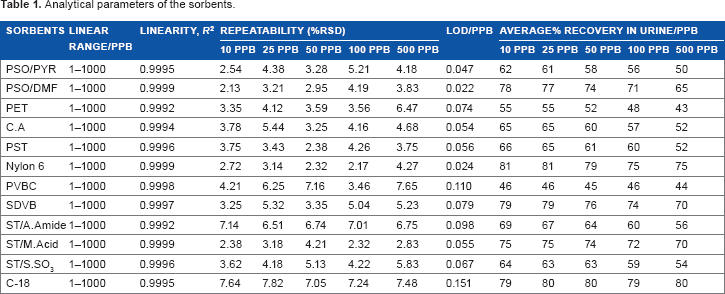
Similar to SDVB, the polystyrene gave a fair recovery of 66% because of the large numbers of potential binding sites and hydrophobic interaction between the polystyrene and 1-hydroxypyrene backbone. Nevertheless, the relatively higher hydrophobicity of the polystyrene backbone seems to be obstructing them from effective interaction with the analyte in aqueous medium. Owing to the introduction of the functional groups to the styrene backbone, their efficiencies were increased. From the structure of the 1-hydroxypyrene (Fig. 1), it is obvious that the carboxylic acid, acryl amide, and the sodium sulfonate functional groups introduced into the polystyrene not only increase the polarity of polystyrene but also its wettability (mass transfer ratio). Thus, the interaction between the nanofibers and the analyte was enhanced. There is a possibility of hydrogen bond interaction between the -OH group of the analyte and these functional groups. A number of researchers have reported that the introduction of 1-heptanesulfonic sodium as a salt can increase the compatibility of the polymer with aqueous medium.18,24,28
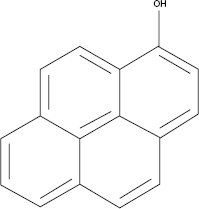
The chemical structure of 1-hydroxypyene.
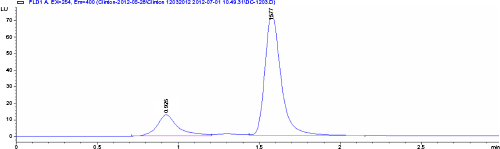
HPLC Chromatograms for the extraction of urinary 1-hydroxypyrene using ENs.
Pore-filling is equally a viable sorption mechanism that could be playing a significant role in the adsorption process. The porous structures are recognized as being advantageous because they can increase the surface area and offer spaces and sites for sorbing the adsorbates.17,20,24,25 For less porous fibers, it could be negligible but when considering the larger pore volume and the relatively hydrophilic fibers, pore-filling may be the main sorption mechanism. Even though the adsorption mechanisms of these nanofibers are relatively complicated, the presumed chemistries involved are pore-filling, hydrogen bonding, À-À bonding interaction, and to a very low extent, van der Waals forces.
Effect of Packing on the Recovery Efficiency of ENs
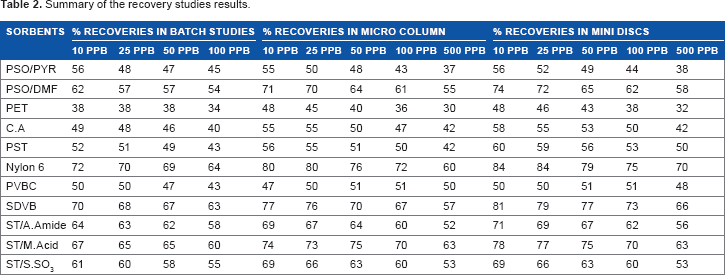
Different packing formats were assessed to ascertain if packing has an effect on the recovery efficiencies and the results are profiled in Figure 3 and Table 2. When compared to the batch studies, both the disc nanofiber sorbents and the pipette tip sorbents exhibited evident dominance on percentage recoveries. The experimental results showed comparable recoveries for the mini disc fibers and micro columns although the disc displayed slightly higher recoveries possibly due to the exposure of the analyte to a larger reacting surface. Similarly, the higher sorbent height exhibited by the pipette tip fibers enhanced their recoveries greatly, thereby compensating for the larger reacting surface of the mini disc. Thus, the difference in extraction efficiencies of the mini discs and micro columns was not so conspicuous.
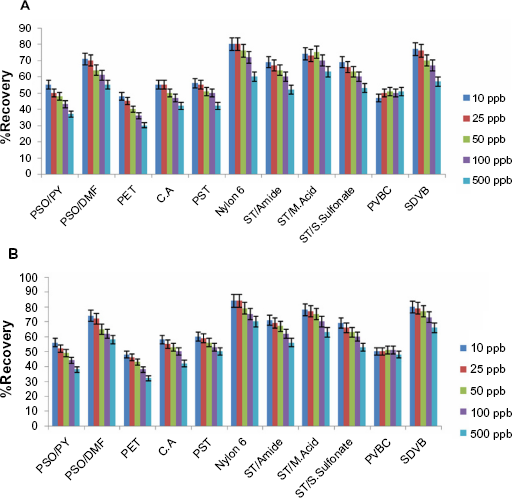
Effect of packing format of the nanofibers on the extraction efficiency of 1-hydroxypyrene (A) Micro column extraction efficiency (B) Mini discs extraction efficiency.
Summary of the recovery studies results.
Comparison of Nanofibers with the c-18 sorbent
The comparative studies between the commercial C-18 SPE sorbent and the nanofiber sorbents is profiled in Table 1. Octadecyl cartridge is the most widely used and one of the most effective sorbents employed in the extraction of organic compounds in aqueous solution, including urine samples. 24 From the results obtained, 300 mg sorbent mass was used in the case of the C-18 when 10 mg nanofiber was used; hence large volume of sample and organic solvent is required for the C-18 sorbent. Consequently, longer time would be spent with a higher tendency of contamination, thereby affecting the precision of the C-18 cartridge. Moreover, the low volumes of methanol (0.2 mL) used for elution in the nanofiber sorbents poses another advantage of environmental friendliness over the C-18 cartridge, which requires evaporation of the eluate. The experimental results showed highly comparative percentage recoveries between the nanofibers and C-18 but the nanofiber saves time, is more environmental friendly, can be improved by introducing better chemistries, and can be miniaturized with better precision and detection levels.
Surface Area and Porosity study
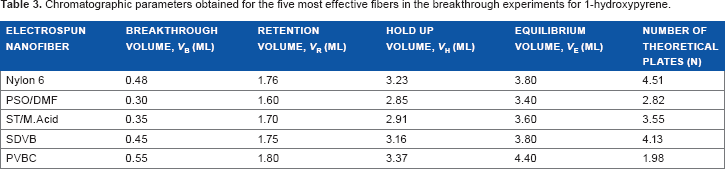
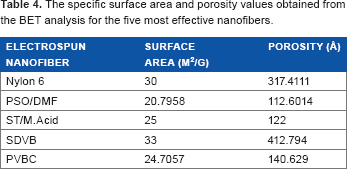
Surface areas and pore characteristics of five ENs were determined using the BET isotherms obtained from carbon dioxide and nitrogen adsorption on an Accelerated Surface Area and Porosimetry System (ASAP TM 2020), Micromeritics (Bedfordshire, England). The average specific surface areas and average pore sizes generated for Nylon-6, SDVB, ST/M.Acid, polysulfone in DMF, and PVBC were 30 m2/g (317.4111 Å), 33 m2/g (412.794 Å), 25 m2/g (122 Å), 20.7958 m2/g (112.6014 Å), and 24.7057 m2/g (140.629 Å), respectively (Table 3). The BET analysis of the five ENs revealed that surface area of these fibers and their porosity contributed immensely to their sorption efficiencies. The highly porous nature of nanofiber non-woven produced via electrospinning is a key element in their application in many fields.29,30 If functionalized with ligands, the pore sizes of the sorbent material will control the accessibility of the ligand to the analytes of interest while the specific surface area of the sorbent defines its efficiency of adsorption. The specific surface area of the sorbent is determined by the size of the nanofibers. Nanofibers of smaller diameters are expected to produce sorbents of higher surface areas. An optimal sorbent should provide a platform for fast analyte mass-transfer kinetics and this depends on the physicochemical properties of the sorbent (surface area, pore structure, and surface chemistry).
Chromatographic parameters obtained for the five most effective fibers in the breakthrough experiments for 1-hydroxypyrene.
Choice of Eluting solvent
Different solvents, methanol, ethanol, acetonitrile, and methanol:acetonitrile (1:1) were screened to determine the optimal solvent for the desorption of the extracted urinary 1-hydroxypyrene. From the results profiled in Figure 4, methanol had the highest efficiency as the eluting solvent for the analyte in majority of the sorbents assessed. In studying the effects of the eluting efficiency of various solvents, it is noteworthy that the eluting power of these solvents is greatly influenced by their polarity and analyte dissolution power. Methanol was found to be the best eluent, followed by a mixture of methanol and acetonitrile (1:1), acetonitrile only, ethanol, and finally acetone. Methanol seems to be more polar and interacts better with 1-hydroxypyrene, which has a greater solubility in methanol. 1-OHpy is a representative lipophyl metabolite of PAH compounds and 100% methanol is well established as a common organic solvent that can elute it. 31
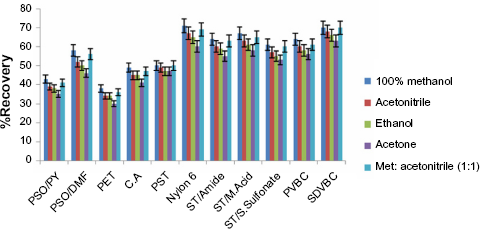
Assessment of different solvents for their elution strength.
Volume of Eluting solvent
Methanol volume in the range of 0.05-0.3 mL was used to elute the highest concentration of extracted analyte. As the eluting volume increases, there was a corresponding increase in the concentration of eluted analyte until 0.2 mL, where it remained constant despite further increment in the volume of methanol used. This implies that 0.2 mL of methanol was sufficient to elute all the extracted 1-hydroxypyrene from the fibers.
Breakthrough parameters
For better understanding of the use of ENs as a sorbent bed, it would be necessary to determine the recovery efficiency (mechanical strength, packing density, packing format) and retention characteristics (breakthrough parameters) of the sorbent bed. 32 In this light, the experimental breakthrough curves for the disk sorbents packing format were established as shown in Figure 5. At the stage of determining the breakthrough volume, simplification of the electrospun nanofiber-based SPE process had earlier been achieved in our group by employing a syringe pump for semi-automation as shown in Figure 6. From these curves, three important parameters: breakthrough volume (VB), hold up volume (VM), and retention volume (VR), were estimated as they correspond (on the breakthrough curve) to 1, 99, and 50% of the maximum concentration of analyte in the eluate. 32 The steep slopes obtained for the breakthrough curves especially for Nylon 6 and SDVB sorbents suggest fast mass transfer kinetics. The breakthrough volumes were between 0.3 and 0.55 mL, with PVBC as the highest (0.55 mL). Other values were: Nylon 6 (0.48 mL), SDVB (0.45 mL), ST/M.Acid (0.35 mL), and PSO/DMF (0.30 mL) (Table 4). The VB helps to establish the suitability of SPE sorbents because it gives an indication of the loading capacity of the sorbent. The theoretical plate number (N) was further calculated using method proposed by Werkhoheve-Goe®wie. 33 Nylon 6 had the highest N value of 4.51. Other values were: SDVB (4.13), ST/M. Acid (3.55), PSU/DMF (2.82), and PVBC (1.98) (Table 4). Theoretical plates are important for the retention characteristics of an SPE-sorbent bed, and it can be predicted from the shape of the breakthrough curve.32,34 Given that theoretical plates are a function of the available surface area for analyte interaction, we can conclude that a sorbent material with a larger surface area may exhibit a larger number of theoretical plates and, consequently, a large retention capacity as mass transfer kinetics would be enhanced. Hence, the excellent recovery efficiency achieved by Nylon 6 (81%) and SDVB (79%) could be attributed to the higher number of theoretical plate estimated.
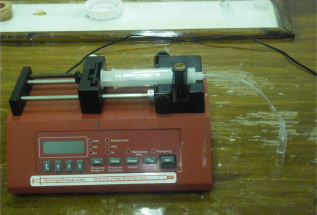
Semi automated device for obtaining breakthrough parameters.
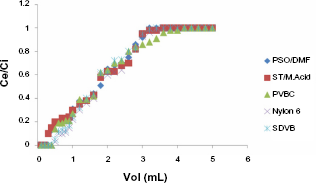
Breakthrough curves determined for 1-hydroxypyrene in five ENs.
The specific surface area and porosity values obtained from the BET analysis for the five most effective nanofibers.
Conclusions
The miniaturization of sample preparation devices was successfully demonstrated by packing eleven nanofibers into microcolumn and mini disc cartridges. The results show that the developed nanofiber mini discs and pipette tip and the analytical protocol were effective extraction methods in the analysis of 1-hydroxypyrene (a carcinogenic biomarker) in body fluids (Tables 1 and 2). It can comfortably replace the conventional C-18 SPE cartridge as it provides a number of advantages in simplifying sample preparation and reducing the cost and time of the analysis with acceptable reliability and sensitivity (Table 1), hence promoting green chemistry practice. It was also demonstrated that breakthrough and recovery experiments were sufficient to evaluate or predict the performance of electrospun nanofiber based SPE devices (Table 4). Therefore, a similar experimental procedure can be employed to evaluate future electrospun nanofiber based SPE devices as well as screening of electrospun nanofiber based sorbent. This will certainly open a better way for the pretreatment and bioanalytical applications of these devices.
Author Contributions
Conceived and designed the experiments: OCI, CA, SC, NT. Analyzed the data: OCI, SC. Wrote the first draft of the manuscript: OCI. Contributed to the writing of the manuscript: CA, SC, NT. Agree with manuscript results and conclusions: OCI, CA, SC and NT. Jointly developed the structure and arguments for the paper: OCI, CA, SC and NT. Made critical revisions and approved final version: CA. All authors reviewed and approved of the final manuscript.
Disclosures and Ethics
As a requirement of publication the authors have provided signed confirmation of their compliance with ethical and legal obligations including but not limited to compliance with ICMJE authorship and competing interests guidelines, that the article is neither under consideration for publication nor published elsewhere, of their compliance with legal and ethical guidelines concerning human and animal research participants (if applicable), and that permission has been obtained for reproduction of any copyrighted material. This article was subject to blind, independent, expert peer review. The reviewers reported no competing interests.