






Abstract
Current classifications of pulmonary hypertension have contributed a great deal to our understanding of pulmonary vascular disease, facilitated drug trials, and improved our understanding of congenital heart disease in adult survivors. However, these classifications are not applicable readily to pediatric disease. The classification system that we propose is based firmly in clinical practice. The specific aims of this new system are to improve diagnostic strategies, to promote appropriate clinical investigation, to improve our understanding of disease pathogenesis, physiology and epidemiology, and to guide the development of human disease models in laboratory and animal studies. It should be also an educational resource. We emphasize the concepts of perinatal maladaptation, maldevelopment and pulmonary hypoplasia as causative factors in pediatric pulmonary hypertension. We highlight the importance of genetic, chromosomal and multiple congenital malformation syndromes in the presentation of pediatric pulmonary hypertension. We divide pediatric pulmonary hypertensive vascular disease into 10 broad categories.
Keywords
INTRODUCTION
The classification of pulmonary hypertension conceived at the 1998 WHO Symposium in Evian[1] and the subsequent revisions and refinements that resulted from symposia in Venice[2] and Dana Point[3] have contributed greatly to the understanding of pulmonary vascular disease, facilitated drug trials and improved our understanding of congenital heart disease in adult survivors. However, these classifications are not applicable readily to pediatric disease.[4–7] The response to the debate on the classification of pediatric pulmonary hypertension at the Pulmonary Vascular Research Institute (PVRI) meeting in Lisbon in 2010 suggested that there was a widespread, well-recognized need for the development of a classification system of pediatric pulmonary hypertensive vascular disease specifically for use in children. Also, it was recognized that physicians, who care for adult survivors of pediatric disease, might be able also to use such a classification in their assessments. As a result, the PVRI Pediatric Taskforce was initiated. This paper summarizes the work of the PVRI Pediatric Taskforce as presented at the 2011 annual meeting of the PVRI in Panama.
DISCUSSION
Difficulties in applying the Dana Point Classification to pediatrics
The areas of particular difficulty in applying the Dana Point Classification[3] in pediatrics are mentioned briefly here and expanded upon under specific headings later in the article. The fetal origins of pulmonary vascular disease are important not only in pediatric diseases, but also in adults as perinatal events are likely to play a key role in establishing the risk for pulmonary hypertension. The Dana Point Classification does not acknowledge the potential importance of developmental mechanisms. Pulmonary hypertensive vascular disease, even when presenting in adulthood, maybe related to fetal, perinatal and early childhood development. The perinatal origins of systemic hypertension and coronary artery disease in adults are now well recognized.[8] Neonatal pulmonary vascular disease received inconsistent attention at Evian, Venice and Dana Point. In particular the concepts of perinatal maladaptation, maldevelopment and pulmonary hypoplasia as causative factors in neonatal pulmonary hypertension were not listed. Furthermore as a tool in the real life clinical assessment of the young child, the Dana Point Classification often does not reflect the complex heterogeneity of factors that contribute to pediatric pulmonary vascular disease[6] (Fig. 1). For instance in pediatric practice, patients are commonly evaluated for pulmonary hypertension who may have been born prematurely, with chromosomal or genetic anomalies, congenital cardiac defects, as well as, sleep disordered breathing, chronic aspiration and secondary parenchymal pulmonary disease.
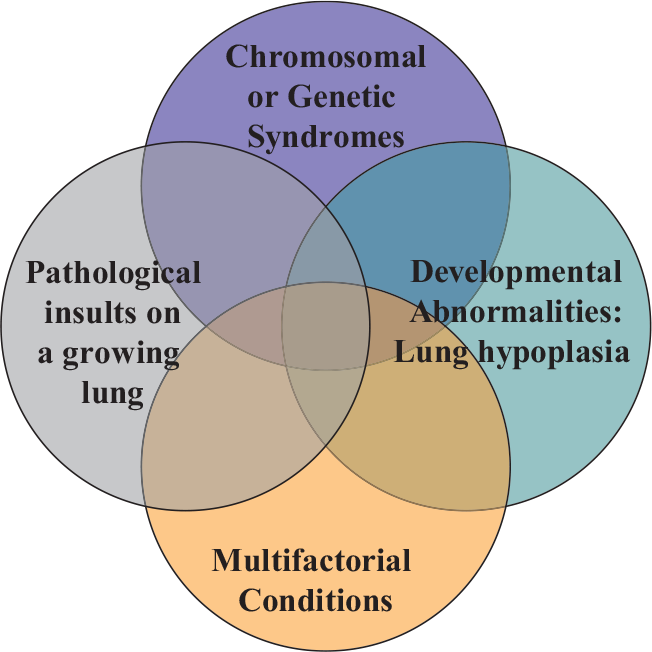
Venn diagram illustrating the heterogeneity and multifactorial elements in pediatric pulmonary hypertensive vascular disease.
Aims of the PVRI Panama Classification
The classification system that we propose is based firmly in clinical practice. The specific aims of this new system are to improve diagnostic strategies, to promote appropriate clinical investigation and to improve our understanding of disease pathogenesis, physiology and epidemiology and to guide the development of human disease models in laboratory and animal studies. It should be also an educational resource. This classification system unequivocally is not based on therapy of pulmonary hypertension or designed to be a therapeutic guide. The utility of an effective classification system lies in its ability to help us to make sense of our observations on each child, but be structured enough to permit unambiguous classification when possible but flexible enough to allow for the inclusion of as yet undiscovered ideas. Classifications are useful in medicine if they provide a framework for the diagnosis and management of a disease, and encourage epidemiological insight. A perfect classification, like the periodic table, would also have categories for as yet undiscovered disease or mechanisms of known disease complexes.
We acknowledge the great value of the Dana Point Classification.[3] Indeed, there are elements that we have left untouched. We are cognizant that if our suggested classification system has any merit it is because–to paraphrase Sir Isaac Newton in 1676–only by “standing on the shoulders of giants” have we been able to see further. With this in mind, we propose a new classification of pediatric pulmonary hypertensive vascular disease.
Overall schema
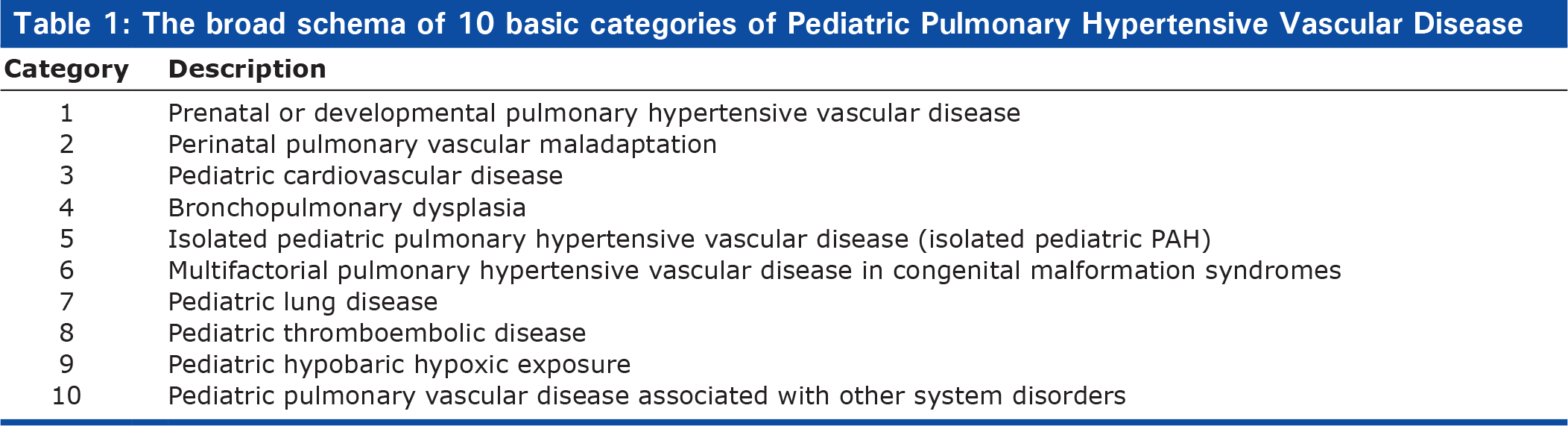
We have used the term pediatric pulmonary hypertensive vascular disease in preference to pulmonary hypertension to exclude patients with pulmonary hypertension but without an elevated pulmonary vascular resistance (Table 1). This occurs in children with large systemic to pulmonary connections. These children do not require drug therapy for pulmonary hypertension but rather benefit from timely and accurate closure of the defect. We do, however, wish to include children who have undergone various stages of single ventricle treatment who may have a symptomatically elevated pulmonary vascular resistance but with a mean pulmonary artery pressure <25 mmHg. Thus we suggest that pediatric pulmonary hypertensive vascular disease be defined as a mean pulmonary artery pressure >25 mmHg and a pulmonary vascular resistance index >3.0 Wood units m2 for biventricular circulations. We suggest that pulmonary hypertensive vascular disease following a cavopulmonary anastomosis be defined as a pulmonary vascular resistance index >3.0 Wood units m2 or a transpulmonary gradient >6 mmHg (mean pulmonary artery pressure minus mean left atrial pressure) even if the mean pulmonary artery pressure is <25 mmHg. We add the caveat that calculated pulmonary vascular resistance maybe increased, not only, by an increased transpulmonary gradient, but also, by decreased pulmonary blood flow. We acknowledge that pulmonary blood flow maybe difficult to estimate after a cavopulmonary anastomosis because of multiple sources of pulmonary blood flow.
The broad schema of 10 basic categories of Pediatric Pulmonary Hypertensive Vascular Disease
The pulmonary artery occlusion, left atrial or systemic ventricular end diastolic pressures maybe increased or normal but these values are clearly important in considering the differential diagnosis.
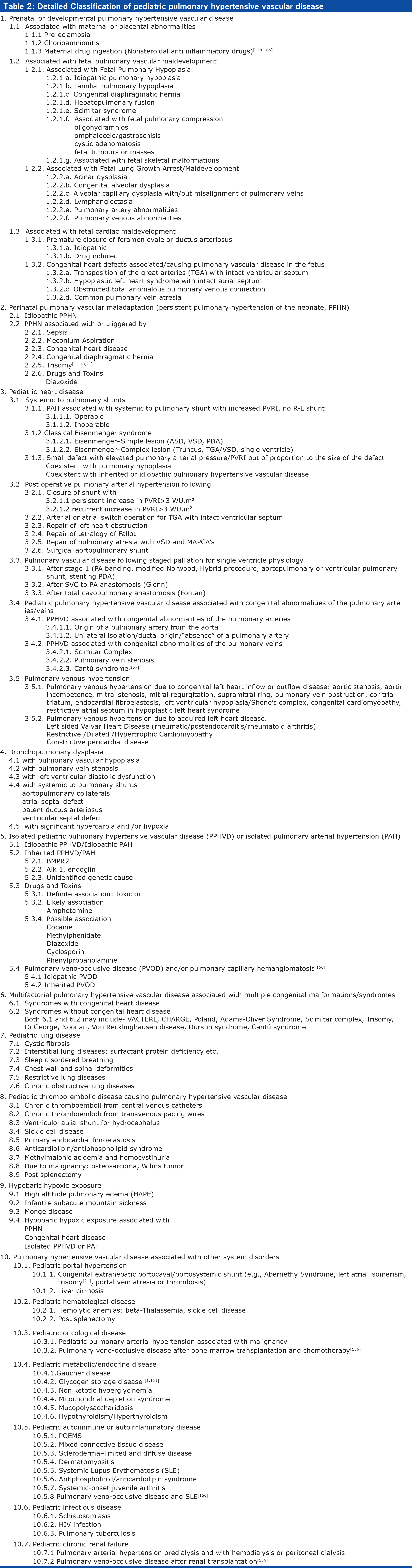
We have divided pediatric pulmonary hypertensive vascular disease into 10 broad categories listed in order of frequency of presentation to the pediatric clinic (Table 1). There is no published all-inclusive epidemiological study or registry data on pediatric pulmonary hypertension. As far as we can tell the reports to date have excluded one or other of the categories in the classification system we present here. Therefore, when such data is available the order of the categories may need revision. We emphasize that we have attempted to provide a clinically useful classification (Table 2), which permits the categorization of patients with multifactorial causes of pulmonary hypertension especially when associated with a syndrome or chromosomal abnormality. To reflect the heterogeneity of pulmonary vascular disease in childhood we have included the possibility that a disease or condition may appear in different categories. This is particularly the case when a disease such as sickle cell, scimitar or antiphospholipid syndrome may cause different types of pulmonary hypertensive vascular disease.
Detailed Classification of pediatric pulmonary hypertensive vascular disease
CATEGORY 1
Prenatal or developmental pulmonary vascular disease
Perhaps the most striking difference between the adult and childhood onset of pulmonary hypertensive vascular disease is that during fetal, neonatal and early postnatal life the pulmonary vasculature is exposed to pathological and/or environmental insults while it is still growing and maturing. This may result in maladaptation, maldevelopment or growth arrest. Natural attempts at recovery from insults may be influenced by the ongoing developmental and maturational signals. This may result in unique and different sequelae than those seen in adults exposed to a similar insult (Table 2). The lung-vascular unit is composed of alveolus, bronchiole, capillary, arteriole, venule and lymphatic channel and the development of each is dependent upon another.[9] Disease of one element in the lung-vascular unit may affect other components as for example in persistent pulmonary hypertension of the newborn, bronchopulmonary dysplasia[10] (Fig. 2) and alveolar capillary dysplasia with misalignment of the pulmonary veins.[11]
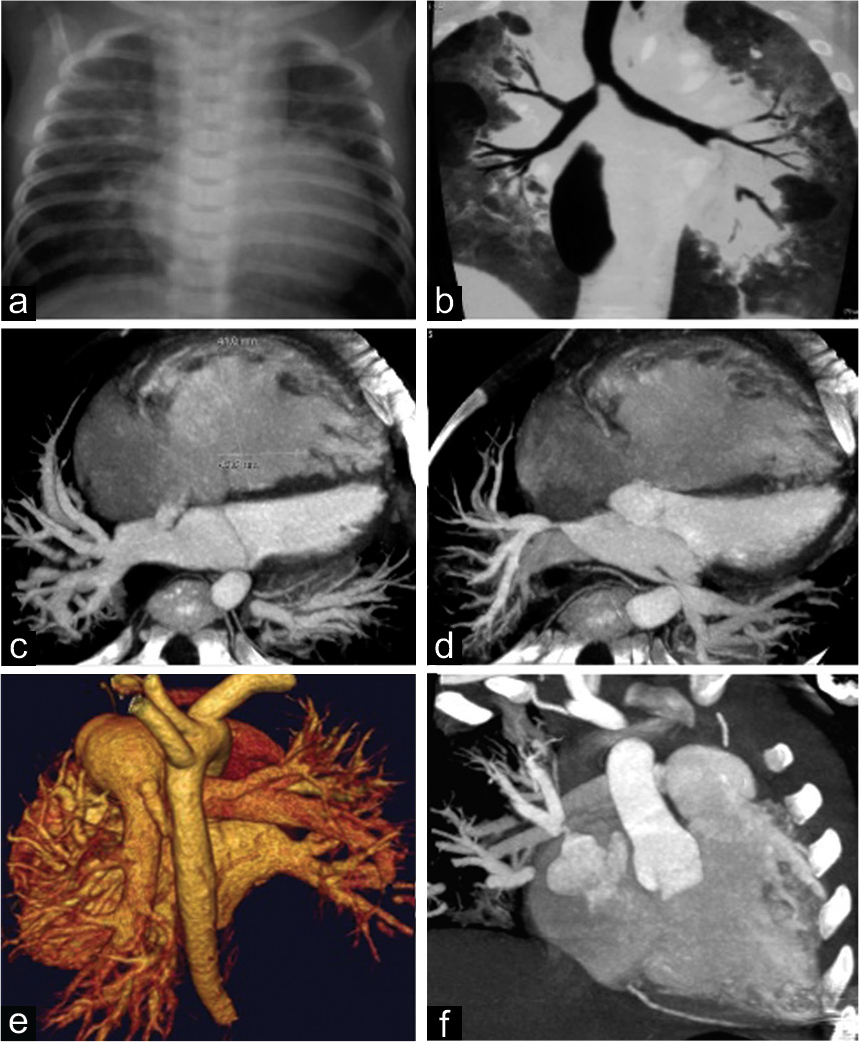
This figure illustrates the complexity of pulmonary hypertensive vascular disease in a two-year-old infant with bronchopulmonary dysplasia. (a) chest X ray, cardiomegaly and parenchymal lung infiltrates; (b) lung CT scan, showing lung extensive parenchymal damage with areas of atelectasis and emphysema; (c) CT angiogram, showing right ventricular and right atrial dilatation, and atrial septal defect; (d) CT angiogram showing left and right upper pulmonary vein stenosis; (e) reconstructed CT image showing persistent ductus arteriosus; and (f) CT angiogram showing the severe stenosis of right upper pulmonary vein.
In utero, the fetal pulmonary circulation is characterized by high pulmonary artery pressure and markedly elevated pulmonary vascular resistance. In the first hours after birth, dramatic respiratory and circulatory events cause pulmonary vasodilation and favorable remodeling of the pulmonary vascular bed, which reduce pulmonary vascular resistance and lead to an increase in pulmonary blood flow. If successful transition of the pulmonary circulation occurs the pulmonary artery mean pressure decreases in the first three weeks of life to 10–20 mmHg, similar to adult levels.[12] In young children total pulmonary vascular resistance indexed is similar to adults.[13] Yet despite this physiological adaptation with reduction in pulmonary vascular resistance the ultra structural appearance of smooth muscle cells does not closely resemble that of the adult until about 2 years of age.[14] Fetal growth factors may influence postnatal pulmonary vascular form and function.[10]
It is clear that pediatric pulmonary hypertension specialists manage increasing numbers of neonates and children whose pulmonary hypertension may have fetal origins. In particular the association of pre-eclampsia and bronchopulmonary dysplasia,[15] and disorders associated with lung hypoplasia and diseases associated with pulmonary vascular disease in utero.[11,16–25] Pulmonary hypoplasia, the result of growth arrest, is an important concept in any classification system of neonatal pulmonary hypertensive disease. Pulmonary hypertensive vascular disease in children may occur against a background of varying degrees of pulmonary hypoplasia. This has been especially well documented particularly in congenital heart disease[9] congenital diaphragmatic hernia[26] and Down syndrome.[27,28] It is also relevant that alveolarisation and pulmonary vascular development may continue through the first 8 years of life.[9] The normal rate of vascular growth and changes in the cross sectional area of the pulmonary vascular bed at birth or during the first years of life is unknown. Notably lung hypoplasia may be found in around 10% of neonatal autopsies and in up to 50% of neonates with congenital anomalies.[28,29] It is possible that diverse post natal pulmonary vascular insults, even those resulting in adult onset disease, are more likely to result in pulmonary hypertension if the subject was born with a pulmonary vascular cross sectional area below the 3rd percentile. Thus the likelihood of developing pulmonary hypertension throughout life may be related to the initial surface area at birth, with the effects of each successive insult at least partly due to the balance between pulmonary vascular reserve and rate of pulmonary vascular attrition due to the pathological insult be it genetic, epigenetic or environmental.
CATEGORY 2
Perinatal pulmonary vascular maladaptation
This category contains only the syndrome of persistent pulmonary hypertension of the newborn (PPHN) (Table 2). We recognize that there is considerable debate about the origins of PPHN and that it may reflect in utero pulmonary vascular disease.[30] Clinical observations that neonates with severe PPHN who die during the first days after birth already have pathologic signs of chronic pulmonary vascular disease suggest that intrauterine events may play an important role in this syndrome.[30–32] Adverse intrauterine stimuli during late gestation, such as abnormal blood flow, changes in substrate or hormone delivery to the lung, chronic hypoxia, chronic systemic hypertension, inflammation or others, may potentially alter lung vascular function and structure, contributing to abnormalities of postnatal adaptation.[33,34] It seems likely that as the mechanisms of PPHN become understood better it will become necessary to reassess the classification. However, at present most would recognize PPHN as a disorder of transition from intra to extra uterine life.[35–43]
Neonates born at high altitude frequently need more time to adapt to ex-utero life; some of them require supplementary oxygen for a few weeks. The pulmonary pressures remain increased above the normal age specific values for altitude, at this time. There is a delay in the pulmonary arterial remodeling after birth in those born at high altitude.[44] However, we have acknowledged the considerable, even fatal effect that birth at very high altitudes (≥ 2,500m) may impose in the early postnatal period. These newer observations[4,45] contrast with previous reports.[46] We suggest that PPHN is a disease of the first 30 days of life that usually presents at, or within a few days, after birth. However, we recognize that it would be prudent to accelerate and broaden the diagnostic evaluation of any neonate presenting with symptomatic pulmonary hypertension outside the first week of life as the etiology may not be PPHN.
CATEGORY 3
Pediatric cardiovascular disease
Pediatric cardiovascular disease may be the most common disorder globally causing pulmonary vascular disease in children (Table 2).[47–49]
The list of cardiac abnormalities and diseases is more comprehensive in this section of the classification than in the Dana Point Classification but we have maintained the basic structure of the Dana point classification as it pertains to shunts.[5,7,50,51] We considered the essential outcome of the diagnostic work up of a child with a shunt and elevated pulmonary vascular resistance index is to conclude whether or not the child should undergo cardiac repair or further evaluation. There is considerable interest in evaluating if a course of medical therapy will enable surgical repair in certain patients with borderline pulmonary vascular resistances.
The interaction between congenital heart disease and genetic factors often makes it difficult to classify the cause of the pulmonary hypertensive vascular disease with certainty. For instance how should a child with an atrioventricular canal defect and BMPR 2 mutation be classified?[52] Or how should we classify a child with a minor cardiac shunt and a coexistent genetic or chromosomal anomaly? The classification allows for this eventuality and this area will become clarified in the future as we seek genetic links between congenital heart and pulmonary vascular disease.
Persistent or late presenting pulmonary vascular disease after atrial or arterial switch for transposition of the great arteries with an intact septum is recognized with such increasing frequency that we have specified the condition in the classification. [53–55]
The classical Eisenmenger syndrome is well recognized as a multisystem disorder. However, the differentiation between complex and simple is clinically extremely important for both survival and functional level.[56] Some studies have suggested that children with Eisenmenger may have a more rapid clinical decline than adults.[57] There is growing concern that children with repaired congenital shunts and either persistent or recurrent pulmonary hypertension fare worse than patients with either Eisenmenger or idiopathic pulmonary hypertension.[47] It is likely that this subgroup will need further refinement in the future.
The category entitled pulmonary venous hypertension includes in addition the cardiomyopathies, both acquired and congenital.[58,59]
Pulmonary vascular disease following staged surgery for single ventricle: The use of pulmonary hypertension specific agents in the treatment of children and adults following the Glenn or Fontan type surgery is widespread. Preliminary data from the Spanish registry suggests that 14% of children receiving sildenafil or bosentan have a single ventricle type lesion. The interaction of the pulmonary and systemic circulations when the kinetic energy for blood flow through both circulations is derived from a single ventricular mass (and without a dedicated subpulmonary ventricle) is complex and pulmonary vascular resistance plays an important physiologic role.[60–62] Recent studies have suggested that exercise intolerance,[63,64] and even plastic bronchitis[65,66] and protein losing enteropathy[67] may be due in part to an increased pulmonary vascular resistance.[61,68]
Hypobaric hypoxic exposure and congenital heart disease: We have included congenital heart disease at high altitude under Category 9 because high altitude may affect the incidence as well as the anatomy of the ductus arteriosus.[69] This pertains also to children with trisomy 21 born at high altitude. In addition, pulmonary vascular reactivity testing (including prolonged hyperoxia testing) and management criteria may differ from those used at sea level.[4,44,45,69–72]
CATEGORY 4
Bronchopulmonary dysplasia
Bronchopulmonary dysplasia (Table 2) remains the most common sequela after preterm birth, causing persistent cardiorespiratory problems throughout childhood and is growing as a significant problem in adulthood.[73,74] Twelve percent (12%) of births are premature and place the patient at risk of bronchopulmonary dysplasia or chronic lung disease of prematurity. Bronchopulmonary dysplasia is a complex disorder and much more than chronic parenchymal lung disease secondary to ventilation strategies. Bronchopulmonary dysplasia, although it has changed over the decades, is characterized by an arrest of vascular and alveolar lung growth,[75–78] which often has prenatal origins.[15] Thus a patient with bronchopulmonary dysplasia may have pulmonary hypertension due to decreased vascular growth compounded by intermittent or chronic hypoxia, hypercarbia due to lung and airway injury, a systemic to pulmonary shunt, diastolic cardiac dysfunction and pulmonary vein stenosis[79–83] (Fig. 2).
CATEGORY 5
Isolated pediatric pulmonary hypertensive vascular disease or isolated pediatric pulmonary arterial hypertension
The category for isolated pulmonary hypertensive vascular disease or isolated pulmonary arterial hypertension (Table 2) resembles closely the Dana Point Classification.[84–86] However, we suggest that the term “idiopathic” be reserved for those cases with truly “idiopathic” pulmonary hypertension i.e. unassociated with any other genetic, chromosomal etc. abnormality. In pediatrics the difficulties are encountered with a classification system if “idiopathic” pulmonary arterial hypertension is diagnosed together with a genetic defect or chromosomal syndrome.[6]
Some drugs reported to cause pulmonary hypertension in children are different or (because they are used infrequently in pediatrics) less well validated from those described in adults.[87–92]
CATEGORY 6
Multifactorial causes of pulmonary hypertension associated with congenital malformation syndromes
We are recognizing more frequently that children born with congenital malformations (Table 2) often suffer from pulmonary vascular disease due to a number of contributing factors. Examples include CHARGE, VACTERL, Down syndrome and Di George spectrum of disorders. [23,93–106] In addition, pulmonary vascular disease secondary to a shunt maybe more rapidly progressive in patients with genetic syndromes.[107]
CATEGORY 7
Pediatric lung disease
The co-existence of certain lung diseases with pulmonary hypoplasia is recognized increasingly in children (Table 2). The classification of interstitial lung disease also suggests that lung hypoplasia and growth arrest are a common feature of a number of childhood interstitial lung diseases.[18] Pulmonary hypertension has a profound impact on the outcome of interstitial lung disease.[18] Genetic causes of lung disease are recognized and may have an impact on the prenatal pulmonary vasculature.[33,34,108,109]
CATEGORY 8
Pediatric thromboembolic disease
There is a lower incidence of pulmonary hypertension due to thromboembolic disease in children compared to adults. The associated or predisposing diseases associated with pulmonary thromboembolism in children are also in general different.[110–115] Although surgical options for chronic thromboembolic pulmonary hypertension have been explored less well in children, the success of surgical treatment of this disease in adults should encourage considering such an option in certain cases in the pediatric population (Table 2).[116,117]
CATEGORY 9
Pediatric hypobaric hypoxic exposure
Hypobaric hypoxic exposure or pulmonary hypertension due to high altitude (Table 2) was considered by those on the task force with extensive clinical experience working at high altitude to be sufficiently different from other forms of pulmonary arterial hypertension to justify inclusion as a separate category. These differences include hypoxia in the absence of parenchymal lung disease, different genetic aspects, and different treatment strategies.[4,44–46,70,72,118–126]
CATEGORY 10
Pediatric pulmonary hypertensive vascular disease associated with other system disorders
Here we have listed disorders (Table 2), which may be complicated by or associated with pulmonary hypertension.[100,127,148–155] We draw attention to unique aspects of pediatric disease such as extrahepatic portal hypertension, which may occur secondary to portal vein thrombosis following umbilical line placement and be overlooked as liver function tests may be normal.
CONCLUSION
We propose a comprehensive classification of pediatric pulmonary hypertension that includes pulmonary vascular hypertensive disorders occurring throughout early life from the neonate to adolescent. We emphasize the importance of prenatal and perinatal influences, including maldevelopment and lung hypoplasia, that may contribute to pulmonary vascular disease. We suggest that pediatric pulmonary hypertensive vascular disease be defined as a mean pulmonary artery pressure >25 mmHg and a pulmonary vascular resistance index >3.0 Wood units m2 for biventricular circulations. We suggest that following a cavopulmonary anastomosis pulmonary hypertensive vascular disease be defined as a pulmonary vascular resistance index >3.0 Wood units m2 or a transpulmonary gradient >6 mmHg even if the mean pulmonary artery pressure is <25 mmHg. We have classified pediatric pulmonary hypertensive vascular disease into 10 broad categories. The classification we propose is based firmly on clinical practice. The specific aims are to improve diagnostic strategies, promote clinical investigation and understanding of pathogenesis, physiology and epidemiology, and to guide the development of human disease models in laboratory and animal studies. We hope, at the least, that this classification system will serve as a catalyst for improvement and lead ultimately to better outcomes for our patients. If there are omissions or improvements to be made, we encourage interested readers to let us know through the PVRI website (http://pvri.info/home).