






Abstract
Background
Although considerable progress has been made over the last decades, human immunodeficiency virus (HIV) incidence and acquired immunodeficiency syndrome (AIDS) mortality rates have remarkably increased in the Brazilian Amazon region. Here, we employed temporal analysis to determine the impact of public policies on the HIV epidemic in the state of Pará, Brazil, which has the second highest HIV incidence rate in the Amazon region.
Design and methods
This is an ecological study conducted in the state of Pará, employing secondary data of HIV/AIDS cases notified to the Information System for Notifiable Diseases, 2007– 2018. The following epidemiological variables were collected: year of notification, municipality of residence, age, sex, education, exposure category, and HIV/AIDS diagnostic criteria. The study population was composed of 21,504 HIV/AIDS cases. The HIV/AIDS incidence rates were analyzed employing the temporal trend analysis (TTA) followed by the chi-square test and residue analysis to determine the association between the epidemiological variables and time series periods.
Results
A total of 50% of the notifications were composed of AIDS cases. TTA identified two periods in HIV/AIDS incidence, with stabilization of cases in the first period (G1, 2007–2012) and an upward trend in the second period (G2, 2012–2018). The most prevalent epidemiological characteristics in G2 (
Conclusions
Public policy to control HIV infection in the Brazilian Amazon region has been partially effective. HIV screening tests and treatment should be made widely available to eradicate HIV infection in the Amazon region by 2030.
Keywords
Introduction
Global estimates indicate that 37.9 million people were living with human immunodeficiency virus (HIV) by 2018, with 1.7 million new HIV cases and 770,000 acquired immunodeficiency syndrome (AIDS)-related deaths in the same year. 1 In Brazil, about 900,000 AIDS cases were reported to the Ministry of Health from 1980 to 2018. Although the numbers of HIV/AIDS cases and AIDSrelated deaths in Brazil have decreased by 16% and 33%, respectively, the Brazilian Amazon region has intriguingly witnessed an upward trend of cases and mortality rates since the 1980s. 2 Currently, the Amazon region, particularly the state of Pará, has the highest HIV/AIDS incidence and mortality rates nationwide, which increased up to 21.8% and 26%, respectively, between 2008 and 2018. The state of Pará and its capital, Belém, are the main affected areas in the Amazon region and rank fifth and second in terms of the number of HIV/AIDS cases, respectively. 2
Significance for public health
In the past several years, the Brazilian government applied considerable resources, among which was the incorporation of The Joint United Nations Programme on HIV/AIDS (UNAIDS) “Treatment as Prevention” (TasP) strategy in 2013, to address the HIV epidemic. According to the TasP program, all people diagnosed with HIV should start antiretroviral treatment (ART) regardless of the disease stage and CD4 T lymphocyte count. Furthermore, the HIV screening coverage was expanded to the primary public healthcare network and non-governmental organizations. 3 HIV diagnostic reporting became mandatory as of 2014 to better monitor the HIV epidemic. 4 Brazil has the highest coverage of HIV screening and the highest number of individuals with undetectable viral load in Latin America. 5 However, challenges remain in facing the epidemic in Brazil, particularly in the northern region of the country.
The countries that implemented the universalization of ART and HIV testing reported a significant decrease in their HIV detection and AIDS-related death rates.6,7 Both strategies were reinforced by the UNAIDS through the 90-90-90 goals to eradicate HIV infection by 2030. 8 However, the impact of the TasP program in the Amazon region remains unclear, particularly because the HIV epidemic continually rises despite all the prevention and management policies that have been implemented. A temporal trend analysis (TTA) is ideal to address this type of question because it can determine the impact of public policies on community health issues. TTA expands the knowledge of how a certain process will behave through the characterization of its trend while identifying associated factors with significant impacts on the study variables. 9
Despite of the impact of HIV in the Brazilian Amazon region, no studies have focused on evaluating the efficiency of the TasP policy in this region. Therefore, in this study we employed the TTA to determine the impact of the TasP program on the HIV epidemic in Northern Brazil. In addition, an association analysis was carried out to determine the epidemiological profile changes in the trend periods identified in the TTA. Given the expansion of HIV screening and ART coverages, we hypothesized that AIDS cases would have a downward trend from 2014 and the HIV cases an upward trend followed by a stabilization. Collectively, our findings may assist health authorities improve existing public policies and/or create new programs for the prevention and management of HIV infection.
Design and methods
Study design and setting
This work was a time-series study using secondary data of HIV/AIDS case notifications entered into the Information System for Notifiable Diseases (ISND) between 2007 and 2018. The data were provided by the Pará State Department of Health.
Pará is the second largest state in Brazil, with a territorial extension of 1,248,042,515 km and an estimated population of 7,321,493 inhabitants. The area is divided into 144 municipalities and six political mesoregions, namely,
Study sample
The study sample was composed of all HIV/AIDS cases that were reported to the ISND between 2007 and 2018. Data were provided by the State Department of Public Health of Pará and were collected between July 01 and August 30, 2019. Only individuals with a home address in Pará were considered for the analysis. The following variables were collected: year of notification, municipality of residence, age, sex (female and male), schooling, exposure category, and clinical diagnostic (HIV, AIDS). The data were double checked to avoid incompleteness and redundancy. After data depuration, the study sample consisted of 10,199 HIV and 11,305 AIDS cases, totaling 21,505 case notifications.
Data analysis
First, the annual distribution of HIV or AIDS cases was analyzed separately for the period of 12 years. Second, the annual incidence of HIV plus AIDS cases (HIV/AIDS) was pooled and analyzed by the TTA technique. The annual incidence rate was obtained by dividing the number of case notifications in each year by each specific population estimate for the state of Pará: the entire population (males and females) and age groups by sex. The results were standardized by 100,000 inhabitants. For better comparison of our results with those published in the Brazilian AIDS Epidemiological Bulletin, the age (in years) was categorized in accordance with the bulletin into the following groups: 15-19, 20-24, 25-29, 30-34, 35-39, 40-44, 45-49, 50-54, 55-59 and ≥60 years.
Incidence trends were calculated using the Joinpoint Regression Program, version 4.7, developed by the National Cancer Institute (USA). This program was used to estimate timeseries trends based on the calculation of the annual percentage change (APC). Here, the total HIV/AIDS incidence rates and the stratified incidence rate by sex and age groups were considered dependent variables and years as the independent one. Significant upward and downward trends were defined as that with a positive or negative APC, respectively, at p<0.05.
Following the TTA, chi-square test and residue analysis were performed to determine the association between the epidemiological variables (sex, age, race/skin color, schooling and exposure category) and the time series defined in the trend analysis. The 13-14- year-old age group was included in the association analysis only because HIV/AIDS incidence could not be calculated for this specific age group due to the lack of corresponding population-wide information available. In these analyses, the number of HIV/AIDS notifications were considered dependent variables and the age, sex, schooling, and exposure category as independent ones. Association analysis was performed in Bioestat 5.3 software, and statistical significance was set at p<0.05.
Results
From 2007 to 2018, 10,199 HIV cases and 11,305 AIDS cases were reported in the state of Pará, totaling 21,504 HIV/AIDS cases. Over this period, the HIV/AIDS incidence rate increased by 420% (2007: 9.2, 2018: 47.9; /100,000 inhabitants). Although the incidence of HIV cases from the year 2014 was high, the number of AIDS cases corresponded to approximately 50% of all case notifications in the entire study period (Figure 1).
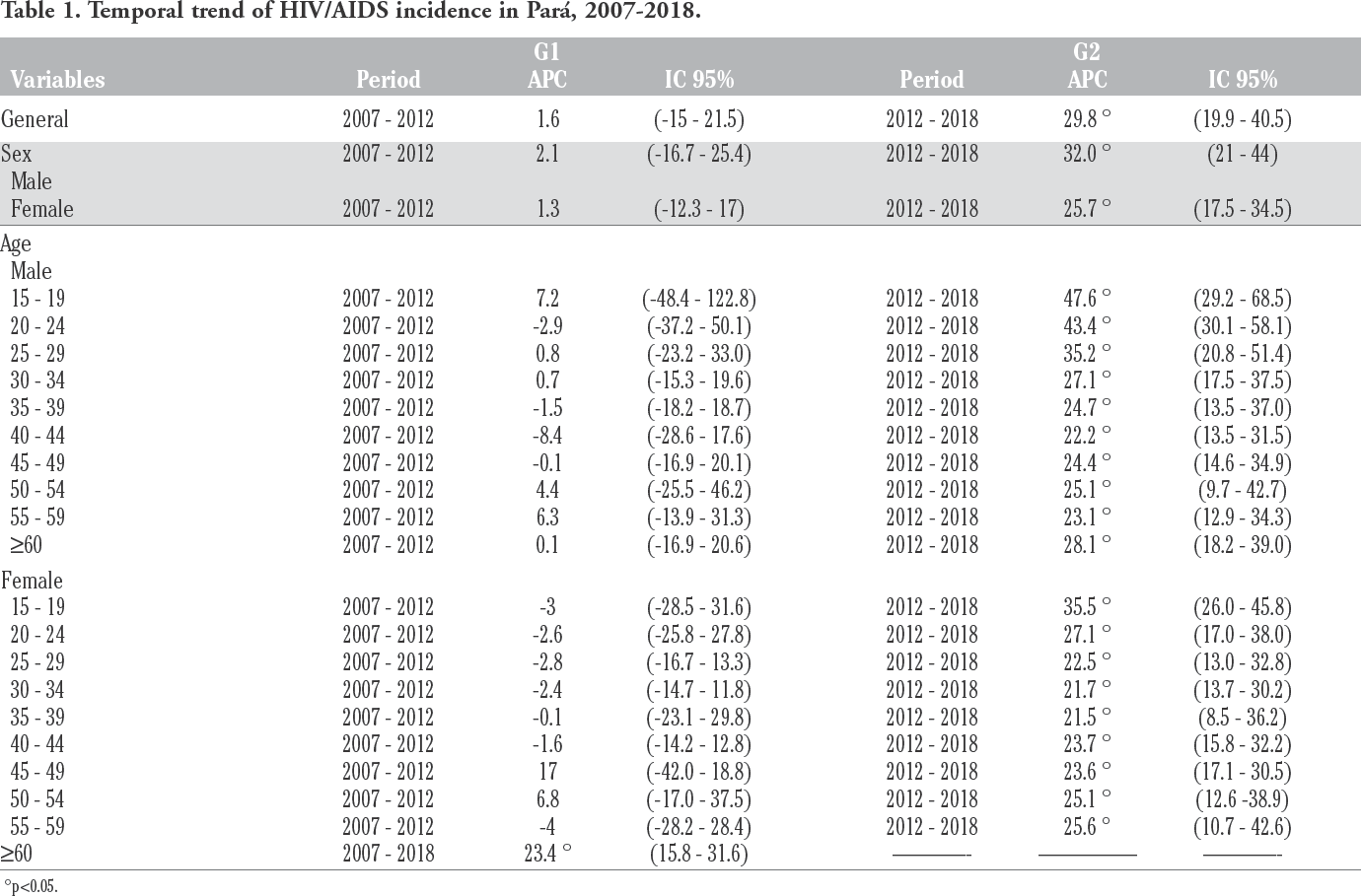
TTA identified two periods in HIV/AIDS incidence, namely, 2007 to 2012 (G1) and 2012 to 2018 (G2), with 5,042 cases notified in G1 and 16,463 cases in G2. Cases in the first period exhibited stabilization (G1, APC: 1.6%), and an upward trend was recorded in the second period (G2, APC: 29.8%). This configuration was repeated for all analytical categories, but females aged over 60 years had only one period with a continuous upward trend in the number of HIV/AIDS cases (APC 23.4%; Table 1).

Temporal trends of AIDS, HIV, and HIV/AIDS incidence rates in Pará from 2017 to 2018.
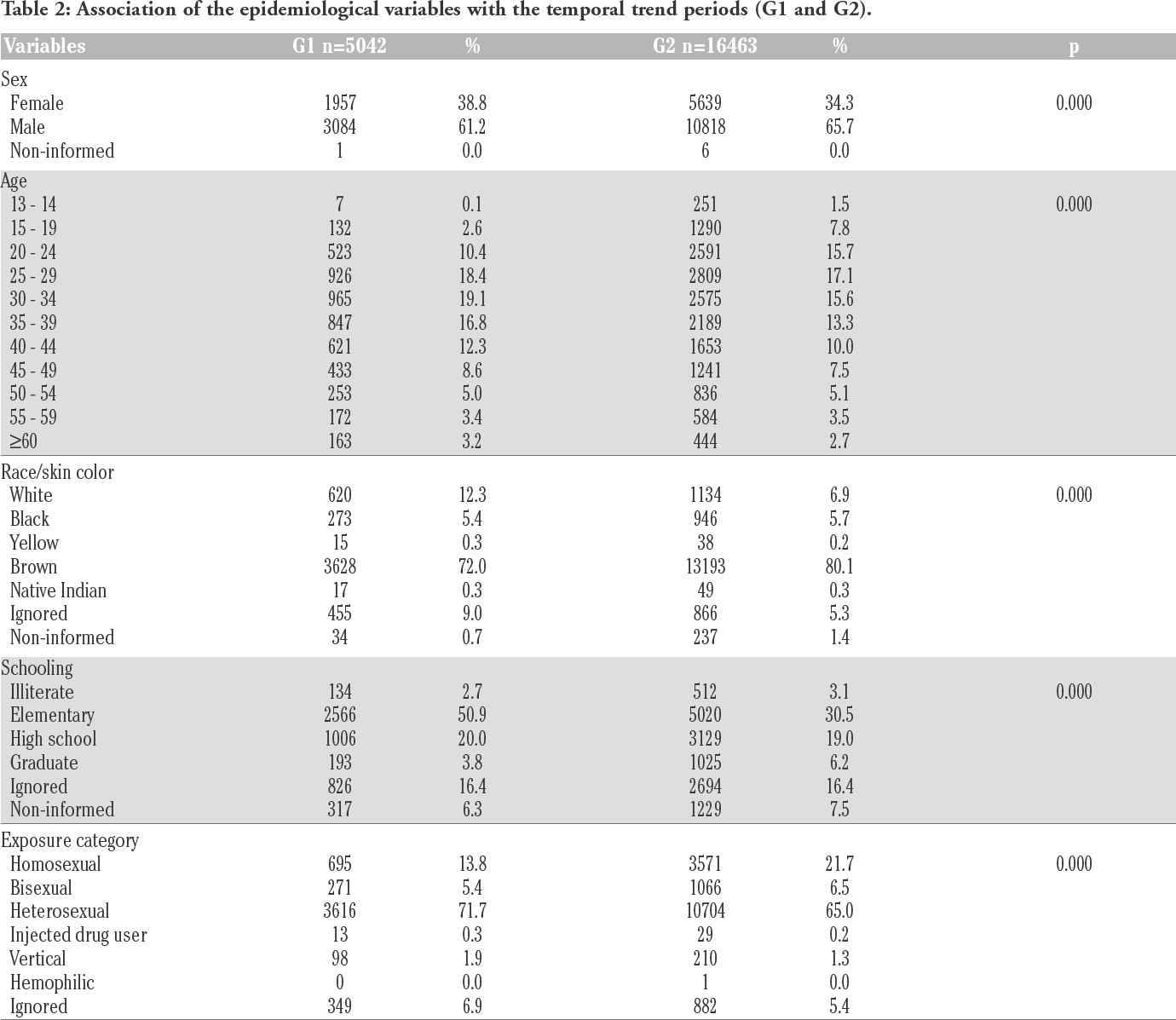
Table 2 shows the results of the association analysis of epidemiological variables between G1 and G2. A statistically significant difference was observed between the time periods concerning all study variables (sex, age group, race/skin color, education, and exposure category). The most prevalent epidemiological characteristics in G2 (
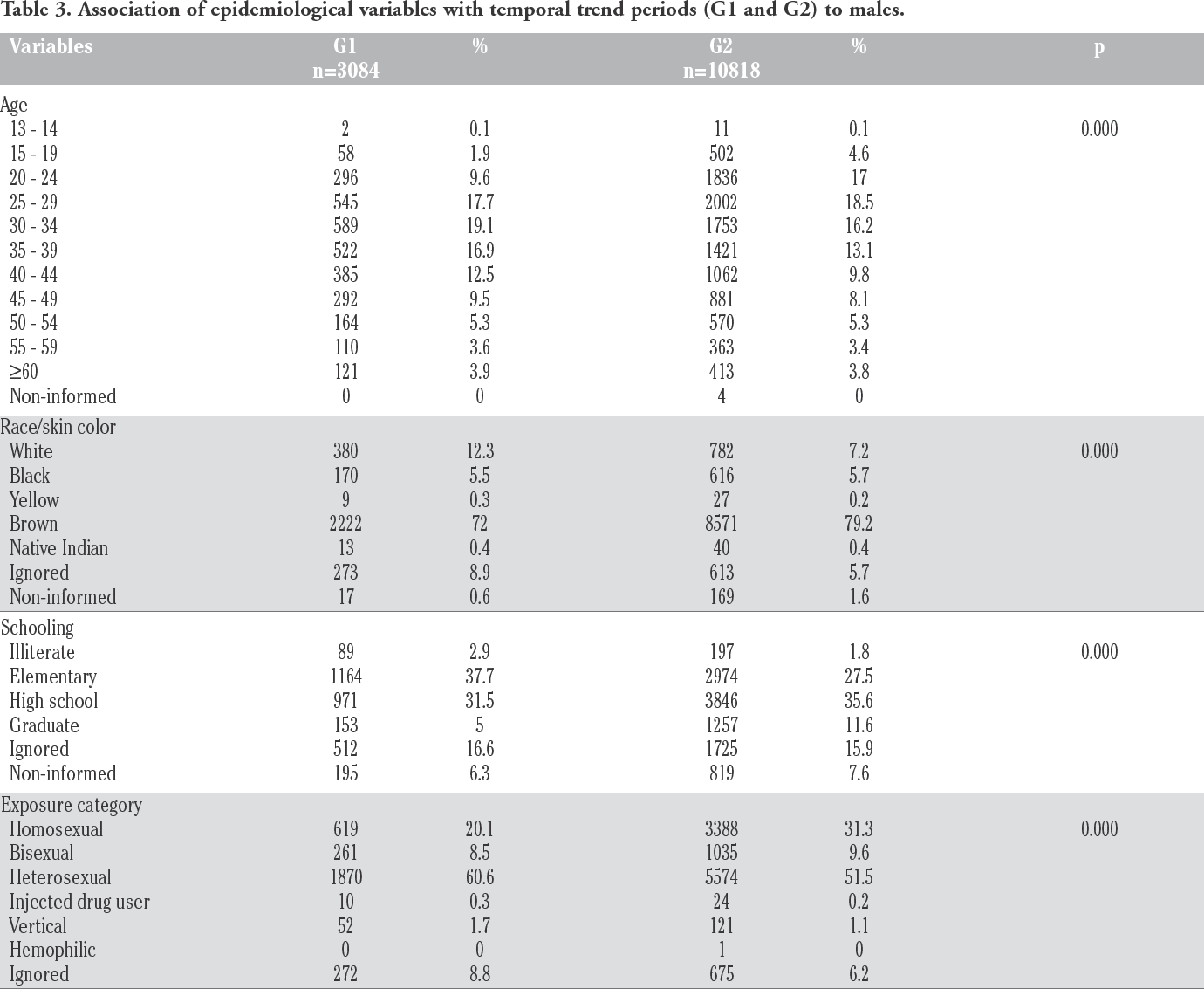
Association analysis was performed for each sex separately. Among males, the most prevalent epidemiological characteristics in G2 (
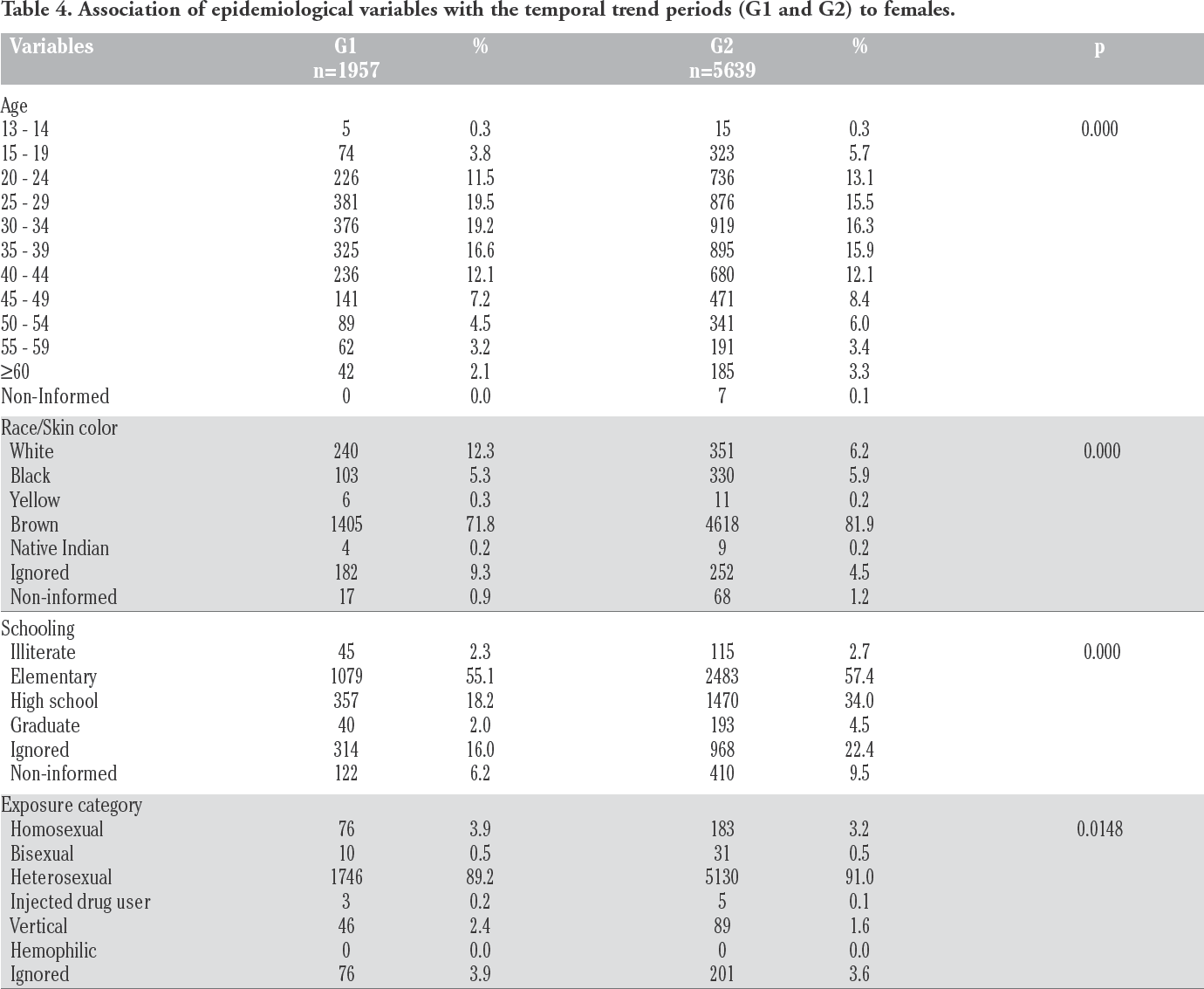
Consistent with the findings for males, similar skin color and education characteristics were found for females. However, the age groups most prevalent in G2 amongst females were 15-19, 50-54, and 60 years and over. Moreover, heterosexual women were most frequently affected in G2 than their counterparts (Table 4).
Discussion
Our results showed that HIV/AIDS incidence in the state of Pará showed a stationary trend (G1, 2007 to 2012) and an upward trend (G2, 2012 to 2018) from 2007 to 2018. The epidemiological profile of individuals with HIV/AIDS changed between G1 and G2. Adult individuals with a low educational attainment and heterosexuals were most frequently affected in G1, whereas young individuals with a high educational attainment and homosexuals were most frequently affected in G2. In addition, the incidence of HIV/AIDS increased amongst elderly women in G2.
Despite the implementation of the TasP program in 2013, an alarmingly high number of AIDS cases was reported in the state of Pará in the following years. However, we expected to find an increase in the number of HIV cases and an opposite trend for the number of AIDS cases, as observed in other countries that universalized ART and HIV testing.6–7 Such a high percentage of late diagnosis in the state of Pará can be due to the great distance that residents have to travel to gain access to healthcare services. The state of Pará has peculiar characteristics, such as large territorial extension, with residents living in places far away from major cities and experiencing difficulty in gaining access to healthcare and education services. In addition, primary healthcare network services have a low coverage and are mostly concentrated in urban centers.12,13 To date, the state of Pará ranks the third lowest in Brazil's Human Development Index. 10 A study carried out in North Carolina showed that HIV late diagnosis was directly correlated with the distance of people's households to the health center where HIV screening was available. 14 The insufficient amount of HIV screening tests and unqualified health professionals are other issues to consider when analyzing the issue of late diagnosis. 13
Considering the Pará's large territorial area and all geographic and socioeconomic barriers to people's access the healthcare services, for its 144 municipalities, Pará has 33 ART dispensing units, 7 specialized healthcare centers on HIV/AIDS treatment, and 48 testing and counseling Centers, and all of them are located in urban zones. Two dispensing units of pre-exposure prophylaxis (PrEP) are located in Belém, the capital of Pará.
12
The change in the epidemiological profile of seropositive individuals as of 2012, with a high prevalence among young, homosexual, and high school individuals, was consistent with that observed on a global scale.
8
Homosexuals accounted for 17% of all new HIV infections worldwide in 2018. In Latin America and Brazil, this percentage corresponded to 30% and 51%, respectively. Despite having a high educational level, most of the affected young people lack adequate knowledge about HIV transmission/prevention forms and are at a high exposure risk to the virus due to their unsafe sexual behavior (
Temporal trend of HIV/AIDS incidence in Pará, 2007-2018.
°p<0.05.
Notably, different from the southern and the middle west of Brazil, the incidence of HIV/AIDS increased among women in advanced age in G2 compared with men, and this finding can be explained by several factors, such as female subservience. This trait causes difficulty in the discussions on the use of a condom in sexual intercourse and contributes to or results from domestic violence. Other factors include socio-cultural barriers and HIV stigmatization, which may prevent access to HIV screening. All these factors may explain the upward trend in the number of cases amongst women aged 60 years and older and further explain why the TasP program did not affect the trend analysis of this specific age group.21–24
New HIV infection possibilities should also be considered for middle-aged and elderly individuals. Although sexuality in middle age has been improved with the use of pharmaceutical products, society and health professionals commonly overlook the sexuality of elderlies and disregard their risk of developing sexually transmissible infections. As a result, HIV screening tests are not commonly prescribed in primary healthcare network services for this age group but rather during the late stage of HIV infection when they become sick.25,26 Despite the increased number of HIV cases amongst elderly individuals and their more rapid progress to AIDS than young patients,27–29 public policies in the field specifically addressing this population group are lacking.
Association of the epidemiological variables with the temporal trend periods (G1 and G2).
Limitations
This study was limited by the impossibility of establishing an actual correlation between HIV screening test coverage and an increase in the number of case notifications due to the lack of access to the number of HIV tests applied in the state of Pará from 2007 to 2018. Another limitation was the HIV/AIDS subnotifications in the system. However, this limitation did not compromise the data analysis.
Conclusions
Our study demonstrated that the incidence of HIV/AIDS cases in the state of Pará stabilized between 2007 and 2012 and significantly increased between 2012 and 2018. Although the TasP program has been effective, the increased number of AIDS cases in the second trend period poses a concern. Between 2012 and 2018, the HIV epidemic had a high impact on young individuals, homosexuals, people with a high school background, and elderly women. Despite the TasP program, no effect was noticed in the upward trend of HIV/AIDS cases amongst women older than 60 years.
HIV screening tests and ART should be made widely available to eliminate HIV infection in the Amazon region by 2030, as proposed by the UNAIDS. Special attention should be drawn to specific populations, such as homosexuals, young individuals, and elderly women.
Association of epidemiological variables with temporal trend periods (G1 and G2) to males.
Association of epidemiological variables with the temporal trend periods (G1 and G2) to females.
Footnotes
The authors declare no conflict of interest.