




Abstract
BACKGROUND:
Professionalism is one of the fundamental traits which includes behaviors, commitments, standards, and goals that helps define a profession.
OBJECTIVE:
This study aimed to assess the attitude of dental students and graduates regarding the practice of professionalism in dentistry using the Professionalism Mini Evaluation Exercise (P-MEX) questionnaire.
METHOD:
This cross-sectional study was conducted amongst the dental undergraduates, lecturers and postgraduate faculty. Views regarding professionalism were assessed using the P-MEX. The 24-questions based survey form is comprised of questions related to doctor and patient relationship skills, reflective abilities, time management, and lastly, interprofessional relationship expertise. Data was analyzed using SPSS version 23. Descriptive statistics were done using mean and SD, whilst associations between responses were assessed using Mann-Whitney U and Kruskal-Wallis tests. P value less than 0.05 was considered significant.
RESULTS:
From a total of 201 participants, 95 (47.3%) were males and 106 (52.7%) were females. Statistically significant association was seen between time management, reflective skills, and interpersonal skills with gender, as well as the domains of P-MEX and years of education.
CONCLUSION:
The use of P-MEX provides a valid confirmation for the assessment and awareness of professionalism amongst the dental faculty and students. Females demonstrated higher traits of professionalism as compared to males. The findings from the current study identify that students and faculty members had sufficient awareness regarding professionalism and the practice of professionalism was routinely followed.
Introduction
Professionalism is the integral part of student progress towards completion of a healthcare degree [1]. However, because professionalism is constantly evolving and being improved, it is difficult to conceptualize its definition and evaluation [2, 3]. Although professionalism has been identified as a vital component of the clinical competency but no consensus towards the assessment of best practice approach has been developed [4]. Definitions of professionalism vary in different descriptions identifying the role of health care professionals, the American Board of Medical Specialties (ABMS) which defined professionalism as “a belief system in which group members (‘professionals’) declare (‘profess’) to each other and the public the shared competency standards and ethical values they promise to uphold in their work and what the public and individual patients can and should expect from these professionals” [5, 6]. In contrast, the General Dental Council (GDC) of the UK has defined professionalism as “the knowledge, skills, attitudes and behaviors required to practice in an ethical and appropriate way, putting patients’ needs first and promoting confidence in the dental team” [3].
Professionalism affects the relationship between the patients and healthcare professionals, it influences the quality of care and the treatment provided, unprofessional behavior of the students during their training period may increase the risk of disciplinary action [7]. Bahaziq et al. assessed a number of instances where the doctors’ unprofessional behavior towards their patients impacted the quality of patient care and treatment provided, which resulted in unfavorable outcomes, leading to patient discontent and disciplinary action against the treating physician [8]. Similarly, Patel et al. also highlighted the inadequacies and shortcomings of the treating surgeon’s professionalism which severely undermined the surgical team’s trust and adversely impacted the patients safety and satisfaction [9]. This conduct harmed the communication between the patient, doctor, and medical staff as well as the connection between them [10]. As a result, thorough and timely evaluation of professionalism throughout training is essential for the development of health care workers [11, 12].
The importance of professionalism in the curriculum cannot be underestimated; its evaluation can be useful in tracking the development of professional competencies, provides insight into the program’s hidden curriculum, and acts as a medium for curriculum reform [13]. The Professionalism Mini-Evaluation Exercise (P-MEX) has been used in several studies to assess dental professionalism [14, 15]. Since Cruess et al. created the P-MEX tool in Canada and it has been piloted in nations like Finland and Japan, more culturally relevant characteristics have been incorporated into it since [16–18]. Following the Ottawa report from 2011, several nations like Japan and China assessed medical professionalism. Various studies have used P-MEX for the evaluation of dental professionalism [17–21]. However, to date no study has used the P-MEX questionnaire to assess professionalism in Pakistan. This study therefore aims to evaluate the perceptions of dental students and faculty regarding professionalism using the PMEX questionnaire.
Method
Study participants
The study participants comprised of third and fourth year dental undergraduate students (BDS), lecturers working in clinical outpatient departments and postgraduate dental faculty. All participants were asked to complete the questionnaire which was distributed through WhatsApp and Facebook messenger. Participants were assured regarding maintaining confidentiality of the responses received. From 205 questionnaires, 201 forms had been completely filled out and were included in the study.
Inclusion and exclusion criteria
Students from the third and fourth year BDS performing clinical procedures, along with lecturer and postgraduate faculty who consented to participate, were included in the study. Students from the first and second year BDS who did not engage in clinical procedures and participants not giving consent were excluded.
Ethical approval
Ethical approval for the current study was obtained from the Institutional Ethical Review committee, which was conducted in line with the Declaration of Helsinki prior to commencement of the research.
Research tool
The research questionnaire P-MEX was used for the current study. Demographic details of the participants were enquired, which included age, gender, details regarding whether being an undergraduate student (third or fourth year), lecturer and postgraduate faculty.
The subsequent 24-item questionnaire comprised of seven questions which were related to doctor and patient relationship skills, that included listening keenly to patient, showing interest and respect for the patient, identifying the patient’s need, trying to meet up with the patient’s need, providing patient care, advocated on behalf of a patient and/or family member, maintained limitations with patients and associates. The next five questions were related to reflective skills and encompassed awareness of self-limitations, acknowledging mistakes, inquiring and accepting feedback, and maintaining composure during problematic situations. Three questions focused on time management skills, which included being on time, completing tasks correctly, being available to patients or colleagues, while last nine questions inquired were related to inter-professional relationship skills, this involved having suitable appearance, identifying gaps in self-knowledge and skills, respecting colleagues and assisting them when needed, avoiding derogatory language, maintaining patient privacy, using health resources properly, and respecting rules of the system.
Reliability of questionnaire
The reliability of P-MEX questionnaire for the current study was assessed using Cronbach alpha, which resulted in a value of 0.975, indicating good reliability. However, in the study conducted by Amirhajlou et al., the Cronbach alpha value for reliability of the P-MEX questionnaire was 0.88 [22].
Sample size calculation
Sample size was calculated by using OpenEpi3 software having confidence interval of 95% and 1% margin of error, the calculated sample size was 205. Four incompletely filled forms were excluded, which had incomplete information, hence 201 participants were included.
Data analysis
Data was analyzed using SPSS version 23. Descriptive statistics in the form of mean and standard deviation were presented. As the data was not normally distributed, Mann-Whitney U test and Kruskal-Wallis test detected association of gender and year of education with the P-MEX domains. P value less than 0.05 was considered significant.
Results
From a total of 201 participants, n = 95 (47.3%) were male and n = 106 (52.7%) were female. Among these participants this included n = 45 (22.4%) third year students, n = 49 (24.4%) fourth year students, n = 60 (29.9%) lecturers and n = 47 (23.4%) postgraduate faculty. An aggregate of 201 P-MEX completed forms comprising of 24 items were selected to assess the professionalism according to gender distribution and different levels of professional tiers.
Table 1 presents the mean scores and standard deviation of each question. The mean score for all variables of 24 P-MEX items were calculated for each assessment item (Table 1).
Participants score based on Professionalism Mini Evaluation Exercise (P-MEX)
Participants score based on Professionalism Mini Evaluation Exercise (P-MEX)
Table 2 shows the findings obtained for gender-based response on four domains of P-MEX. (i) Doctor-patient relationship: male mean rank was 90.94 while for female mean rank was 110.02 respectively. Though non-significant p-value (0.2) was identified. (ii) Reflective skills: male mean rank was 89.51 while for female mean rank was 111.3. The p-value for reflective skills was 0.007. (iii) Time management: male mean rank for time management was 93.51 and for female mean rank was 107.71 respectively. The p-value for time management was 0.077. (iv) Interpersonal relationship skills: male mean rank was 93.74 and for female mean rank was obtained as 107.5 respectively, with p-value of 0.088. The mean average score for males was 3.87 and 4.11 for females (Table 2).
Gender based scores of participants on P-MEX
Mann-Whitney U test. *significant at P < 0.05.
In Table 3, Kruskal-Wallis test was applied to evaluate participants score based on the year of education on P-MEX: (i) Doctor-patient relationship: mean rank for third and fourth year, lecturers and postgraduate faculty were 104.93, 74.4, 112.48 and 110.31 respectively, the p-value for this variable was 0.003. (ii) Reflective skills: mean rank for third and fourth year, lecturers and postgraduate faculty were 110.57, 70.55, 114.28 and 106.64 respectively and p-value was 0.001. (iii) Time management: mean rank for third and fourth year, lecturers and postgraduate faculty were 111.84, 77.23, 110.93 and 102.71 with p-value of 0.007. (iv) Interpersonal relationship skills: mean rank for third and fourth year, lecturers and postgraduate faculty were 113.16, 76.37, 108.88 and 104.99 with p-value of 0.006.
Participants score based on year of education on P-MEX
Kruskal-Wallis test applied. *significant at P < 0.05.
Professionalism in the medical and dental fields has lately drawn attention globally and can be verified using reliable and validated tools [18]. P-MEX has undergone effective testing in several ethnic contexts throughout the globe [21–22]. According to Masella, “the most important mission of dental education is to develop professionalism in the student”, as technical knowledge and expertise in the field only make sense within the context of professionalism [23]. Moreover, Masella also identified the essential characteristics of dental professionalism which are benevolence, integrity, carefulness, communitarianism, and the commitment to perfection [24].
Results depicted in Table 1 demonstrate the attributes addressed by the different domains of professionalism. In doctor-patient relationship skills, most participants felt that ‘showing respect for a patient’ was an important trait of professionalism. This finding is consistent with the study conducted in Malaysia [25]. This could be attributed to the strong cultural/geographical values identified in the Asian subcontinent. Additionally, various studies have demonstrated the crucial role of teachers and specialists in enriching students’ viewpoint regarding the professional attribute during their medical training through role modeling and demonstrations [25–27].
However, ‘accepting inconvenience to meet patient’ demonstrated a lower mean value. These findings are consistent with the results obtained from previously conducted studies in which the professional attribute of putting patients’ interest first proved less tempting for students [28, 29]. This identifies the fact that these professional dilemmas are generally dependent on the interest and preference of students but could be boosted by further improvising professional attributes during interactive sessions. The other significant behaviors identified were ‘awareness regarding limitation as a dentist’, ‘maintaining appropriate appearance when dealing with patients’, and ‘respect your colleagues’. The results of the current study match with the study by Farah-Franco et al., in which the highest mean scores were reported in avoidance of insult, respect for peers and colleagues, maintaining one’s boundaries and appropriate appearance when dealing with patients [30].
According to Tiffin et al., practicing professionalism during undergraduate years was quite less as students mostly focused towards knowledge-based learning, and it was only practiced when students started their undergraduate training during their interaction with peers, staff and patients [31]. In our study, most participants displayed professional behavior when dealing with patients and performing clinical procedures.
Table 3 identifies significant differences between gender and the mean ranks of professionalism. Females generally scored higher as compared to males in all four domains of professionalism, this can be attributed to the fact that females are generally more responsible, understanding and have greater empathy as compared to males [32]. Moreover, statistically significant results could be identified in the reflective skills, where similarly females demonstrated higher scores than males. These findings are in contrast with the study by Farah-Franco et al., where overall scores of study participants were quite low [30]. This reflects that the dentist must acknowledge and report in case of procedural error, take up the responsibility and identify their personal limitations and must undergo further training as needed.
The relationship between P-MEX and different levels of education was also determined. In the doctor-patient relationship domain, highest mean ranks were observed amongst the graduate faculty which could be because they formed the majority in our study, while the lowest mean rank was seen by fourth year students. The score for reflective skills was also on the higher side for lecturers; these findings are consistent with Japanese study conducted by Tsugawa et al. [21]. This could be because the extent of medical professionalism taught to undergraduate students is quite insufficient and requires further training. Interestingly, scores for time management and interpersonal skills were higher for third year students. This is indicative of the professional attitude of third year students towards their patients whilst meeting them for the first time and identifies their enthusiasm in being able to treat them. Moreover, as demonstrated by Razzaq et al., undergraduates may have shown biasness whilst filling out the survey forms, based on personal preferences rather than following the true objective of the assessment [33].
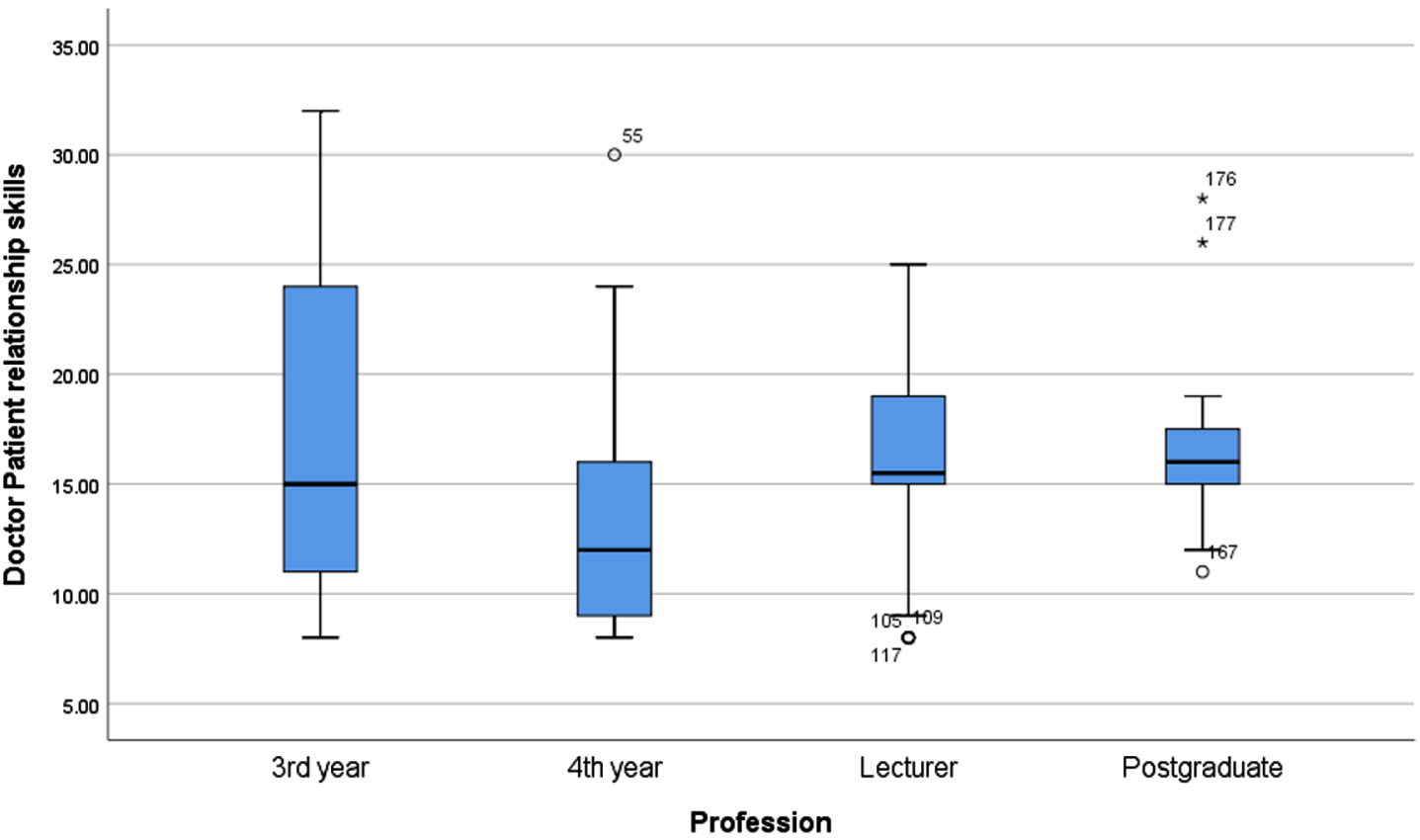
Box plots demonstrating association of doctor-patient relationship skills with profession.
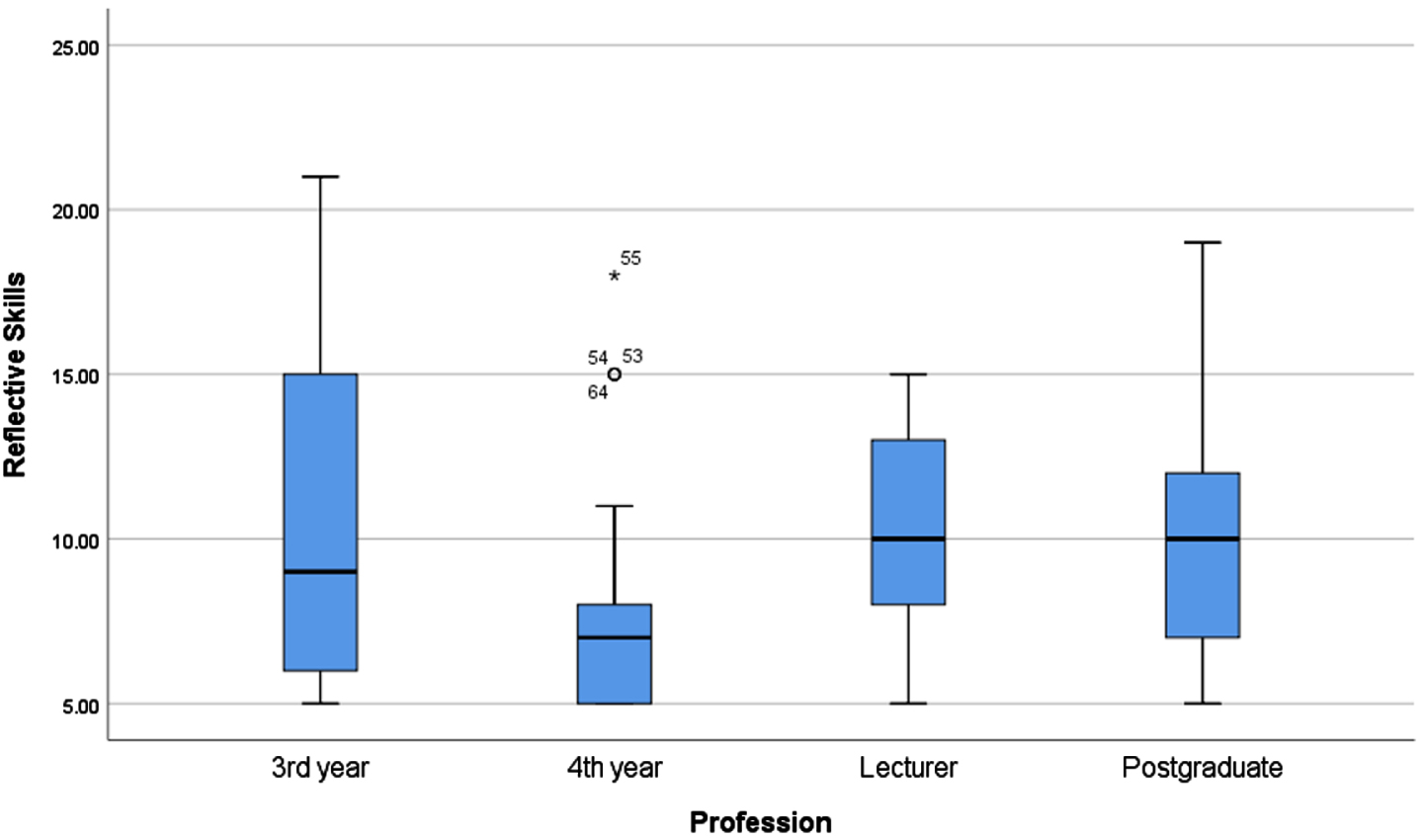
Box plots demonstrating association of reflective skills with profession.
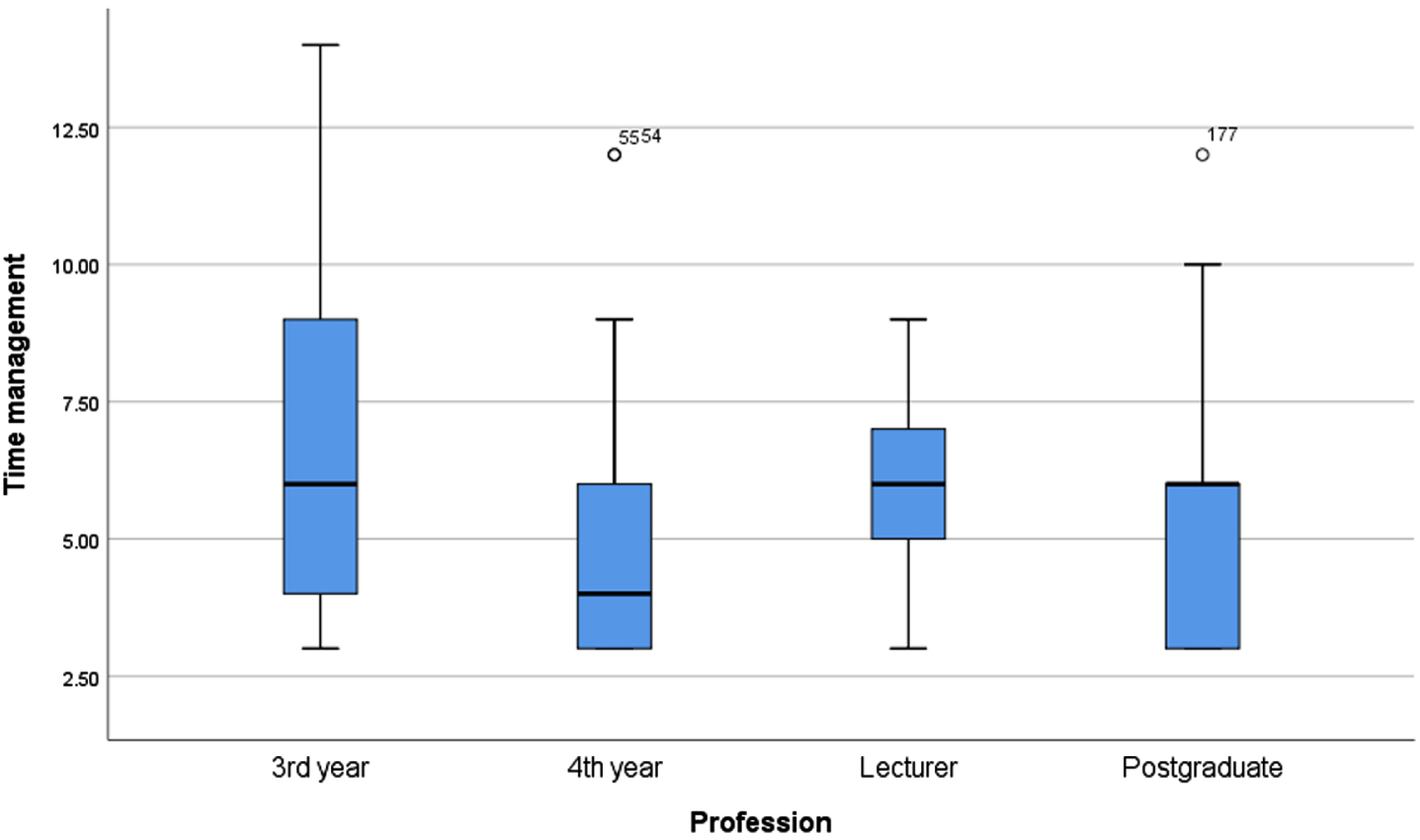
Box plots demonstrating association of time management skills with profession.
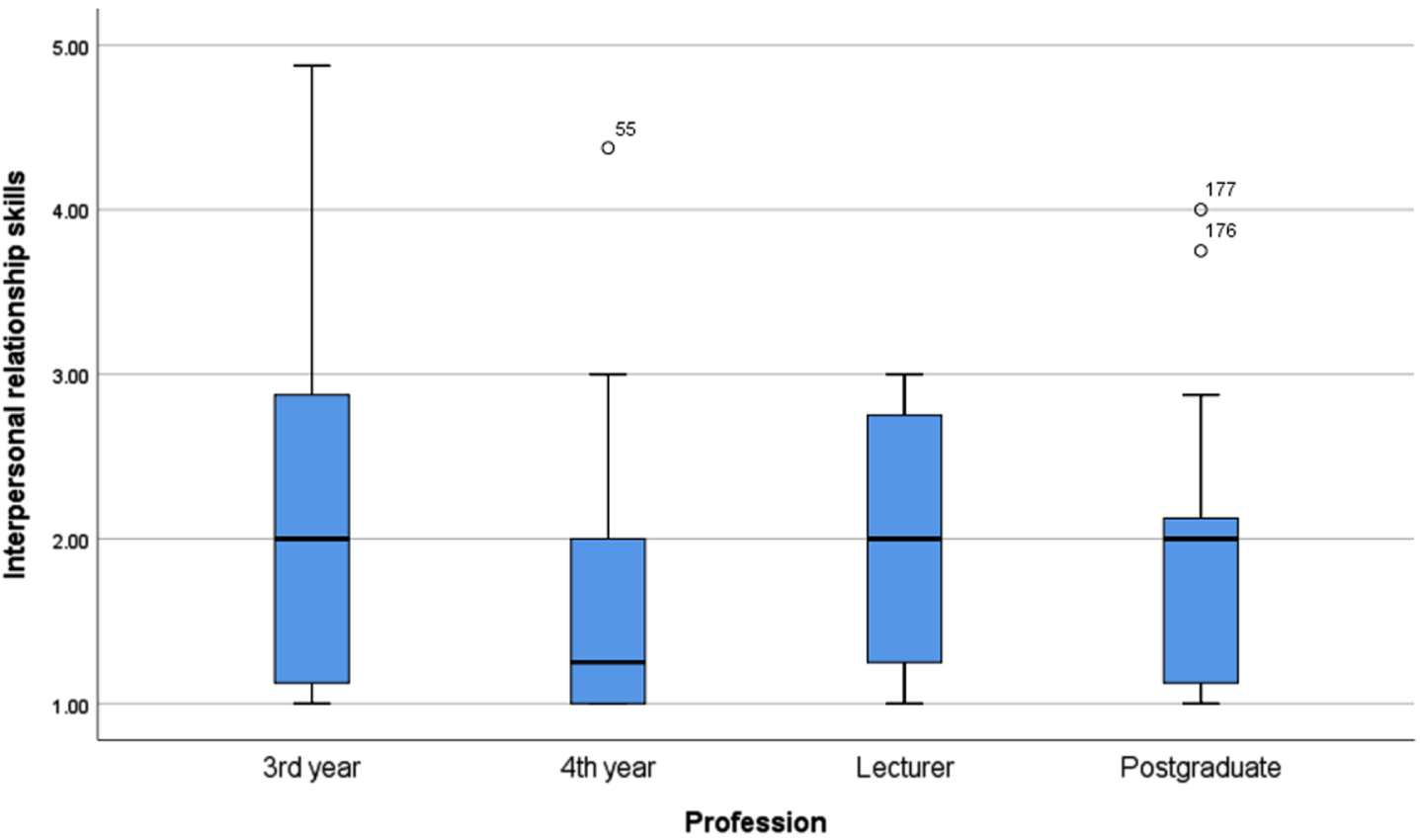
Box plots demonstrating association of interpersonal relationship skills with profession.
Lastly, P-MEX is an important tool which can assess the practice of professionalism at different levels of teaching. However, it should be added as a part of curriculum to be taught to undergraduate students’ and used for evaluation purpose [34]. Further awareness sessions regarding professionalism must also be provided to faculty which would help them nest practice of professionalism in young students. Expectation of patients have motivated healthcare educators and faculty to practice attributes of professionalism which should be according to patient desire, faculty members and students who demonstrates adequate professional ethics during their routine practice must be monitored and rewarded, as it will serve as a motivation for other students to practice professionalism [35–37].
The major limitation was limited sample size and being a single centric study. Questionnaire for the study were distributed online, so there is a possibility that students or faculty members may not have filled it out in true spirit. Lastly, in the current study only dental undergraduate student and graduate faculty were involved. Future research can incorporate other medical fields.
The use of P-MEX provides valid confirmation for the assessment and awareness of professionalism amongst the dental faculty and students. The findings from the current study identify that students and faculty members had adequate awareness regarding professionalism and the practice of professionalism was routinely followed. Females demonstrated higher professionalism traits compared to males. Additional components regarding professionalism must be incorporated within the curriculum.
Ethics statement
Ethical approval for the research was obtained from the ethical committee and conducted according to the Declaration of Helsinki. The study participants were initially informed regarding the study design, after which they voluntarily provided written informed consent.
Availability of data and materials
The dataset used for the current study is available from the corresponding author upon reasonable request.
Competing interests
The authors have no conflicts of interest to report.
Funding
Not applicable.
Footnotes
Acknowledgments
We are grateful to the dental students and faculty for contributing to the study and helping with the process of data collection.